
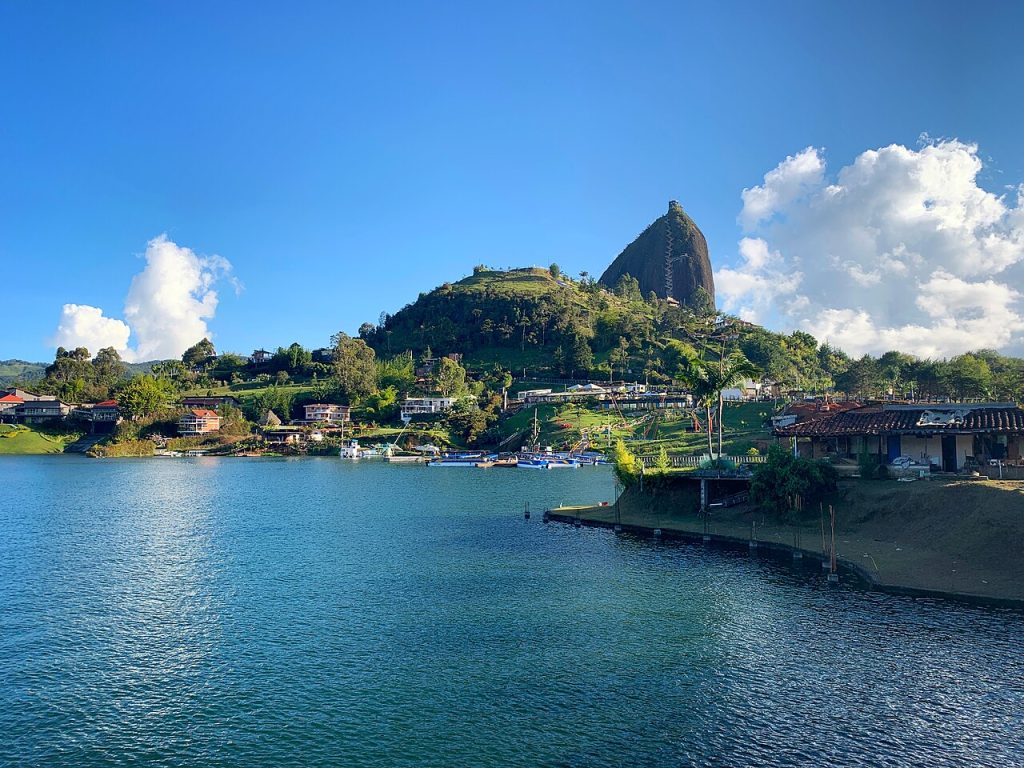
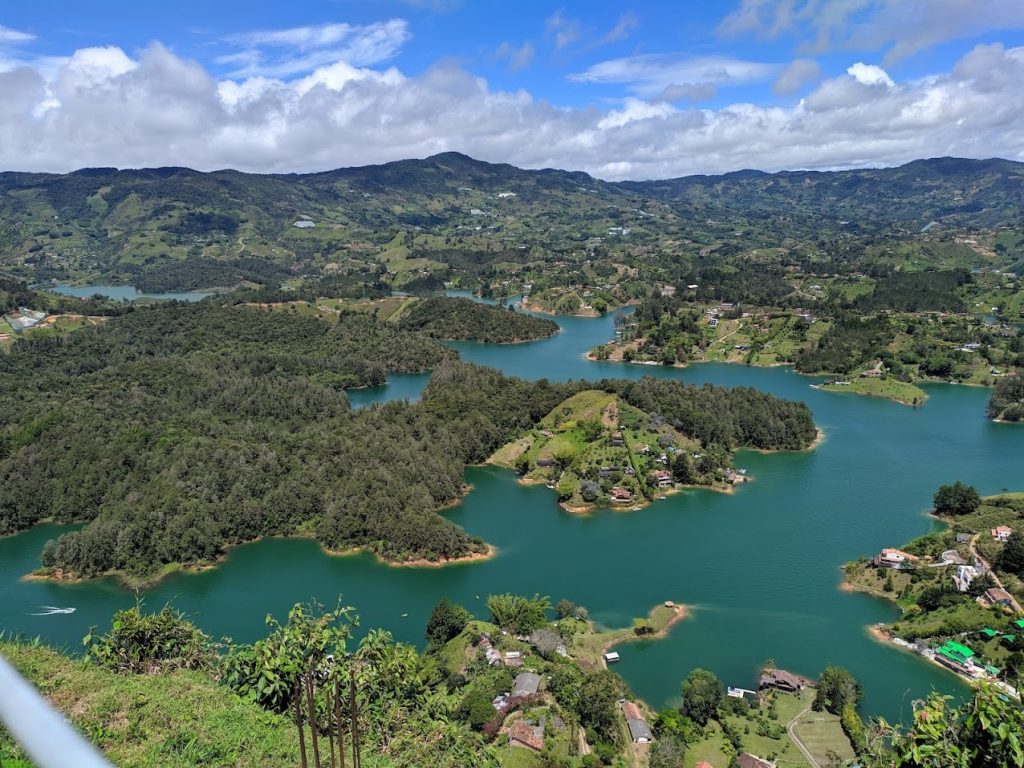
East of Medellín, a giant granite rock rises from a maze of blue water and green islands. Down below, a small town shows off houses painted in every colour, their walls decorated with carved panels called zócalos. This is Guatapé, one of the most colourful towns in Colombia. In this guide, you will discover what to see in Guatapé, Colombia, how to get there and when to visit.
Quick Facts About Guatapé, Colombia
| Country | Colombia |
| Region | Eastern Antioquia, Antioquia Department |
| Known For | Painted zócalos, El Peñón de Guatapé and the island-dotted reservoir |
| UNESCO Status | Not listed |
| Founded | 1811 |
| Best Time to Visit | December to March and July to August |
| Time Needed | One to two days |
| Continent | South America |
Where Is Guatapé, Colombia?
Guatapé is a town and municipality in the Department of Antioquia, in northwestern Colombia. It belongs to the subregion of Eastern Antioquia and lies about 79 kilometres from Medellín. The town sits at an altitude of around 1,890 metres, on the shore of a large reservoir.
Why Visit Guatapé, Colombia?
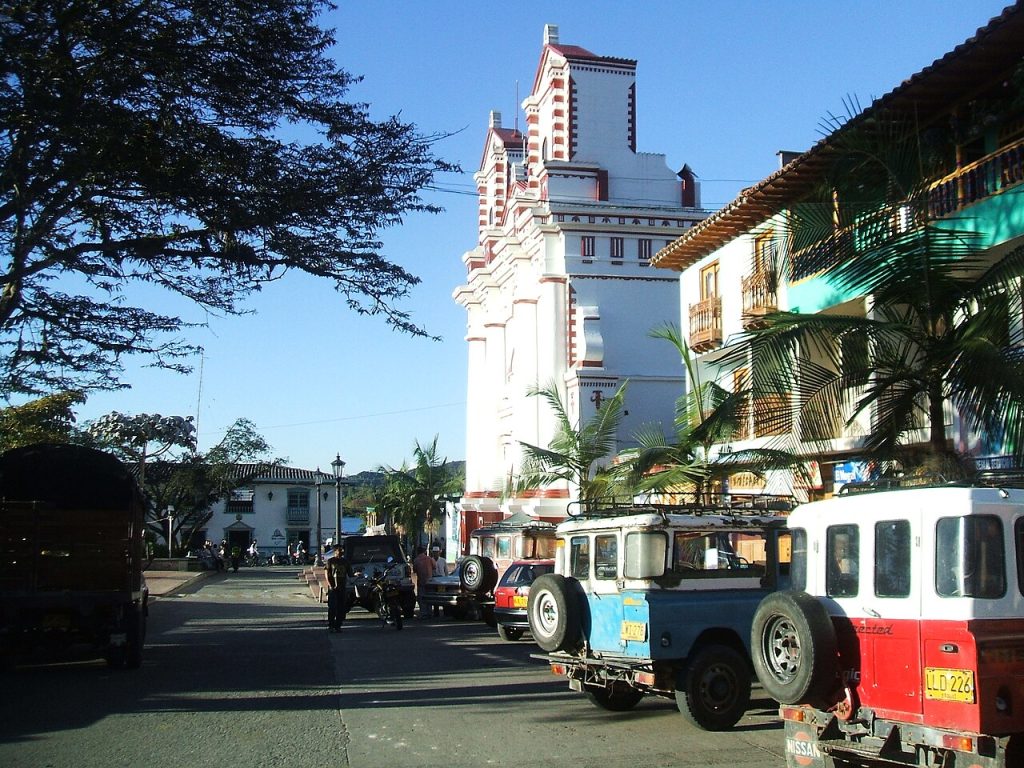
First of all, Guatapé is a joy to walk around. Its streets are lined with brightly painted houses, and many are decorated with zócalos. In addition, the landscape around town is unlike anywhere else in the country.
The famous rock, El Peñón de Guatapé, offers one of Colombia’s best viewpoints. Meanwhile, the reservoir invites boat trips between wooded islands. Together, they make Guatapé an ideal escape from the busy streets of Medellín.
The Zócalos of Guatapé
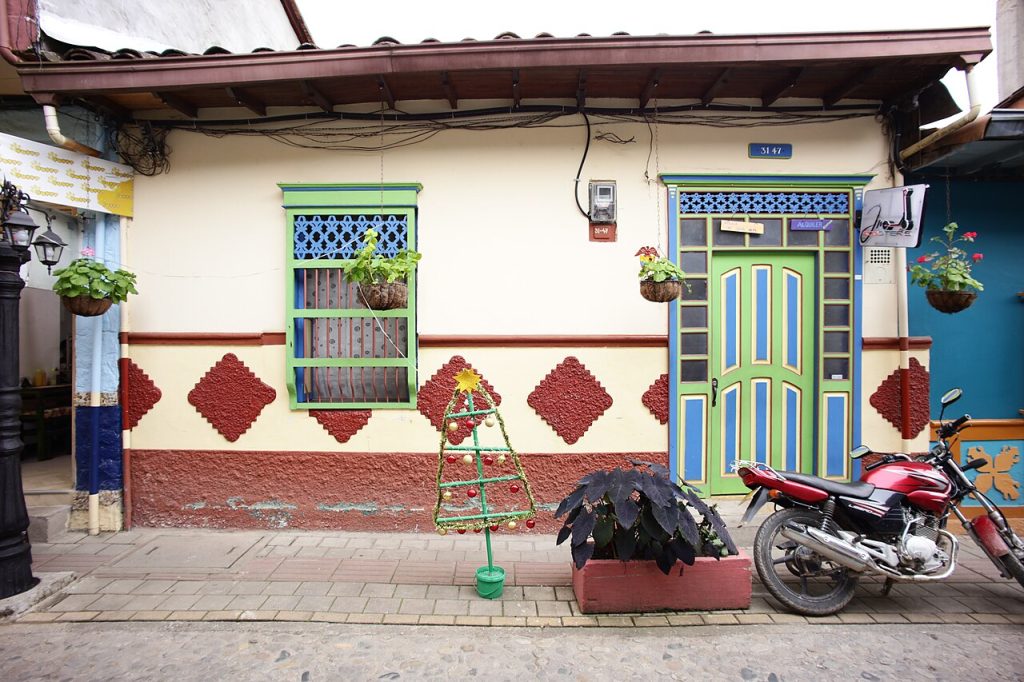
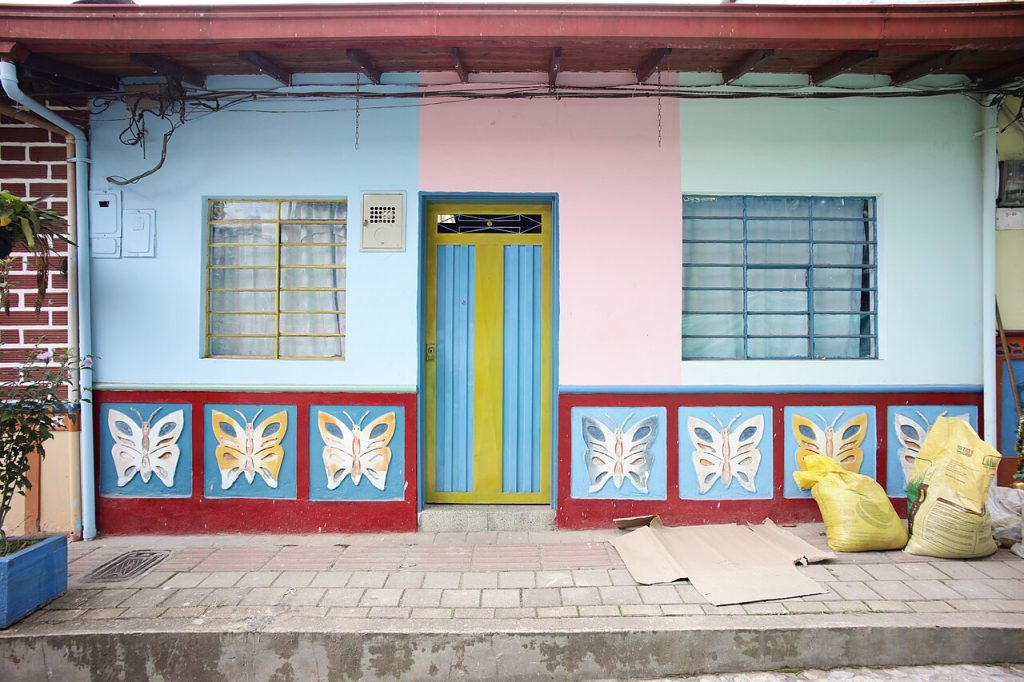
Zócalos are the town’s signature. They are decorative panels that run along the lower part of building walls, usually in raised relief and painted in bright colours.
What the Panels Show
Many zócalos show animals, farm scenes, local trades or simple geometric patterns. Some tell the story of the family that lives inside, while others show what a shop sells. As a result, a stroll through town feels like reading a picture book.
Plazoleta de los Zócalos
The Plazoleta de los Zócalos is a small square surrounded by some of the most colourful façades in town. Its steps and bright walls make it a favourite photo spot.
Calle del Recuerdo
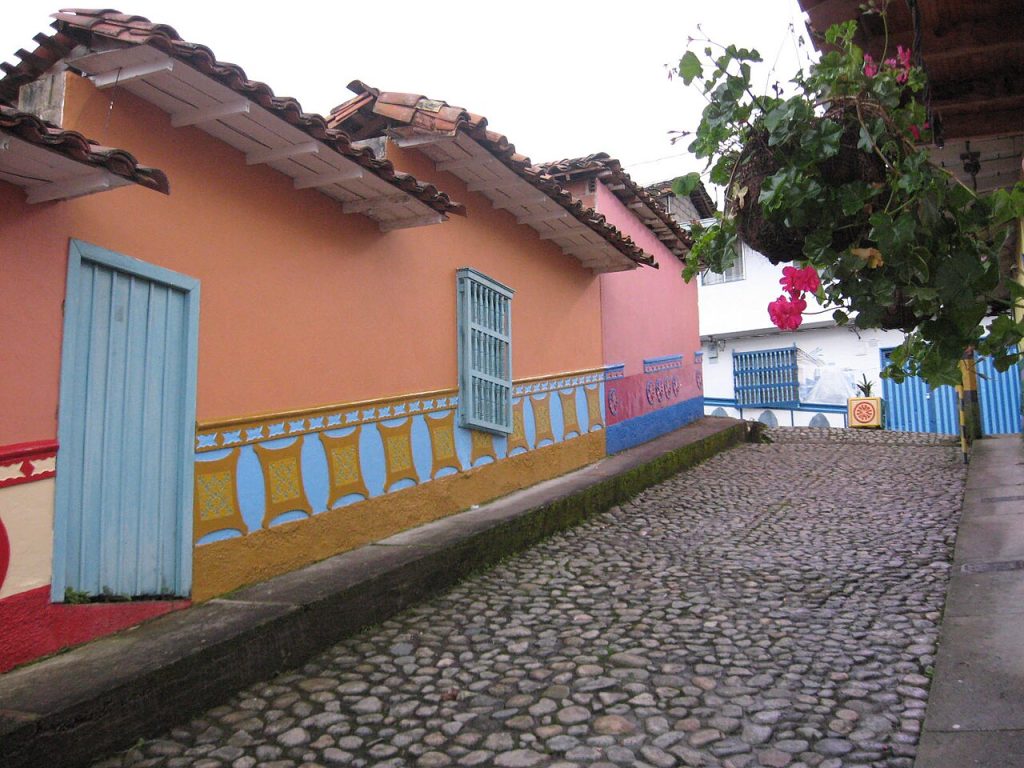
Calle del Recuerdo, the Street of Memories, is another highlight. Its houses are carefully painted, and the lane leads gently downhill towards the waterfront.
El Peñón de Guatapé
El Peñón de Guatapé, also known as La Piedra del Peñol, is a huge granite monolith just outside town. You can climb it on a staircase built into one side, with more than 700 steps to the top.
The climb is steep but manageable, and there are places to rest along the way. At the summit, the view opens across the reservoir and its scattered islands. Therefore, it is worth timing your climb for a clear morning.
Life Around the Reservoir
The reservoir shapes daily life in Guatapé. It was created when a dam flooded the valley to produce hydroelectric power.
The Malecón
A Waterfront Promenade
The malecón, a waterfront promenade, is lined with cafés and food stalls.
Water Sports
From here, you can rent kayaks or jet skis, or simply watch the evening light over the water.
Boat Trips
Exploring the Islands
Boat tours weave between the green islands and around quiet coves.
The Old Town of El Peñol
Some tours pass the site of the old town of El Peñol, which was flooded when the reservoir was created. A memorial marks the spot.
One Historical Fact About Guatapé, Colombia
Guatapé was founded on 4 October 1811 by the Spaniard Don Francisco Giraldo y Jiménez. Much later, the construction of a dam turned the surrounding valley into a reservoir. As a result, Guatapé became one of Colombia’s most important centres of electricity production.
How to Get to Guatapé, Colombia
By bus: Buses leave regularly from Medellín’s Terminal del Norte. The journey usually takes around two hours.
By tour: Many day tours from Medellín combine El Peñón, a boat ride and time in town.
By car: The road from Medellín is paved and well signposted, and parking is available near the town and the rock.
Best Time to Visit Guatapé, Colombia
Guatapé has a mild climate all year. However, the drier months, from December to March and from July to August, are usually best for clear views from El Peñón. Weekends and holidays are busy, so visit on a weekday if you can.
Is Guatapé, Colombia Worth Visiting?
Yes, Guatapé is worth visiting. The colourful zócalos, the climb up El Peñón and the island views make it one of the most memorable trips from Medellín. Furthermore, staying a night lets you enjoy the town after the day-trippers leave.
Final Thoughts
Guatapé is a small town with a big personality. With its painted streets, giant rock and sparkling reservoir, it offers both culture and scenery in one easy trip. Whether you climb the steps at sunrise or wander the lanes at sunset, Guatapé, Colombia will leave you smiling.
Image Credits
Wikimedia Commons
- El Peñón de Guatapé From the Highway Bridge: Photo by Elena.laps via Wikimedia Commons (CC BY-SA 4.0)
- Guatapé Reservoir From El Peñón: Photo by Ferferic via Wikimedia Commons (CC BY 4.0)
- Zócalo Façade in Guatapé: Photo by Javier Perez Montes via Wikimedia Commons (CC BY-SA 4.0)
- Painted House in Guatapé: Photo by Javier Perez Montes via Wikimedia Commons (CC BY-SA 4.0)
- Colourful Street in Guatapé: Photo by Millerarq2000 via Wikimedia Commons (CC BY-SA 4.0)
- Street in Guatapé: Photo by Allmhurach via Wikimedia Commons (CC BY-SA 3.0)