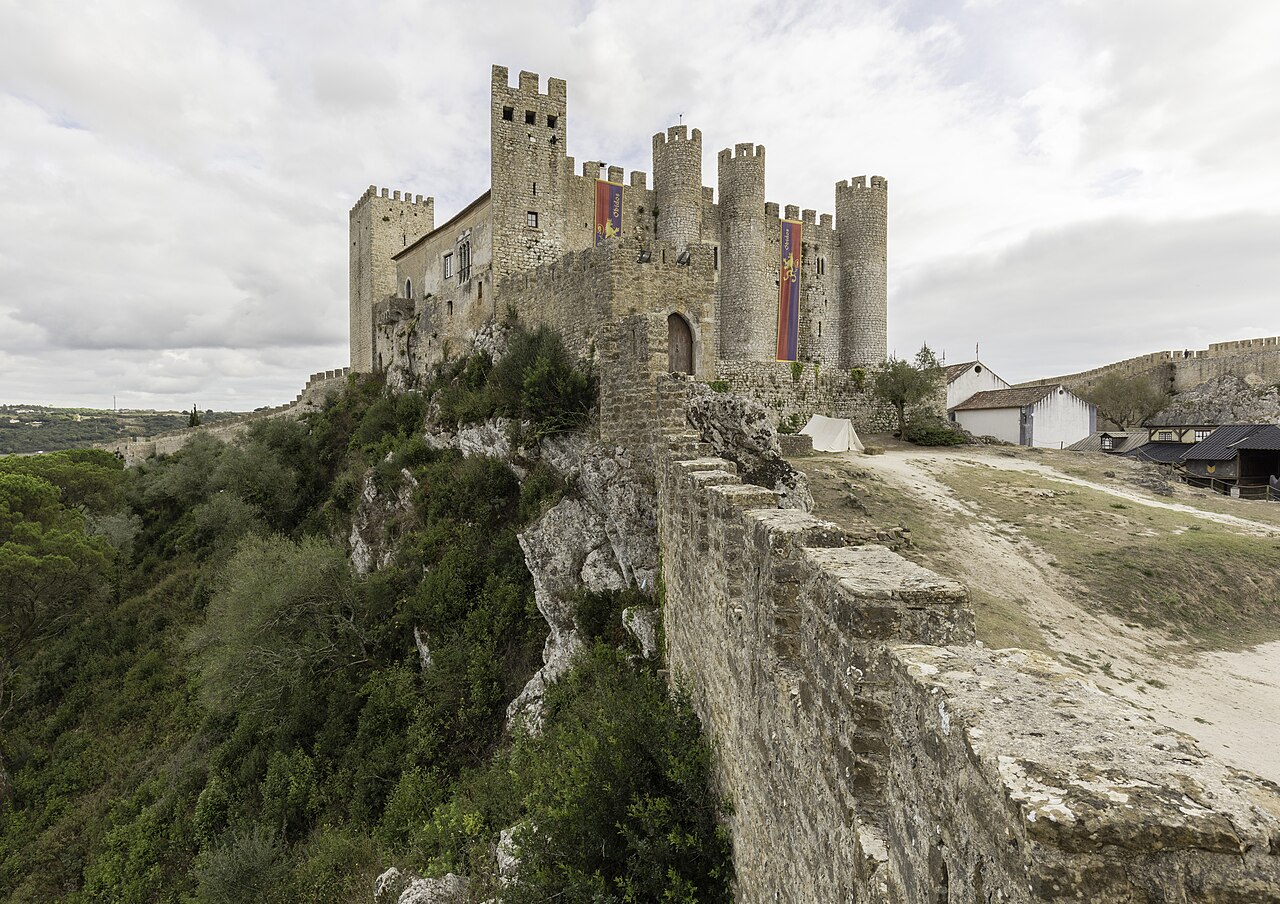
Óbidos Portugal is a small hilltop town wrapped inside medieval walls. Inside them, meanwhile, white houses trimmed in blue and yellow line narrow cobbled lanes. Meanwhile, flowers spill over doorways and a castle crowns the northern end. In fact, Portuguese royals loved the town so much that King Dinis gave it to his bride as a wedding gift in 1282. So, this guide covers everything you need to plan a trip to Óbidos Portugal.
Quick Facts About Óbidos Portugal
| Country | Portugal |
| Region | Oeste, Leiria District |
| Known For | Medieval walls, a hilltop castle, ginjinha in chocolate cups, and bookshops in unexpected places |
| UNESCO Status | UNESCO Creative City of Literature, since 2015 |
| Founded | Captured from the Moors in 1148 by Portugal’s first king, Afonso Henriques |
| Best Time to Visit | Spring and early autumn |
| Time Needed | Half a day to one full day |
| Continent | Europe |
Where Is Óbidos Portugal?
Óbidos sits on a hill in the Oeste region of central Portugal. Also, it lies close to the Atlantic coast and the Óbidos Lagoon. Also, it is north of Lisbon, so it is one of the most popular day trips from the capital. In addition, it pairs well with nearby coastal towns such as Peniche, Nazaré and Caldas da Rainha.
Why Visit Óbidos Portugal?
Above all, Óbidos is one of the best-preserved medieval towns in Portugal. Even so, it is small enough to explore in a few hours. For example, you can walk along its walls, wander some of the prettiest streets in the country and enjoy festivals all year round.
The town also has a literary side. For instance, in 2015, UNESCO named it a Creative City of Literature. As a result, its bookshops fill some surprising spaces, including a former church.
Óbidos Castle and the Town Walls
Óbidos Castle
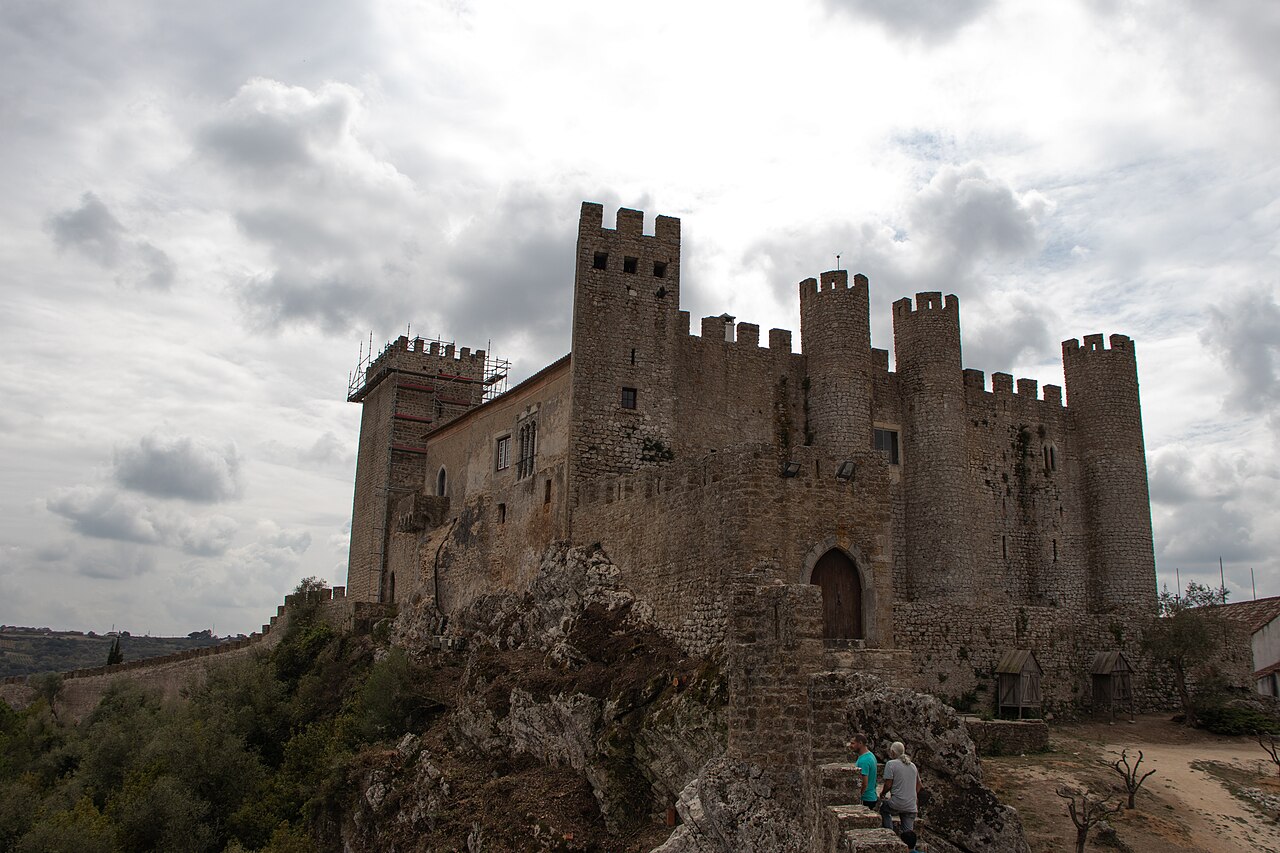
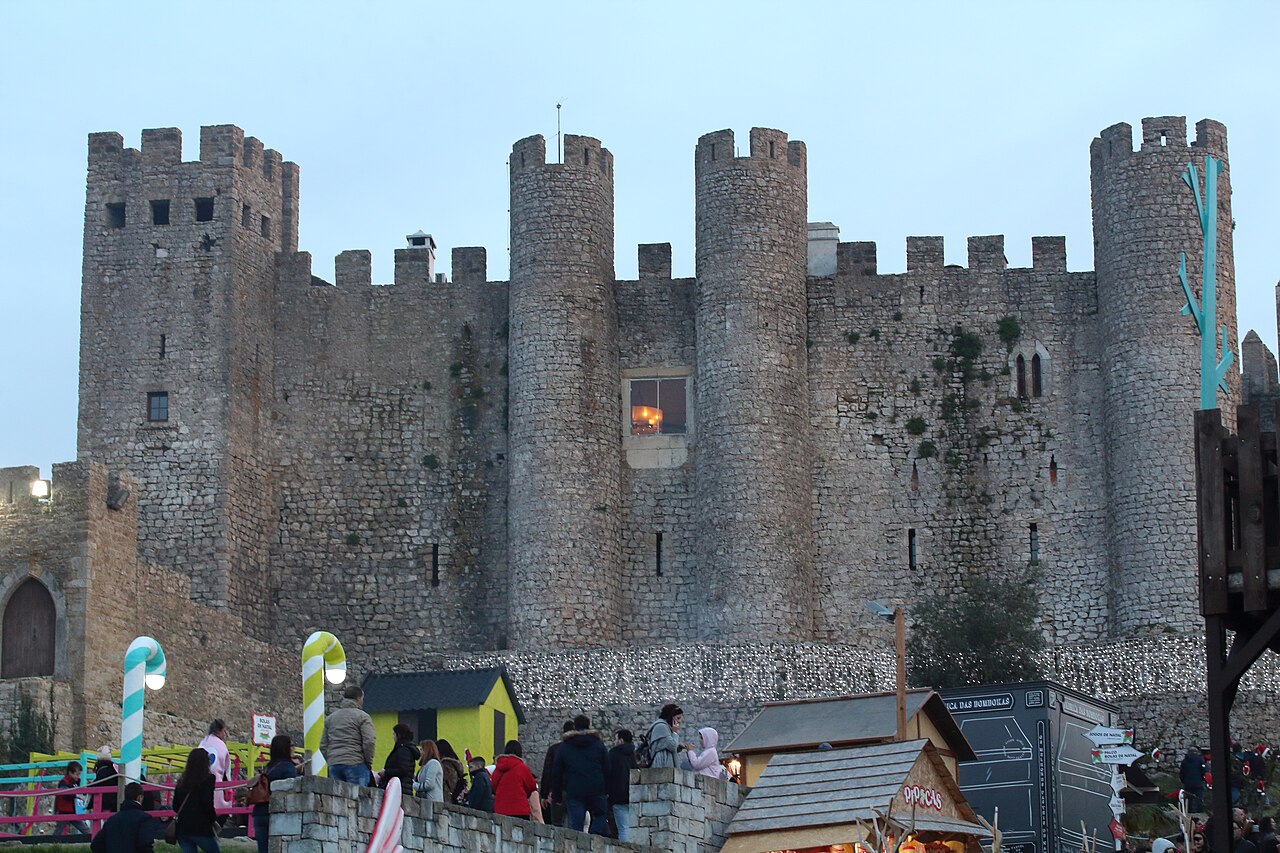
Originally, the castle at the northern end of town dates back to the Moorish period. Later, Portugal’s first king, Afonso Henriques, captured Óbidos in 1148. After that, King Dinis strengthened the castle and walls. The keep was then added in the 14th century. Today, however, the castle is a historic hotel. Still, you can admire its towers from the walls and the square outside.
Walking the Walls
In addition, the walls circle the whole town. Also, you can walk along the top for wide views over the rooftops and countryside. However, be careful. After all, the path is narrow and uneven, and there are no railings on the inner side. So, wear good shoes and avoid the walk on windy days.

Porta da Vila
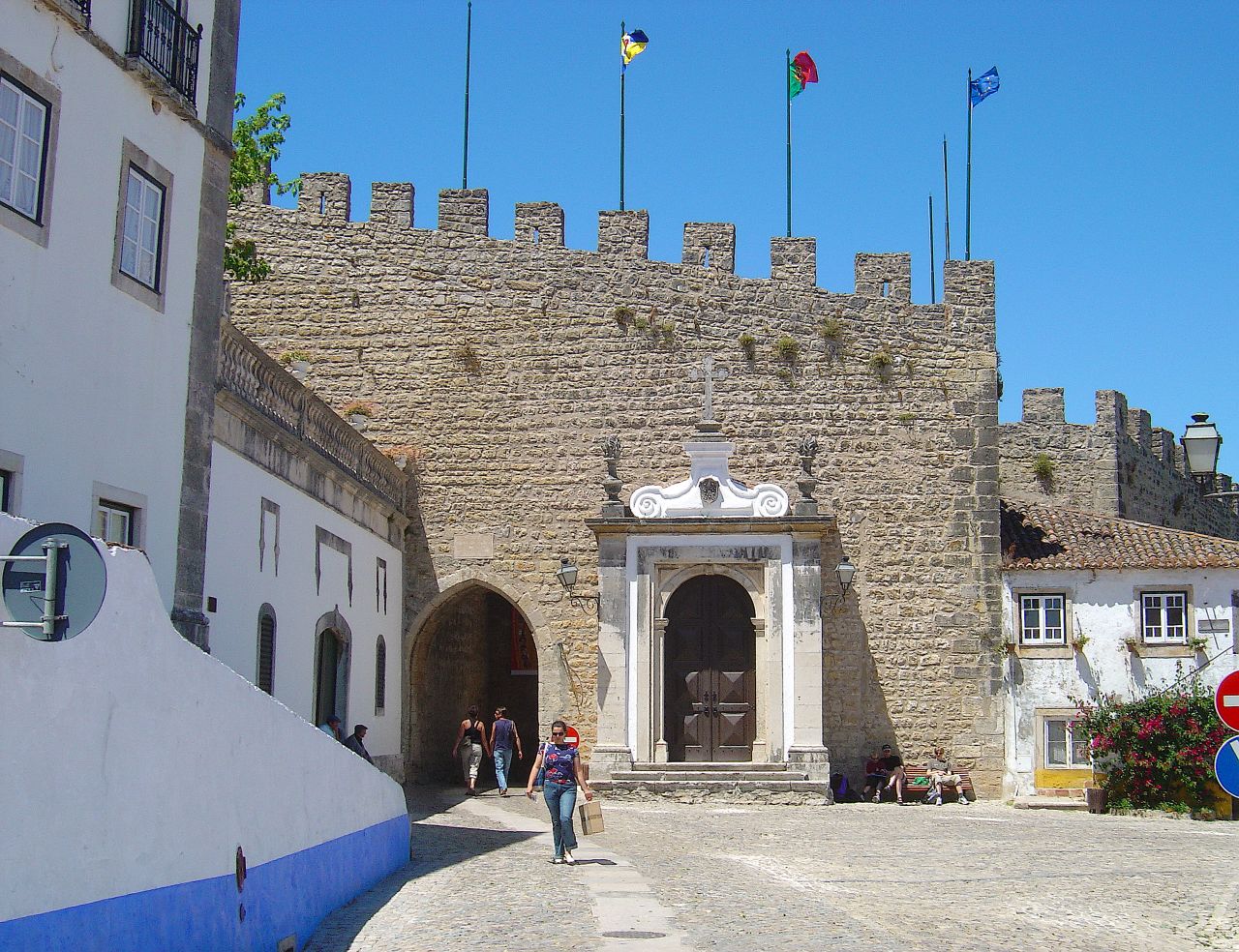
Usually, most visitors enter through Porta da Vila, the main gate on the south side. Inside, it also forms a small chapel covered in 18th century blue and white tiles. Meanwhile, a street musician often plays in the echoing passage.
Things to Do in Óbidos
Rua Direita
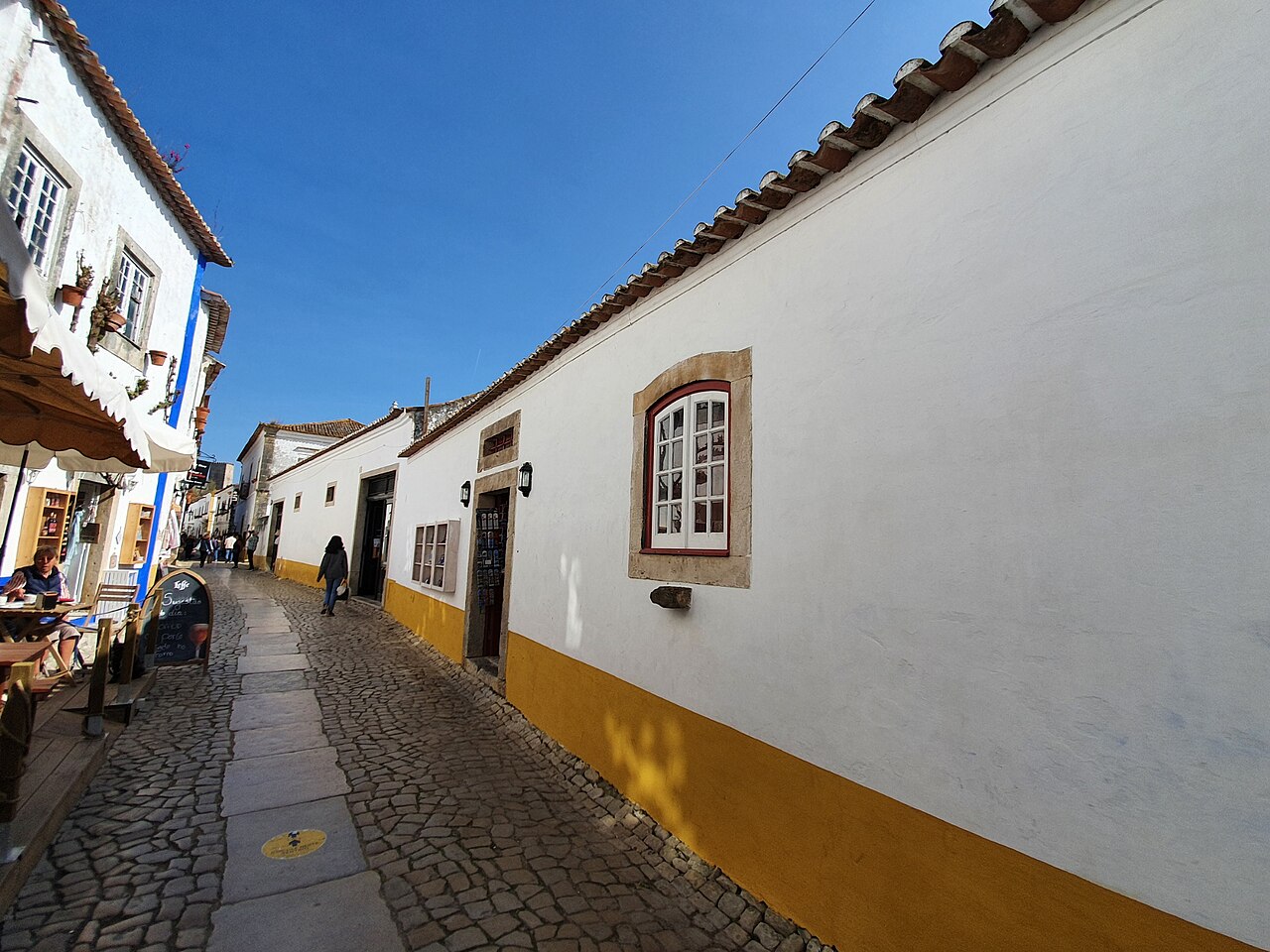
First, Rua Direita is the main street, running from Porta da Vila up to the castle. Along the way, it is also lined with ceramics shops, cafes and stands selling ginjinha. However, it gets busy around midday. So, walk it early or late for the best photos.
The Side Lanes
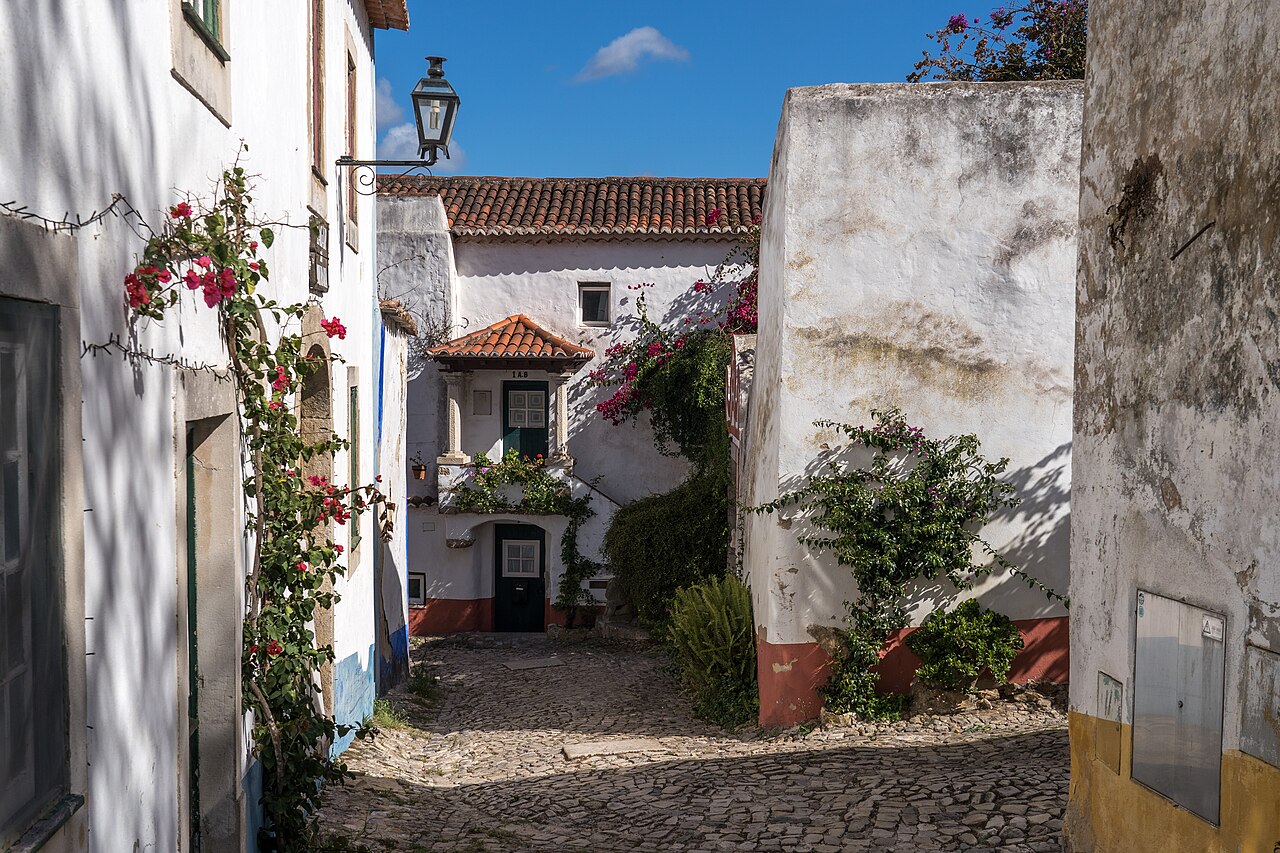
However, step off Rua Direita, and the crowds thin out at once. In fact, the lanes beside it are much quieter. Here, you will also see flower pots on the steps, painted window frames and glimpses of the walls.
Igreja de Santa Maria
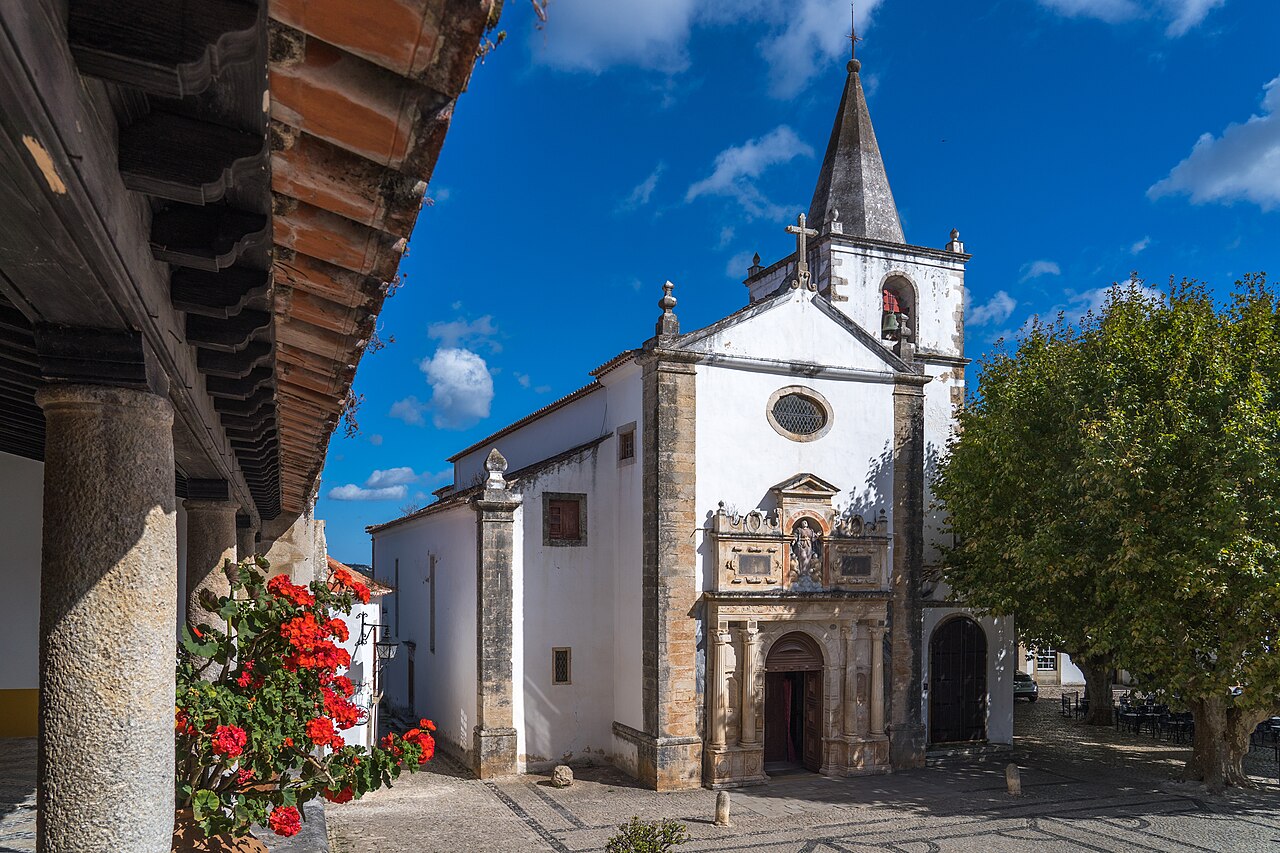
Next, the main church faces a small square in the middle of town. In 1441, the young King Afonso V married his cousin Isabel here, while both were still children. Inside, moreover, the walls are lined with 17th century tiles. Also, the church holds paintings by Josefa de Óbidos, a celebrated painter of the 1600s.
Ginjinha in a Chocolate Cup
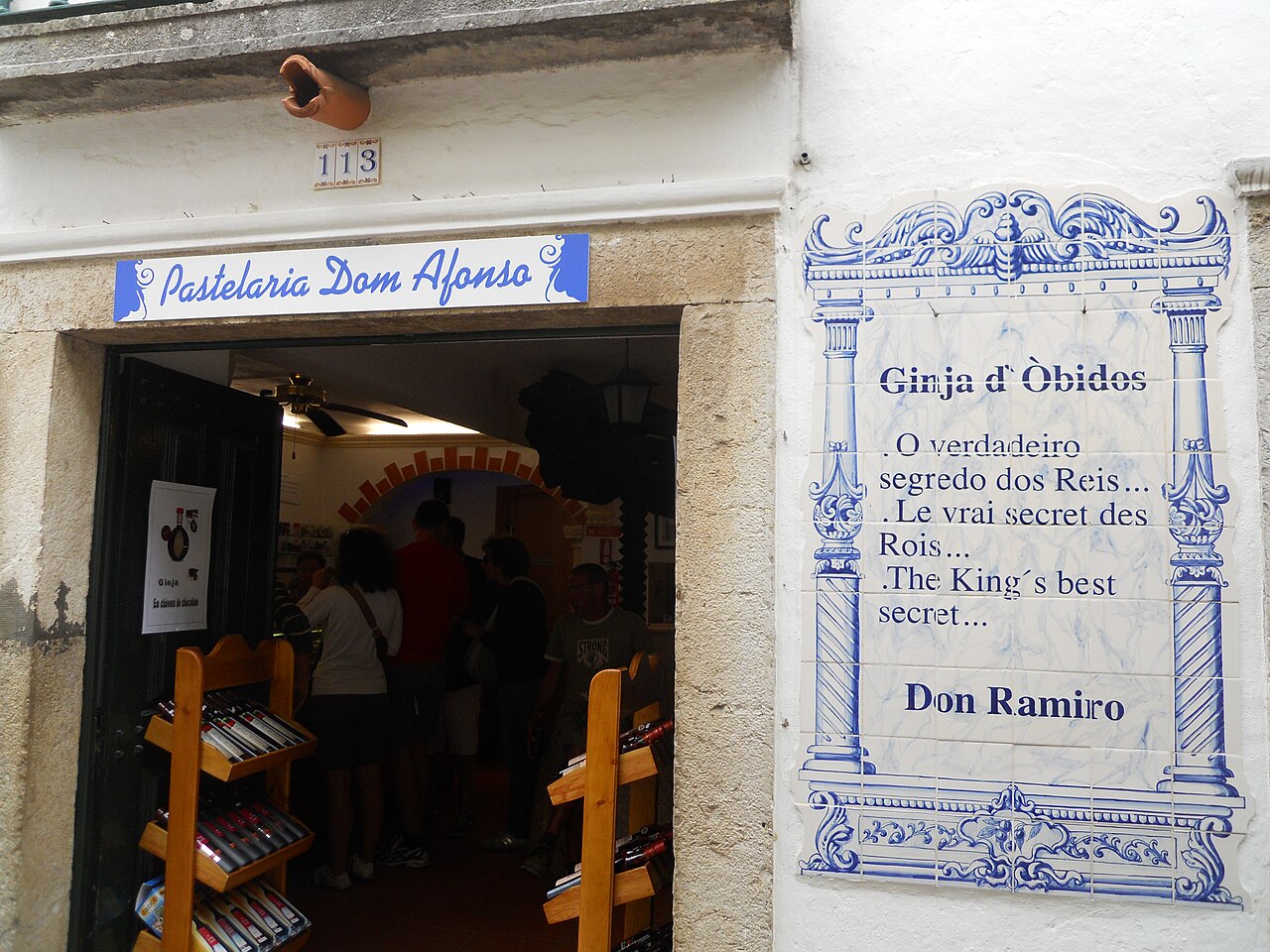
No visit is complete without a shot of ginjinha. Essentially, it is a sweet liqueur made from sour cherries. Here, it is usually served in a small chocolate cup. First, drink the liqueur. Then eat the cup. Generally, stalls along Rua Direita sell it for a couple of euros.
Bookshops and Festivals
A Town of Books
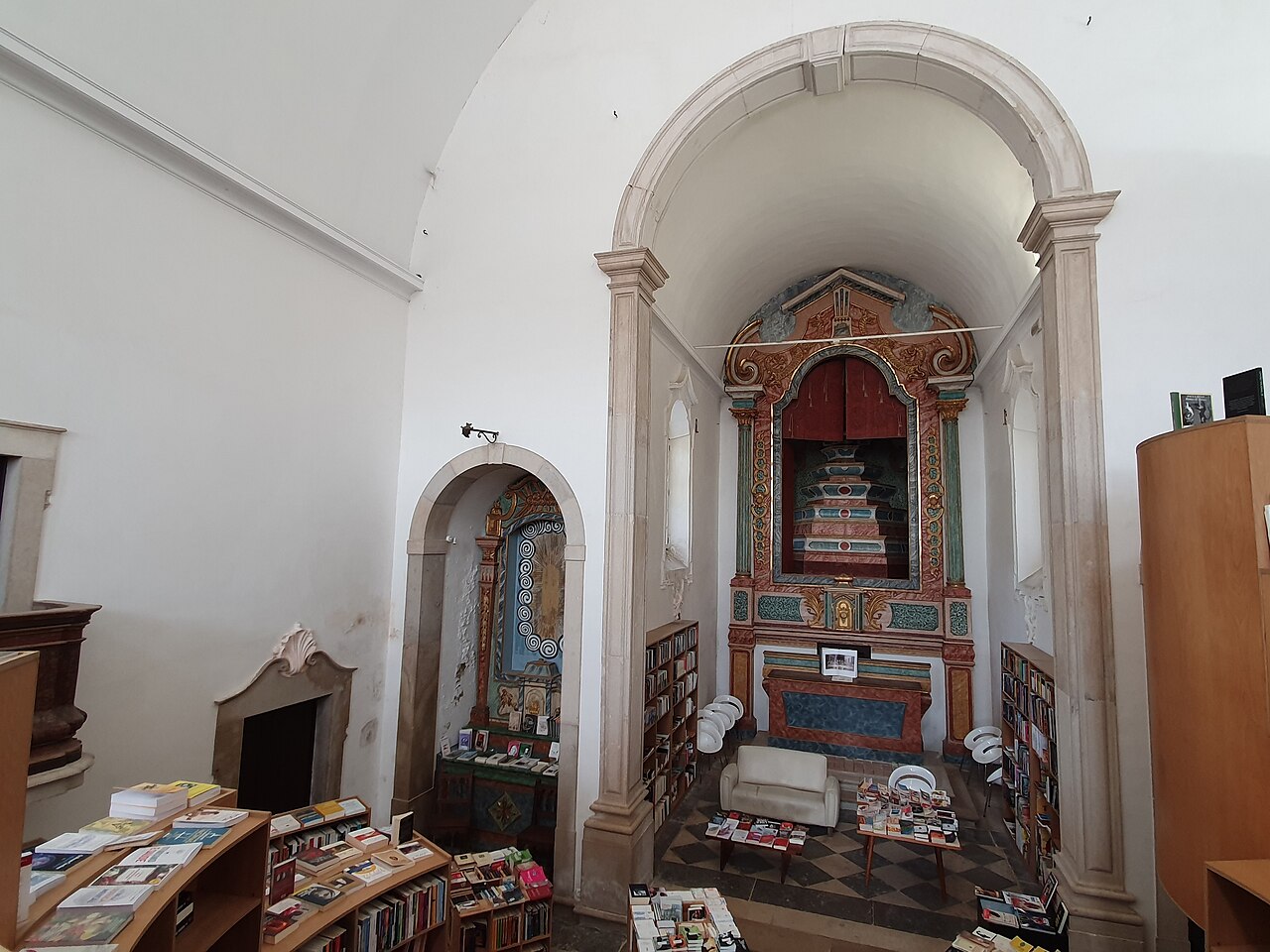
Óbidos has more bookshops than you might expect for its size. Of these, the most famous one, Livraria de Santiago, fills the old Church of Santiago. There, shelves of books now stand beneath the vaulted ceiling. Similarly, other bookshops have popped up in a former market and a wine cellar.
Festivals Through the Year
- International Chocolate Festival: Usually held in spring, with chocolate sculptures and tastings
- Mercado Medieval: A summer market with costumes, jousting, food and music
- FOLIO: An international literary festival each autumn
- Óbidos Vila Natal: A Christmas village and market for families
The Óbidos Aqueduct
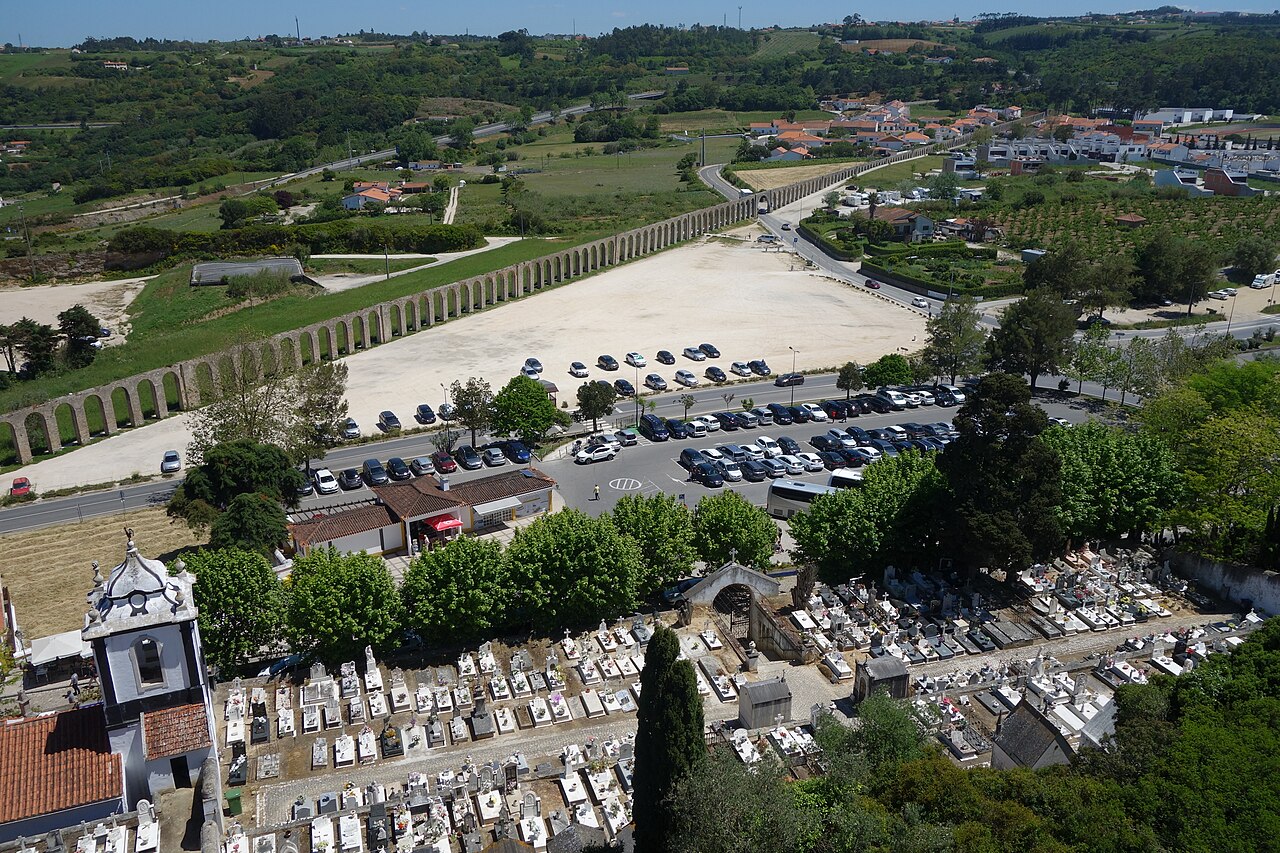
Just outside the walls stands a long stone aqueduct. Originally, it was built in the 16th century to bring water to the town’s fountains. Also, it is an easy stop on the walk from the car parks or bus stop.
One Historical Fact About Óbidos Portugal
Óbidos earned the nickname Town of Queens because King Dinis gave it to Queen Isabel in 1282. After that, the town stayed part of the dowry of Portuguese queens for centuries. Finally, the tradition ended in 1834.
How to Get to Óbidos Portugal
- Bus from Lisbon: Express buses leave from the Campo Grande area and take about an hour. Without a car, this is the easiest option.
- Driving: The drive from Lisbon takes about an hour on the A8 motorway. Then park outside the walls, because cars cannot enter the historic centre.
- Train: Óbidos has a small station, but trains are slow and infrequent. So, the bus is usually better.
Best Time to Visit Óbidos Portugal
Spring and early autumn bring pleasant weather and smaller crowds. Summer, on the other hand, is lively thanks to the medieval market. Still, tour groups fill the town at midday, so arrive early or stay the night. Winter, by contrast, is quiet, apart from the busy Christmas season.
Is Óbidos Portugal Worth Visiting?
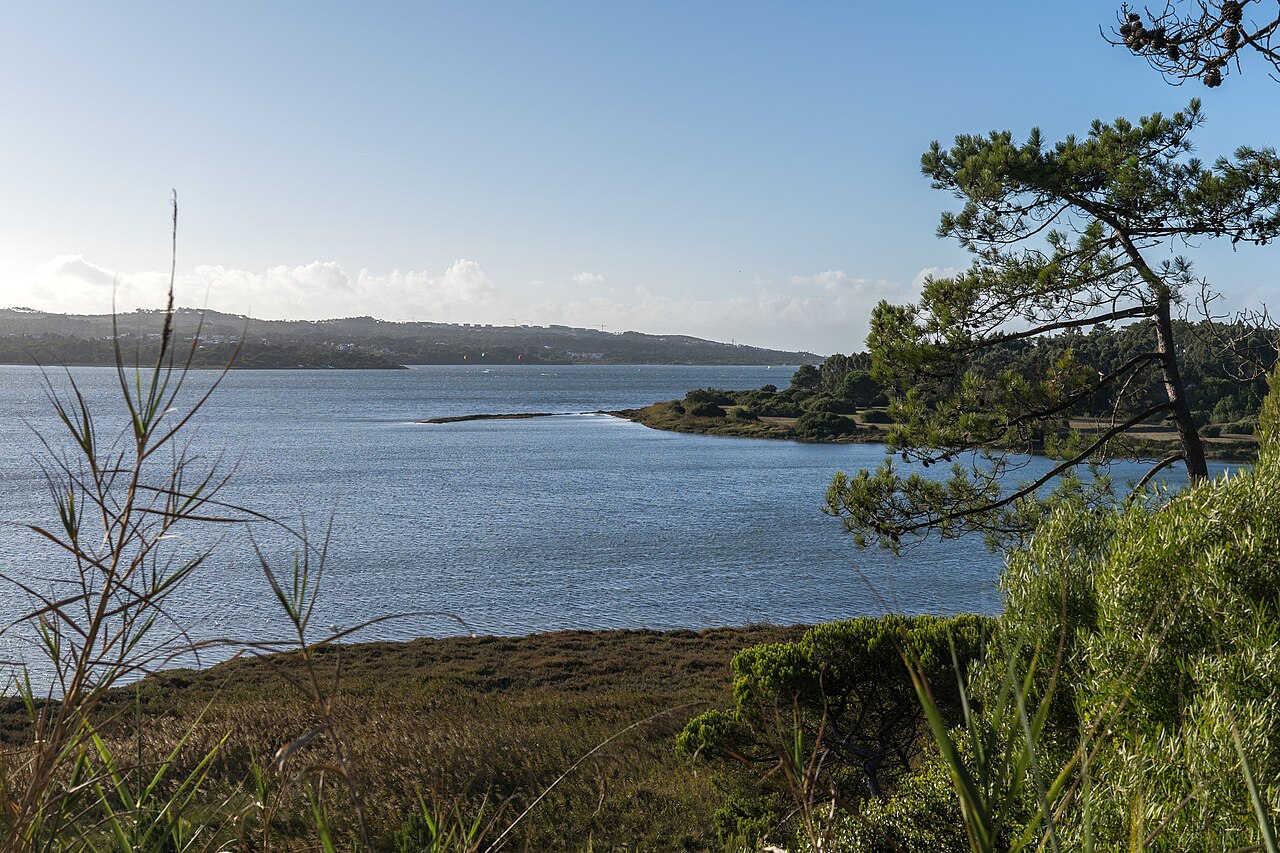
Yes, definitely. Óbidos is one of the most charming small towns in Portugal. Also, it is an easy day trip from Lisbon. For a full day out, combine it with the Óbidos Lagoon or the nearby beaches.
Final Thoughts on Óbidos Portugal
First, walk the walls at sunset. Next, sip ginjinha from a chocolate cup. Then browse the books beneath a church ceiling. Finally, wander the lanes after the tour buses leave. Of course, Óbidos may be small. Even so, it is easy to see why Portugal’s queens treasured it for so long.
Image Credits
Wikimedia Commons
Diego Delso: Castillo de Óbidos, Óbidos, Portugal, 2021-09-09, DD 33, CC BY-SA 4.0

Ana Rita Ferreira 80: Castelo de Óbidos 6, CC BY-SA 4.0

Vitor Oliveira from Torres Vedras, PORTUGAL: Porta da Vila – Óbidos – Portugal (533454323), CC BY-SA 2.0

GualdimG: Rua Direita Óbidos 04, CC BY-SA 4.0

Alexkom000: 2025-09-21 Óbidos, Igreja de Santa Maria, CC BY 4.0

Palickap: Óbidos, muralhas (4), CC BY-SA 4.0

Alexkom000: 2025-09-21 Óbidos 11, CC BY 4.0

Pmk58: Ginjinha di Obidos, CC BY-SA 4.0

GualdimG: Interior Igreja Paroquial de Santiago Obidos 04, CC BY-SA 4.0

FlyingCrimsonPig: Aqueduto de Óbidos, Óbidos (40935700150), CC BY 2.0

LennyAragon: Óbidos, mercado de Natal!, CC BY-SA 4.0

Alexkom000: 2025-09-21 Lagoa de Óbidos 05, CC BY 4.0
