Lijiang Old Town is a maze of cobbled lanes, wooden houses and crystal-clear canals in the mountains of Yunnan. Moreover, above it, the snowy peaks of Jade Dragon Snow Mountain rise into the sky. Meanwhile, willow trees lean over the water, and red lanterns sway in front of the shops. In fact, the town has been home to the Naxi people for centuries, and their culture still shapes daily life. However, it can get busy, so timing matters. Here is how to plan your visit.
Quick Facts About Lijiang Old Town
| Country | China |
| Region | Yunnan Province, southwestern China |
| Known For | Naxi culture, canals and stone bridges, wooden architecture and mountain views |
| UNESCO Status | Old Town of Lijiang, UNESCO World Heritage Site since 1997 |
| History | A trading town on the Tea Horse Road for around 800 years |
| Altitude | About 2,400 meters above sea level |
| Best Time to Visit | March to May and September to November |
| Getting There | Fly to Lijiang airport or take the high-speed train from Kunming |
Where Is Lijiang Old Town?
Geographically, Lijiang lies in northwestern Yunnan, a province in southwestern China. Specifically, it sits on a high plateau about 500 kilometers northwest of Kunming. In addition, it is close to the borders of Tibet and Sichuan. As a result, it is a great gateway to the mountains, gorges and lakes of the region.
Why Visit Lijiang Old Town?
First, the town has a unique water system. Spring water from Black Dragon Pool flows through a network of canals that runs past almost every house. Consequently, UNESCO listed the old town, together with nearby Baisha and Shuhe, as a World Heritage Site in 1997.
Second, Lijiang Old Town is a center of Naxi culture. For example, the Naxi still use Dongba script, one of the few pictographic writing systems in use today. Finally, the surrounding scenery is spectacular. If you loved our guide to Hoi An in Vietnam, you will enjoy this other lantern-lit historic town.
Things to Do in Lijiang Old Town
Get Lost in the Lanes
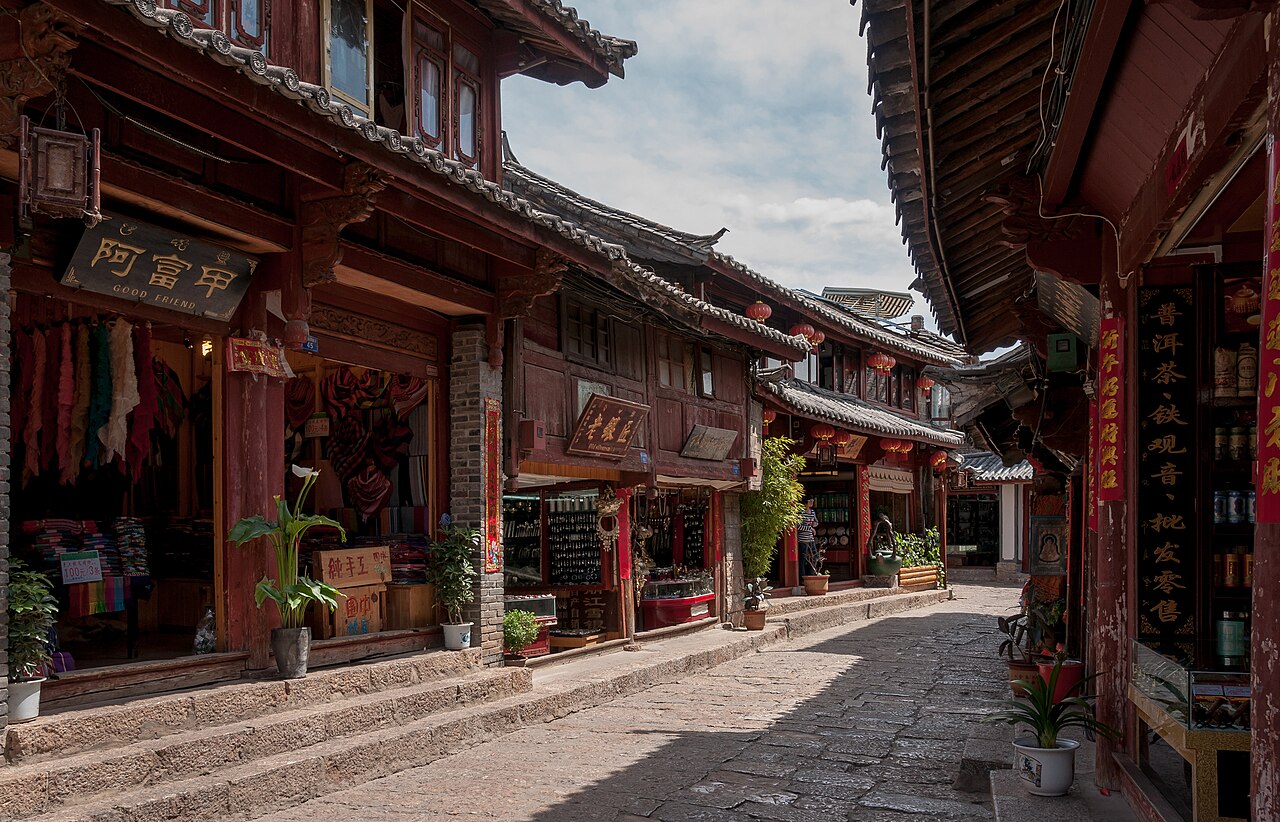
The best way to explore is to wander. Start at Sifang Street, the old market square, and then follow the canals in any direction. Above all, go early in the morning, when the lanes are quiet and locals are sweeping their doorsteps.
Follow the Canals
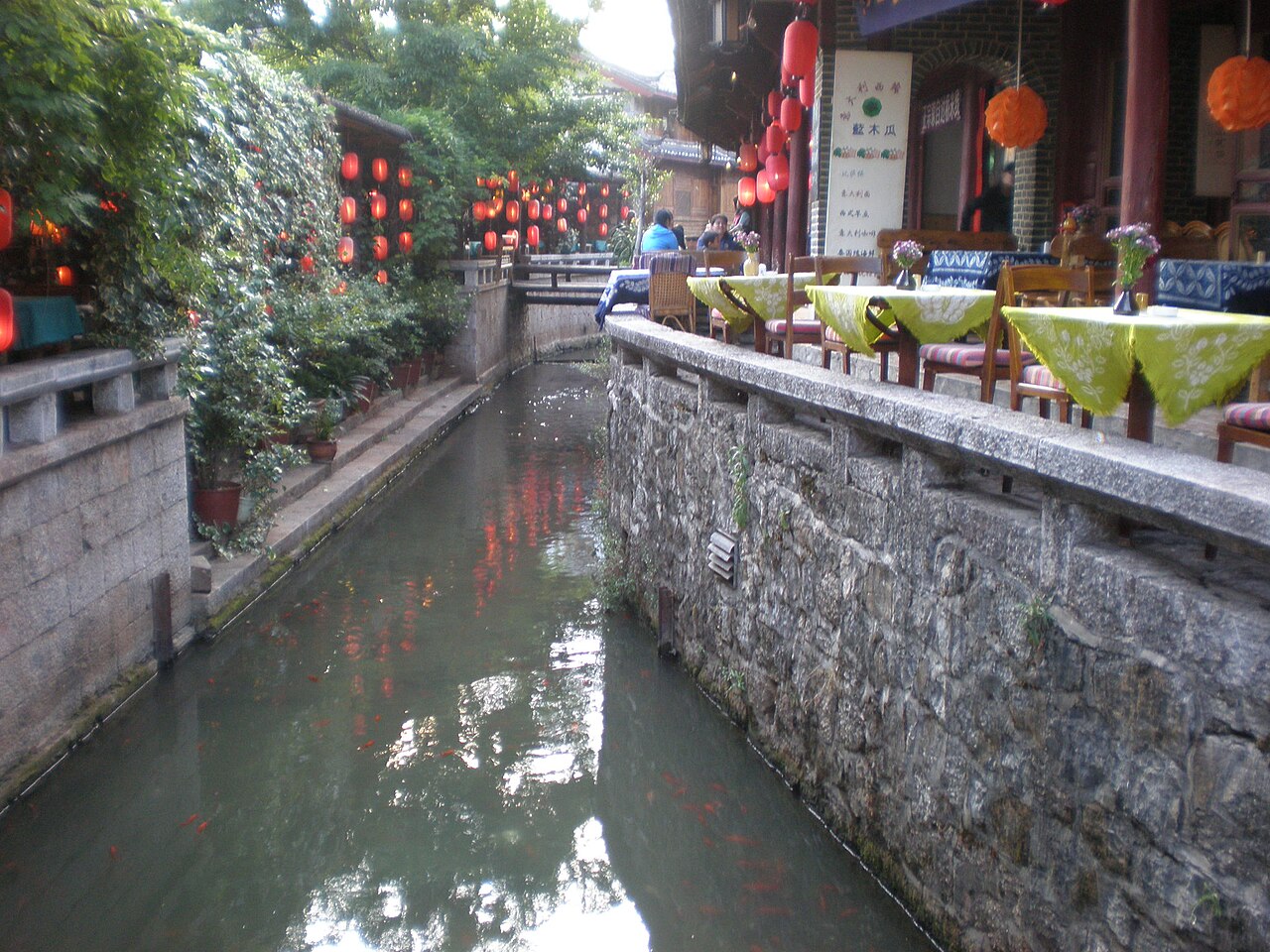
In particular, clear water runs along many streets, crossed by small stone bridges. Traditionally, residents used the water for drinking, washing and cleaning the streets. Similarly, some houses still have three-level wells, where each pool had a different use.
Visit Mu Mansion and Lion Hill
Mu Mansion was the home of the Mu family, who ruled the region for centuries. In fact, its courtyards, halls and gardens are inspired by the Forbidden City in Beijing. Then, climb nearby Lion Hill to the Wangu Pavilion for views over the rooftops and the mountains.
See Black Dragon Pool
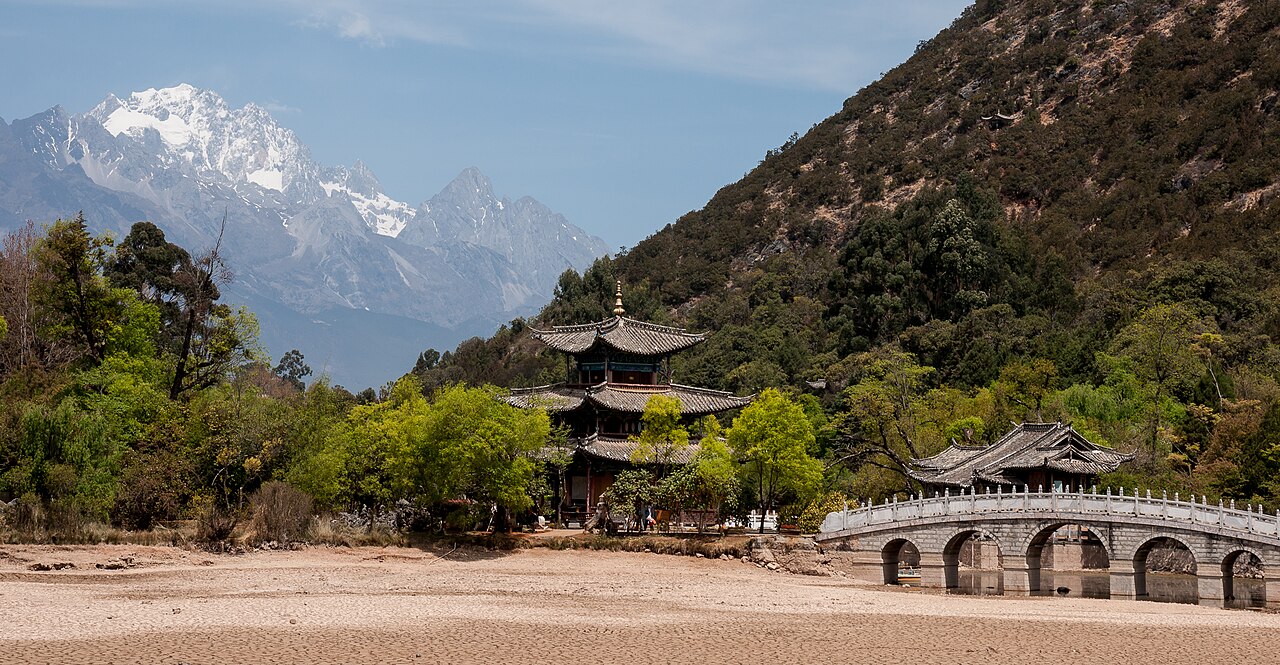
Black Dragon Pool lies just north of the old town. In fact, it offers the classic view of a white marble bridge and pavilion with Jade Dragon Snow Mountain behind. Furthermore, the park contains the Dongba Research Institute, where you can learn about Naxi script.
Listen to Naxi Music
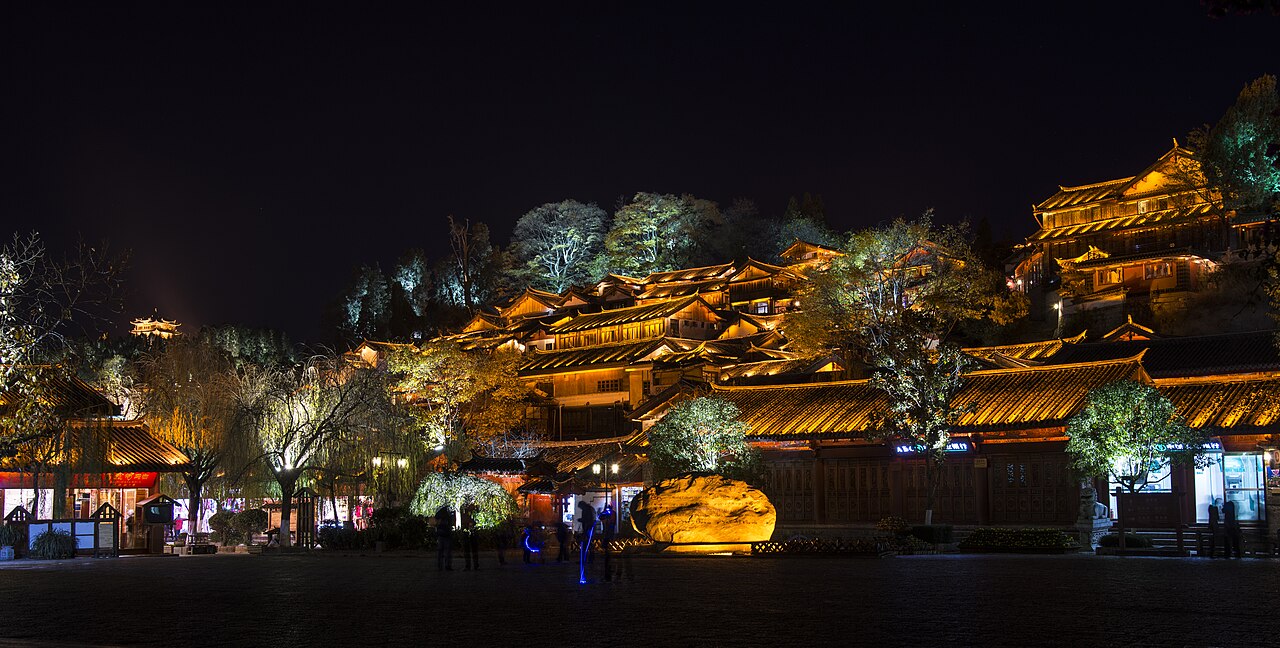
In the evening, local orchestras perform Naxi ancient music, which preserves melodies that are centuries old. Meanwhile, the lanes glow with lanterns, and bars and cafés line the canals.
Day Trips From Lijiang Old Town
Baisha and Shuhe
Baisha is a quiet village with Ming dynasty murals that blend Buddhist, Taoist and Tibetan styles. Similarly, Shuhe is a smaller old town with canals and a more relaxed feel. Both are easy to reach by bicycle or taxi.
Jade Dragon Snow Mountain and Tiger Leaping Gorge
Jade Dragon Snow Mountain rises to more than 5,500 meters. Fortunately, a cable car carries visitors high up the slopes. In addition, Tiger Leaping Gorge, one of the deepest gorges in the world, lies about two hours away and offers a famous two-day hike.

One Historical Fact About Lijiang Old Town
Unusually for a Chinese town, Lijiang never had a city wall. According to local legend, the ruling Mu family refused to build one. The reason is that the character for their name inside a square would form the character for “trapped”. Therefore, the town grew freely around its canals.
How to Get to Lijiang Old Town
Lijiang Sanyi International Airport has flights from major Chinese cities. From there, the old town is about 40 minutes away by taxi or shuttle bus. Alternatively, high-speed trains connect Kunming and Lijiang in about three hours. Once you arrive, the old town is pedestrian-only, so you will explore on foot.
Best Time to Visit Lijiang Old Town
The best time to visit is in spring, from March to May, or in autumn, from September to November. During these months, skies are often clear, and the mountain views are excellent. On the other hand, summer brings rain and big domestic crowds. Also, the town sits at high altitude, so take it easy on your first day.
Is Lijiang Old Town Worth Visiting?
Yes, it is. Lijiang Old Town can feel commercial in the busiest areas, but its canals, Naxi culture and mountain scenery are truly special. Ideally, stay in a courtyard guesthouse and explore early and late in the day. For another beautifully preserved Chinese town, read our guide to Jiufen in Taiwan.
Final Thoughts on Lijiang Old Town
In short, Lijiang is a town of water, wood and mountains. Wander the canals at dawn, listen to ancient Naxi music and gaze at the snowy peaks from Black Dragon Pool. By the end of your stay, you will understand why so many travelers fall for this corner of Yunnan.
Image Credits
Wikimedia Commons
- CEphoto, Uwe Aranas: Lijiang Yunnan Black-Dragon-Pool-01, CC BY-SA 3.0
- CEphoto, Uwe Aranas: Lijiang Yunnan Heritage-shops-in-old-town-01, CC BY-SA 3.0
- BrokenSphere: Old Town of Lijiang canal 2, CC BY-SA 3.0
- chensiyuan: 1 lijiang old town night, CC BY-SA 4.0
- CEphoto, Uwe Aranas: Lijiang Yunnan China Jade-Dragon-Snow-Mountain-01, CC BY-SA 3.0


