
Orchha India is a small town on the banks of the Betwa River where grand Bundela palaces, soaring temples and a row of royal cenotaphs survive almost untouched by time. Once the capital of a powerful kingdom, it is now a peaceful place where vultures circle the domes and pilgrims gather at a temple that treats a god as king.

Quick Facts About Orchha, India
| Country | India |
| Region | Niwari district, Madhya Pradesh (Bundelkhand) |
| Known For | Bundela palaces, temples, riverside chhatris |
| UNESCO Status | On the Tentative List |
| Founded | 1531, by Rudra Pratap Singh |
| Best Time to Visit | October to March |
| Time Needed | 1 to 2 days |
| Continent | Asia |
Where Is Orchha, India?
Orchha is in the Niwari district of Madhya Pradesh, in the historic Bundelkhand region of central India. It lies on the Betwa River, about 18 kilometres from Jhansi in Uttar Pradesh and 126 kilometres from Gwalior.
Why Visit Orchha, India?
First, Orchha offers some of the finest Rajput and Mughal-influenced architecture in India without the crowds of better-known sites. Palaces, temples and cenotaphs are packed into a compact area, so you can explore much of it on foot.
In addition, the setting is lovely. The Betwa River flows past rocky banks and forest, and the skyline of spires and domes is especially memorable at sunrise and sunset. Finally, Orchha is easy to reach from Jhansi, which is on a major railway line.
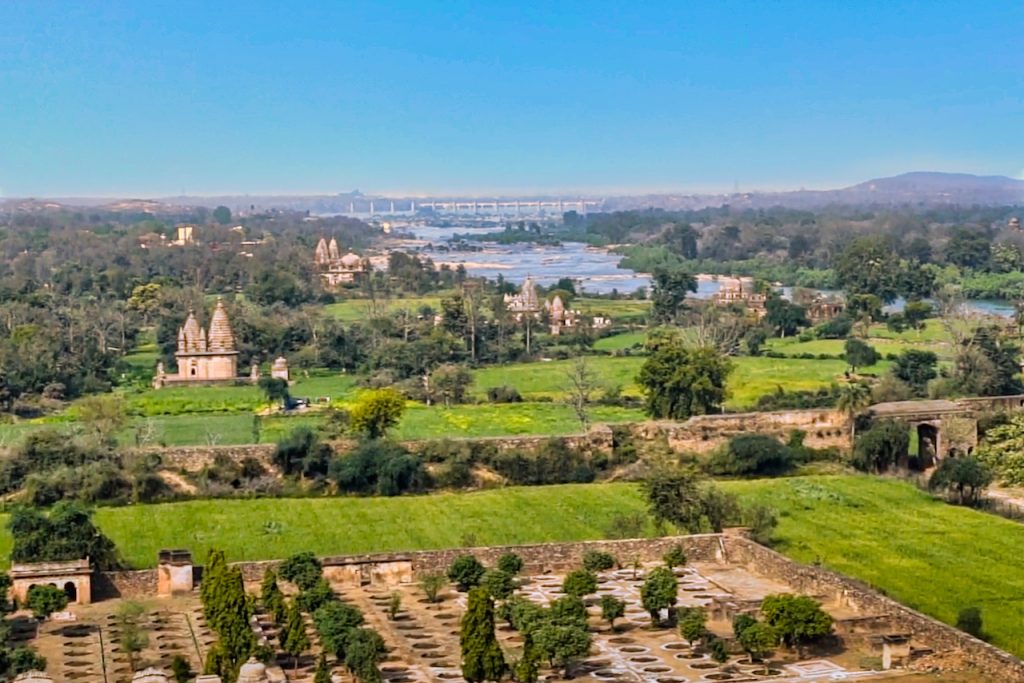
The Orchha Fort Complex
Raja Mahal
The fort complex stands on an island in the Betwa River and consists of several connected buildings built at different times. The Raja Mahal is one of the most noteworthy, and its inner rooms still hold colourful murals of religious and court scenes.
Jahangir Mahal
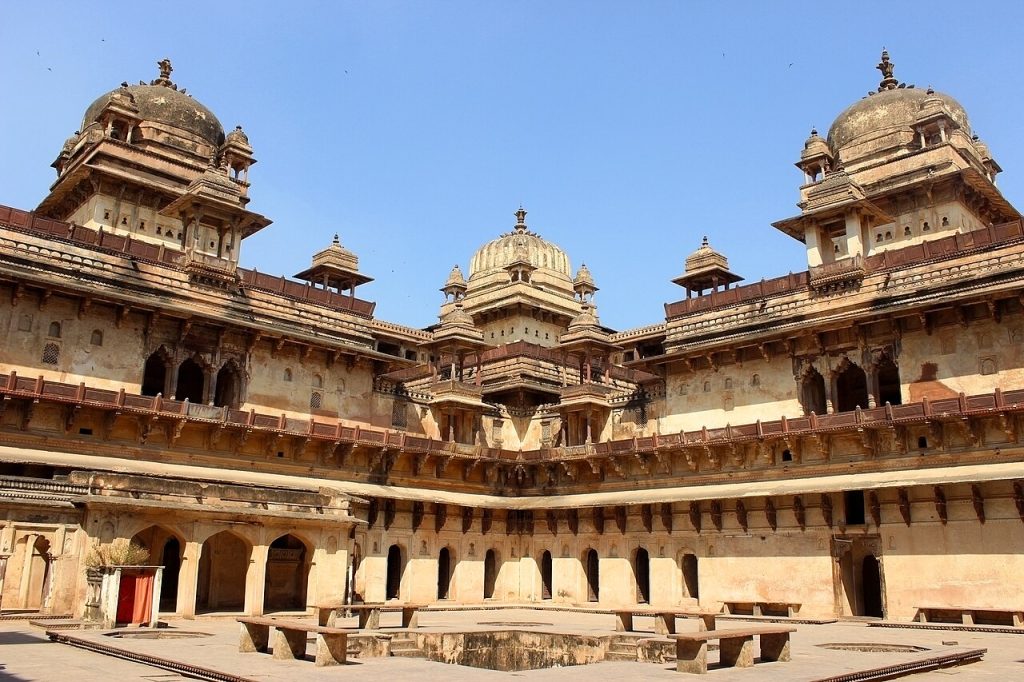
The Jahangir Mahal is the showpiece of the fort. It was built by Bir Singh Deo, one of Orchha’s best known rulers, to welcome the Mughal emperor Jahangir. Its tiers of balconies, terraces and domes rise around a large central courtyard, and the views from the upper levels are superb.
Sound and Light Show
In the evening, a sound and light show at the fort tells the story of the Bundela kings. It is a pleasant way to end a day of sightseeing.
Temples of Orchha
Orchha’s temples are as impressive as its palaces. The Ram Raja Temple is unique because Lord Rama is worshipped here as a king rather than only as a god. Even today, police guards give him a guard of honour every day. The temple has an almost entirely plain exterior, relieved by projecting windows and a line of small domes along the top.
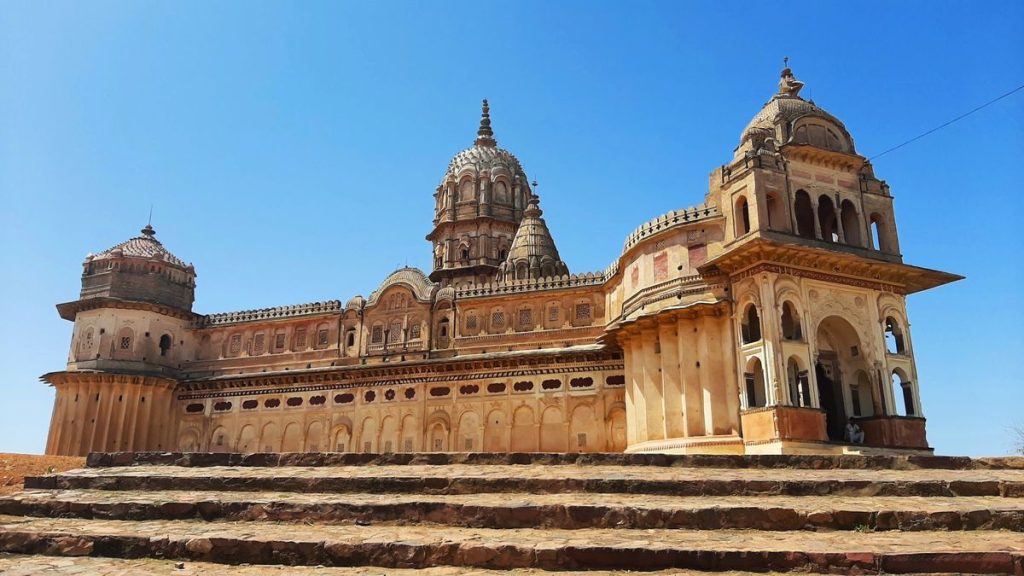
Next door, the Chaturbhuj Temple, built by Queen Ganesh Kunwar, towers over the town with tall spires. Climb its steep stairs for sweeping views over Orchha. Meanwhile, the Lakshmi Narayan Temple, on a hill west of town, is known for its fine wall paintings.
The Chhatris and the Betwa River
The Royal Chhatris
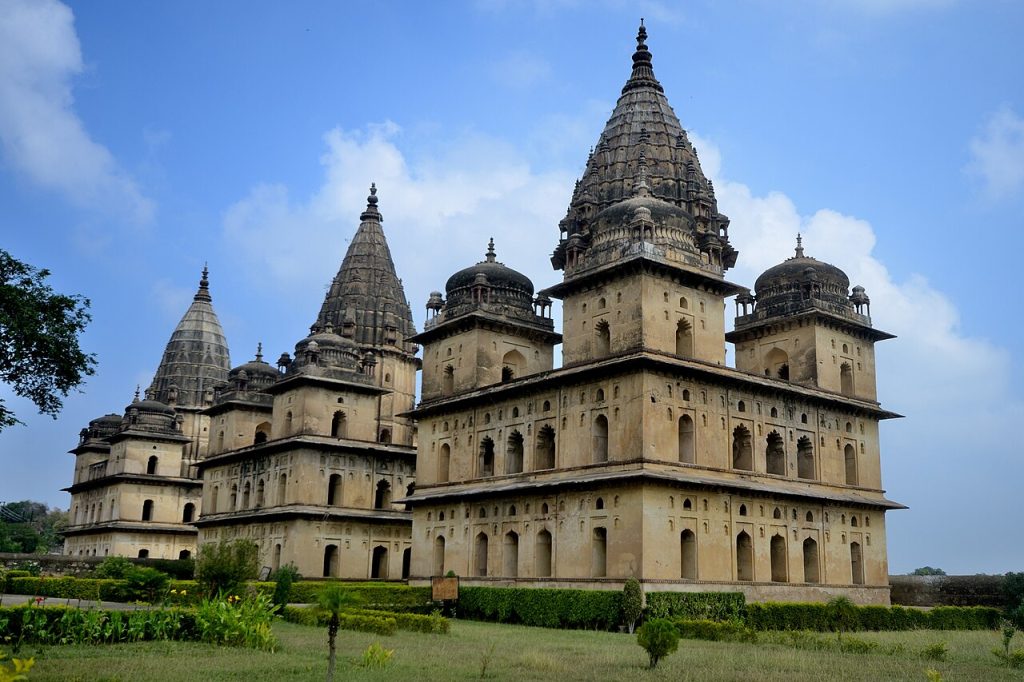
Along the southern bank of the Betwa stand the chhatris, cenotaphs built in memory of Orchha’s rulers. These tall, domed memorials look especially dramatic at sunset, when they glow against the sky and reflect in the river.
Watching the Vultures
Look up while you are there, because the chhatris and palaces are known as nesting sites for vultures, which have become rare in much of India.
Along the Betwa River
Orchha Nature Reserve
Across the river, the Orchha Nature Reserve offers walking trails, birdwatching and quiet spots by the water.
River Activities
When water levels allow, local operators offer rafting and boat trips on the Betwa. Alternatively, simply sit on the rocks near the bridge and watch daily life by the river.
One Historical Fact About Orchha, India
Orchha was founded in 1531 by the Bundela chief Rudra Pratap Singh, who became its first king and also built the Fort of Orchha. Today, Lord Rama is still regarded as the only king of Orchha.
How to Get to Orchha, India
The easiest way to reach Orchha is through Jhansi, which has excellent rail connections, including fast trains from Delhi and Agra. From Jhansi railway station, a taxi or auto-rickshaw takes around 30 minutes to Orchha. The nearest airport is in Gwalior, roughly 126 kilometres away.
Best Time to Visit Orchha, India
The best time to visit Orchha is from October to March, when the weather is cool and dry. April to June is very hot, while the monsoon from July to September brings rain and green landscapes. In particular, early mornings and late afternoons are ideal for photography.
Is Orchha, India Worth Visiting?
Yes, Orchha is well worth a visit. It combines palaces, temples and riverside scenery in one peaceful town. Moreover, its proximity to Jhansi makes it easy to add to a trip through central or northern India.
Final Thoughts
Orchha India feels like a kingdom paused in time. Explore the Jahangir Mahal, join pilgrims at the Ram Raja Temple, climb the Chaturbhuj Temple and watch the sun set over the chhatris. Consequently, it is one of the most rewarding stops in central India.
Image Credits
Wikimedia Commons
- Orchha Chhatris on the Betwa: Photo by Kartikr.naturephotography via Wikimedia Commons (CC BY-SA 4.0)
- Aerial View of Orchha: Photo by Ms Sarah Welch via Wikimedia Commons (CC0)
- Jahangir Mahal, Orchha: Photo by Suyash Dwivedi via Wikimedia Commons (CC BY-SA 4.0)
- Lakshmi Narayan Temple, Orchha: Photo by SpeakingArch via Wikimedia Commons (CC BY-SA 4.0)
- Royal Chhatris of Orchha: Photo by Sharvarism via Wikimedia Commons (CC BY-SA 4.0)