
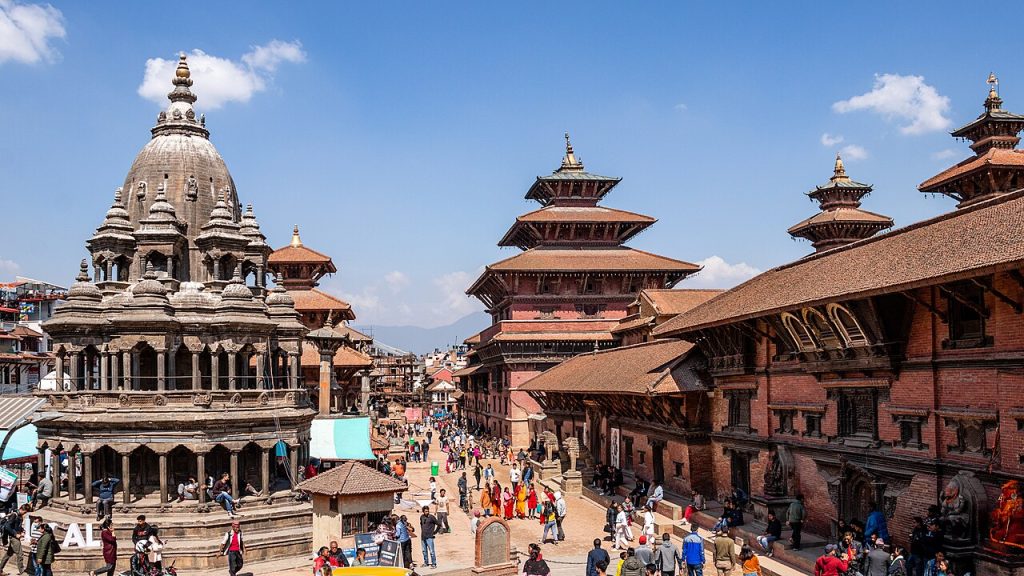
Patan Nepal, also known as Lalitpur, is one of the three royal cities of the Kathmandu Valley and arguably the most refined. Its Durbar Square is packed with tiered temples and a stone Krishna temple, while quiet courtyards hide Buddhist monasteries and workshops where artisans still cast bronze statues. It feels calmer than central Kathmandu, yet it is only a short ride away.
Quick Facts About Patan, Nepal
| Country | Nepal |
| Region | Lalitpur, Kathmandu Valley |
| Known For | Patan Durbar Square, Newar architecture, Buddhist monasteries, metalwork |
| UNESCO Status | Part of the Kathmandu Valley World Heritage Site (1979) |
| Founded | Ancient city; flourished under the Malla kings (12th to 18th century) |
| Best Time to Visit | October to November, or March to April |
| Time Needed | 1 to 2 days |
| Continent | Asia |
Where Is Patan, Nepal?
Patan, officially Lalitpur, lies in the south-central part of the Kathmandu Valley at an altitude of about 1,350 metres. It sits just south of Kathmandu, across the Bagmati River, and is the fourth most populous city in Nepal.
Why Visit Patan, Nepal?
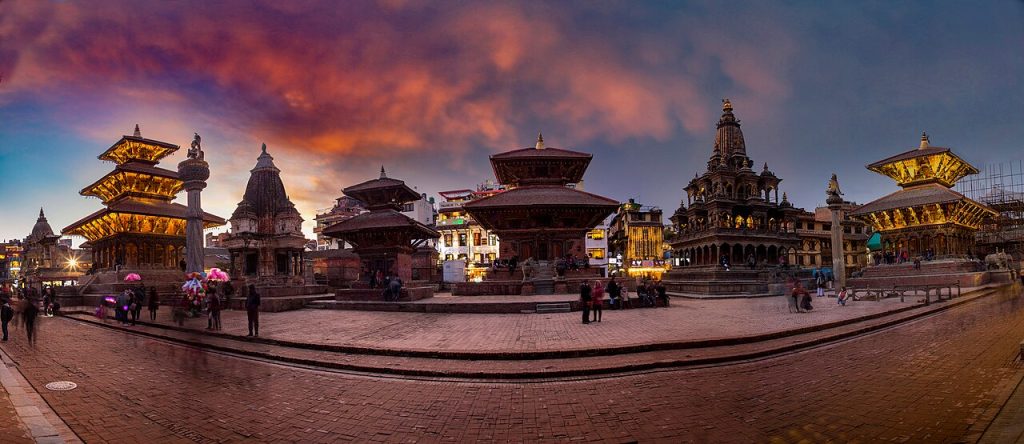
First, Patan Durbar Square is one of the finest collections of Newar architecture anywhere. Temples, palaces and courtyards stand side by side, many decorated with intricate wood and stone carvings.
In addition, the city has a strong tradition of arts and crafts, especially metalwork and woodcarving. Finally, Patan is easy to explore on foot, and its back streets reveal hidden shrines, water spouts and peaceful monastery courtyards.
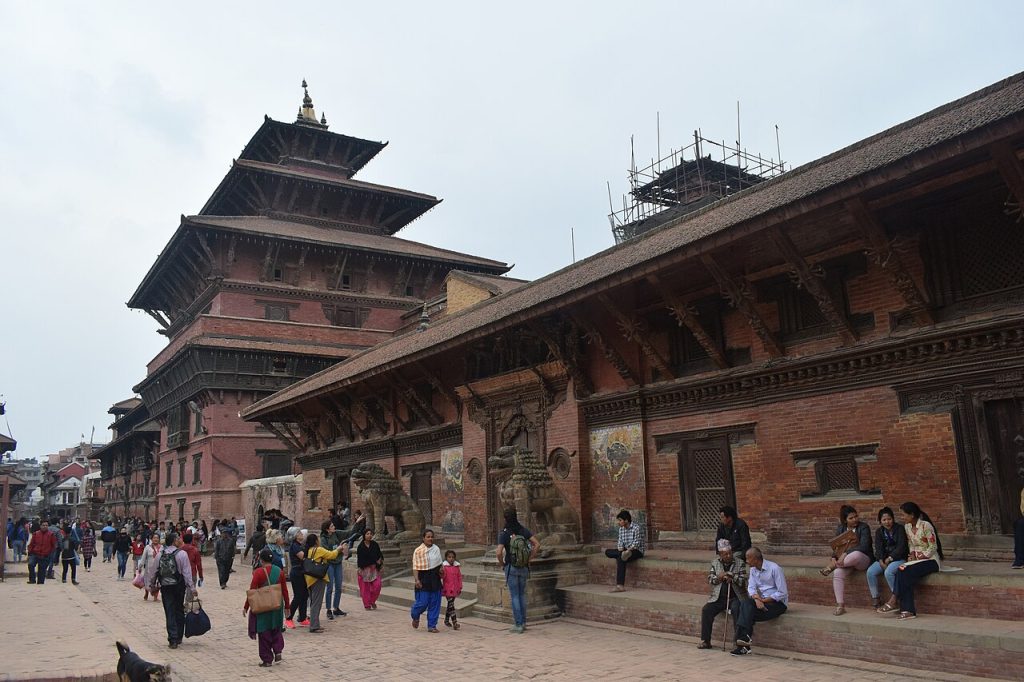
Patan Durbar Square
Krishna Mandir
Krishna Mandir, built in 1637 by King Siddhi Narsingh Malla, is the most famous monument on the square. Unlike the pagoda-style temples around it, it is made of stone in the shikhara style, with carvings that illustrate scenes from the Mahabharata and Ramayana.
The Royal Palace and Patan Museum
The old royal palace faces the square with a series of courtyards, including the Sundari Chowk with its carved royal bath. Part of the palace houses the Patan Museum, widely regarded as one of the best museums in Nepal, with a superb collection of religious art.
Pagoda Temples
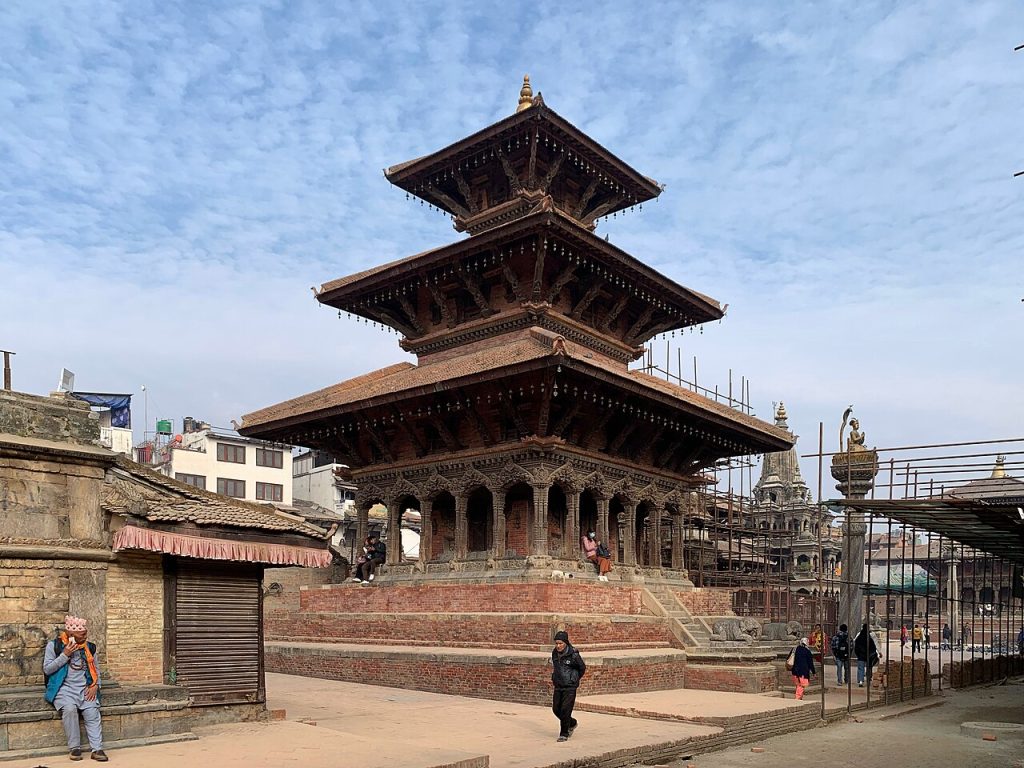
Several multi-tiered pagoda temples rise around the square, their roofs supported by carved wooden struts. Many were damaged in the 2015 earthquake and have since been carefully restored.
The Golden Temple
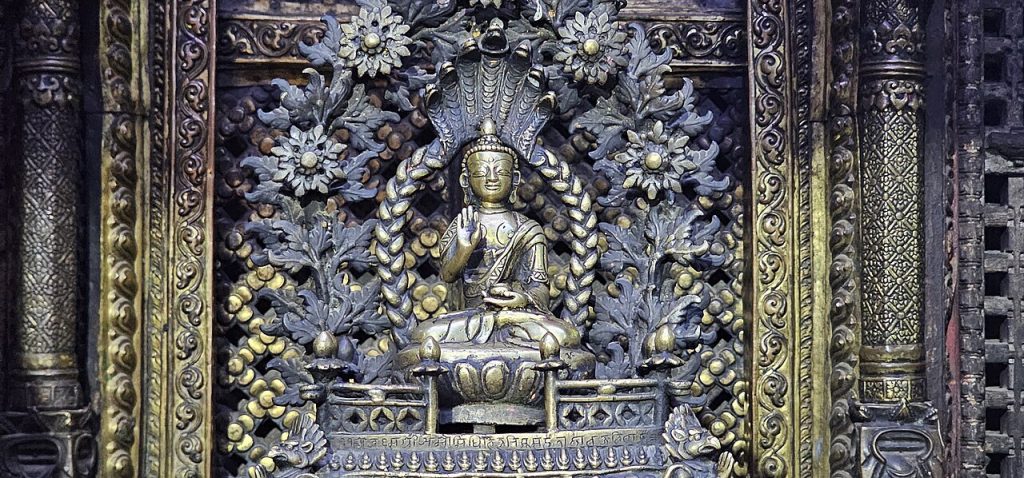
Just north of Durbar Square, Hiranya Varna Mahavihar, known locally as the Golden Temple, is a Buddhist monastery hidden inside a quiet courtyard. Its three-tiered facade glitters with gilded metal, and the courtyard is filled with prayer wheels, bells and statues.
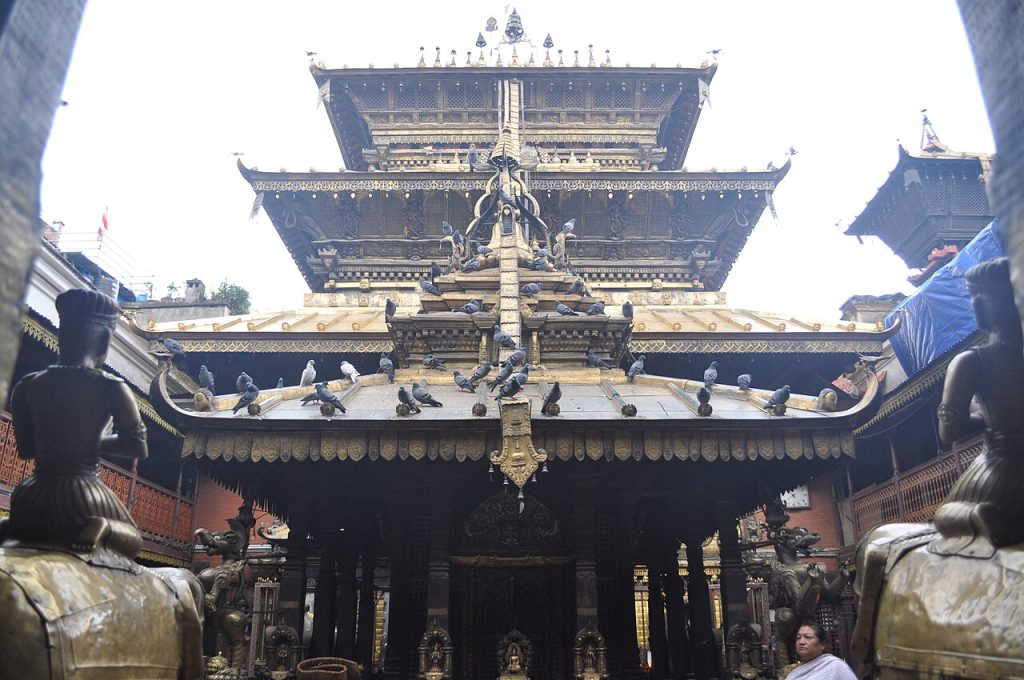
Inside, ornate shrines display the skill of Patan’s metalworkers. Remove your shoes and any leather items before entering, and walk clockwise around the main shrine, as is the local custom.
Courtyards, Crafts and Temples Beyond the Square
Mahabuddha Temple
The Temple of a Thousand Buddhas
South-east of the square, the Mahabuddha Temple is covered in terracotta tiles, each showing an image of the Buddha. It is tucked into a narrow courtyard, so look up to take it all in.
Metalwork Shops
The surrounding lanes are lined with workshops selling bronze and copper statues, many made using traditional lost-wax casting methods.
Kumbheshwar Temple
North of the centre, Kumbheshwar Temple is one of the few five-tiered pagoda temples in the valley. Its sacred pond is believed to be linked to a holy lake in the Himalaya.
Ashoka Stupas
At the edges of the old city stand four ancient stupas, said to have been built during a visit by the Mauryan emperor Ashoka. They mark the cardinal points of the city.
One Historical Fact About Patan, Nepal
Patan is historically known as Yala in the Newar language. The Mauryan emperor Ashoka is said to have visited around 249 BC and erected four stupas at the city’s cardinal points. Later, Patan flourished under the Malla kings between the 12th and 18th centuries, when most of its great monuments were built.
How to Get to Patan, Nepal
Tribhuvan International Airport in Kathmandu is the gateway to Nepal. From central Kathmandu or Thamel, a taxi to Patan Durbar Square takes about 20 to 30 minutes, depending on traffic. Local buses and microbuses also run between the two cities. Visitors pay an entry fee to enter the Durbar Square area.
Best Time to Visit Patan, Nepal
The best times to visit are October and November, when skies are clear after the monsoon, and March and April, when the weather is warm and flowers bloom. Winter is cool and dry but can be hazy. The monsoon, from June to September, brings heavy rain, although the temples look lush and fresh.
Is Patan, Nepal Worth Visiting?
Yes, Patan is well worth visiting. It offers some of the finest architecture and craftsmanship in the Kathmandu Valley in a calm, walkable setting. Moreover, the Patan Museum alone makes the trip worthwhile.
Final Thoughts
Patan Nepal is a city of artists, temples and quiet courtyards. Explore Durbar Square, visit the Patan Museum, step into the Golden Temple and wander the lanes of metalworkers. In short, it is an essential stop on any trip to the Kathmandu Valley.
Image Credits
Wikimedia Commons
- Patan Durbar Square: Photo by Bijay Chaurasia via Wikimedia Commons (CC BY-SA 4.0)
- Patan Durbar Square in the Afternoon: Photo by Dolon Prova via Wikimedia Commons (CC BY-SA 4.0)
- Temple in Lalitpur Durbar Square: Photo by Chainwit. via Wikimedia Commons (CC BY-SA 4.0)
- Golden Temple (Hiranya Varna Mahavihar): Photo by Megh shakya via Wikimedia Commons (CC BY-SA 4.0)
- Shrine at Hiranya Varna Mahavihar: Photo by Nabin K. Sapkota via Wikimedia Commons (CC BY-SA 4.0)
- Patan Durbar Square in the Evening: Photo by Mithunkunwar9 via Wikimedia Commons (CC BY-SA 4.0)