Inside thick city walls, whitewashed lanes lead past blue doors, carpet shops and bakeries scented with dates and honey. At the center rises one of the oldest mosques in the Islamic world. This is Kairouan Tunisia, a holy city with more than 1,300 years of history. Yet, despite its fame, it remains calm and refreshingly free of crowds. So, read on to discover what makes this medina such a rewarding stop.
Kairouan Tunisia Quick Facts
| Country | Tunisia |
| Region | Kairouan Governorate, central Tunisia |
| Known For | The Great Mosque, the medina and handmade carpets |
| UNESCO Status | World Heritage Site since 1988 |
| Founded | 670 CE by Uqba ibn Nafi |
| Best Time to Visit | March to May and October to November |
| Getting There | Shared taxi or bus from Tunis or Sousse |
| Time Needed | One full day, or a night to enjoy the evening medina |
| Continent | Africa |
Where Is Kairouan Tunisia?
The city lies on a flat inland plain in central Tunisia. It is about 150 kilometers south of Tunis and roughly 60 kilometers west of the coastal city of Sousse. In fact, its position away from the sea was deliberate. Early Arab leaders wanted a base safe from naval attack, yet close enough to the coast for trade.
Today, it is the capital of Kairouan Governorate. The modern town surrounds the walled medina, which holds most of the sights.
Why Visit Kairouan Tunisia?
First, history is everywhere. The city was the first great Islamic capital of North Africa, called Ifriqiya at the time. For centuries, it was a center of learning, law and religion. As a result, many Muslims regard it as one of the holiest cities in the Islamic world.
Second, the medina feels authentic. Unlike some busy resort towns, life here moves at a local pace. For example, you will see artisans knotting carpets, men drinking mint tea and children running through narrow lanes. Finally, it is easy to combine with other highlights, such as the Roman amphitheater at El Djem.
Things to Do in Kairouan Tunisia
Visit the Great Mosque
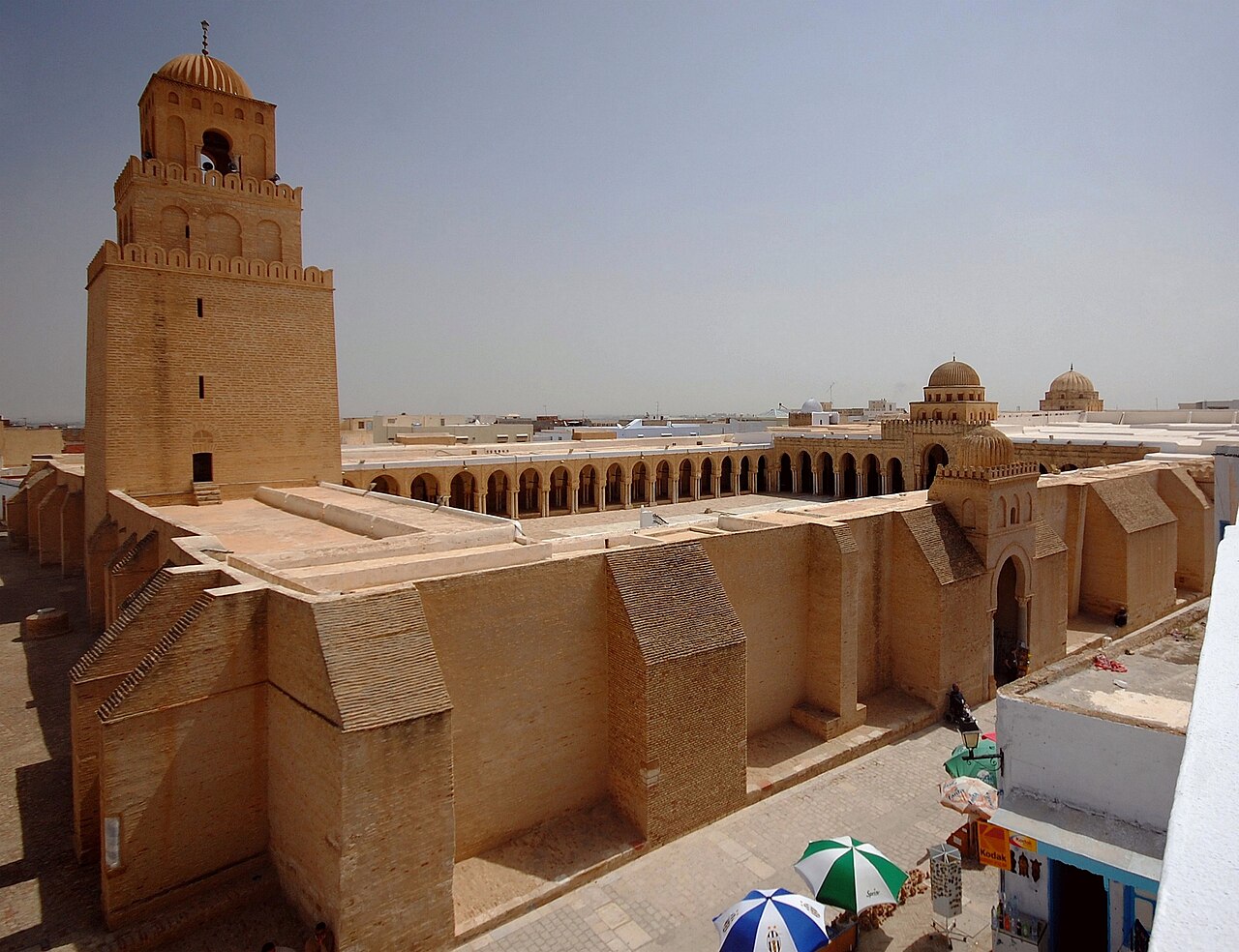
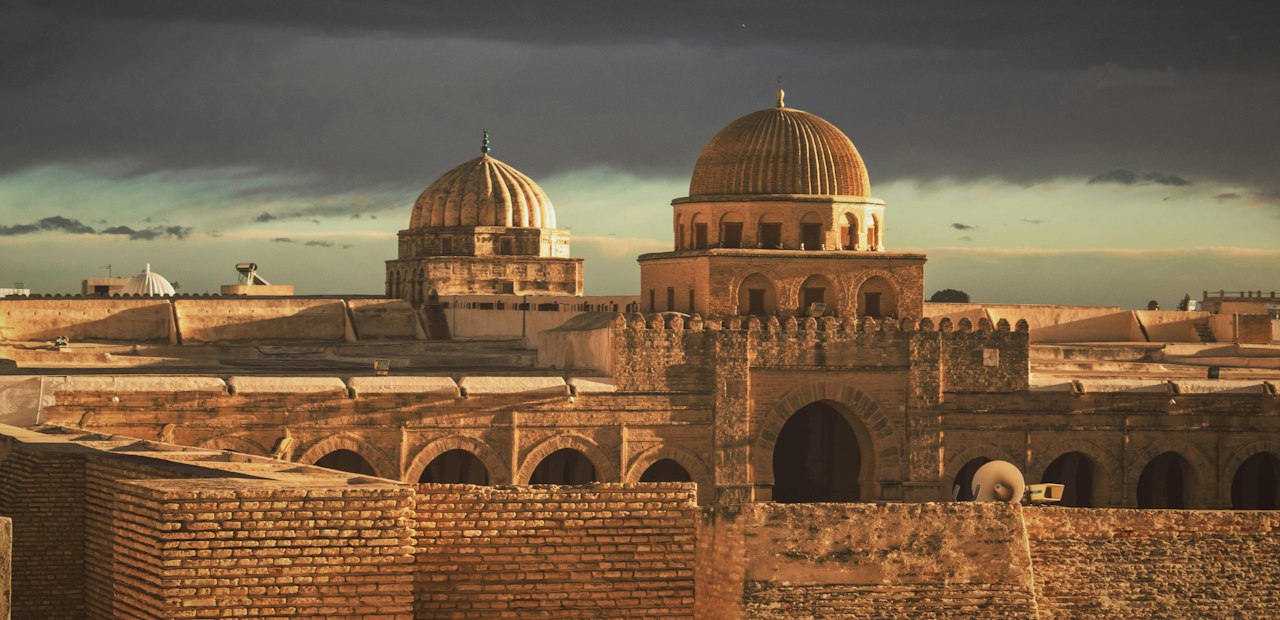
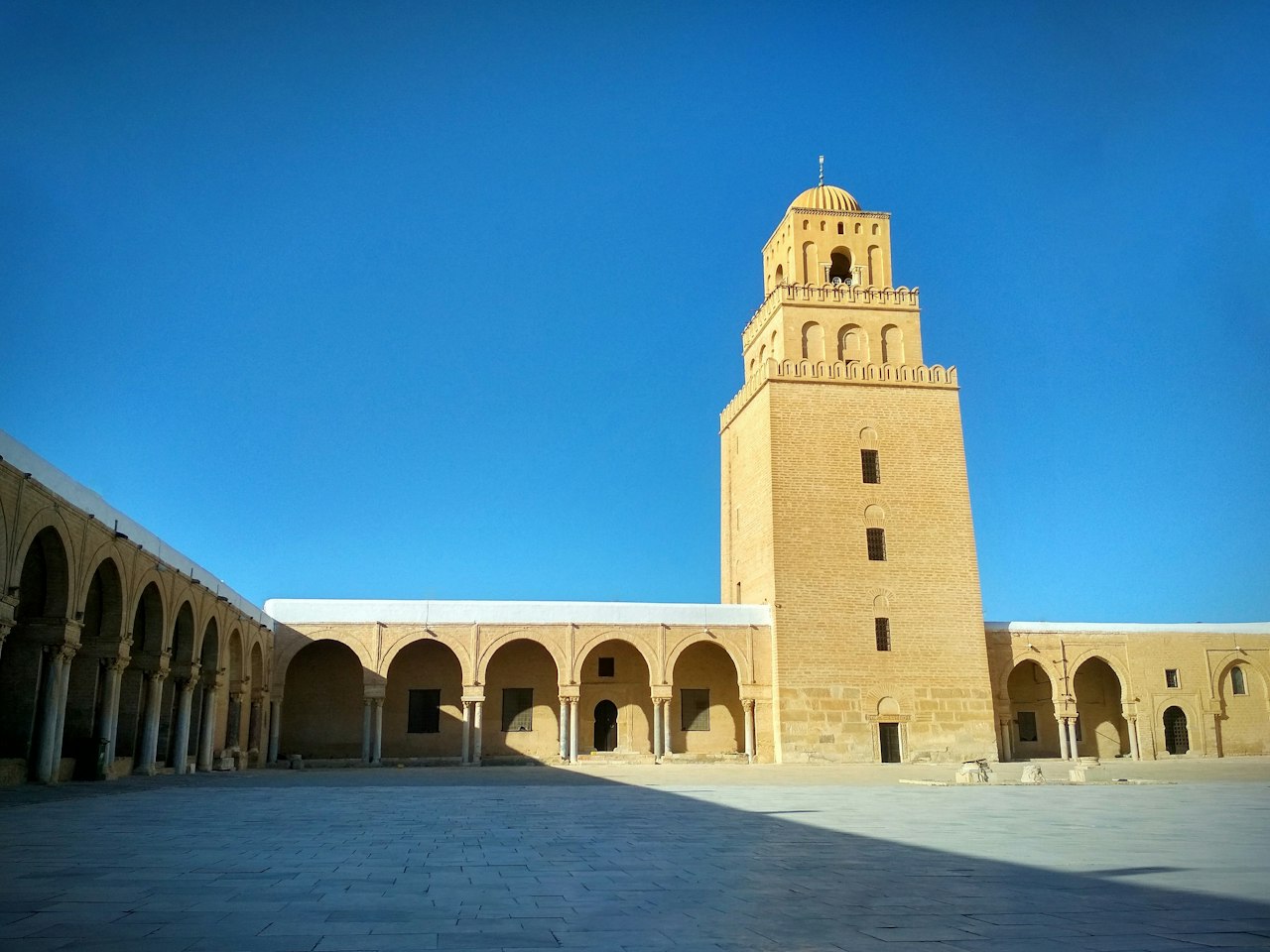
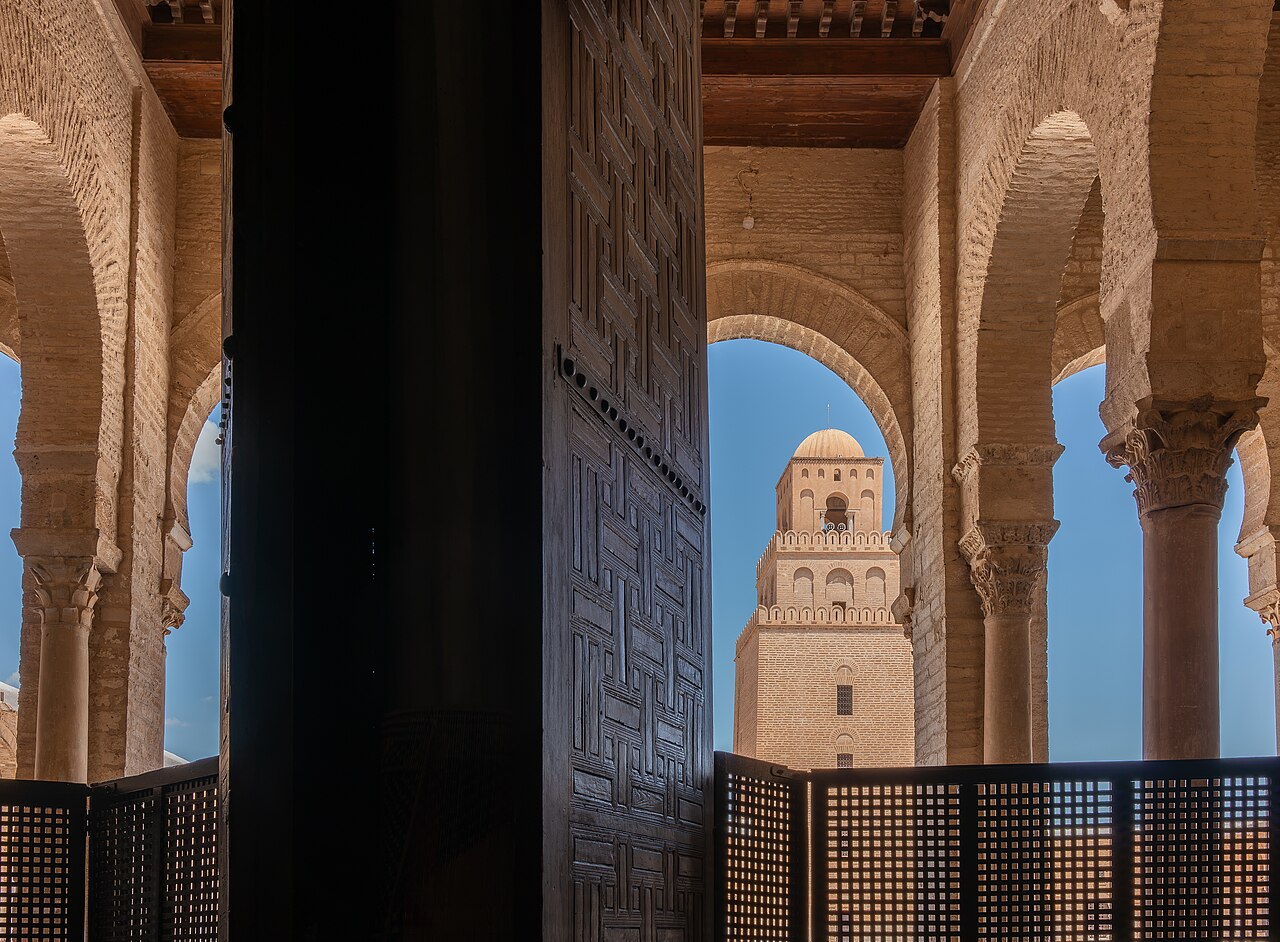
The Great Mosque, also called the Mosque of Uqba, is the star attraction. It was founded in 670 and rebuilt mainly in the ninth century. Its huge marble courtyard is surrounded by arcades, and its square minaret is one of the oldest still standing anywhere. Inside the prayer hall, hundreds of ancient columns hold up the roof. However, non-Muslims may only view the hall from the doorway. Also, dress modestly and check visiting hours, since the mosque closes for prayers.
Explore the Medina
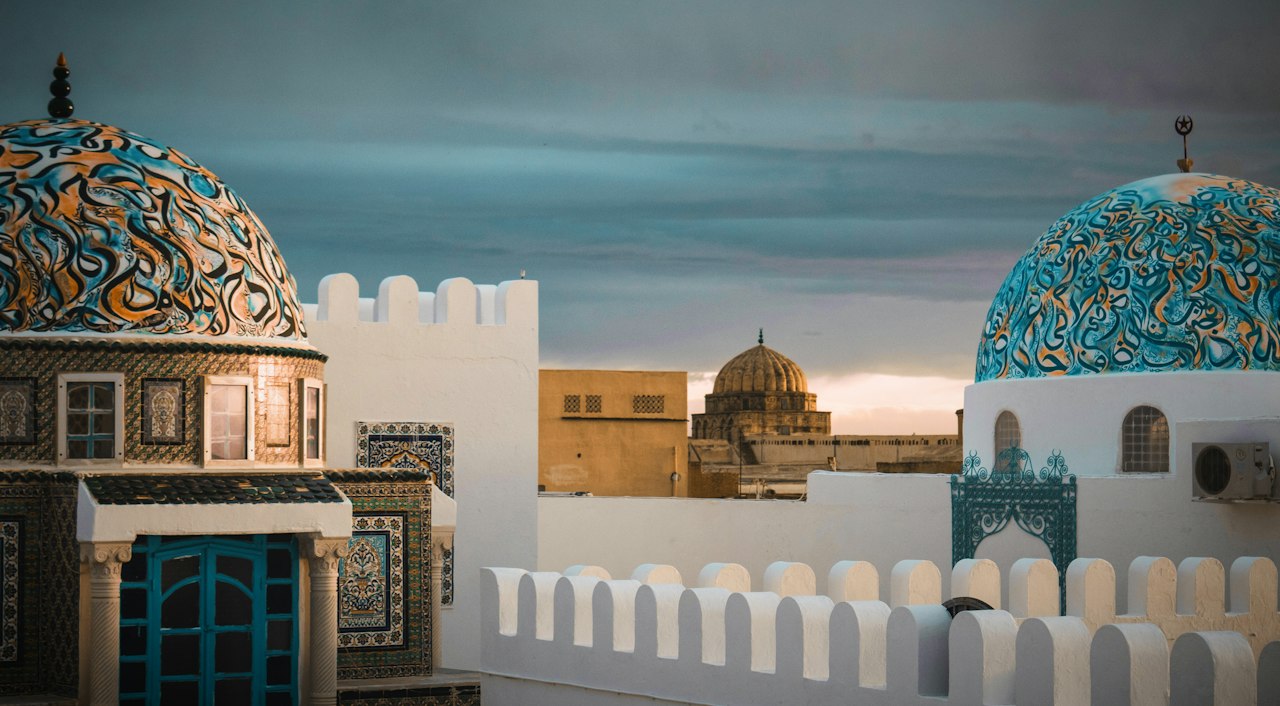
Enter through Bab ech Chouhada or another old gate and simply wander. The lanes are lined with white houses and doors painted blue, green or yellow. Meanwhile, small shops sell brass lamps, leather slippers and spices. Getting lost is part of the fun, and the walls make it hard to stray far.
See the Aghlabid Basins
In the ninth century, the Aghlabid rulers built giant round reservoirs to store water from distant hills. Two of them survive just outside the medina. Although simple at first glance, they were a remarkable feat of engineering. So, climb the viewing platform nearby to appreciate their size.
Admire the Mausoleum of Sidi Sahbi
This shrine honors a companion of the Prophet Muhammad. Locals call it the Mosque of the Barber, because he is said to have kept hairs from the Prophet. The courtyards are covered in colorful tiles and carved plaster. In addition, it is one of the most beautiful interiors open to visitors.
Watch the Camel at Bir Barouta
Bir Barouta is an old well inside the medina. Here, a camel walks in circles to turn a wheel that raises the water. According to legend, the well is linked to the sacred Zamzam well in Mecca. It is a little touristy, but still a curious slice of tradition.
Shop for Carpets and Taste Makroudh
The city is famous for its knotted carpets, often in soft reds, creams and blues. Take your time, compare quality and bargain politely. Afterward, try makroudh, a semolina pastry filled with dates and soaked in syrup. It is the local specialty, and bakeries sell it fresh each morning.
Stay Overnight in the Medina
Most visitors arrive on a day tour and leave by late afternoon. However, staying overnight in Kairouan Tunisia shows you a different side of the city. As the heat fades, families stroll the main street, cafes fill with conversation and the call to prayer echoes over the rooftops. A few traditional houses inside the walls now welcome guests, with tiled courtyards and rooftop terraces. In addition, early morning is the best time to see the Great Mosque in soft light, before tour buses arrive.
Tips for Visiting
- Dress modestly, covering shoulders and knees at religious sites.
- Buy the combined ticket, which covers several main monuments.
- Carry small change for tips, tea and pastries.
- Avoid midday in summer, because the inland heat is intense.
Day Trips From Kairouan Tunisia
El Djem is the top choice. Its Roman amphitheater is one of the best preserved in the world, and it is also a UNESCO site. Likewise, Sousse has a lively medina and a strong coastal fortress called the Ribat. Further west, Sbeitla has impressive Roman temples and quiet ruins.
For more of Tunisia, read our guide to Sidi Bou Said. In addition, if holy walled cities interest you, our guide to Harar in Ethiopia makes a fascinating comparison.
One Historical Fact About Kairouan Tunisia
Many of the columns inside the Great Mosque were not made for it. Instead, builders reused marble and granite columns from older Roman and Byzantine buildings across the region. As a result, the prayer hall is a forest of mismatched pillars, each with its own style of capital. It is a striking reminder of the many cultures that shaped this land.
How to Get to Kairouan Tunisia
- Flying in: Enfidha Hammamet Airport is about an hour away, while Tunis Carthage Airport is around two and a half hours away.
- Shared taxi: Louages run often from Tunis and Sousse and leave when full.
- Bus: Regional buses link the city with Tunis, Sousse and Sfax.
- Rental car: Driving gives flexibility to add El Djem on the same day.
Best Time to Visit Kairouan Tunisia
Spring, from March to May, offers warm days and cool nights. Autumn, from October to November, is also pleasant. In contrast, summer is very hot, often above 35 degrees Celsius. Meanwhile, winter is mild and quiet, although some days are rainy. During Ramadan, the city has a special atmosphere at night, yet opening hours can change.
Is Kairouan Tunisia Worth Visiting?
Yes, especially if you love history and architecture. Kairouan Tunisia offers some of the most important Islamic monuments in Africa, with few crowds. Of course, it is quieter than the coast and has less nightlife. However, that calm is exactly its charm. Overall, it deserves at least a full day on any Tunisia itinerary.
Final Thoughts
In short, this is a city of faith, craft and quiet beauty. Stand in the Great Mosque courtyard, wander the painted lanes and taste a warm makroudh. Then you will understand why travelers have been drawn to Kairouan Tunisia for more than a thousand years.
Image Credits
Unsplash
- Haythem Gataa: Domed building with ochre walls, Unsplash License
- Malek Boukhris: Mosque under a blue sky, Unsplash License
- Haythem Gataa: White and teal building in the medina, Unsplash License
Wikimedia Commons
- weetoon66: Grande Mosquée de Kairouan, vue d’ensemble, CC BY-SA 2.0
- IssamBarhoumi: Great Mosque of Kairouan minaret view 01, CC BY-SA 4.0

