Picture a sleepy riverside town where faded yellow shophouses line quiet streets and fishing boats drift past at sunset. Behind it, the green Elephant Mountains rise above the water. This is Kampot Cambodia, a laid-back provincial town known for its French colonial charm, its world-famous pepper and its easy access to Bokor National Park. In this guide, you will find out what to see, how to get there and when to go.
Quick Facts About Kampot, Cambodia
| Country | Cambodia |
| Region | Kampot Province, southern Cambodia |
| Known For | French colonial architecture, Kampot pepper and riverside sunsets |
| UNESCO Status | Not listed (an old town nomination has been in preparation since 2017) |
| Founded | Recorded by the 1770s; a royal seaport from the 1840s |
| Best Time to Visit | November to April |
| Time Needed | Two to four days |
| Continent | Asia |
Where Is Kampot, Cambodia?
Kampot is the capital of Kampot Province in southern Cambodia. The town sits on the banks of the Praek Tuek Chhu River, about 5 kilometers from the Gulf of Thailand. To the west, the Elephant Mountains form a dramatic backdrop, with Bokor Mountain standing closest to town.
By road, Kampot lies roughly 155 kilometers southwest of Phnom Penh. The small seaside town of Kep is a short drive to the east, while the Vietnamese border is not far beyond that.
Why Visit Kampot, Cambodia?
First of all, Kampot moves at a gentle pace. After the traffic of Phnom Penh or the crowds of Siem Reap, the town feels like a deep breath. Days here revolve around coffee by the river, slow bike rides and long dinners.
In addition, the town has real character. Its old center still holds rows of French colonial shophouses, a historic market and an old iron bridge. On top of that, the surrounding countryside is full of pepper farms, salt fields, caves and green hills.
Finally, Kampot makes an excellent base. From here, you can climb into the cool air of Bokor National Park, eat fresh crab in Kep or simply kayak along the river. As a result, many travelers plan a short stop and end up staying a week.
Exploring Kampot Old Town
The heart of Kampot Cambodia is its compact old town, set along the east bank of the river. Most sights are within walking distance, so it is easy to explore on foot or by bicycle.
Walk Among the Colonial Shophouses
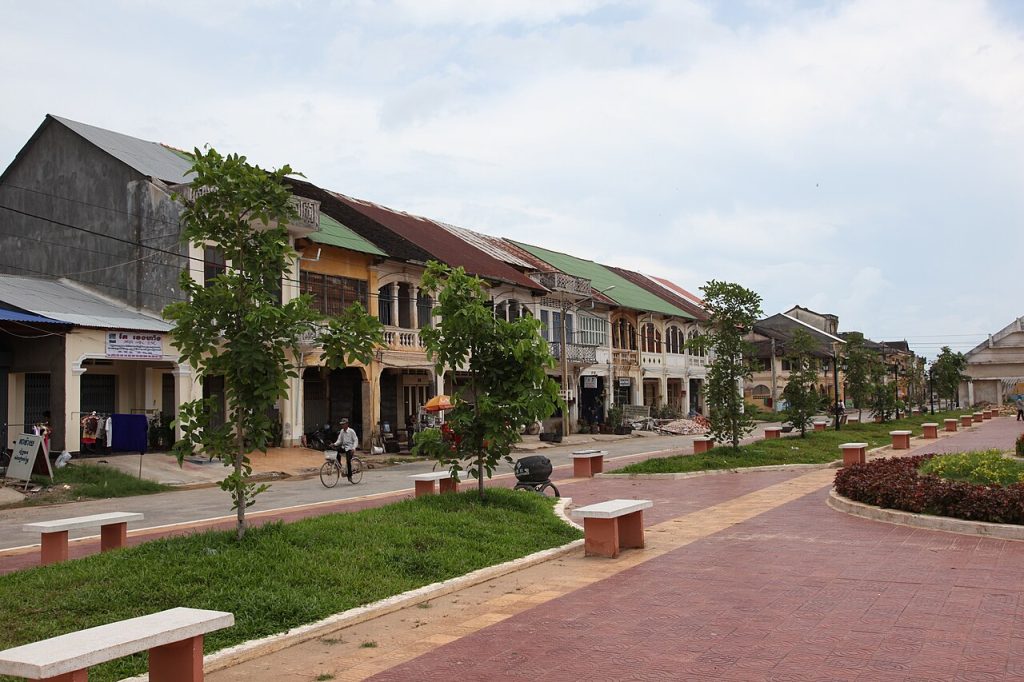
During the French protectorate, Kampot served as a regional administrative center. Consequently, the town center still has many buildings from that era. Two-story shophouses with tall shutters and pastel walls line the streets around the Old Market.
Some facades have been restored, while others are weathered and draped in vines. Either way, they make the town a joy to photograph. The Kampot Provincial Museum, housed in a colonial-era building, is also worth a quick visit.
Spot the Durian Roundabout and the Old Bridge
No walk is complete without the Durian Roundabout. A giant sculpture of the spiky fruit stands in the middle of a traffic circle, a nod to the durian grown in the province. Admittedly, it is quirky and slightly odd, but locals love it.
Nearby, the Old Bridge spans the river. Its iron frame is one of the most recognizable landmarks in town. It is also a pleasant place to watch boats come and go.
Watch the Sunset Along the Riverside
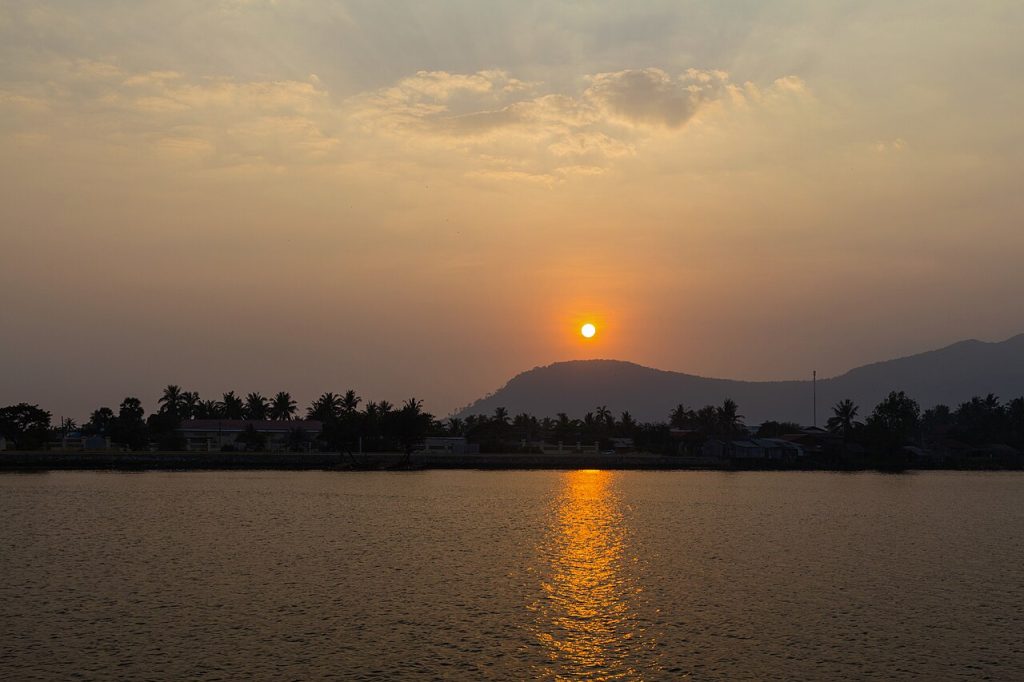
In the late afternoon, head to the riverside promenade. Here, cafes and guesthouses face the water as well as the mountains beyond. As the light fades, the sky often turns orange and pink behind Bokor Mountain.
Alternatively, join a sunset boat trip. Several operators run short river cruises in the evening, which give you a calm view of the town from the water.
Kampot Pepper: The Town’s Famous Spice
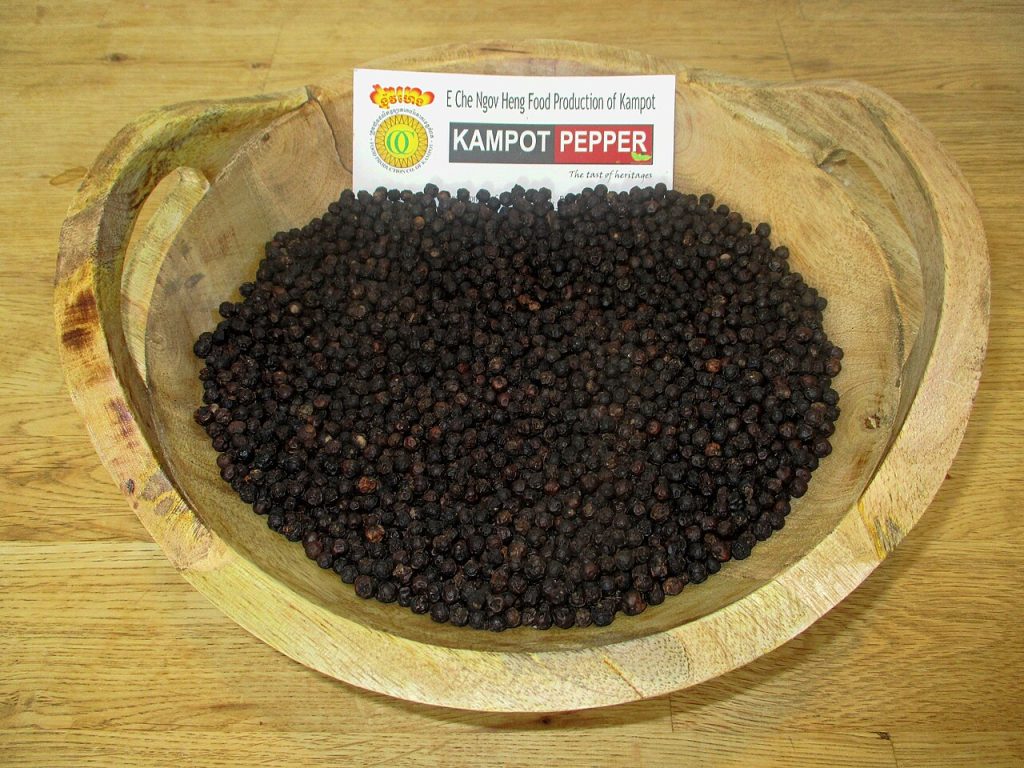
Of course, Kampot pepper is the province’s most famous export. Chefs prize it for its strong aroma and complex flavor, and it is sold around the world. Even so, the best place to taste it is right here, on a working farm.
In fact, the spice has a long history. In the 13th century, the Chinese diplomat Zhou Daguan described pepper growing in the region. Later, under French rule, intensive production began in the 1870s. Around 1900, Cambodia harvested roughly 8,000 tons a year.
However, the civil war years nearly wiped out the industry. By the late 1990s, only about 4 tons a year were harvested. Fortunately, farmers returned to their land in the 2000s, and production has been recovering ever since.
Today, Kampot pepper carries a protected status. In 2010, it became the first Cambodian product to receive Geographical Indication status. Then, in 2016, the European Union granted it Protected Geographical Indication status as well.
When you visit a pepper farm, you will usually see the vines climbing tall poles and learn how one plant produces green, black, red and white peppercorns. Most farms also offer free tastings and sell pepper to take home. For this reason, a farm tour is one of the most popular things to do in Kampot.
Day Trips From Kampot, Cambodia
Beyond the town, the province also offers mountains, coastline and traditional industries. Most day trips are easy to arrange by tuk-tuk, scooter or organized tour.
Bokor National Park
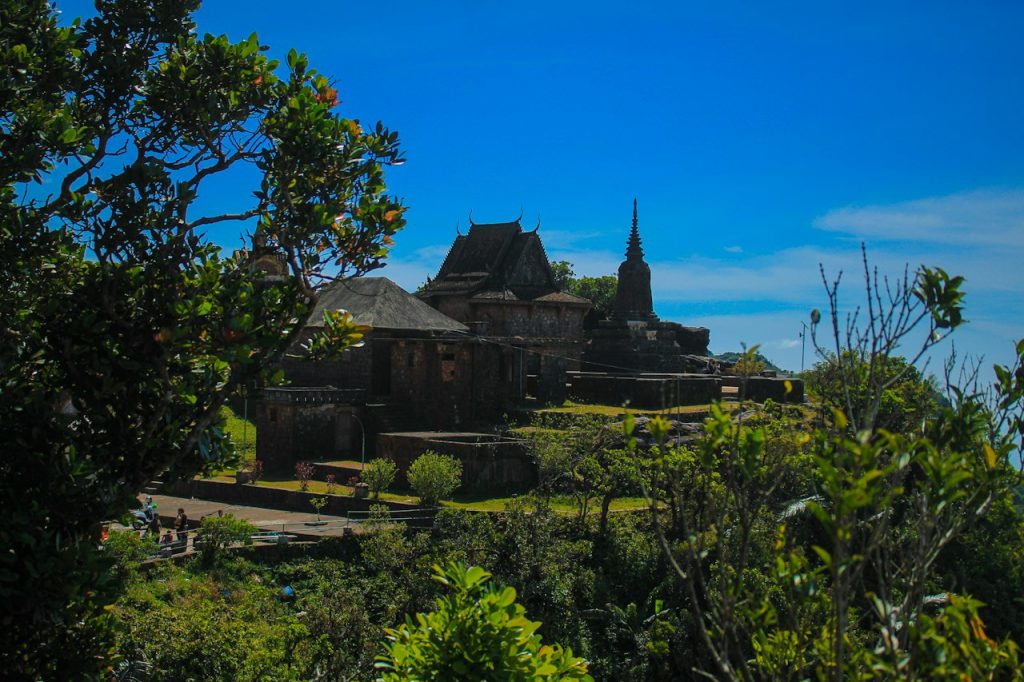
Bokor National Park covers the mountains west of town. A long, winding road climbs to the plateau, where the air is noticeably cooler than on the coast. Along the way, there are wide views over the plains and the Gulf of Thailand.
Bokor Hill Station
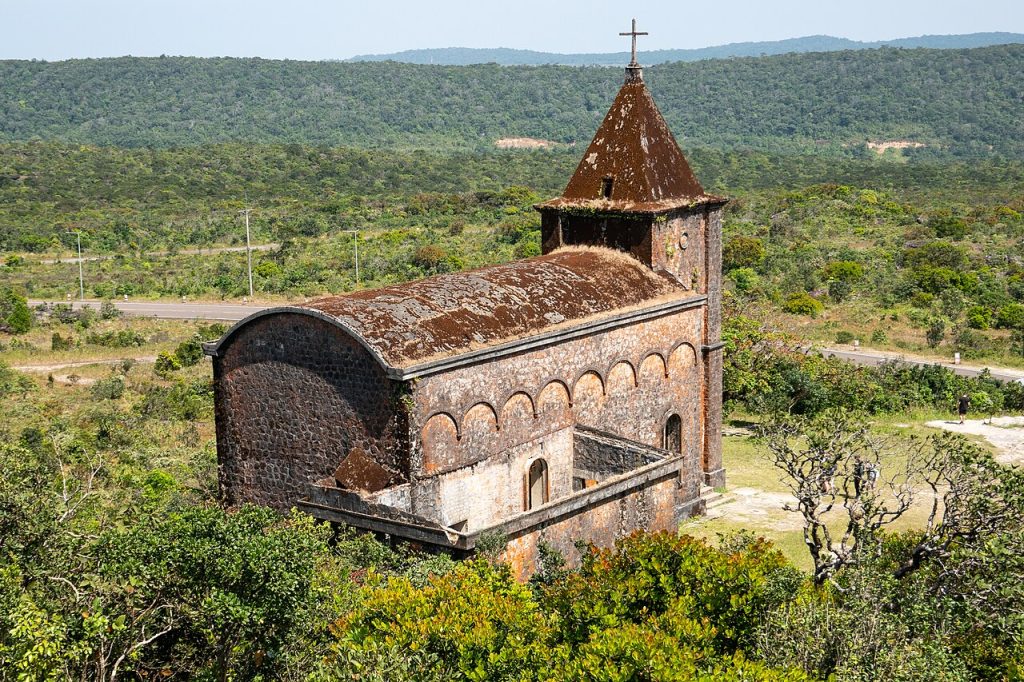
In the early 1920s, the French built a mountain resort on the plateau, about 37 kilometers west of Kampot. Then, in 1925, its centerpiece, the Bokor Palace Hotel, opened. Sadly, the construction came at a terrible human cost, with hundreds of workers reported to have died.
The French left in the late 1940s, and the site was later abandoned again during the war years. Today, the weathered Catholic church and the old palace give the summit an eerie, ghost town feel. Meanwhile, a large modern resort has opened nearby as part of a new development.
Popokvil Waterfall
Also on the plateau, the Popokvil Waterfall tumbles over rocky ledges in two tiers. It is at its best after the rains, so plan your visit for the end of the wet season if you can.
The Kampot Salt Fields
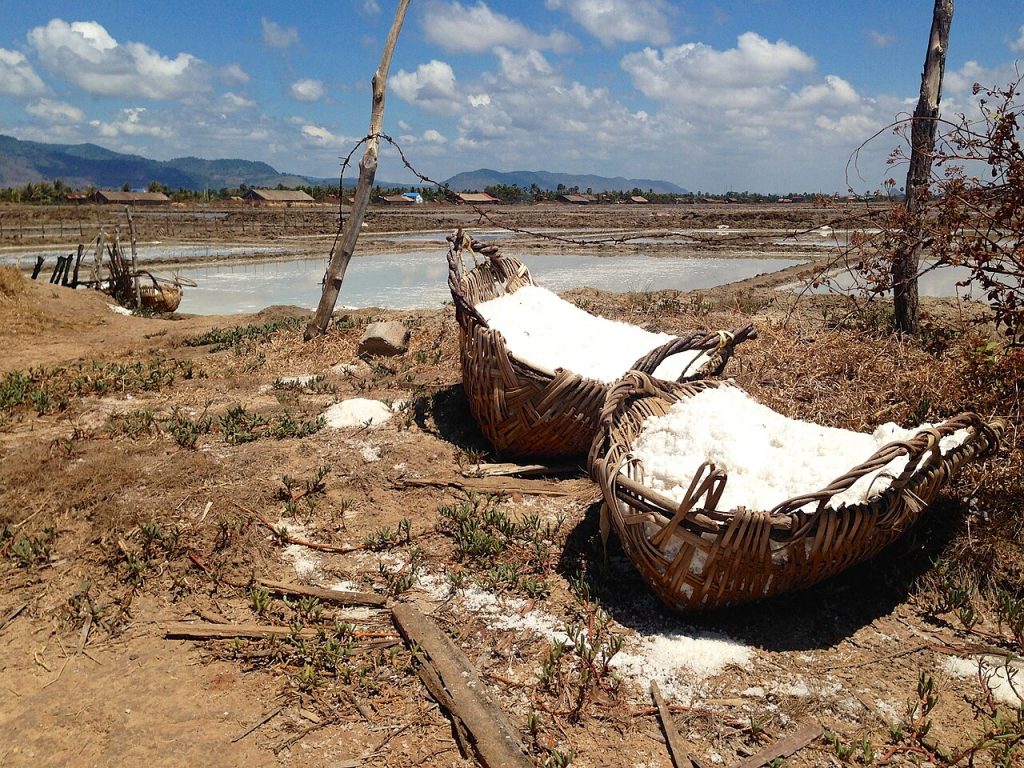
East of town, flat salt fields stretch toward the sea. During the dry season, workers flood the pans with seawater, let the sun evaporate it and then rake up the salt by hand. Kampot sea salt is one of the province’s best known products, alongside its pepper.
Kayaking and the Countryside
For something more active, rent a kayak and paddle along the quieter stretches of the river. Many visitors also rent bicycles to explore the rice fields and villages around town. In short, the countryside is just as rewarding as the old town itself.
One Historical Fact About Kampot, Cambodia
In the 1840s, King Ang Duong built a road linking the royal capital at Oudong to Kampot. As a result, Kampot became Cambodia’s only international seaport for a time. Its importance faded later in the 19th century, after the port of Saigon opened and trade shifted to the Mekong.
How to Get to Kampot, Cambodia
In general, most travelers arrive from Phnom Penh. There is no airport in town, so the journey is by road or rail.
- Minivan: The fastest public option, usually taking about 2.5 to 4 hours depending on traffic.
- Bus: Several companies run daily buses, which take around 3 to 5 hours.
- Train: Royal Railway runs a scenic service with a morning departure. The station lies a few kilometers north of town, so you will need a tuk-tuk for the last stretch.
- Private taxi: The most convenient choice, with door-to-door service in about 3 to 4 hours.
Kampot is also well connected to Kep, Sihanoukville and the Vietnamese border crossing at Prek Chak. Since timetables and prices change often, check the latest details before you travel.
Best Time to Visit Kampot, Cambodia
The best time to visit is during the dry season, from November to April. Rainfall is lowest in January, and the skies are also usually clear. As a result, this is the ideal period for river trips and the drive up to Bokor.
From May to October, the wet season brings heavy afternoon showers, with August usually the rainiest month. On the bright side, the countryside turns lush and green, the waterfalls are full and there are fewer visitors. Temperatures stay warm all year, with average highs above 30°C.
Is Kampot, Cambodia Worth Visiting?
Yes, absolutely. Kampot Cambodia rewards travelers who enjoy slow travel, local food and a sense of history. It may not have grand temples like Angkor, but it has something just as valuable: a relaxed, authentic atmosphere.
Moreover, few places combine so much in such a small area. Within a short ride, you can visit pepper farms, salt fields, a mountain ghost town and the seaside. For many travelers, it ends up being a highlight of their trip to Cambodia.
Final Thoughts
Overall, Kampot is a town that rewards patience. Take time to wander the colonial streets, taste the pepper at its source and watch the sun drop behind Bokor Mountain. Above all, do not rush. Give Kampot a few days, and it will likely leave you wishing you had planned for more. If you love riverside towns in Southeast Asia, you may also enjoy our guides to Luang Prabang and Hoi An.
Image Credits
Unsplash
- Hillside Pagoda in Kampot Province: Photo by SAM sokkolinmony on Unsplash (Unsplash License)
Wikimedia Commons
- Sunset Over the Praek Tuek Chhu River: Photo by Marcin Konsek via Wikimedia Commons (CC BY-SA 4.0)
- Colonial Shophouses in Kampot Old Town: Photo by Hans A. Rosbach via Wikimedia Commons (CC BY-SA 3.0)
- Kampot Peppercorns in a Wooden Bowl: Photo by Turaids via Wikimedia Commons (CC BY-SA 4.0)
- Church at Bokor Hill Station: Photo by PsamatheM via Wikimedia Commons (CC BY-SA 4.0)
- Baskets of Kampot Sea Salt: Photo by James Antrobus via Wikimedia Commons (CC BY 2.0)