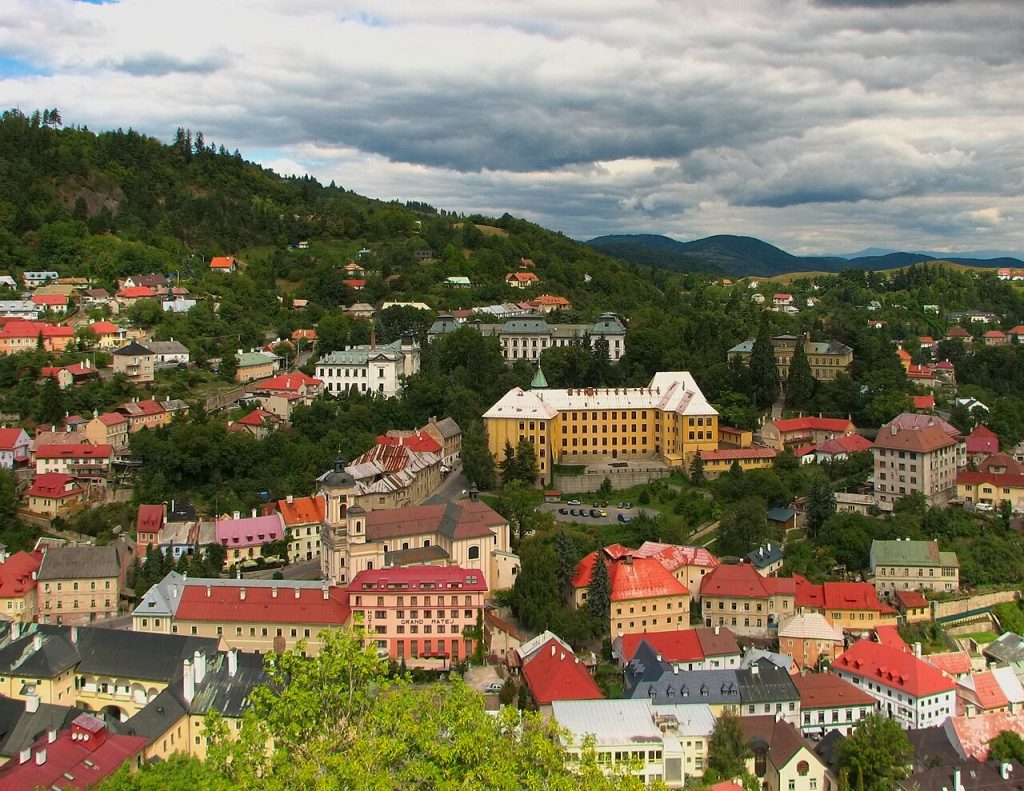
Inside the crater of an ancient volcano in central Slovakia, colorful houses and church towers climb steep green slopes. Castles stand above the rooftops, and a baroque Calvary crowns a nearby hill. This is Banská Štiavnica, once one of the richest silver mining towns in Europe. In this guide, you will discover what to see, how to get there and when to visit.
Quick Facts About Banská Štiavnica, Slovakia
| Country | Slovakia |
| Region | Banská Bystrica Region, central Slovakia |
| Known For | Silver mining history, castles, the Calvary and the tajchy lakes |
| UNESCO Status | Historic Town of Banská Štiavnica, World Heritage Site since 1993 |
| Founded | First mentioned in 1156; royal town from 1238 |
| Best Time to Visit | May to September |
| Time Needed | Two days |
| Continent | Europe |
Where Is Banská Štiavnica, Slovakia?
Banská Štiavnica lies in central Slovakia, in the Banská Bystrica Region. In fact, the town sits inside a large caldera left by an ancient collapsed volcano, surrounded by the Štiavnica Mountains.
Because of this setting, the town is spread across steep hillsides rather than a flat valley. As a result, almost every street offers a view.
Why Visit Banská Štiavnica, Slovakia?
First of all, Banská Štiavnica is beautiful and unusual. Its houses, churches and castles are scattered across the slopes of an old volcano, which makes it unlike any other town in Slovakia.
In addition, it has a remarkable history. For centuries, silver and gold made it a major mining center, and its scientists and engineers were among the most advanced in Europe. Therefore, UNESCO listed the town and its surroundings in 1993.
Finally, the area is perfect for outdoor activities. For example, you can hike to viewpoints and swim in historic mining lakes.
Exploring the Historic Center
The historic center is compact but hilly. Above all, wear comfortable shoes and be ready to climb.
Trinity Square
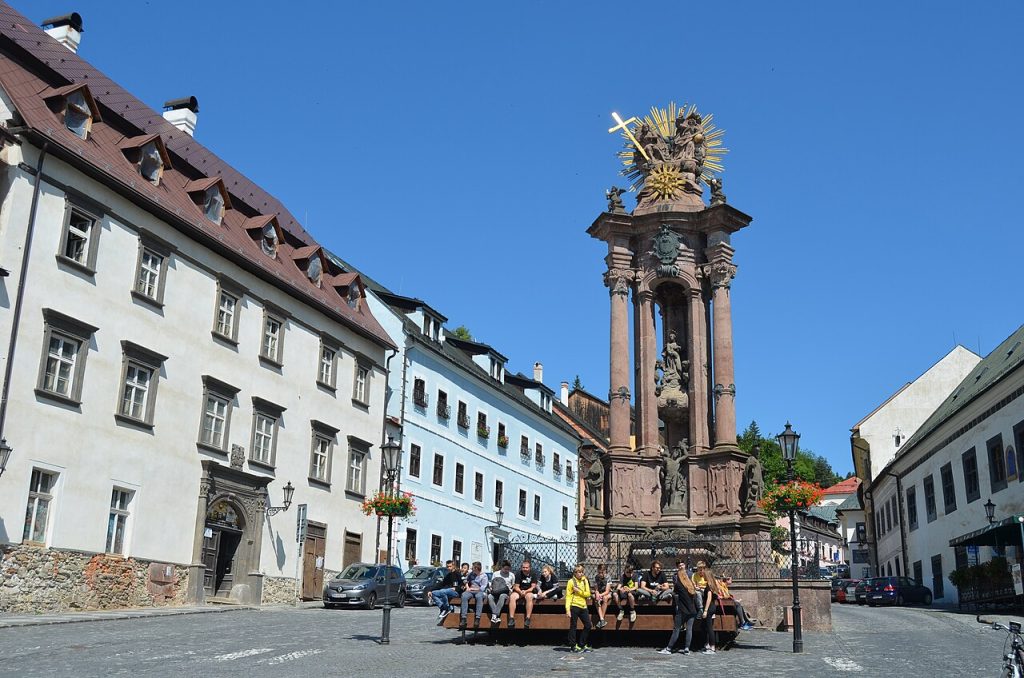
Trinity Square is the heart of town. In particular, it is dominated by the Holy Trinity column, a tall plague column decorated with statues. In addition, the square is home to a mineralogical museum.
Historic Buildings
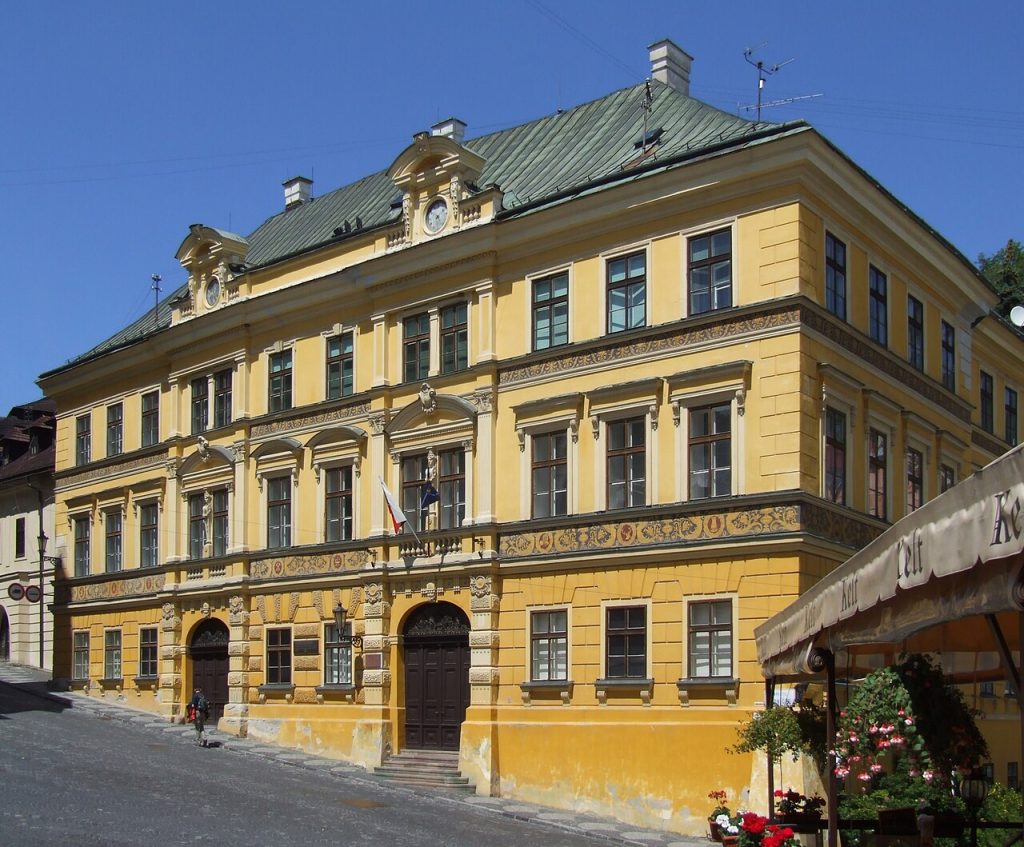
Around the square, grand townhouses recall the wealth of the mining era. In particular, look for the ornate facades, painted walls and carved doorways.
The Old Castle and the New Castle
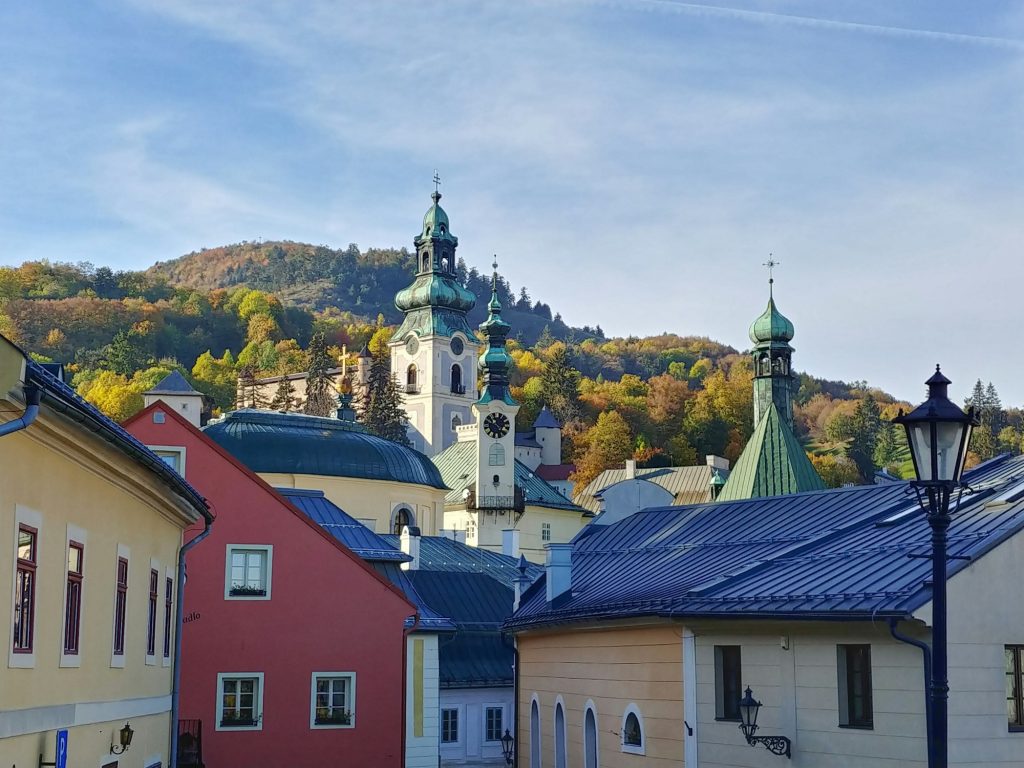
Banská Štiavnica has two castles, and both are now museums. The Old Castle stands just above the center, while the New Castle, a white tower on a hill, offers excellent views. Consequently, it is worth climbing up for the panorama over the rooftops.
Mining Heritage in Banská Štiavnica
Mining shaped every part of the town’s history. In fact, the area has mining roots going back to Celtic times.
The Open-Air Mining Museum
At the open-air mining museum, you can go underground on a tour of about 1.5 kilometers. Along the way, guides explain how miners worked in the past. Therefore, it is one of the most popular attractions in town.
A Pioneer of Mining Science
The town was also a center of mining education. Its Mining Academy, founded in 1735, was the first mining school in the Kingdom of Hungary. Later, in 1848, it became the Academy of Mining and Forestry.
Beyond the Town Center
The countryside around Banská Štiavnica is full of history and natural beauty.
The Calvary
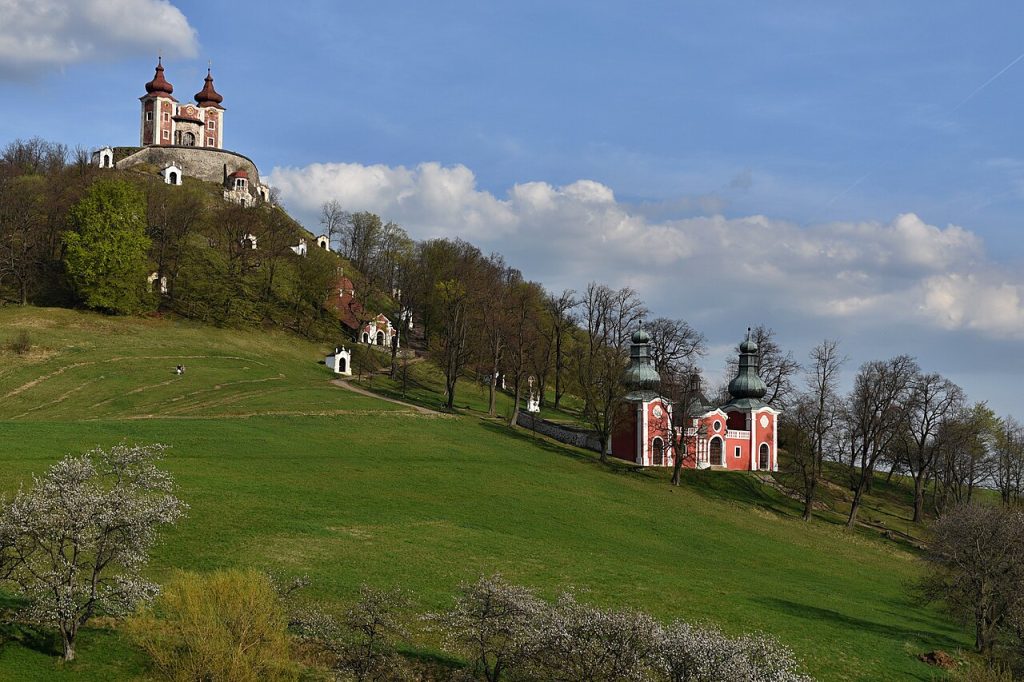
The Calvary is a baroque complex of churches and chapels built by the Jesuits in the 18th century. Specifically, it stands on a volcanic hill near Ostrý vrch, just outside town.
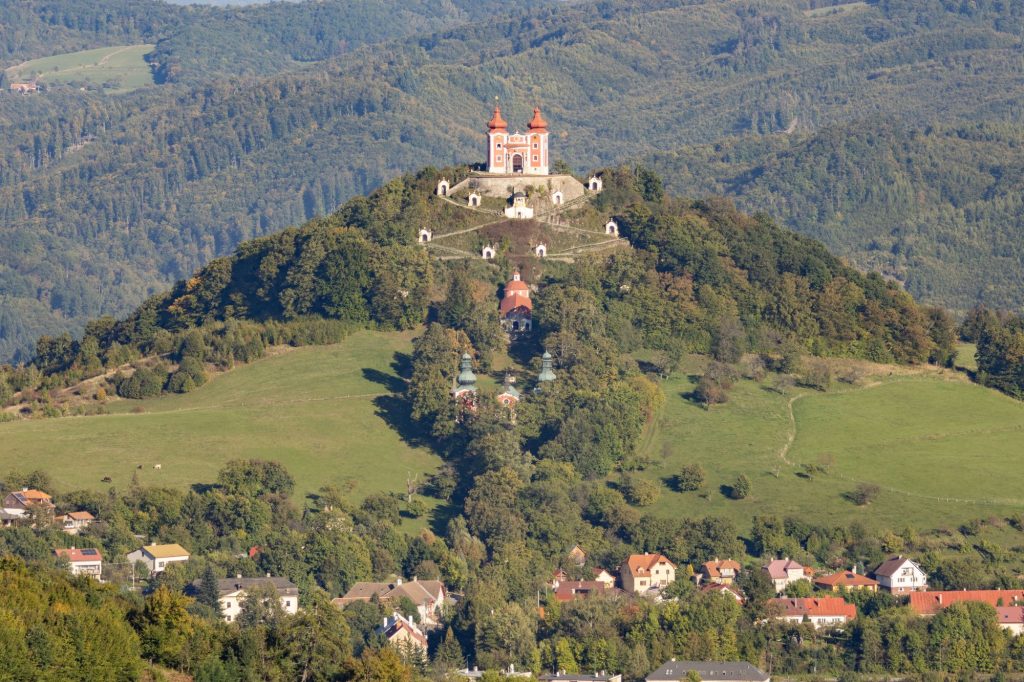
A path climbs past small chapels to the upper church at the top. Along the way, the views over the town and mountains are spectacular. Especially in spring and autumn, it is a beautiful walk.
The Tajchy Lakes
Around the town, you will find about sixty artificial lakes called tajchy. In fact, they were built between the 15th and 18th centuries to supply water for the mines.
An Engineering Marvel
Together, the lakes are linked by a network of channels more than 100 kilometers long. In fact, this system helped drain flooded mines and power machinery.
Swimming and Relaxing
Today, the tajchy are used mainly for recreation. As a result, they are popular for swimming, picnics and walks in summer.
One Historical Fact About Banská Štiavnica, Slovakia
Banská Štiavnica holds an important place in the history of mining technology. In 1627, gunpowder was used in one of its mines, one of the first known uses of explosives in mining. Later, in the 18th century, local scientists designed a sophisticated system of reservoirs and channels to drain the mines.
How to Get to Banská Štiavnica, Slovakia
In general, Banská Štiavnica is easiest to reach by car or bus.
- By car: Driving lets you explore the surrounding mountains and lakes at your own pace.
- By bus: Buses connect Banská Štiavnica with other towns in central Slovakia.
- By train: A branch railway serves the town, though connections usually require a change.
Best Time to Visit Banská Štiavnica, Slovakia
The best time to visit is from May to September, when the weather is warm and the lakes are perfect for swimming. In autumn, the forested hills also turn gold and red.
In September, the town celebrates its mining traditions with the colorful Salamander parade. By contrast, winter is cold and quiet, although the snowy rooftops can look magical.
Is Banská Štiavnica, Slovakia Worth Visiting?
Yes, absolutely. Banská Štiavnica combines a unique volcanic setting, rich mining history and charming architecture. Moreover, it is still far less crowded than many other UNESCO towns in Central Europe.
For travelers who enjoy history and the outdoors, it is a perfect choice. Therefore, it deserves a place on any trip to Slovakia.
Final Thoughts
Banská Štiavnica is a town built on silver and set in a volcano. Explore Trinity Square, go underground in the mining museum and climb to the Calvary for the view. Above all, take your time on the steep, winding streets. If you love historic towns in Central Europe, you may also enjoy our guides to Kutná Hora and Český Krumlov.
Image Credits
Wikimedia Commons
- View From the New Castle: Photo by Adrian Tync via Wikimedia Commons (CC BY-SA 4.0)
- Holy Trinity Column: Photo by Pedro via Wikimedia Commons (CC BY 2.0)
- Neo-Renaissance Building: Photo by Pudelek (Marcin Szala) via Wikimedia Commons (CC BY-SA 4.0)
- Calvary Chapels: Photo by Synalik via Wikimedia Commons (CC BY-SA 4.0)
- Panorama From the Calvary: Photo by Mineralysk via Wikimedia Commons (CC BY-SA 4.0)
Pexels
- Calvary on the Hill: Photo by Jan Brndiar via Pexels (Pexels License)
Unsplash
- Old Town Towers: Photo by Alena (@almi22) via Unsplash (Unsplash License)