
Sainte Genevieve Missouri is the oldest permanent European settlement in the state and one of the best places in the United States to see French colonial architecture. Its quiet streets also hold rare vertical log houses, shady porches and centuries old gardens. Moreover, it is just an hour’s drive from St. Louis, which makes it a perfect weekend escape.
Quick Facts About Sainte Genevieve, Missouri
| Country | United States |
| Region | Ste. Genevieve County, eastern Missouri |
| Known For | French colonial vertical log houses, national historical park, river town charm |
| UNESCO Status | Not listed; the Louis Bolduc House is a National Historic Landmark |
| Founded | Around the mid 1700s by French Canadian settlers; moved to its present site after 1785 |
| Best Time to Visit | April to October |
| Time Needed | 1 to 2 days |
| Continent | North America |
Where Is Sainte Genevieve, Missouri?
Sainte Genevieve, usually written Ste. Genevieve, sits on the west bank of the Mississippi River in eastern Missouri. In addition, it serves as the seat of Ste. Genevieve County and has around 5,000 residents.
By road, the town lies about 46 miles south of St. Louis. Across the river, a small ferry links it with Modoc in Illinois, where the old French village of Kaskaskia once stood.
Why Visit Sainte Genevieve, Missouri?
First, Sainte Genevieve offers a rare window into French life on the Mississippi. Several of its colonial homes date from the late 1700s, when the area was under Spanish rule.
Second, the town is now home to Ste. Genevieve National Historical Park. As a result, you can join ranger led tours and learn the full story of the community.
Finally, the town is charming and relaxed. Meanwhile, antique shops, cafés and wineries make it easy to spend a slow and pleasant day.
French Colonial Homes of Sainte Genevieve
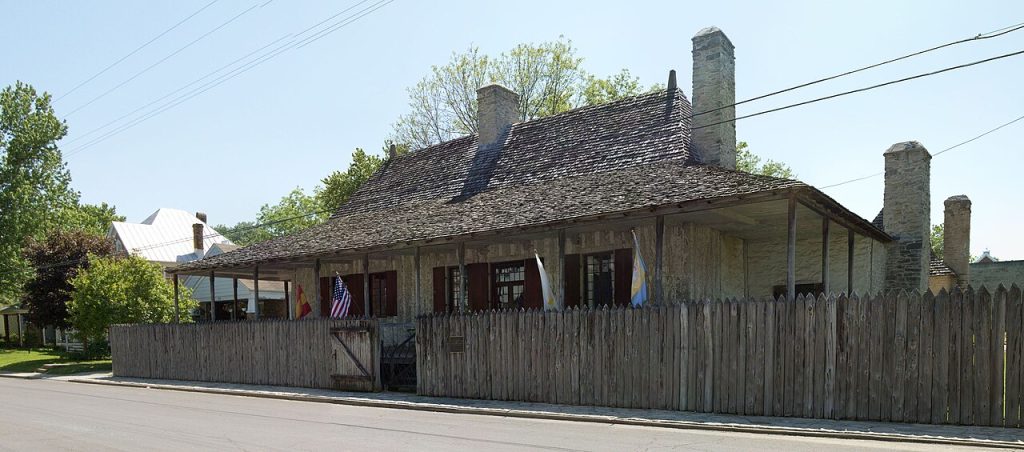
The historic district of Sainte Genevieve Missouri holds one of the largest groups of French colonial buildings in North America. Above all, it is the vertical log construction that makes them special.
The Louis Bolduc House
To begin with, the Louis Bolduc House, built in 1792 and 1793, is a National Historic Landmark. Its massive walls of upright oak logs also sit beneath a steep hipped roof. Today, the house and its garden show visitors how a wealthy French family lived on the frontier.
Life on the Galerie
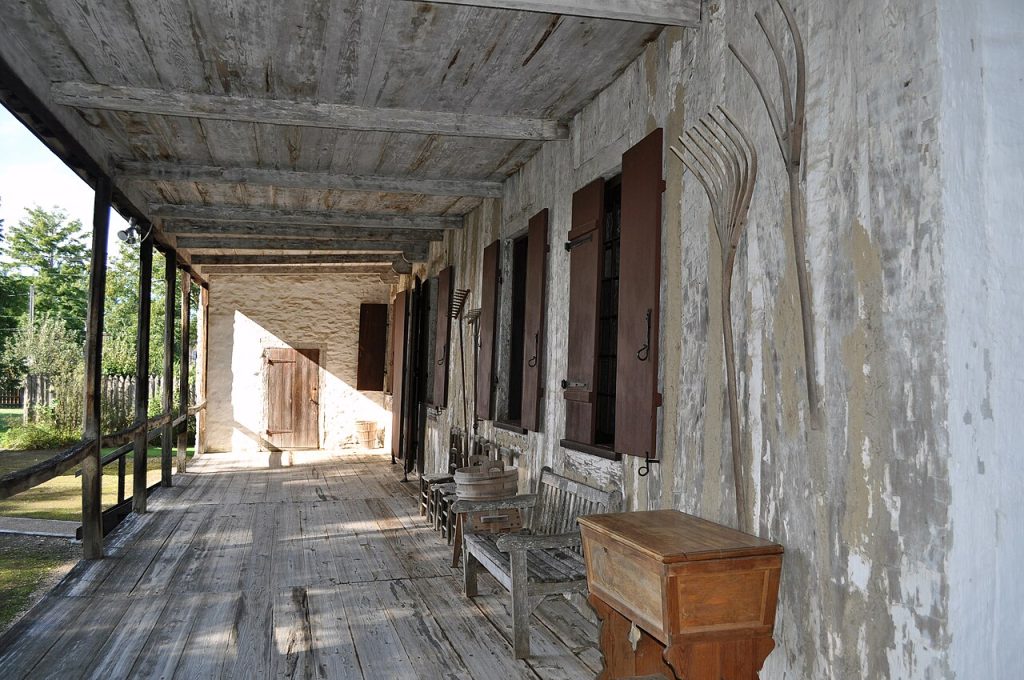
Like most French colonial homes, the Bolduc House has a wide porch called a galerie. Families used this shaded space to work, rest and greet neighbours, especially in the evening. In summer, it also kept the interior cool.
The Guibourd House
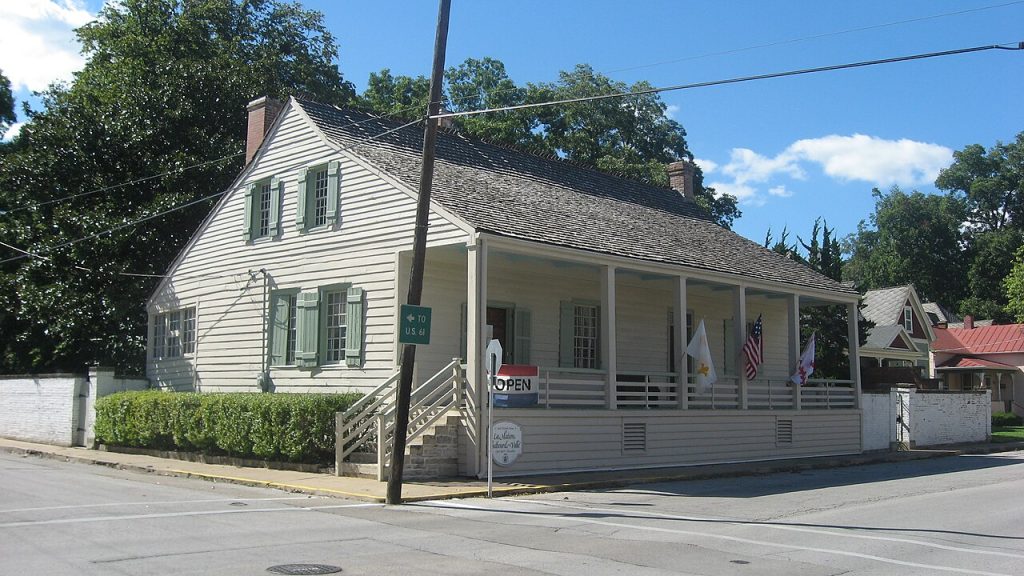
Similarly, the Jacques Dubreuil Guibourd House is another elegant example of local architecture. Because of its long porch, simple lines and lovely garden, it is also a favourite stop on walking tours.
Ste. Genevieve National Historical Park
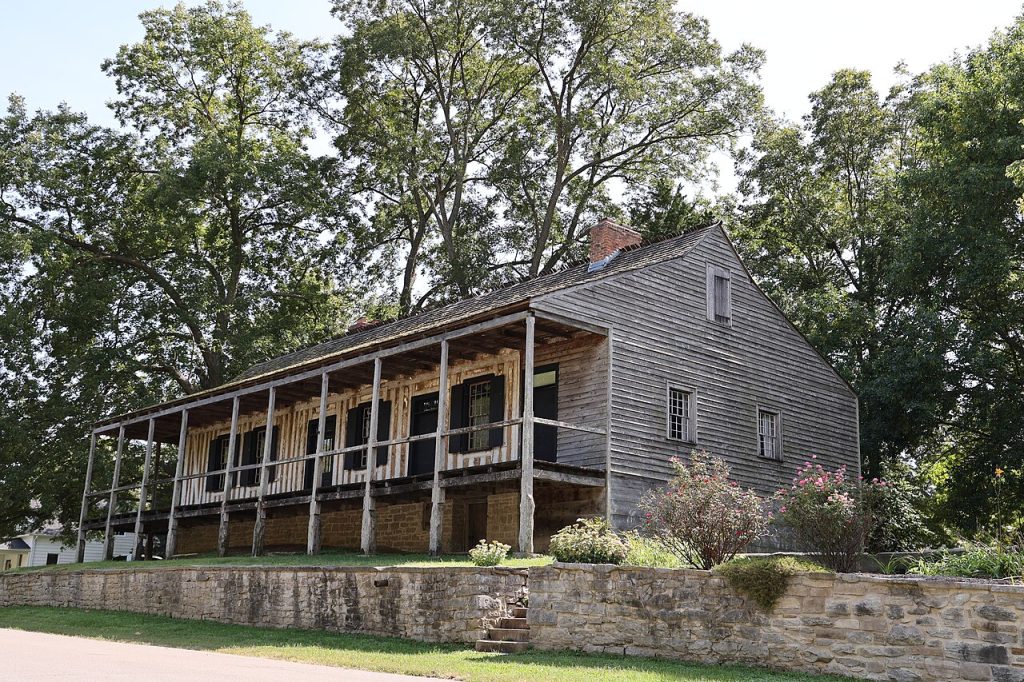
In 2020, Ste. Genevieve National Historical Park became a full unit of the National Park Service. Today, the park protects several historic homes and also tells the story of the town’s French, African American and Native American residents.
For example, the Green Tree Tavern is one of the oldest buildings in the town. Inside, original beams still show the marks of the carpenters who shaped them more than two centuries ago. For this reason, start your visit at the park welcome centre, where rangers can help you plan a route.
Exploring the Town Centre
The compact town centre is easy to explore on foot. In addition, many of the most interesting buildings stand within a few blocks of each other.
The Church of Sainte Genevieve
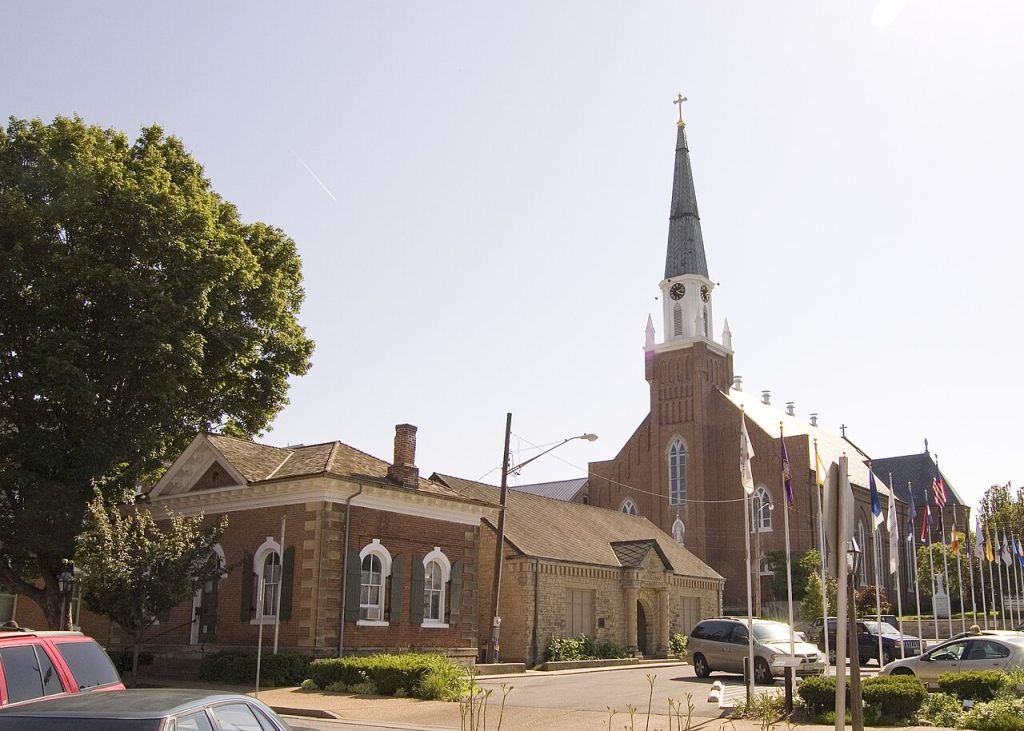
Above all, the brick Church of Sainte Genevieve rises above the main square. As a result, its tall spire is visible from many parts of town. Inside, look for the painting of Saint Genevieve, the patron saint of Paris.
Poteaux en Terre Houses
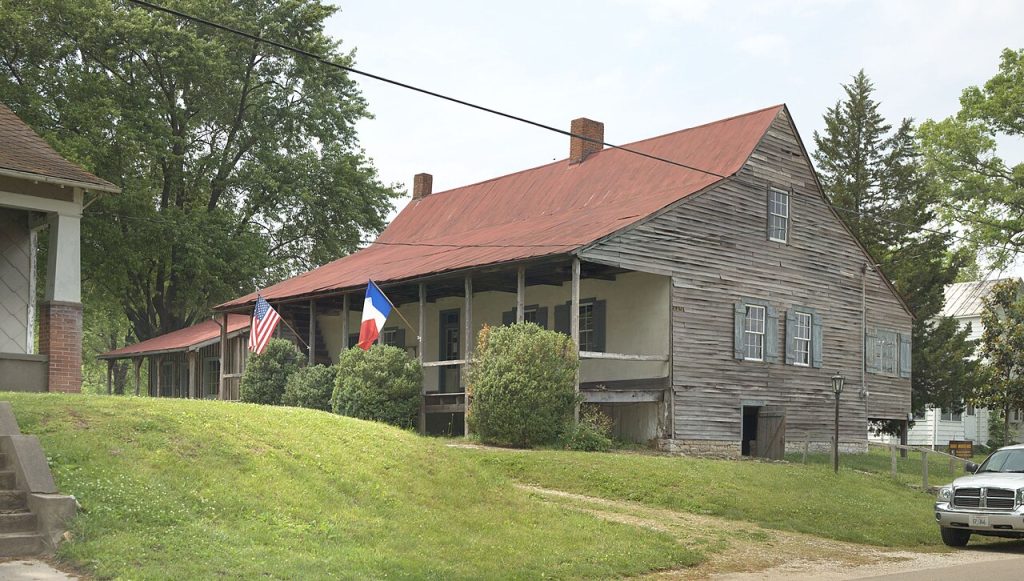
Historically, French builders used two main styles of vertical log walls.
Posts in the Ground
In the poteaux en terre style, builders set the logs directly into the earth. Remarkably, the Amoureux House still uses this method, and only a handful of such buildings survive in the country.
Posts on a Sill
In the poteaux sur sole style, on the other hand, the logs rest on a wooden or stone sill. This design lasted longer because it kept the wood away from damp soil.
Shops, Food and Wine
After sightseeing, browse the antique shops and galleries along Main Street. Then try a local bakery or café. The countryside nearby also has several wineries, which are perfect for an afternoon tasting.
One Historical Fact About Sainte Genevieve, Missouri
The original village of Sainte Genevieve stood on the floodplain right beside the Mississippi. However, after the great flood of 1785, the residents moved their homes to higher ground about two miles to the north. As a result, the town stands where it does today.
How to Get to Sainte Genevieve, Missouri
The easiest way to reach Sainte Genevieve Missouri is by car. From St. Louis, take Interstate 55 south, and the drive takes about an hour.
Alternatively, if you are coming from Illinois, the Ste. Genevieve to Modoc ferry offers a short and scenic river crossing. Check the schedule before you go, since service can change with river levels. St. Louis Lambert International Airport is the nearest major airport.
Best Time to Visit Sainte Genevieve, Missouri
The best time to visit Sainte Genevieve is from April to October, when the gardens are green and most sites keep longer hours. In particular, the Jour de Fête festival in August brings crafts, music and food to the streets.
Winter, on the other hand, is quieter. Even so, special events such as La Guiannée on New Year’s Eve keep old French traditions alive.
Is Sainte Genevieve, Missouri Worth Visiting?
Yes, definitely. After all, Sainte Genevieve Missouri offers rare colonial architecture, a new national park and the relaxed charm of a small river town. Furthermore, it pairs well with a visit to nearby Hawn State Park. One or two days here is a great way to discover a lesser known chapter of American history.
Final Thoughts
Sainte Genevieve Missouri is a living museum of French life along the Mississippi. So walk under the old porches, explore the historic homes and enjoy a glass of local wine. In the end, this small town will surprise you with its history and its quiet charm.
If you love historic small towns in the Midwest, you may also enjoy our guides to Galena, Illinois and Eureka Springs, Arkansas.
Image Credits
Wikimedia Commons
- Bolduc House Front: Photo by Andrew Balet via Wikimedia Commons (CC BY 3.0)
- Bolduc House Galerie: Photo by JaimeLouise via Wikimedia Commons (CC BY-SA 4.0)
- Guibourd House: Photo by Nyttend via Wikimedia Commons (Public domain)
- Green Tree Tavern: Photo by NPS via Wikimedia Commons (Public domain)
- Church of Ste Genevieve: Photo by Andrew Balet via Wikimedia Commons (CC BY 3.0)
- Amoureux House: Photo by Andrew Balet via Wikimedia Commons (CC BY 3.0)