Galle Fort is a little walled town that juts out into the Indian Ocean on Sri Lanka’s south coast. For example, inside the thick stone ramparts, quiet lanes are lined with colonial villas, churches, mosques and leafy courtyards. Meanwhile, the waves crash against the walls just a few steps away. Today, the old town is full of boutique hotels, art galleries and relaxed cafés. So, if you want history, sea views and a slower pace, this is a perfect stop. Here is everything you need to know.
Quick Facts About Galle Fort
| Country | Sri Lanka |
| Region | Galle, on the southwest coast of Sri Lanka |
| Known For | Ocean ramparts, a historic lighthouse, colonial streets, boutique hotels and cafés |
| UNESCO Status | Old Town of Galle and its Fortifications, UNESCO World Heritage Site since 1988 |
| Founded | Fortified by the Portuguese in the late 1500s and rebuilt by the Dutch from 1649 |
| Best Time to Visit | December to April, the dry season on the southwest coast |
| Getting There | About two hours by expressway or a scenic train ride from Colombo |
Where Is Galle Fort?
Specifically, the fort sits on a rocky headland in the city of Galle, about 120 kilometers south of Colombo. Meanwhile, the modern city, with its bus station and markets, spreads out beside it. However, once you pass through the old gate, everything slows down. In addition, some of Sri Lanka’s best beaches are only a short tuk-tuk ride along the coast.
Why Visit Galle Fort?
To begin with, Galle Fort is one of the best-preserved colonial fortified towns in Asia. The Portuguese first fortified the site in the late 1500s. Later, the Dutch took over in 1640 and rebuilt it on a grand scale. As a result, UNESCO listed the old town and its fortifications as a World Heritage Site in 1988.
Another reason to go is the mix of cultures. In fact, Sri Lankan, Dutch, British, Moorish and Malay influences all left their mark here. Moreover, families still live inside the walls, so Galle Fort feels like a real neighborhood rather than an open-air museum. If you enjoyed our guide to Hoi An in Vietnam, you will love this other historic trading port.
Things to Do in Galle Fort
Walk the Ramparts
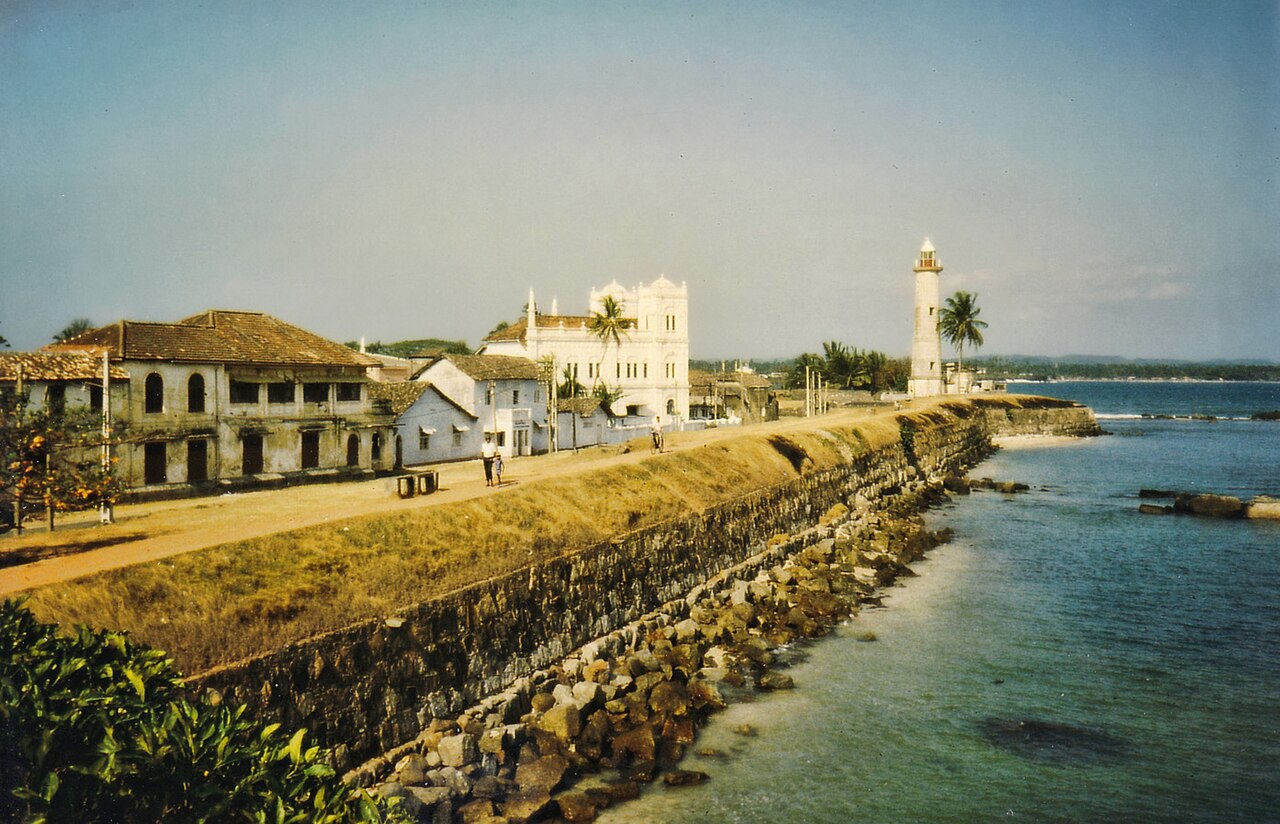
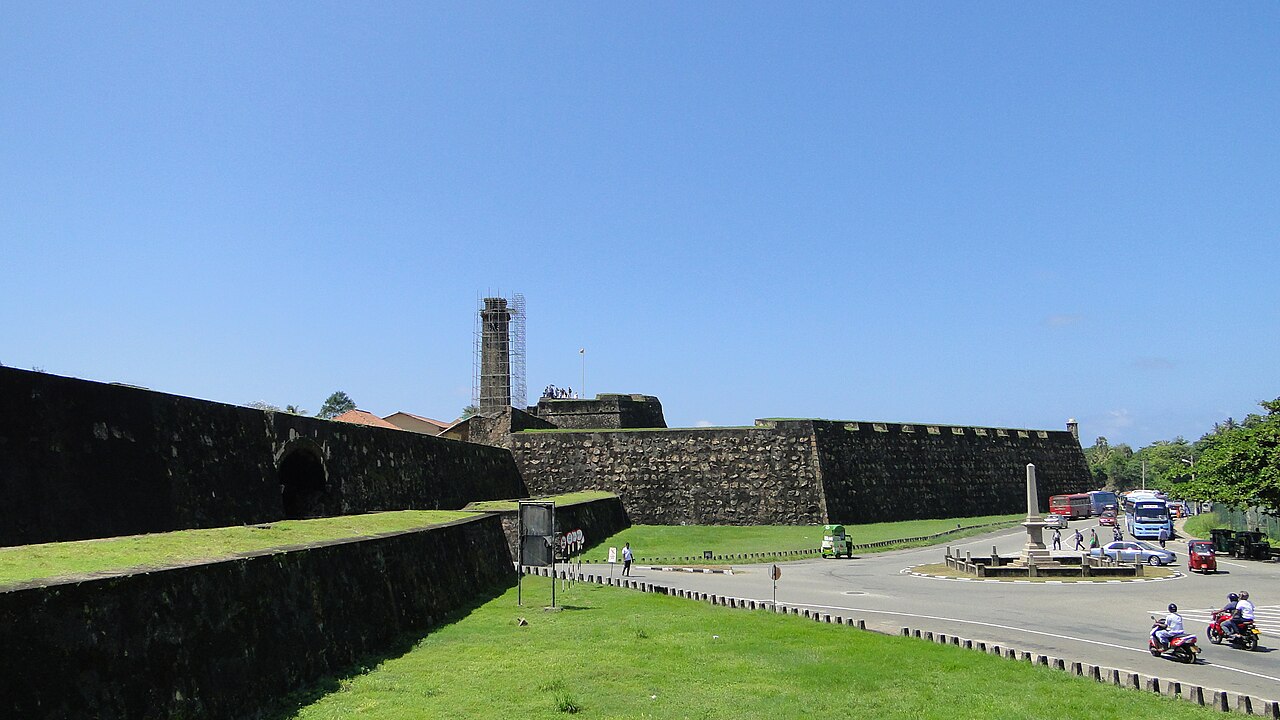
The best way to start is with a walk along the ramparts. Altogether, the walls run for about three kilometers around the old town, with bastions, sea views and grassy lawns. In the late afternoon, locals come out to stroll, fly kites and play cricket. Then, as the sun sets, the whole wall glows golden.
See the Galle Lighthouse
The white lighthouse stands on the southeastern corner of the walls. In fact, the present tower dates from 1939, after an earlier one was destroyed by fire. Unfortunately, it is not usually open to visitors. Even so, it is the most photographed landmark in town, especially with waves breaking on the rocks below.
Visit the Meeran Mosque and the Churches
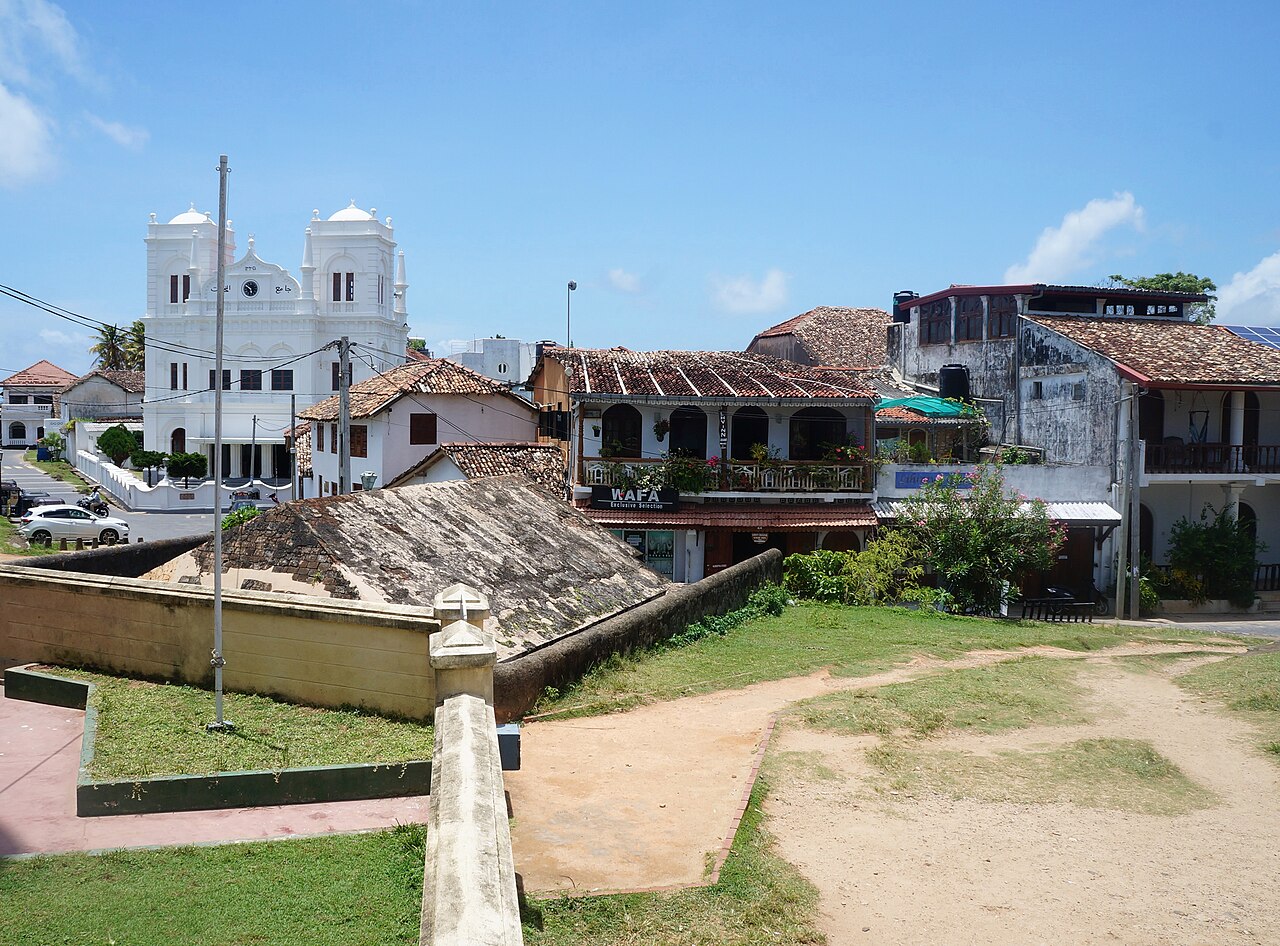
Close to the lighthouse is the Meeran Mosque, a bright white building that looks a bit like a church. In contrast, the Dutch Reformed Church, completed in 1755, has a floor paved with old gravestones. Nearby, All Saints’ Anglican Church adds a touch of Victorian Gothic. Together, they show how many communities have shared these streets.
Explore the Lanes and Museums
Wander along Church Street, Pedlar Street and Leyn Baan Street, where old villas now hold shops, cafés and galleries. Next, step into the Old Dutch Hospital, a long colonial building that now houses restaurants with ocean views. If you like history, the National Maritime Museum covers the region’s sea trade and marine life.
Watch the Jumpers at Flag Rock
Flag Rock is a bastion on the southern walls. Here, for instance, local divers sometimes jump from the ramparts into the sea for tips. Even without the jumpers, it is a great spot for sunset.

Day Trips From Galle Fort
Unawatuna and Jungle Beach
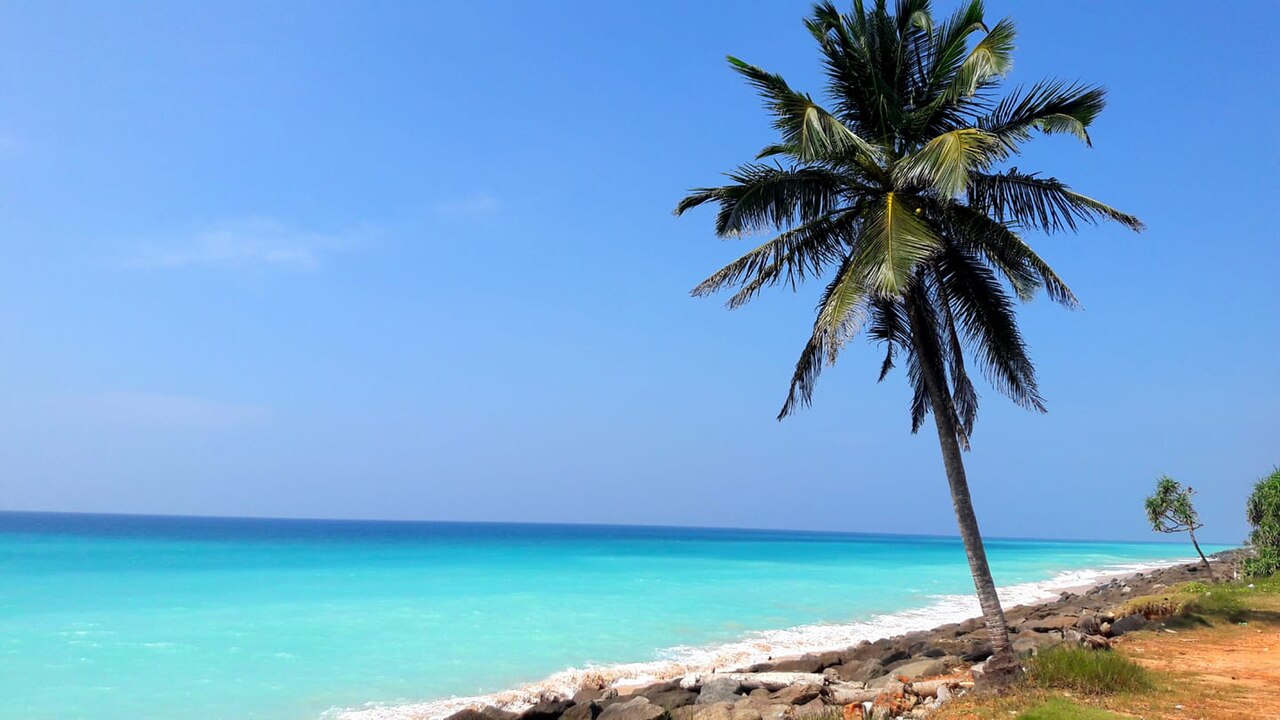
Unawatuna is a curved bay with calm water and palm trees, about six kilometers east of the fort. Therefore, it is ideal for swimming and snorkeling. Nearby, Jungle Beach is smaller and quieter. On the headland above it, the white Japanese Peace Pagoda offers wide views of the coast.
Stilt Fishermen and Whale Watching
Further along the coast, around Koggala and Ahangama, you may see the famous stilt fishermen perched on poles in the surf. In addition, the town of Mirissa is a popular base for whale watching between November and April.
One Historical Fact About Galle Fort
On December 26, 2004, the Indian Ocean tsunami devastated much of the coastline around Galle. However, the old Dutch walls protected the town inside, and Galle Fort suffered far less damage than the modern city next to it.
How to Get to Galle Fort
From Colombo, the Southern Expressway gets you to Galle in about two hours by car or express bus. Alternatively, the coastal train is slower but very scenic, as it runs right along the ocean for long stretches. From Bandaranaike International Airport, a private transfer takes around two and a half to three hours.
Best Time to Visit Galle Fort
The best time to visit Galle Fort is from December to April, when the southwest coast is dry and sunny. During this season, the sea is calm, which is ideal for swimming. On the other hand, the southwest monsoon brings rain from May to September. Also, consider timing your trip for the Galle Literary Festival, which is often held in January.
Is Galle Fort Worth Visiting?
Yes, without a doubt. Galle Fort combines history, culture, great food and beautiful sea views in a compact, walkable town. Ideally, plan to stay at least two nights to enjoy it after the day visitors leave. For another walled town by the sea, see our guide to Kotor in Montenegro.
Final Thoughts on Galle Fort
In short, this old town is one of the highlights of any trip to Sri Lanka. Walk the walls at sunset, browse the galleries and sip tea in a shady courtyard. By the end of your stay, Galle will feel like the perfect mix of history and island life.
Image Credits
Wikimedia Commons
- Jan Kranendonk (https://www.jankranendonk.nl): Galle Fort wall and lighthouse, CC BY-SA 4.0
- Ankur Panchbudhe from Pune, India: Galle Fort ramparts (23304598811), CC BY 2.0
- PIERRE ANDRE LECLERCQ: Galle, la Mosquée Meera , CC BY-SA 4.0
- Icaptures84: Dutch Galle Fort, Sri Lanka, CC BY-SA 4.0
- Ruchira159: Unawatuna beach sri lanka, CC BY-SA 4.0


