Tucked into a narrow valley in the Pocono Mountains, rows of Victorian buildings climb steep streets beneath forested hills. Steam trains whistle at the old station, and mansions built on coal fortunes overlook the town. This is Jim Thorpe, a small Pennsylvania town often called the Switzerland of America. In this guide, you will learn what to see, how to get there and when to visit.
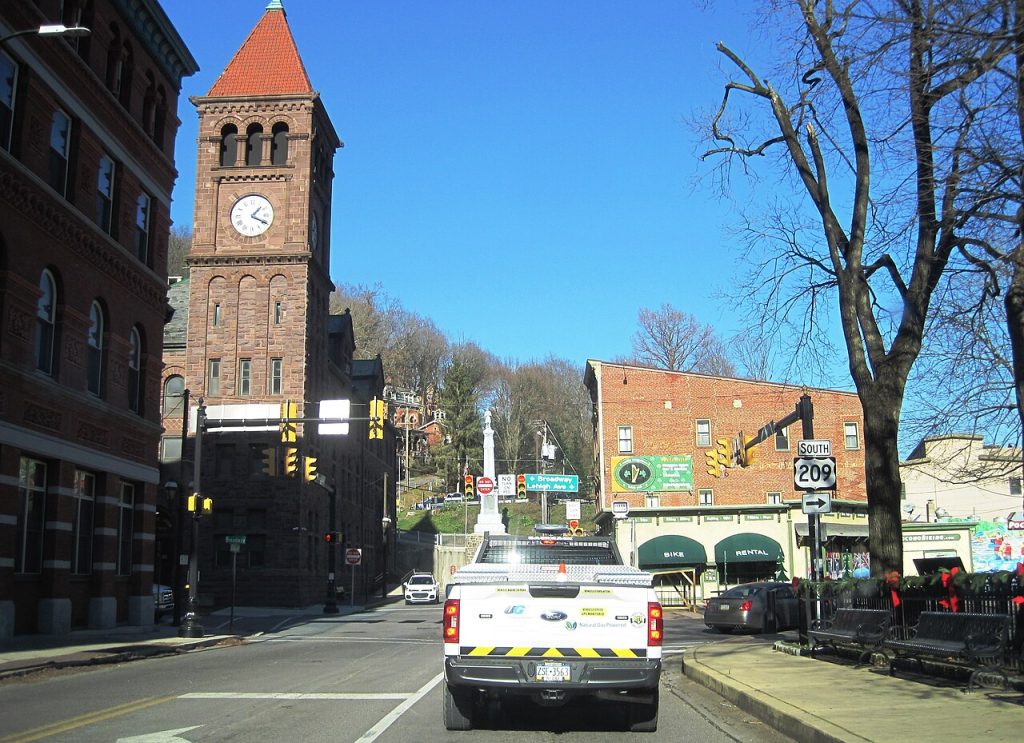
Quick Facts About Jim Thorpe, Pennsylvania
| Country | United States |
| Region | Carbon County, Pocono Mountains, Pennsylvania |
| Known For | Victorian architecture, the Asa Packer Mansion and the Lehigh Gorge |
| UNESCO Status | Not listed (the old town is a National Register historic district) |
| Founded | 1818 (as Mauch Chunk) |
| Best Time to Visit | September to October |
| Time Needed | One to two days |
| Continent | North America |
Where Is Jim Thorpe, Pennsylvania?
Jim Thorpe is the county seat of Carbon County, in the Pocono Mountains of northeastern Pennsylvania. In fact, it sits in the valley of the Lehigh River, surrounded by steep wooded hills.
The town is also within easy reach of several big cities. For example, it lies about 29 miles northwest of Allentown, 83 miles from Philadelphia and 117 miles from New York City.
Why Visit Jim Thorpe, Pennsylvania?
First of all, the town is beautiful. Because of its mountain setting, it has earned nicknames such as the Switzerland of America and the Gateway to the Poconos.
In addition, Jim Thorpe has a fascinating history. It grew rich from coal, and its grand mansions and churches still tell that story. Moreover, it has one of the most unusual name stories of any town in America.
Finally, the outdoors are right on the doorstep. For example, hiking, cycling, rafting and scenic train rides make it a great base for active travelers.
Exploring Historic Jim Thorpe
The old town is compact and best explored on foot. However, the streets are steep, so wear comfortable shoes.
Walk Along Broadway
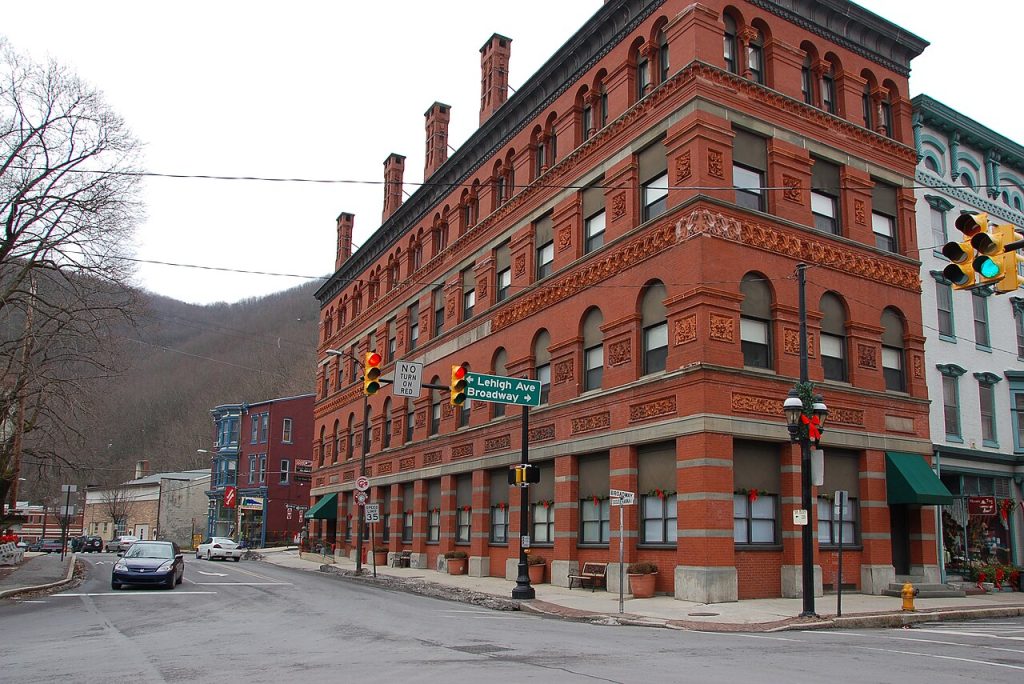
Broadway is the main street of the historic district. Here, brick buildings from the 19th century house cafes, galleries and boutiques. Meanwhile, the hills rise steeply behind the rooftops.
Visit the Asa Packer Mansion
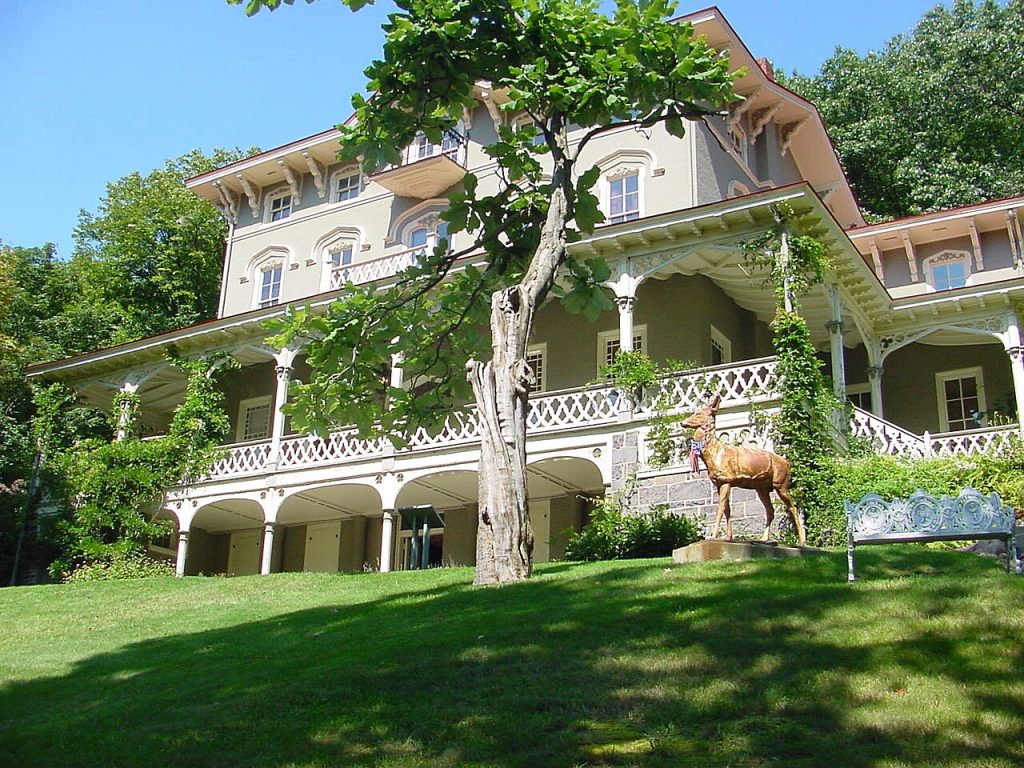
Perched on a hill above town, the Asa Packer Mansion belonged to Asa Packer, a railroad and coal entrepreneur. Today, it is also listed on the National Register of Historic Places. Therefore, it is one of the most popular sights in town.
Next door, the Harry Packer Mansion is also listed. Interestingly, it is said to have inspired Disney’s Haunted Mansion.
The Old Jail and the Molly Maguires
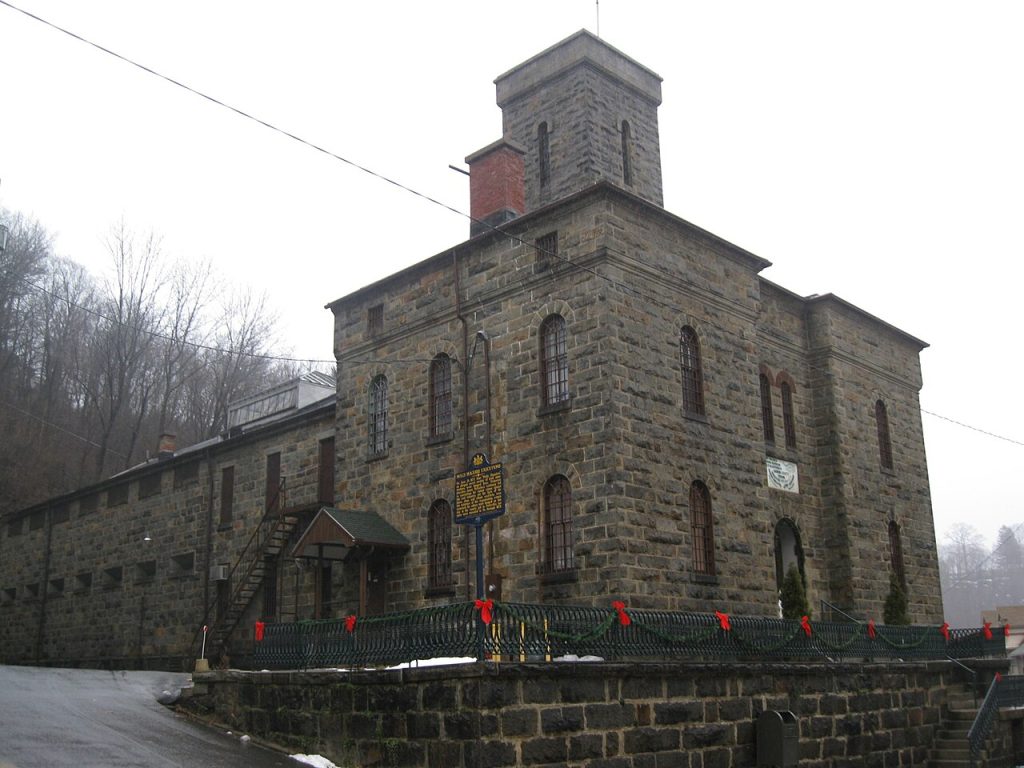
The old Carbon County Jail is another historic landmark. In particular, it is linked to the story of the Molly Maguires, a secret society of Irish coal miners. In 1876, a trial in Mauch Chunk led to four men being hanged for murder. Consequently, the jail is a sobering reminder of the town’s turbulent past.
St Mark’s Episcopal Church
St Mark’s Episcopal Church is another landmark on the National Register. Its Gothic Revival style also adds to the town’s grand Victorian character.
Outdoor Adventures Around Jim Thorpe
Beyond the historic center, the surrounding mountains offer plenty of adventure.
Lehigh Gorge State Park
Lehigh Gorge State Park follows the river through a deep, forested canyon. In fact, visitors can hike, mountain bike and go whitewater rafting. In particular, the area around Glen Onoko is known for its waterfalls.
Rafting the Lehigh River
During the warmer months, rafting trips run on the Lehigh River. As a result, the town is a favorite with families and adventure seekers.
Cycling the Gorge
Alternatively, rent a bike and follow the trail through the gorge. Since it is mostly flat, it suits riders of all levels.
The Lehigh Gorge Scenic Railway
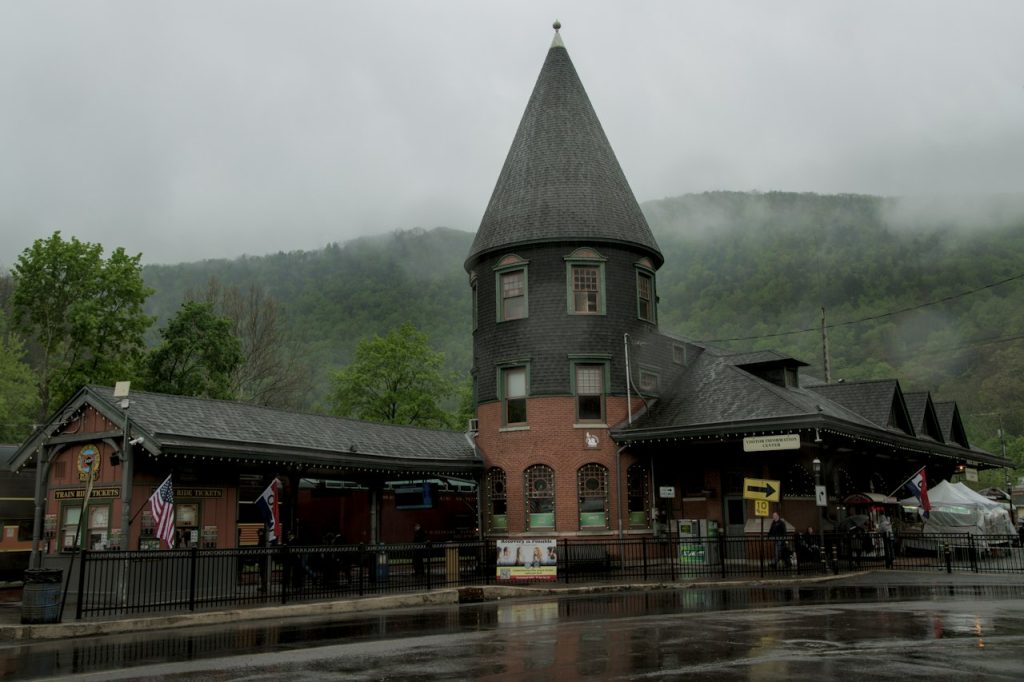
For a relaxing way to see the scenery, ride the seasonal Lehigh Gorge Scenic Railway. Trains depart from the historic station in town and then run along the river through the gorge.
One Historical Fact About Jim Thorpe, Pennsylvania
The town was not always called Jim Thorpe. Founded in 1818 as Mauch Chunk, it was a coal-shipping company town. Later, in 1954, Mauch Chunk and East Mauch Chunk merged and took the name of the Olympic champion Jim Thorpe, even though he never lived there. Today, his memorial stands in the borough.
How to Get to Jim Thorpe, Pennsylvania
In general, Jim Thorpe is best reached by car.
- From Allentown: The town lies about 29 miles to the northwest.
- From Philadelphia: The drive covers roughly 83 miles.
- From New York City: The town is about 117 miles to the west, which makes it a popular weekend getaway.
Once you arrive, park outside the busiest streets and explore on foot.
Best Time to Visit Jim Thorpe, Pennsylvania
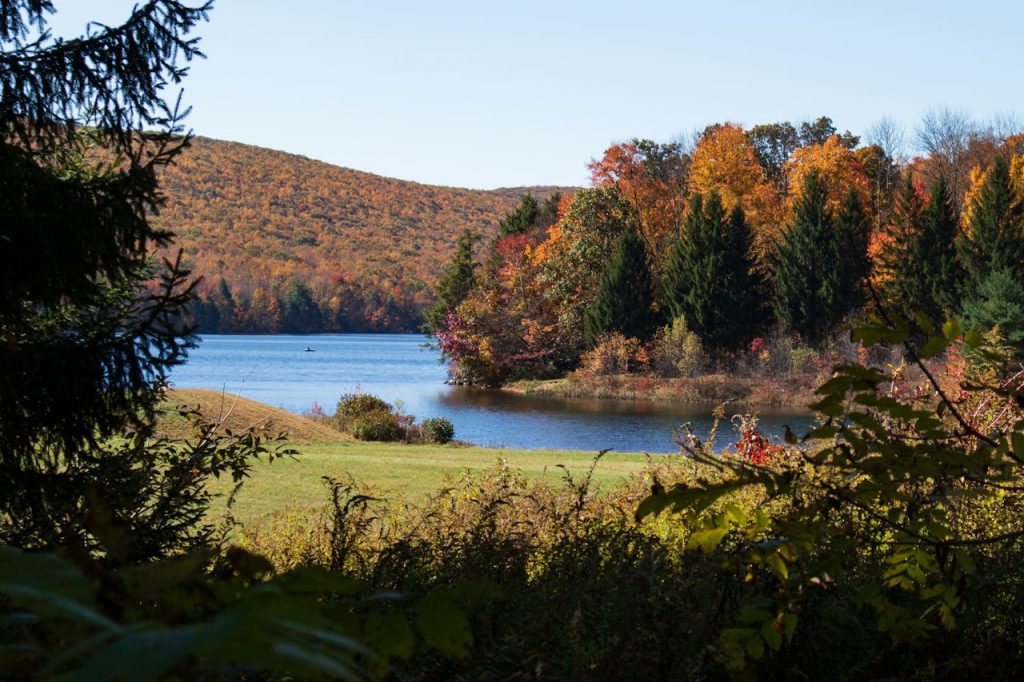
Autumn is the most popular season, when the forests of the Poconos turn red, orange and gold. In particular, October brings spectacular colors, so book early.
Alternatively, summer is ideal for rafting, hiking and cycling. In contrast, winter is quiet, although the snowy hills can be beautiful.
Is Jim Thorpe, Pennsylvania Worth Visiting?
Yes, absolutely. Jim Thorpe combines Victorian charm, fascinating history and outdoor adventure in one small mountain town. Moreover, it is easy to reach from several major cities.
Whether you love architecture, trains or hiking, you will find plenty to enjoy. Therefore, it makes a perfect weekend escape.
Final Thoughts
Jim Thorpe is a town with a story around every corner. Stroll along Broadway, tour the Packer mansions and ride the train through the Lehigh Gorge. Above all, visit in autumn if you can, when the mountains glow with color. If you love historic small towns in the United States, you may also enjoy our guides to Galena and Mackinac Island.
Image Credits
Unsplash
- Train Station in Jim Thorpe: Photo by Hasnain Sikora on Unsplash (Unsplash License)
- Autumn Lake in Jim Thorpe: Photo by Ryan Stone on Unsplash (Unsplash License)
Wikimedia Commons
- Broadway in Jim Thorpe: Photo by Mr. Matté via Wikimedia Commons (CC BY-SA 4.0)
- Asa Packer Mansion: Photo by Chris18240 via Wikimedia Commons (Public domain)
- Historic Building in Jim Thorpe: Photo by Doug Kerr via Wikimedia Commons (CC BY-SA 2.0)
- Victorian Buildings on Broadway: Photo by Derek Ramsey via Wikimedia Commons (GFDL 1.2)