
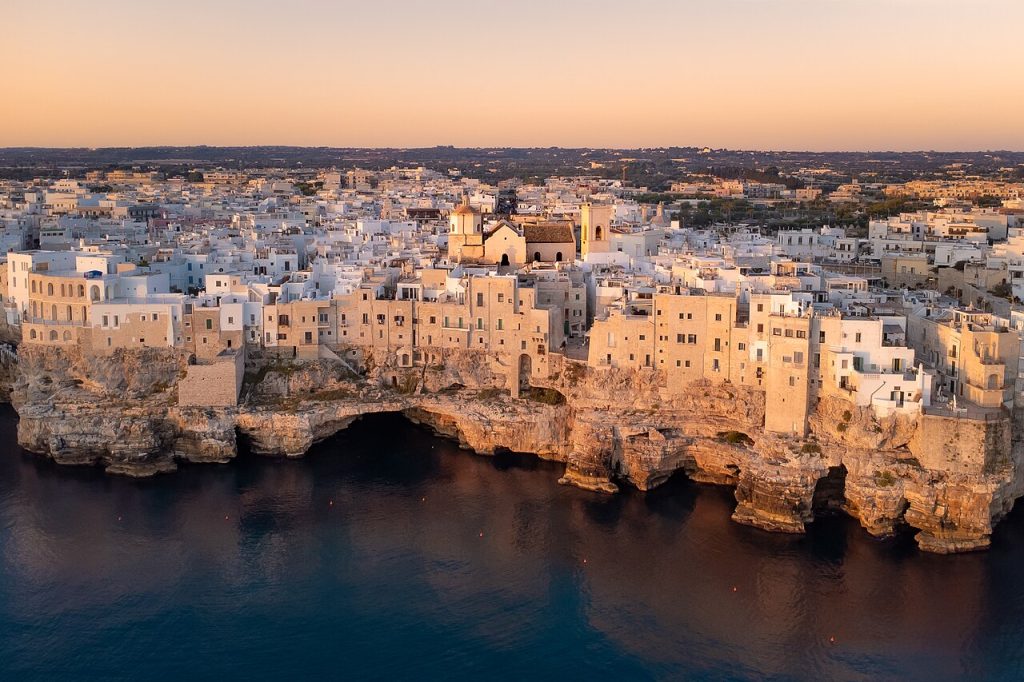
Polignano a Mare Italy is a whitewashed town perched on limestone cliffs above the Adriatic Sea in Puglia. Its old town hangs right over the water, sea caves open beneath the houses, and a tiny pebble cove sits between two rocky walls. As a result, it has become one of the most photographed places on Italy’s southern coast.
Quick Facts About Polignano a Mare, Italy
| Country | Italy |
| Region | Metropolitan City of Bari, Apulia (Puglia) |
| Known For | Clifftop old town, Lama Monachile cove, sea caves, Domenico Modugno |
| UNESCO Status | Not listed |
| Founded | Ancient origins, possibly the Greek city of Neapolis of Apulia |
| Best Time to Visit | May, June and September |
| Time Needed | 1 to 2 days |
| Continent | Europe |
Where Is Polignano a Mare, Italy?
Polignano a Mare is a town and municipality in the Metropolitan City of Bari, in the Apulia region of southern Italy. It lies on the Adriatic coast about 35 kilometres south-east of Bari, between Mola di Bari and Monopoli.
Why Visit Polignano a Mare, Italy?
First, the setting is remarkable. Few towns are built so close to the edge of the sea, and every lane in the old centre seems to end at a balcony over the water. In addition, the town is compact, so you can explore it on foot in a few hours.
Second, Polignano a Mare makes an easy base for discovering Puglia. Bari, Monopoli, Alberobello and the Itria Valley are all within reach. Finally, the town has a lively food scene, with fresh seafood, local olive oil and creamy gelato on almost every corner.
Lama Monachile and the Old Town
Lama Monachile
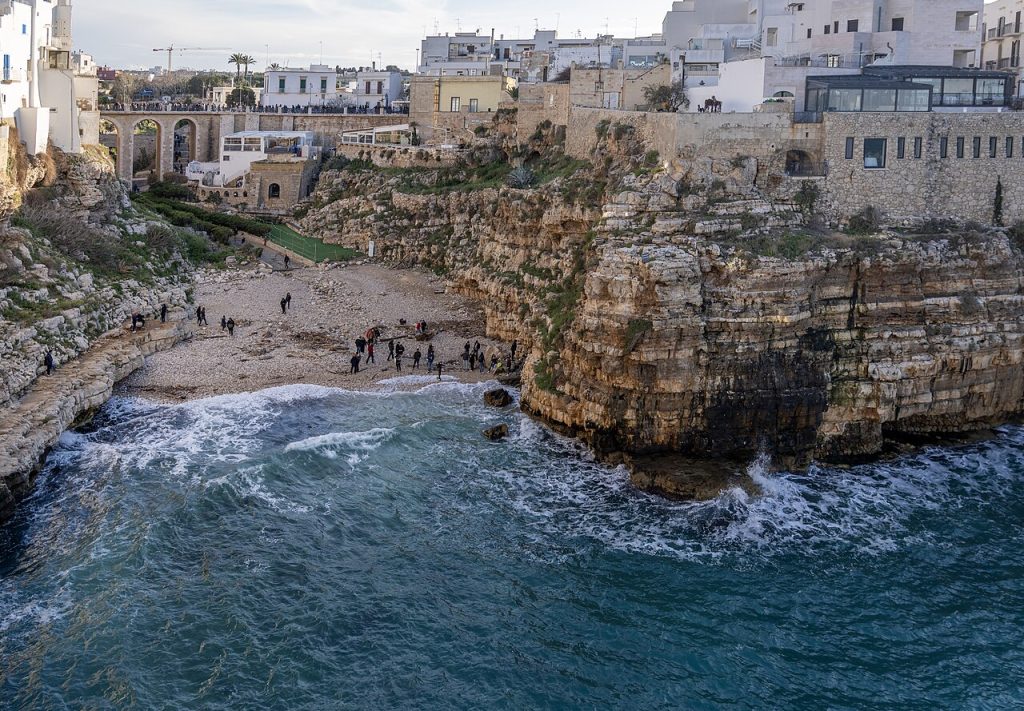
Lama Monachile is the symbol of Polignano a Mare. This narrow cove sits at the mouth of a small ravine, with tall cliffs and houses rising on both sides. The pebble beach is tiny, yet on summer days it fills with swimmers, and the clear turquoise water is impossible to resist.
The Bridge Over the Cove
Above the beach, a bridge carries the road over Lama Monachile. It follows the route of the ancient Via Traiana, the Roman road that once linked Benevento to Brindisi. From the bridge, you get one of the classic views of the cove and the old town.
Lanes, Terraces and Poetry
Inside the historic centre, narrow white lanes lead to small squares, churches and panoramic terraces. Look out for the short poems painted on doors and steps throughout the old town, a playful local touch. Meanwhile, the Chiesa Matrice, the main church, stands near the heart of the centre.
Sea Caves and Clifftop Views
The cliffs beneath Polignano a Mare are riddled with sea caves carved by the waves over thousands of years. The most famous is Grotta Palazzese, a cave that houses a hotel restaurant where diners eat just above the sea. Because tables there are in high demand, reservations are essential.
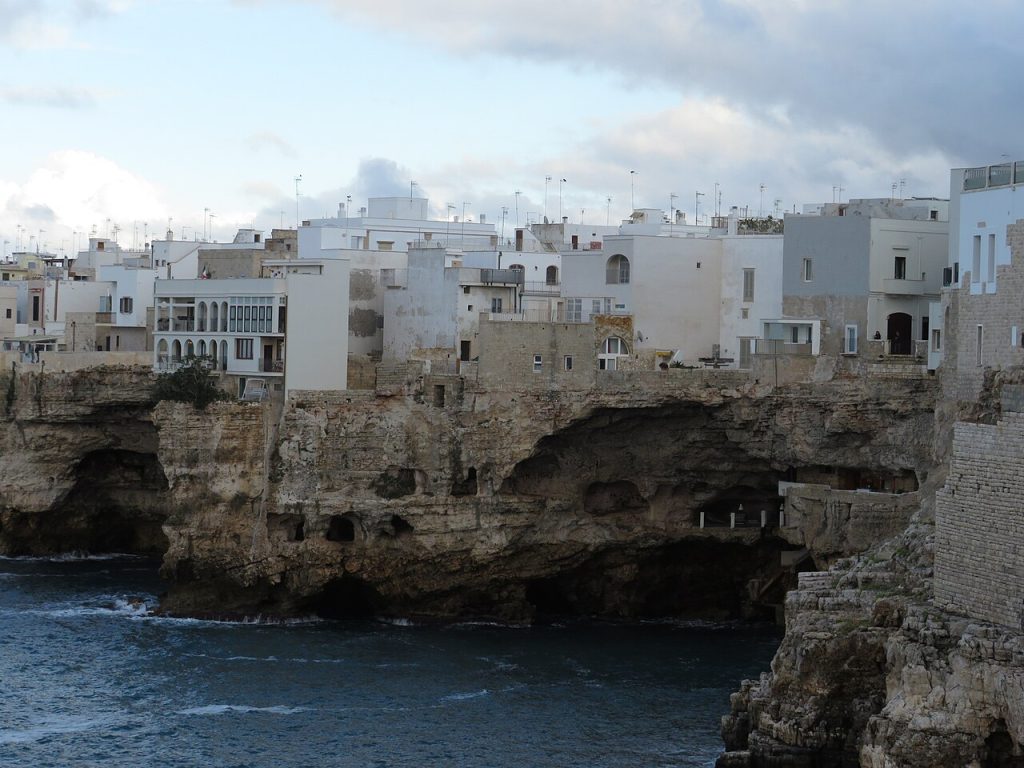
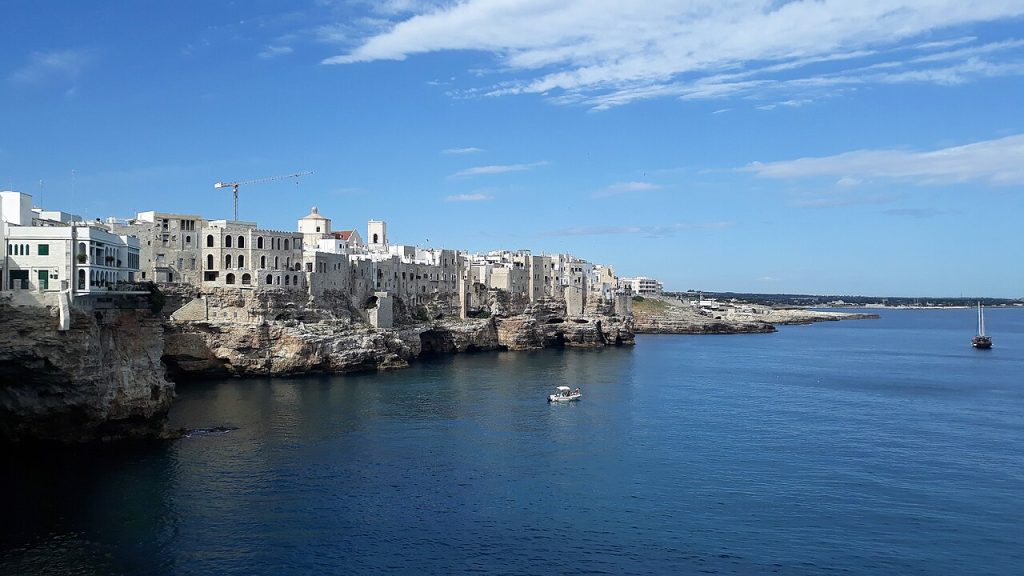
Many other caves can only be seen from the water. For this reason, boat tours leave from the small harbour and take visitors along the coast to peek inside. Afterwards, walk along the clifftop promenades for wide views of the Adriatic and the houses lined up along the edge. The town has also hosted the Red Bull Cliff Diving World Series, with divers launching from a platform high above the cove.
Art, Music and Local Life
The Domenico Modugno Statue
Polignano a Mare is the birthplace of singer Domenico Modugno, famous for the song “Nel blu, dipinto di blu”, better known as “Volare”. A bronze statue of Modugno with his arms open wide stands on a seafront terrace, and it is a favourite spot for photos at sunset.
Fondazione Museo Pino Pascali
This contemporary art museum is dedicated to Pino Pascali, an artist born in Polignano a Mare. It occupies a building right by the sea and hosts changing exhibitions alongside works by Pascali himself.
Beyond the Centre
Abbey of San Vito
A short distance north of town, the Abbey of San Vito Martire sits beside a small fishing harbour. Its seaside setting makes it a peaceful stop, especially in the early evening.
Palazzo dell’Orologio
Back in the old town, the Palazzo dell’Orologio, with its clock, overlooks one of the main squares and marks the entrance to the historic centre.
One Historical Fact About Polignano a Mare, Italy
Polignano a Mare is believed to stand on the site of the ancient Greek city of Neapolis of Apulia. Later, the Byzantines made it a municipal centre in the 6th century, and in the 11th century the Normans boosted the local economy through olive oil production.
How to Get to Polignano a Mare, Italy
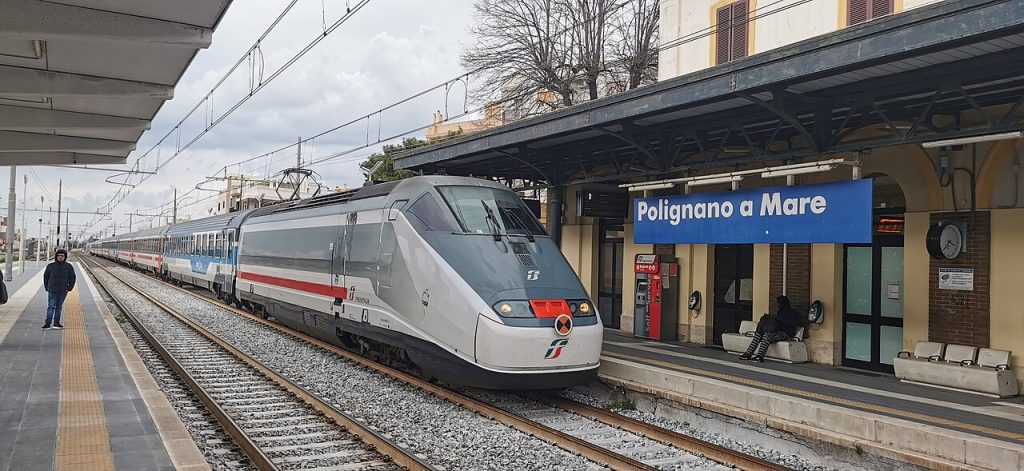
The nearest airport is Bari Karol Wojtyła Airport, with Brindisi Airport a little further south. From Bari, regional trains reach Polignano a Mare in around half an hour, and the station is a short walk from the old town. Alternatively, you can drive along the coast road, although parking near the centre is limited in summer.
Best Time to Visit Polignano a Mare, Italy
May, June and September are ideal, with warm sea water and fewer crowds. July and August are the busiest months, when the beach and lanes can feel packed. In contrast, winter is quiet and mild, which suits travellers who simply want to walk and enjoy the views.
Is Polignano a Mare, Italy Worth Visiting?
Yes, without doubt. Polignano a Mare packs dramatic scenery, history and good food into a small area. Moreover, its easy rail link to Bari means you can visit as a day trip or stay longer and explore more of Puglia.
Final Thoughts
Polignano a Mare Italy is a place where the sea is always part of the view. Swim in Lama Monachile, wander the white lanes, take a boat into the caves and finish the day by the Modugno statue as the sun goes down. It is a memorable stop on any trip to southern Italy.
Image Credits
Wikimedia Commons
- Polignano a Mare Old Town at Dusk: Photo by Pasquale Alberto Carone via Wikimedia Commons (CC BY-SA 4.0)
- Lama Monachile in Polignano a Mare: Photo by ParisTaras via Wikimedia Commons (CC BY-SA 4.0)
- Grotta Palazzese Cliffs: Photo by Enric via Wikimedia Commons (CC BY-SA 4.0)
- Polignano a Mare Coastline: Photo by acediscovery via Wikimedia Commons (CC BY 4.0)
- Train at Polignano a Mare Station: Photo by Eino81 via Wikimedia Commons (CC0)