
Ushguli Georgia is a cluster of medieval villages high in the Caucasus, where stone defensive towers stand against a backdrop of glaciers and green valleys. It is one of the highest continuously inhabited settlements in Europe, and arriving here feels like stepping into another century.

Quick Facts About Ushguli, Georgia
| Country | Georgia |
| Region | Svaneti (Samegrelo-Zemo Svaneti) |
| Known For | Medieval Svan tower houses, Mount Shkhara, high-altitude villages |
| UNESCO Status | Part of the Upper Svaneti World Heritage Site (1996) |
| Founded | Medieval; most towers built between the 9th and 12th centuries |
| Best Time to Visit | June to September |
| Time Needed | 1 to 2 days |
| Continent | Asia |
Where Is Ushguli, Georgia?
Ushguli is a community of five medieval villages at the head of the Enguri gorge in Svaneti, in north-western Georgia. It sits at an altitude of about 2,100 metres near the foot of Mount Shkhara, one of the highest summits of the Greater Caucasus. The nearest town is Mestia, roughly 45 kilometres away by mountain road.
Why Visit Ushguli, Georgia?
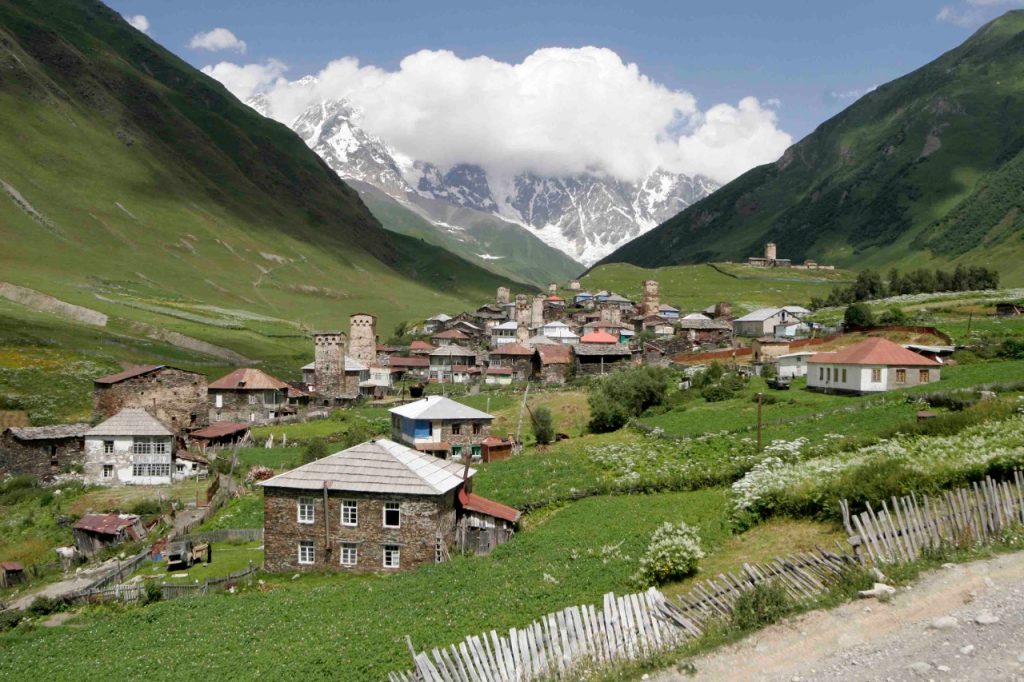
First of all, the scenery is extraordinary. Snow-capped Shkhara rises directly behind the villages, while meadows full of wildflowers cover the valley floor in summer. In addition, the dozens of stone towers make Ushguli one of the most distinctive places in the Caucasus.
Furthermore, Ushguli offers a rare look at traditional mountain life. About 70 families still live here year round, even though the area is covered in snow for around six months of the year. As a result, a visit feels personal and unhurried, especially once the day visitors leave.
The Svan Towers of Ushguli
What the Towers Were For
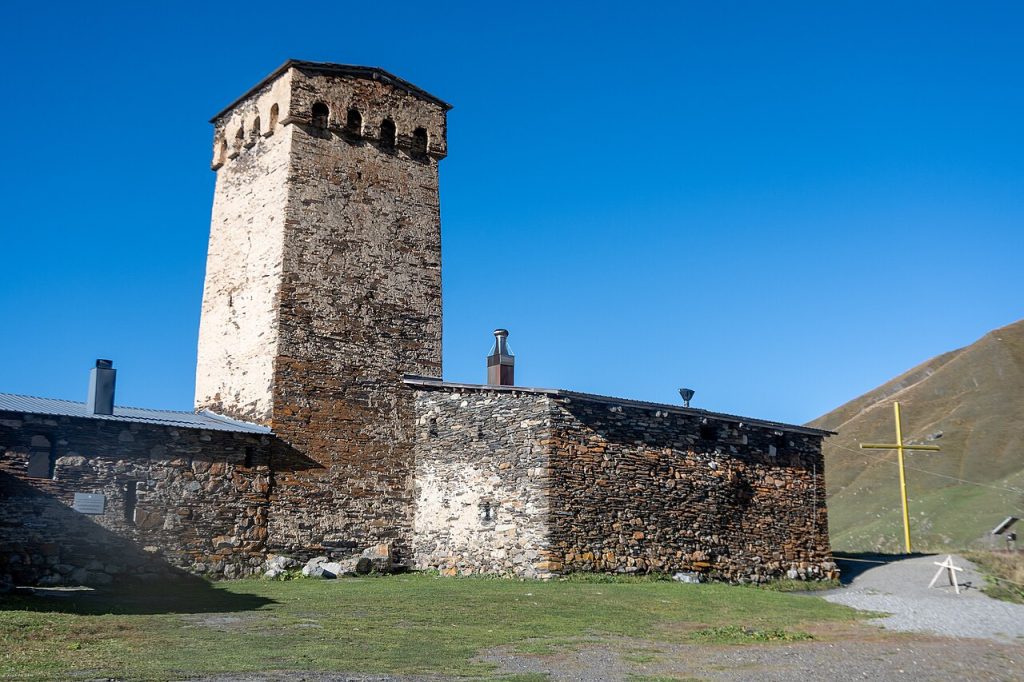
The most notable feature of Ushguli is its defensive tower houses. These stone towers, between three and five storeys tall, were built mainly between the 9th and 12th centuries. Families used them as refuges during attacks, feuds and avalanches.
Chazhashi Museum-Reserve
Chazhashi, one of the villages within the community, contains a large concentration of towers and has been preserved as a Museum-Reserve. Walking its lanes, you will see towers attached to old family homes, stone walls and wooden balconies.
Visiting a Tower
Some towers can be visited, often for a small fee paid to the family that owns them. Inside, steep ladders lead up through dark floors to small openings with views across the valley. However, the climb can be tight, so take your time.
Lamaria Church and the Five Villages
Ushguli is made up of five villages: Zhibiani, Chvibiani, Chazhashi, Murqmeli and Lamjurishi. Each has its own character, yet they are close enough to walk between in an hour or two.
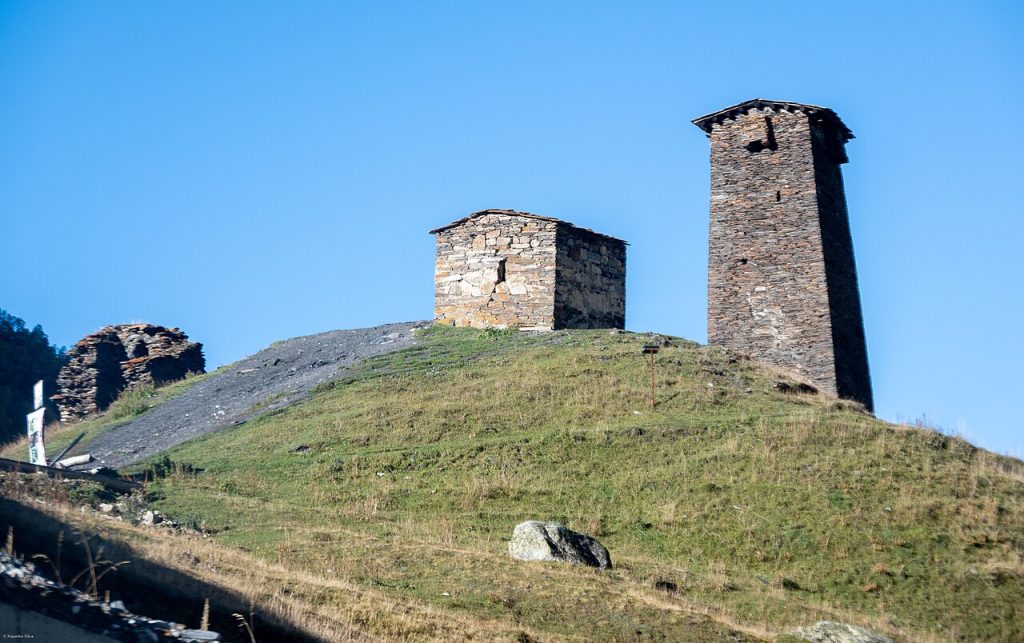
On a hilltop near Zhibiani stands Lamaria Church, a small chapel that dates back to the 12th century. Inside, it contains frescoes from Georgia’s Golden Age, and a stone tower stands beside it. Because the church overlooks the valley, it is also a lovely spot for photos at sunset.
Hiking and Exploring Around Ushguli
The Shkhara Glacier Hike
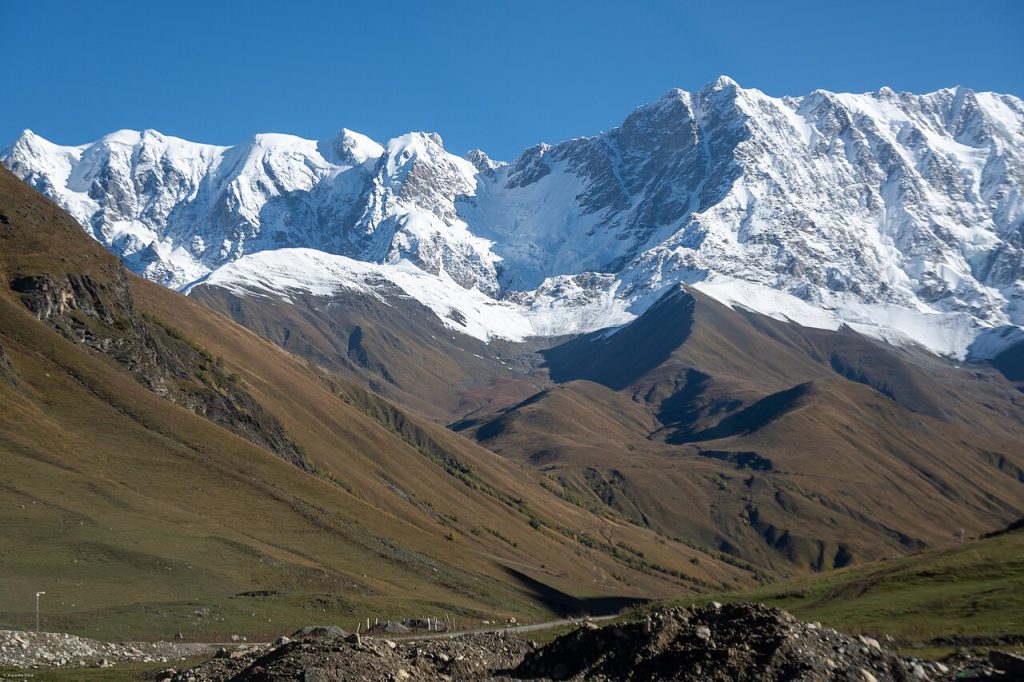
The most popular walk from Ushguli follows the Enguri River up the valley toward the Shkhara glacier. The trail is fairly gentle but long, so plan for a full day there and back. Along the way, the views of the Greater Caucasus only get better.
The Mestia to Ushguli Trek
A Classic Multi-Day Route
Many hikers arrive in Ushguli on foot via the Mestia to Ushguli trek, which usually takes four days. The route passes through traditional villages and over mountain passes, with guesthouses along the way.
Tips for Hikers
Bring layers, sun protection and cash, as card payments are limited. In addition, check the weather in Mestia before setting off, since conditions in the mountains change quickly.
One Historical Fact About Ushguli, Georgia
Because of its preservation and traditional architecture, Ushguli, together with Mestia and the surrounding area, was recognised as part of the Upper Svaneti UNESCO World Heritage Site in 1996. Its remote location helped protect its medieval character for centuries.
How to Get to Ushguli, Georgia
Most travellers first reach Mestia, either by minibus from Zugdidi or Kutaisi or by a short domestic flight from Tbilisi or Kutaisi when operating. From Mestia, shared jeeps and minibuses run to Ushguli in summer, and the drive takes around two hours. Alternatively, experienced hikers can walk in on the multi-day trek. In winter, the road is often blocked by snow, so check conditions before you go.
Best Time to Visit Ushguli, Georgia
The best time to visit Ushguli is from June to September, when the road is open, the meadows are green and hiking trails are clear. July and August are warm and busy with hikers. In contrast, winter is very cold and snowy, and access can be difficult or impossible.
Is Ushguli, Georgia Worth Visiting?
Absolutely. Ushguli combines medieval architecture, dramatic mountain scenery and a traditional way of life that few places still have. Even though getting there takes effort, the reward is one of the most memorable landscapes in Georgia.
Final Thoughts
Ushguli Georgia is a place to slow down and look up. Climb a Svan tower, visit Lamaria Church, hike toward the Shkhara glacier and spend a night in a family guesthouse. In short, it is a highlight of any trip to Svaneti.
Image Credits
Wikimedia Commons
- Svan Towers in Ushguli: Photo by Florian Pinel via Wikimedia Commons (CC BY-SA 3.0)
- Ushguli and Shkhara: Photo by Giorgi Abdaladze via Wikimedia Commons (CC BY-SA 4.0)
- Tower House in Ushguli: Photo by xiquinhosilva via Wikimedia Commons (CC BY 4.0)
- Hilltop Church and Tower, Ushguli: Photo by xiquinhosilva via Wikimedia Commons (CC BY 4.0)
- Caucasus Peaks Near Ushguli: Photo by xiquinhosilva via Wikimedia Commons (CC BY 4.0)