
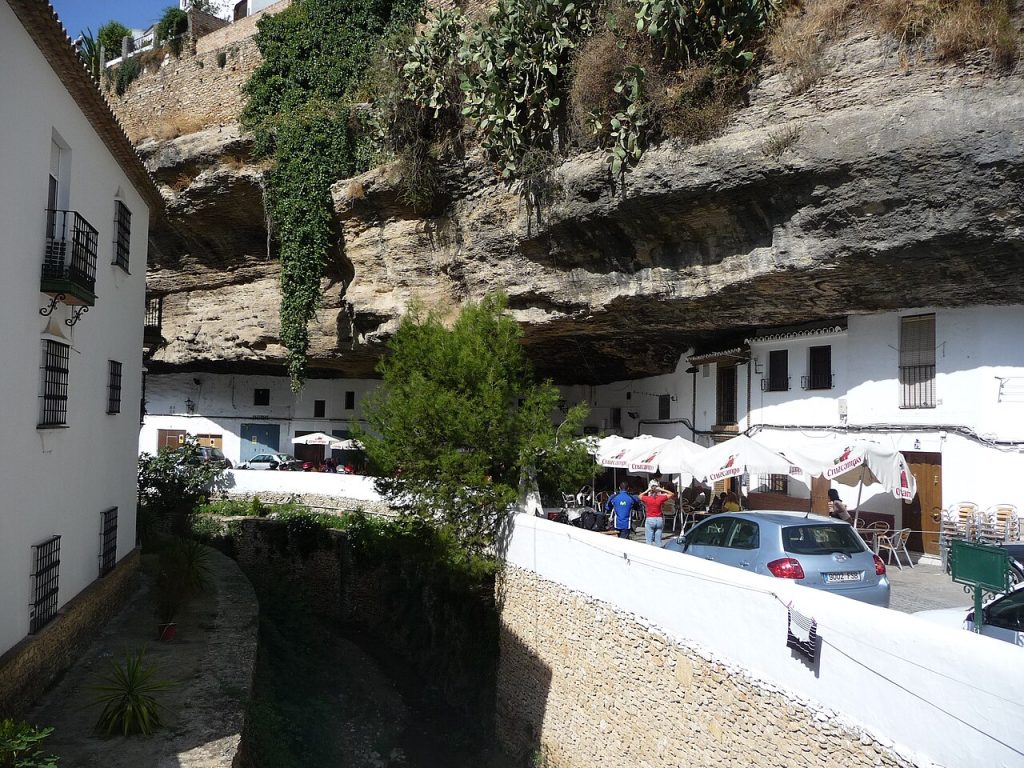
Setenil de las Bodegas Spain is a whitewashed Andalusian village where houses, bars and shops are built straight into the cliffs, sheltered by enormous overhangs of rock. In some streets, the stone ceiling stretches right across the lane, so you walk through what feels like a natural tunnel. It is one of the most unusual towns in Spain.
Quick Facts About Setenil de las Bodegas, Spain
| Country | Spain |
| Region | Province of Cádiz, Andalusia |
| Known For | Houses built under rock overhangs, white village streets, tapas |
| UNESCO Status | Not listed |
| Founded | Moorish fortified town; taken by Castile in 1484 |
| Best Time to Visit | March to May, or September to November |
| Time Needed | Half a day to 1 day |
| Continent | Europe |
Where Is Setenil de las Bodegas, Spain?
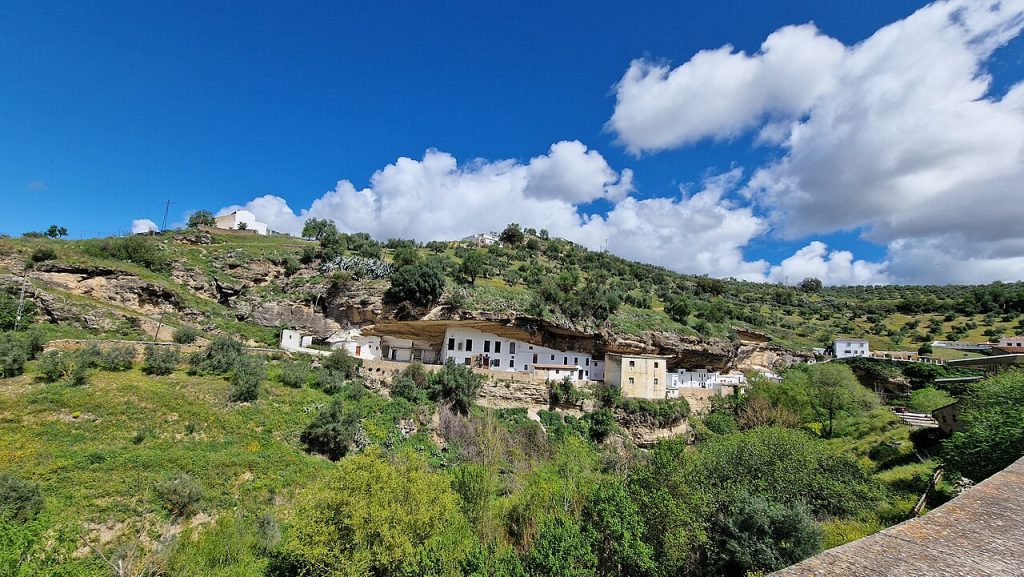
Setenil de las Bodegas is a town and municipality in the province of Cádiz, in Andalusia, southern Spain. It sits in a gorge carved by the Río Trejo, north-west of Ronda and about 157 kilometres north-east of the city of Cádiz.
Why Visit Setenil de las Bodegas, Spain?
First, the town’s rock dwellings are unlike anything else in Andalusia. Rather than building on top of the land, residents built into it, using the overhangs as roofs that keep homes cool in summer and warm in winter.
In addition, Setenil is part of the famous route of the Pueblos Blancos, the white villages of Andalusia. Finally, it makes an easy half-day trip from Ronda, and its tapas bars under the rock are a memorable place for lunch.
The Rock Streets of Setenil
Cuevas del Sol
Calle Cuevas del Sol is the town’s sunniest street, with bars and restaurants lined up under a huge ledge of rock facing the river. On warm days, the terraces fill with people enjoying tapas, local cheeses and chorizo in the shade.
Cuevas de la Sombra
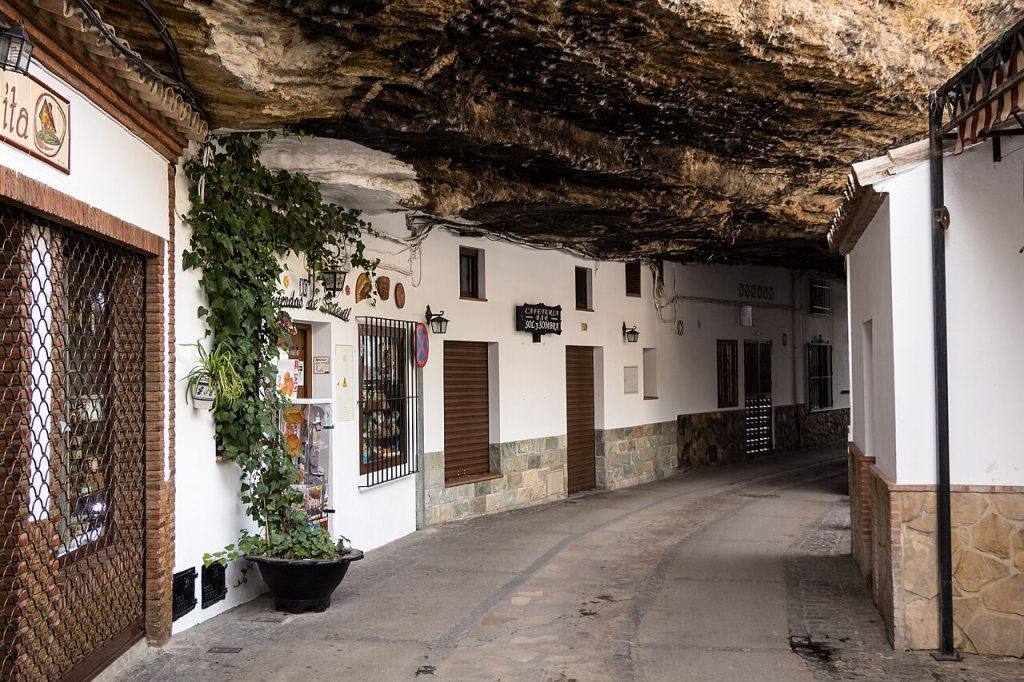
Across the river, Calle Cuevas de la Sombra is the opposite experience. Here, the rock covers the whole street, creating a cool, shaded tunnel that gets little direct sunlight. As a result, it is a refreshing place to walk on hot afternoons.
Calle Herrería and Other Lanes
Climb the steep lanes such as Calle Herrería for more houses built under the rock and lovely views over the rooftops. Along the way, you will find small shops selling local products and crafts.
Houses Built Into the Rock
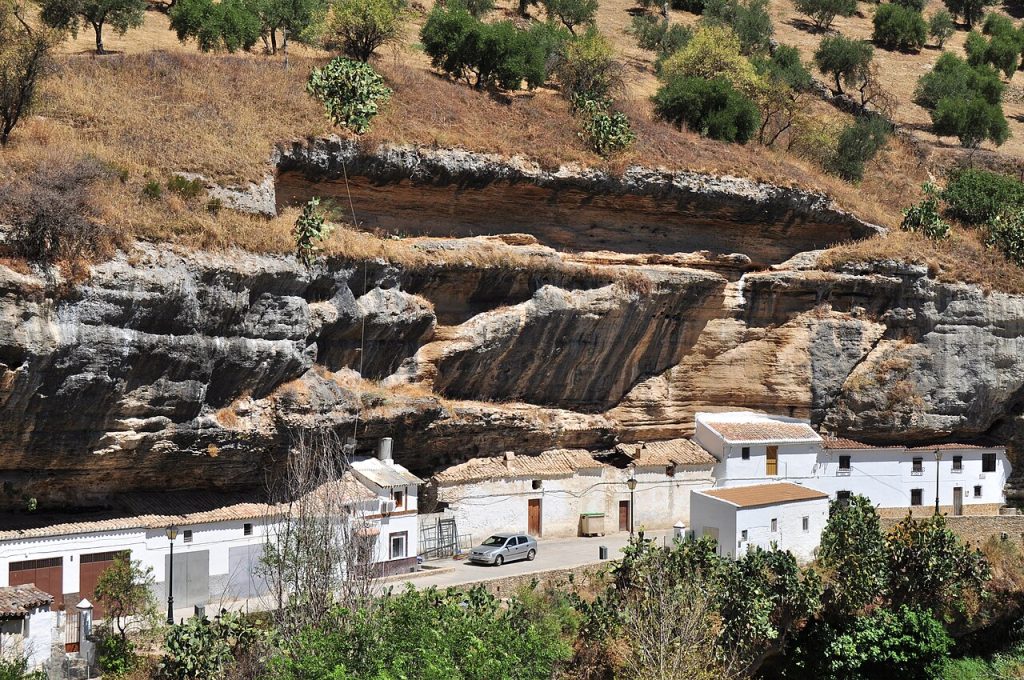
Setenil’s homes follow the shape of the cliff, with walls built up to meet the rock and the stone itself forming the roof. Some houses look as if the mountain is about to swallow them. In fact, this way of building made the most of natural shelter long before modern insulation existed.
Given the evidence of cave-dwelling communities nearby, such as at the Cueva de la Pileta west of Ronda, where habitation goes back more than 25,000 years, the site may have been occupied far earlier than the town itself. Either way, the cliffs have shaped life here for centuries.
The Castle, Viewpoints and River
The Moorish Castle
Above the town, the ruins of the castle still dominate the skyline. The fortress dates from at least the Almohad period in the 12th century, and its surviving tower offers views over the rooftops and the surrounding countryside.
Church of the Incarnation
Next to the castle, the Iglesia de Nuestra Señora de la Encarnación blends Gothic and later styles and is worth a quick look.
Viewpoints
Several miradores around the upper town give wide views of the white houses, the gorge and the olive groves beyond.
Along the Río Trejo
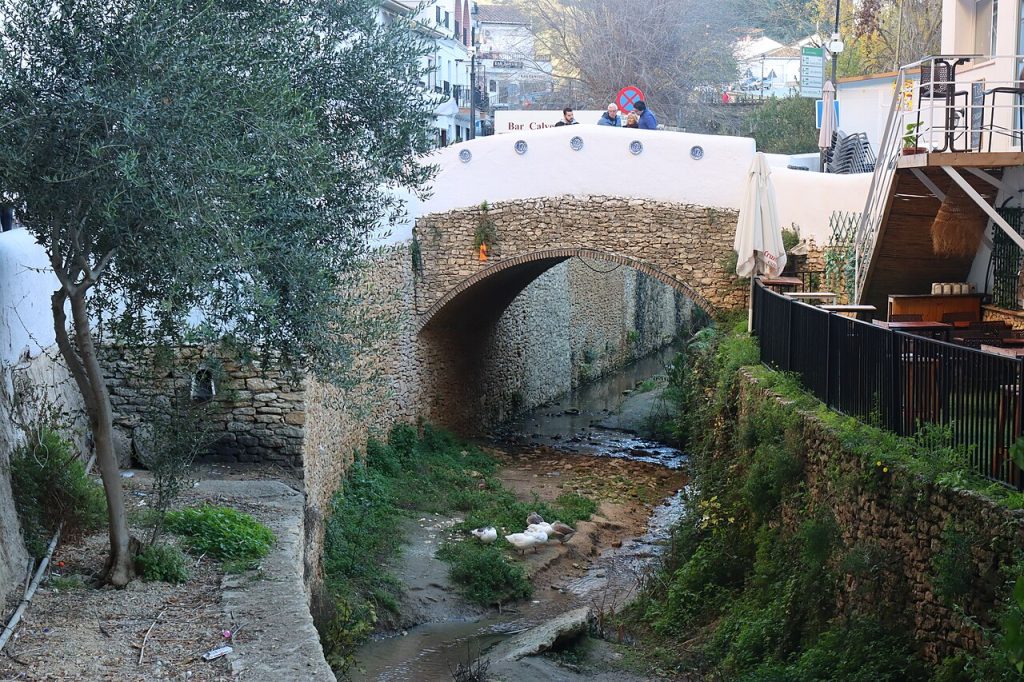
Down in the gorge, a stone bridge crosses the river and paths lead past houses tucked into the cliffs. It is a quieter area that rewards a slow wander.
One Historical Fact About Setenil de las Bodegas, Spain
Setenil was a fortified Moorish town that resisted Christian attacks, including a failed siege in 1407. It finally fell in 1484, when Castilian forces used gunpowder artillery and took fifteen days to capture the castle. According to tradition, its name comes from the Latin phrase septem nihil, meaning “seven times nothing”, a reference to the many sieges it withstood.
How to Get to Setenil de las Bodegas, Spain
The easiest way to reach Setenil is by car. It is about 20 minutes from Ronda and around an hour and a half from Málaga or Seville. Setenil also has a small railway station on the line through Ronda, although it lies a few kilometres outside the town, so a taxi or walk is needed. Parking in the centre is limited, so leave the car at the edge of town.
Best Time to Visit Setenil de las Bodegas, Spain
The best times to visit are spring, from March to May, and autumn, from September to November, when the weather is mild and pleasant for walking. Summer can be very hot, although the rock streets offer welcome shade. Weekdays are quieter than weekends, when day trippers arrive.
Is Setenil de las Bodegas, Spain Worth Visiting?
Yes, Setenil de las Bodegas is well worth visiting. Its rock-covered streets are truly unique, and the town is small enough to enjoy in a few hours. Moreover, it pairs perfectly with a visit to Ronda and the other white villages.
Final Thoughts
Setenil de las Bodegas Spain shows how people learned to live with the landscape rather than against it. Walk beneath the rock on Cuevas de la Sombra, enjoy tapas on Cuevas del Sol and climb to the castle for the view. In short, it is a highlight of any road trip through Andalusia.
Image Credits
Wikimedia Commons
- Street Under the Rock in Setenil: Photo by El Pantera via Wikimedia Commons (CC BY-SA 4.0)
- Setenil de las Bodegas Town View: Photo by Makoki20 via Wikimedia Commons (CC0)
- Lane Under the Rock, Setenil: Photo by Rafa Esteve via Wikimedia Commons (CC BY-SA 4.0)
- Houses Built Into the Rock, Setenil: Photo by Luis Rogelio HM via Wikimedia Commons (CC BY-SA 2.0)
- Bridge in Setenil de las Bodegas: Photo by Draceane via Wikimedia Commons (CC BY-SA 4.0)