
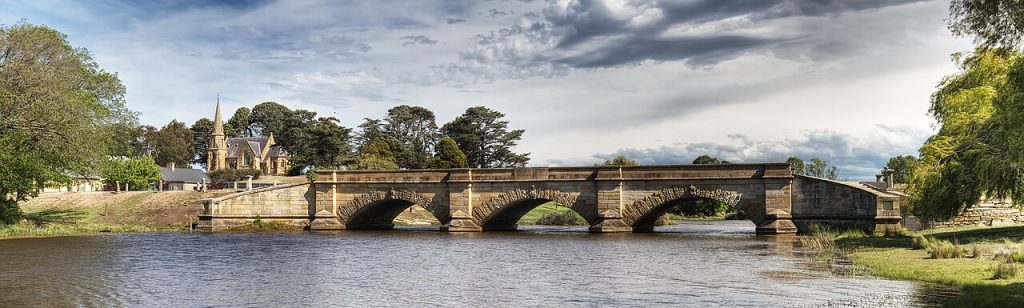
Ross Tasmania is a small village in the island’s Midlands, where convict-built sandstone cottages line quiet, tree-shaded streets and one of Australia’s finest colonial bridges spans the Macquarie River. It is an easy stop on the drive between Hobart and Launceston, yet it rewards anyone who stays a little longer.
Quick Facts About Ross, Tasmania
| Country | Australia |
| Region | Northern Midlands, Tasmania |
| Known For | Ross Bridge, convict history, sandstone buildings |
| UNESCO Status | Not listed |
| Founded | Named in 1821 by Governor Lachlan Macquarie |
| Best Time to Visit | October to April |
| Time Needed | Half a day to 1 day |
| Continent | Oceania |
Where Is Ross, Tasmania?
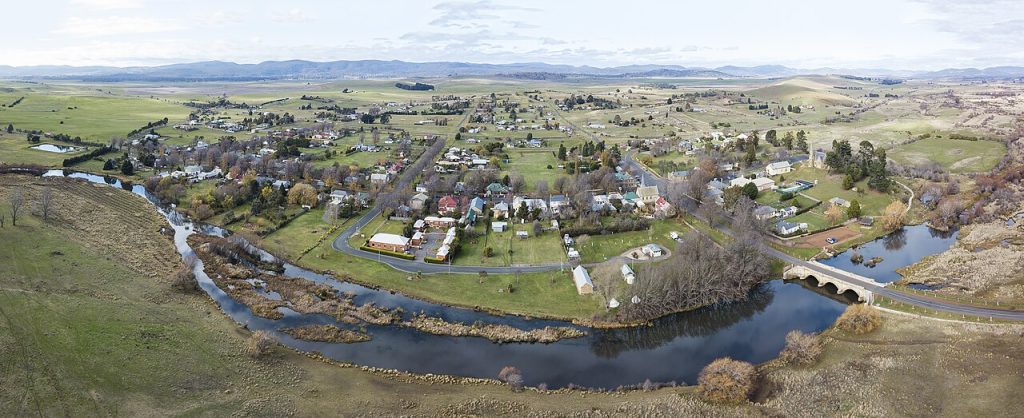
Ross lies on the Macquarie River in the Northern Midlands of Tasmania, Australia. It is about 78 kilometres south of Launceston and 117 kilometres north of Hobart, just off the Midland Highway.
Why Visit Ross, Tasmania?
First, Ross is one of the best-preserved colonial villages in Australia. The town is listed on the Register of the National Estate and is noted for its historic bridge, original sandstone buildings and convict history.
In addition, it is a peaceful place to break a road trip. You can see the main sights in a couple of hours, stretch your legs by the river and enjoy a pie or a vanilla slice at the bakery. Finally, the surrounding farmland, famous for fine wool, makes a lovely backdrop.
Ross Bridge
A Convict Masterpiece
Ross Bridge was completed in 1836 and is one of the oldest bridges still in use in Australia. Commissioned by Lieutenant-Governor George Arthur, it was designed by architect John Lee Archer and built by a convict work team.
The Carvings of Daniel Herbert
The bridge is famous for its carvings. Two convict stonemasons, James Colbeck and Daniel Herbert, worked on it, and Herbert is credited with most of the carved faces, animals and symbols that decorate the arches. Look closely, as some faces are said to depict local figures of the time.
Visiting the Bridge
Walk across the bridge and then down to the riverbank to see the carvings on the arches. Early morning and late afternoon light bring out the warm colour of the sandstone.
The Four Corners and Heritage Streets
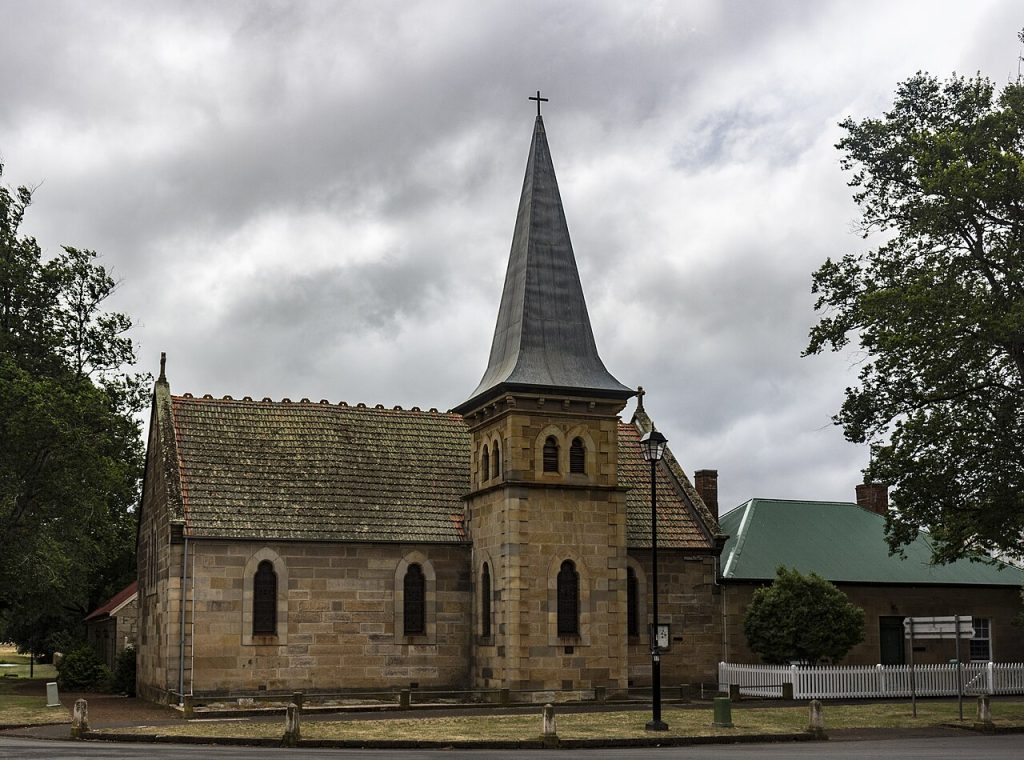
The village crossroads is humorously known as the “Four Corners of Ross”. Each corner has a label: Temptation, represented by the hotel, Recreation by the town hall, Salvation by the church and Damnation by the old jail. It is a playful summary of colonial life.
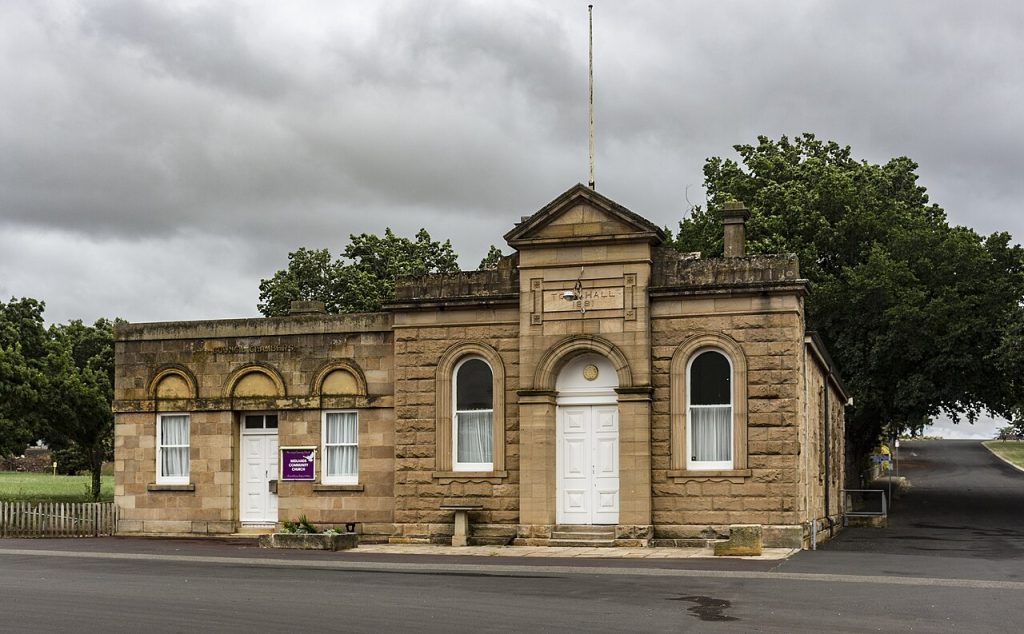
Beyond the crossroads, Church Street is lined with old sandstone buildings, including former shops, cottages and the historic Royal Ordnance Corps Store, which was built in 1836 and still has the corps crest carved above the door. Meanwhile, the church on the hill offers a fine view over the village.
Wool, Bakeries and the Female Factory
The Tasmanian Wool Centre
Ross sits in one of Australia’s best-known fine wool districts. The Tasmanian Wool Centre tells the story of the local wool industry and the town’s history, and it also sells woollen goods.
The Ross Female Factory
A Place of Convict Women
Just outside the village, the Ross Female Factory site was a convict institution for women. Between 1848 and 1854, it housed female convicts and their babies. Today, interpretive signs and a small cottage help visitors understand their lives.
Walking the Site
A short walk from the village leads across open grassland to the site, with views back toward the town and the river.
Ross Village Bakery
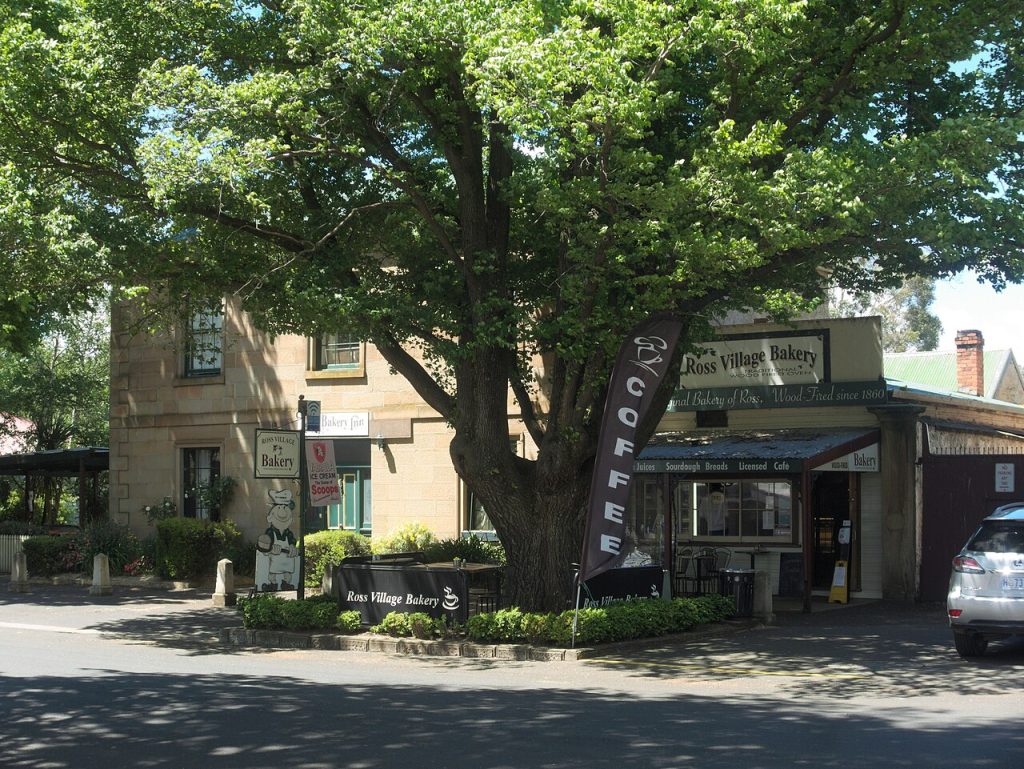
The Ross Village Bakery is a popular stop for travellers, known for its pies and vanilla slices baked in a traditional wood-fired oven. Grab a treat and enjoy it in the nearby park.
One Historical Fact About Ross, Tasmania
On an expedition in 1821, Governor Lachlan Macquarie passed through the area and named it Ross, after Ross Priory, the Scottish seat of his friend Hector Macdonald Buchanan on Loch Lomond. Ross soon became an important stopover on road journeys between Launceston and Hobart.
How to Get to Ross, Tasmania
The easiest way to reach Ross is by car along the Midland Highway. From Launceston, the drive takes about an hour, and from Hobart around an hour and a half. Some coach services between Hobart and Launceston also stop at Ross, although a car gives you more freedom to explore the Midlands.
Best Time to Visit Ross, Tasmania
The best time to visit is from October to April, when the weather is milder and the gardens are green. Autumn, from March to May, brings golden leaves to the village’s old trees. Winter is cold and frosty, though crisp sunny days can be beautiful.
Is Ross, Tasmania Worth Visiting?
Yes, Ross is well worth visiting. Its bridge, heritage streets and convict history make it one of the most interesting stops in Tasmania’s Midlands. Moreover, it is right on the main road, so it fits easily into any itinerary.
Final Thoughts
Ross Tasmania is a small village with a big story. Admire Daniel Herbert’s carvings on Ross Bridge, stand at the Four Corners, learn about the Female Factory and treat yourself at the bakery. In short, it is the perfect pause on a Tasmanian road trip.
Image Credits
Wikimedia Commons
- Ross Bridge: Photo by JJ Harrison via Wikimedia Commons (CC BY-SA 3.0)
- Aerial View of Ross: Photo by Chensiyuan via Wikimedia Commons (CC BY-SA 4.0)
- Sandstone Building in Ross: Photo by Steven Penton via Wikimedia Commons (CC BY 2.0)
- Church in Ross: Photo by Steven Penton via Wikimedia Commons (CC BY 2.0)
- Ross Bakery: Photo by Gary Houston via Wikimedia Commons (CC0)