
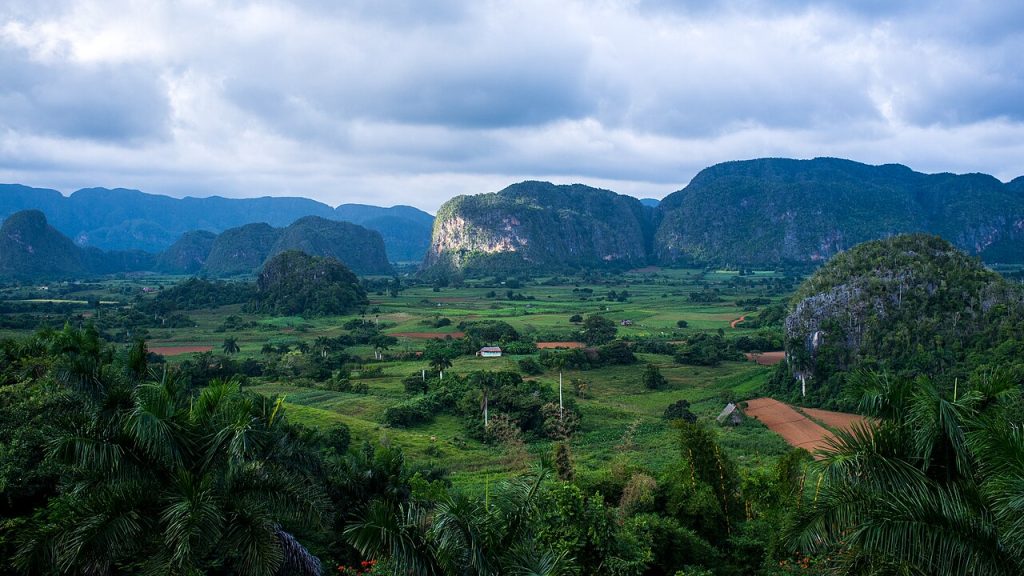
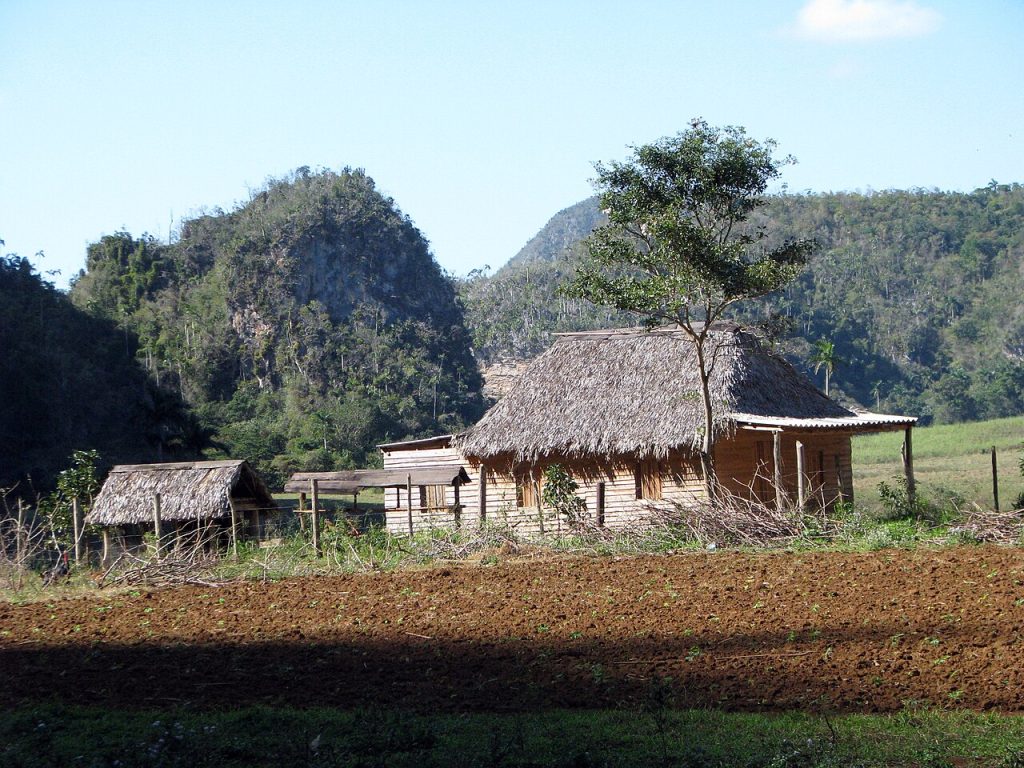
Viñales Cuba is a sleepy farming town set in one of the most striking landscapes in the Caribbean. Rounded limestone hills called mogotes rise from a flat valley of red soil, where farmers still plough with oxen and tobacco leaves dry in thatched barns. Slow, green and peaceful, it is the perfect contrast to the energy of Havana.
Quick Facts About Viñales, Cuba
| Country | Cuba |
| Region | Pinar del Río Province |
| Known For | Mogotes, tobacco farms, caves, rural landscapes |
| UNESCO Status | Viñales Valley World Heritage Site (1999) |
| Founded | Town established in 1878; area settled by tobacco growers in the early 1800s |
| Best Time to Visit | November to April |
| Time Needed | 2 to 3 days |
| Continent | Caribbean |
Where Is Viñales, Cuba?
Viñales is a town and municipality in the north-central part of Pinar del Río Province, in western Cuba. It lies in the Sierra de los Órganos, roughly three hours by road west of Havana, with the Viñales Valley spreading out immediately to the north of town.
Why Visit Viñales, Cuba?
First, the scenery is unlike anywhere else in Cuba. The valley’s mogotes, tobacco fields and palm trees create a landscape that looks almost painted.
In addition, Viñales is the heart of Cuba’s tobacco country, so it is the place to learn how famous Cuban cigars begin. Finally, the town itself is relaxed and welcoming, with colourful single-storey houses, family-run guesthouses and live music in the evenings.
The Viñales Valley and Its Mogotes
What Are Mogotes?
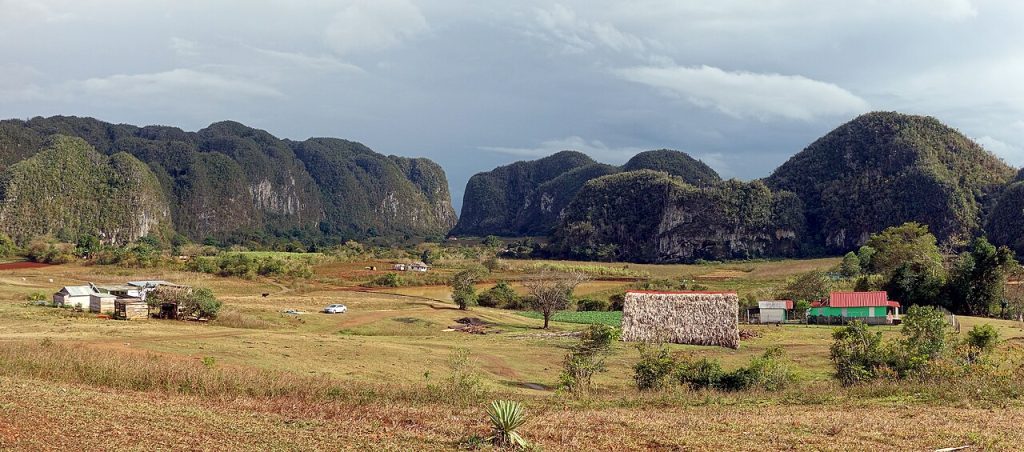
Mogotes are steep-sided limestone hills formed over millions of years as water dissolved the surrounding rock. Covered in vegetation, they rise abruptly from the valley floor and give Viñales its distinctive skyline.
Viewpoints
For the classic view, head to the viewpoint near Hotel Los Jazmines, just outside town. From there, the valley stretches out below, dotted with farms and framed by mogotes. Sunrise and late afternoon offer the best light.
Exploring on Horseback or Bike
Horseback rides with local guides are a popular way to explore the valley, passing farms, caves and small lakes. Alternatively, hire a bicycle and follow the quiet country roads at your own pace.
Tobacco Farms
Viñales is an agricultural area where fruit, vegetables, coffee and especially tobacco are grown using traditional methods. Many farms welcome visitors and explain each stage, from planting to harvest.
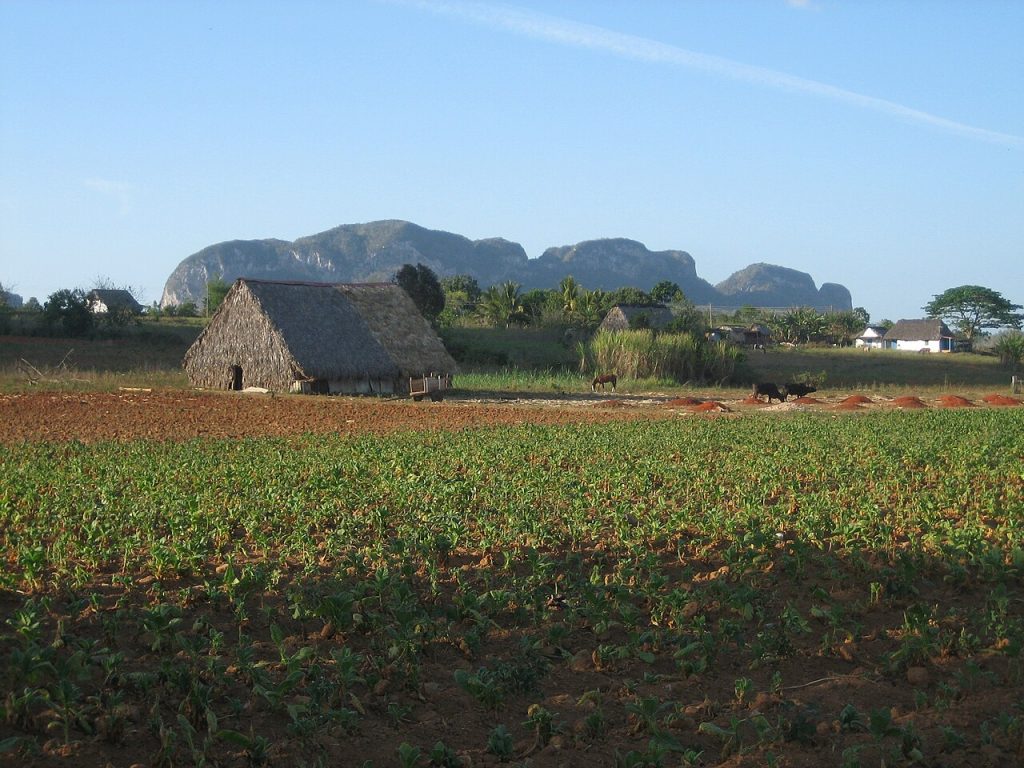
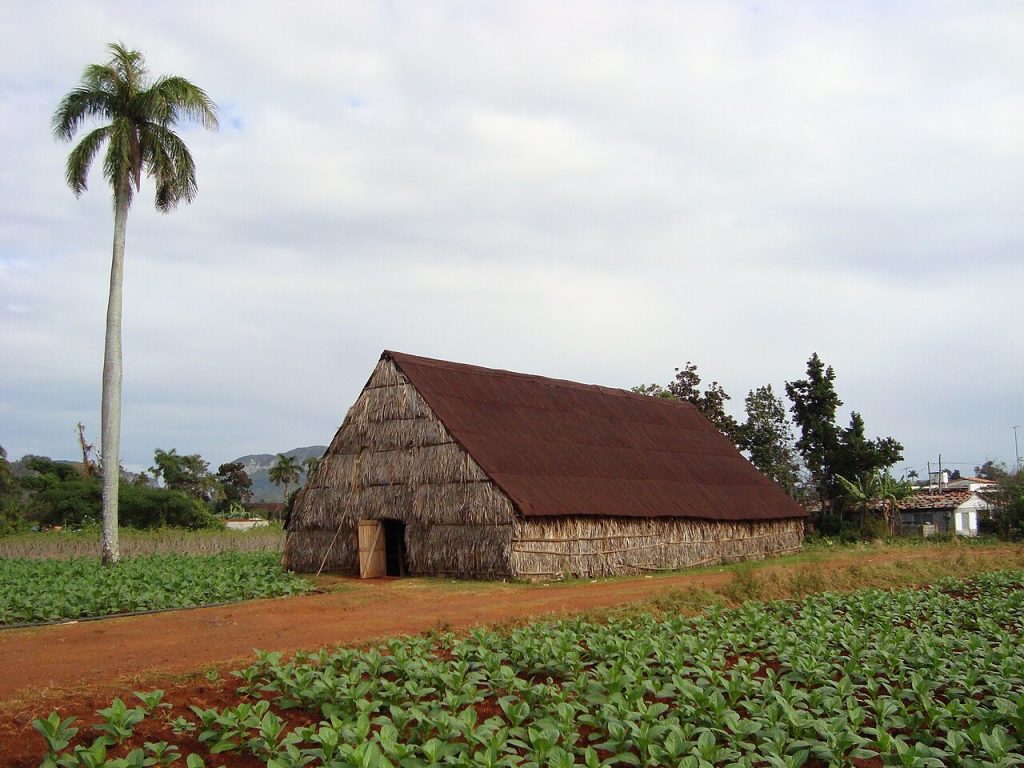
After harvest, tobacco leaves hang in tall thatched curing barns, where they dry slowly in the air. On a farm visit, you can often watch a farmer roll a cigar by hand and learn why the soil and climate here are so prized.
Caves, Murals and Local Life
Cueva del Indio
A Cave by Boat
Cueva del Indio is a cave system where visitors walk through limestone passages before taking a short boat ride along an underground river.
Other Caves
Cueva de José Miguel and the Santo Tomás cave system are also nearby. These caves once served as shelters for people escaping slavery.
Mural de la Prehistoria
The Mural de la Prehistoria is a huge, brightly painted mural on the side of a mogote, created in the 1960s. Opinions on its style vary, yet it is a well-known stop in the valley.
The Town
Back in town, the main street is lined with porched houses, cafes and craft stalls. The small church and central square come alive in the evening, often with live music.
One Historical Fact About Viñales, Cuba
Before European settlement, the area was home to Taíno people and later to people who had escaped slavery. At the beginning of the 1800s, tobacco growers from the Canary Islands settled the region, and the town of Viñales was established in 1878. In 1999, the Viñales Valley was inscribed as a UNESCO World Heritage Site for its karst landscape, traditional agriculture, vernacular architecture, crafts and music.
How to Get to Viñales, Cuba
Most visitors travel from Havana, about three hours away. Víazul tourist buses run daily, and shared taxis, known as colectivos, are a popular and faster alternative. Many travellers stay in casas particulares, private guesthouses run by local families, which offer a warm welcome and home-cooked meals.
Best Time to Visit Viñales, Cuba
The best time to visit Viñales is during the dry season, from November to April, when skies are clearer and trails are firm. This is also when tobacco is grown and harvested. In contrast, the wet season, from May to October, brings heavy afternoon showers and a risk of hurricanes later in the year.
Is Viñales, Cuba Worth Visiting?
Yes, Viñales is well worth visiting. Its landscape is among the most memorable in the Caribbean, and its farms offer real insight into Cuban rural life. Moreover, its relaxed pace makes it ideal for a few restful days.
Final Thoughts
Viñales Cuba is a place to slow down and breathe. Ride a horse through the valley, visit a tobacco farm, explore a cave by boat and watch the sun set over the mogotes. In short, it is a highlight of any trip to Cuba.
Image Credits
Wikimedia Commons
- Viñales Valley: Photo by Severin.stalder via Wikimedia Commons (CC BY-SA 3.0)
- View of the Mogotes, Viñales: Photo by Velvet via Wikimedia Commons (CC BY-SA 4.0)
- Tobacco Field in Viñales: Photo by Susanne Bollinger via Wikimedia Commons (CC BY-SA 4.0)
- Tobacco Curing Hut and Fields: Photo by Adam Jones via Wikimedia Commons (CC BY-SA 2.0)
- Farm in Viñales: Photo by Hyppolyte de Saint-Rambert via Wikimedia Commons (CC BY-SA 4.0)