
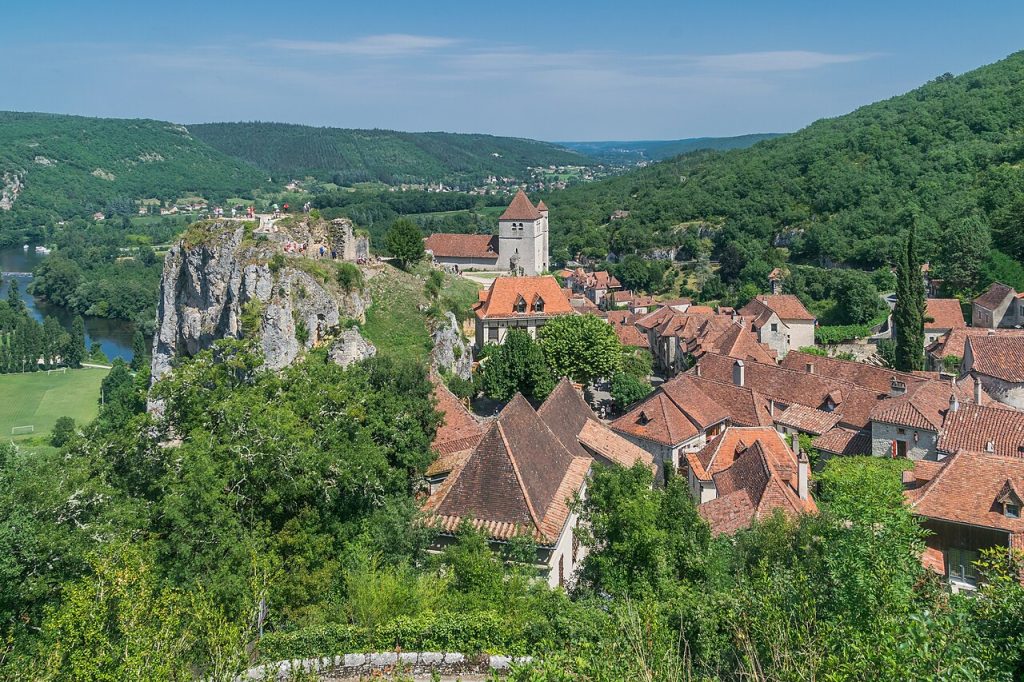
Saint-Cirq-Lapopie France is a medieval village that clings to a cliff high above the Lot River. Moreover, its stone houses, steep lanes and Gothic church look almost unchanged since the Middle Ages. In fact, many travelers call it one of the most beautiful villages in the country. So, this guide covers what to see, how to get there and when to go.
Quick Facts About Saint-Cirq-Lapopie, France
| Country | France |
| Region | Lot department, Occitanie |
| Known For | Clifftop setting above the Lot River, Gothic church, castle ruins, towpath walk |
| UNESCO Status | Not listed; member of Les Plus Beaux Villages de France |
| Founded | Middle Ages, as a stronghold of the Lapopie lords |
| Best Time to Visit | April to June and September to October |
| Time Needed | Half a day to 1 day |
| Continent | Europe |
Where Is Saint-Cirq-Lapopie, France?
Saint-Cirq-Lapopie sits in the Lot department of Occitanie, in southwestern France. More precisely, it stands on a rocky cliff about 100 meters above the Lot River. Meanwhile, the town of Cahors lies around 30 kilometers to the west.
In addition, the village belongs to the Causses du Quercy Regional Natural Park. This park is, above all, a land of limestone plateaus, caves and deep river valleys.
Why Visit Saint-Cirq-Lapopie, France?
First, the setting is spectacular. Indeed, the whole village seems to hang over the valley, and the views change with every turn of the lane. Second, the old center is very well preserved, with timber framed houses, old workshops and narrow streets. As a result, it feels almost like an open air museum.
Also, the village has a long artistic history. For example, the painter Henri Martin helped make it famous, and the poet André Breton spent time here in the 1950s. Moreover, it is a member of Les Plus Beaux Villages de France, the association of the most beautiful villages in the country. In 2012, it even won a national television vote for the favorite village of the French.
Things to Do in Saint-Cirq-Lapopie
Wander the Medieval Lanes
The best way to enjoy the village is simply to walk. Steep lanes lead past stone houses with brown tiled roofs, carved doorways and small gardens. Meanwhile, many old buildings now hold craft shops, galleries and cafés.
For centuries, local artisans worked in these streets, and woodturning was an important trade. Still, artists and craftspeople use some of the old workshops today.
Wear good shoes, because the cobbles are uneven and the slopes are steep. Also, try to explore early in the morning, before the day trippers arrive.
Visit the Gothic Church
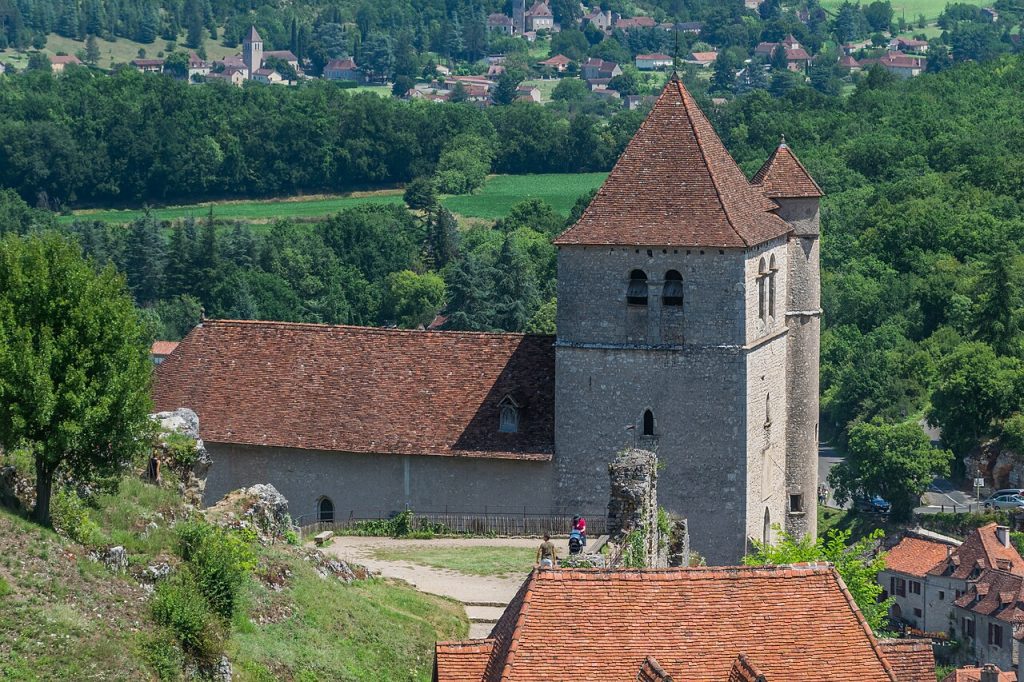
The fortified church stands right at the edge of the cliff. It dates mainly from the 16th century and has a sturdy bell tower and simple Gothic lines. Inside, the space is calm and cool. As a result, it is a welcome break on a hot day. However, the views from the terrace beside the church are just as memorable as the building itself.
Climb to the Castle Ruins
At the top of the village, a path leads up to the ruins of the old castle. Admittedly, only fragments of the walls remain today. Still, the rock offers the finest panorama in the area.
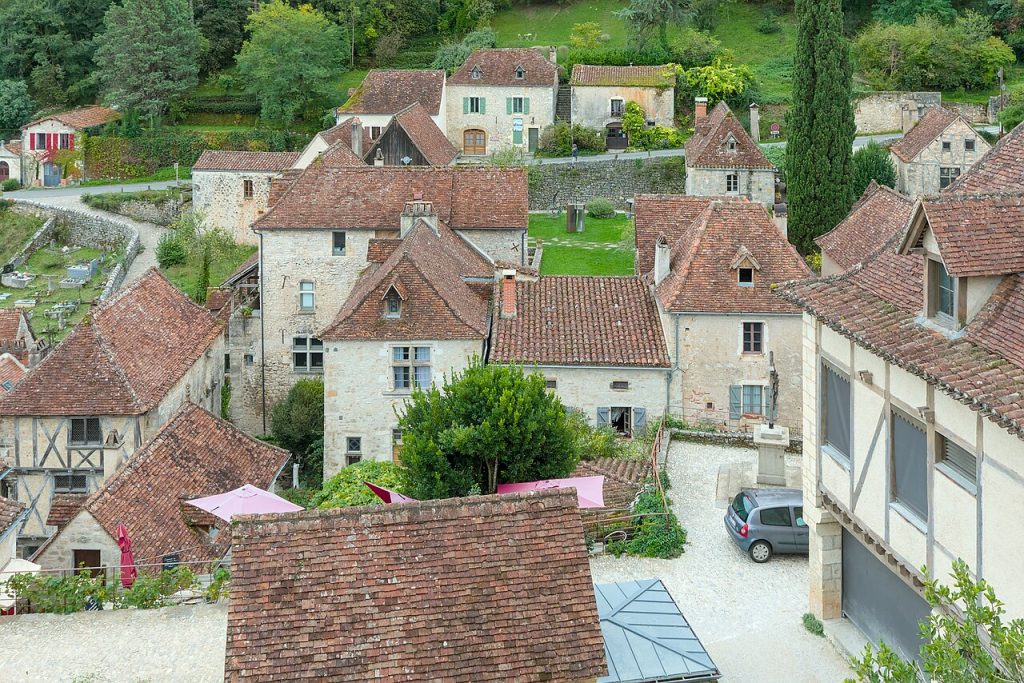
From here, you can see the rooftops below, the church tower, as well as the green curve of the valley. So, this is the best spot for photos, especially in the soft light of late afternoon.
The Lot River and the Towpath
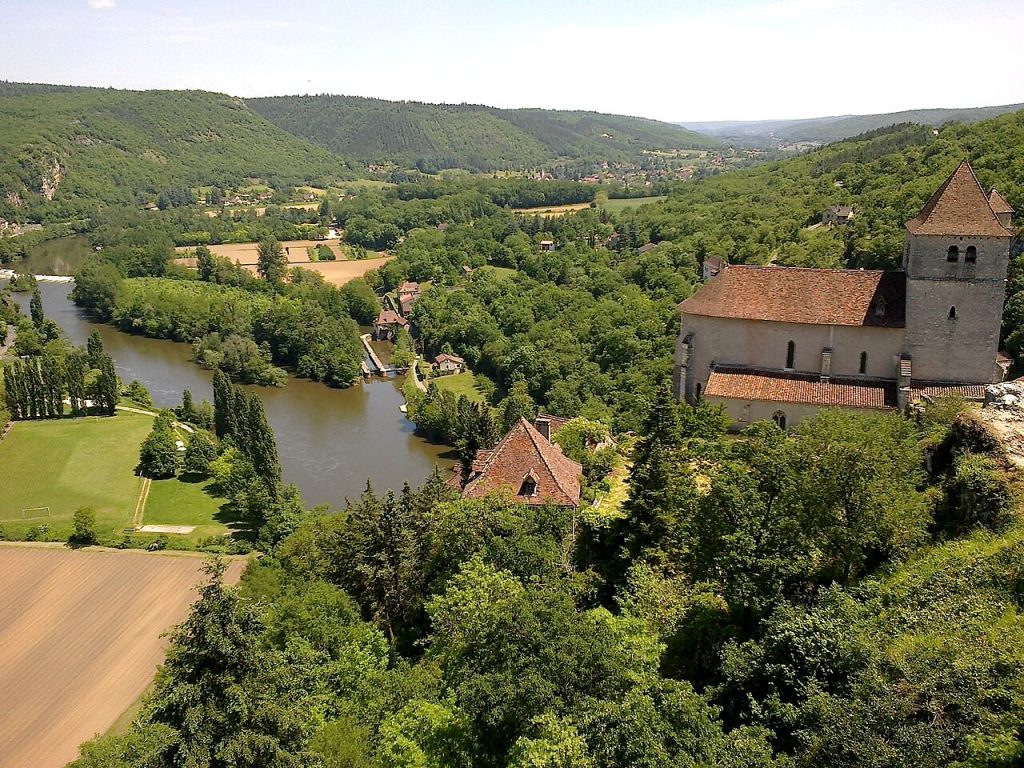
For centuries, the Lot River has shaped life in this valley. In the past, boats carried wine, wood and other goods downstream toward Cahors and Bordeaux. Today, the river is much quieter, and it is popular with kayakers and small cruise boats.
One of the highlights of the area is the Chemin de Halage, the old towpath along the river. Between Bouziès and the village, workers cut a section of this path right into the limestone cliff. They once used it to haul boats upstream with ropes.
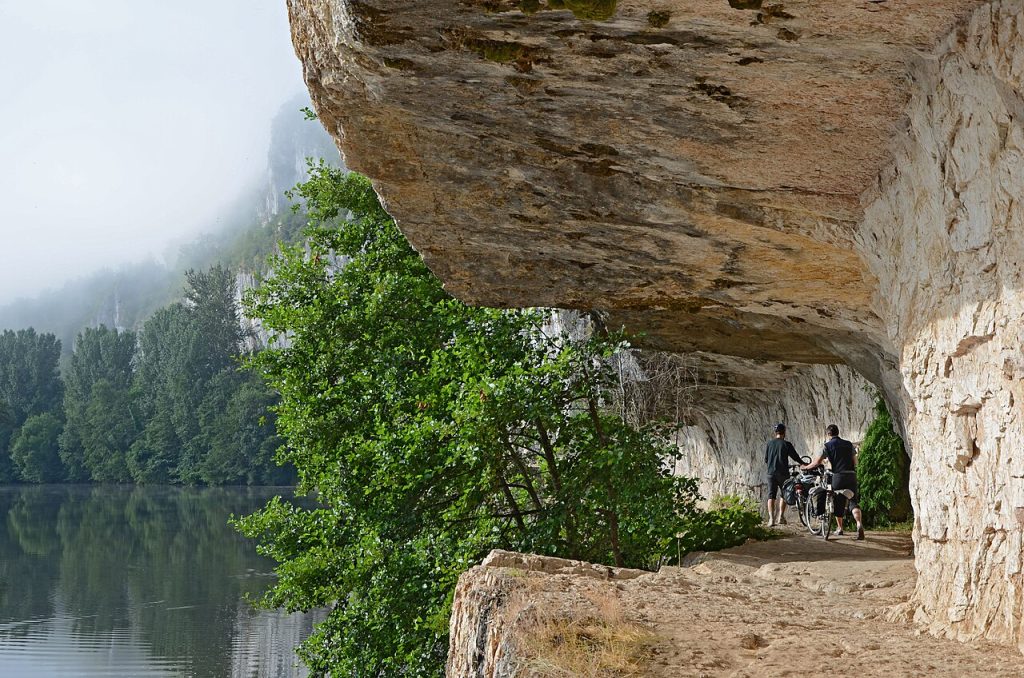
Today, however, it makes a beautiful walk, with the rock hanging over your head and the river just beside you. In addition, a large modern carving decorates part of the cliff along the way.
Generally, you can walk the path in a couple of hours. Alternatively, you can rent a canoe and see the cliffs from the water. Either way, it is a lovely way to see the village from below.
Exploring the Lot Valley Around the Village
Prehistoric Caves
Pech Merle Cave
Just a short drive away, near Cabrerets, lies the Grotte du Pech Merle. Above all, this cave holds some of the finest prehistoric paintings open to the public in Europe, including spotted horses and human handprints. Visits are by guided tour, and numbers are limited. Therefore, book your tickets in advance, especially in summer.
Nearby Towns
Cahors
To begin with, Cahors is the main town of the Lot. It is famous for the Valentré Bridge, a fortified medieval bridge with three towers. Furthermore, the vineyards around Cahors produce a dark red wine made mostly from Malbec grapes.
Figeac
Figeac lies further east and has a handsome old center. It is also the birthplace of Jean-François Champollion, who deciphered Egyptian hieroglyphs. As a result, the town has a museum dedicated to the writing systems of the world.
One Historical Fact About Saint-Cirq-Lapopie, France
In the Middle Ages, the region of Quercy was made up of four viscounties. In particular, the stronghold of Saint-Cirq-Lapopie was the main seat of one of them. Interestingly, four feudal families held power in the area: the Lapopie, Gourdon, Cardaillac and Castelnau families. Over time, however, wars and sieges left the castle in ruins.
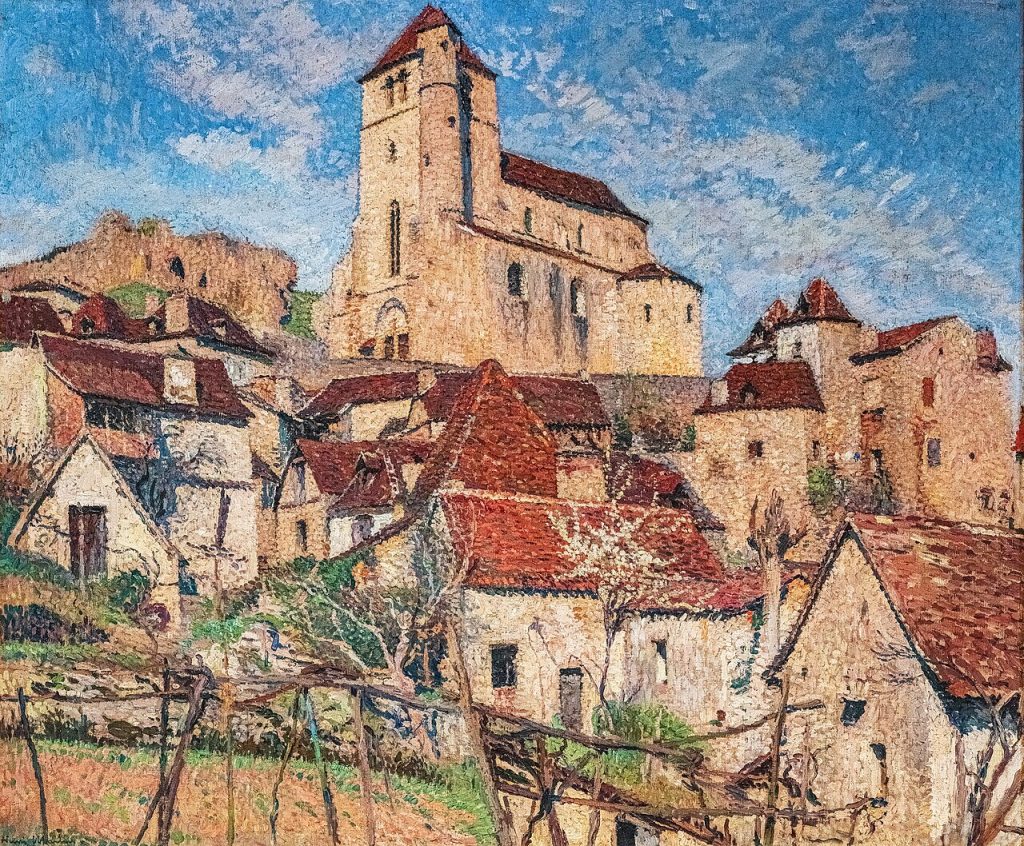
Centuries later, the village found new fame through art. The painter Henri Martin was one of the first artists to discover it, and he painted its rooftops several times. Later, other artists and writers followed him here.
How to Get to Saint-Cirq-Lapopie, France
In general, the easiest way to reach the village is by car. From Cahors, the drive along the valley takes about 40 minutes. Similarly, from Toulouse, allow around two hours.
If you prefer the train, travel to Cahors on the line between Paris and Toulouse. Then, rent a car or book a taxi for the last stretch, because local buses are limited.
Note that you cannot drive into the village center. Instead, use the paid parking areas on the edge of the village or down by the river.
Best Time to Visit Saint-Cirq-Lapopie, France
The best time to visit is from April to June or in September and October. During these months, the weather is mild, and the lanes are calmer. In contrast, July and August are hot and very busy, since the village welcomes hundreds of thousands of visitors each year.
On the other hand, winter is quiet and peaceful. However, many shops and restaurants close during the low season.
Is Saint-Cirq-Lapopie, France Worth Visiting?
Yes, absolutely. After all, few villages combine such a dramatic setting with such well preserved medieval streets. Moreover, the river walks, caves and nearby towns make it an excellent base for a few days in the Lot Valley. Just plan to arrive early or stay overnight, so you can enjoy the village when it is quiet.
Final Thoughts
Saint-Cirq-Lapopie, France is a village that rewards slow travel. So, walk its steep lanes, look out from the castle rock and follow the towpath along the river. In the end, you will understand why so many artists fell in love with this place.
Planning a longer trip? You can also pair this visit with our guides to Colmar, Eguisheim and Dinan.
Image Credits
Wikimedia Commons
- View of Saint-Cirq-Lapopie: Photo by Krzysztof Golik via Wikimedia Commons (CC BY-SA 4.0)
- Church of Saint-Cirq-Lapopie: Photo by Krzysztof Golik via Wikimedia Commons (CC BY-SA 4.0)
- View From the Castle: Photo by Benjamin Smith via Wikimedia Commons (CC BY-SA 4.0)
- Lot River From the Castle: Photo by rene boulay via Wikimedia Commons (CC BY-SA 3.0)
- Towpath Along the Lot River: Photo by Pline via Wikimedia Commons (CC BY-SA 3.0)
- Les Toits, Saint-Cirq-Lapopie by Henri Martin: Photo by Didier Descouens via Wikimedia Commons (Public domain)