
Mandawa India is a small desert town where almost every old mansion is covered in paintings. In fact, its painted havelis have earned it the nickname of the open air art gallery of Rajasthan. Meanwhile, its sandy lanes, camel carts and quiet fort give it a timeless feel. So, this guide covers what to see, how to get there and when to go.
Quick Facts About Mandawa, India
| Country | India |
| Region | Shekhawati, Jhunjhunu district, Rajasthan |
| Known For | Painted havelis, frescoes, Castle Mandawa |
| UNESCO Status | Not listed |
| Founded | 18th century, around a fort built by Thakur Nawal Singh |
| Best Time to Visit | October to March |
| Time Needed | 1 to 2 days |
| Continent | Asia |
Where Is Mandawa, India?
Mandawa lies in the Shekhawati region of northern Rajasthan, in the Jhunjhunu district. More precisely, it is about 29 kilometers from the town of Jhunjhunu. In addition, Jaipur is around four hours away by road, while Delhi is roughly five to six hours away.
Why Visit Mandawa, India?
First, Mandawa offers a side of Rajasthan that few travelers see. Instead of grand palaces, you will find merchant homes decorated from top to bottom with colorful frescoes. Second, the town is small and walkable, so you can explore it easily in a day or two.
Also, the atmosphere is calm compared with the busy cities of the state. As a result, it is a relaxing stop between Delhi, Jaipur and Bikaner. Finally, many havelis now work as heritage hotels, so you can sleep inside the art itself.
Exploring the Painted Havelis
What Is a Haveli?
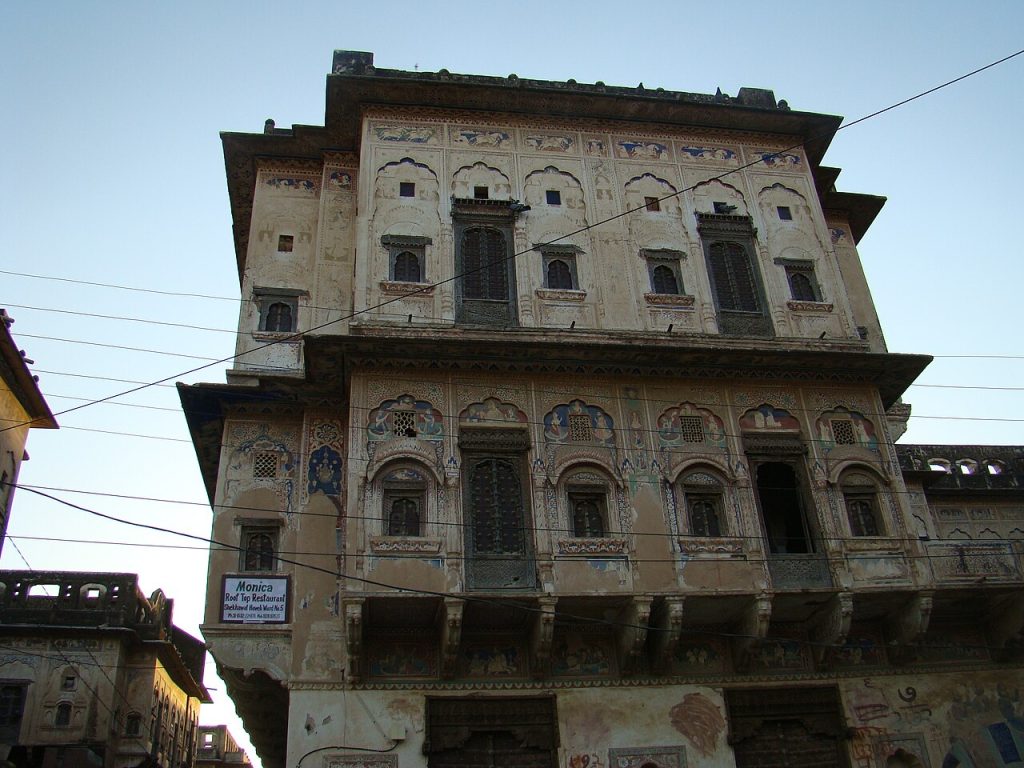
A haveli is a traditional mansion built around one or more inner courtyards. In Shekhawati, wealthy merchant families built them to show off their success. Consequently, they hired painters to cover the outer walls, gateways and courtyards with murals.
The Sneh Ram Ladia Haveli
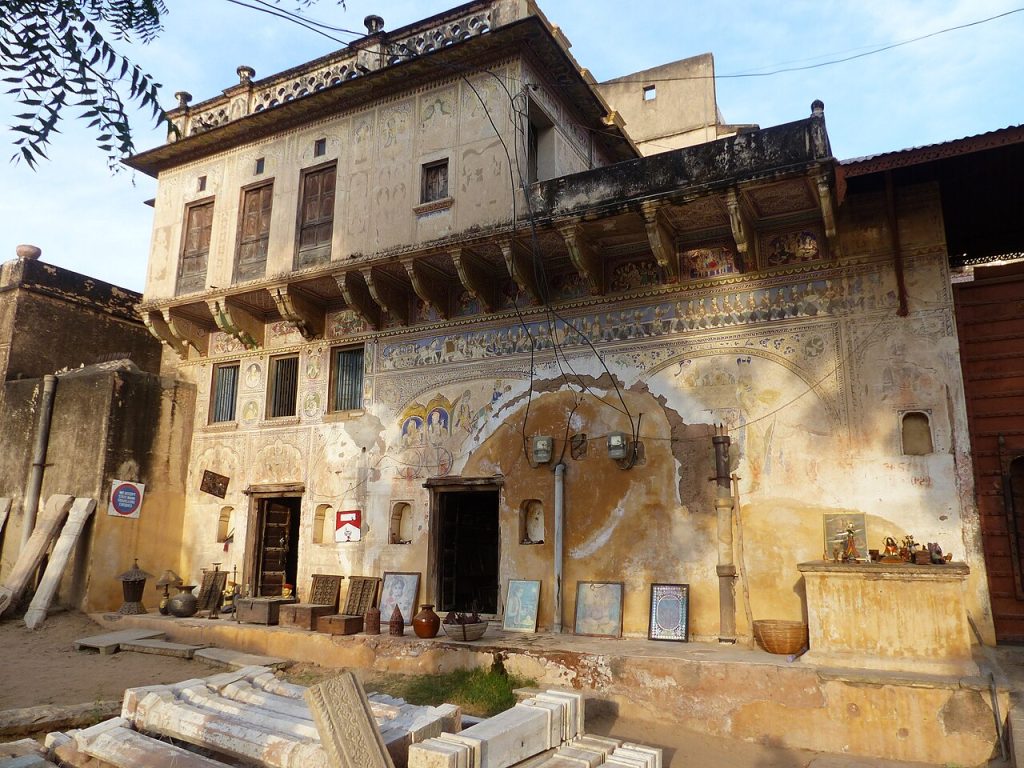
The Sneh Ram Ladia Haveli is one of the most photographed buildings in town. Its facade is full of painted panels, carved windows and small balconies. Likewise, its courtyards show scenes of gods, horsemen and royal processions.
Other Havelis to See
Many other havelis line the lanes of the old town, including the Murmuria Haveli and the Chokhani Double Haveli. However, most of them are private homes. So, ask the caretaker before entering, and expect to pay a small fee or tip.
The Stories in the Frescoes
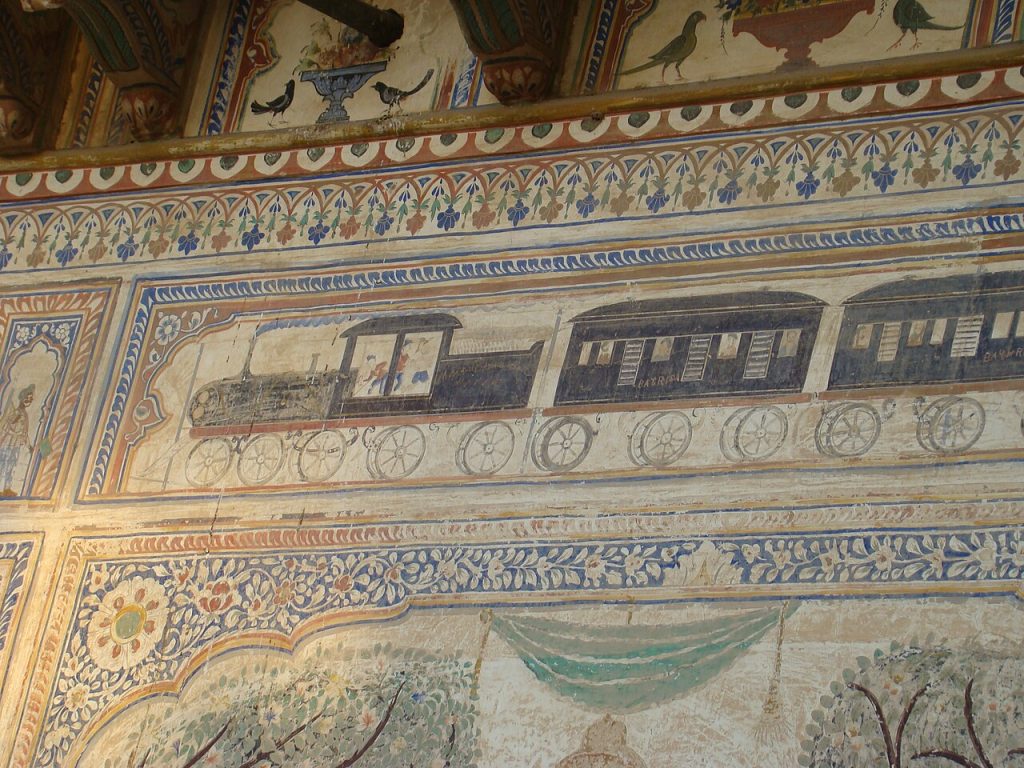
The frescoes of Mandawa are a visual history of the town. At first, painters showed scenes from Hindu legends, such as the life of Krishna and the tales of the Ramayana. Later, however, they began to paint the modern world that the merchants saw on their travels.
For this reason, you will spot trains, cars, airplanes and even British officers on the walls. Some paintings show gramophones or bicycles, which were exciting novelties at the time.
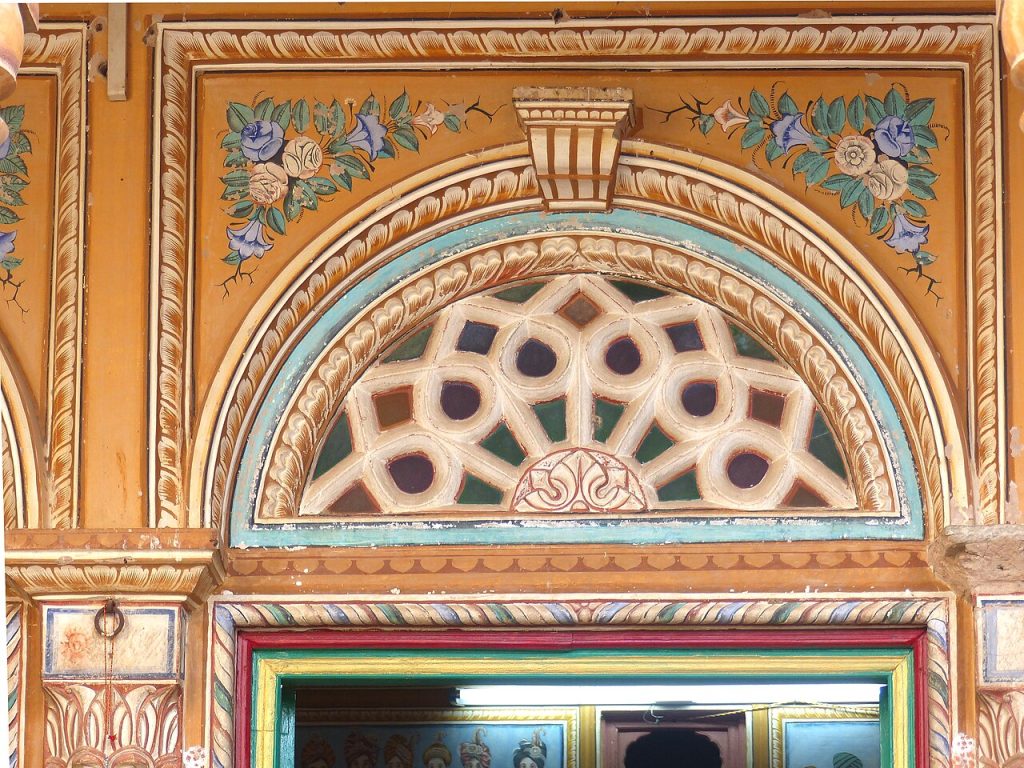
Look closely at the arches and ceilings too. Often, the finest details hide inside the entrance halls, where the paint is protected from the sun. In the morning, the soft light makes the colors glow.
Beyond the Havelis
Castle Mandawa
The town grew up around a fort that Thakur Nawal Singh built in the 18th century. Today, Castle Mandawa is a heritage hotel, but visitors can often see parts of it or stop for tea. Its rooftop offers great views over the town at sunset.
Wells and Desert Life
Old Wells and Water Tanks
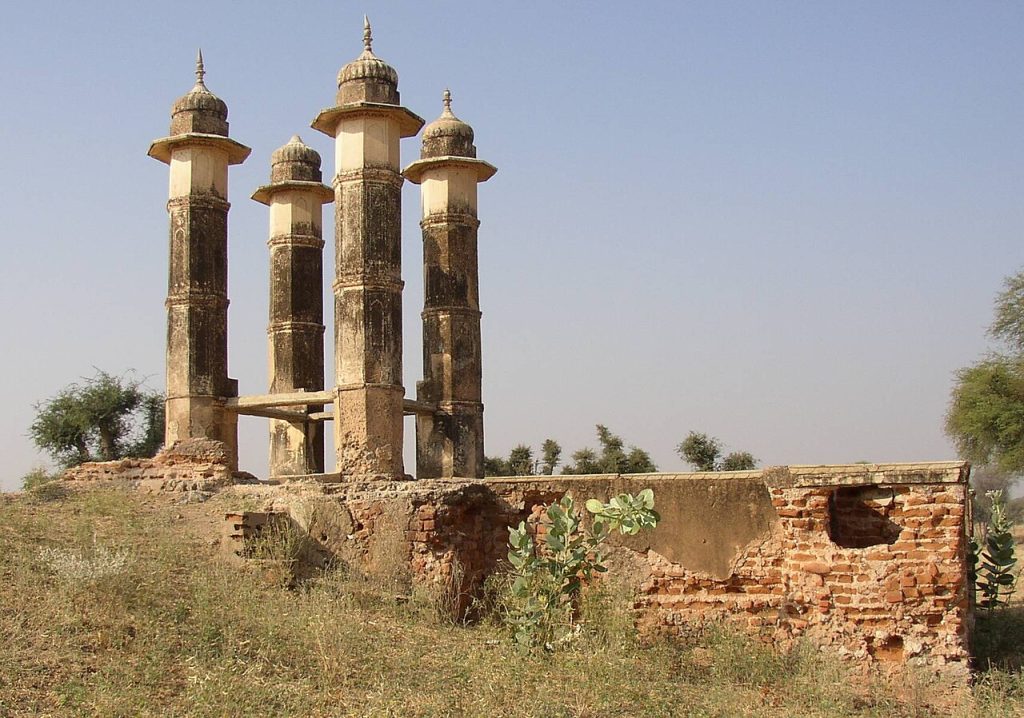
In this dry region, water was precious. Because of this, rich families paid for wells and tanks, often decorated with pillars and small domed pavilions. Some still stand on the edge of town.
Camel Rides and Village Walks
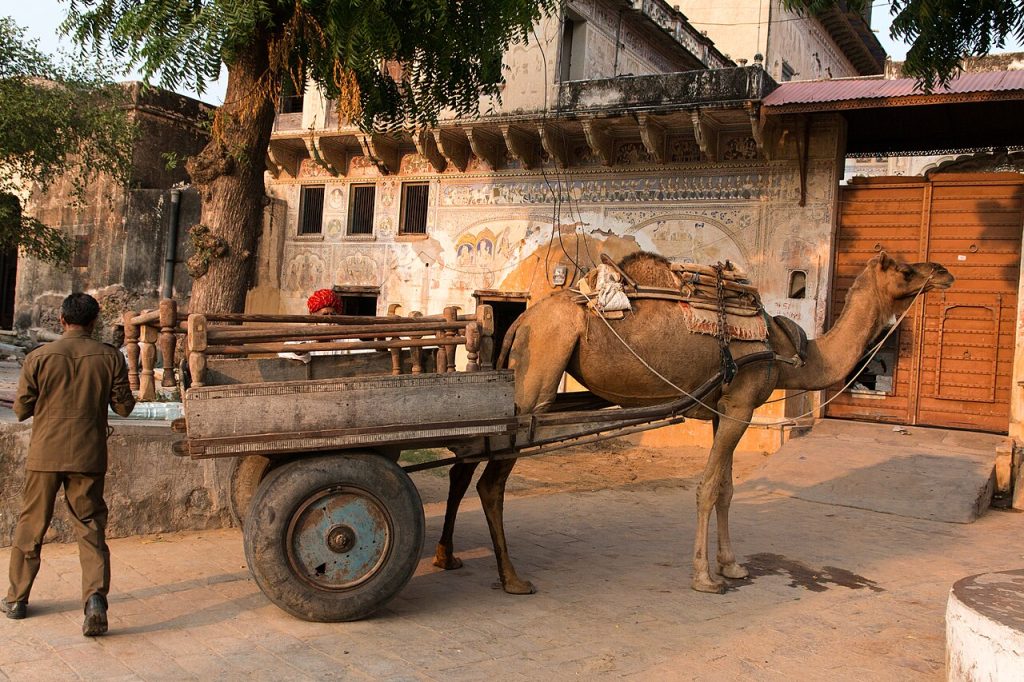
Camel carts are still a common sight in Mandawa. Many hotels can also arrange camel rides or walks to nearby villages and millet fields. Above all, try to be out in the countryside at sunset, when the desert light turns golden.
Nearby Shekhawati Towns
Nawalgarh and Fatehpur
Mandawa is a great base for exploring other Shekhawati towns. For example, Nawalgarh has many fine havelis, and Fatehpur is also known for its painted mansions. Together, they make an excellent day trip.
One Historical Fact About Mandawa, India
In the 18th century, Mandawa was a trading outpost on caravan routes that carried goods across the desert. Later, many local merchant families moved to cities such as Kolkata and Mumbai, where they grew very rich. Nevertheless, they sent money home to build painted havelis as a sign of their status. Some of the best known business families in India trace their roots to the Shekhawati region.
How to Get to Mandawa, India
The easiest way to reach Mandawa is by car with a driver from Jaipur or Delhi. Alternatively, you can take a train to Jhunjhunu and then a taxi or local bus for the last stretch. Buses also run from Jaipur, although they are slower and less comfortable.
Once in town, walking is the best way to get around. In addition, auto rickshaws are available for short trips.
Best Time to Visit Mandawa, India
The best time to visit is from October to March. During these months, the days are warm and sunny, while the nights are cool. In contrast, summer is extremely hot, with temperatures often above 40 degrees Celsius.
Also, the monsoon brings some rain in July and August. However, the region stays fairly dry compared with the rest of India.
Is Mandawa, India Worth Visiting?
Yes, especially if you love art, history and photography. Mandawa shows a unique chapter of Indian heritage that you will not find in the big tourist cities. Moreover, it is peaceful, friendly and easy to explore. Just remember that many havelis are fragile, so treat them with care.
Final Thoughts
Mandawa, India is a town that turns every walk into a visit to a gallery. So, wander its lanes, look up at the painted walls and stay a night in a heritage haveli. In the end, you will see Rajasthan in a whole new way.
Planning a longer trip? You can also pair this visit with our guides to Jodhpur, Jaisalmer and Bundi.
Image Credits
Wikimedia Commons
- Sneh Ram Ladia Haveli Facade: Photo by Wolfgang Sauber via Wikimedia Commons (CC BY 4.0)
- Haveli in Mandawa: Photo by Nicolás Pérez via Wikimedia Commons (CC BY-SA 3.0)
- Train Fresco on a Mandawa Haveli: Photo by Nicolás Pérez via Wikimedia Commons (CC BY-SA 3.0)
- Painted Arch in a Mandawa Haveli: Photo by Wolfgang Sauber via Wikimedia Commons (CC BY-SA 4.0)
- Old Well in Mandawa: Photo by Doris Antony, Berlin via Wikimedia Commons (CC BY-SA 3.0)
- Camel Cart in Mandawa: Photo by Daniel VILLAFRUELA. via Wikimedia Commons (CC BY-SA 3.0)