Monsanto Portugal is one of the most unusual historic villages in Europe, a place where stone houses, medieval lanes, and giant granite boulders seem to blend into one unforgettable landscape. Set high on a rocky hill in Central Portugal, the village earns its fame from homes built beside, beneath, and around massive rocks, giving it a dramatic appearance that feels both ancient and almost fairytale-like.
Unlike many destinations that are known for a single landmark, Monsanto Portugal is memorable because the entire village feels shaped by its surroundings. Its steep streets, castle ruins, countryside views, and local legends all reveal a place where history and nature connect deeply. For travelers looking for a Portugal hidden gem with character, atmosphere, and striking scenery, Monsanto is one of the country’s most fascinating places to explore.
Quick Facts About Monsanto Portugal
| Country | Portugal |
| Region | Castelo Branco District, Central Portugal |
| Known For | Granite boulders, stone houses, medieval streets, and hilltop views |
| UNESCO Status | Not a UNESCO World Heritage Site |
| Founded | Medieval origins, with earlier Roman and pre-Roman settlement in the region |
| Best Time to Visit | Spring and autumn |
| Time Needed | Half day to one full day |
| Continent | Europe |
Where Is Monsanto Portugal?
Monsanto Portugal is a historic hilltop village in the municipality of Idanha-a-Nova, located in the Castelo Branco District of Central Portugal. It sits in the Beira Baixa region, close to the border with Spain, among huge granite boulders that define its dramatic setting.
The village rises along the slope of a rocky hill, with narrow lanes, stone houses, and viewpoints overlooking the surrounding countryside. Because of its remote location and preserved character, Monsanto Portugal is often described as one of the most atmospheric historic villages in Europe.
Why Visit Monsanto Portugal?
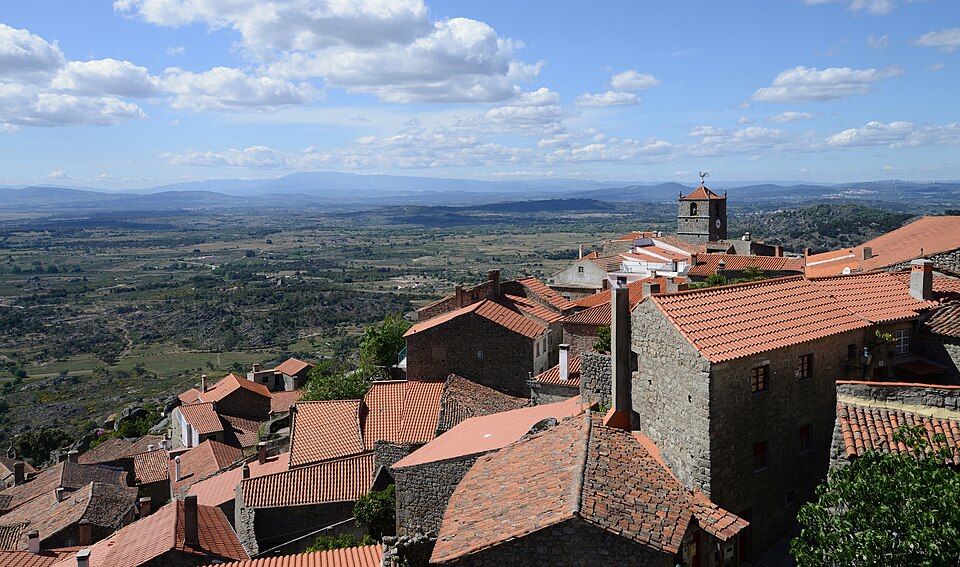
Monsanto Portugal is worth visiting because it does not feel like an ordinary village. Instead of being built around a flat town square or a simple street grid, the village seems to grow directly out of the mountain. Houses lean against giant granite boulders, rooftops sit beneath massive stones, and narrow pathways wind between rock walls and centuries-old homes.
For travelers searching for a Portugal hidden gem, Monsanto Portugal offers a rare combination of natural scenery, medieval history, local legends, and traditional village life. Peaceful, unusual, and visually unforgettable, it appeals especially to visitors who enjoy historic villages, scenic viewpoints, and places deeply connected to their landscape.
A Village Shaped by Stone, Kings, and Legends
Monsanto Portugal has a history that feels inseparable from the rocks around it. Long before it became known as one of the most beautiful historic villages in Portugal, this hilltop settlement was valued for its strategic position, strong natural defenses, and wide views over the surrounding countryside. Its granite boulders formed more than just a dramatic part of the landscape. They helped shape the way people built homes, defended the village, and adapted daily life to the rugged terrain.
Over the centuries, Monsanto’s position near the border with Spain made it valuable in times of conflict. Its castle, walls, and steep stone paths helped protect the community. Meanwhile, villagers continued building around the giant boulders instead of removing them. This gave Monsanto its unforgettable appearance: houses tucked beneath massive rocks, narrow lanes winding between stone walls, and rooftops that seem to blend into the mountain itself.
One of the most beloved local traditions is connected to the village’s survival during a long siege. According to legend, the people of Monsanto had only one calf and a little grain left, but instead of surrendering, they threw the calf from the castle walls to make their enemies believe they still had plenty of food. The attackers, discouraged by the trick, eventually gave up. Today, this story is remembered during the Festa das Cruzes, or Festival of the Crosses, when villagers celebrate Monsanto’s resilience by carrying decorated clay pots and flowers through the streets.
This mix of history, legend, and landscape is what makes Monsanto Portugal so memorable. It is not just a stone village with beautiful views. It is a place where medieval power, local tradition, and the natural world all seem to meet in the same narrow streets.
Walking Through Monsanto’s Boulder-Lined Streets
One of the best ways to experience Monsanto Portugal is simply to walk slowly through its narrow streets. The village is filled with stone lanes, stairways, and small corners where the architecture blends almost perfectly with the surrounding rock. In some places, granite boulders form part of a wall. In others, they seem to rest directly above rooftops or squeeze between houses.
This is what makes Monsanto such a remarkable stone village. The builders never tried to hide the landscape. They embraced it instead. Instead of removing the enormous rocks, villagers shaped their houses around them. They used the boulders as shelter, support, and part of the village’s identity.
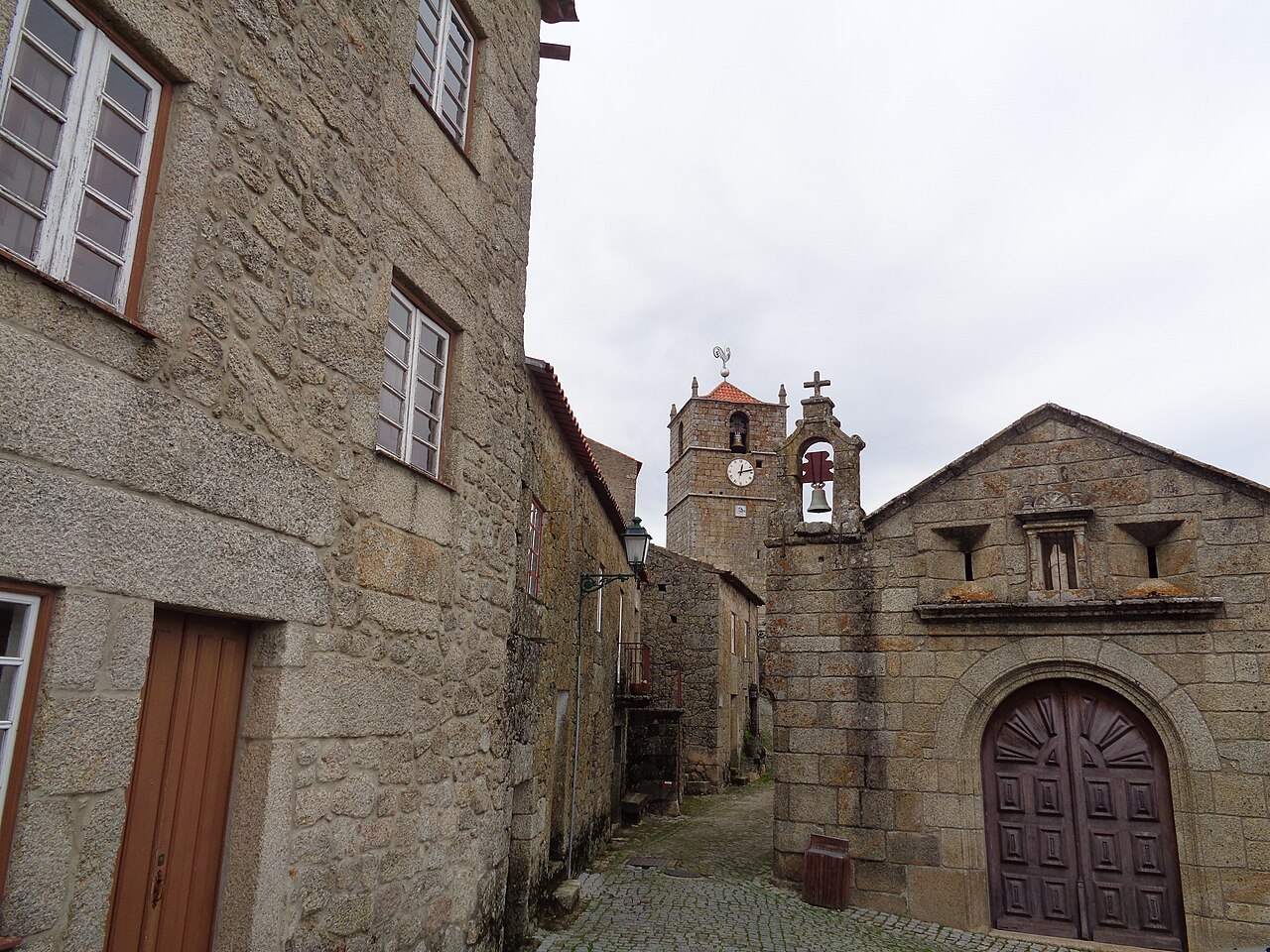
As you walk through the village, look for traditional stone houses with red-tiled roofs, wooden doors, flower pots, and small windows facing the countryside. The lanes can be steep, so comfortable shoes are helpful, but the views and details make the climb worthwhile. Every turn reveals another unusual scene. You might find a house pressed against a boulder, a quiet alley framed by stone, or a viewpoint across Central Portugal.
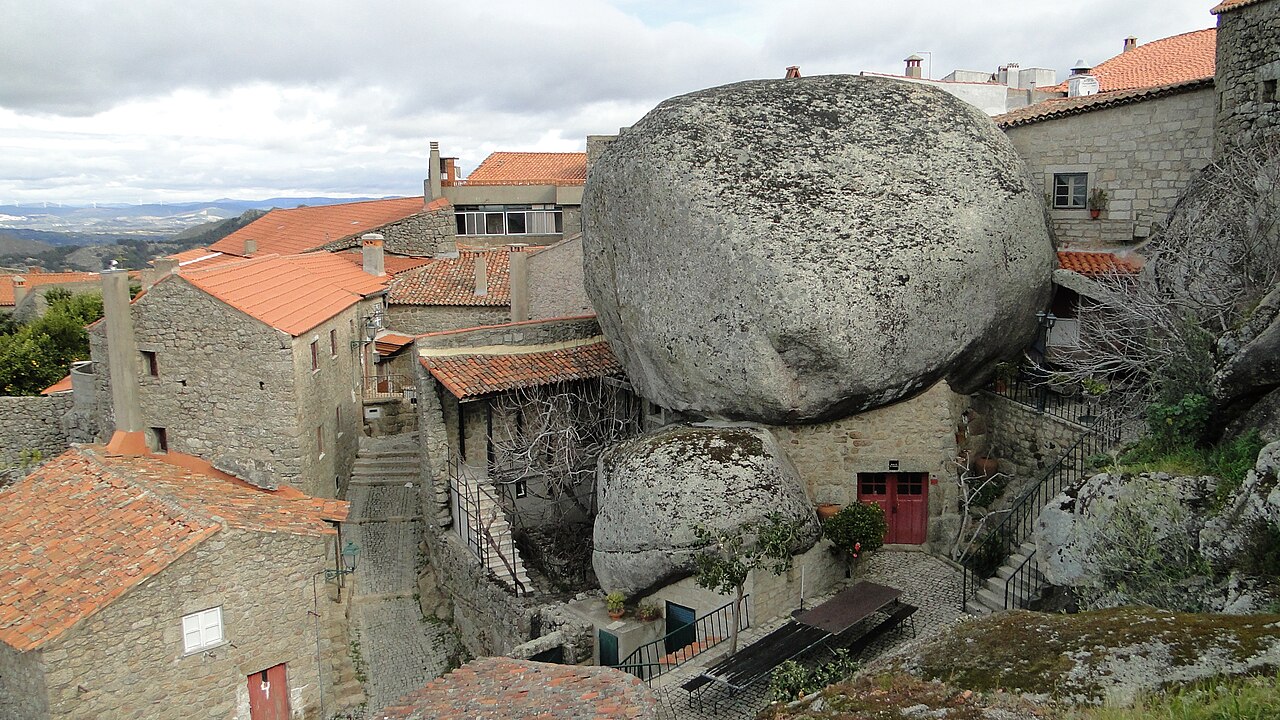
Stone Houses and Granite Boulders
The most iconic feature of Monsanto Portugal is the relationship between its houses and granite boulders. Some boulders are so large that they look as if they could roll down the hill, yet they have been part of the village for generations. This gives Monsanto a fairytale-like appearance, but it also shows how practical village life once was.
The boulders provided natural protection from wind, heat, and weather. They also helped defenders protect the village during earlier centuries. Today, they draw visitors from around the world, especially photographers and travelers who love unusual architecture.
Monsanto Castle and Hilltop Views
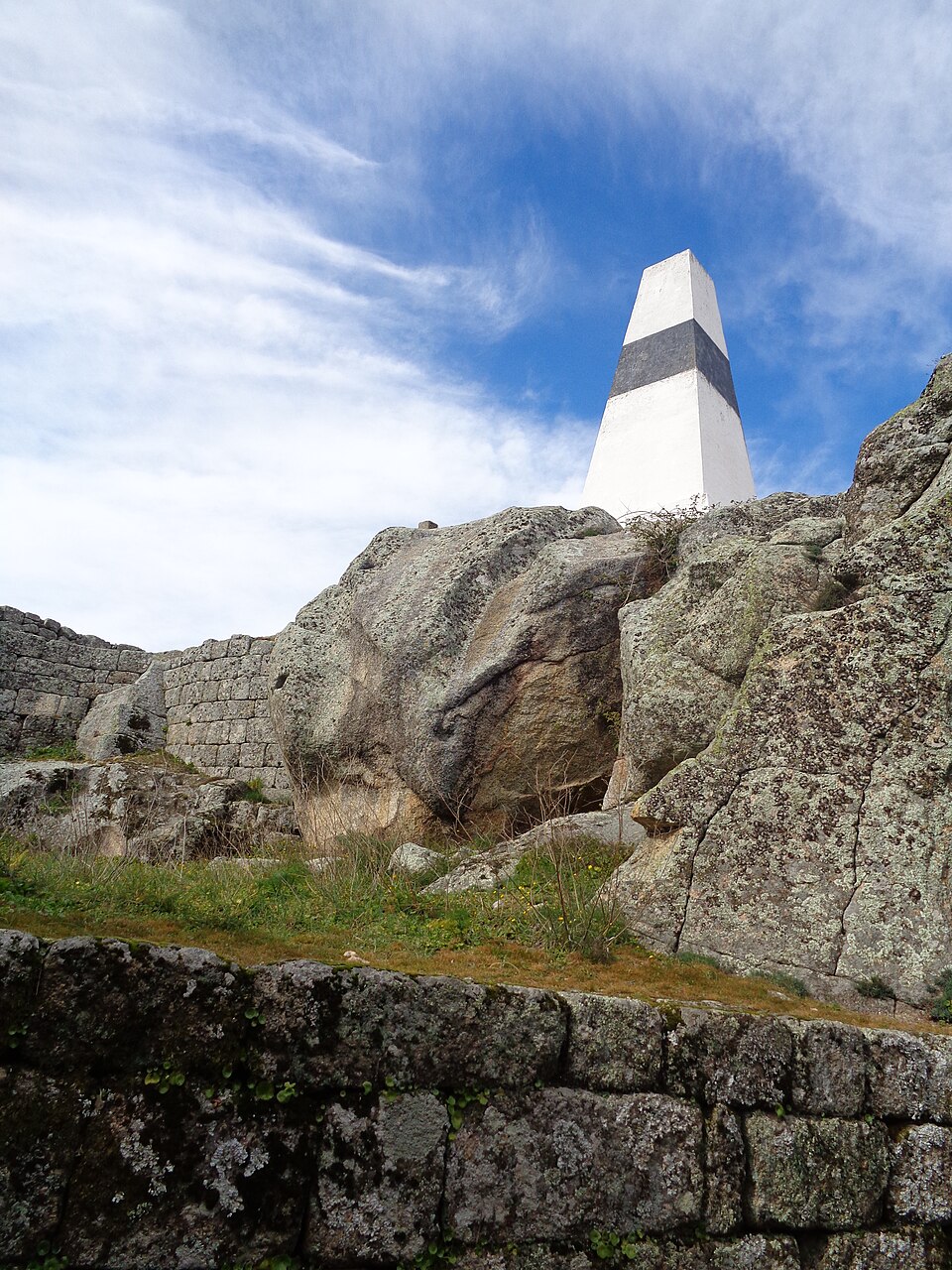
High above the village, Monsanto Castle is one of the most important landmarks in Monsanto Portugal. The castle ruins crown the rocky summit and offer sweeping views over the surrounding plains, hills, and farmland. The uphill walk to the castle rewards visitors with some of the most stunning scenery in the village.
Monsanto Castle reflects the village’s defensive importance during the medieval period. Its high position allowed guards to watch the surrounding region, while the rocky landscape made the hill naturally difficult to attack. Much of the castle is now in ruins. However, the remaining walls and stone paths still help visitors imagine how powerful this hilltop fortress once felt.
Viewpoints Over Central Portugal
The Monsanto Castle ruins offer panoramic views over central Portugal, where historic ramparts blend seamlessly with natural granite boulders. This scenic, high-altitude spot offers a quiet, engaging experience showcasing the region’s countryside and historic defensive architecture.
Local Life in a Historic Village in Portugal
Although Monsanto Portugal attracts visitors for its boulders and castle ruins, it remains a real village with local rhythms and traditions. Walking through its streets, you may see quiet homes, small gardens, cats resting in sunny corners, and residents going about daily life among the same stone lanes that travelers come to admire.
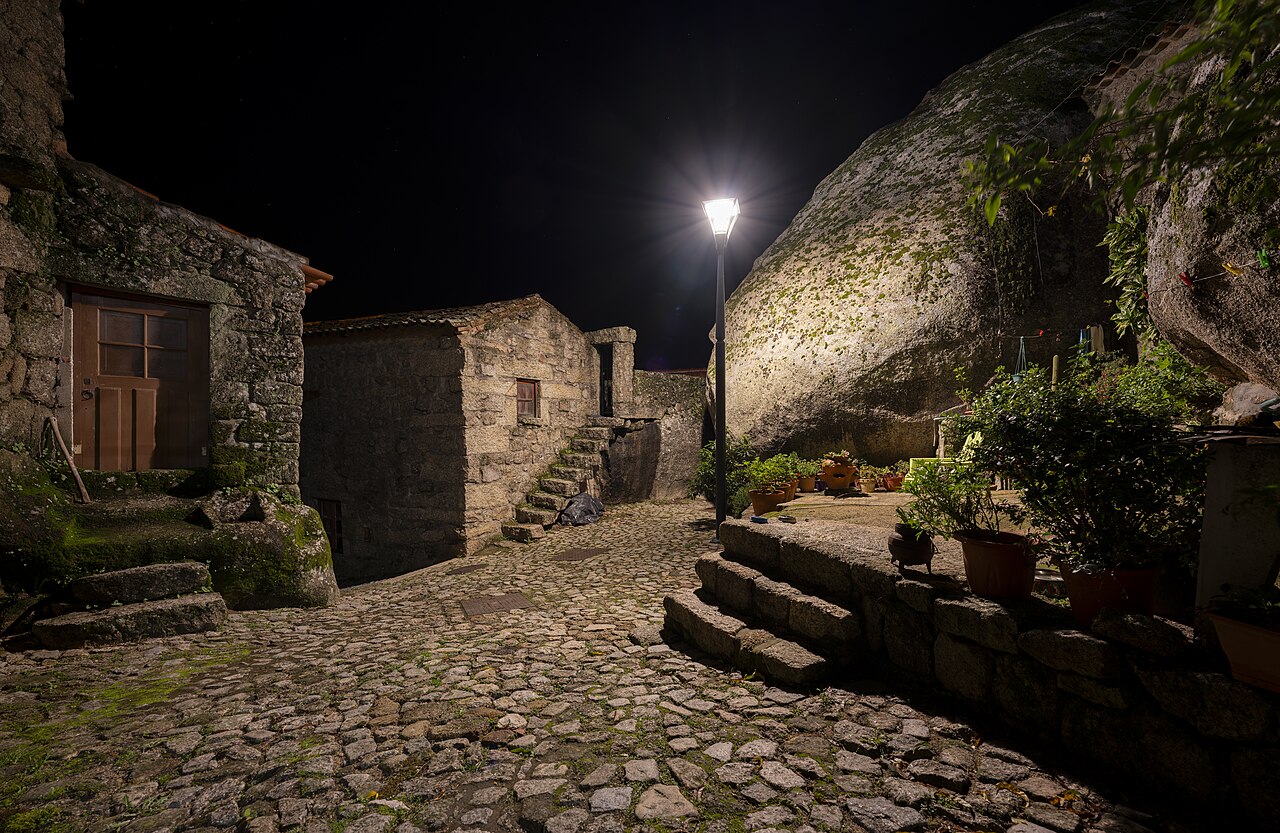
This slower atmosphere is part of Monsanto’s charm. The village never feels overly polished or crowded. Instead, the village has a lived-in quality that makes it feel authentic. The combination of historic architecture, local traditions, and peaceful scenery gives Monsanto a strong sense of place.
Traditional Festivals and Local Celebrations
Monsanto Portugal celebrates its history through local festivals that bring the community together. The most famous is the Festa das Cruzes, held each May, when villagers carry decorated clay pots and flowers through the streets to honor the village’s legendary survival during a medieval siege. These celebrations give visitors a rare glimpse into living traditions that have continued for generations.
Food, Cafés, and Local Crafts
Monsanto Portugal also has a small number of family-run cafés and local shops worth exploring. Traditional Portuguese dishes, fresh coffee, and handmade crafts reflect the village’s quiet pride in its heritage. Stopping at one of these small establishments is one of the simplest ways to connect with the community and experience everyday life in one of Portugal’s most atmospheric villages.
A Portugal Hidden Gem With Character
Monsanto Portugal is often called a Portugal hidden gem because it is not as internationally famous as Lisbon, Porto, Sintra, or the Algarve. However, for travelers who enjoy historic towns and villages, it offers something very special. It has beauty, history, unusual architecture, and a strong local identity.
Because it is a smaller destination, explore it slowly. Rather than rushing through, take time to notice the details: the stone steps, the old doorways, the textures of the granite, and the way the village seems to change as the light moves across the hillside.
What Makes Monsanto Different From Other Portuguese Villages
Most Portuguese villages are built around a central square or along a main street. Monsanto Portugal breaks this pattern entirely. The giant granite boulders dictate the layout, the architecture, and the atmosphere. No two streets feel the same, and no other village in Portugal looks quite like it. This uniqueness is precisely what makes it worth the journey.
Tips for First-Time Visitors
Arriving early in the morning gives you the best chance to explore Monsanto Portugal quietly, before day-trippers arrive. Wear comfortable shoes, as the cobblestone lanes are steep and uneven in places. Bring water, especially in summer, and set aside at least half a day to wander without rushing. Those who take their time discover the most.
One Historical Fact About Monsanto Portugal
One of the most famous historical stories connected to Monsanto Portugal is the legend behind the Festa das Cruzes, or Festival of the Crosses. According to local tradition, the village was once surrounded during a long siege, and the people inside the castle were running dangerously low on food. Instead of showing weakness, they tricked the enemy using their last calf and a small amount of grain.
The villagers threw the calf from the castle walls, making it seem as though Monsanto still had enough food to waste. The attackers believed the village could survive much longer than expected, so they eventually gave up and left.
Whether every detail of the story is legend or history, it remains one of Monsanto’s most memorable traditions. Today, the tale is remembered during the Festa das Cruzes, when decorated clay pots and flowers are carried through the village as a symbol of survival, courage, and local pride.
How to Get To Monsanto Portugal
Monsanto is located in central Portugal near the Spanish border and is best reached by car. The village is approximately 3 hours from Lisbon and around 3.5 to 4 hours from Porto, making it a worthwhile stop on a road trip through Portugal’s countryside.
Public transportation options are limited, so driving is the most convenient way to visit. Many travelers combine Monsanto with nearby stops. These include Sortelha, Marvão, and Piódão in Portugal’s Historic Villages network.
Once you arrive, the village is best explored on foot. Its narrow cobblestone streets, steep paths, and hidden corners are part of the experience and are not suitable for large vehicles.
Wear comfortable walking shoes, as many of Monsanto’s streets are steep, uneven, and paved with traditional cobblestones.
Best Time to Visit Monsanto Portugal
The best time to visit Monsanto Portugal is during spring or autumn, when the weather is usually mild and comfortable for walking. These seasons are especially good for exploring the steep village lanes and hiking up toward Monsanto Castle.
Summer can be hot, especially at midday. Therefore, visit early in the morning or later in the afternoon. Winter is quieter and can still be beautiful, but the weather may be cooler and less predictable.
Is Monsanto Portugal Worth Visiting?
Monsanto Portugal is absolutely worth visiting if you enjoy historic villages, dramatic landscapes, and destinations with a strong sense of identity. It is not a place filled with big attractions or busy entertainment. Its beauty comes from the village, the rocks, and the history. Together, they create something truly unique.
This is a destination for slow travel. The best experience comes from wandering the lanes, climbing toward the castle, stopping at viewpoints, and noticing how stone shaped the village over many generations.
For travelers building an itinerary through Central Portugal, Monsanto is one of the most memorable stops. It offers a different side of the country: quieter, older, more rugged, and deeply atmospheric.
Final Thoughts
Monsanto Portugal is one of those places that stays in your memory because it feels unlike anywhere else. Its giant granite boulders, medieval lanes, stone houses, and hilltop castle create a village that feels both ancient and alive.
What makes Monsanto special is not just its appearance, but the way its history and landscape are connected. Kings, knights, and ordinary people all shaped it. Each generation learned to live among the rocks rather than build around them.
For anyone looking for a Portugal hidden gem with history, character, and unforgettable scenery, Monsanto Portugal deserves a place on your travel destinations list.
Image Credits
- Boulder Houses in Monsanto — Photo by Perigrinator via Wikimedia Commons (CC BY-SA 4.0)
- View of Monsanto Village — Photo by Alvesgaspar via Wikimedia Commons (CC BY-SA 4.0)
- Houses Built Around Giant Boulders in Monsanto — Photo by Rafael Tello via Wikimedia Commons (CC BY-SA 4.0)
- Monsanto Castle — Photo by Axel Cotón Gutiérrez via Wikimedia Commons (CC BY-SA 4.0)
- Church of Mercy, Monsanto — Photo by Axel Cotón Gutiérrez via Wikimedia Commons (CC BY-SA 4.0)
- Monsanto Streets at Night — Photo by Jules Verne Times Two via Wikimedia Commons (CC BY-SA 4.0)
Sources: Visit Portugal; Center of Portugal; Portugal Virtual