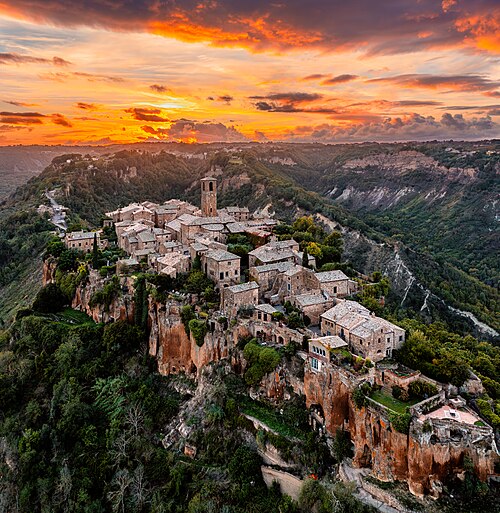
Civita di Bagnoregio Italy sits on a crumbling plateau of volcanic tuff. It is reached only by a long footbridge over a valley of eroded badlands. Locals call it La città che muore, or the dying town. The cliffs beneath it have been slowly falling away for centuries. Fewer than a dozen people live here year round. Even so, tourists cross the bridge by the thousands each year to wander its Etruscan streets and photograph its skyline. In fact, few villages in Italy pack this much drama into so small a footprint. Overall, this guide covers everything worth knowing before you make the walk across.
Quick Facts About Civita di Bagnoregio, Italy
| Country | Italy |
| Region | Province of Viterbo, Lazio |
| Known For | A crumbling hilltop village reached only by a footbridge, medieval streets, and dramatic badlands scenery |
| UNESCO Status | Not a UNESCO World Heritage Site (nominated in 2021, not yet inscribed) |
| Founded | More than 2,500 years ago by the Etruscans |
| Best Time to Visit | Spring and autumn |
| Time Needed | Half a day to one full day |
| Continent | Europe |
Where is Civita di Bagnoregio, Italy?
Civita di Bagnoregio sits in the Province of Viterbo, in the Lazio region of central Italy. Specifically, it lies about 120 kilometers (75 miles) north of Rome, near the shores of Lake Bolsena. The village sits just one kilometer east of the larger town of Bagnoregio, though the two feel much farther apart. In fact, a deep valley of eroded badlands, known locally as the calanchi, separates them.
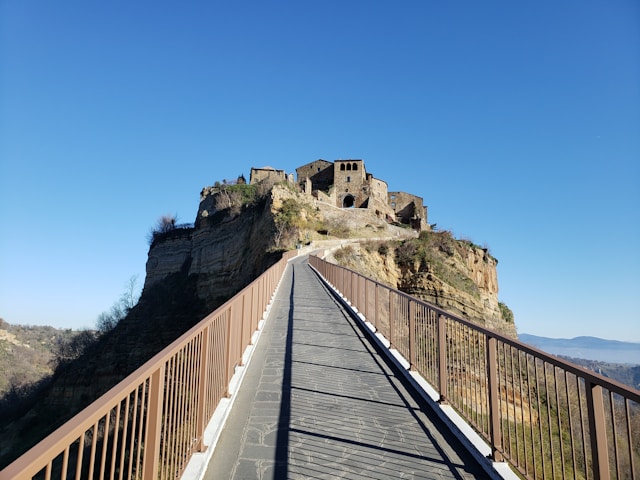
Notably, Civita itself sits atop an isolated plateau of volcanic tuff, at an elevation of about 443 meters (1,453 feet). As a result, the only way in or out is a reinforced concrete footbridge built in 1965. Below, layers of clay and tuff continue to erode. Indeed, this is exactly why the village earned its nickname as the dying town.
Why Visit Civita di Bagnoregio, Italy?
Civita di Bagnoregio is worth visiting for the walk alone. Specifically, the footbridge crossing is one of the more memorable approaches to any village in Italy. Below, the calanchi badlands fall away in layered ridges of clay and stone. Meanwhile, the medieval streets on the other side feel almost frozen in time, since so few residents remain to modernize them.
In addition, this is genuinely one of the best examples of an Etruscan hilltop settlement still standing today. The town’s layout follows an ancient Etruscan street grid, while its buildings carry medieval and Renaissance detail layered on top. For this reason, a visit here works well as a day trip from Rome. It also pairs easily with other hill towns in northern Lazio. Either way, few places reward a short walk with quite this much visual payoff.
Wandering the Alleys of Civita di Bagnoregio
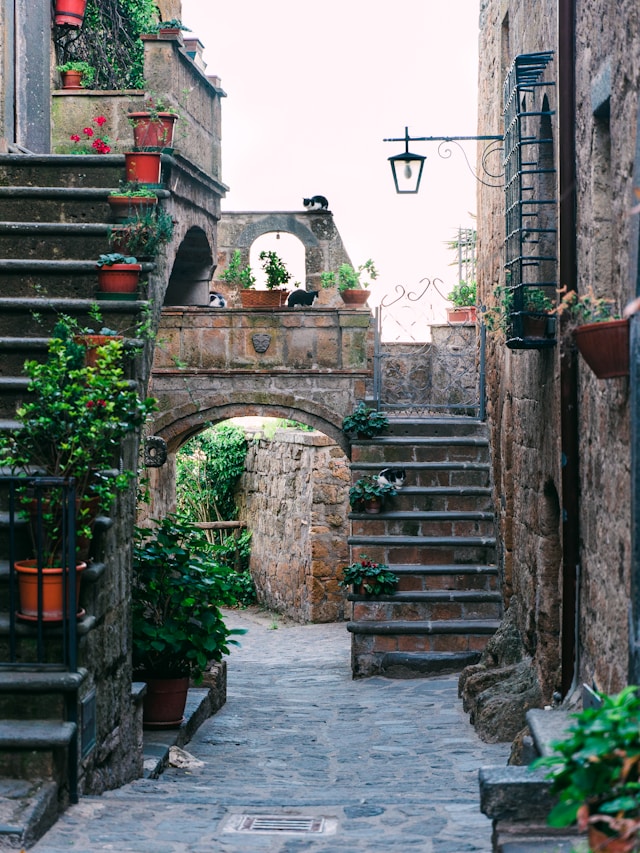
Once across the bridge, Civita di Bagnoregio reveals itself as a maze of narrow stone alleys. Indeed, the entire village can be crossed on foot in under fifteen minutes, yet it rewards a much slower pace. Cats outnumber residents here by a wide margin, and they tend to treat the whole village as their own.
Cats and Quiet Alleys
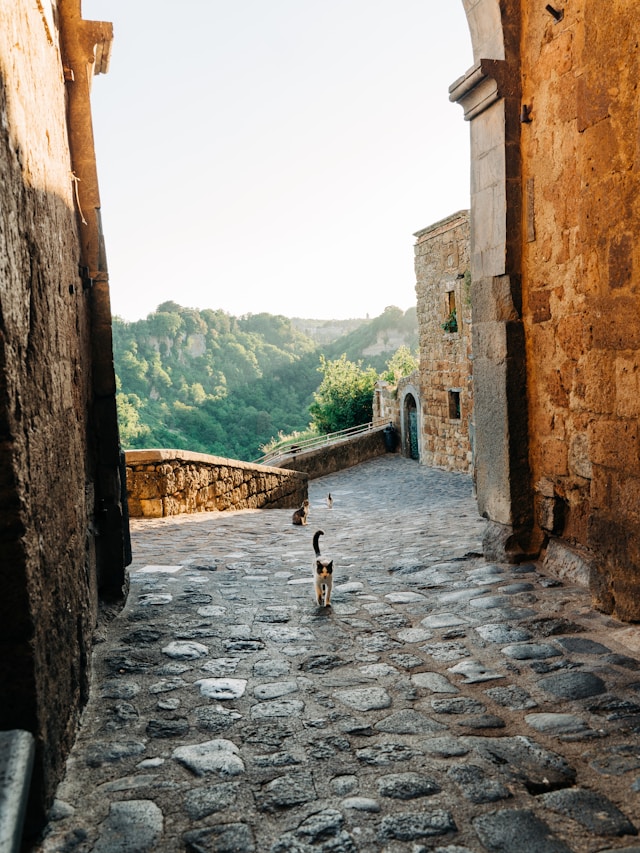
Stone alleys wind between staircases, arches, and terracotta pots overflowing with plants. Notably, cats are everywhere, sunning themselves on ledges or crossing the cobblestones toward a view of the valley below. In fact, locals joke that the cats now outnumber the human population several times over.
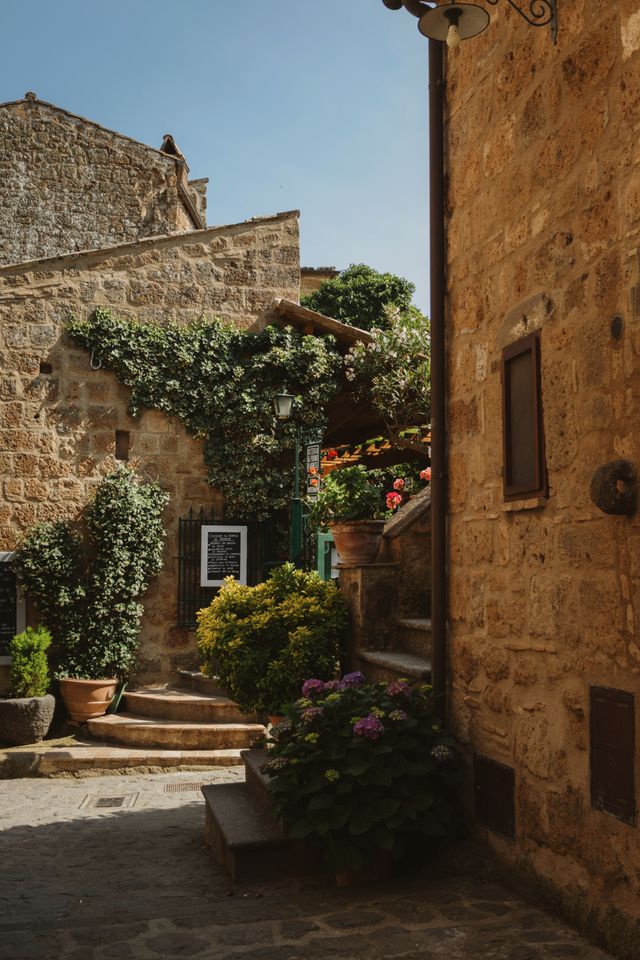
Similarly, some alleys open unexpectedly onto small shaded courtyards. A hand painted sign or a chalkboard menu is often the only clue. Just around the corner, a cafe or shop is usually waiting. Overall, half the appeal of Civita is simply not knowing what the next turn will reveal.
Staircases, Doors, and Stone Details
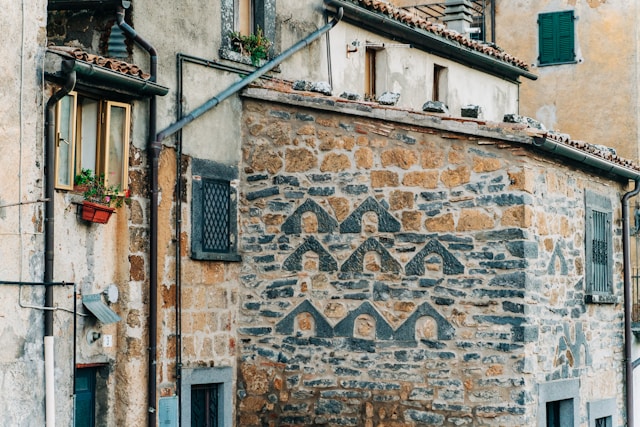
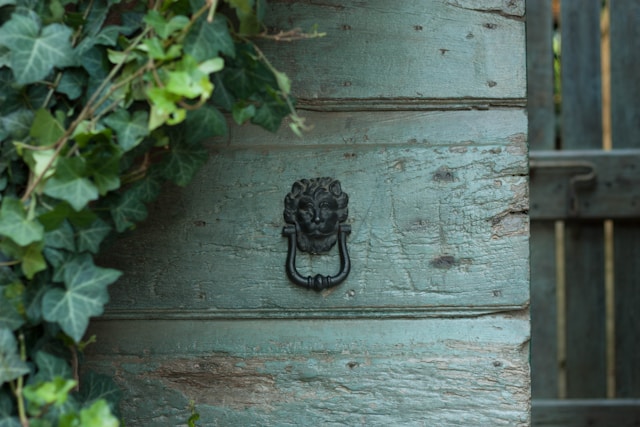
Notably, every building in Civita seems to have its own character, built up over centuries of small repairs. For example, one weathered wall shows a decorative chevron pattern of dark stone set beside a window with a flower box. Likewise, an old green door nearby still holds its cast iron lion head knocker, half hidden beneath trailing ivy.
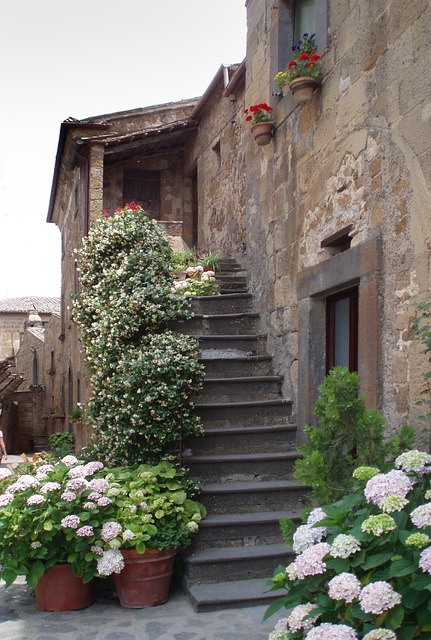
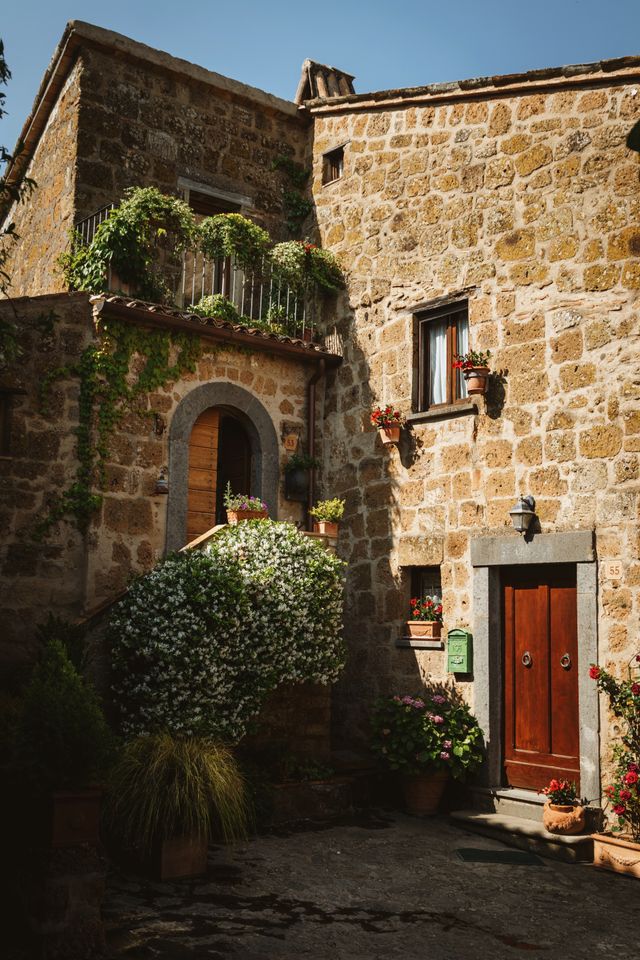
Elsewhere, a stone staircase climbs past pots of pink and white hydrangeas toward an upper floor door. Nearby, another stone house shows off an arched wooden doorway framed by climbing ivy. Together, these small details are what make wandering Civita’s back streets worth the extra time.
Archways and Hidden Courtyards
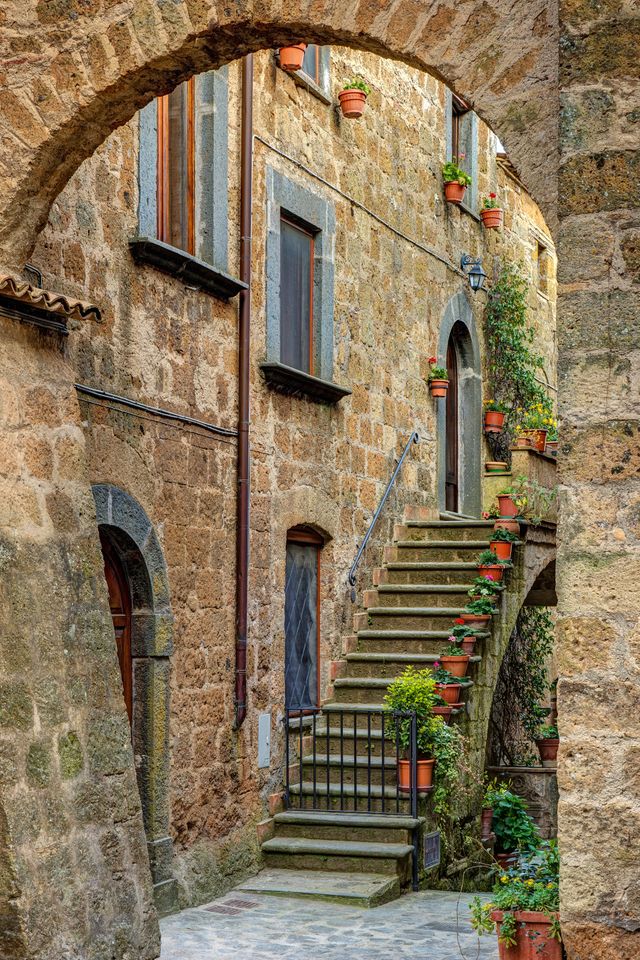
Several of Civita’s alleys pass beneath stone archways that once served as defensive gateways. Now, they simply frame staircases lined with potted plants, leading up toward homes still occupied by the village’s few remaining residents.
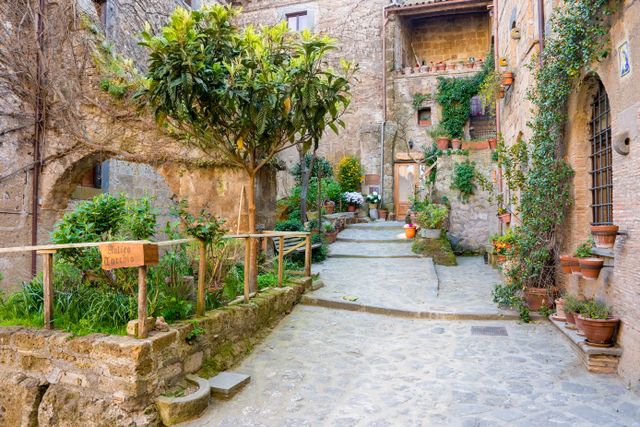
Further along, a quiet courtyard opens beside a small lemon tree and a wooden sign reading Antico Torchio. This is one of the few flat, open spaces in the village. As a result, it makes a natural spot to pause before continuing on.
The Church of San Donato and Civita’s Main Piazza
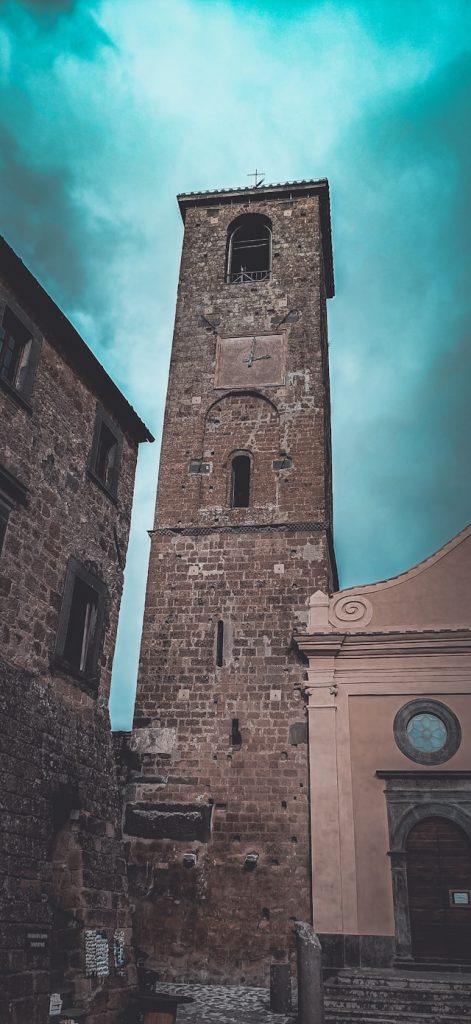
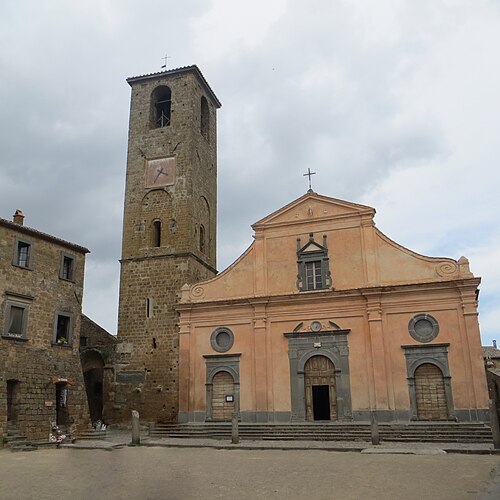
Specifically, at the heart of Civita di Bagnoregio sits Piazza San Donato, the village’s only real open square. A tall stone bell tower rises beside the pink facade of the Church of San Donato. It is visible from nearly every approach into the village. Inside, the church holds a wooden crucifix. Each Good Friday, it is carried through the streets in a centuries old procession.
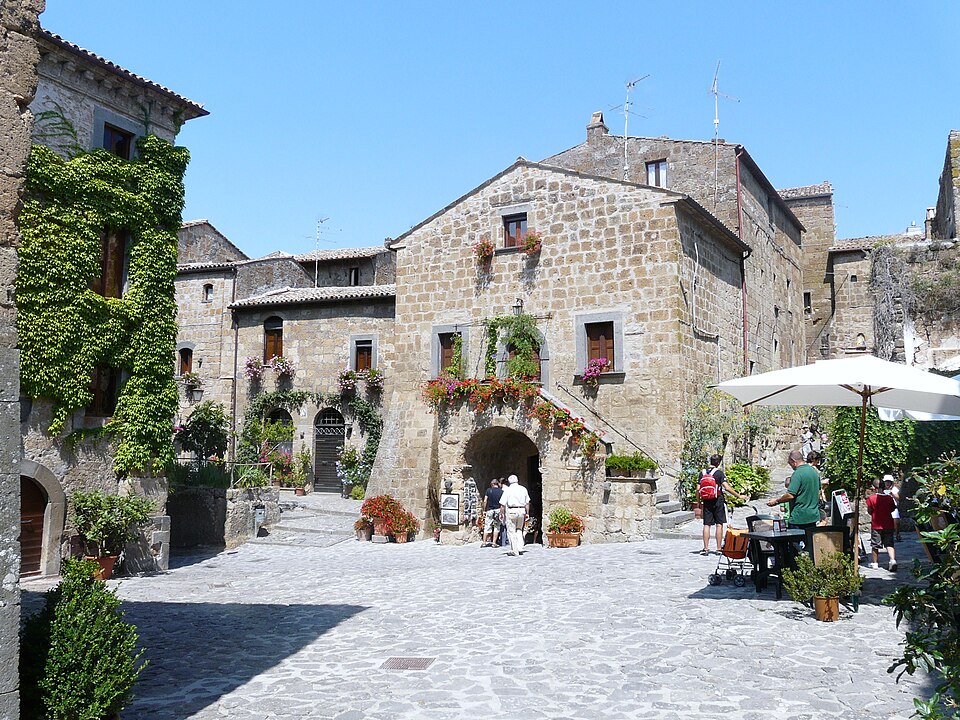
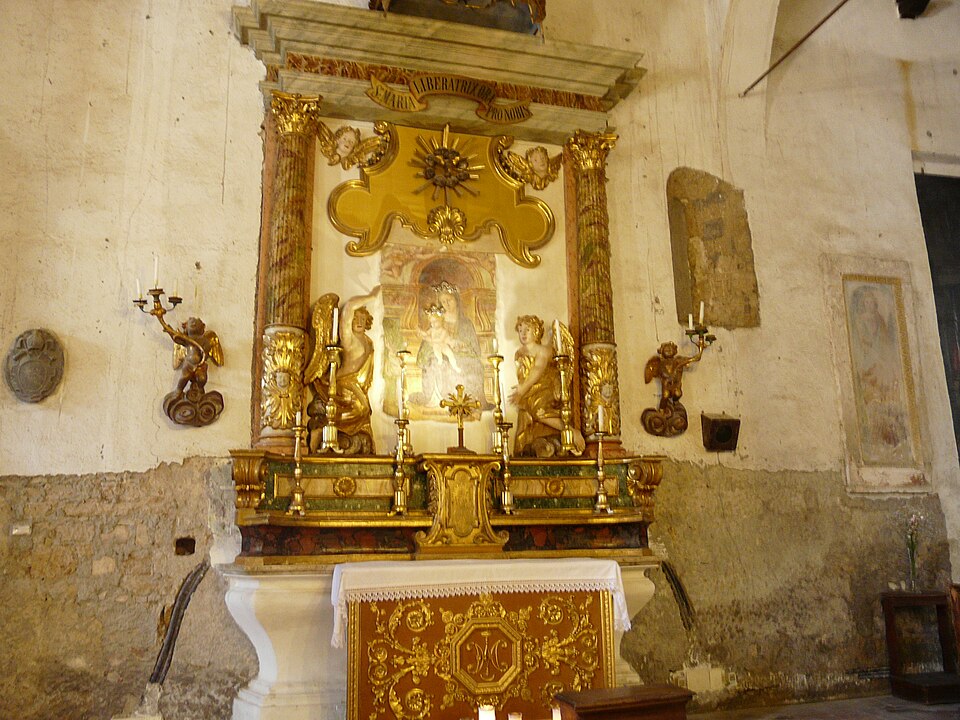
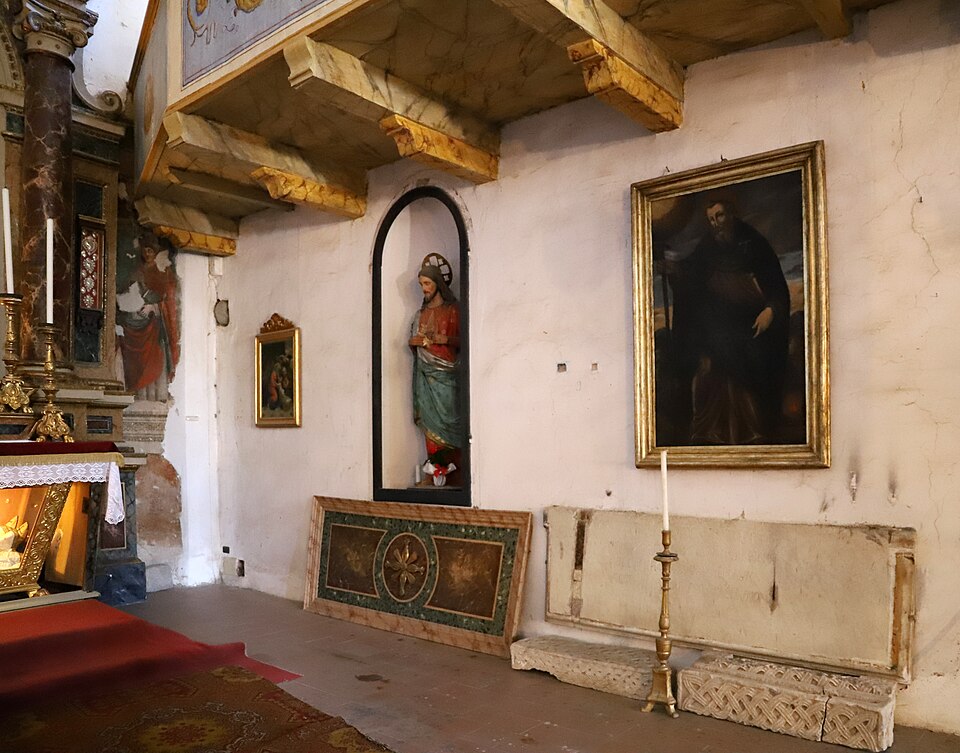
Tourists and vendors gather in the piazza throughout the day, since it remains the village’s main meeting point. Nearby, an ivy covered building shades a row of small shops selling local crafts and souvenirs. Inside, a gilded side altar features carved angels and a painted image of the Madonna and Child. Nearby, a quieter side chapel holds a statue tucked into an arched niche, beside a few framed devotional paintings. Together, these small details give the church far more presence than its modest size would suggest.
Crossing the Bridge Into the Dying Town
No visit to Civita di Bagnoregio is complete without understanding what makes the crossing itself so significant. The bridge and the eroding land beneath it are, in many ways, the whole story of this village.
The Footbridge and the Toll
The current footbridge dates to 1965, replacing earlier crossings lost to landslides over the centuries. Since 2013, visitors have paid a small entry toll to cross it. This fee funds maintenance and has helped stabilize the local economy. Even so, residents and workers are exempt, and the bridge remains closed to regular vehicle traffic.
Why the Village Is Disappearing
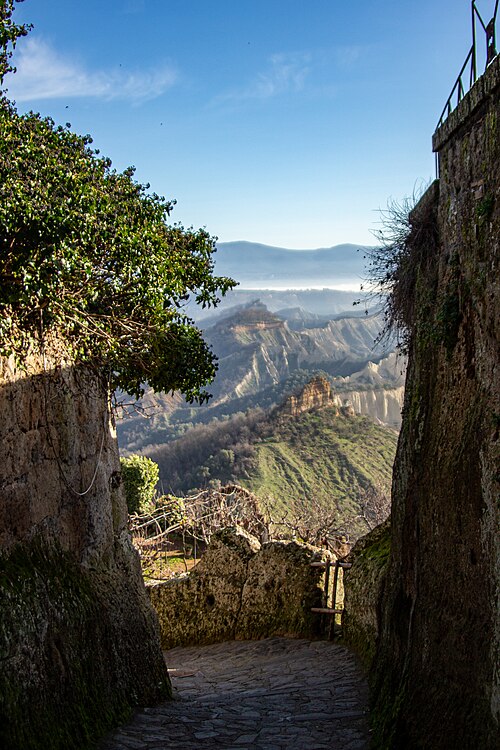
In short, Civita sits on a base layer of soft clay, topped by a harder layer of volcanic tuff. Over time, rainfall and erosion strip away the clay underneath, and the tuff above eventually collapses into the valley. This is why locals have called it La città che muore, the dying town, for generations. Despite the risk, engineers have reinforced parts of the plateau with steel rods to slow the process down.
One Historical Fact About Civita di Bagnoregio, Italy
Civita di Bagnoregio’s isolated, cliff top silhouette inspired Studio Ghibli director Hayao Miyazaki. In fact, he was developing his 1986 animated film Castle in the Sky at the time. Indeed, the floating fortress in the movie borrows heavily from Civita’s dramatic setting, perched above a valley with no easy way in or out. Today, fans of the film sometimes make the trip specifically to see the real village that helped inspire it. It is a fitting legacy for a town whose entire identity is built around its precarious, otherworldly position.
How to Get To Civita di Bagnoregio, Italy
Most visitors reach Civita di Bagnoregio by car, since public transportation options are limited. From Rome, the drive takes roughly ninety minutes along the A1 motorway toward Orvieto, followed by local roads to Bagnoregio. Parking is available near the start of the footbridge, though spaces fill quickly during peak season.
For travelers without a car, regional trains run from Rome to Orvieto, followed by a bus connection to Bagnoregio. Once in Bagnoregio, the footbridge to Civita is a short walk from the town center. Guided day trips from Rome are also widely available and often include stops at nearby hill towns.
Best Time to Visit Civita di Bagnoregio, Italy
Spring and autumn generally offer the most comfortable conditions for visiting Civita di Bagnoregio. Specifically, April through June and September through October bring mild temperatures and manageable crowds. Summer, by contrast, draws the heaviest tourist numbers along with hot, often crowded conditions on the narrow bridge and streets.
Winter, meanwhile, is quieter but colder, and some shops and cafes reduce their hours. For photographers chasing dramatic light, early morning or sunset visits work best. These hours tend to offer the softest, most atmospheric views of the village and the badlands beneath it.
Is Civita di Bagnoregio, Italy Worth Visiting?
Civita di Bagnoregio is well worth visiting for travelers drawn to dramatic scenery and a genuine sense of history. Few places in Italy combine ancient Etruscan roots, medieval architecture, and ongoing natural erosion in quite this way. On the other hand, the village is small, and a visit rarely takes more than half a day.
Even so, for anyone asking whether Civita di Bagnoregio is worth visiting, the crossing alone tends to answer the question. In that case, those seeking a quiet, uncrowded experience should aim for an early morning or off season visit. Otherwise, midday crowds during peak summer months can make the narrow streets feel considerably busier than the photos suggest.
Final Thoughts
Civita di Bagnoregio rewards travelers who take the crossing seriously rather than rushing through it. Naturally, the footbridge and the badlands below deserve as much attention as the village itself. Then, once across, the real pleasure is simply wandering without a fixed plan, since almost every alley leads somewhere worth photographing. At sunset, the entire plateau glows in shades of orange and gold. In that light, the village’s fragile, otherworldly setting becomes impossible to ignore.
Of course, if you are building a broader Italy or Europe itinerary, dramatic hill towns are not unique to Lazio either. Consider pairing a visit to Civita di Bagnoregio with a stop in Cuenca, Ecuador, another compact, colorful town built into a dramatic Andean landscape.
Image Credits
Introduction / Featured Image
- Civita di Bagnoregio’s Hilltop Village at Sunset – Photo by Gabriele Merlino on Unsplash
Why Visit Civita di Bagnoregio, Italy
- The Footbridge Connecting Civita di Bagnoregio to the Mainland – Photo by Bernardo Ferrari on Unsplash
Wandering the Alleys of Civita di Bagnoregio
- A Narrow Stone Alley with Staircases and Cats – Photo by Gabriella Clare Marino on Unsplash
- Cats Walking Down a Cobblestone Alley Toward a Green Valley View – Photo by Gabriella Clare Marino on Unsplash
- A Shaded Stone Alley with Greenery and a Small Chalkboard Sign – Photo by Laura Meinhardt on Pexels
- A Weathered Stone Wall with a Patterned Brick Design and a Flower Box Window – Photo by Gabriella Clare Marino on Unsplash
- A Weathered Green Door with an Iron Lion Head Knocker – Photo by Andrew Scherle on Unsplash
- A Stone Staircase Framed by Blooming Hydrangeas – Photo by zorgog on Pixabay
- A Stone House Corner with an Arched Wooden Doorway and Ivy – Photo by Laura Meinhardt on Pexels
- A Stone Archway Leading to a Staircase Lined with Potted Plants – Photo by Wojciech Wyszkowski on Pexels
- A Cobblestone Courtyard with a Lemon Tree and a Wooden Sign – Photo by Wojciech Wyszkowski on Pexels
The Church of San Donato and Civita’s Main Piazza
- The Bell Tower of the Church of San Donato – Photo by Fadi Al Shami on Unsplash
- Tourists Gathered in the Main Piazza of Civita di Bagnoregio – Photo by Davide Papalini, Wikimedia Commons, CC BY-SA 3.0
- The Church of San Donato and Its Bell Tower Under a Cloudy Sky – Photo by Luca Aless, Wikimedia Commons, CC BY-SA 3.0
- A Gilded Side Altar Inside the Church of San Donato – Photo by Davide Papalini, Wikimedia Commons, CC BY-SA 3.0
- A Side Chapel with a Statue Niche and Framed Paintings – Photo by Sailko, Wikimedia Commons, CC BY 3.0


Crossing the Bridge Into the Dying Town
- A Stone Path Opening Onto a View of the Eroded Badlands – Photo by Atehercam, Wikimedia Commons, CC BY-SA 4.0

Final Thoughts
- An Aerial View of Civita di Bagnoregio at Sunset – Photo by Giladtop, Wikimedia Commons, CC BY-SA 4.0
