There are places in the world that stop you in your tracks the moment you arrive, and Colonia del Sacramento Uruguay is one of them. Step off the ferry from Buenos Aires and you are immediately transported into a living museum: cobblestone lanes lined with flowering bougainvillea, centuries-old stone walls draped in afternoon light, and the vast silver expanse of the Río de la Plata shimmering at the end of every street.
Remarkably, this small city in Uruguay carries the weight of three and a half centuries with extraordinary grace. It does so without feeling frozen or artificial. Indeed, people live here. Cafés spill onto the cobblestones. Vintage cars rumble past colonial facades. Colonia del Sacramento Uruguay is utterly, irresistibly alive.
Whether you are planning a single afternoon or a longer stay, this Colonia del Sacramento travel guide covers everything you need to know before you go.
Quick Facts About Colonia del Sacramento Uruguay
| Country | Uruguay |
| Region | Colonia Department, southwestern Uruguay |
| Known For | UNESCO-listed Barrio Histórico, cobblestone streets, colonial architecture, Calle de los Suspiros, and Río de la Plata sunsets |
| UNESCO Status | UNESCO World Heritage Site (inscribed 1995) |
| Founded | 1680 by Portuguese explorer Manuel Lobo |
| Best Time to Visit | Spring (September to November) and autumn (March to May) |
| Time Needed | One full day to two days |
| Continent | South America |
Where is Colonia del Sacramento Uruguay?
Colonia del Sacramento sits on a small, rounded peninsula jutting into the southern shore of the Río de la Plata, in Uruguay’s Colonia Department. More specifically, it lies approximately 180 kilometers west of Montevideo.Remarkably, it sits just 50 kilometers across the water from Buenos Aires, Argentina. This makes it one of the most accessible international destinations in South America. The Barrio Histórico, the city’s UNESCO-protected historic quarter, occupies the very tip of the peninsula. Fortunately, it is compact enough to explore almost entirely on foot.
Why Visit Colonia del Sacramento Uruguay?
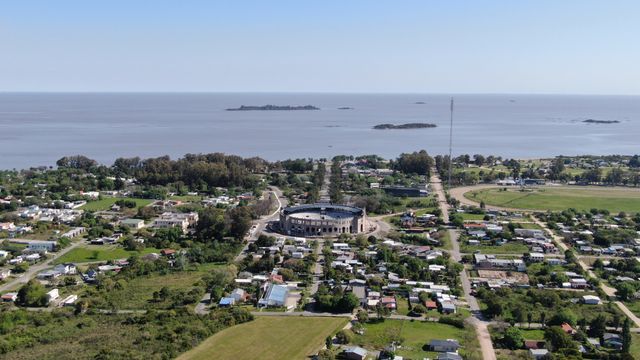
Colonia del Sacramento Uruguay is one of the best-preserved Portuguese colonial cities in South America. Its historic quarter, the Barrio Histórico, earned UNESCO World Heritage recognition in 1995. However, this is not a city that exists solely in the past. Rather, it is a living, breathing community with independent restaurants, artisan shops, and local residents who have called these colonial streets home for generations.
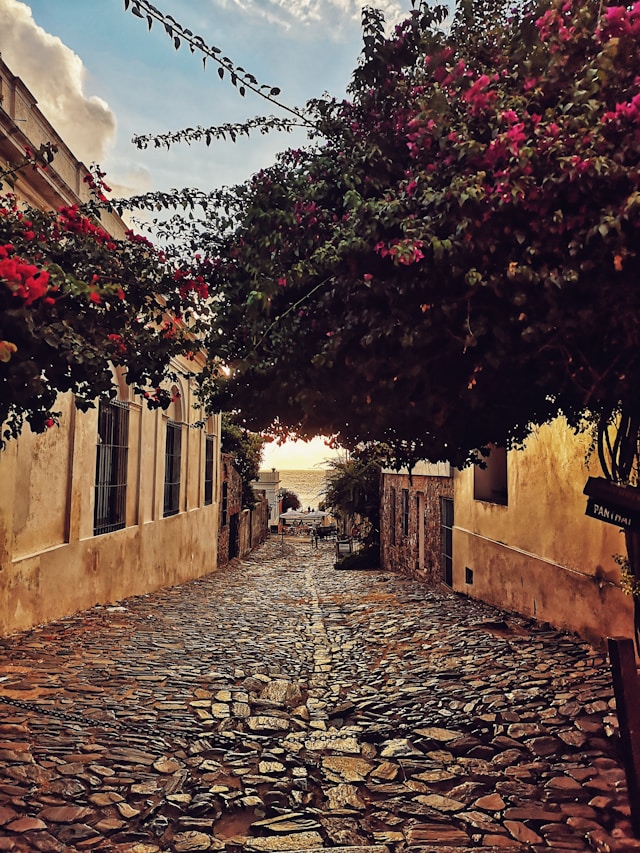
In addition, Colonia del Sacramento Uruguay is one of the few historic cities in the region where the scale remains human. There are no skyscrapers, no mass tourism infrastructure, and no admission fee to simply wander the old town. You arrive, and the city opens itself up to you. For travelers seeking a break from the intensity of Buenos Aires or Montevideo, few destinations offer the same combination of colonial heritage, natural beauty, and calm.
Furthermore, the city’s position on the Río de la Plata means the scenery changes constantly throughout the day. The golden hour over the river estuary is something visitors tend to remember for years.
For more incredible South American travel destinations, explore our full destinations guide.
The Barrio Histórico: The UNESCO-Listed Heart of Colonia del Sacramento Uruguay
The Barrio Histórico is the historic core of Colonia del Sacramento Uruguay. It is a compact grid of cobblestone streets, colonial buildings, and fortification walls that together form one of the most atmospheric old quarters in South America. What makes it particularly special is the layered mix of architectural styles. Portuguese and Spanish colonial buildings stand side by side, reflecting centuries of competing rule. Stone, brick, and terracotta tile are the dominant materials, and every wall, doorway, and iron-barred window carries a story. In fact, the Barrio Histórico Uruguay earned its UNESCO World Heritage Uruguay status in 1995 precisely because of this rare concentration of colonial heritage preserved in near-original condition.
Calle de los Suspiros
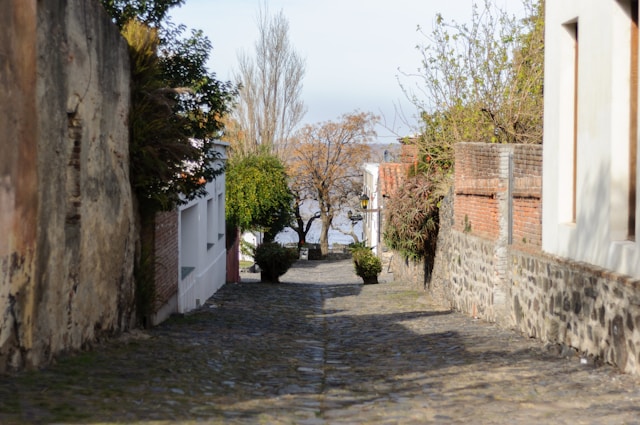
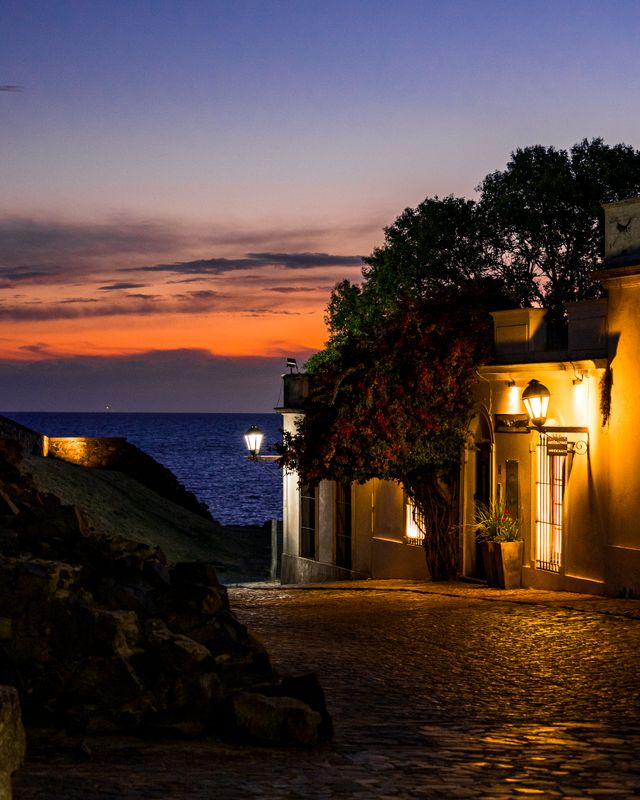
No street in Colonia del Sacramento is more celebrated than the Calle de los Suspiros, the Street of Sighs. It is exactly what its name suggests: a narrow, gently sloping cobblestone lane flanked by thick stone and brick walls. A traditional lantern post casts long shadows at dusk. At the far end, the Río de la Plata glitters in the fading light.
The name is said to come from the sighs of the enslaved people who once walked it during the colonial era. However, today the street draws photographers, lovers, and wanderers from across the world. It is brief, beautiful, and impossible to forget. It is also one of the most photographed spots in all of Uruguay, and rightly so.
The Portón de Campo
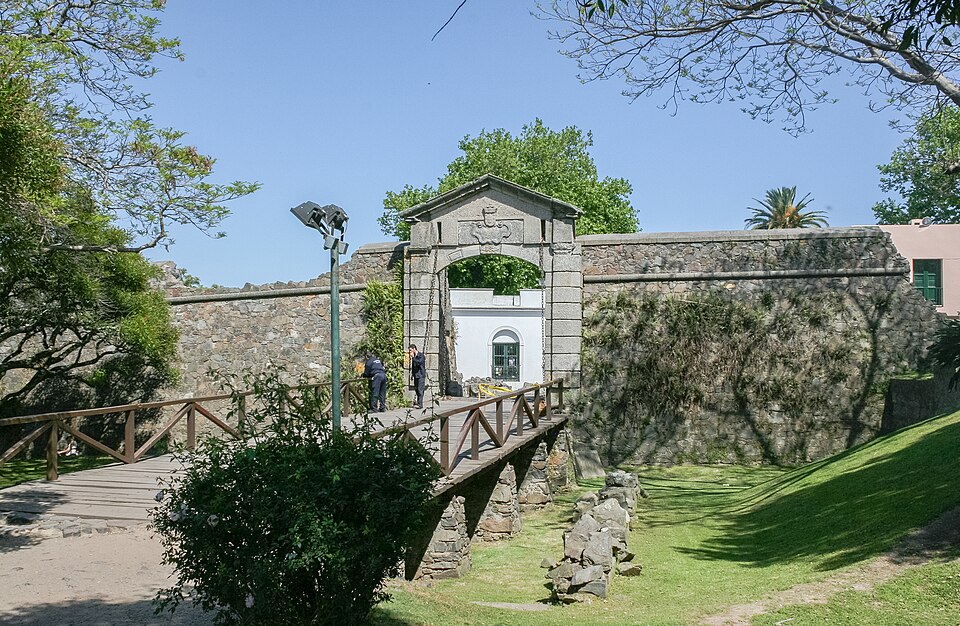
Known as the Gate of the Field, the Portón de Campo marks the official entrance to the Barrio Histórico. Consequently, it is one of the most visited landmarks in Colonia del Sacramento. Built by the Portuguese in the early 18th century, this stone archway is reached via a wooden footbridge. The footbridge spans the remains of the original moat, which once protected the city from overland attack.
Its carved stonework and thick flanking walls give an immediate sense of the city’s fortified Portuguese colonial past. Passing through the gate feels genuinely ceremonial, like crossing a threshold from the modern world into another era entirely. It is a powerful entry point to the historic quarter and the perfect place to begin any exploration of the old town.
Colonial Architecture and Colorful Streets
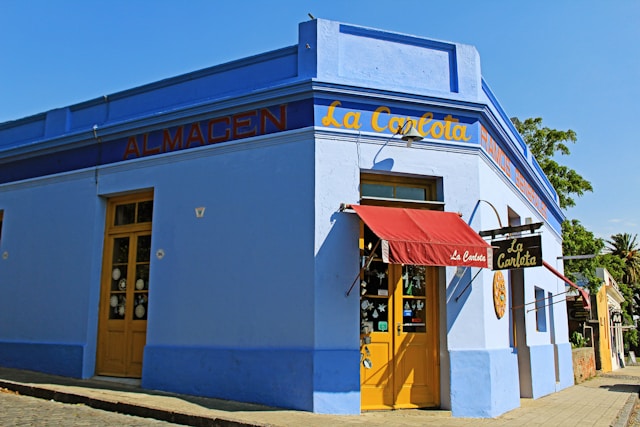
Beyond the famous landmarks, the Barrio Histórico reveals itself in layers. A bright blue corner almacén with golden lettering. A weathered stone building bearing a mounted clock. A terracotta-roofed house with iron-barred windows and pink bougainvillea climbing the wall. Each street turns up something new.
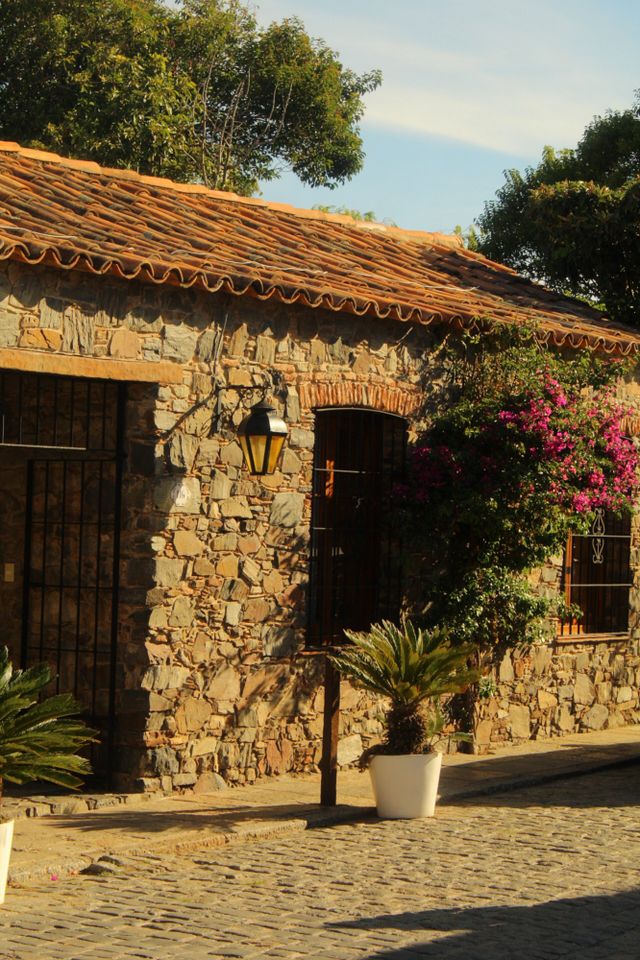
The neighborhood is not a single architectural style but an accumulation of them: Portuguese colonial, Spanish colonial, and everything that came in between. This layered colonial heritage is precisely what earned the Barrio Histórico its UNESCO listing. Unified by cobblestones underfoot and light that seems to fall differently here than anywhere else, it is a place that rewards slow, careful attention.
The Waterfront of Colonia del Sacramento Uruguay
The Río de la Plata and Its Distinctive Waters
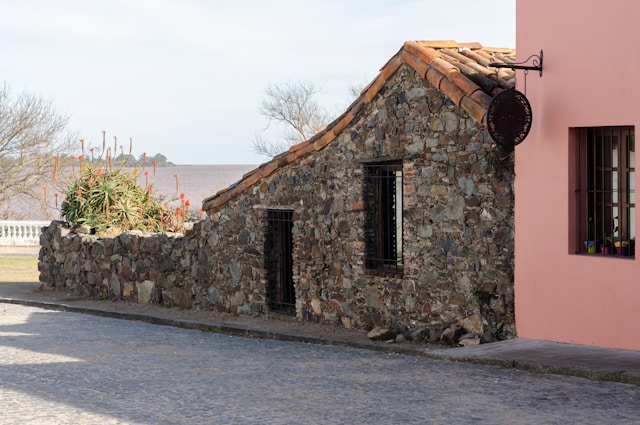
Colonia del Sacramento’s historic quarter is surrounded on three sides by water. The Río de la Plata is as much a part of the city’s identity as its cobblestone streets. However, the river here is not blue but a distinctive brownish-silver. This color comes from sediment carried thousands of kilometres from the Paraná and Uruguay rivers upstream. On overcast days, the estuary is so wide that the Argentine shore simply disappears from view.

A Calm and Unspoiled Waterfront
Unlike many coastal cities, the waterfront here is calm, green, and largely unbuilt. Native shrubs, rocky banks, and low benches line the shore. Locals often sit here to watch the light change over the water. As a result, it feels less like a tourist attraction and more like a quiet neighbourhood escape.

Sunset Over the Río de la Plata
At sunset, the Río de la Plata becomes something extraordinary. Colour fills the wide sky above Colonia del Sacramento Uruguay. The rocky shoreline catches the last light in shades of gold, purple, and deep blue. It is one of the most dramatic natural displays in Uruguay. In fact, it costs nothing more than the time to sit and watch. Many visitors consider the sunset here a highlight of their entire South America travel experience.
Things to Do in Colonia del Sacramento Uruguay
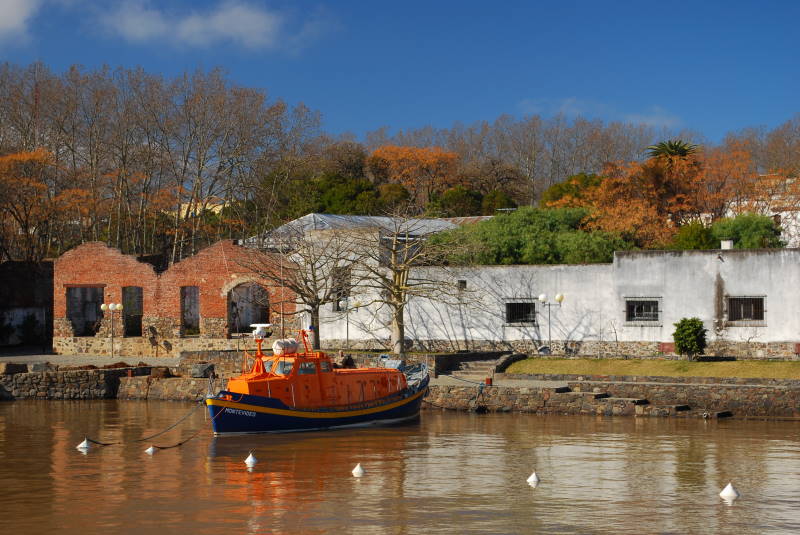
There is no shortage of things to do in Colonia del Sacramento Uruguay. The city rewards visitors who take their time. Beyond the famous cobblestone streets and the Portón de Campo, there are historic museums, a climbable lighthouse, a scenic waterfront promenade, and some of the best al fresco café culture in Uruguay. The Barrio Histórico is small enough to explore thoroughly in a single day, but rich enough to justify staying longer.
The Lighthouse and the View Above
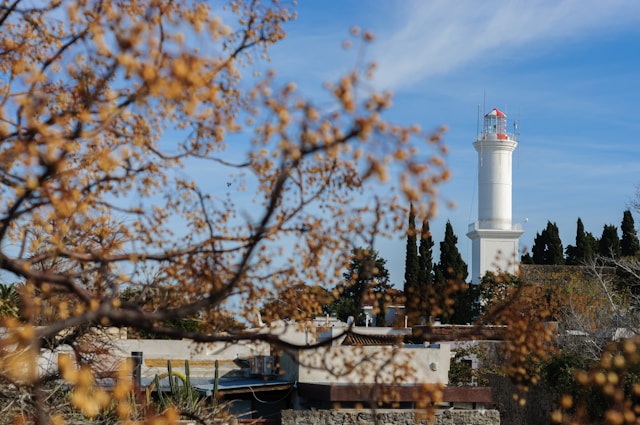
The Faro de Colonia del Sacramento is the city’s most distinctive landmark and one of the top things to do in Colonia del Sacramento Uruguay. Built in 1857 atop the ruins of a 17th-century Jesuit convent, the white lighthouse rises above the surrounding rooftops. It offers panoramic views from its upper platform for a small admission fee. The climb is modest, with a narrow internal staircase leading to the top.
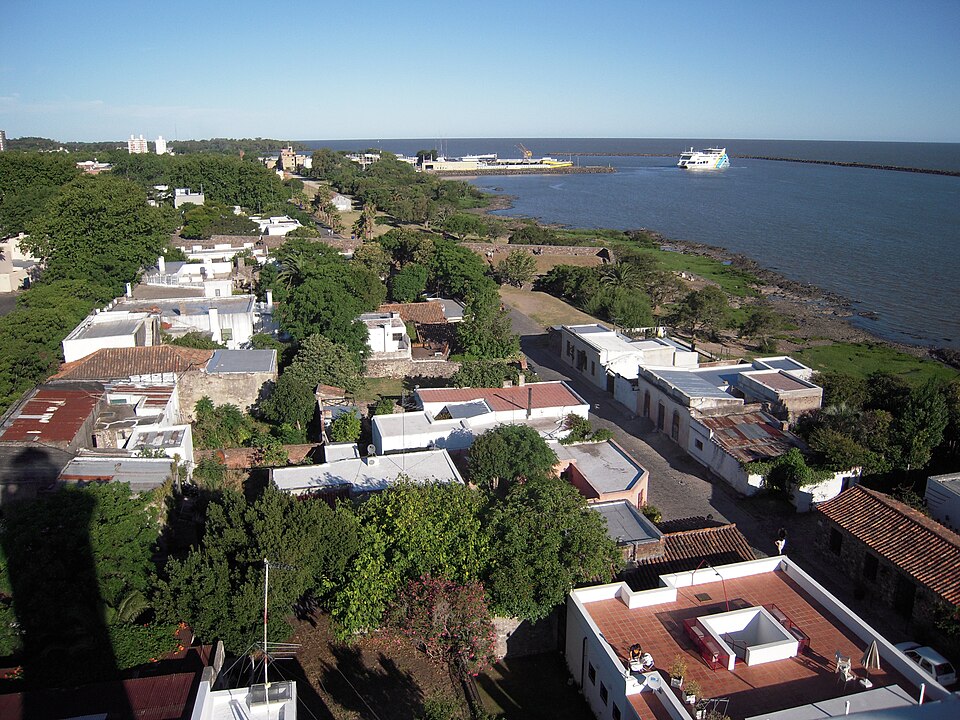
From the top, the Barrio Histórico spreads below in a patchwork of terracotta and green. The ferry terminal and its departing vessels are visible to one side. On the other side, the vast Río de la Plata stretches toward Argentina along the horizon. Late afternoon light makes the view especially memorable. This is a must-do for first-time visitors to Colonia del Sacramento Uruguay.
Museums in the Barrio Histórico Uruguay
The Barrio Histórico Uruguay is home to several small but worthwhile museums. They are all within easy walking distance of each other. The Museo Portugués, located on Plaza Mayor, houses colonial artifacts, navigational instruments, and Portuguese furniture from the city’s founding era. It offers a clear window into the Portuguese colonial history that shaped Colonia del Sacramento Uruguay from 1680 onward.
The Museo Municipal, housed in a colonial building on Calle del Comercio, covers the city’s history from its founding through to independence. The Museo Español focuses on the Spanish colonial period, with artifacts from the decades when Spain controlled the city. For those interested in decorative arts, the Museo de los Azulejos displays traditional decorative tile work from the colonial era. Together, these museums offer a thorough grounding in the colonial heritage of Colonia del Sacramento Uruguay. Most charge a very small admission fee or are free.
Cobblestone Cafés and al Fresco Dining
One of the great pleasures of visiting Colonia del Sacramento is simply sitting down. The Barrio Histórico is filled with small cafés and restaurants. Many spill their tables onto the cobblestones under the shade of old trees. You can spend an hour over coffee or an entire afternoon over a long, unhurried lunch.
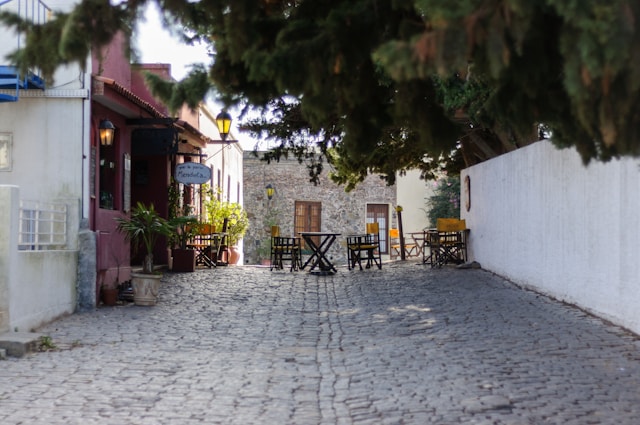
The food leans toward Uruguayan staples: grilled meats, fresh pasta, and local cheeses. In addition, the city has a growing number of restaurants showcasing the wines of the broader Colonia Department, which is known for its vineyards. The chivito, Uruguay’s iconic steak sandwich, is widely available and worth trying at least once. The atmosphere throughout is relaxed and genuinely local, even in the busier spots near the main tourist streets.
Wandering the Colonial Streets of Colonia del Sacramento Uruguay
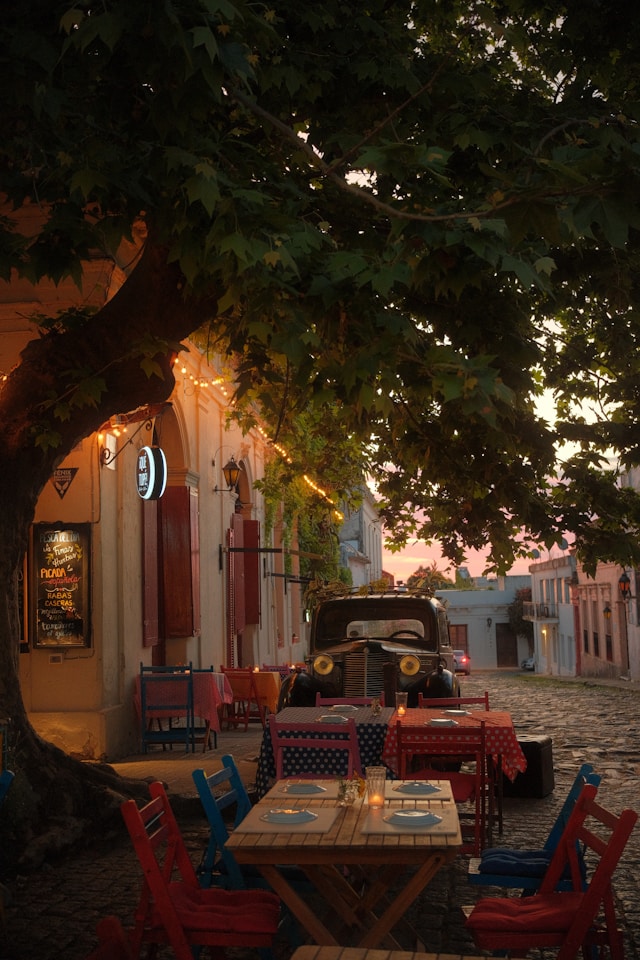
In fact, half the joy of things to do in Colonia del Sacramento Uruguay is simply walking without a plan. Notably, the Barrio Histórico is small enough to cover in a few hours. However, it is rewarding enough that most visitors find themselves looping back through the same lanes just to see them in a different light or at a different hour.
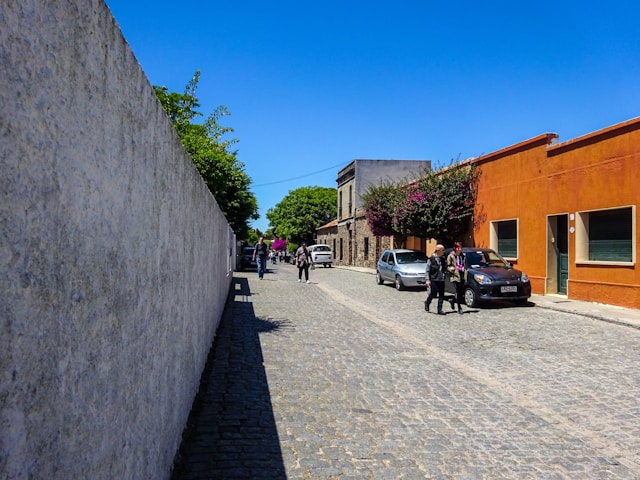
Furthermore, vintage automobiles, including decades-old Citroëns, Renaults, and American sedans, are parked along the lanes as if the 20th century never quite left. Meanwhile, local shop owners chat from their doorways. In addition, artisan shops sell handmade leather goods, pottery, and traditional crafts. The whole neighborhood has the rare quality of feeling both historic and genuinely inhabited: a lived-in colonial heritage that very few cities in South America can match.
One Historical Fact About Colonia del Sacramento Uruguay
Colonia del Sacramento Uruguay has one of the most contested histories of any city in South America. Founded in 1680 by the Portuguese governor of Brazil, Manuel Lobo, it was strategically placed directly across the Río de la Plata from the Spanish city of Buenos Aires. This was a deliberate provocation. It set off nearly a century of armed conflict between Portugal and Spain for control of the Río de la Plata estuary and the broader region.
As a result, the city changed hands no fewer than seven times between Portugal and Spain. Eventually, it became part of the newly independent Uruguay in the early 19th century. As a result, each colonial power left its mark on the architecture and street layout of the Barrio Histórico Uruguay. This is precisely why the neighborhood looks unlike any other in South America: it is not purely Portuguese, not purely Spanish, but a rich and layered archive of both colonial histories.
How to Get To Colonia del Sacramento, Uruguay
The Colonia del Sacramento Ferry from Buenos Aires
The most popular way to reach Colonia del Sacramento Uruguay is by ferry from Buenos Aires. Currently, two main operators run the Colonia del Sacramento ferry service:
- Buquebus: Specifically, it operates fast ferries taking approximately one hour and conventional ferries taking approximately three hours. By far, the most popular way to reach Colonia del Sacramento Uruguay is by ferry from Buenos Aires. Specifically, it departs from the Buquebus terminal at Dársena Norte in Buenos Aires.
- Colonia Express: Similarly, it offers a fast Colonia del Sacramento ferry crossing of approximately one hour. Generally the more budget-friendly option. Also departs from the Buenos Aires waterfront.
Book your Colonia del Sacramento ferry tickets in advance, especially on weekends and during peak season.
Other Ways to Reach Colonia del Sacramento Uruguay
- By bus from Montevideo: Regular long-distance buses connect Montevideo’s Tres Cruces terminal to Colonia del Sacramento. The journey takes approximately two and a half to three hours. COT and Turil are the main operators.
- By car from Montevideo: The drive along Ruta 1 takes around two hours on a well-maintained highway. Car hire is available in Montevideo.
- By car from Buenos Aires: Cross to Uruguay via the Buquebus car ferry, or drive north via the Fray Bentos–Puerto Unzué bridge, though the latter is a significantly longer route.
Getting Around Colonia del Sacramento Uruguay
- On foot: The Barrio Histórico is entirely walkable. Most key attractions are within a 10-minute walk of each other.
- By golf cart or bicycle: Both are available for rent near the ferry terminal and are popular for exploring the wider town beyond the historic quarter.
Best Time to Visit Colonia del Sacramento, Uruguay
Generally, spring (September to November) and autumn (March to May) are the best times to visit Colonia del Sacramento Uruguay. Temperatures during these seasons are mild and pleasant, typically ranging from 15 to 25 degrees Celsius. During spring, the bougainvillea is in full bloom and the cobblestone streets are at their most colorful. Moreover, the golden light of autumn makes the colonial architecture especially photogenic. Both seasons also tend to be quieter than the summer peak, making it easier to enjoy the old town at a leisurely pace.
Summer (December to February) is the most popular season but also the hottest and most crowded. During this time, day-trippers from Buenos Aires arrive in large numbers on weekends. If you are visiting Colonia del Sacramento Uruguay in summer, arriving early in the morning and leaving in the late afternoon will help you avoid the busiest hours.
In contrast, winter (June to August) is quiet and cool, with temperatures typically between 7 and 15 degrees Celsius. However, it is not unpleasant. As a result, fewer tourists mean the cobblestone streets feel more like a living neighbourhood and less like a destination. Some smaller restaurants and traditional guesthouses may reduce their hours during this period. Regardless, sunset over the Río de la Plata is always worth staying for.
Is Colonia del Sacramento, Uruguay Worth Visiting?
Without a doubt, Colonia del Sacramento Uruguay is one of those rare destinations that consistently exceeds expectations. It is intimate enough to feel personal, historic enough to feel significant, and alive enough to feel like more than a museum piece. Above all, the Barrio Histórico alone justifies the journey. However, it is the combination of the cobblestone streets, the waterfront, the light, and the unhurried pace that makes visiting Colonia del Sacramento truly special.
Whether you come for a single afternoon from Buenos Aires or build an overnight stay into a broader Uruguay itinerary, the city rewards the time you give it. Ultimately, for travelers who value authentic colonial heritage, quiet natural beauty, and the kind of place that stays with you long after you have left, Colonia del Sacramento should be at the top of your list.
Final Thoughts
Importantly, Colonia del Sacramento Uruguay doesn’t shout for attention. It doesn’t need to. nstead, it simply exists, cobblestone by cobblestone, wall by flowering wall, and invites you to slow down and look closely.
In an age of over-touristed destinations and Instagram-optimized experiences, there is something genuinely refreshing about a place this beautiful that still feels this real. If you are in Buenos Aires and wondering whether the Colonia del Sacramento ferry crossing is worth it, the answer is yes. And if you are planning a trip to Uruguay more broadly, Colonia del Sacramento should be near the top of your list. Not merely as a quick stop, but as a place deserving of your full, unhurried attention.
If you love colonial architecture and vibrant coastal history, you may also enjoy Old San Juan Puerto Rico, another beautifully preserved historic gem.
Image Credits
- Wooden door with red flowers: Photo by Gonzalo Kaplanski on Unsplash
- La Carlota colorful corner almacén: Photo by Marcela Laskoski on Unsplash
- Calle de los Suspiros leading to the Río de la Plata: Photo by Mayumi Maciel on Unsplash
- Cobblestone street with visitors on a sunny day: Photo by Nikolai Kolosov on Unsplash
- Outdoor café tables on cobblestone street: Photo by Mayumi Maciel on Unsplash
- Historic stone building with mounted clock: Photo by Mayumi Maciel on Unsplash
- Bougainvillea arching over cobblestone lane at sunset: Photo by Jorge Salazar Tovar on Unsplash
- Outdoor café with vintage car parked under a tree: Photo by Tammy Taabassum on Unsplash
- White colonial lighthouse with trees in the foreground: Photo by Mayumi Maciel on Unsplash
- Dramatic sunset over the Río de la Plata rocky shore: Photo by dpkelly07 on Pixabay
- Aerial view of the historic quarter and coastline: Photo by Ezequiel Barroso on Pexels
- Coastal landscape with flowering shrubs and the Río de la Plata: Photo by Nikolai Kolosov on Pexels
- Colonial stone building with lantern and bougainvillea: Photo by Gaspar Liddle on Pexels
- Colonial street bathed in golden hour light: Photo by Gabriel Lopez on Pexels
- Orange and blue boat moored in the historic harbor: Via Wikimedia Commons (verify attribution at source)
- Portón de Campo, the historic city gate with wooden bridge: Via Wikimedia Commons (verify attribution at source)
- View from the lighthouse over rooftops toward the ferry port: Via Wikimedia Commons (verify attribution at source)