
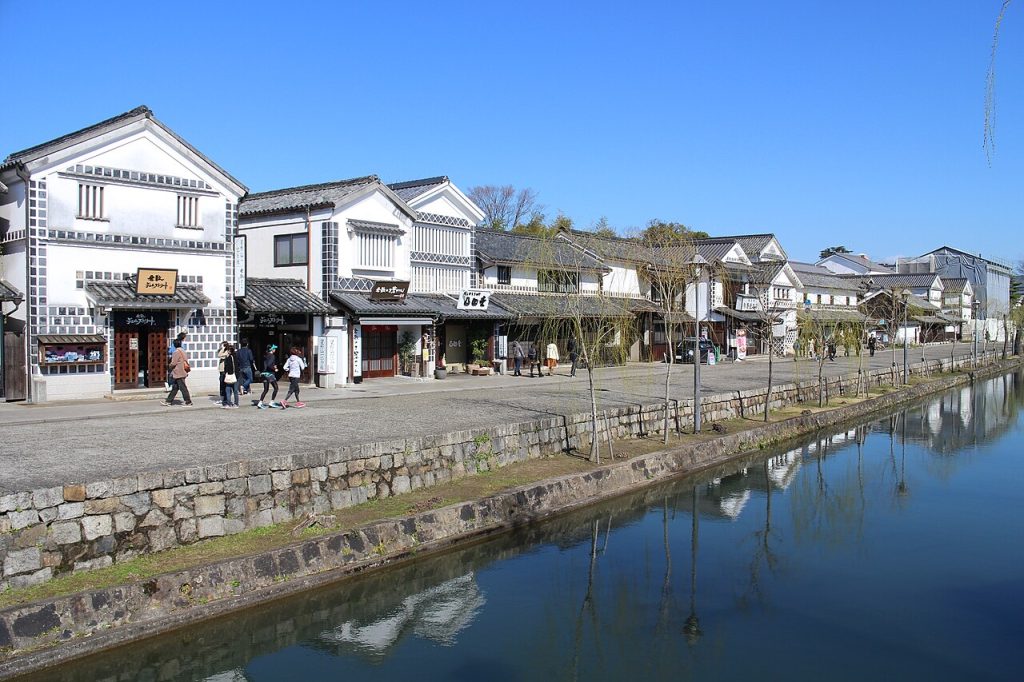
In the west of Japan, a narrow canal slips between rows of white storehouses with black tiled walls. Weeping willows trail their branches in the water, and small wooden boats drift past stone bridges. This is the Bikan Historical Quarter of Kurashiki, a merchant town that grew rich on rice. In this guide, you will discover what to see in Kurashiki, Japan, how to get there and when to visit.
Quick Facts About Kurashiki, Japan
| Country | Japan |
| Region | Okayama Prefecture, western Honshu |
| Known For | Canal-side white storehouses, boat rides and the Ohara Museum of Art |
| UNESCO Status | Not listed (protected as a traditional buildings preservation district) |
| Founded | Grew as a rice trading town in the Edo period |
| Best Time to Visit | March to May and October to November |
| Time Needed | One day |
| Continent | Asia |
Where Is Kurashiki, Japan?
Kurashiki is a city in Okayama Prefecture, in the western part of Honshu, Japan’s main island. Although the modern city is large, its historic heart, the Bikan Historical Quarter, is compact and easy to explore on foot. It lies a short walk south of Kurashiki Station and close to the city of Okayama.
Why Visit Kurashiki, Japan?
First of all, Kurashiki offers a rare look at an Edo period merchant town. Its canal, storehouses and old shopfronts have been carefully preserved. As a result, the quarter feels calm and photogenic, even in the middle of a busy city.
In addition, Kurashiki is easy to combine with Okayama, Himeji or Hiroshima. Therefore, it makes a relaxing day trip or overnight stop on a journey through western Japan.
Exploring the Bikan Historical Quarter
The name Kurashiki comes from kura, the Japanese word for storehouse. The Bikan Historical Quarter is where these storehouses still stand along the canal.
The Willow-Lined Canal
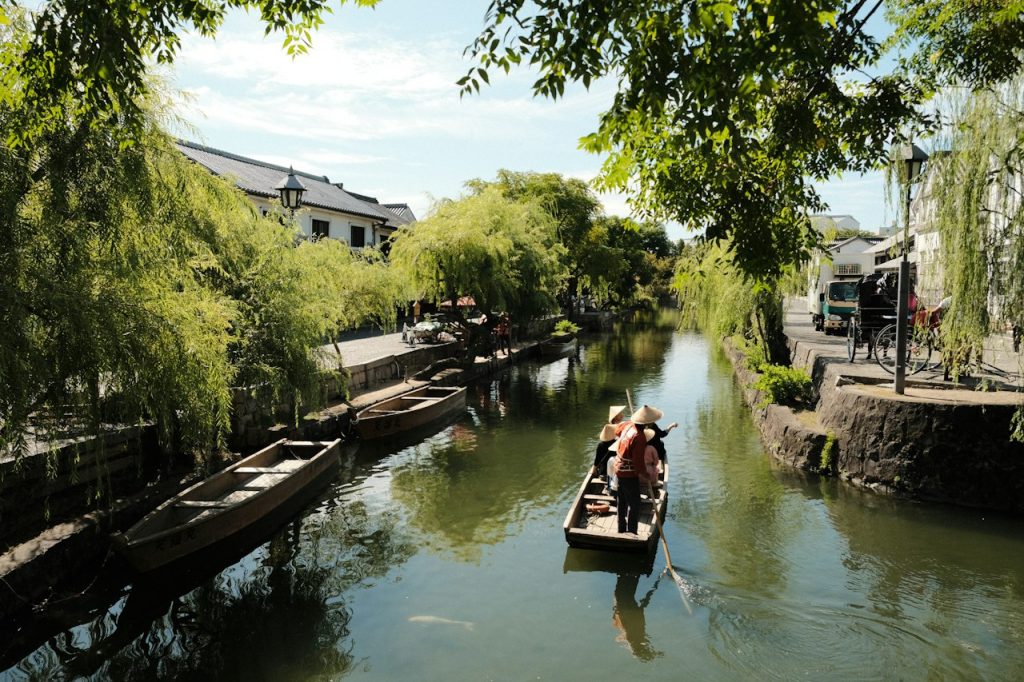
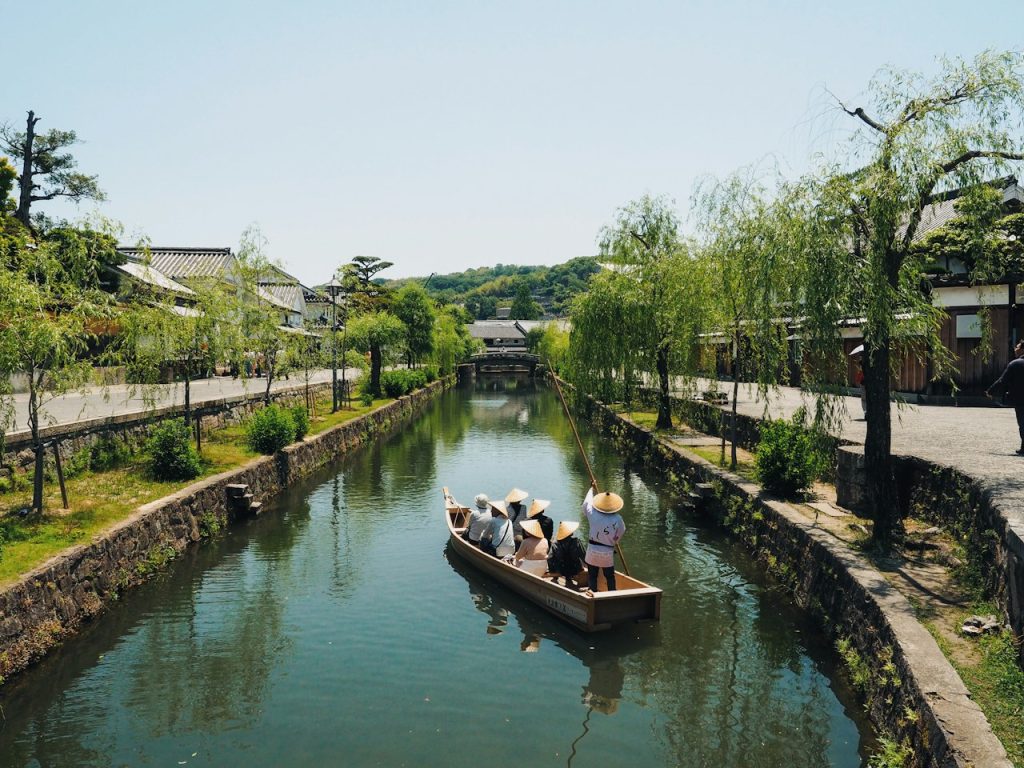
The Kurashiki River canal runs through the centre of the quarter. Stone bridges cross it at intervals, and weeping willows line both banks. In spring and autumn, the reflections of white walls and green branches make it one of the most peaceful scenes in the region.
Boat Rides on the Canal
For a different view, take a short ride in a traditional flat boat. A boatman guides you slowly along the canal while explaining the history of the houses. Rides are short but memorable, especially on a sunny morning.
White Walls and Black Tiles
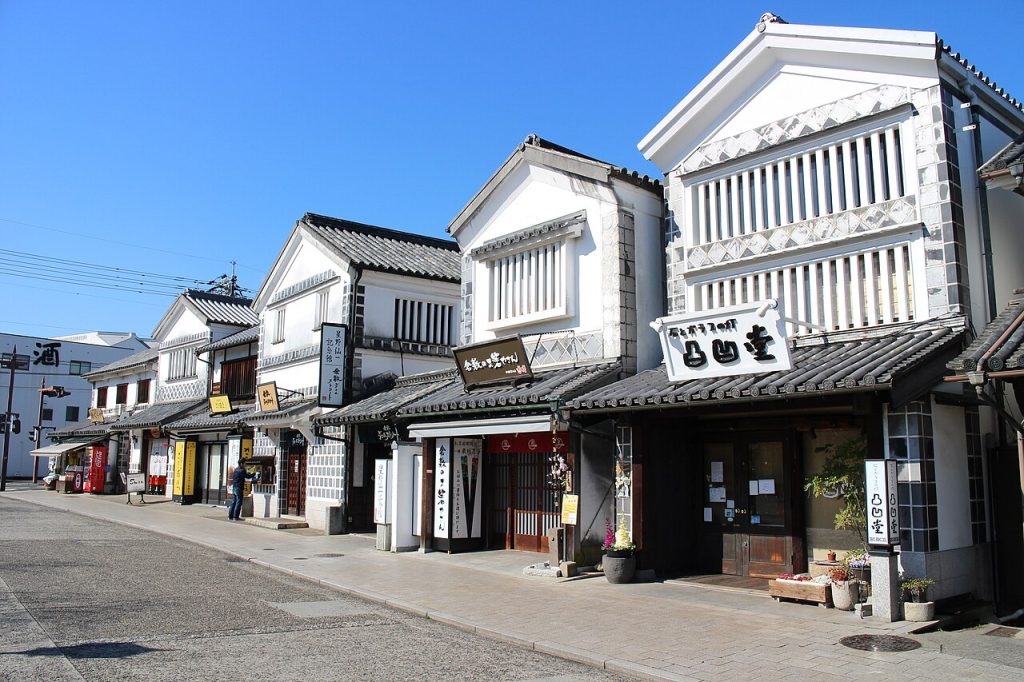
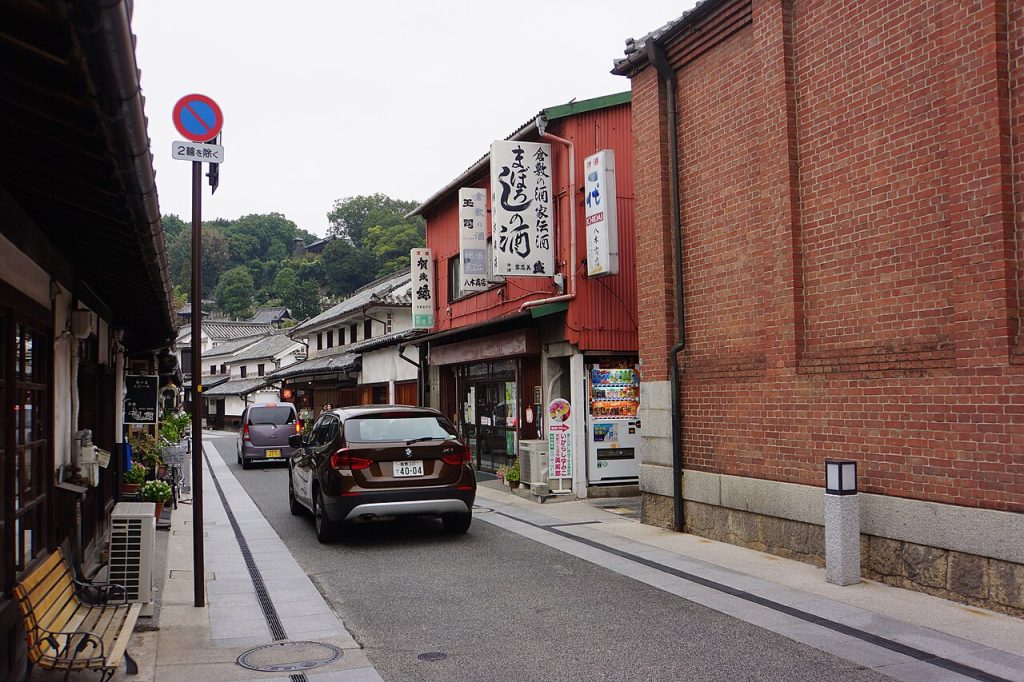
Many of the warehouses date back to the 17th century. Their walls use a striking pattern of white plaster and black tiles, designed to protect goods from fire and damp. Today, the buildings hold cafés, craft shops, galleries and small museums.
Museums and Merchant Houses
Kurashiki is also known for culture. The Ohara Museum of Art, opened in 1930, was the first museum of Western art in Japan. Its collection includes works by famous European painters, as well as Japanese and Asian art.
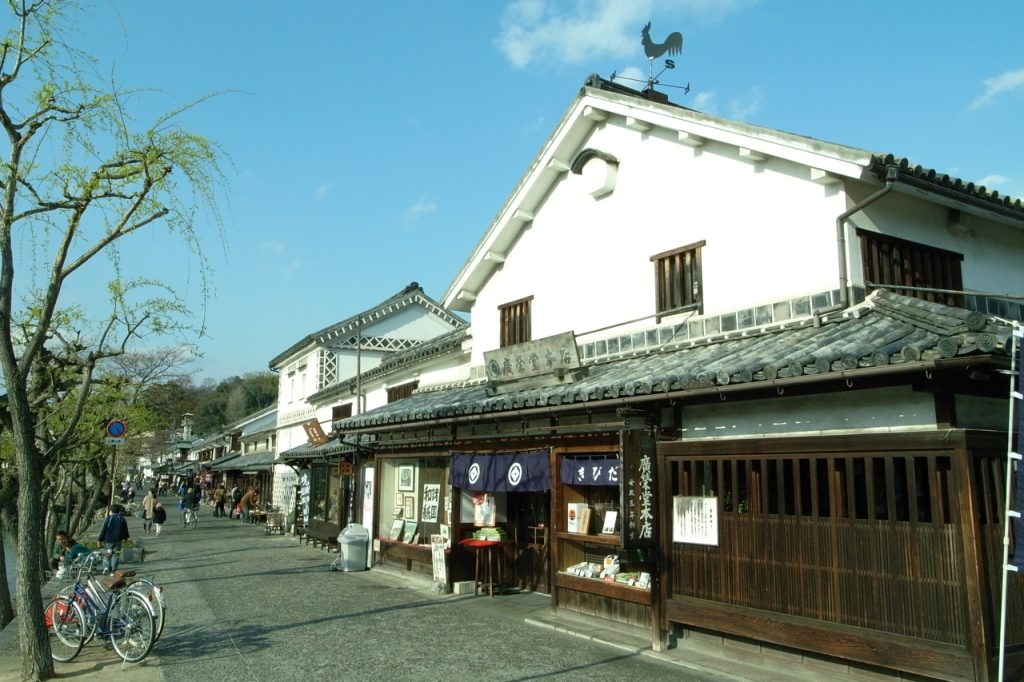
Nearby, several old merchant houses are open to visitors. They show how wealthy traders lived and worked when the town was a collection point for rice taxes. Meanwhile, side lanes lead to shops selling local denim, a craft that the wider Kurashiki area is well known for.
Beyond the Canal
Once you have walked the canal, there is more to see in the quarter and around it.
Ivy Square
A Former Spinning Mill
Ivy Square is a complex of red brick buildings that once formed a cotton spinning mill. Today, ivy covers the walls, and the site holds a hotel, shops and a courtyard.
A Quiet Courtyard
The courtyard is a pleasant place to rest away from the canal crowds. In addition, it shows a later chapter of Kurashiki’s industrial history.
Achi Shrine and the Hilltop View
Climbing Tsurugatayama
Above the quarter, a stairway climbs to Achi Shrine on Tsurugatayama hill.
Rooftop Views
From the top, you can look down on the tiled roofs of the old town. It is especially rewarding in the late afternoon light.
One Historical Fact About Kurashiki, Japan
During the Edo period, Kurashiki was ruled directly by the Tokugawa shogunate. The town and its port served as a collection point for the annual rice taxes, and its storehouses held the grain. This trade is what made Kurashiki’s merchants wealthy.
How to Get to Kurashiki, Japan
By train: Take the San’yō Shinkansen to Okayama, then change to the JR San’yō Line for a short ride to Kurashiki Station. From the station, the Bikan Historical Quarter is about a 10 to 15 minute walk.
By car: Kurashiki is easy to reach by expressway, and paid car parks are located near the quarter.
Best Time to Visit Kurashiki, Japan
The best time to visit Kurashiki is in spring, from March to May, or in autumn, from October to November. During these months, the weather is mild and the willows look their best. Summer is hot and humid, while winter is quieter and cool.
Is Kurashiki, Japan Worth Visiting?
Yes, Kurashiki is worth visiting, especially if you enjoy traditional architecture and slow walks. The canal and storehouses create a calm atmosphere that is hard to find in big cities. Moreover, the museums add depth to a short stay.
Final Thoughts
Kurashiki shows a gentler side of Japan. With its willow-lined canal, white storehouses and quiet boat rides, the Bikan Historical Quarter invites you to slow down. Whether you visit for an afternoon or stay overnight, Kurashiki, Japan is a rewarding stop in the west of the country.
Image Credits
Wikimedia Commons
- Bikan Historical Quarter Canal: Photo by Suicasmo via Wikimedia Commons (CC BY-SA 4.0)
- White Storehouses in the Bikan Quarter: Photo by Suicasmo via Wikimedia Commons (CC BY-SA 4.0)
- Merchant House in the Bikan Area: Photo by Volfgang via Wikimedia Commons (CC BY-SA 3.0)
- Street in the Bikan Quarter: Photo by lienyuan lee via Wikimedia Commons (CC BY 3.0)
Unsplash
- Boat Ride on the Kurashiki Canal: Photo by Austin Curtis on Unsplash
- Boats Under the Willows: Photo by Vicky Ng on Unsplash