
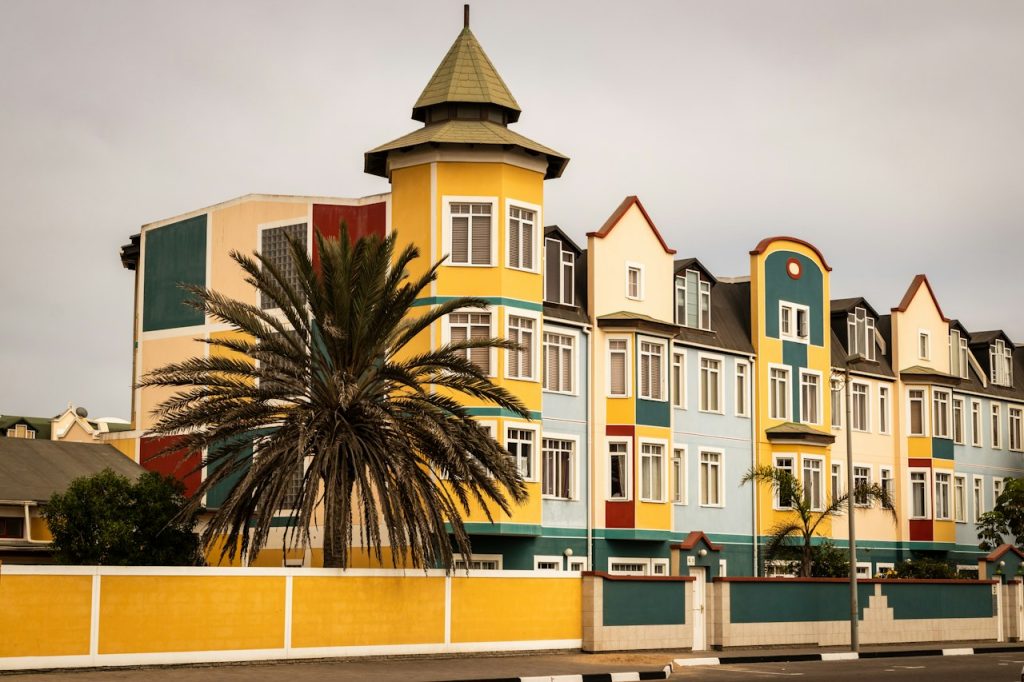
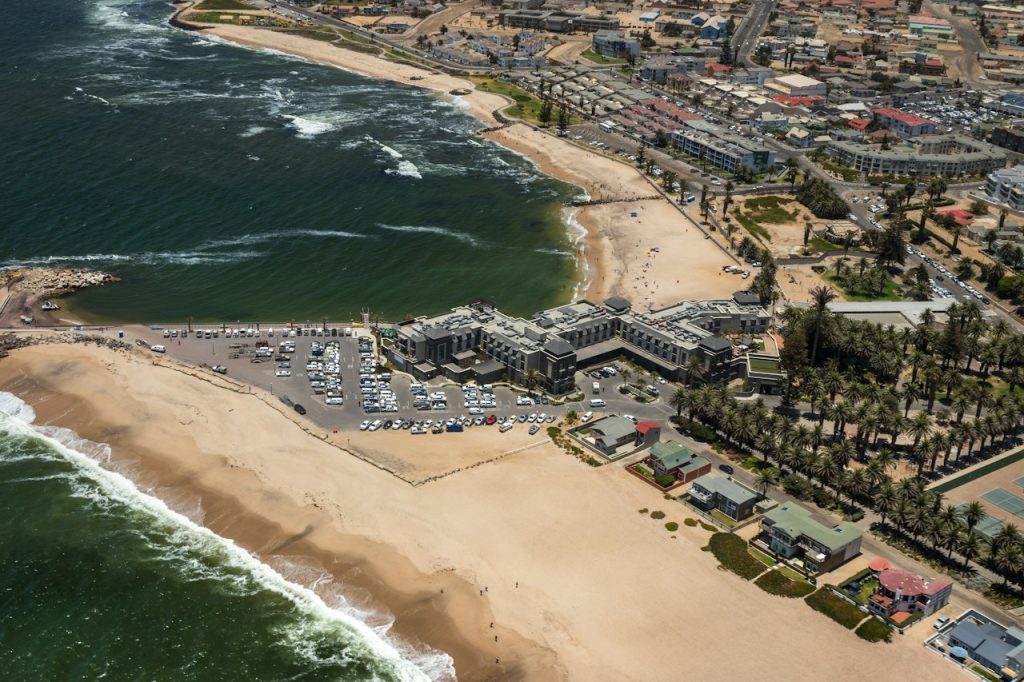
On the edge of the Namib Desert, cool Atlantic fog drifts over palm-lined streets and pastel buildings with turrets and gables. Just beyond town, golden dunes roll down almost to the sea. This is Swakopmund, Namibia’s favourite seaside escape and one of Africa’s most unusual coastal towns. In this guide, you will discover what to see in Swakopmund, Namibia, how to get there and when to visit.
Quick Facts About Swakopmund, Namibia
| Country | Namibia |
| Region | Erongo Region, west coast |
| Known For | German colonial architecture, the jetty, desert dunes and adventure sports |
| UNESCO Status | Not listed (the Namib Sand Sea World Heritage Site lies further south) |
| Founded | 1892 |
| Best Time to Visit | September to March for clearer days; pleasant all year |
| Time Needed | Two to three days |
| Continent | Africa |
Where Is Swakopmund, Namibia?
Swakopmund lies on the Atlantic coast of western Namibia, at the mouth of the Swakop River. It is the capital of the Erongo Region and sits about 352 kilometres west of Windhoek along the B2 road. In addition, the port town of Walvis Bay is only a short drive to the south.
Why Visit Swakopmund, Namibia?
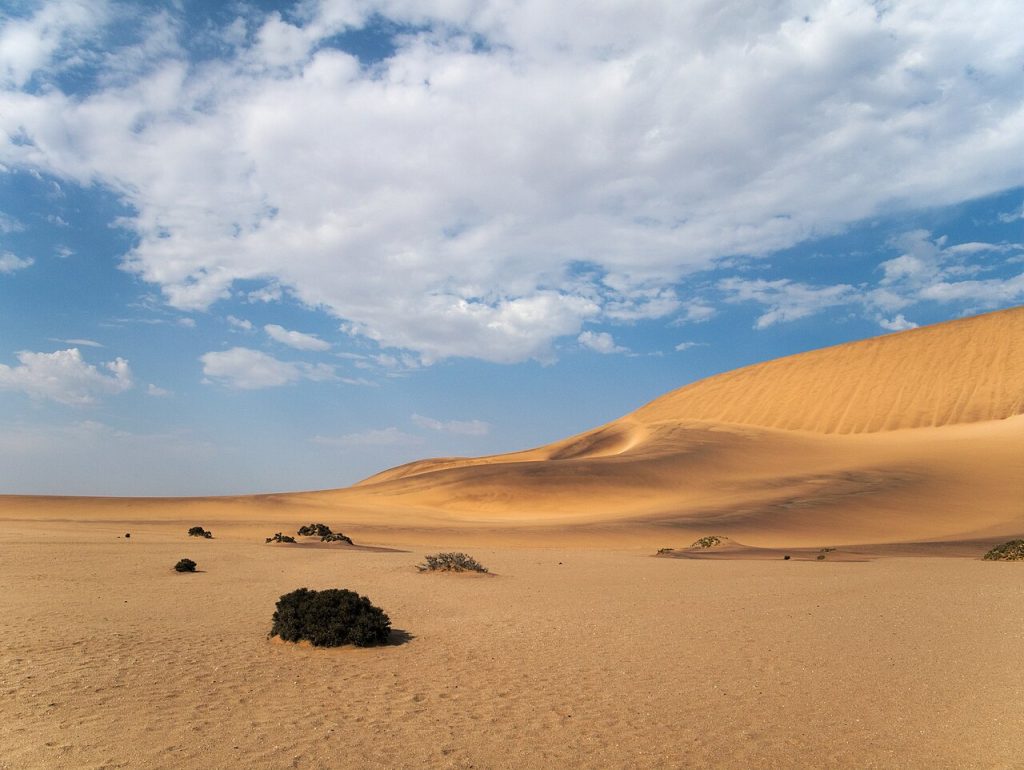
First of all, Swakopmund combines two very different landscapes. On one side lies the ocean, and on the other, the dunes of the Namib Desert. As a result, you can walk on the beach in the morning and ride across the sand in the afternoon.
Moreover, the town has a distinctive look. Its 19th and early 20th century German colonial buildings make it feel unlike anywhere else in Africa. Add cafés, bakeries and a cool climate, and it is easy to see why many travellers stay longer than planned.
Swakopmund’s Colonial Architecture
Swakopmund was founded during the German colonial period, and its old centre still shows it.
Turrets, Gables and Pastel Façades
Walking through the centre, you will see half-timbered details, rounded turrets and pastel walls. Many buildings date from the early 1900s. Today, they hold shops, guesthouses, galleries and restaurants.
The Woermannhaus
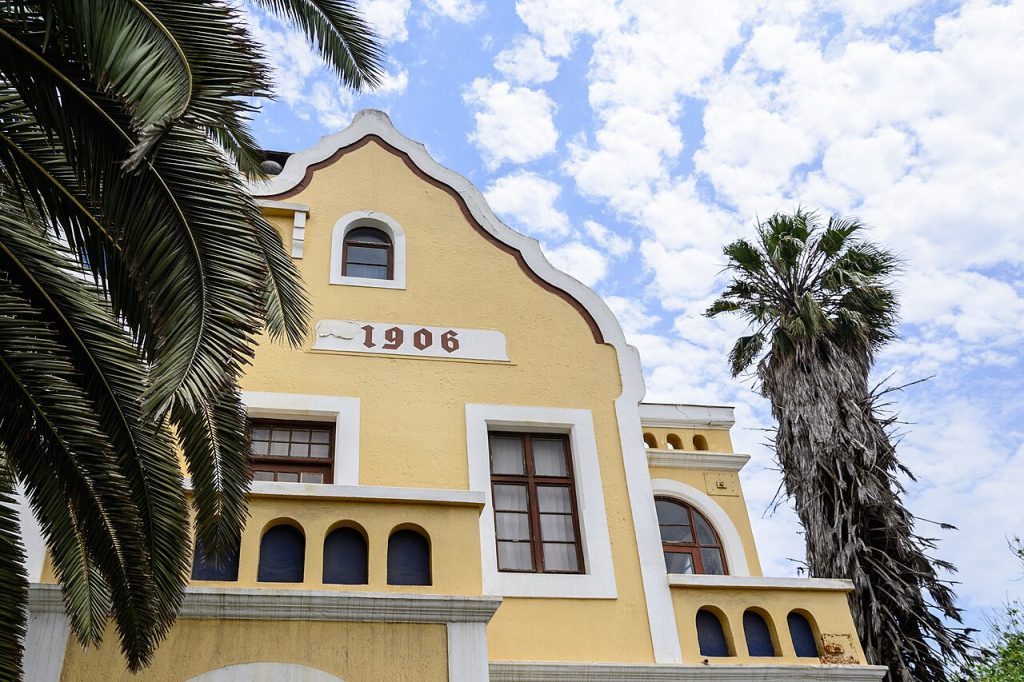
One of the best-known landmarks is the Woermannhaus, built in 1906. Its tall Damara tower once served as a lookout over the harbour. Now the building is a public library.
Strolling the Town Centre
The compact centre is easy to explore on foot. For example, you can combine the main colonial buildings, a coffee stop and the seafront promenade in a single morning.

The Seafront and the Jetty
The cold Benguela Current flows along this coast. Because of it, the sea is chilly, and a thick morning fog often rolls inland. Even so, the seafront is lovely for long walks, especially near sunset.
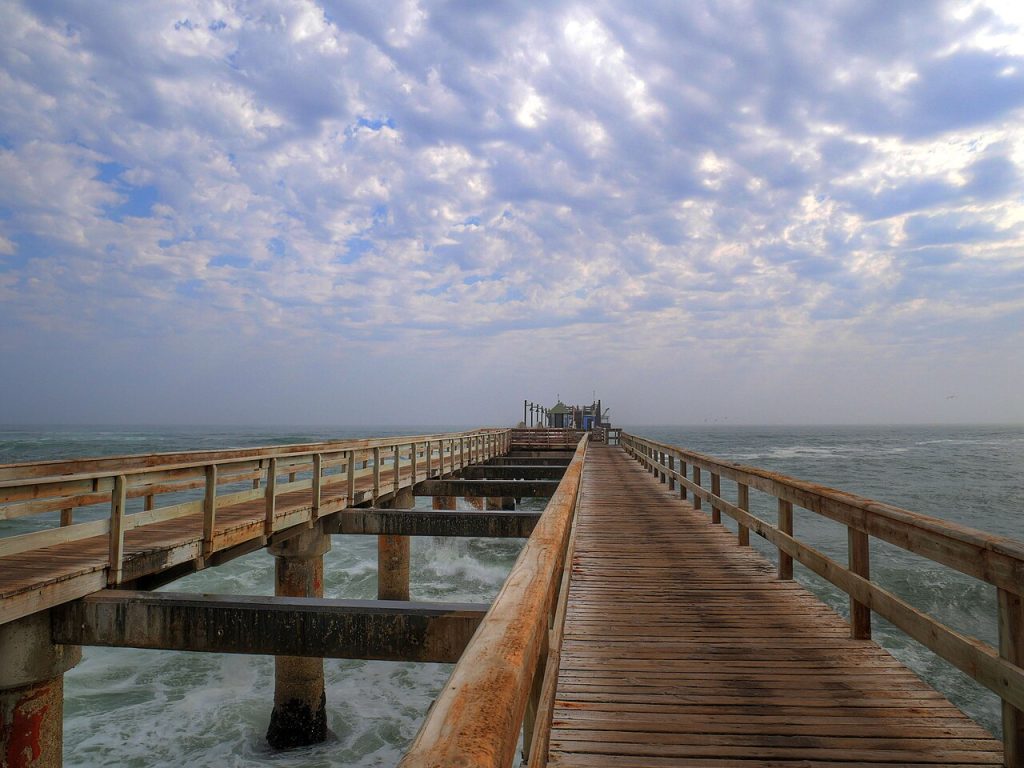
The historic jetty is the town’s best-known waterfront sight. Work on a wooden jetty began in 1905, because the harbour kept silting up. Later, a longer iron jetty replaced it. Today, you can walk out over the waves and look back at the town and the desert beyond.
Into the Namib Desert
The real adventure begins just outside town.
Dune Adventures
Quad Biking and Sandboarding
South of the Swakop River, near Langstrand, operators run quad biking, sandboarding and camel rides in the dunes.
Skydiving and Paragliding
For something bolder, skydiving and paragliding flights offer views of the desert meeting the ocean.
Scenic Drives
The Moon Landscape
East of town, rugged valleys known as the Moon Landscape show a very different, rocky side of the desert.
Welwitschia Plants
Further along the same route, you can see the strange, long-lived welwitschia plants that survive on fog.
One Historical Fact About Swakopmund, Namibia
Captain Curt von François founded Swakopmund in 1892 as the main harbour for German South West Africa. The colony needed its own port, because the natural deep-water harbour at Walvis Bay belonged to the British at the time.
How to Get to Swakopmund, Namibia
By air: The nearest airport is Walvis Bay, a short drive south. Flights connect it with Windhoek and Cape Town.
By road: From Windhoek, the B2 road leads west to the coast. The drive takes about four to five hours.
By shuttle: Shuttle services link Windhoek, Walvis Bay and Swakopmund.
Best Time to Visit Swakopmund, Namibia
Swakopmund is pleasant all year, thanks to its mild coastal climate. However, September to March usually brings clearer, sunnier days. In contrast, winter mornings are often foggy and cool. December and January are busy, because many Namibians spend their holidays here.
Is Swakopmund, Namibia Worth Visiting?
Yes, Swakopmund is worth visiting. Its mix of colonial architecture, ocean views and desert adventure is hard to match. Furthermore, it is a comfortable base for exploring the Namib coast.
Final Thoughts
Swakopmund is a town of contrasts, where fog meets desert sun and German gables stand beside African dunes. With its historic jetty, relaxed cafés and thrilling sand adventures, it offers far more than a beach stop. Whether you stay two days or a week, Swakopmund, Namibia will surprise you.
Image Credits
Wikimedia Commons
- Swakopmund Jetty: Photo by Daniel Kraft via Wikimedia Commons (CC BY-SA 3.0)
- Colonial House in Swakopmund: Photo by dconvertini via Wikimedia Commons (CC BY-SA 2.0)
- Historic Architecture in Swakopmund: Photo by fiverlocker via Wikimedia Commons (CC BY-SA 2.0)
- Dune Near Swakopmund: Photo by Daniel Kraft via Wikimedia Commons (CC BY-SA 3.0)
Unsplash
- Colonial Building in Swakopmund: Photo by Grant Durr on Unsplash
- Swakopmund From Above: Photo by Grant Durr on Unsplash