
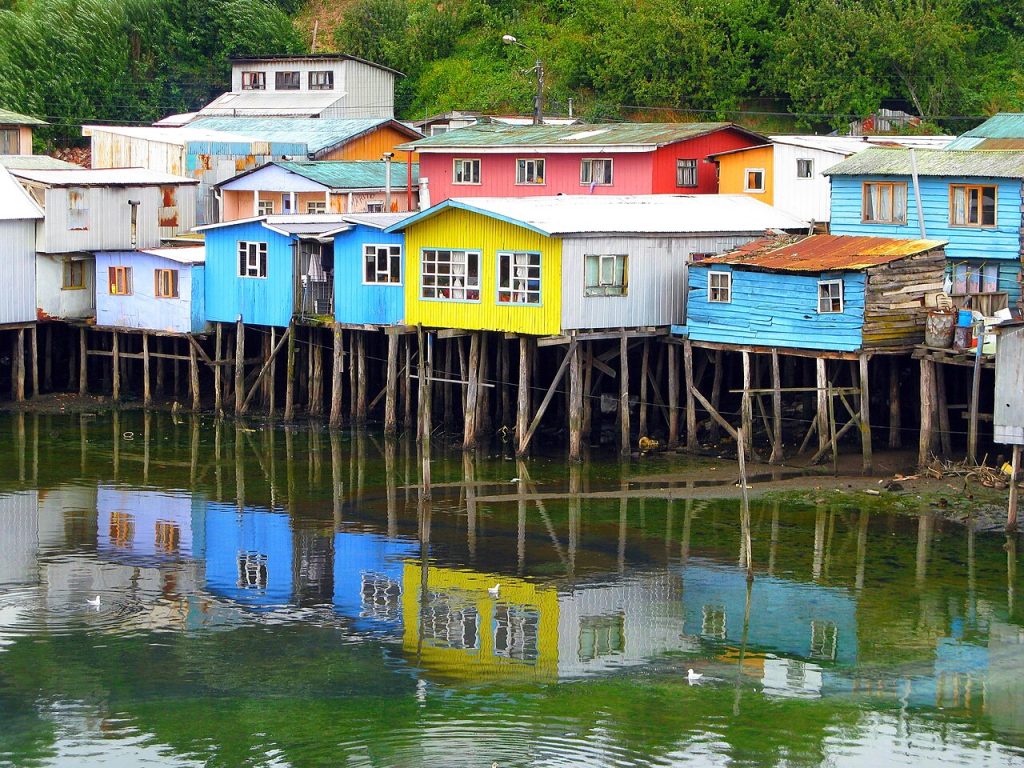
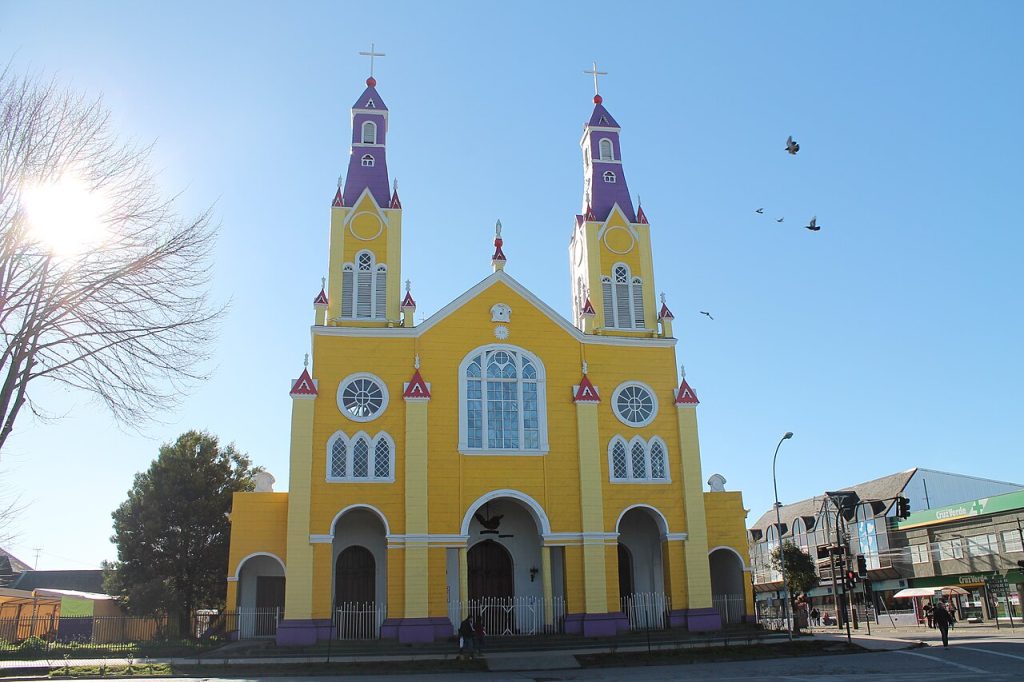
Castro Chile is the capital of Chiloé Island, a rainy, green archipelago famous for its colourful houses on stilts, its wooden churches and its hearty island food. Brightly painted palafitos line the waterfront, while a yellow and violet church towers over the main square. Together, they give Castro a character unlike anywhere else in Chile.
Quick Facts About Castro, Chile
| Country | Chile |
| Region | Chiloé Province, Los Lagos Region |
| Known For | Palafitos (stilt houses), wooden churches, Chilote food |
| UNESCO Status | Church of San Francisco is part of the Churches of Chiloé World Heritage Site |
| Founded | 1567 |
| Best Time to Visit | December to March |
| Time Needed | 2 to 3 days |
| Continent | South America |
Where Is Castro, Chile?
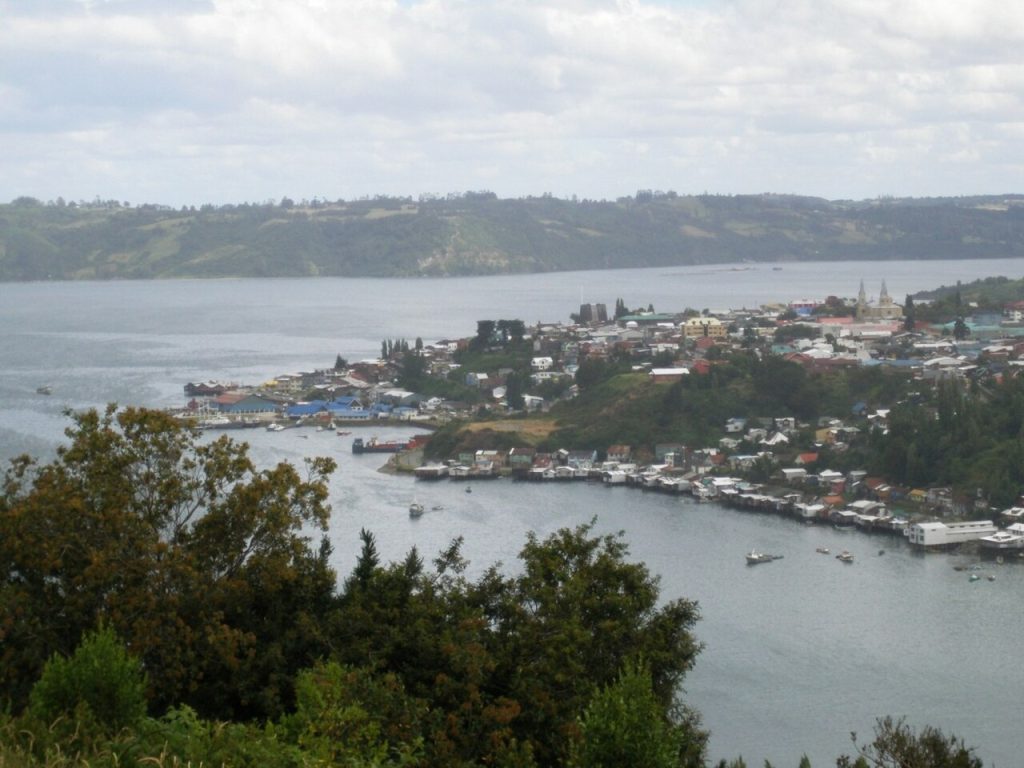
Castro is a city and commune on Chiloé Island in southern Chile. It is the capital of Chiloé Province in the Los Lagos Region and sits on the island’s sheltered east coast, beside the Fiordo de Castro. Puerto Montt, the main mainland gateway, lies to the north across the Chacao Channel.
Why Visit Castro, Chile?
First, Castro is home to Chiloé’s most famous sights: the palafitos and the Church of San Francisco. Both are easy to see on foot in a single day.
In addition, the town is the best base for exploring the island. From here, you can reach other UNESCO-listed wooden churches, small fishing villages and the wild Pacific coast of Chiloé National Park. Finally, Chilote culture, with its myths, crafts and food, feels distinct from the rest of Chile.
The Palafitos of Castro
What Are Palafitos?
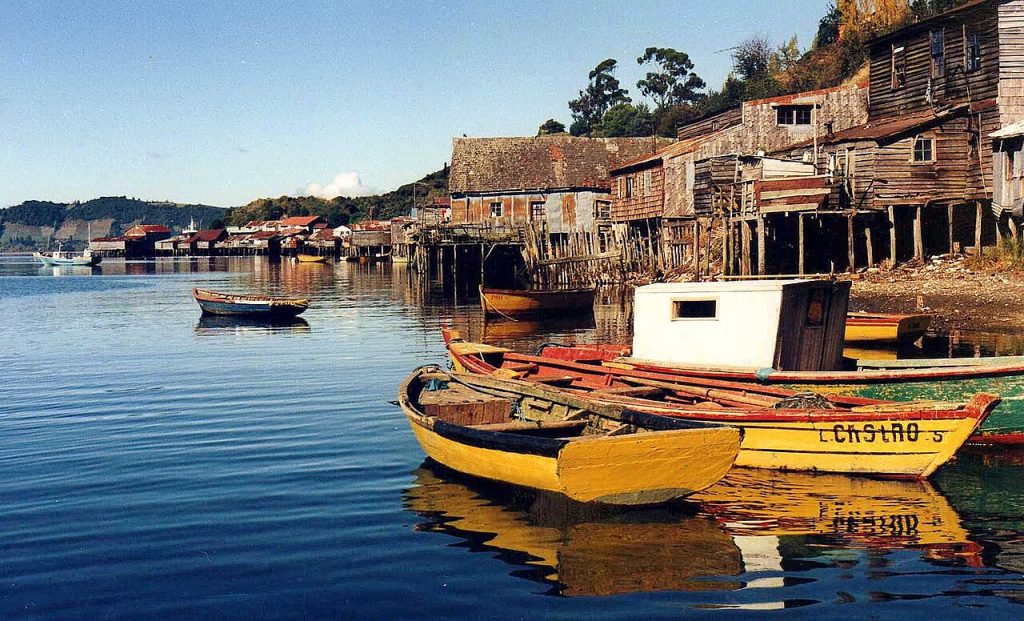
Castro is famous for its palafitos, traditional wooden stilt houses that were once common across Chiloé. Built over the water, they let fishing families moor their boats at the back door while facing the street at the front.
Where to See Them
Some of the best-preserved palafitos stand in the Gamboa district, in the west of the town, along the Fiordo de Castro. Others line the shore near Pedro Montt Avenue at the northern entrance to town. Many have been restored as guesthouses, cafes and craft shops.
Tides and Light
The look of the palafitos changes with the tide. At high tide, the houses seem to float, while at low tide their tall wooden stilts are fully exposed. For this reason, it is worth visiting at different times of day.
The Church of San Francisco
The Church of San Francisco faces the Plaza de Armas and is impossible to miss. Its bright yellow walls and violet trim stand out against grey southern skies. The church is one of the Churches of Chiloé, a group of wooden churches listed together as a UNESCO World Heritage Site.
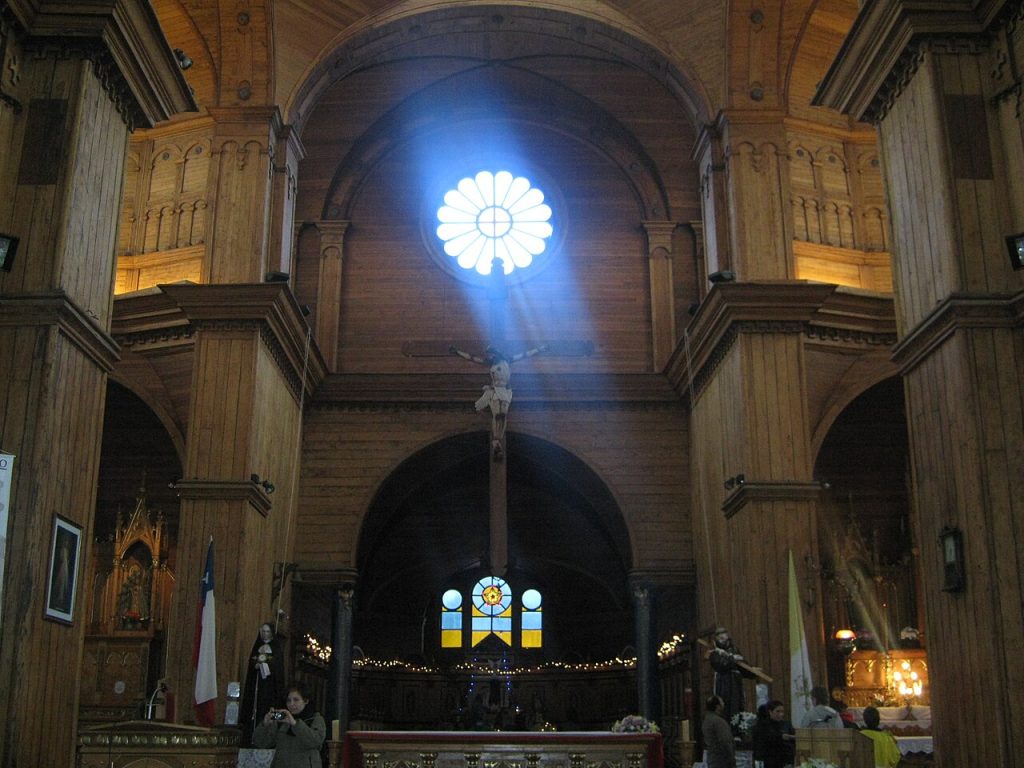
Step inside to see a vaulted interior built entirely of native wood. The warm tones, carved details and quiet atmosphere show the skill of Chiloé’s carpenters, who blended European church design with local boatbuilding techniques.
Food, Crafts and Day Trips
Chilote Food
Curanto
The island’s signature dish is curanto, a feast of shellfish, meat, potatoes and dumplings traditionally cooked in a pit with hot stones. Many restaurants in Castro serve a pot-cooked version called curanto en olla.
Seafood and Potatoes
Chiloé is also known for its many native potato varieties and fresh seafood, including mussels and clams. Look for them at the waterfront market and local restaurants.
Day Trips From Castro
Dalcahue and Nercón
Dalcahue, north of Castro, has a lively crafts market and another UNESCO church. Closer still, in Nercón, which became part of Castro in 2007, the Church of Nuestra Señora de Gracia is also on the World Heritage list.
Chiloé National Park
On the island’s Pacific side, Chiloé National Park offers forest trails, dunes and wild beaches, about an hour’s drive from Castro.
One Historical Fact About Castro, Chile
Castro was founded in 1567 by Captain Martín Ruiz de Gamboa, which makes it Chile’s third oldest city in continuous existence. Up to the middle of the 17th century, the town was looted several times by Dutch pirates.
How to Get to Castro, Chile
Most travellers fly to Puerto Montt and continue by bus, crossing the Chacao Channel by ferry onto Chiloé. The bus ride to Castro takes around three to four hours. Alternatively, Mocopulli Airport, between Castro and Dalcahue, has flights from Santiago and Puerto Montt. A car is useful for exploring the wider island.
Best Time to Visit Castro, Chile
The best time to visit is from December to March, during the southern summer, when days are longer and the weather is milder. Even then, rain is common, so pack a waterproof jacket. In contrast, winter is cold, wet and quiet, although the town keeps its moody charm.
Is Castro, Chile Worth Visiting?
Yes, Castro is well worth visiting. Its palafitos and wooden churches are among the most distinctive sights in South America. Moreover, the town is a convenient base for exploring the rest of Chiloé.
Final Thoughts
Castro Chile rewards travellers who enjoy colour, history and good food. Watch the tide rise under the palafitos, step inside the Church of San Francisco and share a pot of curanto. As a result, you will understand why Chiloé leaves such a strong impression.
Image Credits
Wikimedia Commons
- Palafitos de Castro: Photo by Christian Córdova via Wikimedia Commons (CC BY 2.0)
- Castro From Tenten: Photo by Joanna (JCardinal18) from Washington, DC, USA via Wikimedia Commons (CC BY 2.0)
- Palafitos and Boats, Castro: Photo by rodoluca via Wikimedia Commons (CC BY-SA 3.0)
- Church of San Francisco, Castro: Photo by Jml blaster via Wikimedia Commons (CC BY-SA 3.0)
- Inside the Church of San Francisco: Photo by Malissette via Wikimedia Commons (CC BY-SA 3.0)