At the foot of the Hajar Mountains, a giant round tower rises above a sea of palm trees. Below it, merchants still set out silver daggers, dates and pottery, just as they have for centuries. This is Nizwa Oman, the old heart of the country’s interior. In this guide, you will discover the fort, the souq and the best ways to plan your visit.
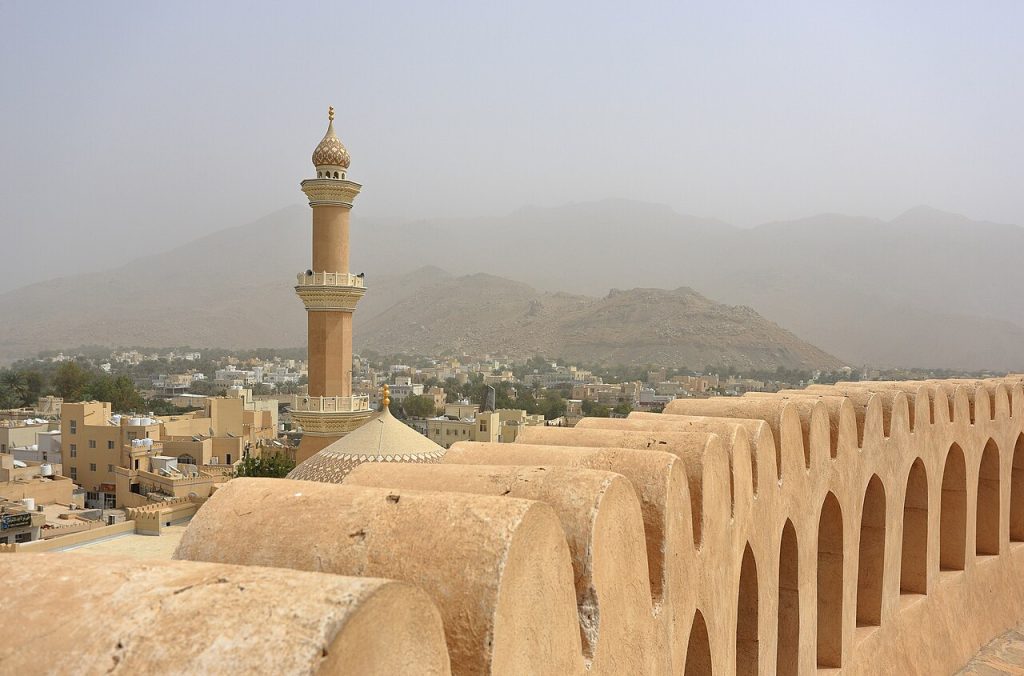
Quick Facts About Nizwa, Oman
| Country | Oman |
| Region | Ad Dakhiliyah Governorate, interior Oman |
| Known For | Nizwa Fort, its souq and the Friday livestock market |
| UNESCO Status | Falaj Daris is part of the Aflaj Irrigation Systems World Heritage Site (2006) |
| Founded | Ancient; capital of Oman in the 6th and 7th centuries |
| Best Time to Visit | November to March |
| Time Needed | One to two days |
| Continent | Asia |
Where Is Nizwa in Oman?
Nizwa lies in the interior of northern Oman, in the Ad Dakhiliyah Governorate. It is also the largest city in the region. In fact, the town sits about 140 to 160 kilometers southwest of Muscat, depending on your route.
Behind the town, the rugged Hajar Mountains rise toward Jebel Akhdar, the “Green Mountain.” Meanwhile, date palm oases stretch across the plain. Because of this location, Nizwa was once a meeting point for caravans, scholars and traders.
Why Visit Nizwa, Oman?
To begin with, Nizwa offers a real sense of traditional Oman. The old town is compact, so you can walk from the fort to the souq in a minute. In addition, the town is a perfect base for exploring mountain villages, other forts and ancient irrigation channels.
Beyond that, Nizwa has deep historical roots. For example, it served as the capital of Oman in the 6th and 7th centuries. Later, it became a center of religion and learning. As a result, the town still feels proud and a little conservative, which is part of its charm.
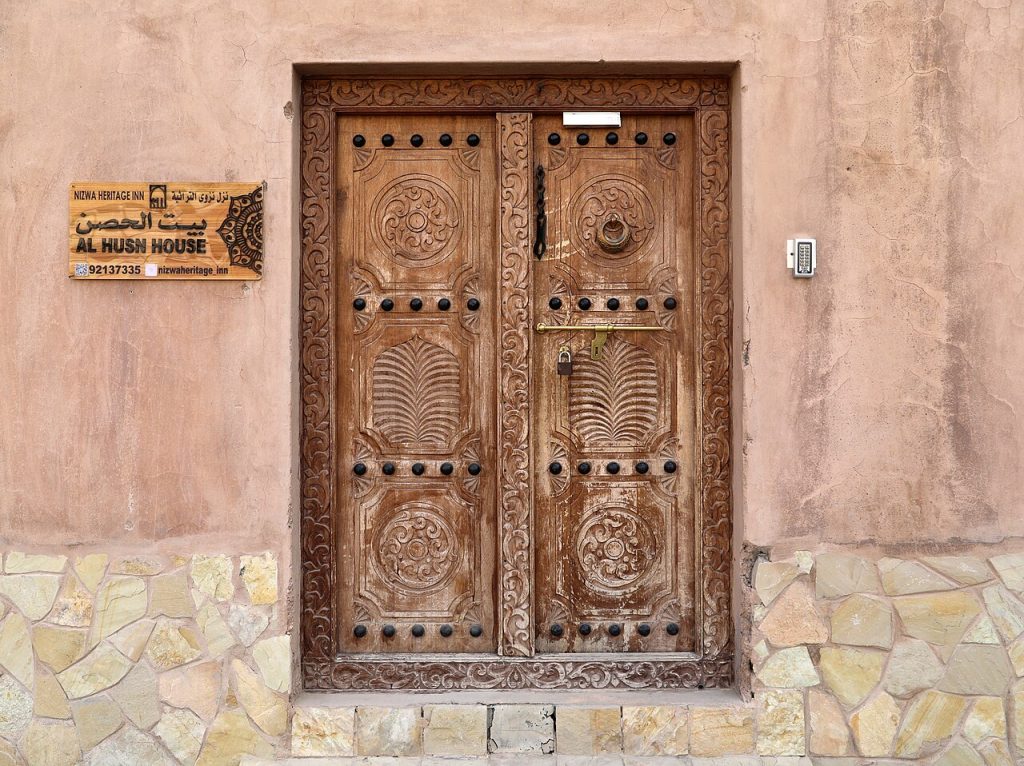
Exploring Nizwa Fort
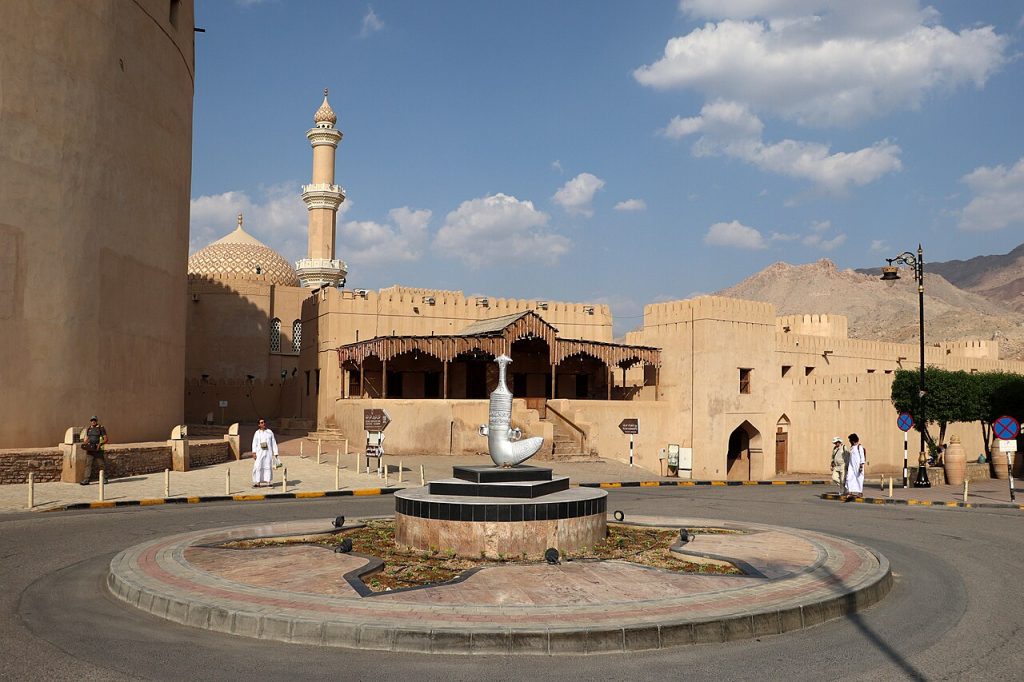
Today, Nizwa Fort is the most visited national monument in Oman. It stands in the middle of the old town, right next to the souq and the blue domed mosque.
The Great Round Tower
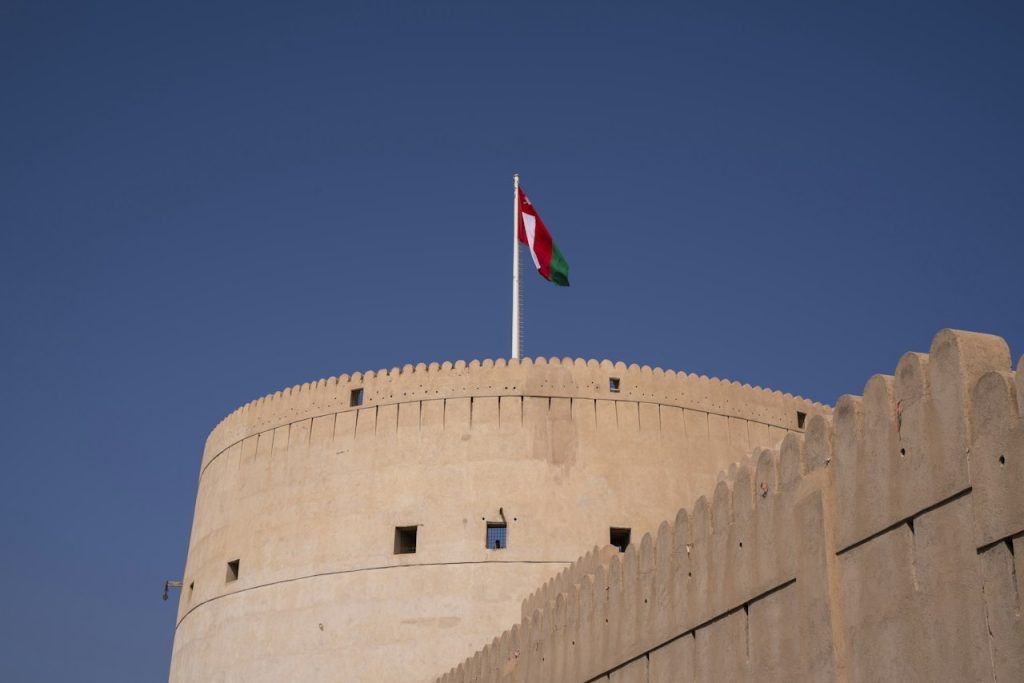
Without doubt, the fort’s most famous feature is its massive round tower. Imam Sultan bin Saif Al Ya’rubi ordered its construction in the 1650s, and the main work took about 12 years. The tower is roughly 30 meters tall, and it is filled with earth and rubble at its base to make it stronger.
From the top, you can then look out over the palm groves, the mosque and the mountains. The view is especially beautiful in the late afternoon, when the walls turn golden.
Clever Defenses
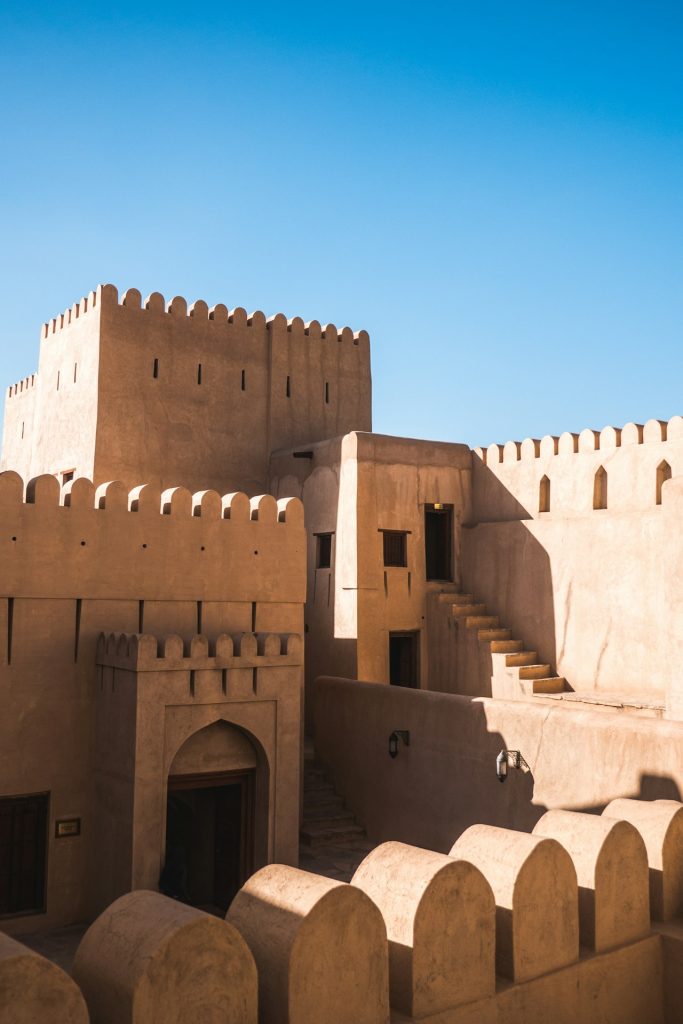
Above all, the fort was built to stop attackers at every step. For instance, a narrow, winding staircase leads to the top, while wooden doors block the way. Above the doors, openings let defenders pour boiling date syrup or water onto invaders. In addition, hidden pits in the floor could trap anyone who forced their way in.
Up on the tower, openings also held cannons pointing in every direction. A few of the old cannons are still in place today.
Museum Rooms and Courtyards
Inside the fort, restored rooms also show how people lived and worked here. In particular, displays explain traditional crafts, weapons, jewelry and the history of the region. On some days, you may also see demonstrations of Omani coffee making or traditional crafts. Therefore, plan at least one to two hours to explore properly.
Shopping in Nizwa Souq
Right beside the fort, Nizwa Souq is one of the oldest markets in Oman. Although it was rebuilt and restored, it still follows a traditional layout, with separate areas for different goods.
Silver and Khanjars
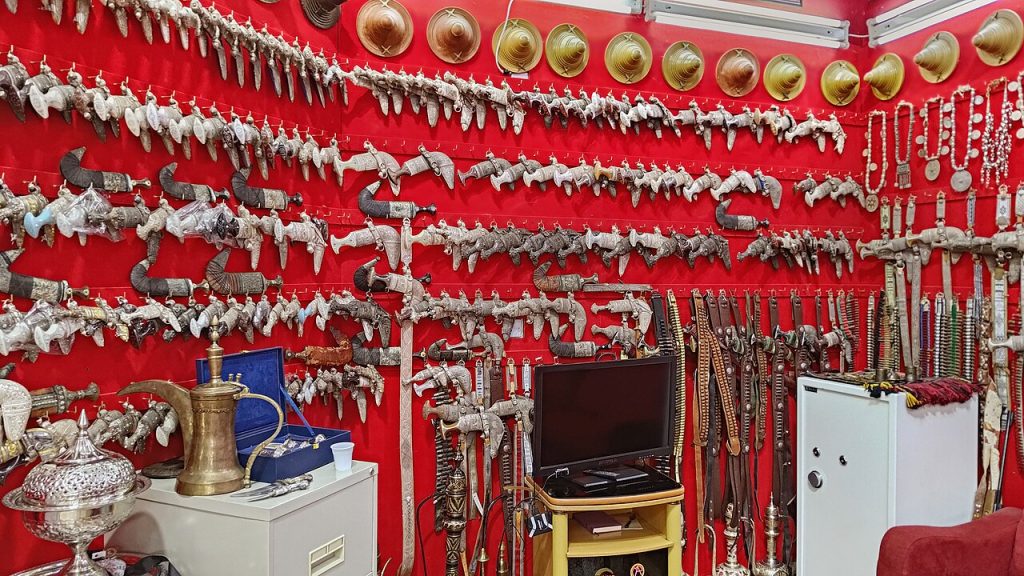
Above all, Nizwa is famous for its silversmiths. Here, you can find the khanjar, the curved dagger that appears on the Omani flag. Shops also sell silver jewelry, old coffee pots and decorative boxes. Some pieces are antiques, while others are new, so ask before you buy.
Dates, Halwa and Pottery
In addition, other parts of the souq sell dates, spices and frankincense. Do not miss Omani halwa, a sticky sweet flavored with rosewater and saffron. You will also find colorful clay pots from nearby villages.
The Friday Livestock Market
Every Friday morning, the area near the souq turns into a lively livestock market. Farmers lead goats, sheep and cows around a circle while buyers shout their bids. The market starts early, around 6:30 a.m., and it is usually over by 9 a.m. For this reason, arrive early and stay at the edge of the circle so you do not block the action.
Tips for the Friday Market
Dress modestly, with shoulders and knees covered. Also, ask before photographing people up close. Finally, expect crowds of both locals and visitors, especially in winter.
One Historical Fact About Nizwa, Oman
Nizwa Fort was built above an underground stream. Thanks to this, defenders always had fresh water, even during long sieges. Storerooms and cellars held food and weapons as well. It is one reason the fort remained the seat of power for imams and governors for so long.
How to Get to Nizwa, Oman
The easiest way to reach Nizwa is by car. From Muscat, the drive takes about one and a half to two hours on a good highway. Renting a car also lets you visit nearby sights, such as Bahla Fort, Jabrin Castle and the mountain villages of Jebel Akhdar.
Public buses also run between Muscat and Nizwa. In addition, many tour companies offer day trips from Muscat. However, a day trip feels rushed, so staying at least one night is better.
Note that the road up Jebel Akhdar requires a four wheel drive vehicle. For this reason, police check vehicles at the start of the mountain road.
Best Time to Visit Nizwa, Oman
The best time to visit is from November to March. During these months, days are warm and sunny, and evenings are pleasant. In the mountains, nights can even be cold, so bring a light jacket.
From May to September, temperatures often climb above 40°C. As a result, sightseeing in the middle of the day becomes very hard. If you visit in summer, explore early in the morning and rest during the afternoon.
Is Nizwa, Oman Worth Visiting?
Absolutely. Nizwa gives you a fort, a historic souq, a famous animal market and mountain scenery, all in one place. It is also easy to reach from Muscat.
Above all, Nizwa shows a side of Oman that feels authentic and rooted in tradition. For travelers who love old towns and hidden gems, it is one of the highlights of the Arabian Peninsula.
Final Thoughts
Nizwa Oman is more than a stop on a road trip. It is a town where history still shapes daily life, from the call to prayer echoing off the fort walls to the Friday auction of goats. Give yourself time to wander, taste the halwa and watch the sunset from the great round tower. After that, you will understand why so many travelers fall in love with this town.
For more Silk Road and Middle Eastern old towns, read our guides to Mardin, Turkey and Khiva, Uzbekistan.
Image Credits
Unsplash
- Round Tower of Nizwa Fort: Photo by ahmed nasser on Unsplash (Unsplash License)
- Battlements of Nizwa Fort: Photo by Ruben Hanssen on Unsplash (Unsplash License)
Wikimedia Commons
- Nizwa Fort Walls: Photo by Martin Falbisoner via Wikimedia Commons (CC BY-SA 4.0)
- Nizwa Souq Square: Photo by Francesco Bini via Wikimedia Commons (CC BY-SA 4.0)
- Khanjar Daggers in Nizwa Souq: Photo by Francesco Bini via Wikimedia Commons (CC BY-SA 4.0)
- Carved Door in Old Nizwa: Photo by Francesco Bini via Wikimedia Commons (CC BY-SA 4.0)