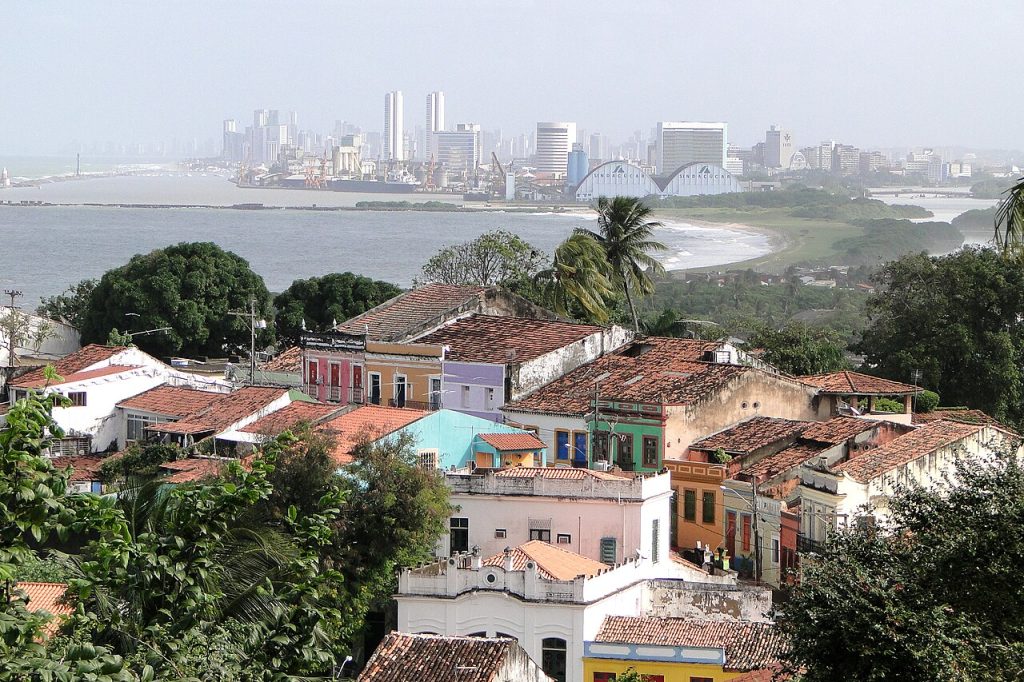
On a green hill above the Atlantic, pastel houses tumble down steep cobbled streets toward the sea. Baroque church towers rise above palm trees, and on the horizon, the skyline of Recife shimmers across the bay. This is Olinda, one of the best preserved colonial towns in Brazil. In this guide, you will discover what to see, how to get there and when to visit.
Quick Facts About Olinda, Brazil
| Country | Brazil |
| Region | Pernambuco, northeastern Brazil |
| Known For | Colonial architecture, Baroque churches, art studios and Carnival |
| UNESCO Status | Historic Centre of the Town of Olinda, World Heritage Site since 1982 |
| Founded | 1535 |
| Best Time to Visit | September to February |
| Time Needed | One to two days |
| Continent | South America |
Where Is Olinda, Brazil?
Olinda lies on the northeastern coast of Brazil, in the state of Pernambuco. In fact, it sits only about six kilometers north of central Recife, the state capital, and forms part of its metropolitan area.
However, the historic center feels a world away from the big city. Set on a hill overlooking the ocean, the old town is surrounded by gardens and tropical trees.
Why Visit Olinda, Brazil?
First of all, Olinda is beautiful. Indeed, its historic center is a UNESCO World Heritage Site, with about 20 Baroque churches, old convents and rows of brightly painted houses.
In addition, the town is full of creativity. Artists, musicians and craftspeople live and work in its old streets, so there are galleries and studios around almost every corner.
Finally, Olinda has one of the most joyful Carnivals in Brazil. Even outside Carnival season, its music, food and festive spirit make it a delightful place to spend a day or two.
Exploring the Historic Center of Olinda
The historic center is compact, but it is also hilly. Therefore, wear comfortable shoes and take your time on the steep streets.
Climb to Alto da Sé
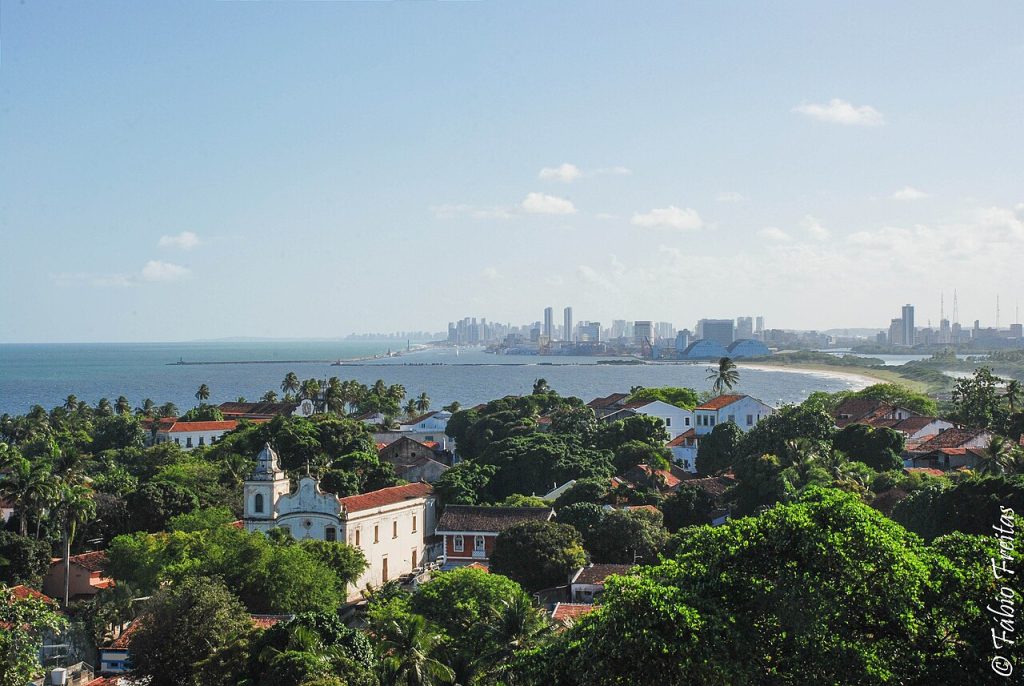
Alto da Sé is the highest point of the old town and its most famous viewpoint. From here, you can look over red-tiled roofs and church towers to the Recife skyline and the Atlantic.
In the late afternoon, craft stalls and food vendors set up around the square. For example, this is a great place to try tapioca, a popular local snack made from cassava.
Visit the Sé Cathedral
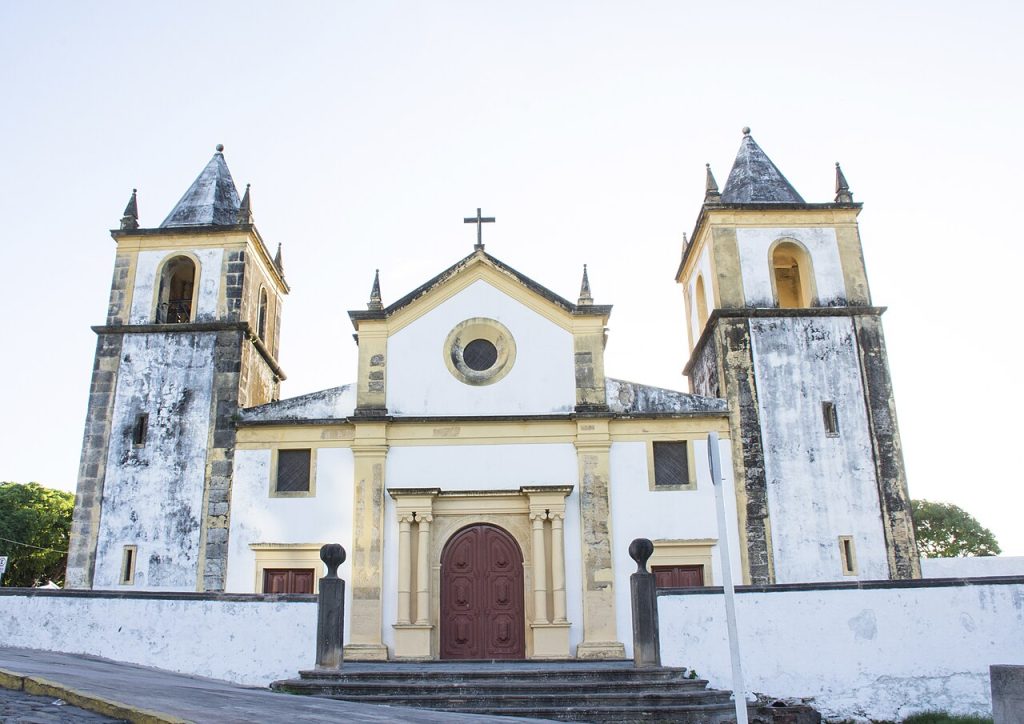
Next to the lookout stands the Sé Cathedral, dedicated to São Salvador do Mundo. It is also the seat of the Archdiocese of Olinda and Recife. Like much of the town, it was rebuilt after the Dutch period, and its simple white facade is one of Olinda’s best known sights.
Wander the Colorful Streets
From the top of the hill, cobbled streets lead down past houses painted in blue, yellow, pink and green. Some facades are also covered in decorative ceramic tiles. Along the way, look out for small chapels known as passos.
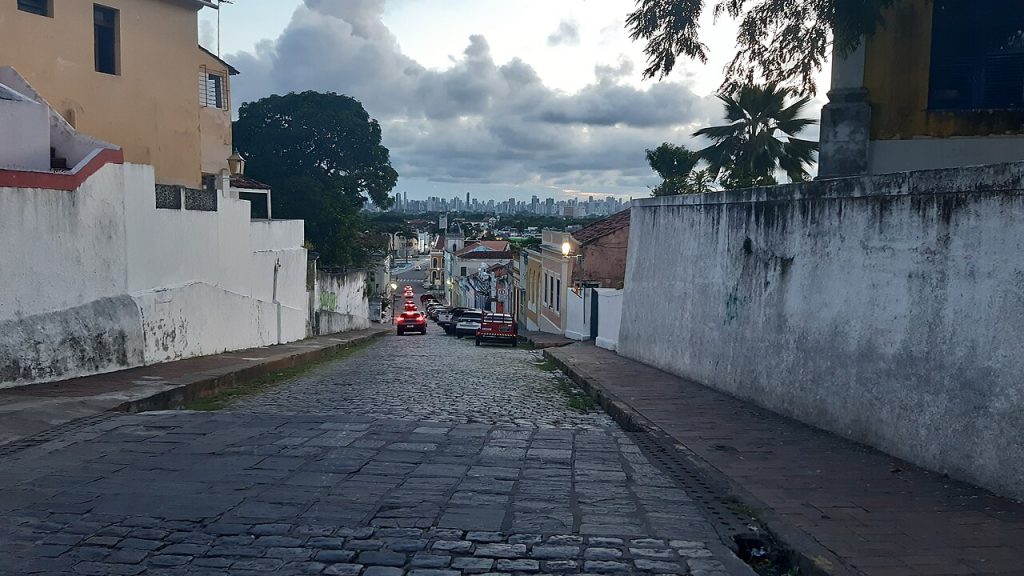
Rua do Amparo is a highlight. Often described as Olinda’s cultural hub, it is lined with artist studios, restaurants and small guesthouses.
The Baroque Churches and Convents of Olinda
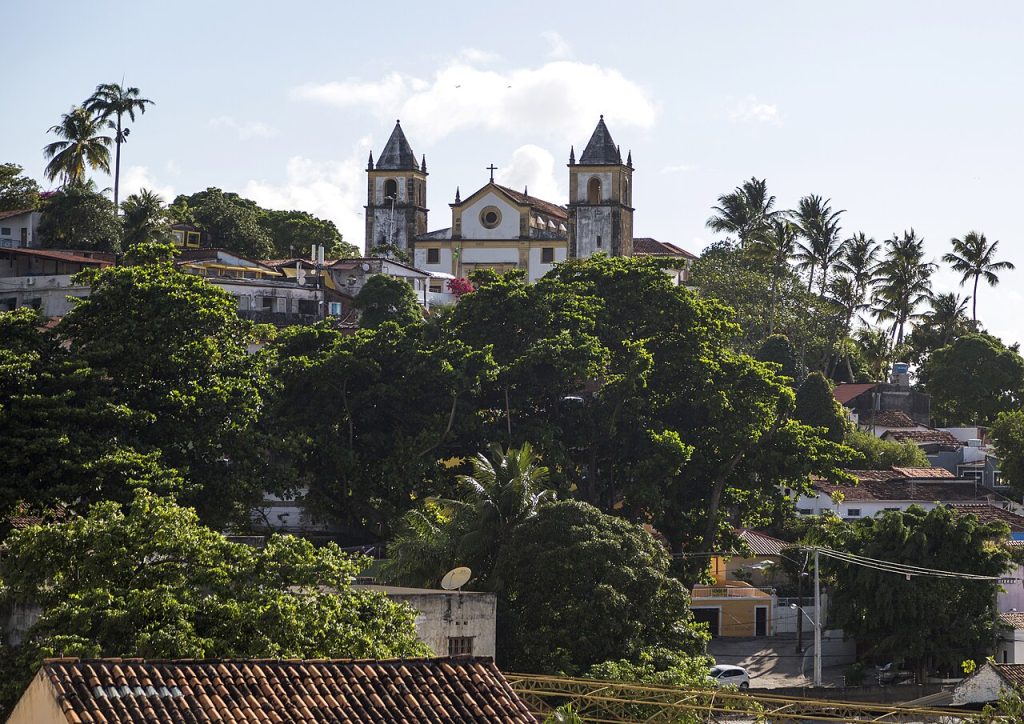
Olinda’s religious buildings are among its greatest treasures. In fact, the Franciscans, Carmelites, Benedictines and Jesuits all built convents or churches here, and their towers still define the skyline.
The Mosteiro de São Bento is perhaps the most impressive. In particular, its church is famous for its gilded altar and Portuguese azulejo tiles. If you visit on a Sunday morning, you may also hear the monks’ Gregorian chant.
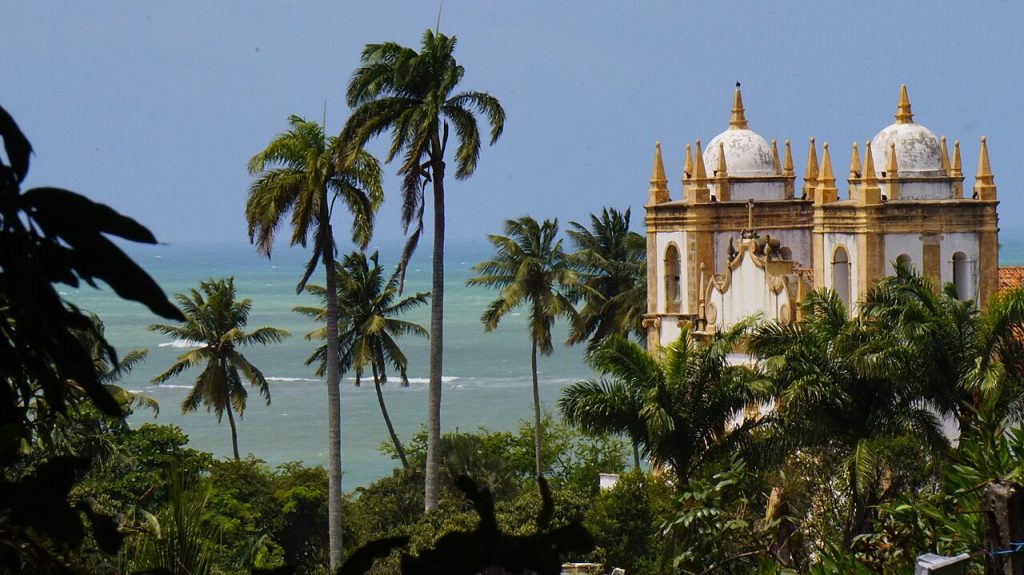
Meanwhile, the Igreja do Carmo stands out on its own hill near the coast. With palm trees all around, it is one of the most photogenic churches in town. Similarly, the 16th century church of São João Batista dos Militares is one of the few older monuments that survived the Dutch fire.
Carnival and Culture in Olinda, Brazil
Olinda is famous for its street culture, and nothing shows it better than Carnival.
A Free Street Carnival
Unlike the ticketed parades of Rio, Olinda’s Carnival is a free celebration in the streets. Instead, small musical groups wind through the hills, and everyone is welcome to join in.
Frevo and Maracatu
The soundtrack of Carnival is frevo, a fast and energetic music and dance, along with maracatu, with its powerful drums and African roots. Both are also closely linked with Pernambuco.
The Giant Puppets
The stars of the show, however, are the bonecos gigantes, or giant puppets. Especially during Carnival, these huge figures parade through the streets. Outside the festival, you can see them at the Casa dos Bonecos Gigantes.
Puppet Traditions All Year
For more puppets, visit the Museu do Mamulengo. It holds more than 1,000 puppets from the region’s traditional puppet theater, some dating back to the 19th century.
One Historical Fact About Olinda, Brazil
Olinda was founded by Duarte Coelho Pereira in 1535 and grew rich from the sugar trade. During the period of Dutch control in northeastern Brazil, invaders looted and burned the town. As a result, most of the historic buildings you see today date from the 18th century, when the Portuguese rebuilt Olinda.
How to Get to Olinda, Brazil
Olinda is easy to reach from Recife, which has an international airport.
- By taxi or rideshare: The trip takes about 20 minutes from central Recife and around 30 minutes from Guararapes International Airport.
- By bus: Public buses from Recife take about 30 minutes. Look for buses marked Olinda Centro Histórico.
- By car: A rental car offers flexibility, but parking in the historic center can be difficult.
Best Time to Visit Olinda, Brazil
Olinda has a warm tropical climate all year. Even so, the drier months from September to February are best for walking the hilly streets. December and January are busier, though, with higher prices.
From March to August, brief afternoon showers are more common. On the other hand, there are fewer visitors and lower prices. If you want to see Carnival, usually in February or March, book your accommodation months in advance.
Is Olinda, Brazil Worth Visiting?
Yes, without a doubt. Olinda combines colonial architecture, ocean views and a vibrant artistic spirit in one small hilltop town. It is also easy to visit from Recife.
Moreover, it offers a slower, more personal side of Brazil. Whether you come for Carnival or a quiet weekday, it rarely disappoints.
Final Thoughts
Olinda is a town of color, music and history. Climb to Alto da Sé at sunset, step inside the Baroque churches and wander the streets full of art. Above all, let the relaxed rhythm of the town carry you along. If you love colonial towns in Brazil, you may also enjoy our guides to Ouro Preto and Paraty.
Image Credits
Wikimedia Commons
- Rooftops of Olinda With Recife in the Distance: Photo by Adam Jones, Ph.D. via Wikimedia Commons (CC BY-SA 3.0)
- Sé Cathedral: Photo by MTur Destinos via Wikimedia Commons (Public domain)
- Igreja do Carmo: Photo by Weber de Sá Diniz via Wikimedia Commons (CC BY-SA 4.0)
- Cobbled Street in Olinda: Photo by Ridiculopathy via Wikimedia Commons (CC0)
- Church Towers of the Upper Town: Photo by MTur Destinos via Wikimedia Commons (Public domain)
- Alto da Sé Lookout: Photo by Fábio Freitas via Wikimedia Commons (CC BY 2.0)