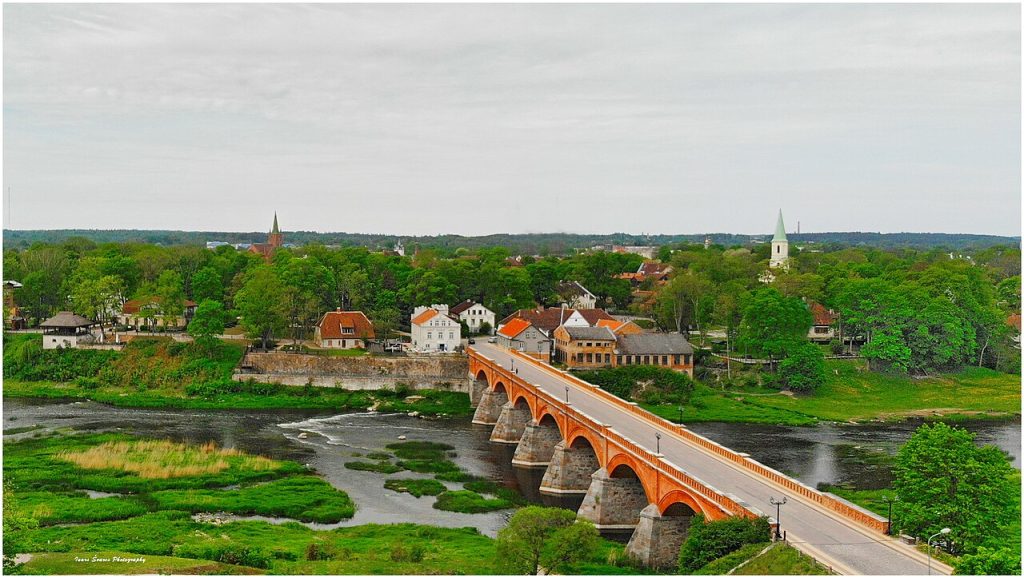
In the green countryside of western Latvia, a river spills over a wide stone ledge while red rooftops gather on the bank beside it. A long brick bridge spans the water, and a little stream flows right between the houses of the old town. This is Kuldīga, a peaceful town with Europe’s widest waterfall and a UNESCO-listed old center. In this guide, you will discover what to see, how to get there and when to visit.
Quick Facts About Kuldīga, Latvia
| Country | Latvia |
| Region | Kurzeme (Courland), western Latvia |
| Known For | The Venta Rapid, a historic brick bridge and a well-preserved old town |
| UNESCO Status | Old Town of Kuldīga, World Heritage Site since 2023 |
| Founded | 1242 |
| Best Time to Visit | May to September |
| Time Needed | One to two days |
| Continent | Europe |
Where Is Kuldīga, Latvia?
Kuldīga lies in the Kurzeme region of western Latvia, historically known as Courland. In fact, it is the center of Kuldīga Municipality and sits on the banks of the Venta River.
Although it is small, with just under 10,000 residents, the town is easy to reach from Riga. As a result, it makes a popular day trip or weekend escape from the capital.
Why Visit Kuldīga, Latvia?
First of all, Kuldīga has a natural wonder right in town. The Venta Rapid is said to be the widest waterfall in Europe, and it lies just a short walk from the center.
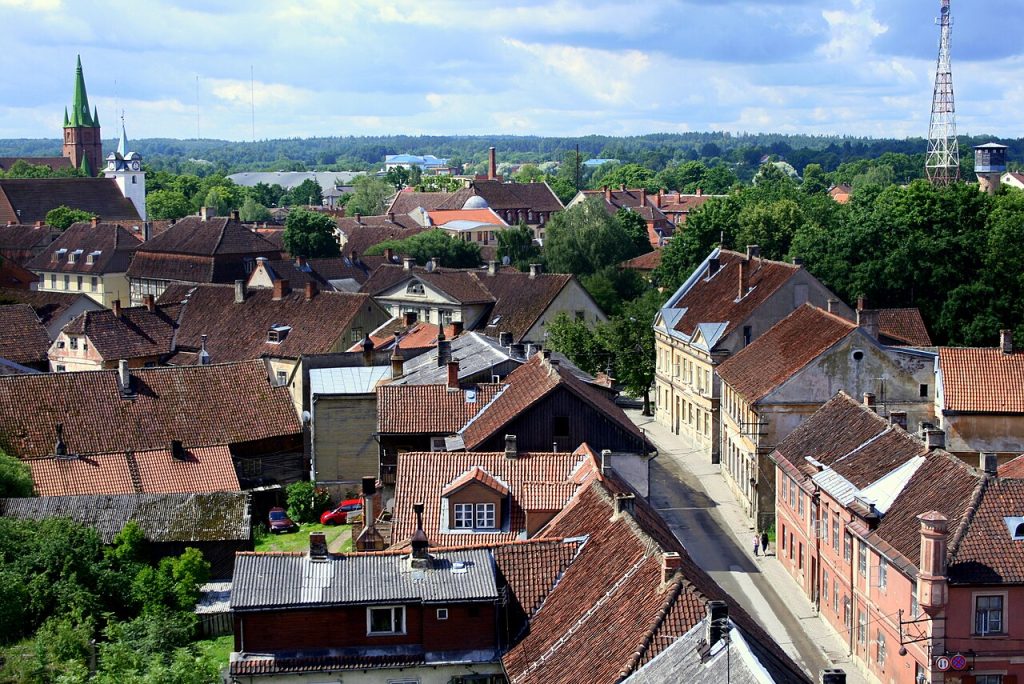
In addition, the old town is remarkably well preserved. Wooden houses, red-roofed buildings and cobbled streets give it a timeless feel. Therefore, UNESCO added it to the World Heritage List in 2023.
Finally, Kuldīga is calm and friendly. Compared with Riga, it sees fewer visitors, so you can enjoy its charm at a slow pace.
The Venta Rapid and the Brick Bridge
The riverside is the highlight of any visit. Fortunately, the waterfall and bridge are right next to each other, so you can see both in one walk.
Europe’s Widest Waterfall
The Venta Rapid, or Ventas rumba, is a natural ledge stretching about 240 meters across the river. Although it is not very tall, its width is impressive. In fact, it is often called the widest waterfall in Europe.
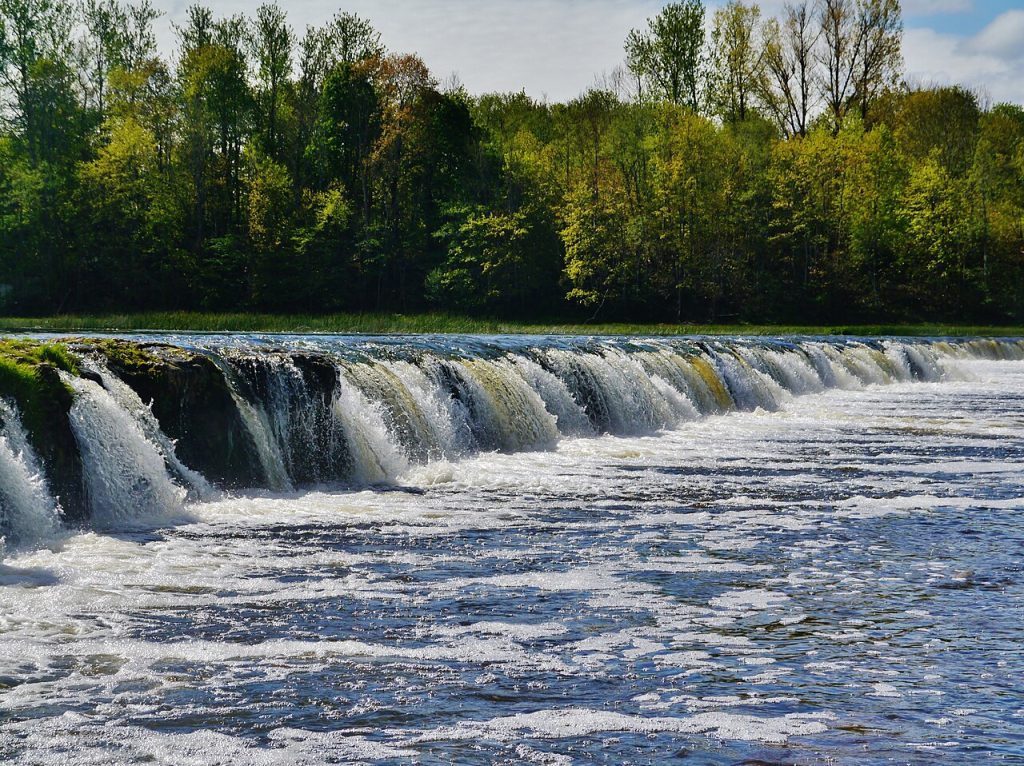
In spring, fish once leaped up the falls in such numbers that Kuldīga became known as the town where salmon were caught in the air. Even today, you may still see fish jumping the ledge during their spring migration.
The Old Brick Bridge
Just downstream, a red brick bridge crosses the Venta. Built in 1874, it is about 164 meters long. Moreover, it is described as the longest bridge of its type in Europe.
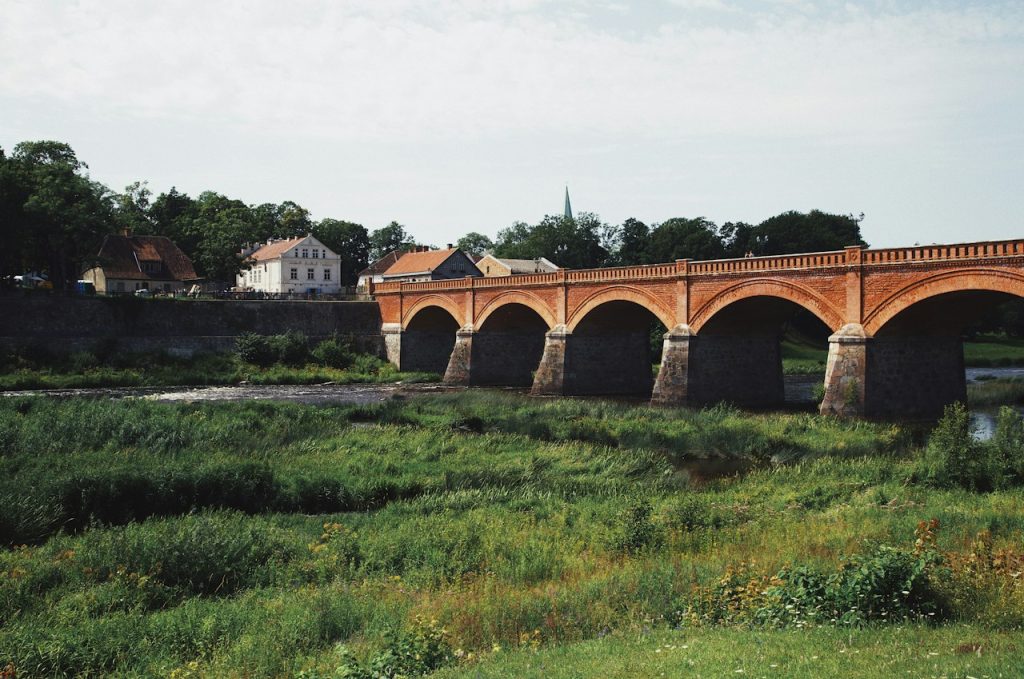
Walking across the bridge, you get wonderful views of the waterfall on one side and the river valley on the other. Especially at sunset, it is one of the most beautiful spots in Latvia.
Exploring the Old Town of Kuldīga
Behind the river, the old town is a joy to explore on foot. Above all, take time to wander its side streets and courtyards.
The Venice of Latvia
A small river called the Alekšupīte runs right along the walls of houses in the old town. Because of this, Kuldīga is nicknamed the Venice of Latvia. Little bridges cross the stream at several points.
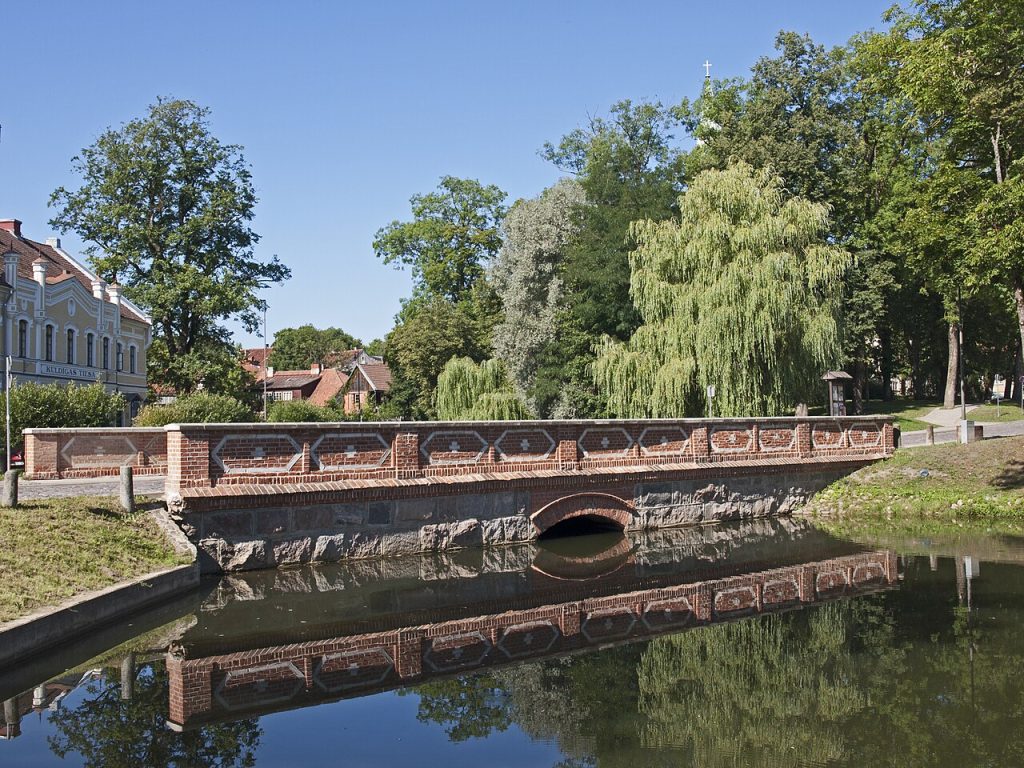
Nearby, the Alekšupīte also forms a waterfall. At about 4.2 meters, it is described as the highest waterfall in Latvia.
Historic Streets and Houses
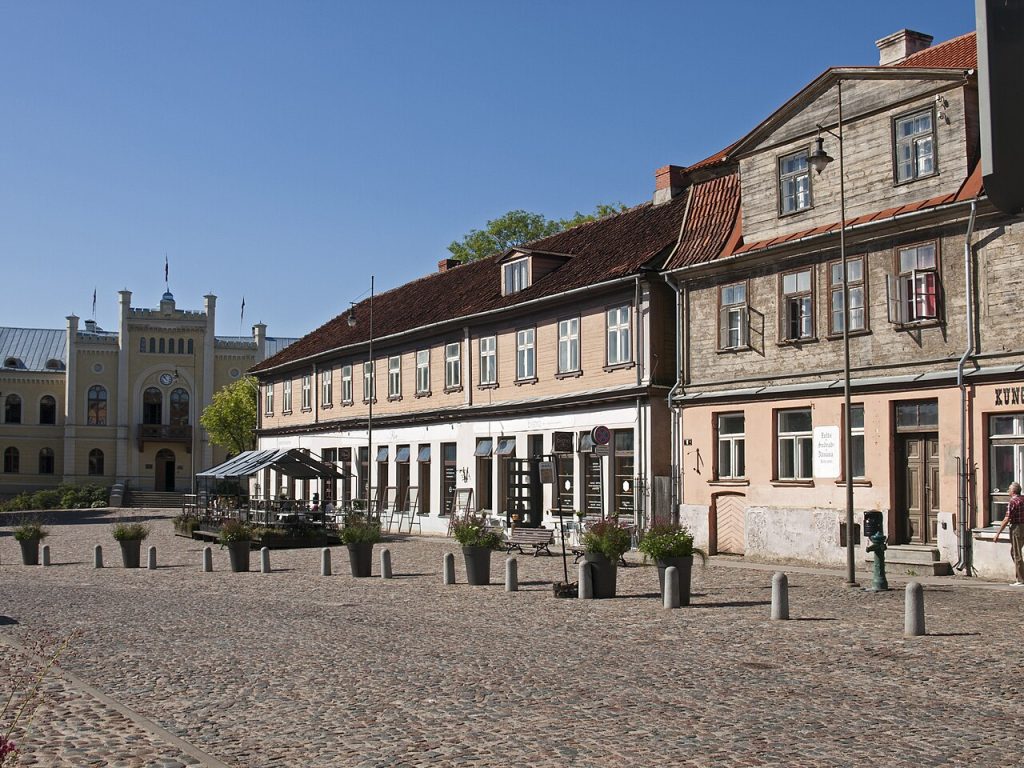
The streets around the old town square are lined with houses from many centuries. For example, you will see timber buildings, plastered merchant houses and red tiled roofs side by side.
St Catherine’s Church
St Catherine’s Church is the oldest church in town, with foundations laid in 1252. Notably, Catherine is the patron saint of Kuldīga. If the tower is open, climb it for a view over the rooftops.
One Historical Fact About Kuldīga, Latvia
Kuldīga traces its founding to 1242, when the Livonian Order received permission to build a castle here. Later, in 1368, it joined the Hanseatic League. Then, in the late 16th and early 17th centuries, it served as a capital of the Duchy of Courland.
How to Get to Kuldīga, Latvia
Kuldīga has no train station, so most visitors arrive by road.
- By bus: Regular buses connect Kuldīga with Riga and other towns in western Latvia.
- By car: Driving gives you the freedom to explore the Kurzeme countryside along the way.
- By air: The nearest major airport is Riga International Airport.
Best Time to Visit Kuldīga, Latvia
The best time to visit is from May to September, when the weather is mild and the days are long. In particular, spring is the season to watch fish leaping the Venta Rapid.
In summer, the riverbanks are perfect for picnics, and you can even wade across parts of the rapid when the water is low. By contrast, winter is cold and quiet, although the frozen waterfall can be beautiful.
Is Kuldīga, Latvia Worth Visiting?
Yes, absolutely. Kuldīga combines a unique natural wonder with one of the best preserved old towns in the Baltic states. Moreover, it remains wonderfully uncrowded.
For travelers who want to see a quieter side of Latvia, it is a perfect choice. Therefore, it deserves a place on any Baltic itinerary.
Final Thoughts
Kuldīga is a town of water, brick and wood. Watch the Venta Rapid, cross the old bridge and wander along the little stream that runs between the houses. Above all, slow down and enjoy the town’s gentle rhythm. If you love historic towns around the Baltic Sea, you may also enjoy our guides to Tallinn Old Town and Visby.
Image Credits
Unsplash
- Brick Bridge Over the Venta: Photo by Sergei Wing on Unsplash (Unsplash License)
Wikimedia Commons
- Kuldīga and the Venta River: Photo by Inārs Švarcs via Wikimedia Commons (CC BY-SA 4.0)
- Venta Rapid: Photo by Zairon via Wikimedia Commons (CC BY-SA 4.0)
- Bridge Over the Alekšupīte: Photo by Ymblanter via Wikimedia Commons (CC BY-SA 4.0)
- Old Town Street in Kuldīga: Photo by Ymblanter via Wikimedia Commons (CC BY-SA 4.0)
- View From St Catherine’s Church: Photo by Laima Gūtmane via Wikimedia Commons (CC BY-SA 3.0)