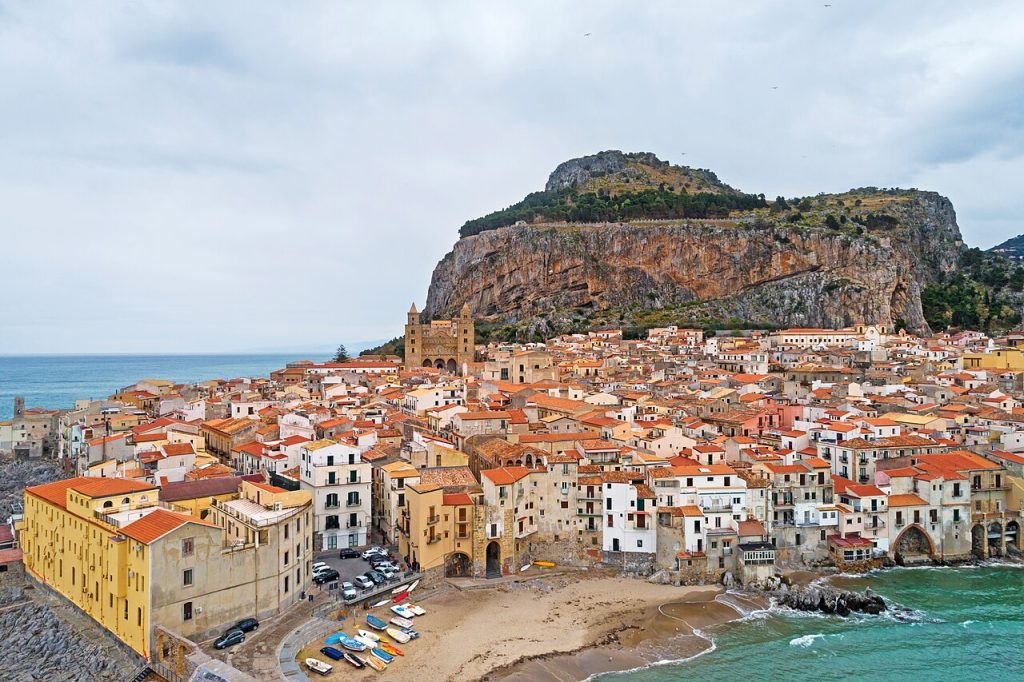
On the northern coast of Sicily, a huge rock rises above a cluster of golden rooftops and a sandy bay. Below it, a Norman cathedral with twin towers watches over narrow lanes that lead straight to the sea. This is Cefalù, one of the most beautiful seaside towns in Italy. In this guide, you will discover what to see, how to get there and when to visit.
Quick Facts About Cefalù, Italy
| Country | Italy |
| Region | Metropolitan City of Palermo, Sicily |
| Known For | The Norman cathedral, La Rocca, the medieval wash-house and its beach |
| UNESCO Status | Cathedral is part of Arab-Norman Palermo and the Cathedral Churches of Cefalù and Monreale |
| Founded | Ancient Greek origins; rebuilt by the Normans from 1131 |
| Best Time to Visit | May to June and September to October |
| Time Needed | One to two days |
| Continent | Europe |
Where Is Cefalù, Italy?
Cefalù lies on the Tyrrhenian coast of northern Sicily, in the Metropolitan City of Palermo. In fact, it sits about 70 kilometers east of Palermo, the island’s capital.
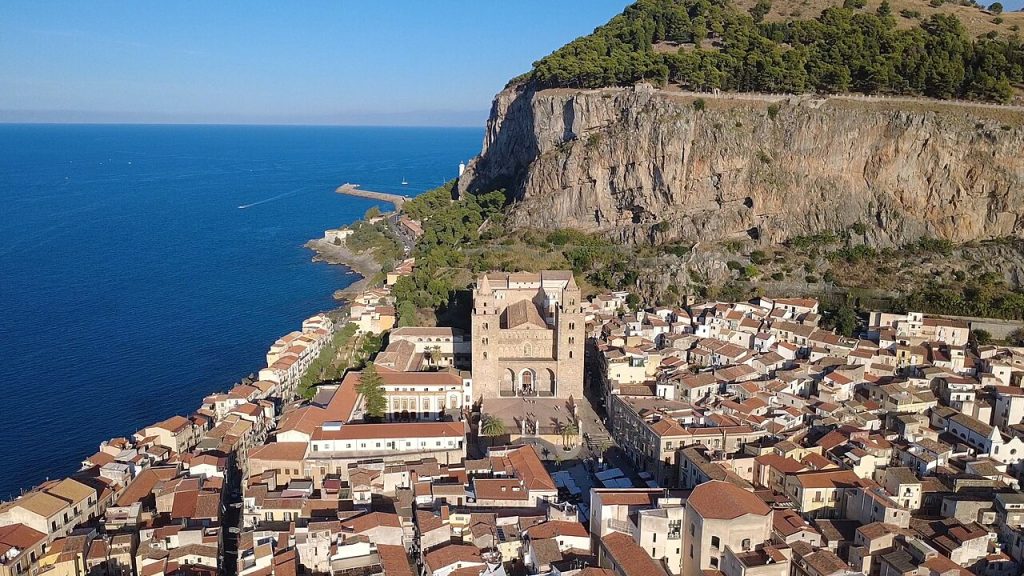
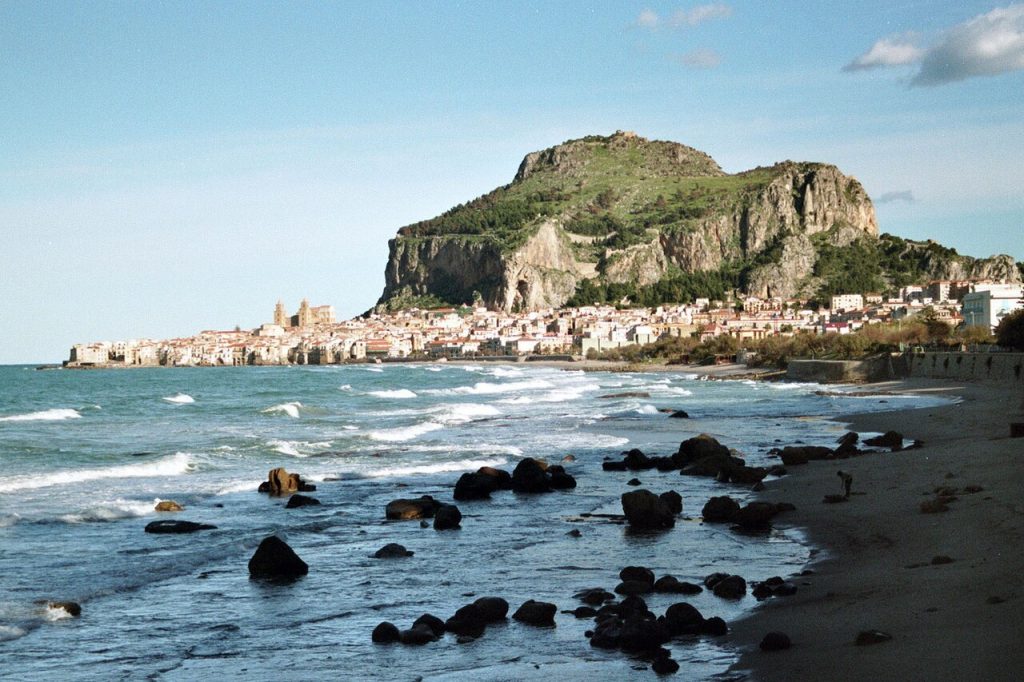
Specifically, the town stands at the foot of a massive rocky headland. As a result, it has both a sandy beach and dramatic cliffs right on its doorstep.
Why Visit Cefalù, Italy?
First of all, Cefalù is stunningly beautiful. Indeed, its old town, beach and towering rock make it one of the most photogenic places in Sicily.
In addition, it has remarkable history. In particular, its Norman cathedral is part of a UNESCO World Heritage Site, and the town has roots going back to ancient Greece.
Finally, it is easy to reach and relaxed. Therefore, it makes a perfect base for exploring the northern coast of Sicily, or a lovely day trip from Palermo.
The Cathedral of Cefalù
The cathedral is the heart of Cefalù. Roger II, the Norman king of Sicily, began building it in 1131. According to legend, he survived a storm at sea, landed on the town’s beach and vowed to build a church to the Holy Saviour. However, historians think political and military reasons were more likely.
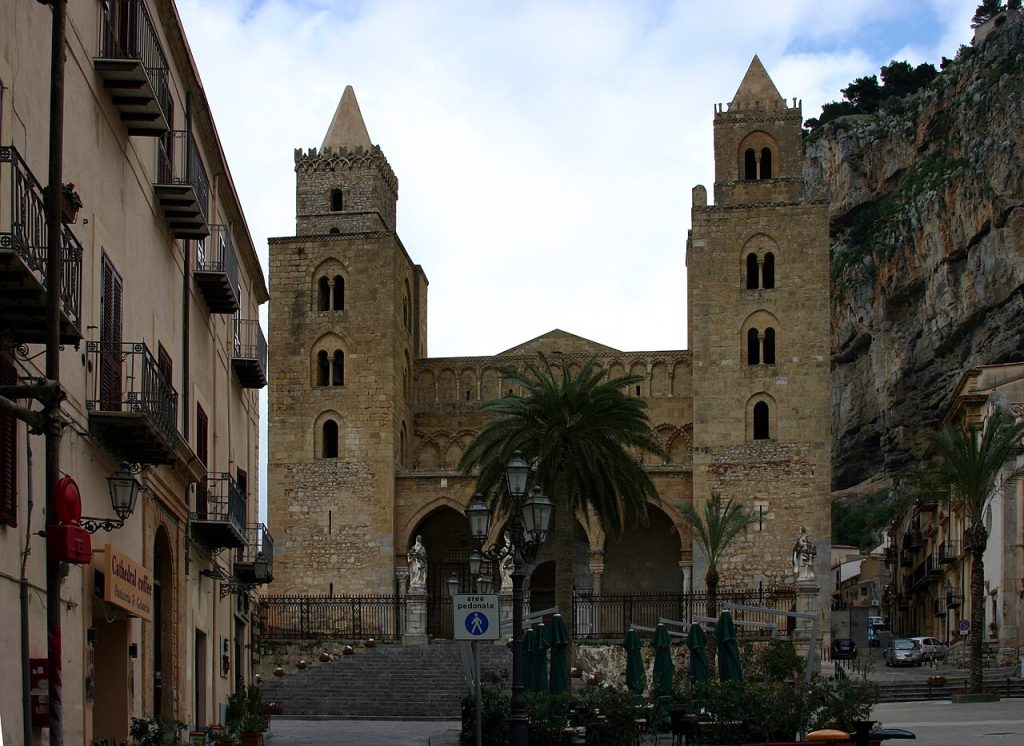
From the outside, the cathedral looks almost like a fortress, with two massive towers. Inside, however, the apse glows with a Byzantine-style mosaic of Christ Pantocrator. Undoubtedly, it is one of the finest mosaics in Sicily.
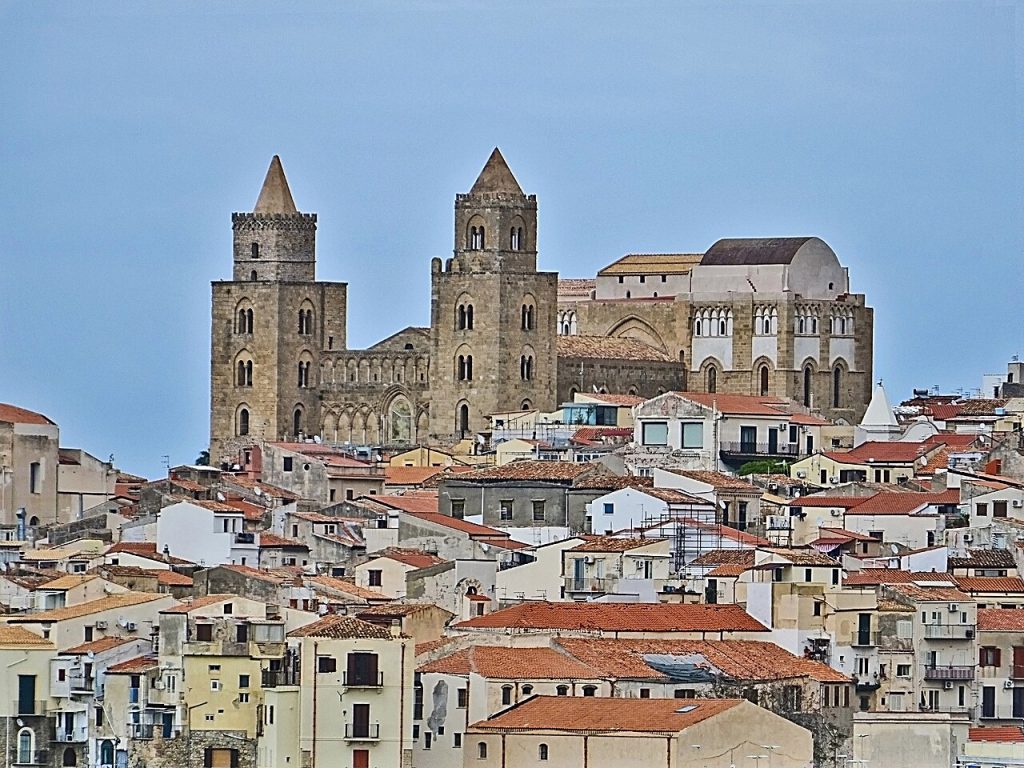
Today, the cathedral is part of the UNESCO World Heritage Site of Arab-Norman Palermo and the Cathedral Churches of Cefalù and Monreale. Consequently, it attracts visitors from around the world.
Exploring the Old Town of Cefalù
Beyond the cathedral, the old town is a maze of narrow lanes, small squares and shops. Above all, it is best explored on foot.
Corso Ruggero
Corso Ruggero is the main street of the old town. Along it, you will find the Osterio Magno, a 13th-century building once owned by the Ventimiglia counts. In particular, look for its elegant mullioned windows.
The Medieval Wash-House
Hidden near the waterfront is the medieval wash-house, or lavatoio, dug into the rock. A staircase of lava stone leads down to the pools. Meanwhile, water flows from cast-iron spouts, some shaped like lion heads. According to legend, the Cefalino river was formed from a nymph’s tears.
The Mandralisca Museum
The Museo Mandralisca is small but fascinating. Above all, its most famous treasure is the Portrait of an Unknown Man by Antonello da Messina. Therefore, it is a must for art lovers.
The Waterfront
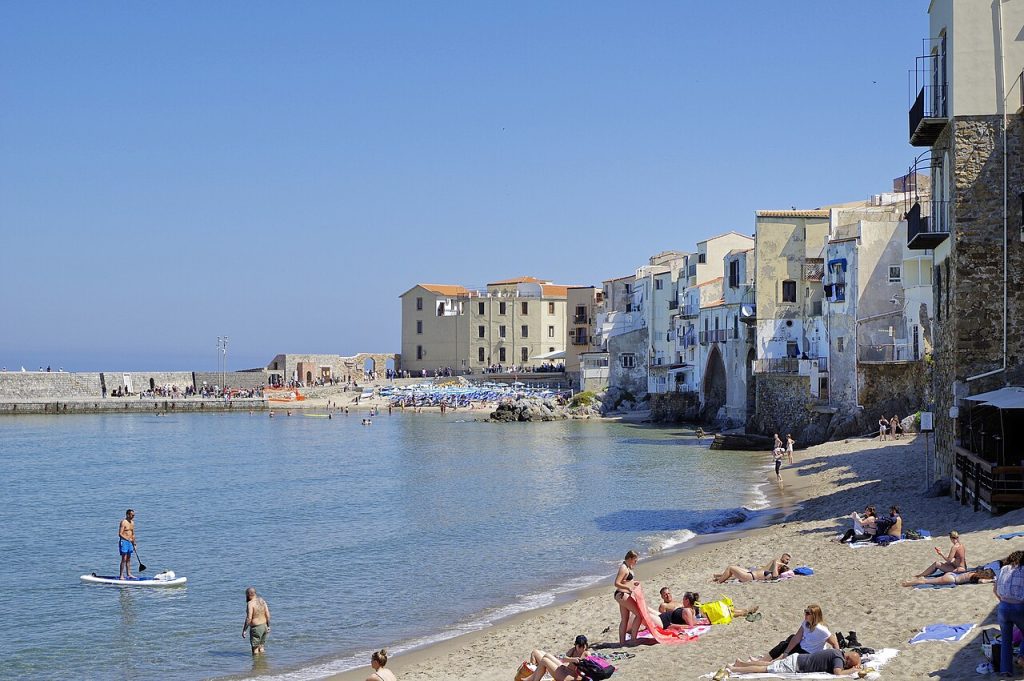
Along the old harbor, houses rise directly from the sea. Especially in the evening, the waterfront is a lovely place for a stroll. Similarly, the long sandy beach is perfect for a swim in summer.
Climbing La Rocca
La Rocca is the huge rock that towers about 270 meters above Cefalù. In ancient times, the Phoenicians knew it as the promontory of Hercules.
The Temple of Diana
Partway up, you will find the Temple of Diana, a megalithic building linked to the cult of water. Nearby, a cistern also dates back to the 9th century BC.
The Norman Castle
At the summit, the remains of a Norman castle stand among the rocks. Most importantly, the views from the top are spectacular, stretching along the coast in both directions.
Bring water and good shoes, since the climb is steep and exposed to the sun. Also, start early in summer to avoid the midday heat.
One Historical Fact About Cefalù, Italy
Greek settlers named the town Kephaloídion, from the Greek word for head, because of its rocky headland. Over the centuries, it passed through Carthaginian, Roman, Byzantine and Arab hands. Then, the Normans captured it in 1063, and in 1131, Roger II moved the town from the top of the rock down to the harbor.
How to Get to Cefalù, Italy
In general, Cefalù is easy to reach from Palermo.
- By train: Regular trains run along the coast between Palermo and Cefalù, and the station is a short walk from the old town.
- By car: The A20 motorway connects Cefalù with Palermo in about an hour.
- By air: The nearest airport is Palermo Falcone-Borsellino Airport.
Best Time to Visit Cefalù, Italy
The best times to visit are May to June and September to October. During these months, the weather is warm and sunny, yet the crowds are smaller than in midsummer.
July and August are hot and busy, especially at the beach. In contrast, winter is mild and quiet, although some restaurants close for the season.
Is Cefalù, Italy Worth Visiting?
Yes, absolutely. Cefalù combines history, art, beaches and dramatic scenery in one compact town. Moreover, it is easy to reach from Palermo.
Whether you come for the cathedral, the climb or the sea, you will leave with wonderful memories. Therefore, it is one of the highlights of any trip to Sicily.
Final Thoughts
Cefalù is a town where history meets the sea. Admire the golden mosaics of the cathedral, climb La Rocca for the views and end the day with a swim. Above all, linger in the lanes as the evening light turns everything gold. If you love historic towns in southern Italy, you may also enjoy our guides to Matera and Alberobello.
Image Credits
Wikimedia Commons
- Cefalù and La Rocca: Photo by Ludvig14 via Wikimedia Commons (CC BY-SA 4.0)
- Cathedral of Cefalù: Photo by ErwinMeier via Wikimedia Commons (CC BY-SA 4.0)
- Cefalù Seafront: Photo by Berthold Werner via Wikimedia Commons (CC BY-SA 4.0)
- View From La Rocca: Photo by Enricopis via Wikimedia Commons (CC BY-SA 4.0)
- Cefalù Across the Bay: Photo by Bjs via Wikimedia Commons (CC0)
- Facade of Cefalù Cathedral: Photo by José Luiz via Wikimedia Commons (CC BY-SA 4.0)