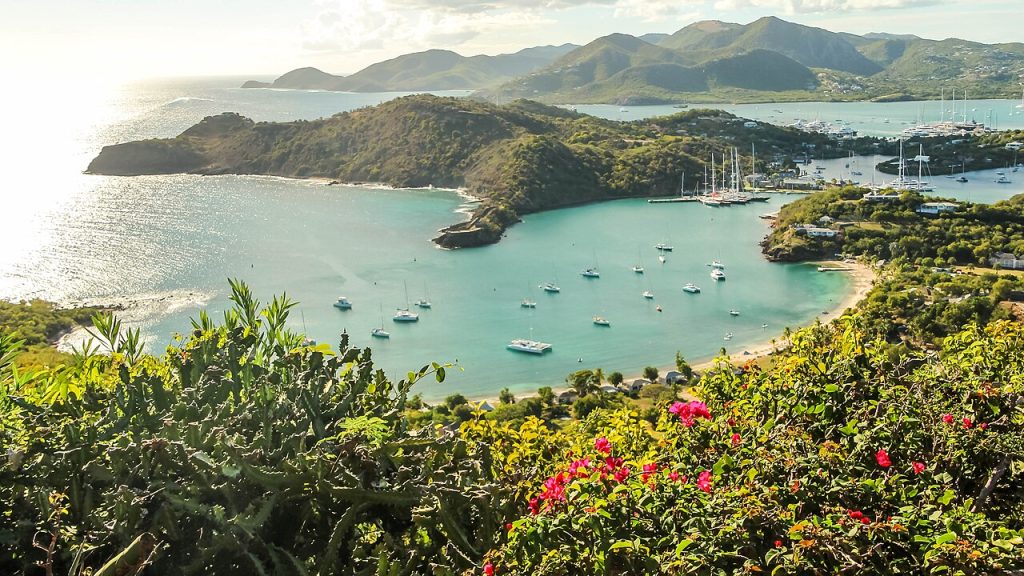
On the southern coast of Antigua, a narrow inlet winds between green hills to a perfectly sheltered harbor. Georgian stone buildings line the waterfront, sleek yachts bob at their moorings, and a hilltop lookout offers one of the finest views in the Caribbean. This is English Harbour, home of the historic Nelson’s Dockyard. In this guide, you will discover what to see, how to get there and when to visit.
Quick Facts About English Harbour, Antigua
| Country | Antigua and Barbuda |
| Region | Saint Paul Parish, south coast of Antigua |
| Known For | Nelson’s Dockyard, Shirley Heights and sailing |
| UNESCO Status | Antigua Naval Dockyard and Related Archaeological Sites, World Heritage Site since 2016 |
| Founded | Naval base established in 1725 |
| Best Time to Visit | December to April |
| Time Needed | One to two days |
| Continent | North America (Caribbean) |
Where Is English Harbour, Antigua?
English Harbour lies on the south coast of Antigua, in the parish of Saint Paul. In fact, it is part of a series of deep, narrow bays surrounded by hills.
Because these hills protected ships from hurricanes, the harbor became one of the most valuable naval bases in the Caribbean. Today, it also sits next to Falmouth Harbour, another popular yachting center.
Why Visit English Harbour, Antigua?
First of all, English Harbour is steeped in history. Nelson’s Dockyard is described as the only continuously working Georgian-era dockyard in the world. Therefore, it is a fascinating place for history lovers.
In addition, the setting is beautiful. Indeed, green hills, turquoise water and white yachts make every view look like a postcard.
Finally, the area has a lively atmosphere. Restaurants, bars and sailing events keep it busy, especially during the winter sailing season.
Exploring Nelson’s Dockyard
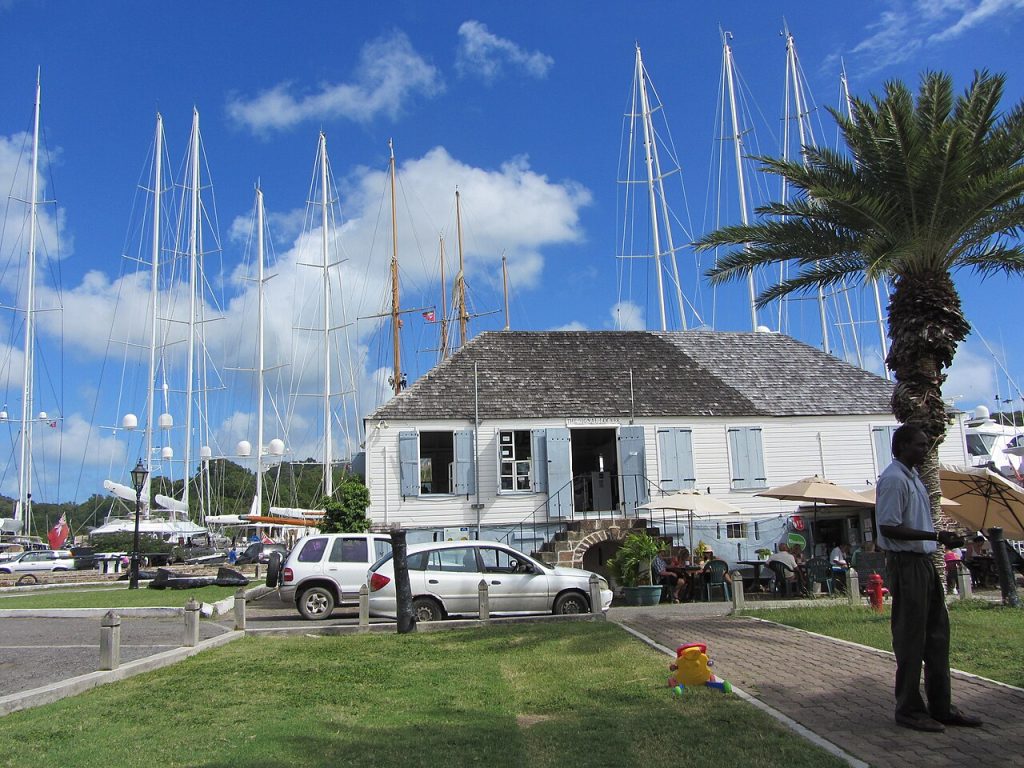
Nelson’s Dockyard is the heart of English Harbour. Above all, it is easy to explore on foot, with most buildings set around open lawns.
The Georgian Buildings
The modern dockyard was built from the mid-1740s, and most of its buildings date from a program between 1785 and 1794. Today, these stone buildings house shops, restaurants, hotels and a marina.
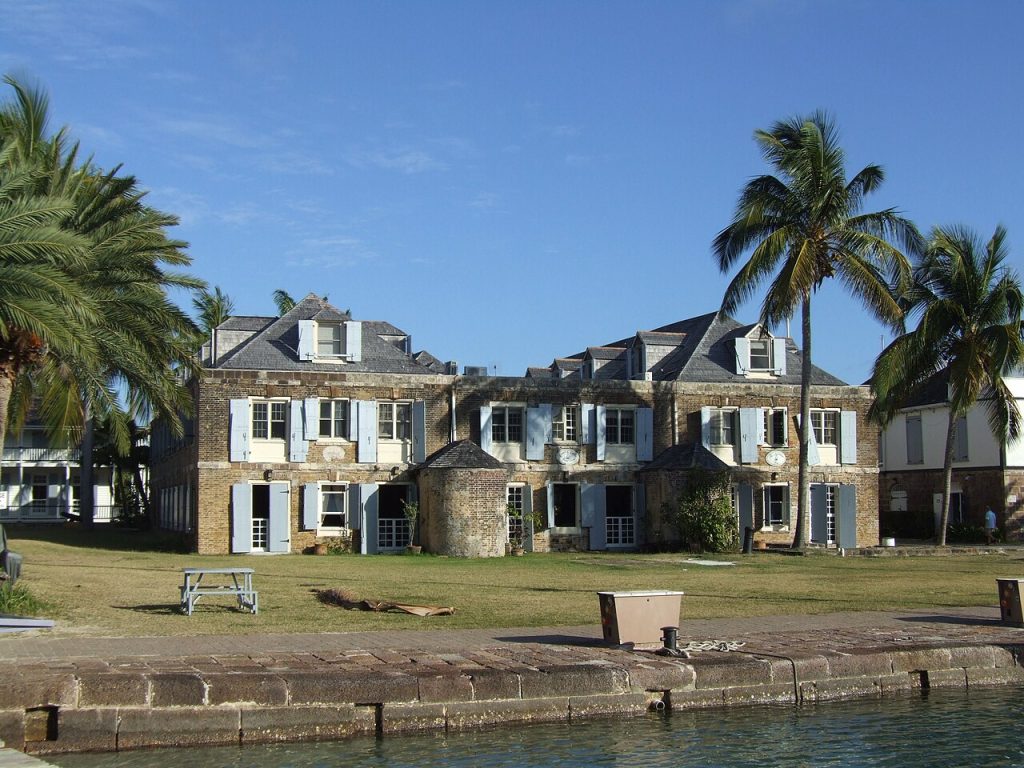
Importantly, the dockyard was built partly by enslaved Africans from nearby plantations. As UNESCO notes, its construction would not have been possible without their labor. Consequently, a visit is also a chance to reflect on that history.
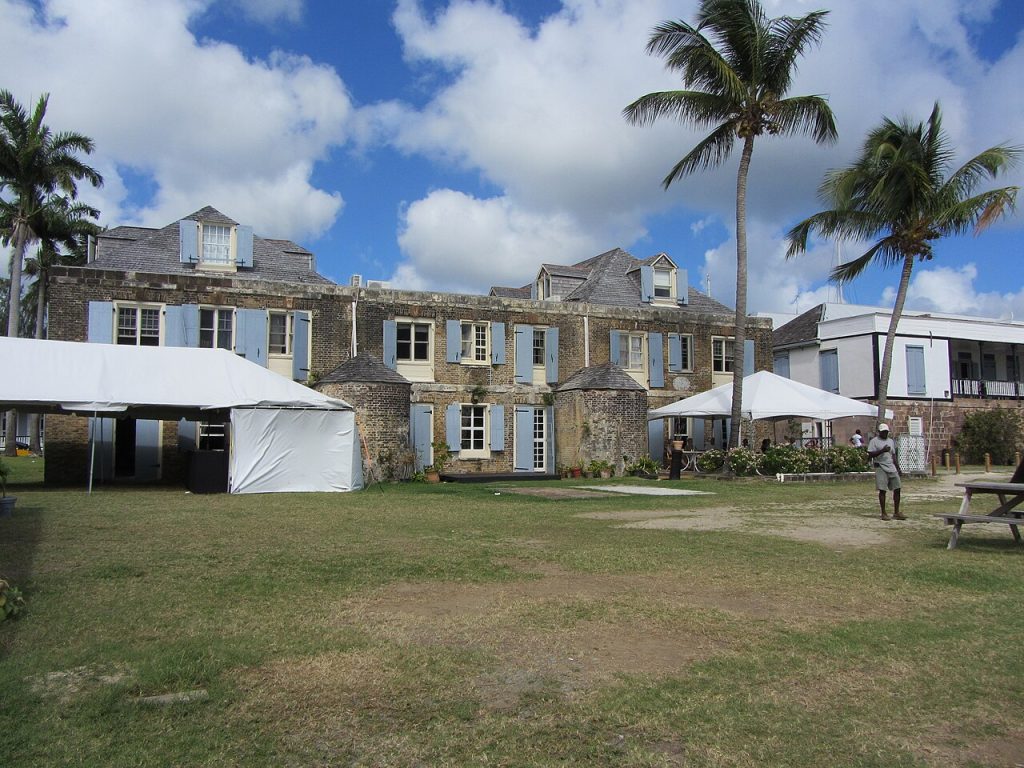
The Dockyard Museum
The Dockyard Museum is housed in the former Naval Officer’s and Clerk’s House. In particular, its exhibits explain the history of the dockyard, the Royal Navy and the people who worked here. Therefore, it is a good place to start your visit.
Nelson’s Connection
The dockyard takes its name from Horatio Nelson, who lived here from 1784 to 1787 as a young officer. Later, of course, he became one of Britain’s most famous admirals.
The Harbor and Its Yachts
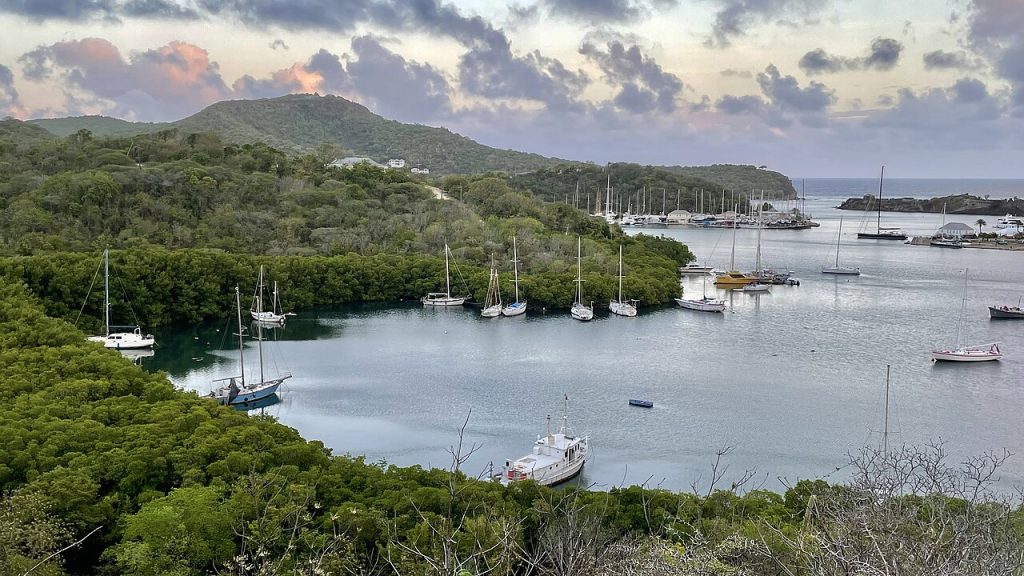
English Harbour is one of the most famous sailing centers in the Caribbean. In fact, its marina is filled with yachts from around the world, especially in winter.
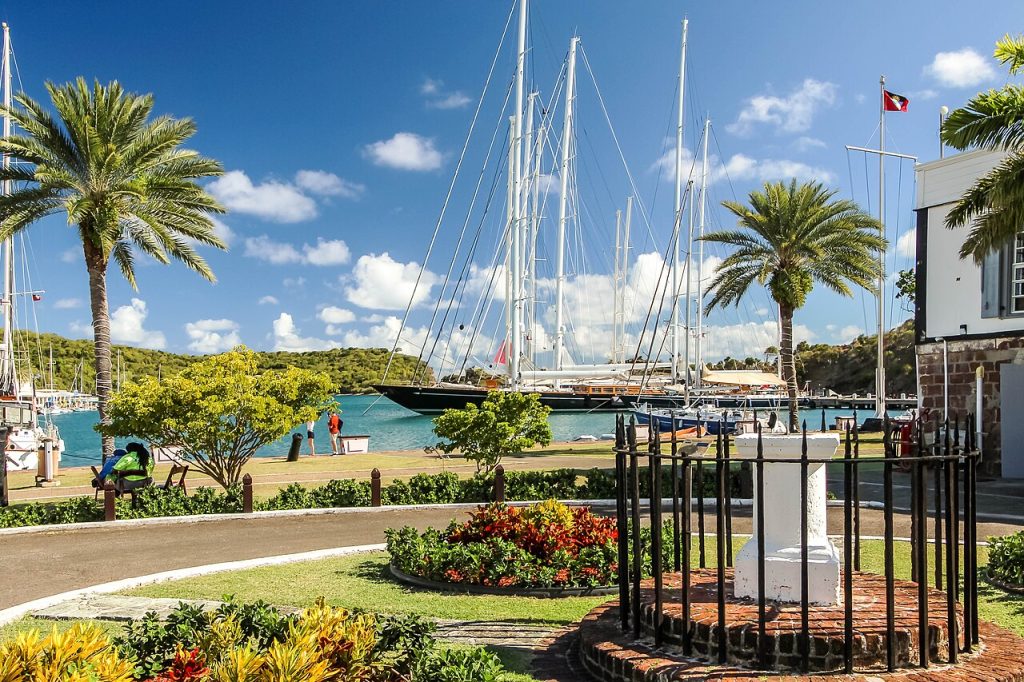
The harbor also hosts major events. For example, Antigua Sailing Week brings racing yachts and crowds of visitors every year. Meanwhile, the North American Optimist Championships draw young sailors from across the region.
Shirley Heights and Beyond
Above the harbor, the hills offer spectacular views and more history.
Shirley Heights Lookout
Shirley Heights is a restored military lookout high above English Harbour. From the top, you can see the whole harbor as well as Falmouth Harbour and the surrounding hills. As a result, it is the most famous viewpoint on the island.
Sunset at Shirley Heights
Shirley Heights is especially popular at sunset. In particular, on Sunday evenings, visitors gather for music, barbecue and the view.
Hiking Trails
Several walking trails link the dockyard with the hills and old fortifications. Also, they offer quieter views over the bays.
Falmouth Harbour
Next door, Falmouth Harbour is another sheltered bay full of yachts. It has restaurants and bars, so it is a nice place for an evening stroll.
One Historical Fact About English Harbour, Antigua
After the English colonized Antigua in 1632, the Royal Navy began using English Harbour as a safe haven. A naval base was established in 1725. However, the Navy abandoned the dockyard in 1889, and it fell into decay. Fortunately, restoration began in 1951, and the dockyard reopened to the public in 1961.
How to Get to English Harbour, Antigua
Most visitors arrive through V. C. Bird International Airport, near the capital, St John’s.
- By taxi: Taxis run from the airport and St John’s to English Harbour across the island.
- By car: Renting a car lets you explore beaches and viewpoints along the way. Remember that traffic drives on the left.
- By yacht: Many visitors arrive by sea, since English Harbour is a major sailing hub.
Best Time to Visit English Harbour, Antigua
The best time to visit is from December to April, during the dry season. During these months, the weather is sunny and pleasant, and the sailing season is in full swing.
In contrast, June to November is the Caribbean hurricane season. Even so, the quieter months can offer lower prices and fewer crowds.
Is English Harbour, Antigua Worth Visiting?
Yes, absolutely. English Harbour combines history, natural beauty and a lively sailing scene in one small area. Moreover, the view from Shirley Heights is one of the best in the Caribbean.
For travelers who want more than a beach holiday, it adds real depth to a trip to Antigua.
Final Thoughts
English Harbour is a place where history and the sea meet. Wander through Nelson’s Dockyard, admire the yachts and watch the sunset from Shirley Heights. Above all, take time to learn the full story of the people who built this remarkable place. If you love historic Caribbean towns, you may also enjoy our guides to Christiansted and Willemstad.
Image Credits
Wikimedia Commons
- English Harbour From Shirley Heights: Photo by Dr. Thomas Liptak via Wikimedia Commons (CC BY 4.0)
- Nelson’s Dockyard: Photo by Kognos via Wikimedia Commons (CC BY-SA 4.0)
- Buildings at Nelson’s Dockyard: Photo by Anneli Salo via Wikimedia Commons (CC BY-SA 4.0)
- Yachts in English Harbour: Photo by Dr. Thomas Liptak via Wikimedia Commons (CC BY 4.0)
- English Harbour Bay: Photo by Vincent van Zeijst via Wikimedia Commons (CC BY-SA 4.0)
- Nelson’s Dockyard Building: Photo by Anneli Salo via Wikimedia Commons (CC BY-SA 4.0)