On the flat marshes of southwest Denmark, a great cathedral tower rises above crooked half-timbered houses and cobbled lanes. Every evening, a night watchman walks the streets with his lantern, just as watchmen did centuries ago. This is Ribe, often called the oldest town in Scandinavia. In this guide, you will learn what to see, how to get there and when to visit.
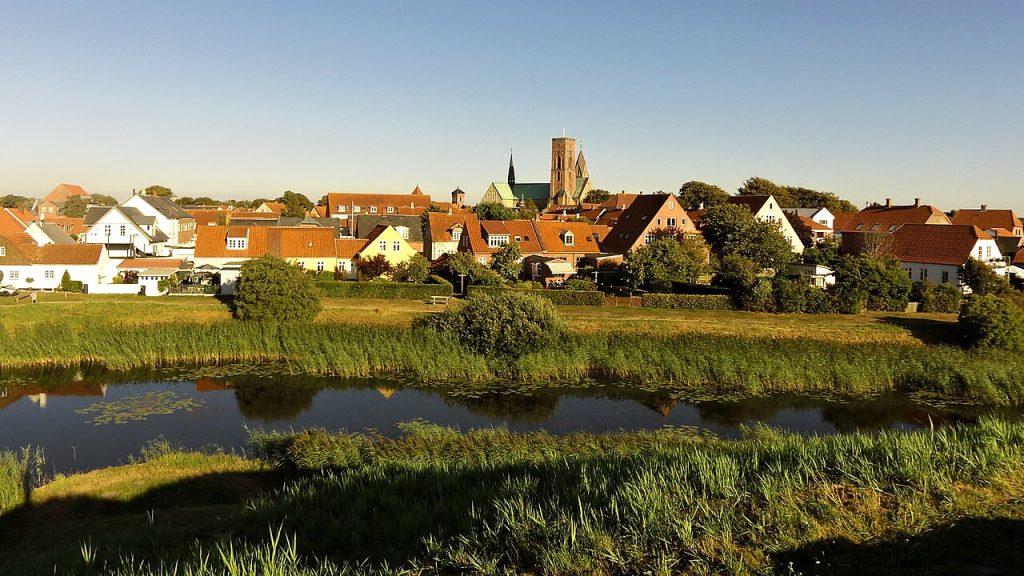
Quick Facts About Ribe, Denmark
| Country | Denmark |
| Region | Southwest Jutland, Esbjerg Municipality |
| Known For | Ribe Cathedral, Viking history, the night watchman and the Wadden Sea |
| UNESCO Status | Not listed (the nearby Wadden Sea is a World Heritage Site) |
| Founded | Early 8th century |
| Best Time to Visit | May to September |
| Time Needed | One to two days |
| Continent | Europe |
Where Is Ribe, Denmark?
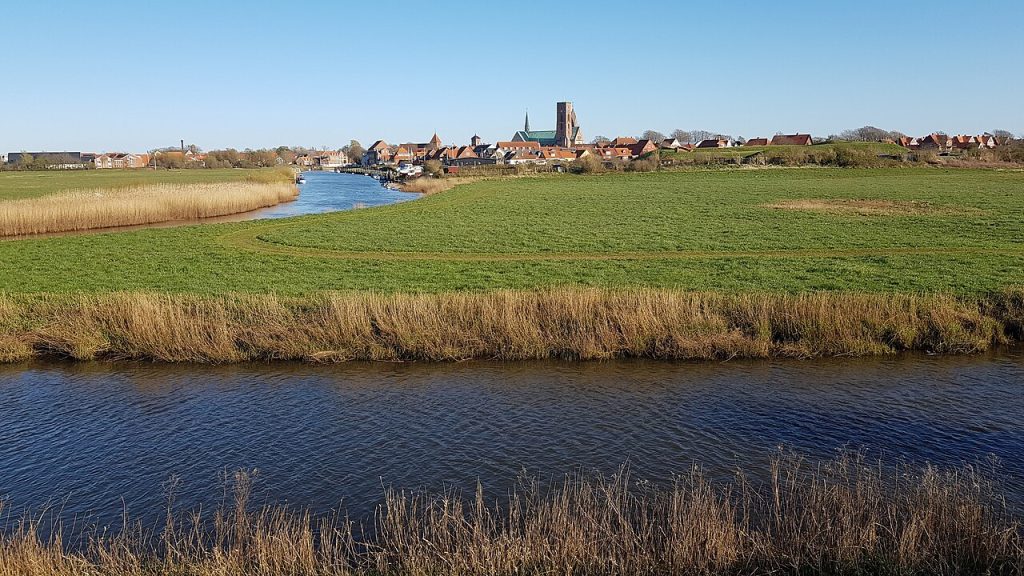
Ribe lies in southwest Jutland, in the Esbjerg Municipality of Denmark. In fact, it sits close to the Wadden Sea, surrounded by flat marshland and slow rivers.
Because the land is so low, the town has suffered many floods. For example, the great storm flood of 1634 left marks that can still be seen on the cathedral walls.
Why Visit Ribe, Denmark?
First of all, Ribe is wonderfully old. In fact, it was already a busy trading center in the early 8th century, and it is often described as the oldest town in Denmark and Scandinavia.
In addition, the old town is beautifully preserved. For example, narrow cobbled streets, timber-framed houses and a magnificent cathedral make it feel like stepping back in time.
Finally, the surrounding nature is remarkable. In particular, the Wadden Sea, a UNESCO World Heritage Site, lies just outside town.
Exploring the Old Town of Ribe
The old town is compact and best explored on foot. Above all, take time to wander the side streets.
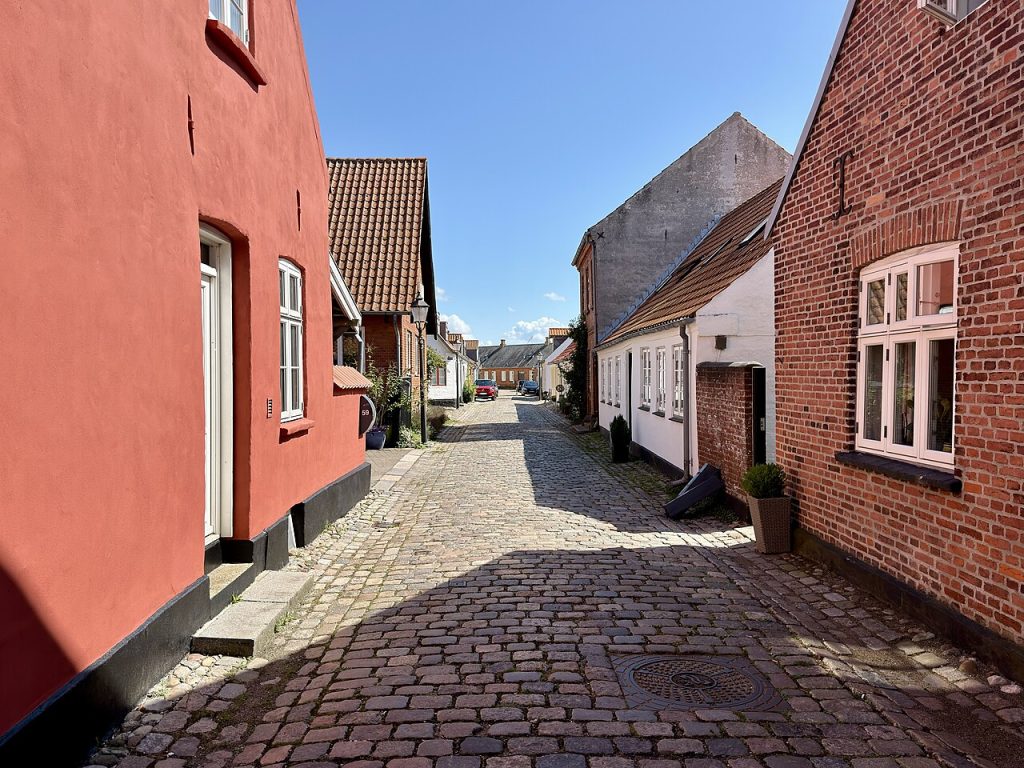
Cobbled Streets and Old Houses
Ribe’s lanes are lined with crooked half-timbered houses, many with colorful doors and flower boxes. Meanwhile, some streets still follow the layout of the medieval town.
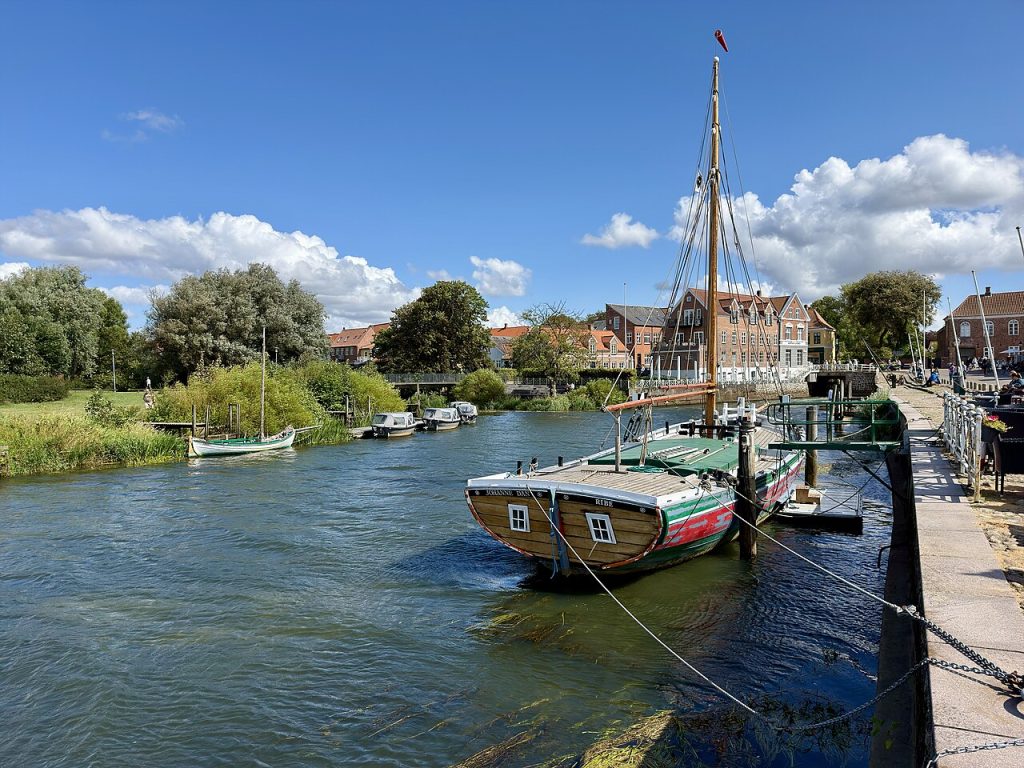
The Old Harbor
Along the river, the old harbor recalls the days when ships sailed up to trade. Today, a historic sailing ship is also often moored here, adding to the picture.
The Night Watchman
Also, on many evenings, the town’s night watchman makes his rounds, sings a goodnight song and tells stories of Ribe’s past. Best of all, the walk is free and given in Danish and English.
Ribe Cathedral
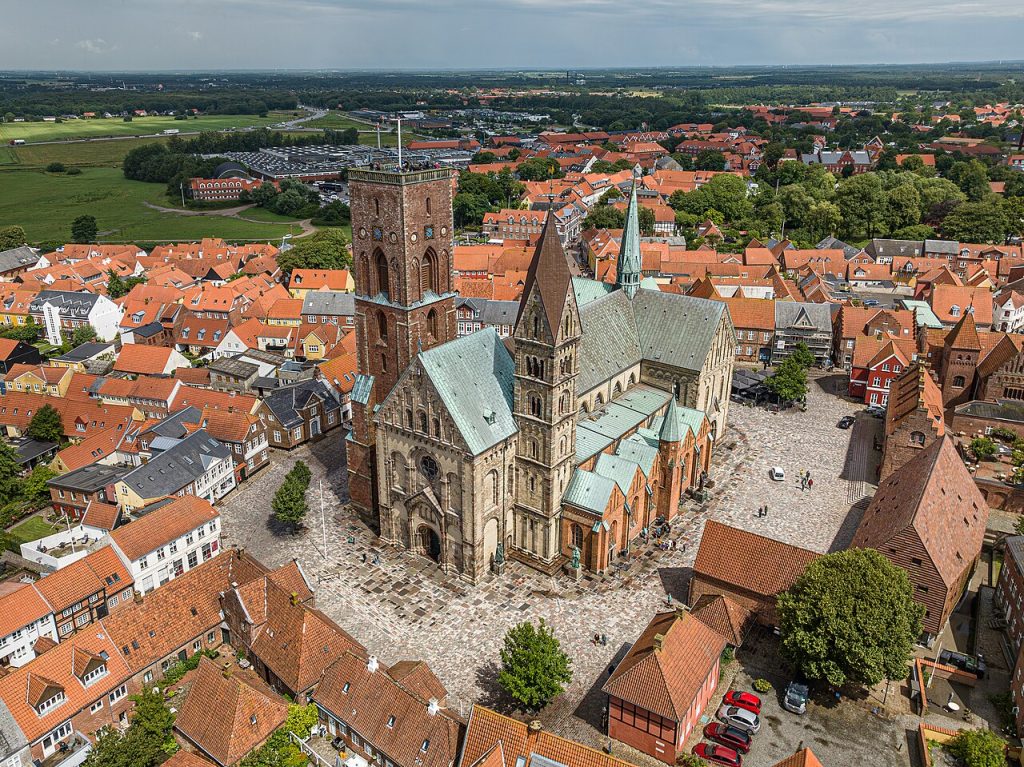
Undoubtedly, Ribe Cathedral is the town’s greatest landmark. In fact, its construction began around 1150, probably on the site of an earlier church. In fact, a bishop and cathedral are confirmed here from 948.
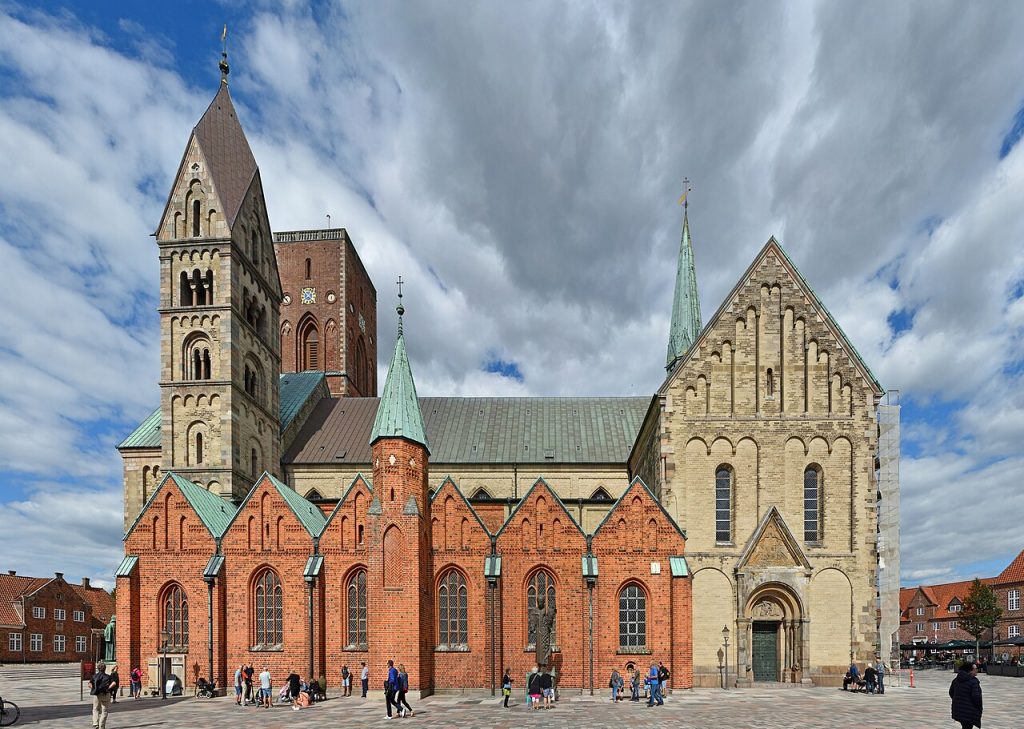
For the best view in town, climb the Commoner’s Tower. Specifically, it rises 52 meters, with 248 steps to the top. Especially on clear days, you can see up to 30 to 35 kilometers, including Esbjerg, the Wadden Sea and nearby islands.
Viking History in Ribe
Ribe’s roots reach deep into the Viking Age. Therefore, there are several ways to explore this past.
Ribes Vikinger Museum
The Ribes Vikinger museum covers the Viking Age and the Middle Ages. In particular, its exhibits explain how the early town grew through trade with Frisia and England.
Ribe Viking Centre
Meanwhile, just outside town, the Ribe Viking Centre recreates life in the Viking Age. Similarly, the annual Ribe Viking Market brings costumed traders and crafts to life.
Nature Around Ribe, Denmark
Beyond the old town, the landscape is flat, open and full of birdlife.
The Wadden Sea National Park
The Wadden Sea National Park is Denmark’s largest national park. In 2014, it became part of a UNESCO World Heritage Site. Moreover, millions of migratory birds stop here each year.
The Black Sun
In spring and autumn, huge flocks of starlings gather over the marshes around Ribe. Then, as they swirl together at dusk, they create a spectacular display known as the Black Sun.
Oyster Safaris
In addition, at low tide, guided tours lead visitors onto the mudflats to gather oysters. Consequently, it is a unique way to experience the Wadden Sea.
One Historical Fact About Ribe, Denmark
Ribe was a commercial center as early as the 8th century, trading mainly with Frisia and England. Coins may even have been minted here around 720. Later, around 860, the missionary Ansgar reportedly asked King Horik II for permission to build a church in Ribe.
How to Get to Ribe, Denmark
Ribe is easy to reach within Denmark.
- By train: Ribe has a railway station on the line between Esbjerg and Tønder.
- By car: The town is a short drive south of Esbjerg.
- By air: The nearest larger airport is Billund, home of Legoland.
Best Time to Visit Ribe, Denmark
The best time to visit is from May to September, when the weather is mild and the days are long. In particular, summer is perfect for exploring the old town and the Wadden Sea.
Alternatively, visit in spring or autumn to see the Black Sun. Winter, by contrast, is cold and quiet, although the old town looks magical at Christmas.
Is Ribe, Denmark Worth Visiting?
Yes, absolutely. Ribe combines over a thousand years of history, a stunning cathedral and unique natural wonders. Moreover, it is small enough to explore in a day.
For lovers of history and nature, it is a highlight of any trip to Denmark. Therefore, consider staying overnight to join the night watchman.
Final Thoughts
Ribe is a town where history feels close. Climb the cathedral tower, walk the cobbled lanes with the night watchman and watch the starlings dance at dusk. Above all, take your time and enjoy its peaceful charm. If you love medieval towns in northern Europe, you may also enjoy our guides to Visby and Bruges.
Image Credits
Wikimedia Commons
- Old Town Across the River: Photo by Hjart via Wikimedia Commons (CC BY-SA 4.0)
- Cathedral and Old Town From Above: Photo by Arne Müseler via Wikimedia Commons (CC BY-SA 4.0)
- Johanne Dan at the Old Harbor: Photo by Olgierd Rudak via Wikimedia Commons (CC BY-SA 4.0)
- Gravsgade: Photo by Olgierd Rudak via Wikimedia Commons (CC BY-SA 4.0)
- The Cathedral: Photo by Ludvig14 via Wikimedia Commons (CC BY-SA 4.0)
- Marshes Outside Town: Photo by Hjart via Wikimedia Commons (CC BY-SA 4.0)