
Lefkara Cyprus is a stone village in the foothills of the Troodos Mountains, famous across the island for its handmade lace and fine silver filigree. Its cobbled lanes, honey coloured houses and quiet churches make it one of the most charming places to visit in Cyprus. Better still, it is an easy day trip from the coast.
Quick Facts About Lefkara, Cyprus
| Country | Cyprus |
| Region | Larnaca District, Troodos foothills |
| Known For | Handmade Lefkara lace, silver filigree, limestone houses |
| UNESCO Status | Lefkara lace is on the UNESCO Intangible Cultural Heritage list (2009) |
| Founded | Medieval village, recorded since at least the 12th century |
| Best Time to Visit | March to May, or September to November |
| Time Needed | Half a day to 1 day |
| Continent | Europe |
Where Is Lefkara, Cyprus?
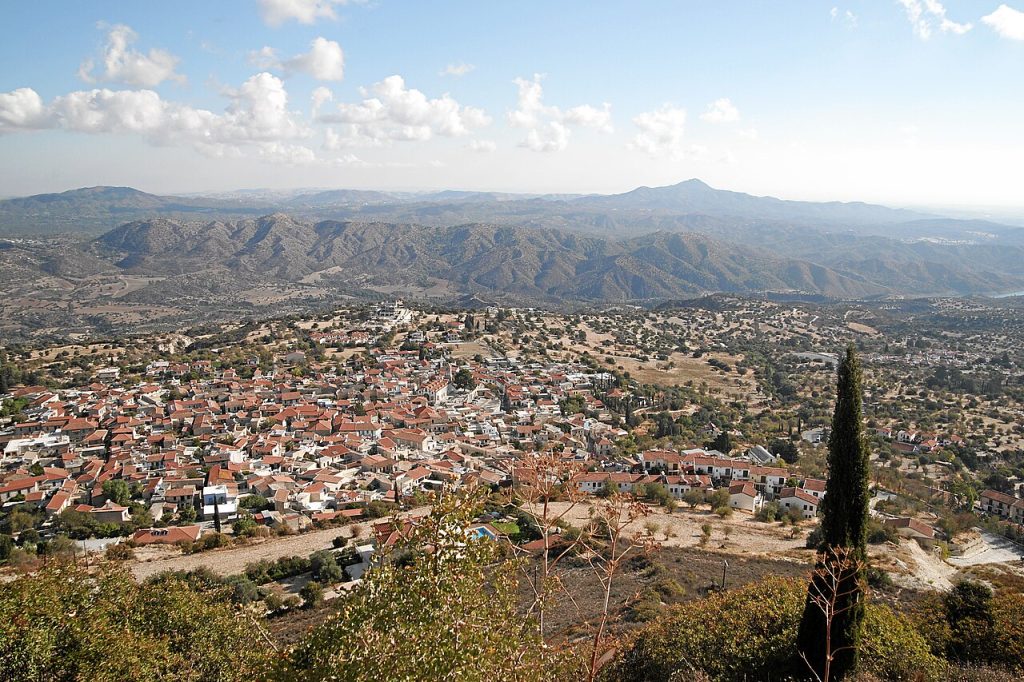
Lefkara sits on the southern slopes of the Troodos range in the Larnaca District, at an altitude of about 500 metres. In fact, the village has two parts. Pano Lefkara (Upper Lefkara) is the larger and busier one, while Kato Lefkara (Lower Lefkara) lies just over a kilometre away.
Also, the village lies just off the main highway between Nicosia and Limassol. As a result, Larnaca, Limassol and Nicosia are all less than an hour’s drive away.
Why Visit Lefkara, Cyprus?
First of all, Lefkara offers a rare look at a living craft tradition. Women still sit outside their homes stitching lace by hand, just as their grandmothers did. Meanwhile, silversmiths work in small shops along the main street.
The village is also beautiful in its own right. Its name comes from the Greek words for “white” and “mountains”, a nod to the pale limestone hills around it. In addition, the government has listed many traditional houses, so the old centre still looks much as it did a century ago.
Finally, Lefkara is calm. Compared with the busy beach towns, it feels slow, local and authentic.
Wandering the Lanes of Pano Lefkara
The best way to enjoy Lefkara Cyprus is simply to walk. Most visitors park at the edge of the village and then follow the narrow lanes downhill toward the main church.
Cobbled Streets and Limestone Houses
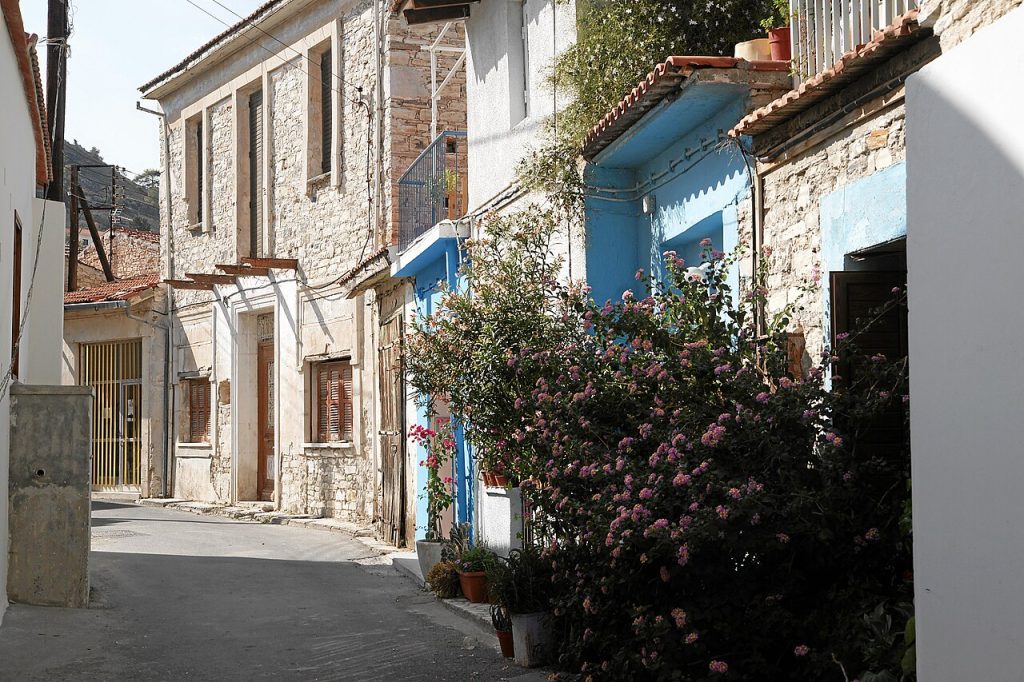
Most of the surviving houses date from the Ottoman period and the early 20th century. Builders used local limestone, adding wooden doors, small balconies and shady courtyards. Along the way, look out for colourful shutters, potted geraniums and old arched gateways.
Lace Makers at Work
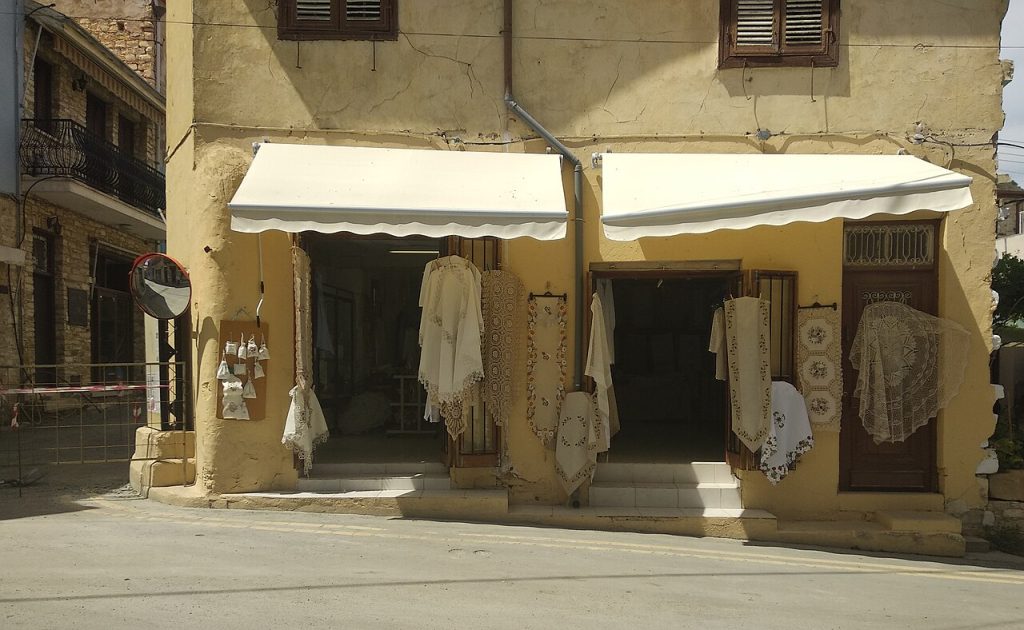
On warm afternoons, you may see local women working on lace in doorways and on benches. They usually welcome a polite hello. However, always ask before taking a close photo.
Silversmith Workshops
Silver filigree is the other great craft of Lefkara. Here, craftsmen twist and solder thin silver threads into delicate jewellery, crosses and small ornaments. In fact, several shops let you watch the craftsmen at work, and prices are often better than in the big tourist towns.
Churches and Chapels of Lefkara
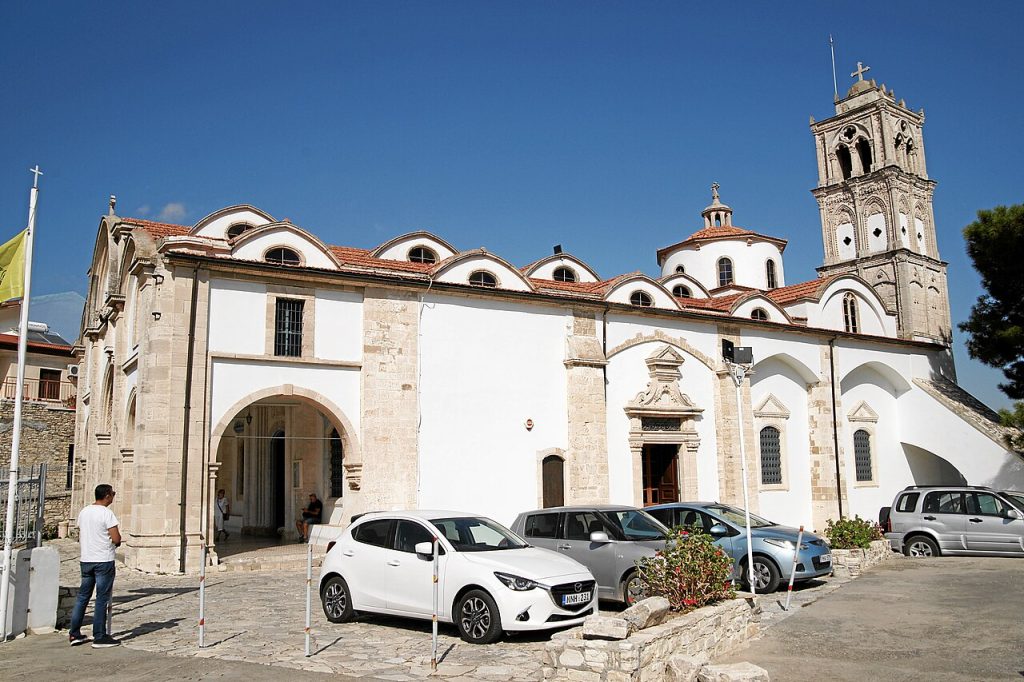
The Church of the Holy Cross, known locally as Timios Stavros, is the heart of Pano Lefkara. Tradition says it holds a fragment of the True Cross. In addition, its interior features an ornate carved wooden iconostasis. The church square is a a pleasant place to sit with a coffee.
Down the hill, Kato Lefkara is home to the small Church of Archangel Michael. Inside, Byzantine frescoes from the late 12th century cover the walls. However, opening hours vary, so check locally before making the walk.
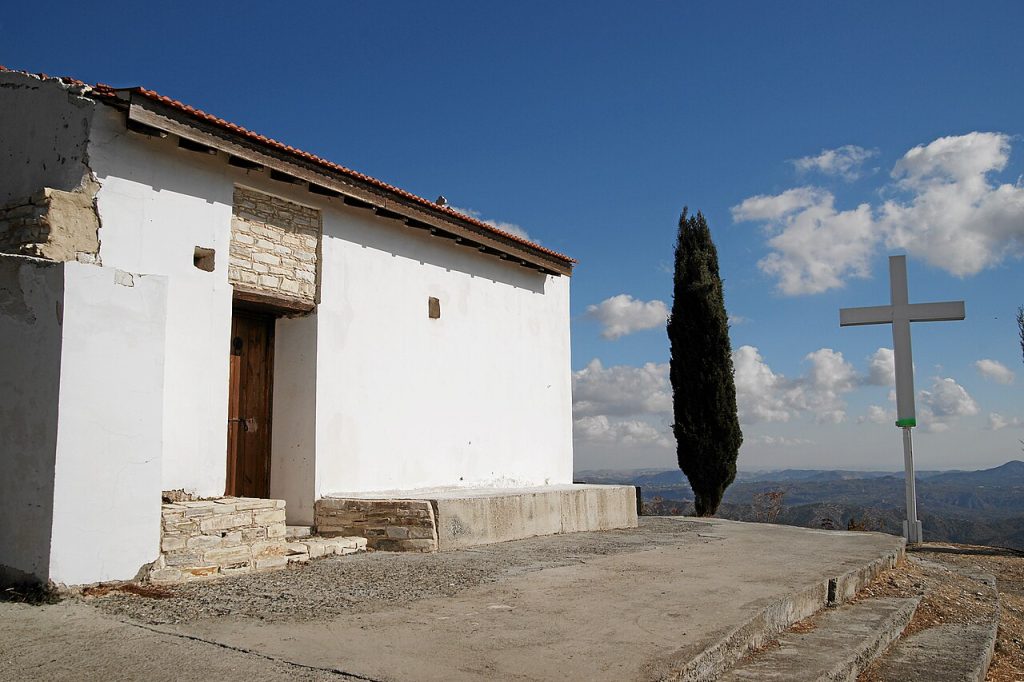
For the best views, climb to the little Sotira chapel on the hill above the village. From the top, red roofs tumble down the slope toward the coastal plain. Sunset is especially lovely.
Lefkara Lace and Local Culture
Lace is what made Lefkara Cyprus famous, and it is still the soul of the village today.
The Art of Lefkaritika
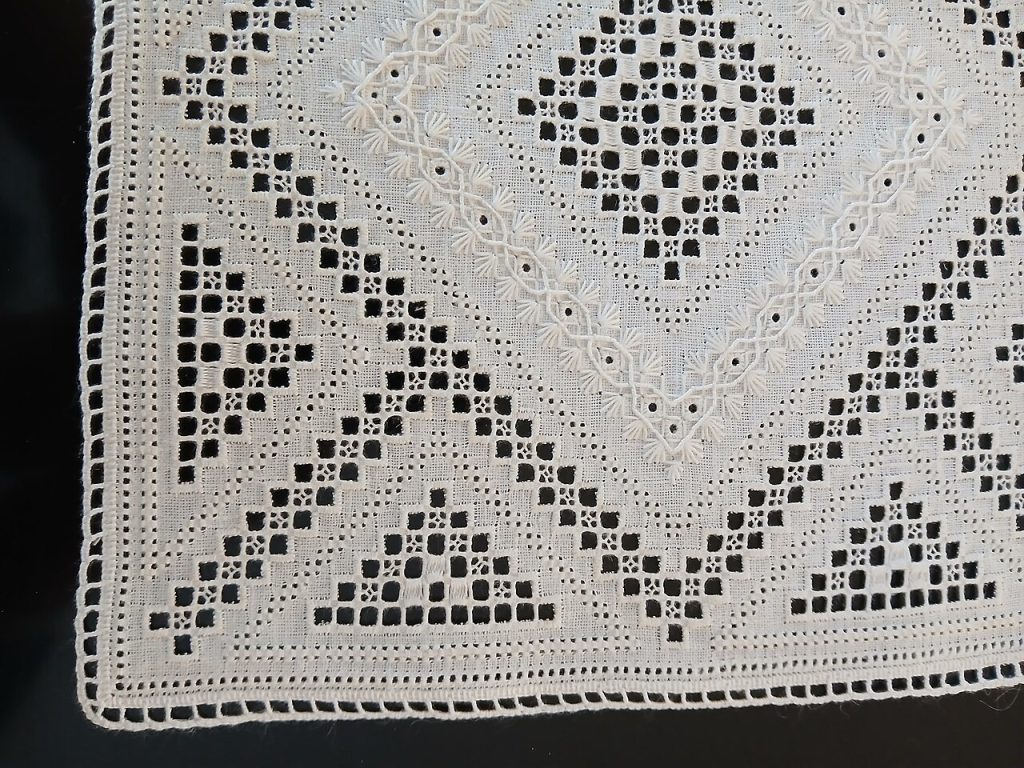
Lefkara lace, or lefkaritika, is a type of hand embroidery stitched on linen. In style, it blends local Cypriot traditions with influences from Venetian embroidery.
Patterns and Techniques
Typically, each piece uses a mix of cut work, satin stitch and hemstitching. Most of the designs are geometric, with zigzags, triangles and rhombuses. Because artisans make every piece by hand, a large tablecloth can take months to finish.
UNESCO Recognition
In 2009, UNESCO added Lefkara laces to its Representative List of the Intangible Cultural Heritage of Humanity. As a result, this recognition helps protect a skill that has passed from mother to daughter for generations.
Museum of Traditional Embroidery and Silversmith Work
The restored Patsalos House now holds a small museum of embroidery and silverwork. Inside, you can see antique lace, local costumes and the furniture of a traditional village home. It is a great first stop, since it helps you spot genuine handmade pieces in the shops.
Food and Village Life
After exploring, stop at one of the tavernas for a Cypriot meze. In addition, many cafés sell loukoumi and other local sweets. On weekdays, the village grows quiet after the tour groups leave, which is the perfect time to linger.
One Historical Fact About Lefkara, Cyprus
According to local legend, Leonardo da Vinci visited Lefkara in 1481. He is said to have bought a lace altar cloth here for Milan Cathedral. Today, locals still tell the story proudly in almost every lace shop in the village.
How to Get to Lefkara, Cyprus
By car, Lefkara is about a 40 minute drive from Larnaca. From Limassol or Nicosia, take the main A1 motorway and follow the signs for Lefkara. You will also find parking at the edge of the old centre.
Alternatively, local buses run from Larnaca, but services are limited. For that reason, a rental car or an organised day tour is the easiest option. Many tours also stop at the Neolithic settlement of Choirokoitia, a UNESCO World Heritage Site a short drive away.
Best Time to Visit Lefkara, Cyprus
The best time to visit Lefkara is in spring, from March to May, or in autumn, from September to November. During these months, the weather is mild and perfect for walking.
Summer is hot, although the village is a little cooler than the coast. In winter, on the other hand, it is quiet and some shops keep shorter hours. Even so, it can be lovely on a sunny day.
Is Lefkara, Cyprus Worth Visiting?
Yes, absolutely. Lefkara is one of the best places to experience traditional village life in Cyprus. Moreover, it is small enough to explore in half a day, yet it rewards a slower visit. In short, if you love crafts, old houses and quiet streets, you will enjoy it.
Final Thoughts
Lefkara Cyprus is a village where history is stitched into every tablecloth. So wander the lanes, visit the churches and watch the lace makers at work. Above all, take home a small handmade piece, and you will carry a little of Lefkara with you.
If you love historic villages like this one, you may also enjoy our guides to Monemvasia, Greece and Cefalù, Italy.
Image Credits
Wikimedia Commons
- Pano Lefkara From the Sotira Hill: Photo by Mboesch via Wikimedia Commons (CC BY-SA 4.0)
- Stone Houses in Lefkara: Photo by Mboesch via Wikimedia Commons (CC BY-SA 4.0)
- Church of the Holy Cross: Photo by Mboesch via Wikimedia Commons (CC BY-SA 4.0)
- Lace Shop in Lefkara: Photo by דוד שי via Wikimedia Commons (CC BY-SA 4.0)
- Lefkara Lace Pattern: Photo by LaceDemo1 via Wikimedia Commons (CC BY-SA 4.0)
- Sotira Chapel: Photo by Mboesch via Wikimedia Commons (CC BY-SA 4.0)