
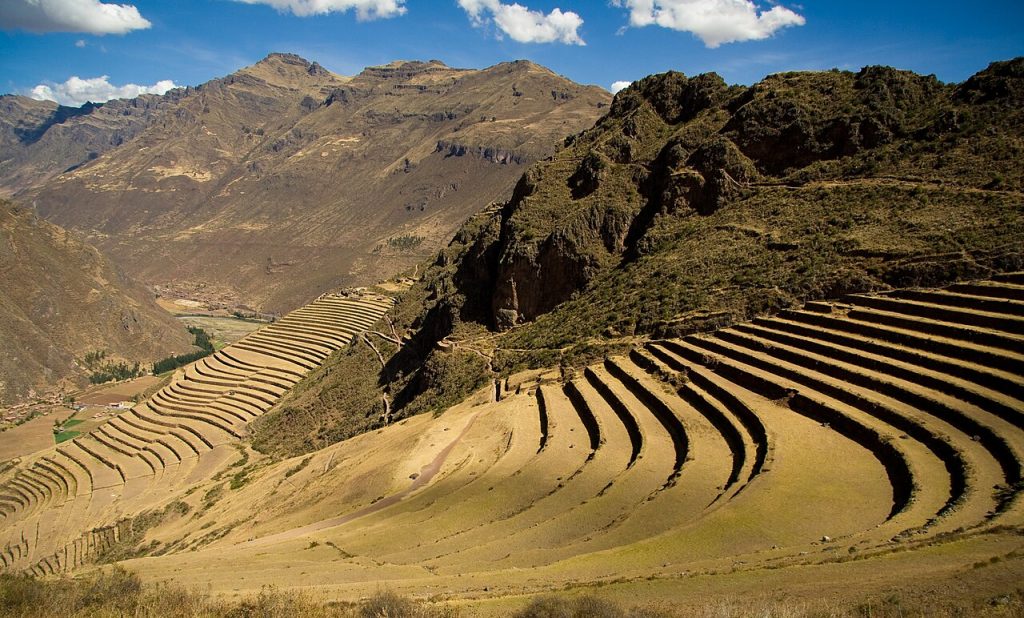
Pisac Peru is a lively market town in the Sacred Valley, overlooked by one of the most impressive Inca citadels in the Andes. Above the town, giant stone terraces curve around the mountain like a staircase for giants. Meanwhile, its colorful craft market draws visitors from nearby Cusco. So, this guide covers what to see, how to get there and when to go.
Quick Facts About Pisac, Peru
| Country | Peru |
| Region | Sacred Valley, Cusco Region |
| Known For | Inca citadel, agricultural terraces, craft market |
| UNESCO Status | Not listed individually |
| Founded | Inca citadel after 1440; colonial town in the 1570s |
| Best Time to Visit | May to September |
| Time Needed | 1 to 2 days |
| Continent | South America |
Where Is Pisac, Peru?
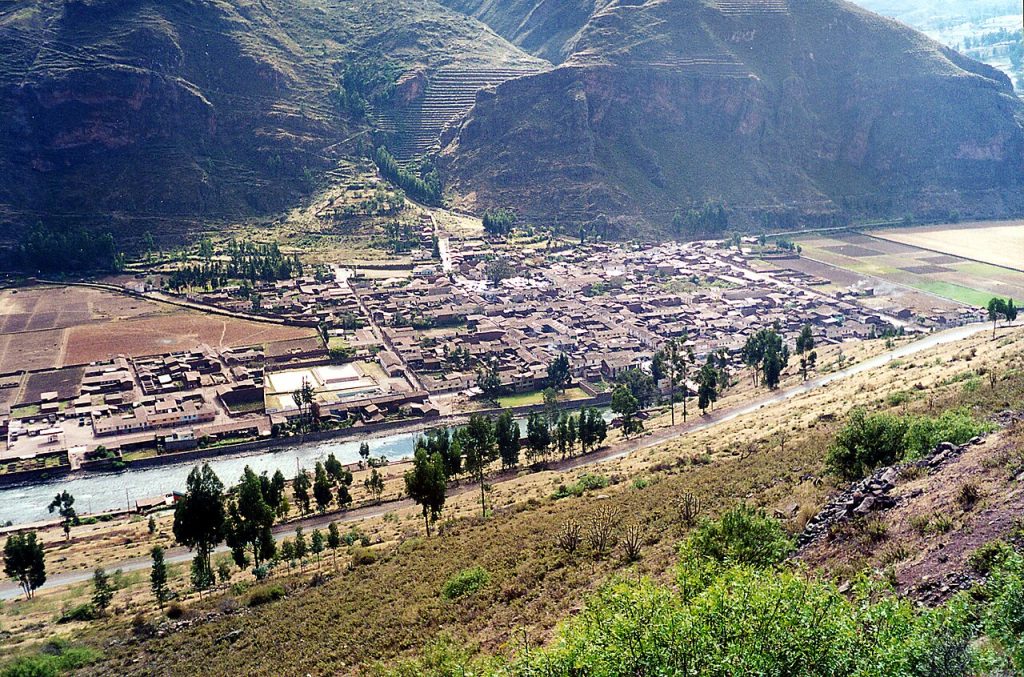
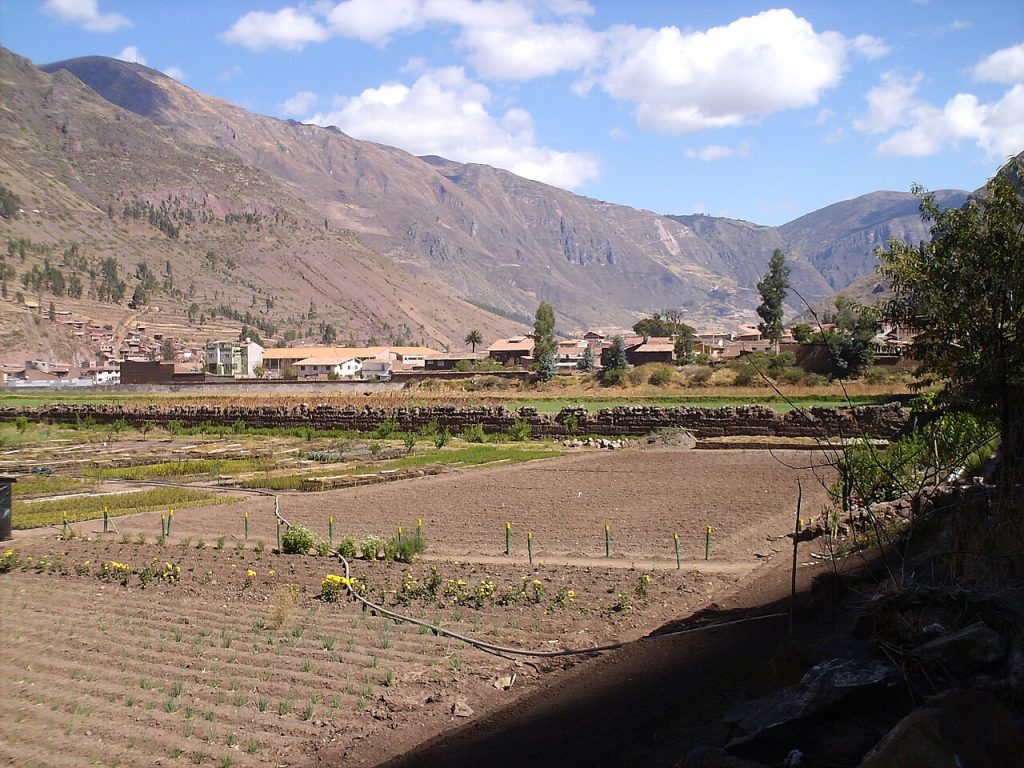
Pisac lies in the Cusco Region of southern Peru, at the eastern end of the Sacred Valley. More precisely, it sits on the banks of the Urubamba River, at nearly 3,000 meters above sea level. In addition, the city of Cusco is only about an hour away by road.
Why Visit Pisac, Peru?
First, the Inca site above the town is huge, beautiful and much less crowded than Machu Picchu. Second, the market is one of the best places in Peru to shop for textiles, ceramics and silver. Also, the town itself is relaxed, with cafés, small guesthouses and wood fired bread ovens.
Finally, Pisac is a great base for exploring the Sacred Valley. As a result, many travelers spend a night or two here before heading on to Ollantaytambo and Machu Picchu.
Exploring the Inca Citadel
The Agricultural Terraces
The terraces of Pisac are the first thing you notice. Built along the steep slopes, they turned the mountain into fertile farmland. Moreover, they helped control erosion and created warmer growing conditions for crops such as maize and potatoes.
The Temple Area
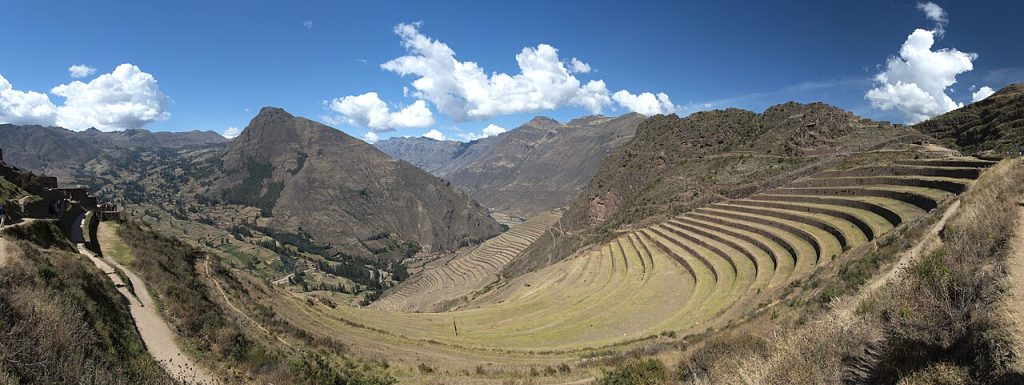
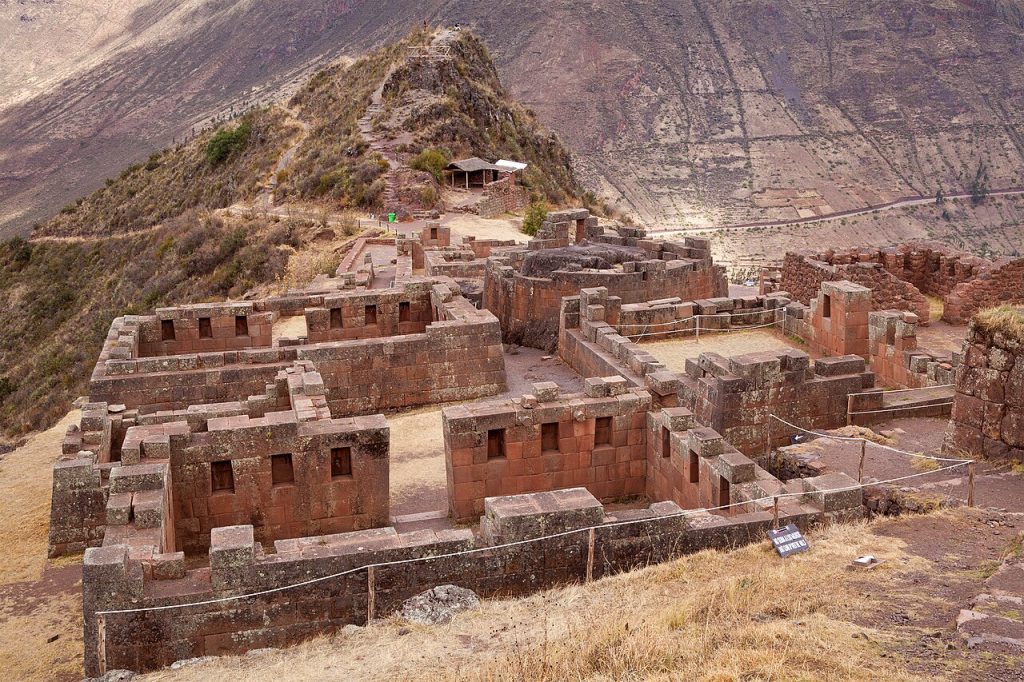
Higher up, the ceremonial sector holds some of the finest stonework in the region. Here, the Inca builders fitted large stones together without mortar. In particular, look for the sun temple area, where a carved rock was likely used for rituals and astronomy.
The Cliff Tombs
Across the gorge from the main ruins, the cliff face is dotted with small holes. In fact, these were Inca burial sites. Although they were looted long ago, they are a powerful reminder of how important this place once was.
The Pisac Market
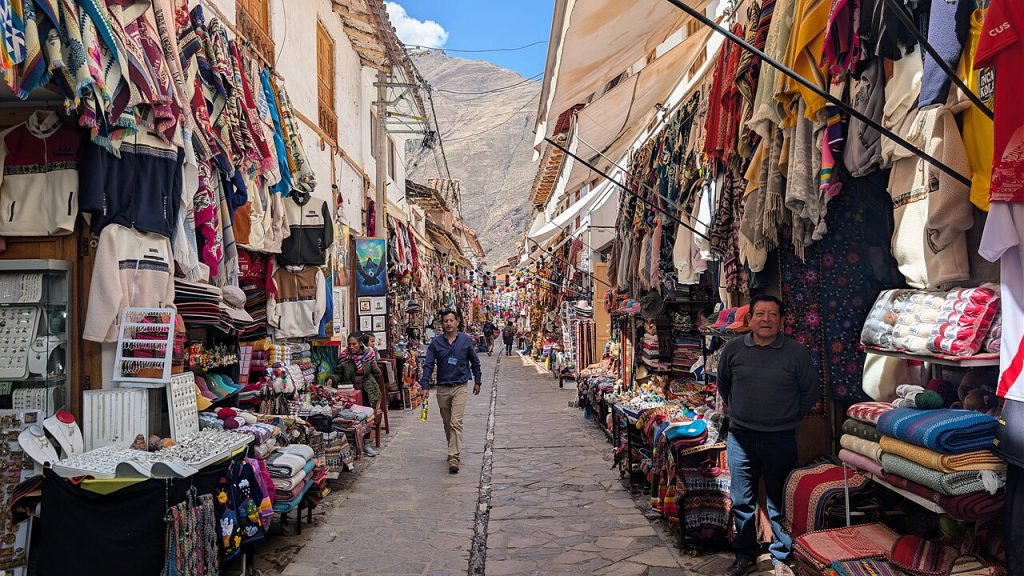
The Pisac market fills the main square and the streets around it. Stalls sell alpaca sweaters, woven blankets, ceramics, jewelry and all kinds of souvenirs. Prices are usually reasonable, and friendly bargaining is normal.
The market runs every day. However, Sunday is the biggest and most colorful day, when people from nearby villages come to sell fruit, vegetables and grains. After shopping, try a fresh empanada or a loaf of bread from one of the traditional clay ovens in town.
Around Pisac and the Sacred Valley
Hiking to the Ruins
From the Town
You can hike up to the ruins from the town on a steep stone path. The climb takes around one and a half to two hours. Alternatively, take a taxi up the road and walk back down through the terraces, which is much easier at this altitude.
Day Trips in the Sacred Valley
Ollantaytambo
Ollantaytambo is a living Inca town further west in the valley. Its massive terraces and old streets make it one of the highlights of the region.
Moray and Maras
Moray is a set of circular Inca terraces that may have served as an agricultural laboratory. Nearby, the salt pans of Maras cover a hillside with hundreds of white pools.
One Historical Fact About Pisac, Peru
Most historians believe that the Inca emperor Pachacuti built the citadel after 1440. It probably served as a royal estate, a fortress, an observatory and a religious site. Surprisingly, none of the Spanish chroniclers mentioned it, despite its size. Later, in the 1570s, Viceroy Francisco de Toledo founded the modern town in the valley below the ruins.
How to Get to Pisac, Peru
The nearest airport is in Cusco, which has flights from Lima and other Peruvian cities. From Cusco, frequent colectivos and buses reach Pisac in about an hour. Alternatively, a taxi or private driver is more comfortable.
To visit the ruins, you need the Cusco tourist ticket, called the boleto turístico. Also, remember that you are at high altitude, so walk slowly and drink plenty of water.
Best Time to Visit Pisac, Peru
The best time to visit is during the dry season, from May to September. During these months, the skies are clear, and the trails are in good condition. However, nights can be very cold.
In contrast, the rainy season, from December to March, brings frequent showers. Nevertheless, the valley is green and beautiful, and there are fewer tourists.
Is Pisac, Peru Worth Visiting?
Yes, absolutely. Pisac combines remarkable Inca ruins, a vibrant market and a relaxed small town atmosphere. Moreover, it is easy to reach from Cusco. In short, it is one of the best stops in the Sacred Valley.
Final Thoughts
Pisac, Peru is a place where Inca history and living Andean culture meet. So, climb the terraces, browse the market and enjoy fresh bread from a clay oven. In the end, you will understand why the Sacred Valley is so special.
Planning a longer trip? You can also pair this visit with our guides to Ollantaytambo, Cuenca and Sucre.
Image Credits
Wikimedia Commons
- Pisac Terraces: Photo by Ricardo Sánchez via Wikimedia Commons (CC BY 2.0)
- Pisac and the Sacred Valley: Photo by Xauxa, Håkan Svensson via Wikimedia Commons (CC BY 2.5)
- Knitwear Shops in Pisac: Photo by H.dav.are via Wikimedia Commons (CC BY-SA 4.0)
- Pisac Ruins: Photo by Unukorno via Wikimedia Commons (CC BY 3.0)
- Panorama of the Pisac Ruins: Photo by Chensiyuan via Wikimedia Commons (CC BY-SA 3.0)
- Farming Area in Pisac: Photo by TonjeGram via Wikimedia Commons (CC BY-SA 4.0)