Few destinations on earth carry the weight of centuries the way Lalibela does. High in the Ethiopian Highlands, at roughly 2,500 meters above sea level, this small town in northern Ethiopia holds eleven rock-hewn churches. Builders carved each one directly from solid volcanic rock more than 800 years ago. For millions of Ethiopian Orthodox Christians, Lalibela Ethiopia is not just a travel destination. It is the holiest place on earth outside of Jerusalem itself. Even for visitors with no religious connection, arriving here feels like stepping into something that defies easy explanation.
So, this guide covers the best things to do in Lalibela, along with tips on how to get there and when to visit Lalibela.
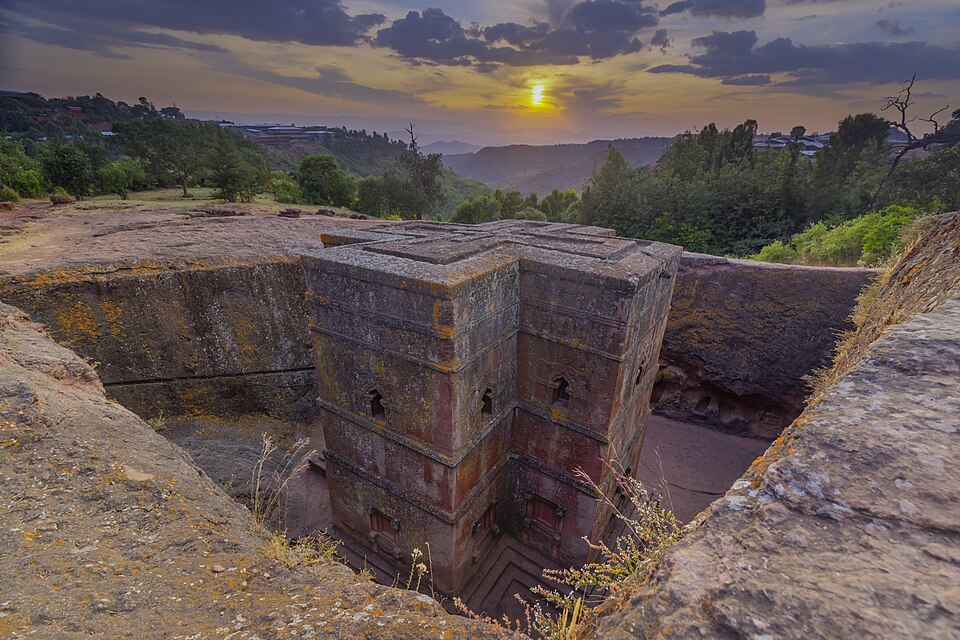
Quick Facts About Lalibela, Ethiopia
| Country | Ethiopia |
| Region | Amhara Region, Northern Ethiopia |
| Known For | Rock-hewn churches, UNESCO World Heritage Site, Ethiopian Orthodox pilgrimage |
| UNESCO Status | UNESCO World Heritage Site (inscribed 1978) |
| Built | 12th to 13th centuries under King Lalibela |
| Best Time to Visit | October to March; January for Timkat festival |
| Time Needed | One to two full days |
| Continent | Africa |
Where is Lalibela Ethiopia?
Lalibela sits in the Amhara Region of northern Ethiopia, in the Lasta Mountains roughly 2,500 meters above sea level. It lies about 645 kilometers north of Addis Ababa, in one of the most dramatically scenic highland zones on the continent. Furthermore, the town’s remote location has helped preserve its character for centuries. In addition, the nearest large town, Woldia, is about 170 kilometers away. As a result, most international visitors arrive by air at Lalibela Airport, served by Ethiopian Airlines from the capital.
Why Visit Lalibela Ethiopia?
Lalibela Ethiopia is the kind of place that changes your sense of what human beings can achieve. Builders carved eleven churches entirely from solid rock between the 12th and 13th centuries. They used no modern tools or machinery. Indeed, the sheer scale of the achievement is staggering. Moreover, what makes visiting Lalibela truly different from almost any other heritage site in the world is that these churches still serve as active places of worship. Priests conduct dawn liturgies in Ge’ez. Pilgrims travel for days on foot to pray here. The ancient and the living share the same space without any tension between them.
Beyond the churches, Lalibela offers the Ethiopian Highlands at their most dramatic. Additionally, a village culture moves at its own unhurried rhythm, and one of the most visually intense religious festivals on earth awaits visitors who time their trip for Timkat in January. Few places in Africa deliver this density of meaning in such a compact and accessible setting.
For more incredible African travel destinations, explore our full destinations guide.
The Rock-Hewn Churches of Lalibela Ethiopia
Builders divided the eleven rock-hewn churches of Lalibela Ethiopia into two main clusters: the northern group and the southeastern group. A network of tunnels, trenches, and ceremonial passageways carved from the same volcanic rock links them together. A third church, Bete Giyorgis, stands apart to the southwest. Together, therefore, they form one of the most remarkable architectural complexes on earth and the centerpiece of the Lalibela UNESCO World Heritage Site, inscribed in 1978.
Bete Giyorgis: The Crown of Lalibela
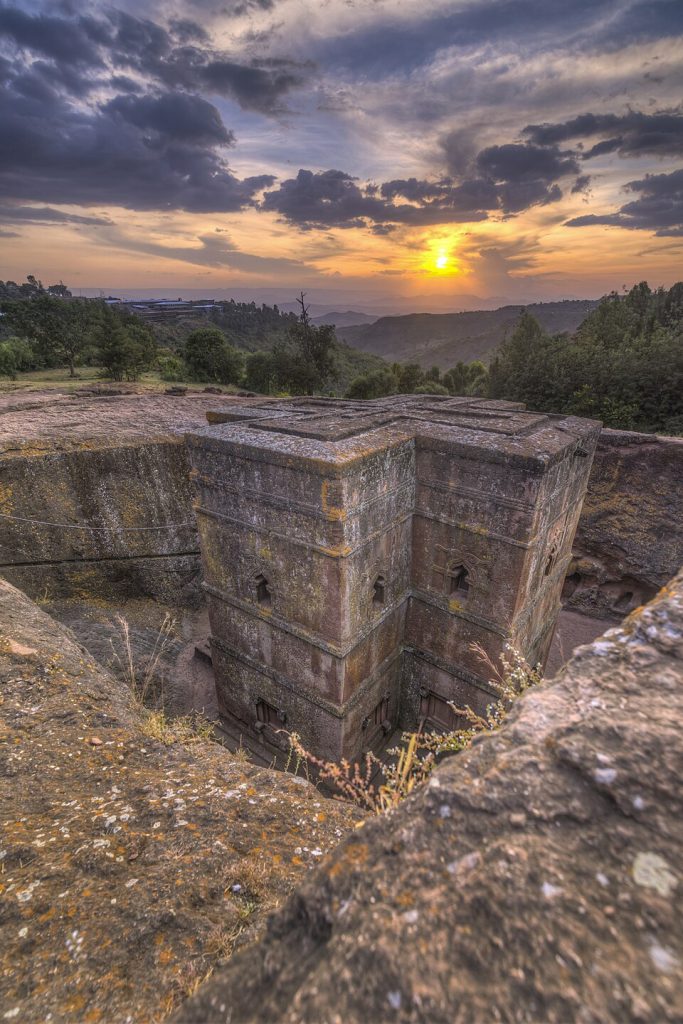
Of all the structures in the complex, Bete Giyorgis defines Lalibela Ethiopia in the eyes of the world. King Lalibela dedicated it to Saint George, the patron saint of Ethiopia, reportedly as an act of gratitude after a victorious battle. The church descends about twelve meters into the earth, its roof flush with the surrounding ground.
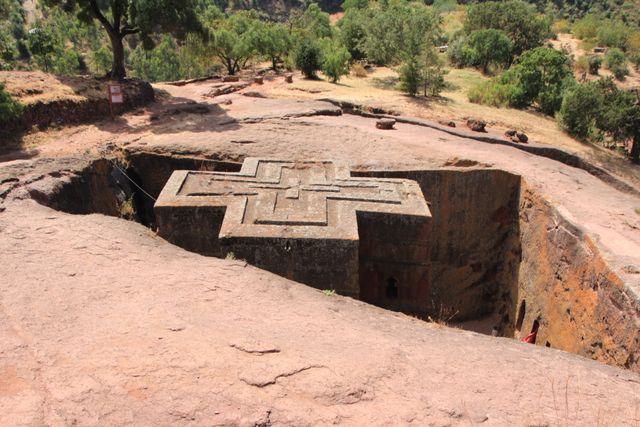
From above, three nested Greek crosses carved in relief into the roof are visible, each one perfectly proportioned inside the other. Furthermore, the exterior walls carry additional cross patterns. A narrow moat runs around the base of the structure to channel rainwater away from the foundations.
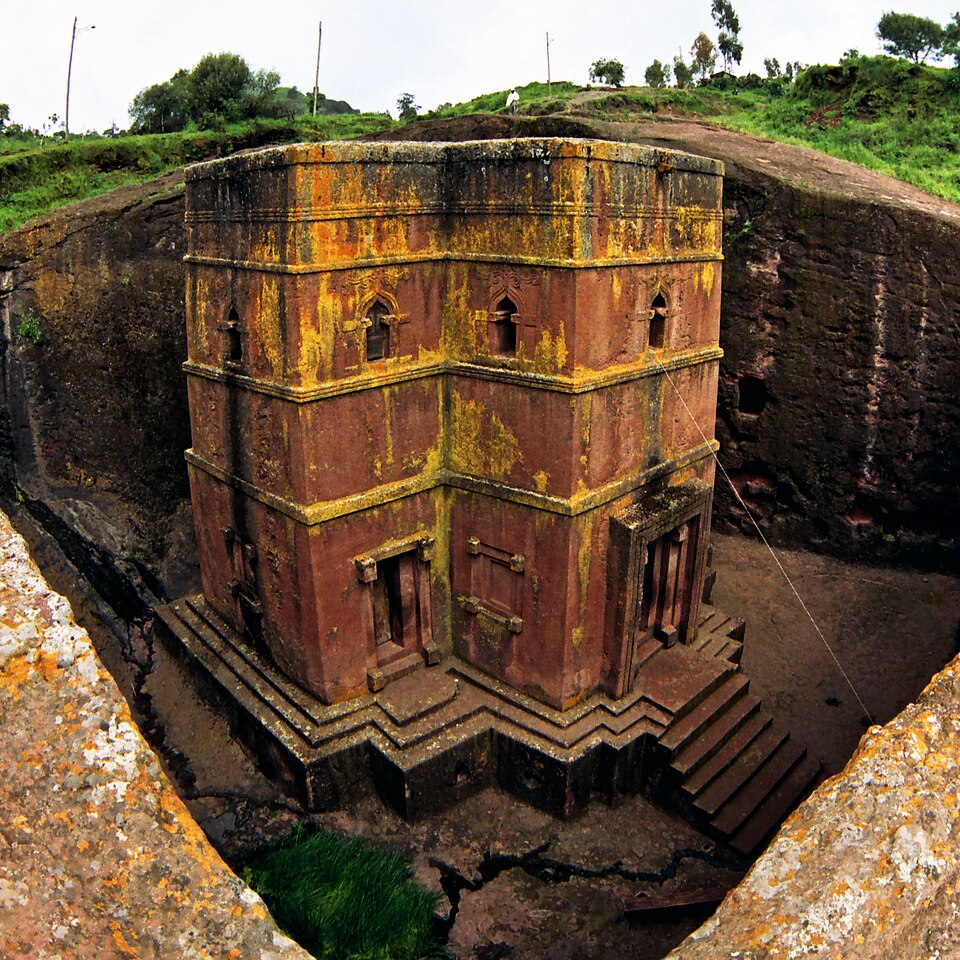
At ground level, the scale of the excavation becomes physical. The trench surrounding the church is deep enough to make the building feel simultaneously massive and intimate. Centuries of moss and lichen cover the stone, shaped by highland rains into something that looks as though it grew here rather than was cut. At sunset, warm light falls into the trench and catches the textured surface of the rock. Consequently, Bete Giyorgis becomes one of the most visually extraordinary sights in Africa.
The Northern and Southeastern Clusters
The northern cluster contains Bete Medhane Alem, the largest church in the complex and believed to be the largest rock-hewn church in the world. Its roof rests on 36 pillars carved from the same mass of rock as the floor and walls. Nearby, Bete Maryam ranks among the oldest churches at the site. In particular, it contains some of the most intact medieval frescoes in Ethiopia, painted directly onto the carved stone interior.
A narrow tunnel cut through the rock leads to the southeastern cluster, which includes churches that are partly cave-cut and partly free-standing monolith. Walking through passages so narrow that shoulders brush both walls adds a quality of physical intimacy that open-air heritage sites rarely achieve.
Inside the Stone Walls
The interiors of the Ethiopian Orthodox churches at Lalibela are dim, candlelit spaces. Carved stone surrounds visitors everywhere: columns, arches, benches, altars, and the floor beneath bare feet all emerge from the same unbroken rock. Moreover, ancient frescoes in blues, reds, and ochres cover sections of the walls, depicting biblical scenes and saints in a style rooted in the pre-Renaissance Ethiopian artistic tradition.
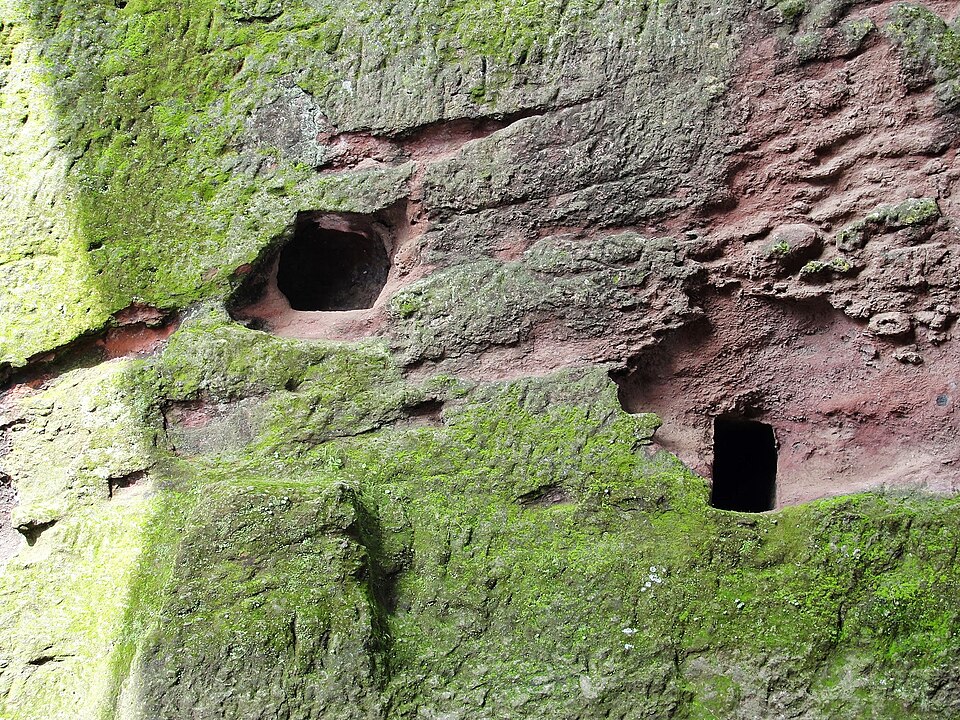
Carved openings in the rock faces admit only enough light to make the darkness legible rather than to illuminate it fully. This quality of restrained light is not accidental. Instead, it creates the atmosphere these spaces were designed to produce: the sense of entering something buried, ancient, and sacred.
Ethiopian Orthodox Faith and the Lalibela Pilgrimage
To visit Lalibela without understanding Ethiopian Orthodox Christianity is to miss what the place truly is. The Ethiopian Orthodox Tewahedo Church traces its origins to the 4th century and maintains a theology and liturgical tradition entirely its own. Moreover, the churches of Lalibela are not monuments to a faith that once existed here. They are the active center of a living religion.
Priests wake before dawn to conduct morning liturgies in Ge’ez, the ancient Semitic language of the church. Additionally, deacons in embroidered robes carry processional crosses and ceremonial umbrellas through the passages between churches. Frankincense burns through the stone corridors at all hours. The narrow rock-cut passageways connecting the churches are not tourist walkways. They are the daily arteries of a community that has worshipped here without interruption for eight centuries.
The Lalibela pilgrimage tradition brings hundreds of thousands of believers to the town each year. Timkat, the Ethiopian Orthodox celebration of Epiphany held each January, transforms Lalibela into one of the most extraordinary religious gatherings in the world. Furthermore, pilgrims travel for days on foot from villages across northern Ethiopia, arriving in white shammas, the thin cotton wrap that is the universal garment of Orthodox devotion.
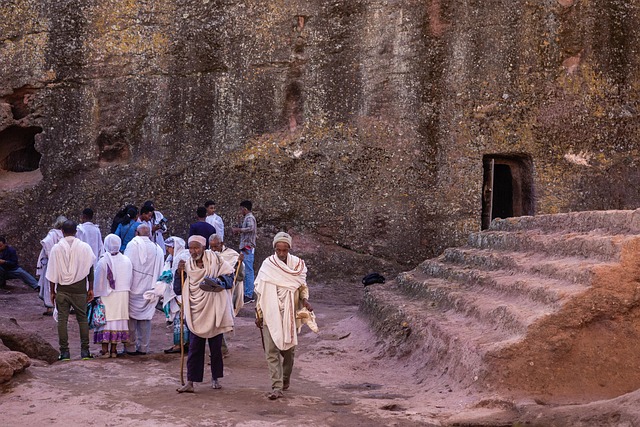
Seeing thousands of pilgrims in white moving through the red rock trenches and terraced hillsides is an image that stays long after leaving. Indeed, it is a reminder that Lalibela Ethiopia is not a relic of a lost civilization but an active, unbroken expression of faith.
The Role of Priests and Deacons
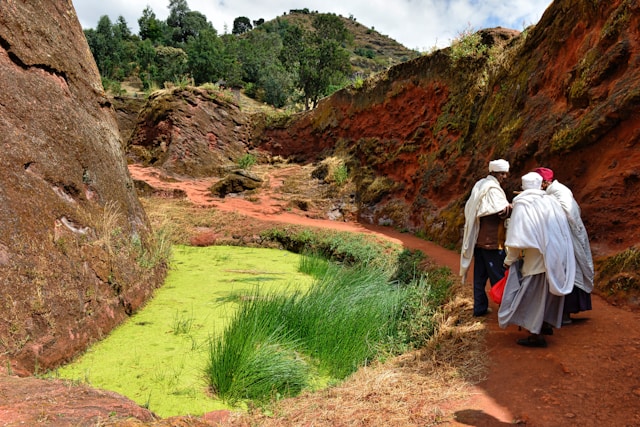
The priests and deacons of Lalibela Ethiopia are not ceremonial figures. They are the living keepers of one of the world’s oldest Christian traditions. Each priest undergoes years of training in Ge’ez scripture, liturgical chant, and church law before taking up his role at the complex. Moreover, many come from families who have served the churches for generations, passing knowledge from father to son in an unbroken line that stretches back centuries. Visiting during morning liturgy, therefore, means witnessing something that has continued largely unchanged since the churches were first carved from the rock.
What to Expect as a Visitor
Visitors to the churches of Lalibela Ethiopia are welcome, but respectful conduct is essential. Consequently, shoes must be removed before entering any of the church buildings, and modest clothing that covers shoulders and knees is expected. Photography inside the churches is sometimes restricted, so always ask permission before raising a camera. Furthermore, engaging quietly and respectfully with priests or pilgrims can lead to some of the most meaningful moments of the entire visit. Lalibela rewards those who approach it with humility and genuine curiosity rather than simply moving through as tourists.
Lalibela’s Highland Landscape and Village Life
The Ethiopian Highlands Setting
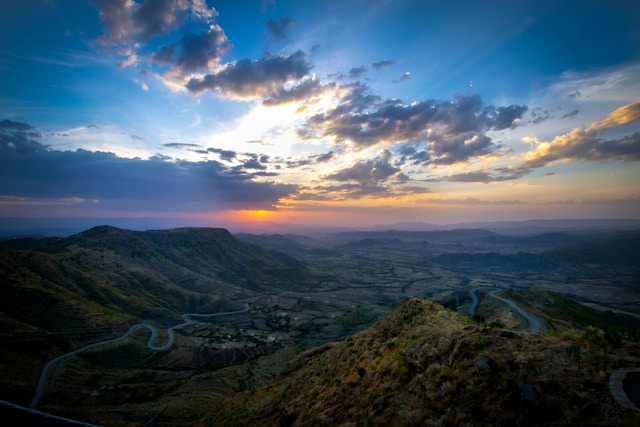
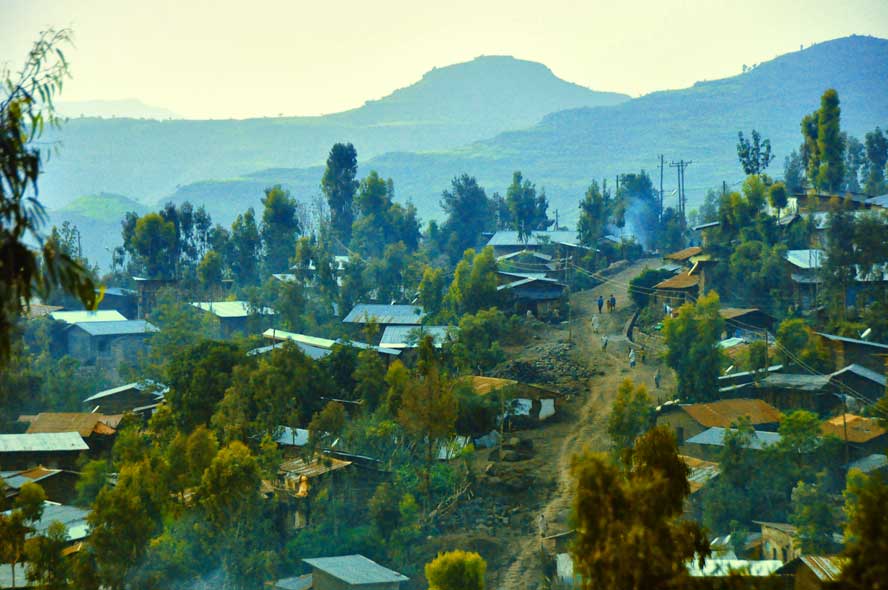
The setting of Lalibela is inseparable from its power. The town sits on a ridge in the Lasta Mountains at over 2,500 meters, surrounded by deep valleys, layered escarpments, and a quality of highland light that photographers find difficult to leave behind.
Morning Mist and High-Altitude Light
Early mornings in Lalibela often bring a soft mist that settles across the highlands, blurring the boundary between the red earth and green hillsides. The air is cool and the light diffused. As a result, the town feels genuinely unhurried in a way that lowland places rarely manage. This combination of altitude, mist, and quiet is one reason visitors consistently describe Lalibela as one of the most atmospherically distinct places they have ever visited.
Views from the Ridges
The ridges above town offer sweeping panoramas across the Lasta Mountains and the valleys below. On clear days, for instance, the views extend for dozens of kilometers. Standing above the town and looking out across the highland landscape gives a sense of the geography that is impossible to get from ground level alone.
Village Life Around the Churches
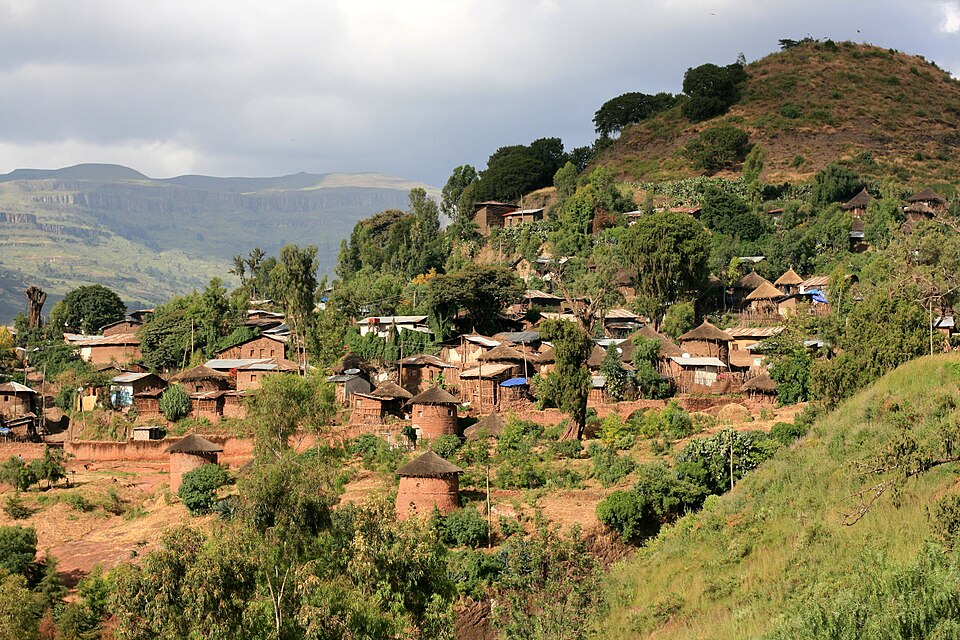
The town around the church complex is as much a part of Lalibela as the churches themselves. Traditional round tukul homes step up the hillsides in dense organic clusters separated by narrow paths and low stone walls.
From a distance, the village blends naturally into the earth tones of the surrounding landscape: ochre, sienna, and deep red against the green of eucalyptus and highland scrub. Similarly, markets draw farmers and traders from surrounding villages into town several days a week. The pace of life here follows agricultural seasons and religious calendars more than tourism schedules. That quality of everyday purpose gives the town a texture that purely touristic places tend to lack.
A Community Shaped by Faith and Tradition
Life in Lalibela Ethiopia revolves around the church calendar. Consequently, religious observances shape the rhythm of daily life more than any other force. Residents wake early for morning prayers, and the sound of liturgical chanting drifts through the town at all hours. Furthermore, the community has maintained these traditions without interruption for centuries, giving the town a spiritual depth that visitors feel immediately upon arrival.
Markets, Crafts, and Everyday Life
Beyond the churches, the weekly market is one of the best places to experience everyday life in Lalibela Ethiopia. Farmers, traders, and craftspeople gather from surrounding villages to sell produce, spices, textiles, and handmade goods. Moreover, local artisans produce traditional Ethiopian crosses, woven baskets, and religious items that reflect the town’s deep cultural heritage. Stopping at the market is therefore one of the most rewarding ways to connect with the community beyond the church complex.
One Historical Fact About Lalibela Ethiopia
According to Ethiopian Orthodox tradition, King Gebre Mesqel Lalibela received a divine vision instructing him to build a new Jerusalem in Ethiopia. The town’s name derives from an Agaw-language phrase meaning “the bees recognize his sovereignty.” Specifically, this refers to a swarm of bees said to have surrounded the king at birth, interpreted as a sign of his destined greatness. Whether builders completed the churches entirely during his reign or over a longer period remains a subject of ongoing historical research. However, the king’s name has bound itself to the site for so long that separating one from the other is now impossible.
How to Get To Lalibela Ethiopia
Ethiopian Airlines operates regular flights between Addis Ababa Bole International Airport and Lalibela Airport. The flight takes approximately one hour. The airline also offers connections from other Ethiopian cities. Lalibela Airport is small but well-maintained for domestic traffic. From the airport, the town center is about 25 kilometers away. Visitors reach it by minibus or private vehicle.
For those traveling overland, the route from Woldia takes roughly four to six hours on mountain roads depending on conditions. The drive is scenic but demanding. Therefore, most international visitors find the flight the more practical option given the distances involved.
Best Time to Visit Lalibela Ethiopia
The best time to visit Lalibela Ethiopia is between October and March, during the dry season. The weather is mild, the roads are passable, and consequently the highland landscape is clear and photogenic. January is the most spectacular month to visit if you can coincide with Timkat, the Ethiopian Orthodox Epiphany festival. However, accommodation fills up quickly and needs booking several months in advance.
July and August fall within the main rainy season. Heavy rainfall makes the rock-cut passages muddy and some areas difficult to navigate. That said, the highland landscape turns intensely green during this period. Additionally, the number of visitors drops significantly. Travelers who prioritize atmosphere over convenience may find the wet season worthwhile.
Is Lalibela Ethiopia Worth Visiting?
Without hesitation, yes. Lalibela Ethiopia is not simply another historic site. It is a living religious landscape unlike anything else on earth. It combines architectural achievement, natural beauty, and unbroken spiritual tradition in a way that is genuinely rare. The rock-hewn churches of Ethiopia belong in the same category as the Pyramids or Angkor Wat in terms of scale and improbability. Moreover, they remain active places of worship rather than open-air museums, which gives them a dimension that purely archaeological sites cannot replicate.
Nevertheless, the journey requires some effort, which is itself part of the reward. Lalibela has shaped centuries of pilgrims who considered the effort of getting here to be part of the meaning of arriving. That context does not disappear just because you came by plane.
Final Thoughts on Lalibela
Lalibela Ethiopia stays with you. The image of Bete Giyorgis descending into its rock trench, the sound of dawn liturgy echoing through stone corridors, the sight of white-robed pilgrims moving through a highland landscape unchanged for centuries — these impressions do not fade quickly. Whether you come for the architecture, the faith, or the landscape, Lalibela ultimately delivers something impossible to forget.
If you enjoy ancient sacred sites, you may also love Monsanto Portugal, another destination where history and landscape feel deeply intertwined.
Image Credits
- Sunset at the Church of Saint George, Lalibela — Thomas Fuhrmann, CC BY-SA 4.0, via Wikimedia Commons
- Aerial view of the Church of Saint George —Photo by Ludo Van den Nouweland from Pexels
- Carved facade of Bete Giyorgis in its rock-cut trench — Dr. Ondřej Havelka (cestovatel), CC BY-SA 4.0, via Wikimedia Commons
- The Church of Saint George at golden hour — Thomas Fuhrmann, CC BY-SA 4.0, via Wikimedia Commons
- Ethiopian Highlands panorama near Lalibela — Photo by mulugeta wolde on Unsplash
- Orthodox priests walking through a rock-cut passage — Photo by Volker Repke on Unsplash
- Morning mist over Lalibela and the highlands — Rod Waddington from Kergunyah, Australia, CC BY-SA 2.0, via Wikimedia Commons
- Moss-covered rock face with carved openings at the church complex — MarcD., CC BY-SA 3.0, via Wikimedia Commons
- Ethiopian Orthodox pilgrims gathered at Lalibela — Image by D Mz from Pixabay
- Hillside village with traditional tukul homes near Lalibela — Damien Halleux Radermecker, CC BY-SA 2.0, via Wikimedia Commons


.jpg)
.jpg)
