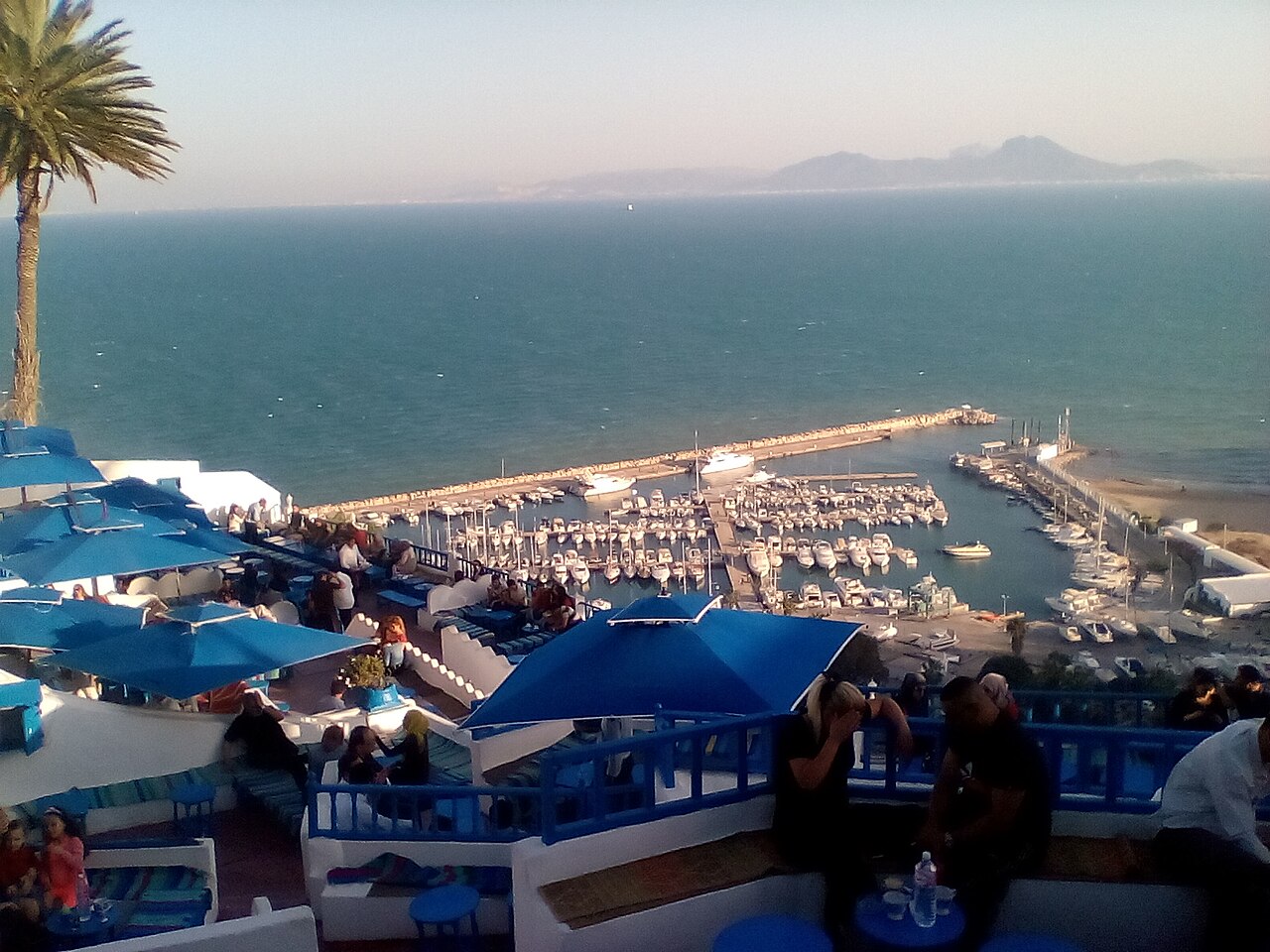
Sidi Bou Said is one of the most beautiful villages in the Mediterranean. Perched on a cliff above the Gulf of Tunis, it is a maze of whitewashed houses with bright blue doors, shutters and window grilles. Meanwhile, bougainvillea spills over the walls, and the scent of jasmine drifts through the lanes. In addition, cafés with sea views invite you to linger over mint tea. In fact, it feels like a postcard come to life. So, here is how to plan your visit.
Quick Facts About Sidi Bou Said
| Country | Tunisia |
| Region | Tunis Governorate, on a cliff above the Gulf of Tunis |
| Known For | Blue and white houses, studded doors, cliffside cafés and Mediterranean views |
| UNESCO Status | Not listed, though nearby Carthage is a UNESCO World Heritage Site |
| History | Named after the Sufi saint Abu Said al-Baji, who lived here in the 1200s |
| Best Time to Visit | April to June and September to October |
| Getting There | About 35 minutes from central Tunis on the TGM light rail |
Where Is Sidi Bou Said?
The village lies about 20 kilometers northeast of central Tunis, the capital of Tunisia. Specifically, it sits on a headland above the sea, next to the ancient ruins of Carthage. As a result, you can easily combine both in one day. Also, the beach suburb of La Marsa is just a short walk or taxi ride away.
Why Visit Sidi Bou Said?
First, the village is simply stunning. In 1915, Baron Rodolphe d’Erlanger helped introduce rules that kept the houses white with blue details. Consequently, Sidi Bou Said Tunisia still looks remarkably unified today.
Second, the village has long attracted artists. For example, the painter Paul Klee visited in 1914 and was inspired by its light and colors. Finally, it is an easy and relaxing escape from the busy capital. If you loved our guide to Chefchaouen in Morocco, you will enjoy this other blue town in North Africa.
Things to Do in Sidi Bou Said
Wander the Blue and White Lanes
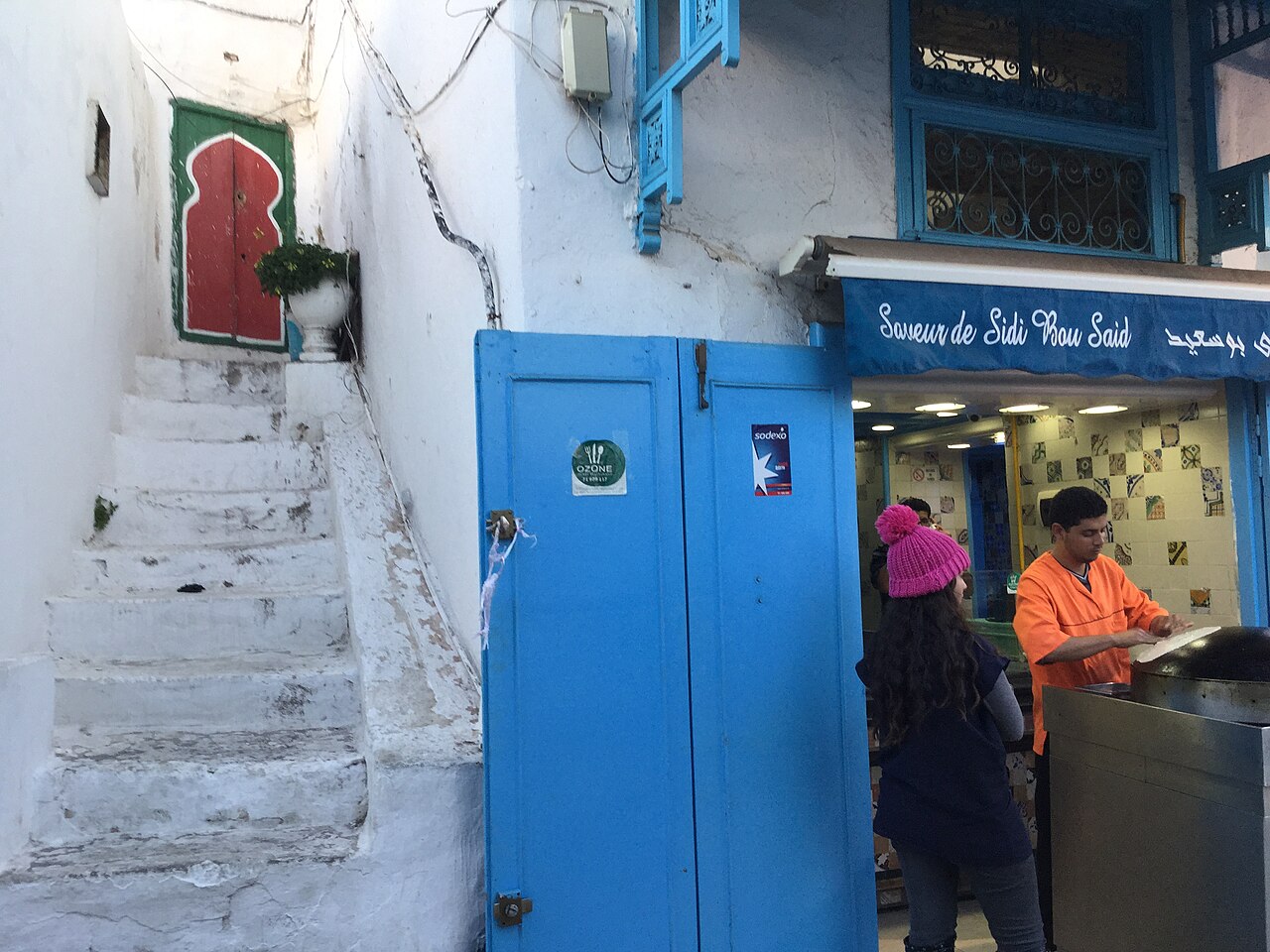
The best way to enjoy the village is to wander. Start on the main street, which climbs gently uphill past souvenir shops and cafés. Then, turn into the side lanes, where the crowds disappear. Above all, look for the studded blue doors, which often feature patterns of black nails forming stars and arches.
Admire the Famous Doors
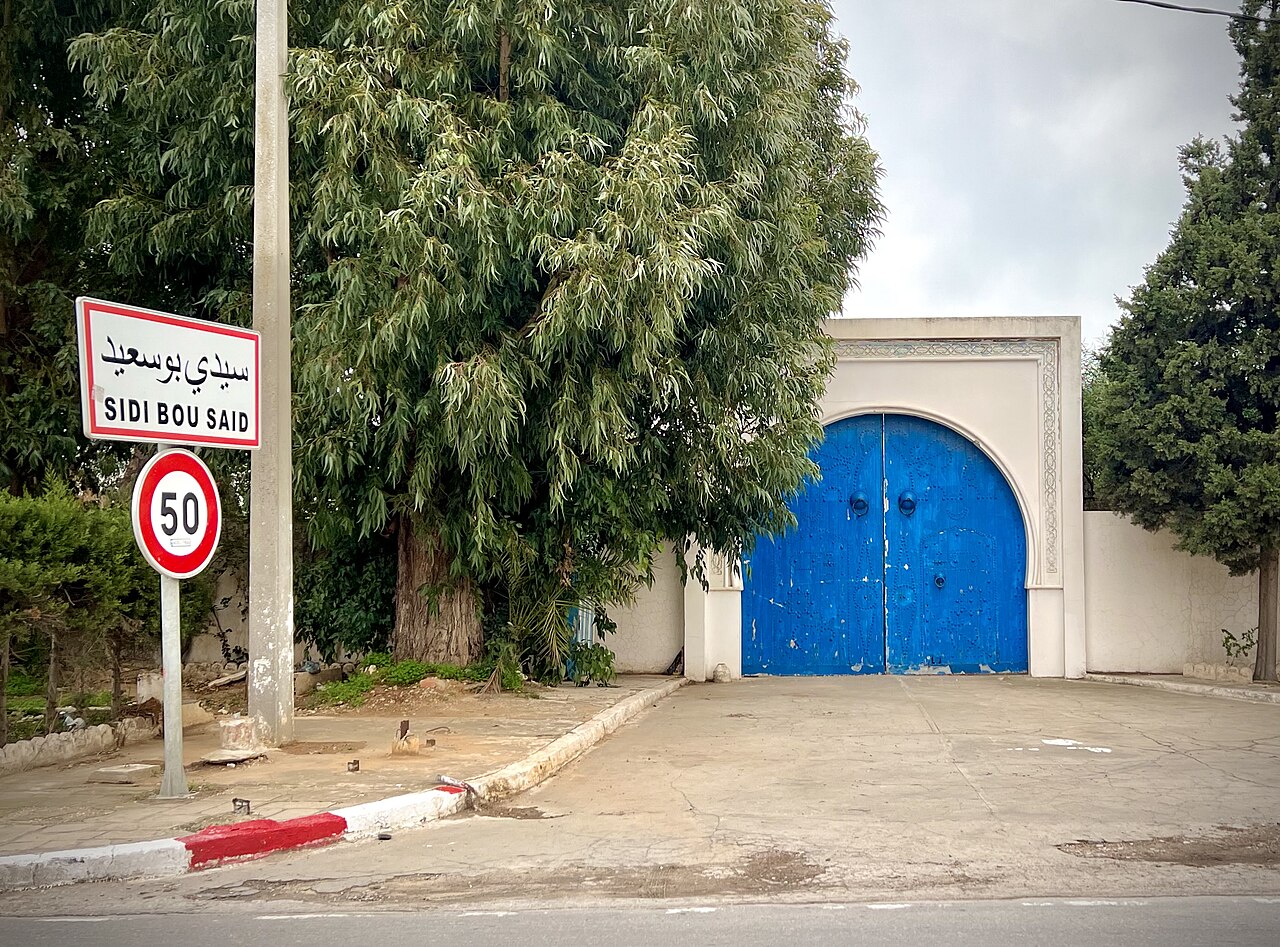
The doors of Sidi Bou Said are an art form. Many are painted bright blue or yellow, and they are decorated with metal studs. In addition, some have small knockers shaped like hands, which traditionally had different sounds for men and women visitors.
Sip Mint Tea at the Cafés
Café des Nattes sits at the top of a steep staircase and is one of the oldest cafés in the village. Similarly, Café des Délices has terraces that tumble down the cliff toward the sea. Therefore, it is the perfect place to watch the sunset with a glass of mint tea topped with pine nuts.
Visit Ennejma Ezzahra Palace
Ennejma Ezzahra was the home of Baron d’Erlanger, built in the early 1900s. Today, it houses the Centre for Arab and Mediterranean Music. Inside, you can see carved plaster, marble courtyards and a collection of musical instruments. Furthermore, the gardens offer peaceful views over the gulf.
Walk Down to the Marina
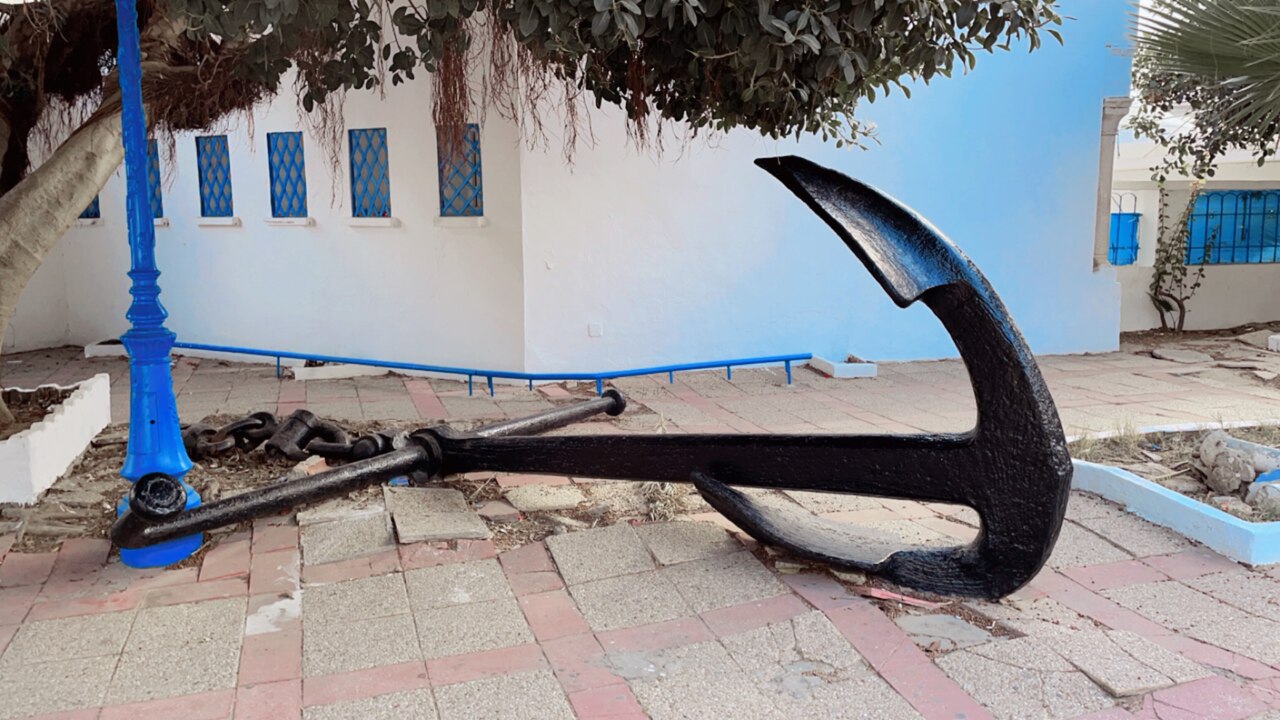
From the top of the village, a path leads down toward the sea. Along the way, you will find quiet corners and old details such as anchors and fishing gear.
Then, at the bottom, the small marina is lined with seafood restaurants. Also, try a bambalouni, a sweet fried doughnut sold from stalls along the main street.
Day Trips From Sidi Bou Said
Carthage
Carthage was once the capital of a great Mediterranean empire. Today, its ruins are scattered across the suburbs next to the village. For example, the Antonine Baths were among the largest Roman baths in Africa. In addition, Byrsa Hill and the Punic ports are well worth a visit.
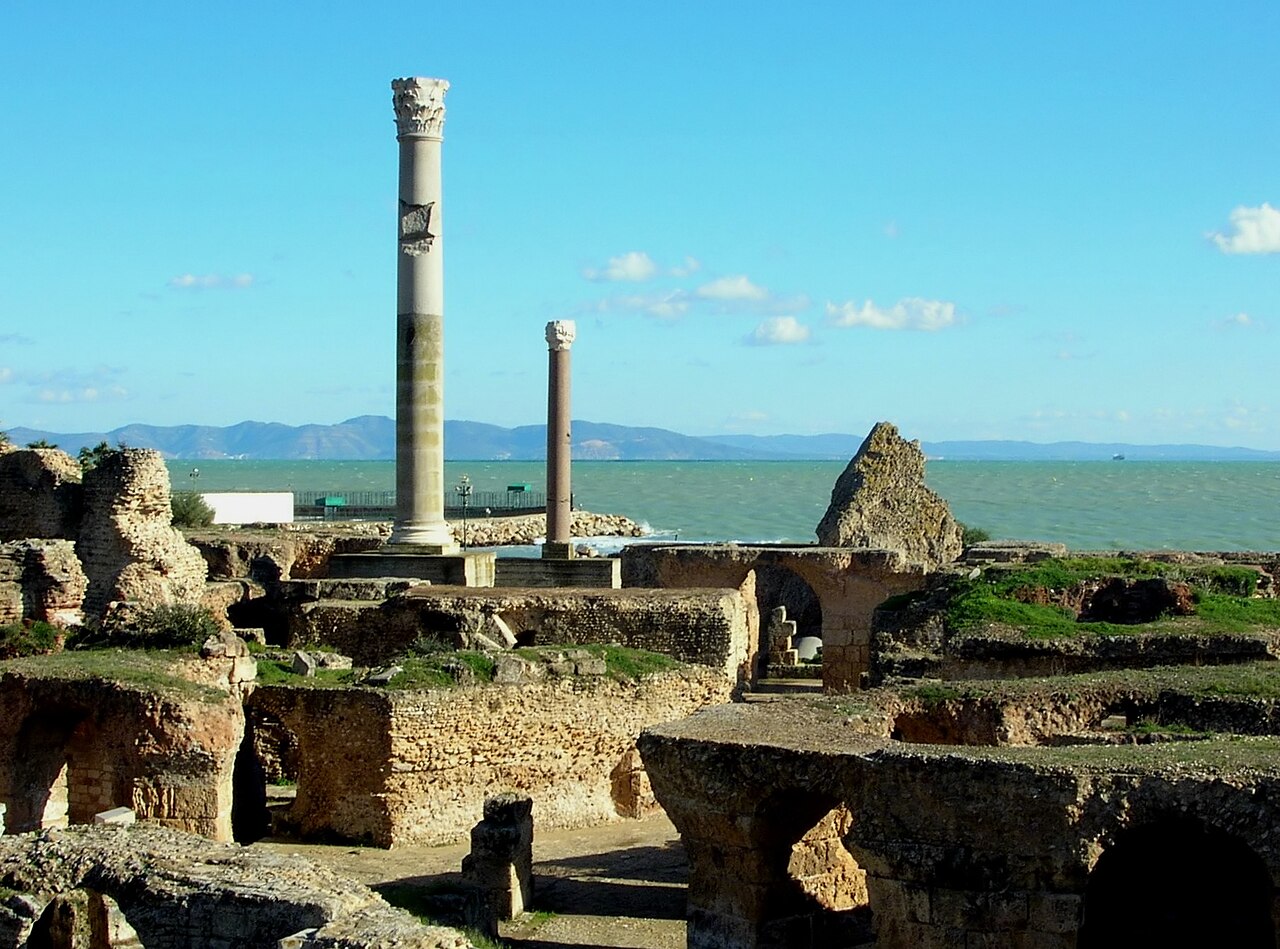
Tunis Medina and the Bardo Museum
The old medina of Tunis is a UNESCO site full of souks, mosques and palaces. Meanwhile, the Bardo Museum holds one of the finest collections of Roman mosaics in the world. Together, they make an excellent day in the capital.
One Historical Fact About Sidi Bou Said
The village takes its name from Abu Said al-Baji, a Sufi holy man who settled here in the 13th century. In fact, his shrine still stands in the village. Over time, the hilltop became a place of pilgrimage before it turned into a retreat for wealthy families and artists.
How to Get to Sidi Bou Said
First, fly into Tunis-Carthage International Airport, which is only about 20 minutes away by taxi. Alternatively, take the TGM light rail from Tunis Marine station in the city center. The ride takes about 35 minutes and offers views of the lake and coast. Then, walk uphill from the station to the village.
Best Time to Visit Sidi Bou Said
The best time to visit is in spring, from April to June, or in autumn, from September to October. During these months, the weather is warm and pleasant. On the other hand, July and August are hot and busy, especially on weekends. Therefore, arrive early in the morning or stay until evening for a calmer experience.
Is Sidi Bou Said Worth Visiting?
Yes, absolutely. Sidi Bou Said is one of the most photogenic places in North Africa, and it is easy to reach from Tunis. Ideally, spend a night in a guesthouse to enjoy the lanes after the day visitors leave. For another charming Mediterranean town, read our guide to Essaouira in Morocco.
Final Thoughts on Sidi Bou Said
In short, this village is a feast of blue and white. Wander the lanes, admire the doors and sip mint tea above the sea. By the end of your visit, you will understand why artists have been falling in love with it for more than a century.
Image Credits
Wikimedia Commons
- SirineEvangeline: Café des délices – Tunisie – sidi bou said, CC BY-SA 4.0
- Zinneke: Sidi Bou Said Street scene, CC BY-SA 3.0
- Sharon Hahn Darlin: Sidi Bou Said, Tunis Governorate, Tunisia – Gate wtih blue doors, CC BY 2.0
- Elh Katcha: L’arc de Sidi bou said, CC BY 4.0
- Bernard Gagnon: Antonine Baths, CC BY-SA 3.0


