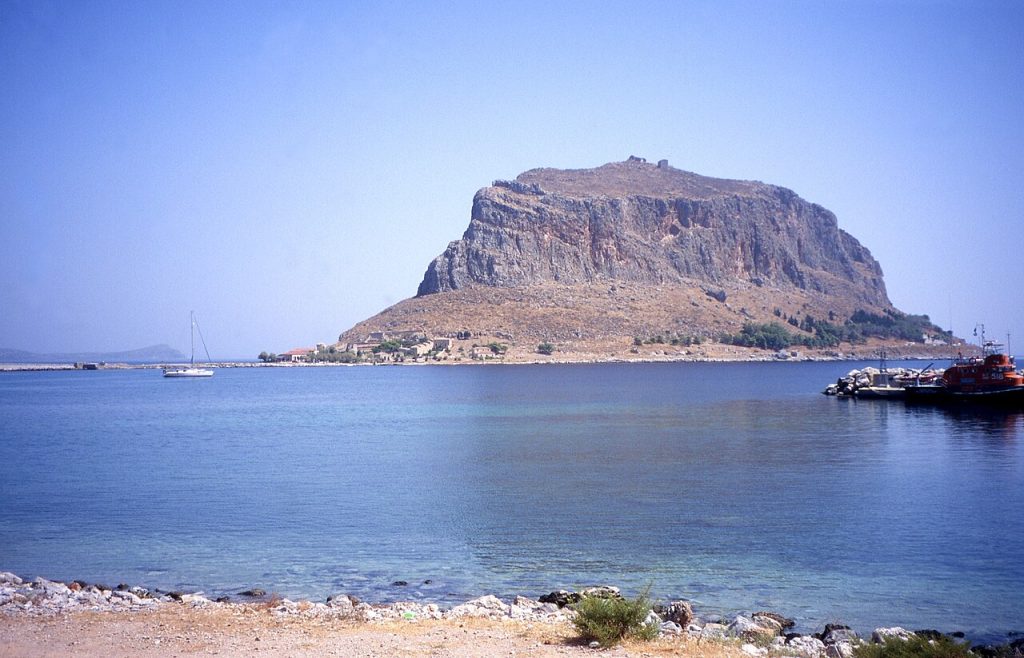
Imagine a huge rock rising out of the sea, joined to the mainland by a single bridge. From the shore, however, it looks empty. Then you walk through a narrow gate, and a whole medieval town appears, tucked into the cliffs. This is Monemvasia Greece, one of the most surprising places in the Peloponnese. In this guide, you will learn what to see, how to get there and when to go.
Quick Facts About Monemvasia, Greece
| Country | Greece |
| Region | Laconia, southeastern Peloponnese |
| Known For | A walled Byzantine town hidden on a sea rock |
| UNESCO Status | Not listed |
| Founded | 6th century AD |
| Best Time to Visit | April to June and September to October |
| Time Needed | One to two days |
| Continent | Europe |
Where Is Monemvasia in Greece?
Monemvasia sits off the southeastern coast of the Peloponnese, in the region of Laconia. The town lies about 285 kilometers south of Athens. Meanwhile, a short bridge links the rock to the modern village of Gefyra on the mainland.
In fact, the rock itself is roughly 300 meters high and about 1.8 kilometers long. Because the town hides on the seaward side, you cannot see it from the mainland at all. As a result, sailors once called the rock the “Gibraltar of the East.”
Why Visit Monemvasia, Greece?
First of all, Monemvasia feels like a secret. Cars cannot enter the castle town, so the only sounds are footsteps, church bells and the sea. In addition, the stone houses have been carefully restored, and many now hold small hotels, tavernas and cafes.
Second, history is everywhere. You can see Byzantine churches, Venetian walls and an Ottoman mosque within a few minutes’ walk. Finally, the views are spectacular. From the Upper Town, the Myrtoan Sea stretches in every direction. For travelers who love charming towns and hidden gems, Monemvasia is hard to beat.
Exploring the Castle Town of Monemvasia
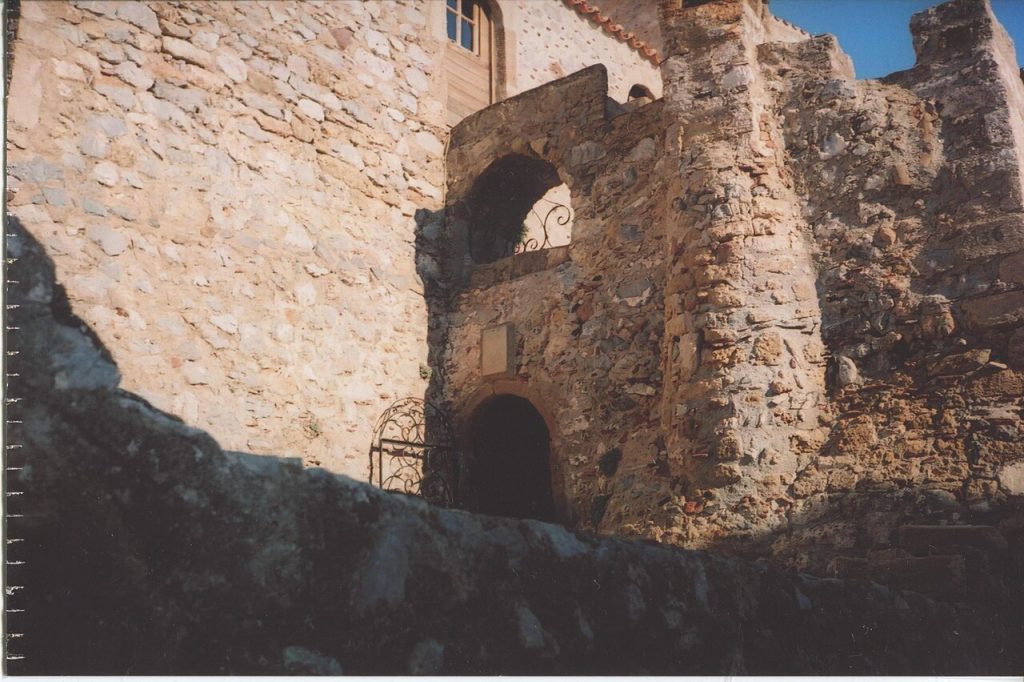
The name Monemvasia comes from two Greek words that mean “single entrance.” Even today, there is still only one way in. Once inside, however, the town divides into two very different parts.
The Lower Town
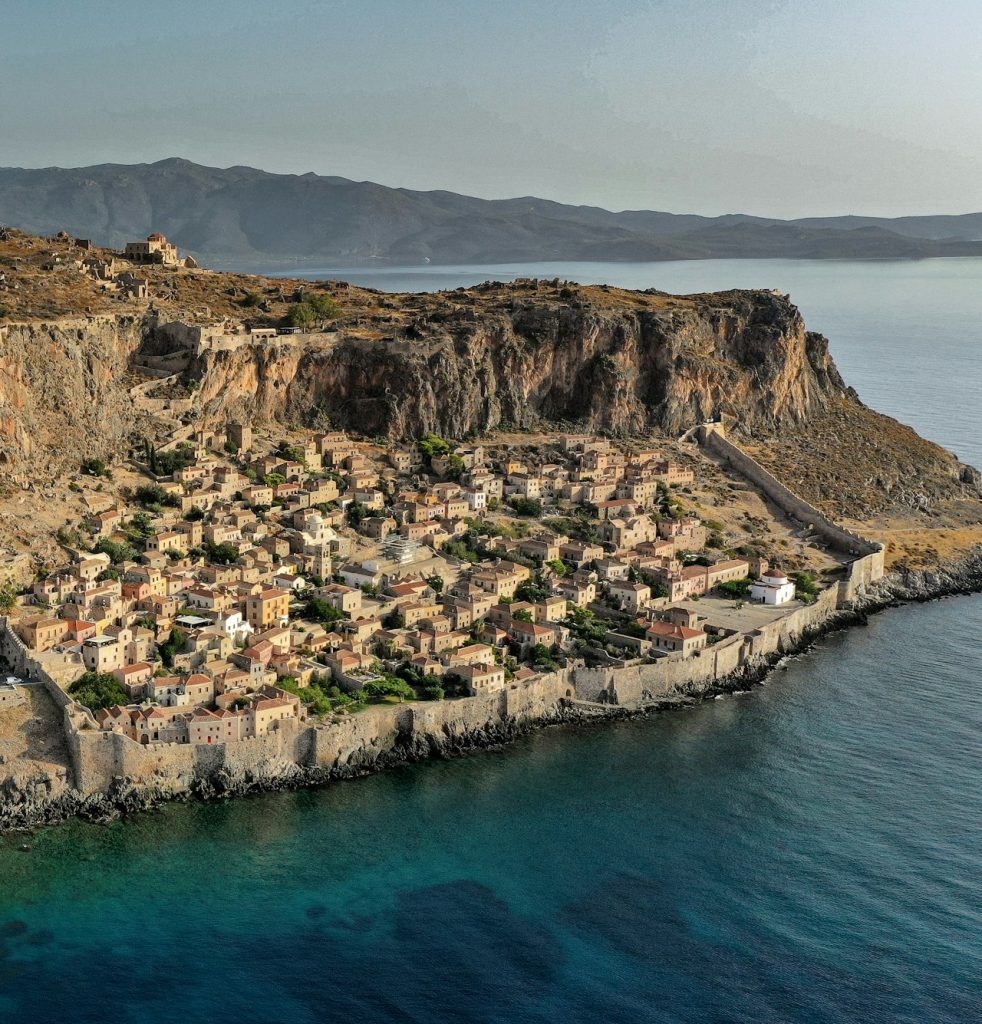
Today, people still live and work in this part of town. First of all, follow the main street, sometimes called the Middle Street, from the gate to the main square. Along the way, you pass small shops selling honey, local sweets and Malvasia wine.
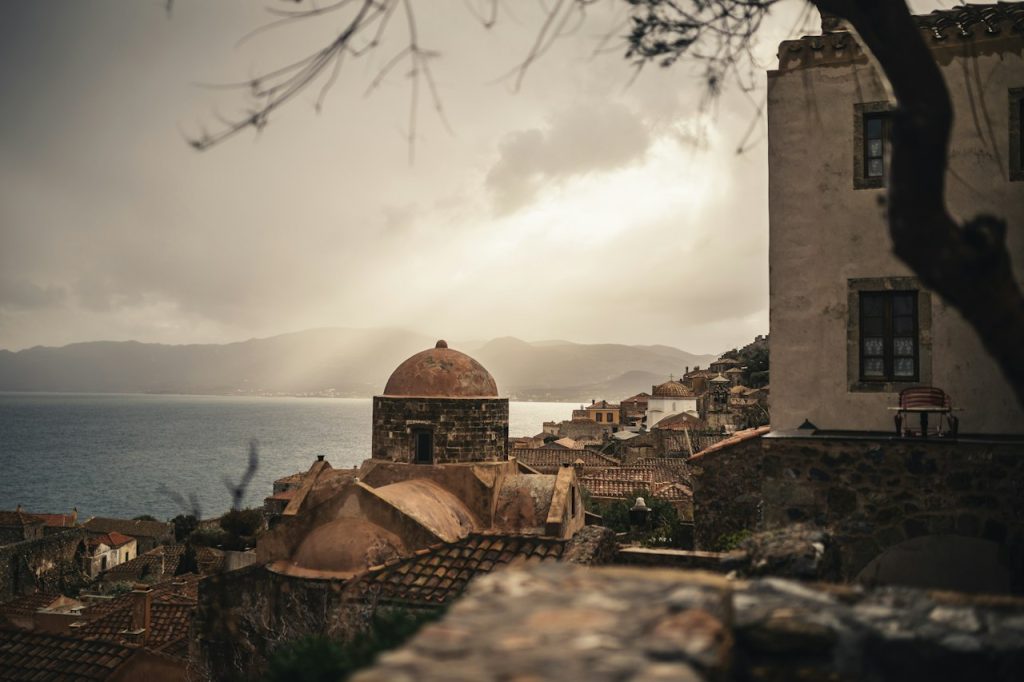
Over the centuries, sailors and merchants also built their homes here. As a result, the Lower Town has around two dozen churches today. In fact, many of them are tiny chapels squeezed between houses. Meanwhile, the lanes twist and climb in every direction, so getting a little lost is part of the fun.
The Upper Town
Above the Lower Town, a zigzag stone path then climbs the cliff. At the top lies the Upper Town, where the nobles and the military once lived. However, most of it is now in ruins. Still, walking among the broken walls, cisterns and foundations is a powerful experience.
Generally, the climb takes about 20 minutes. Even so, the path is steep and slippery in places, so wear good shoes. In summer, go early in the morning or late in the afternoon to avoid the heat.
The Walls and the Sea Gate
In addition, strong walls wrap around the Lower Town. You can also walk along parts of them and look down at waves crashing on the rocks. At the eastern end, a small sea gate opens onto the water. Finally, a 19th century lighthouse stands at the tip of the rock. It is a peaceful spot to watch the sunrise.
Churches and Monuments of Monemvasia
Churches are the heart of Monemvasia. Each one, moreover, tells a different chapter of the town’s long story.
Agia Sofia
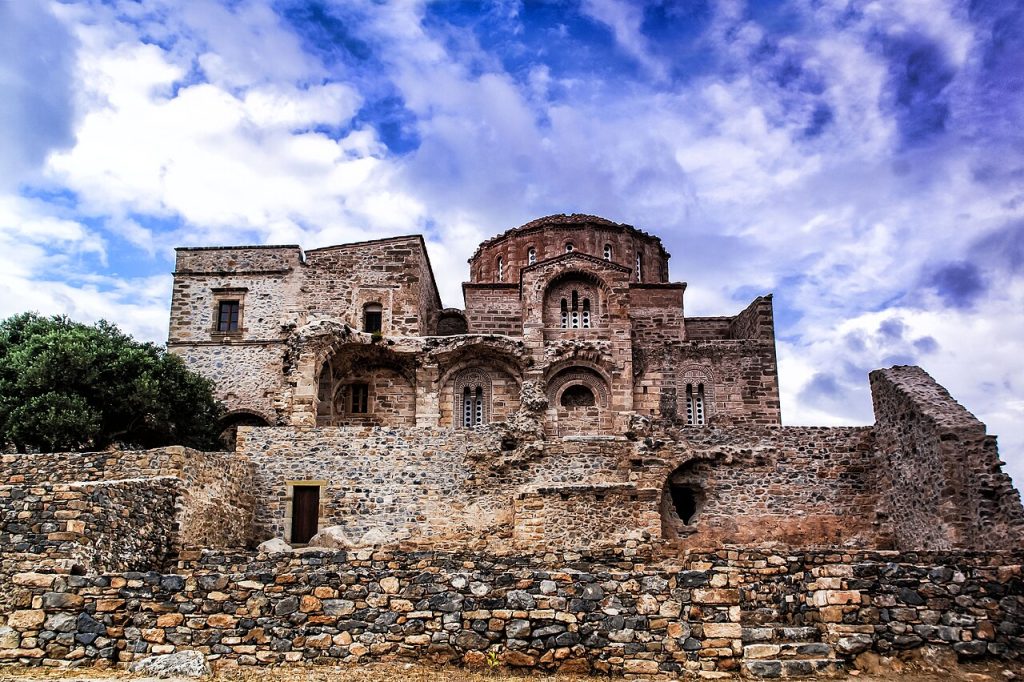
Perched on the edge of the Upper Town cliff, this church is a highlight of any visit. It dates from the 12th century, and it is the only building up there that remains intact. Inside, faded frescoes still cover parts of the walls. Under the Venetians, the church became a Catholic monastery. Later, the Ottomans turned it into a mosque. Today, it is once again a Greek Orthodox church.
Elkomenos Christos
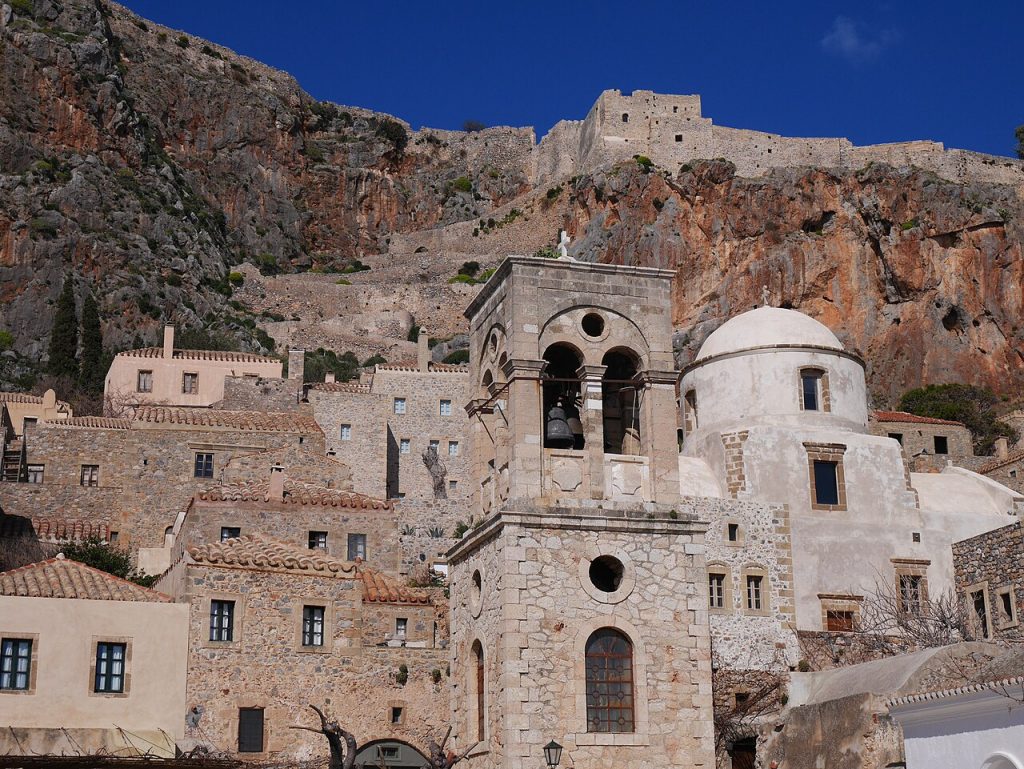
In the main square of the Lower Town stands the Church of Elkomenos Christos, which means “Christ in Chains.” It is also the largest church in town. Next to it, a bell tower rises above the rooftops. Across the square, a former Ottoman mosque now houses the small archaeological collection.
Panagia Chrysafitissa
Near the sea wall, the white church of Panagia Chrysafitissa overlooks a wide square. According to local legend, its icon of the Virgin Mary was miraculously carried here from the village of Chrysafa. As a result, the church remains a special place for local families.
One Historical Fact About Monemvasia, Greece
Monemvasia gave its name to one of the most famous wines of the Middle Ages. During the Middle Ages, merchants shipped sweet wine from the town’s port across Europe. The Venetians called it Malvasia, and the English called it Malmsey. Today, local winemakers have finally revived the wine as PDO Monemvasia-Malvasia.
The town is also linked to poetry. The Greek poet Yiannis Ritsos was born here in 1909. He called his hometown a “stone ship.” His statue now stands near the main gate.
How to Get to Monemvasia, Greece
Most visitors generally drive from Athens. The trip takes about three and a half hours on the motorway through Corinth and Tripoli. Alternatively, a slower coastal road offers beautiful views.
Buses also run from Athens to Monemvasia, usually with a change in Sparta. The bus then stops in Gefyra. From there, walk about 20 minutes across the bridge to the gate.
Remember that cars must park outside the walls, since the lanes are far too narrow. Also, there are no ATMs inside the castle town, so take cash from Gefyra first.
Best Time to Visit Monemvasia, Greece
The best months are April to June and September to October. During these periods, the weather is warm but not too hot, and the crowds are smaller. Spring also brings wildflowers to the Upper Town.
In contrast, July and August are the busiest months. Day trippers fill the main street, and the climb to Agia Sofia can feel very hot. Winter, on the other hand, is quiet and atmospheric. Some hotels and tavernas close, but the town feels almost private.
Is Monemvasia, Greece Worth Visiting?
Yes, without a doubt. Above all, Monemvasia combines history, beautiful architecture and dramatic scenery in one small place. It is also less crowded than many famous Greek islands.
Ideally, spend at least one night inside the walls. That way, you will see the town in the evening, when the day visitors leave and the lanes glow under soft lights.
Final Thoughts
Monemvasia Greece rewards travelers who take the time to look a little closer. Behind a single gate, you will find a living medieval town, peaceful churches and endless sea views. Whether you come for a day or a long weekend, this stone ship of the Peloponnese will stay with you long after you leave.
If you love walled towns, also read our guides to Mdina, Malta and Kotor, Montenegro.
Image Credits
Unsplash
- Lower Town of Monemvasia: Photo by Evangelos Mpikakis on Unsplash (Unsplash License)
- Cobbled Lane in Monemvasia: Photo by Ricki Krause on Unsplash (Unsplash License)
Wikimedia Commons
- Monemvasia Rock: Photo by Ingo Mehlng via Wikimedia Commons (CC BY-SA 3.0)
- Monemvasia Castle Gate: Photo by MinevaE via Wikimedia Commons (CC BY-SA 4.0)
- Agia Sofia Church: Photo by Mpalexandros (Alexandros Bougadis) via Wikimedia Commons (CC BY-SA 4.0)
- Churches of the Lower Town: Photo by Long lasting memories via Wikimedia Commons (CC BY-SA 4.0)