Far out in Egypt’s Western Desert, a green island of palm trees appears among the dunes. Crumbling mud-brick ruins rise above a quiet town, while salt lakes shimmer under the evening sky. This is Siwa Oasis, one of the most remote and fascinating places in Egypt. It also has its own language, its own traditions and a history that reaches back to the pharaohs. In this guide, you will learn what to see, how to get there and when to go.
Quick Facts About Siwa Oasis, Egypt
| Country | Egypt |
| Region | Matrouh Governorate, Western Desert |
| Known For | Shali Fortress, the Oracle of Amun, salt lakes and Siwi Berber culture |
| UNESCO Status | Not listed |
| Founded | Settled since ancient times; Shali Fortress built in the 13th century |
| Best Time to Visit | October to April |
| Time Needed | Two to four days |
| Continent | Africa |
Where Is Siwa Oasis, Egypt?
Siwa Oasis lies in the Western Desert of Egypt, between the Qattara Depression and the Great Sand Sea. In fact, it sits only about 50 kilometers east of the Libyan border and roughly 560 kilometers from Cairo as the crow flies.
Surprisingly, much of the oasis lies below sea level, in a depression that reaches about 19 meters below the sea. Meanwhile, the nearest large town is Marsa Matrouh on the Mediterranean coast, around 300 kilometers to the north.
Why Visit Siwa Oasis, Egypt?
First, Siwa feels completely different from the rest of Egypt. Most residents are Siwi Berbers, and many still speak Siwi, the easternmost Berber language that survives today. Because of its isolation, the oasis has kept a strong local identity.
Second, the landscapes are remarkable. In a single day, you can explore ancient ruins, swim in a natural spring, cross golden dunes and watch the sun set over a salt lake. Few places pack so much variety into such a small area.
Finally, Siwa is peaceful. For example, there are no big resorts or crowded tourist strips. Instead, life moves slowly among the date palms and olive groves. As a result, it is the perfect escape from the noise of Cairo.
Exploring Shali Fortress and Siwa Town
The modern town of Siwa grew up around the old fortress, and the two are best explored together. Most sights in town are within walking distance, while bicycles and donkey carts are popular ways to reach the rest.
Climb the Ruins of Shali
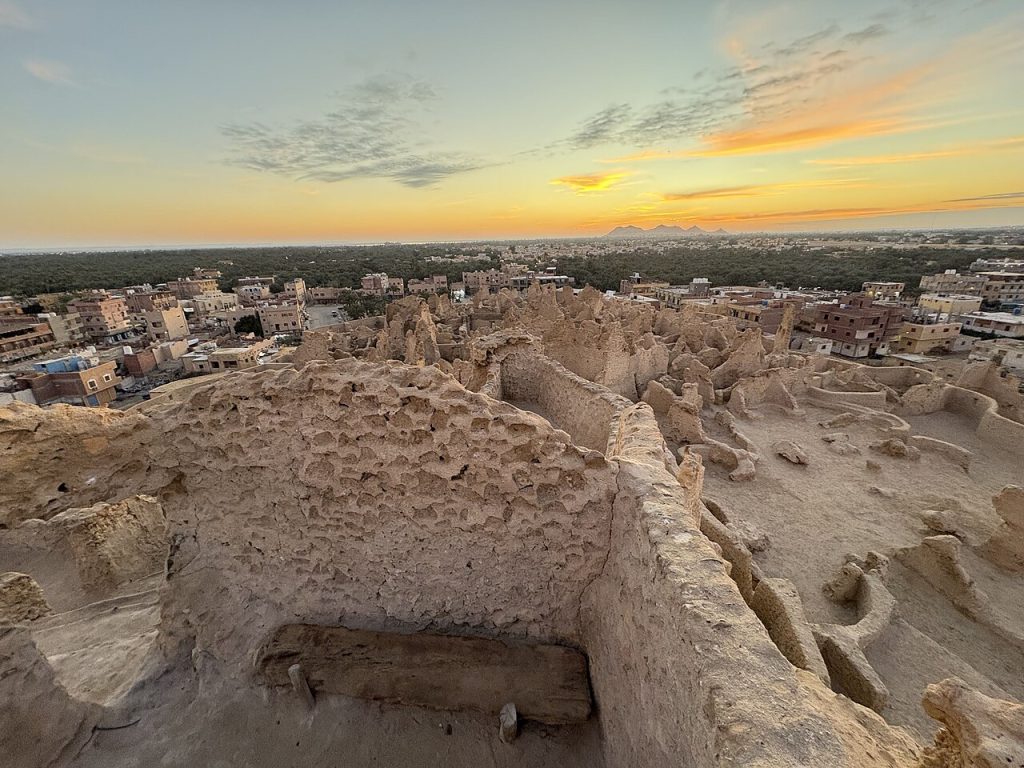
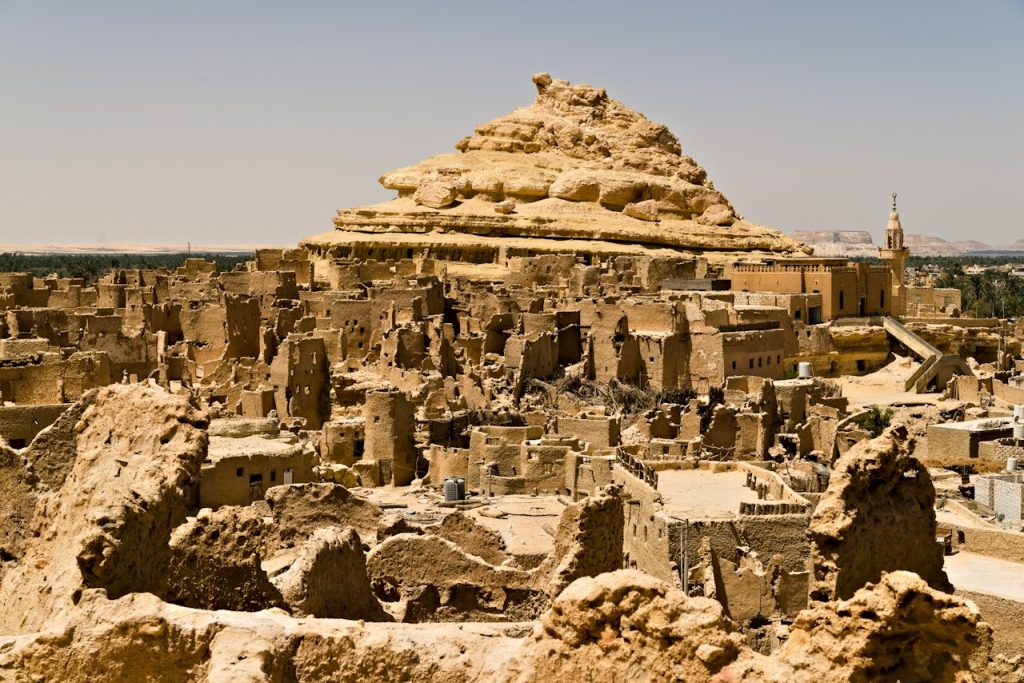
Shali Fortress is the symbol of Siwa Oasis. Berber residents built it on a rocky hill in the 13th century, and its name means home in the Siwi language. For centuries, the fortified town protected the community from raiders.
In addition, the builders made the walls of kershef, a mix of clay, salt and rock that kept the interior cool in the desert heat. Today, you can climb through its maze of lanes to the top, where the views stretch over palm groves, lakes and mountains. It is especially beautiful at sunset.
A Fortress Brought Back to Life
Over time, rain and erosion wore down much of the old town. However, between 2018 and 2020, a restoration project funded by the European Union and carried out with an Egyptian company repaired parts of the fortress. Notably, the builders used materials taken from the site itself, so the restored sections blend in with the ruins.
Wander the Palm Groves and Markets
Below the fortress, the town square and small markets are also busy with local life. Dates are the backbone of the economy here, followed by olives. Consequently, you will find excellent dates, olive oil and local handicrafts to take home. Take time to stroll through the palm groves too, where narrow paths and irrigation channels keep the oasis green.
The Temple of the Oracle of Amun
About a 30-minute walk from Shali, the village of Aghurmi holds the oasis’s most famous ancient site. Here, on a rocky outcrop, stand the ruins of the Temple of the Oracle of Amun. By around 700 BC, the fame of this oracle had spread across the eastern Mediterranean.
Of course, the temple’s most famous visitor was Alexander the Great. After founding Alexandria, he crossed the desert to consult the oracle before his campaign against Persia. His visit helped secure the temple’s place in history.
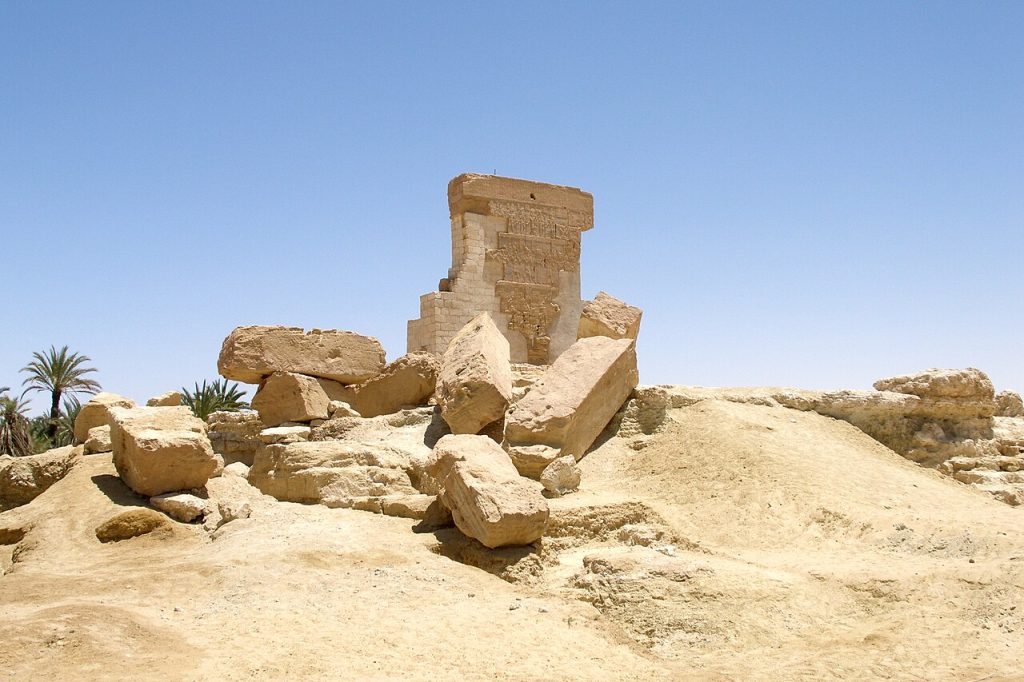
However, another story is even more dramatic. According to ancient accounts, the Persian king Cambyses, who had conquered Egypt, sent a large army to destroy the oracle. The soldiers never returned, and their remains have never been found beneath the sand. Today, the legend of the lost army still draws curious explorers.
Even without the stories, the site is worth a visit. From the top, you can look across the palm groves to Shali and the desert beyond.
Natural Wonders Around Siwa Oasis
Beyond the ruins, the real magic of Siwa lies in its natural setting. Springs, lakes and dunes surround the town, and most are easy to reach in a short trip.
Swim in Cleopatra’s Spring
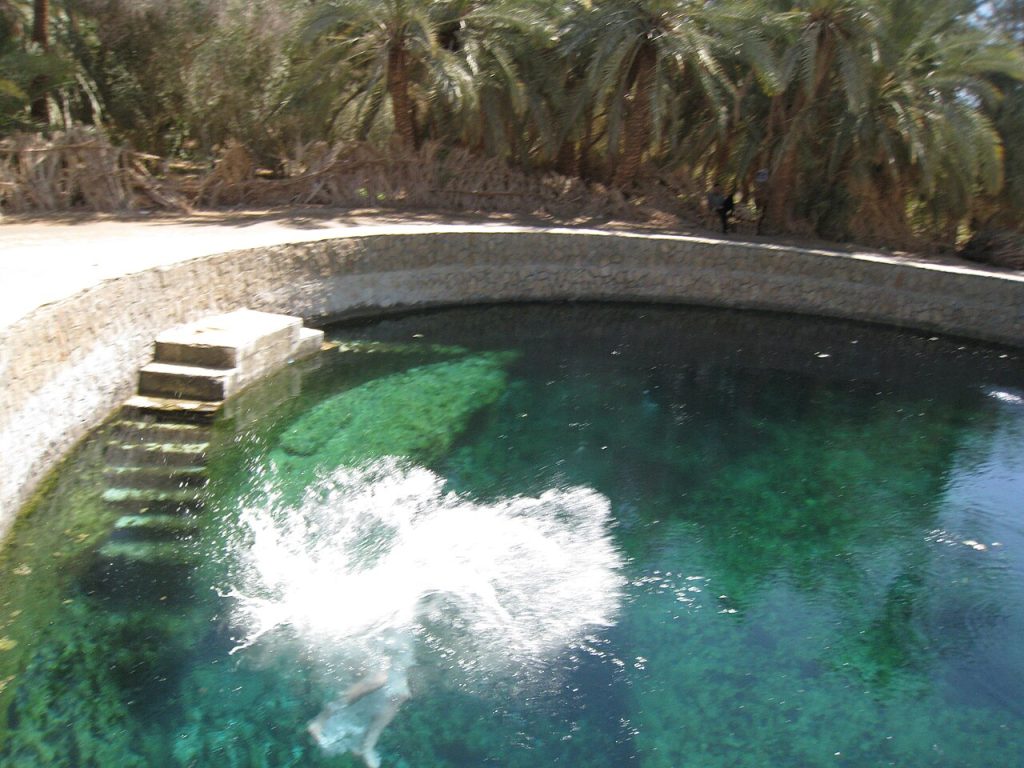
Cleopatra’s Spring, also called Cleopatra’s Bath, is an ancient natural spring set in a stone-lined pool. Indeed, it is one of the most popular places to swim in Siwa. Locals believe the water has healing properties, and small cafes nearby make it a pleasant stop.
The Salt Lakes of Siwa
Two large salt lakes lie within the oasis, fed by drainage water from the surrounding farms. Their bright blue water and white salty shores create a striking contrast with the desert.
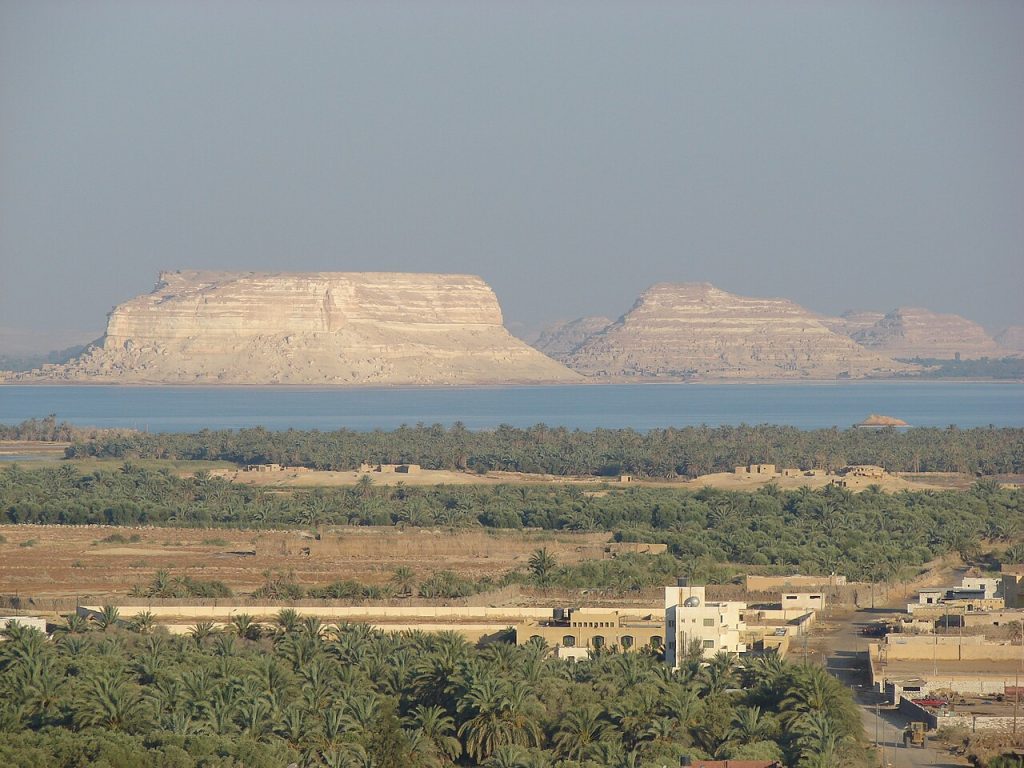
Fatnas Island
Fatnas is a small, palm-covered island on the edge of one of the lakes. It is a lovely spot for a relaxed picnic and some birdwatching. Furthermore, it is a favorite place to watch the sunset, when the sky glows above the water.
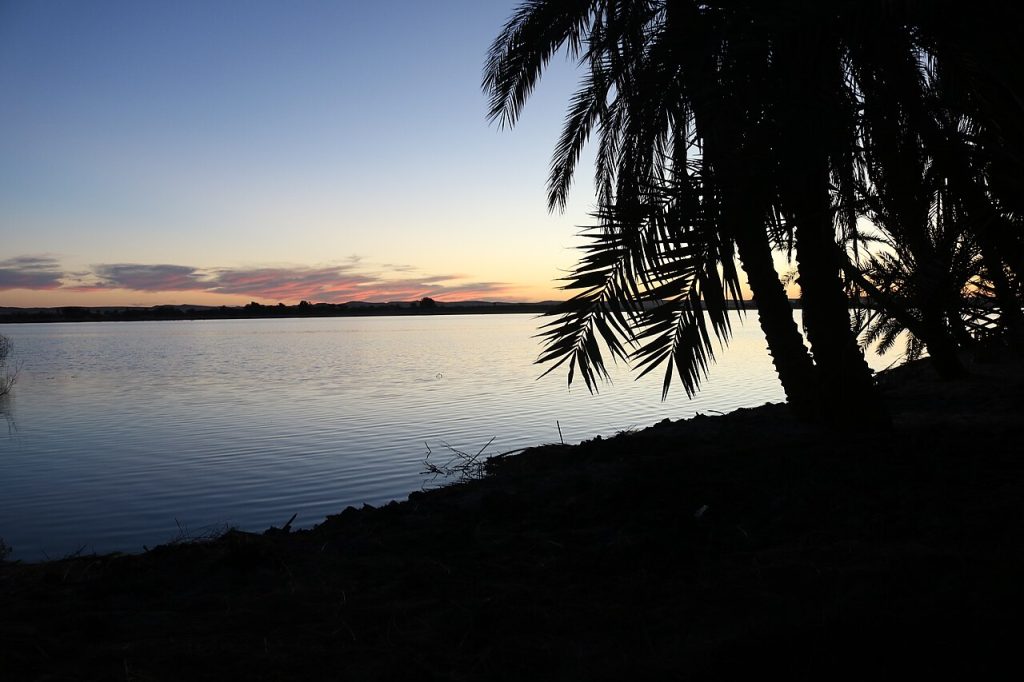
Gebel al-Mawta
Gebel al-Mawta, or the Mountain of the Dead, is a hill full of rock-cut tombs. This Roman-era necropolis holds dozens of tombs carved into the rock, some with painted decoration.
Desert Adventures
South of the oasis, the dunes of the desert begin. Many local operators offer sunset tours, sandboarding and dune drives by 4×4. For many visitors, an evening in the dunes is the highlight of their stay.
One Historical Fact About Siwa Oasis, Egypt
For most of its history, Siwa was cut off from the outside world. In fact, until a paved road to the Mediterranean coast was built in the 1980s, the oasis could only be reached by desert camel tracks. Earlier, in 1926, three days of heavy rain badly damaged Shali, and residents gradually abandoned the old fortress for new homes below.
How to Get to Siwa Oasis, Egypt
Siwa has no commercial airport, so the trip involves a long drive across the desert. Plan for between 8 and 12 hours of travel from Cairo.
- Overnight bus: The West & Mid Delta Bus Company runs a nightly coach from Cairo, taking about 10 to 12 hours.
- Minibus: Private minibus services from Cairo take about 8 to 9 hours.
- Via Marsa Matrouh: Travel to Marsa Matrouh first, then continue by local microbus for about 3.5 hours.
- Private car: A driver from Cairo takes around 8 to 9 hours and gives you the most flexibility.
In peak season, from December to February, book return bus seats in advance. Also, carry your passport, since there are security checkpoints along the desert road.
Best Time to Visit Siwa Oasis, Egypt
The best time to visit is from October to April, when the weather is mild and pleasant for exploring. Days are sunny, although desert nights can get surprisingly cold in winter.
In contrast, summer is extremely hot. Temperatures often climb above 40°C, and the record high is over 48°C. In spring, hot khamsin winds can also bring dust and heat. Rain, on the other hand, is very rare, with only about 12 millimeters a year.
Is Siwa Oasis, Egypt Worth Visiting?
Yes, without a doubt. Siwa Oasis is one of the most unique destinations in Egypt. It combines ancient history, Berber culture and stunning desert landscapes in one place.
Admittedly, the journey is long. Even so, that remoteness is exactly what keeps Siwa special. Once you arrive, the long drive will feel like a small price to pay.
Final Thoughts
Ultimately, Siwa Oasis is a place that stays with you. Climb Shali at sunset, follow the footsteps of Alexander the Great to the Oracle of Amun and float in Cleopatra’s Spring. Then, end the day by a salt lake as the sky turns gold. In short, if you want to see a side of Egypt that few travelers ever reach, Siwa is the place to go. If mud-brick architecture fascinates you, you may also enjoy our guides to Aït Benhaddou and Kairouan.
Image Credits
Unsplash
- Mud-Brick Ruins of Shali Fortress: Photo by kai muro on Unsplash (Unsplash License)
Wikimedia Commons
- Shali Fortress at Sunset: Photo by ولاء via Wikimedia Commons (Public domain)
- Temple of the Oracle of Amun: Photo by Vyacheslav Argenberg via Wikimedia Commons (CC BY 4.0)
- Cleopatra’s Spring: Photo by saragoldsmith via Wikimedia Commons (CC BY 2.0)
- Sunset Over the Lake Near Fatnas: Photo by Maaly Saeed via Wikimedia Commons (CC BY-SA 4.0)
- Salt Lake and Hills in Siwa Oasis: Photo by mykola.rykov via Wikimedia Commons (CC BY 3.0)