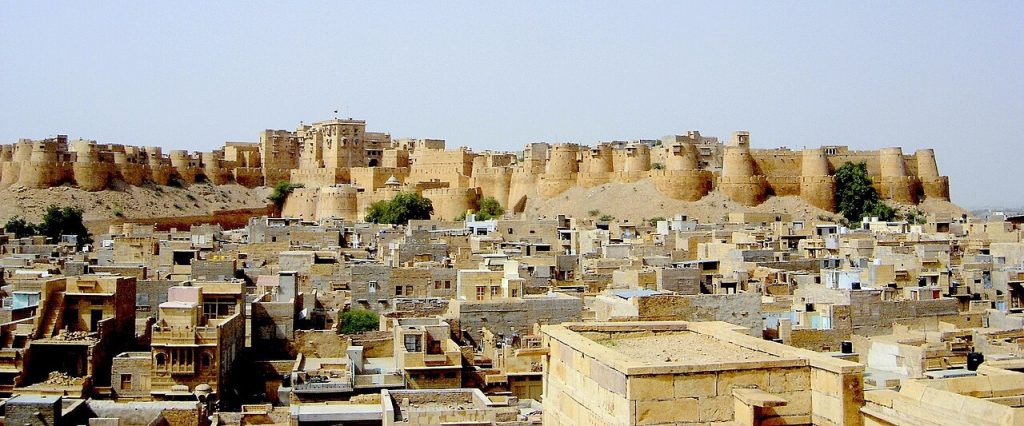
Rising out of the Thar Desert, a honey-colored fort glows like gold in the late afternoon sun. Below its walls, narrow lanes twist between carved sandstone mansions, and beyond the city, the dunes roll toward the horizon. This is Jaisalmer, the Golden City of Rajasthan. In this guide, you will learn what to see, how to get there and the best time to visit.
Quick Facts About Jaisalmer, India
| Country | India |
| Region | Western Rajasthan, Thar Desert |
| Known For | Jaisalmer Fort, carved havelis and desert dunes |
| UNESCO Status | Jaisalmer Fort is part of the Hill Forts of Rajasthan World Heritage Site (2013) |
| Founded | 1156 |
| Best Time to Visit | October to March |
| Time Needed | Two to three days |
| Continent | Asia |
Where Is Jaisalmer, India?
Jaisalmer lies in the far west of Rajasthan, in the heart of the Thar Desert. In fact, it sits roughly 575 kilometers west of Jaipur and is one of the westernmost cities in India, not far from the border with Pakistan.
Because of its remote desert location, the city once grew rich as a stop on caravan routes. Today, however, it is best known as a gateway to the desert.
Why Visit Jaisalmer, India?
First of all, Jaisalmer looks like nowhere else. Almost every building is made of the same yellow sandstone, so the whole city seems to glow. Therefore, people call it the Golden City.
In addition, its fort is still alive. Unlike most historic forts, Jaisalmer Fort is home to thousands of residents, along with shops, temples and guesthouses. As a result, exploring it feels like walking through a living medieval town.
Finally, the desert is right on the doorstep. Within an hour, you can swap city lanes for golden dunes, camel rides and starry skies.
Exploring Jaisalmer Fort
Jaisalmer Fort is the heart of the city and its biggest attraction. According to legend, Rawal Jaisal of the Bhati Rajput clan built it in 1156 on Trikuta Hill. Since 2013, it has been part of the Hill Forts of Rajasthan UNESCO World Heritage Site.
The Golden Walls and 99 Bastions
The fort is wrapped in massive yellow sandstone walls with 99 rounded bastions. However, most of these were built or rebuilt in the 17th century. At sunset, the walls turn a deep gold, which earned the fort its nicknames, Sonar Quila and the Golden Fort.
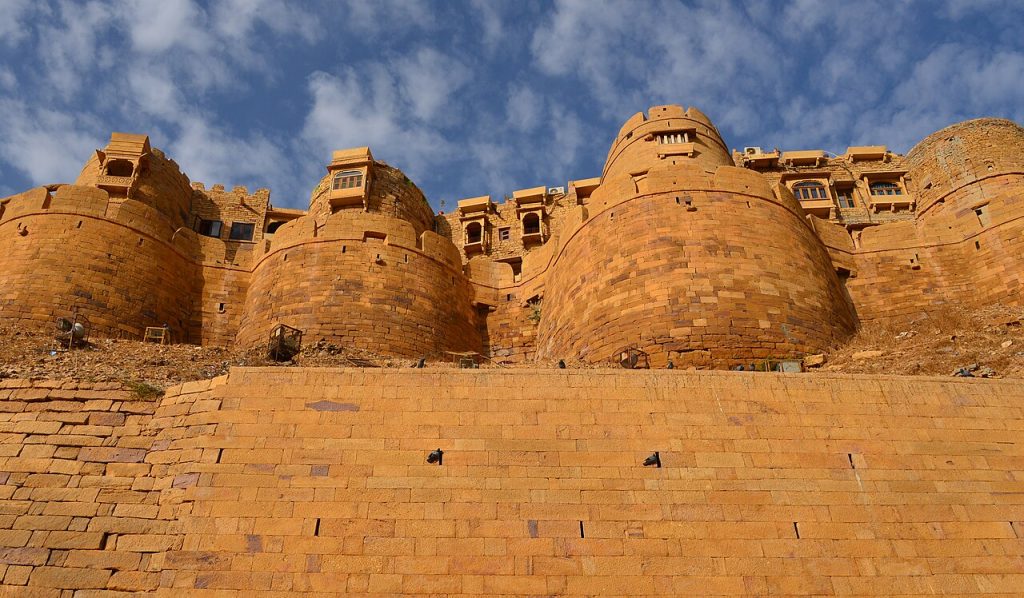
The fort also became famous through cinema. In particular, Satyajit Ray filmed his classic movie Sonar Kella here, which made the name popular across India.
Life Inside the Fort
Inside the gates, you will find a maze of narrow lanes, small homes and busy shops. In fact, thousands of people still live within the walls, which makes it one of the few living forts in the world.
However, this popularity comes at a cost. For example, water seepage, population pressure and tourism have damaged parts of the fort, and some sections have collapsed. For this reason, consider staying in a hotel outside the walls to help reduce the strain.
The Palace and Jain Temples
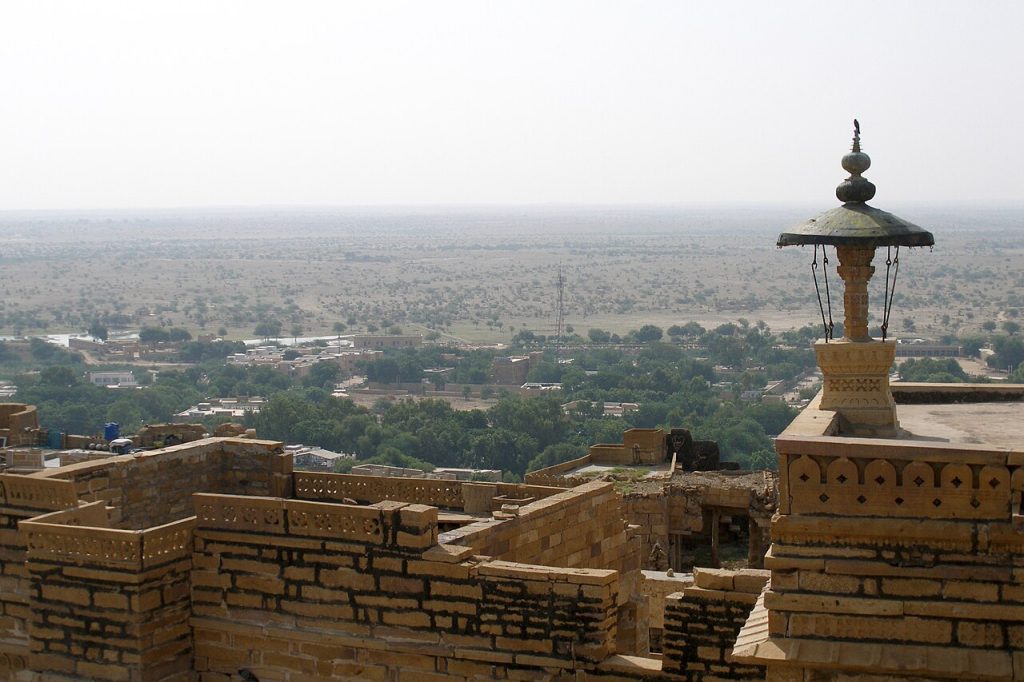
Within the fort stands the Raj Mahal, the former royal palace, which you can visit as a museum. Nearby, a group of seven Jain temples is also famous for its intricate stone carving. Similarly, the rooftops and lookouts offer sweeping views over the city.
The Havelis of Jaisalmer
Below the fort, the old city is famous for its havelis, the grand townhouses built by wealthy merchants. Their sandstone facades are carved so finely that they almost look like lace.
In particular, the most famous is Patwon ki Haveli. In 1805, the merchant Guman Chand Patwa began building five mansions here, one for each of his five sons. Together, they form the largest and oldest haveli complex in Jaisalmer, with around 60 carved balconies. Today, part of it is also a museum.
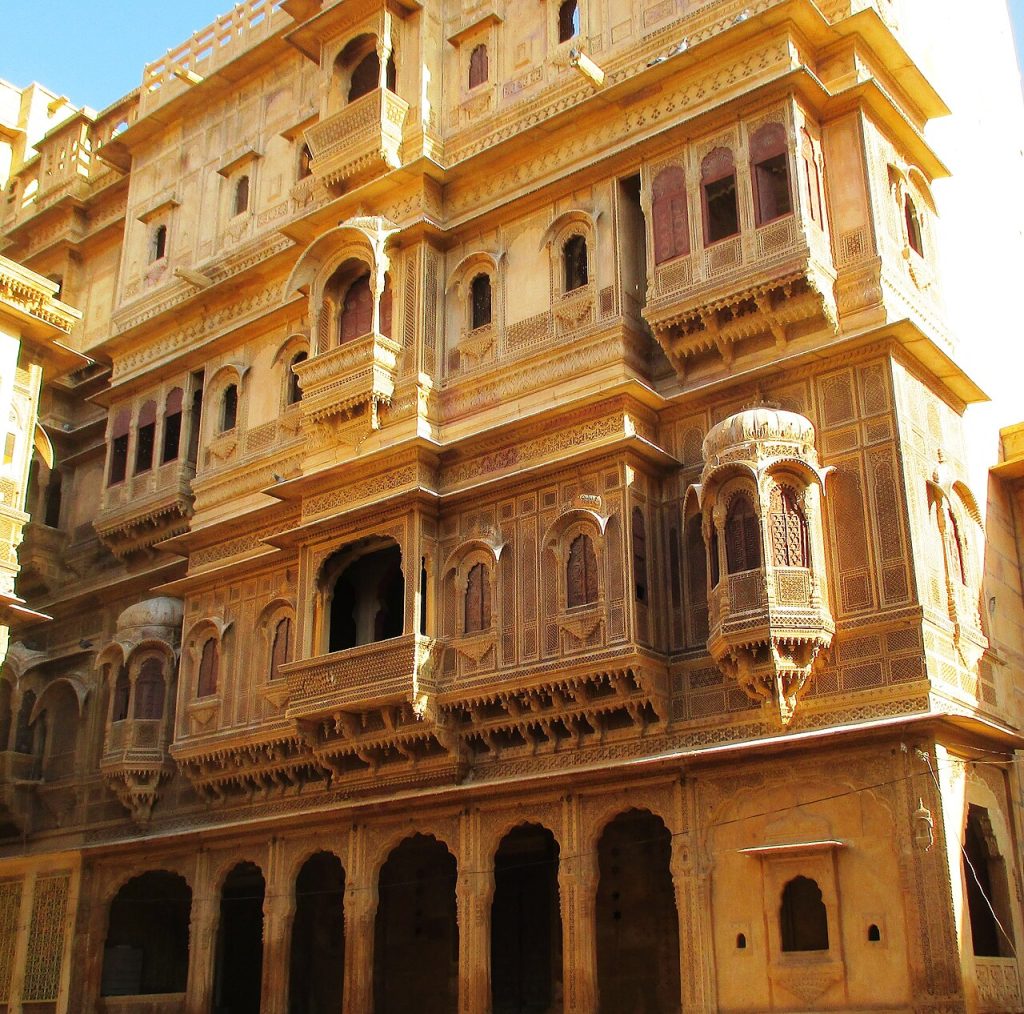
Two other havelis are also worth seeing. For example, Salim Singh ki Haveli has a striking curved top that resembles the stern of a ship. Meanwhile, Nathmal ki Haveli, built in 1885, is known for its carved stone elephants and its two halves, which were meant to match but do not quite.
Beyond the Old City
Once you have explored the fort and havelis, there is plenty more to discover around Jaisalmer.
Gadisar Lake
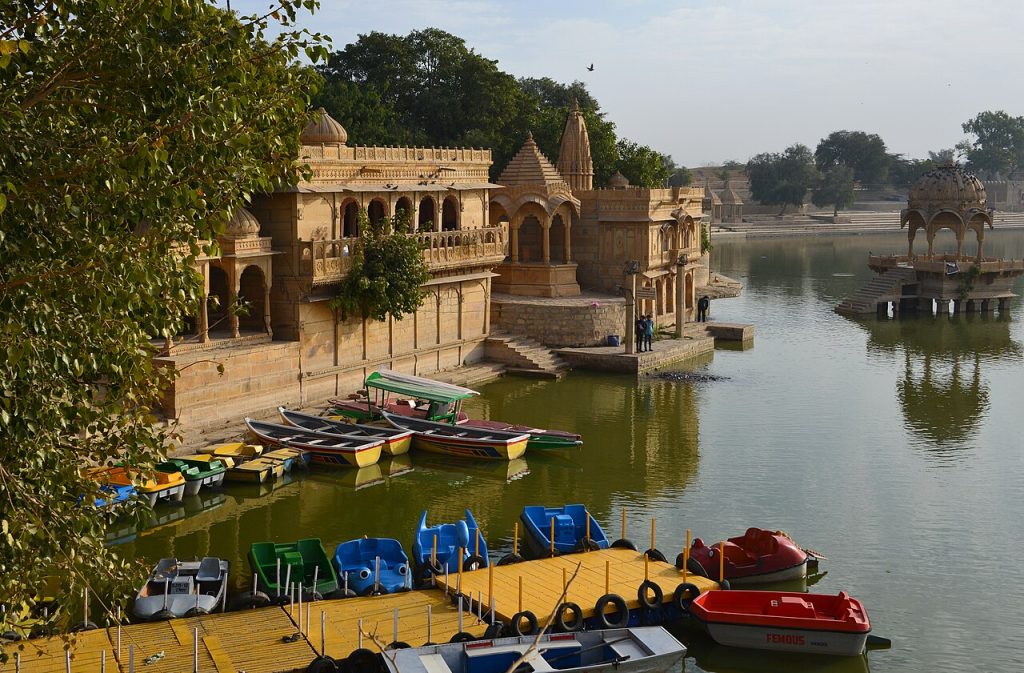
Gadisar Lake lies just outside the old city. Rawal Gadsi Singh had it excavated in 1367, and for centuries it was the town’s main water source. Today, small temples and pavilions line its banks, and it is a peaceful spot at sunrise or sunset.
The Thar Desert
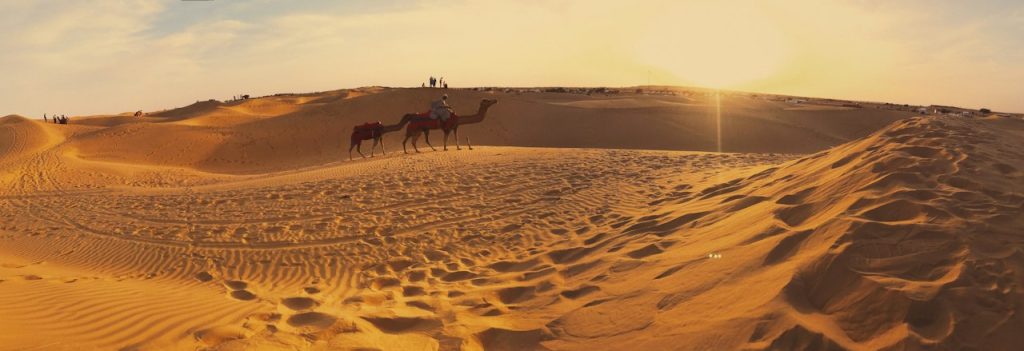
No visit to Jaisalmer is complete without a trip into the desert. Most travelers head to the dunes outside the city, especially the Sam Sand Dunes, about 40 kilometers away.
Camel Safaris
Camel rides are the classic way to explore the dunes. Many tours start in the afternoon, so you can watch the sun set over the sand. Some also include an overnight stay in a desert camp.
Kuldhara Ghost Village
On the way to the dunes, many tours stop at Kuldhara, an abandoned village of crumbling stone houses. It is an eerie, atmospheric place and a fascinating glimpse into the region’s past.
One Historical Fact About Jaisalmer, India
Jaisalmer was founded in 1156 by Rawal Jaisal, a ruler of the Bhati Rajput clan, and the city still carries his name. For centuries afterward, it prospered from the trade caravans that crossed the Thar Desert. As a result, wealthy merchants could afford the lavish havelis that still fill the old city.
How to Get to Jaisalmer, India
Although Jaisalmer is remote, it is well connected to the rest of India.
- By air: Jaisalmer Airport lies about 17 kilometers southeast of the city, with flights to cities such as Delhi, Mumbai, Jaipur and Jodhpur.
- By train: Jaisalmer railway station has daily trains to Jaipur, with onward connections to Delhi and other cities.
- By bus: State and private buses link Jaisalmer with Jodhpur and other towns in Rajasthan.
Once you arrive, the old city is best explored on foot. For trips to the dunes, hire a jeep or join a tour.
Best Time to Visit Jaisalmer, India
The best time to visit is from October to March, when the days are warm and sunny. Nights in the desert can be chilly in winter, though, with January lows averaging around 9°C.
In February, the Desert Festival brings folk music, dancing, camel races and colorful competitions to the city. By contrast, summer is extremely hot, with temperatures often around 40°C. Most of the year’s light rain falls during the monsoon, from June to September.
Is Jaisalmer, India Worth Visiting?
Yes, absolutely. Jaisalmer combines a living medieval fort, exquisite architecture and the wild beauty of the desert. Few places in India feel so unique.
Of course, the journey takes time. Even so, watching the fort glow at sunset or sleeping under the desert stars makes the trip unforgettable.
Final Thoughts
Jaisalmer is a city of golden stone and desert light. Wander the lanes of the fort, admire the carved havelis and end the day on the dunes. Above all, take your time, since this is a place to savor slowly. If you are planning a longer trip through Rajasthan, you may also enjoy our guides to Jodhpur and Bundi.
Image Credits
Unsplash
- Thar Desert Dunes Near Jaisalmer: Photo by Ivy Aralia Nizar on Unsplash (Unsplash License)
Wikimedia Commons
- Jaisalmer Fort Above the Old City: Photo by Gérard Janot via Wikimedia Commons (CC BY-SA 3.0)
- Bastions of Jaisalmer Fort: Photo by Clément Bardot via Wikimedia Commons (CC BY-SA 4.0)
- View From Jaisalmer Fort: Photo by Vyacheslav Argenberg via Wikimedia Commons (CC BY 4.0)
- Patwon ki Haveli: Photo by Sreesarkar via Wikimedia Commons (CC BY-SA 4.0)
- Gadisar Lake: Photo by Clément Bardot via Wikimedia Commons (CC BY-SA 4.0)