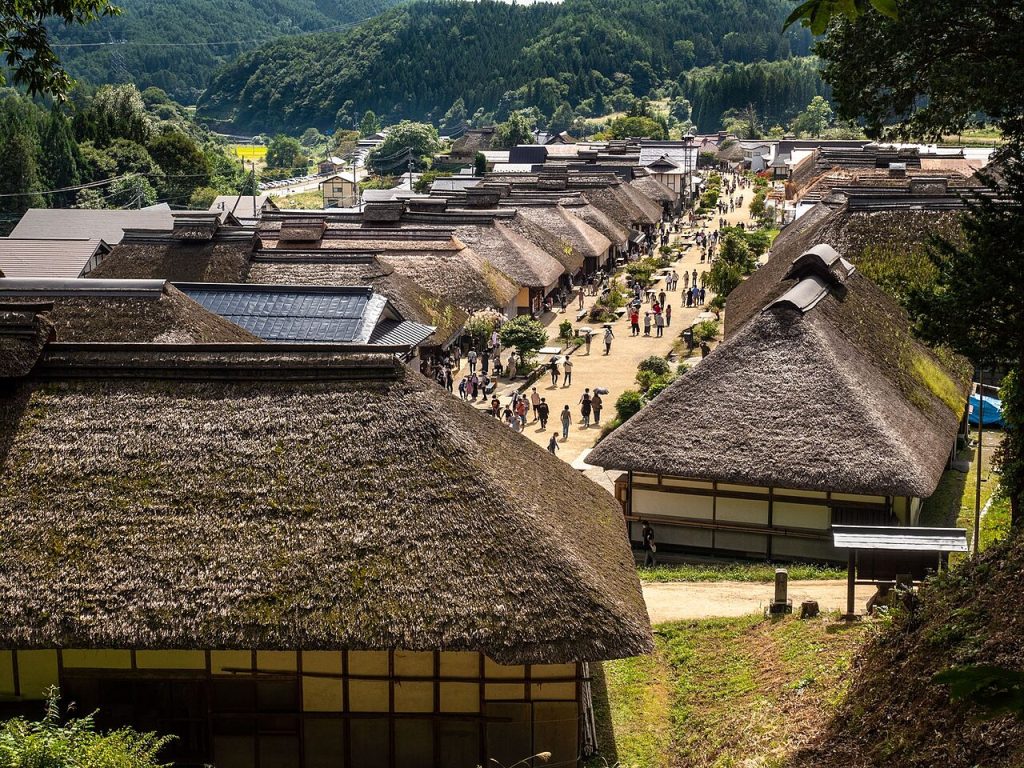
In the mountains of Fukushima, a single wide street is lined on both sides with thick thatched roofs. Water runs along stone channels, and wood smoke drifts from old inns that have welcomed travelers for centuries. This is Ouchi-juku, one of the best preserved post towns in Japan. In this guide, you will discover what to see, how to get there and when to visit.
Quick Facts About Ouchi-juku, Japan
| Country | Japan |
| Region | Shimogō, Minamiaizu District, Fukushima Prefecture |
| Known For | Thatched-roof houses, Edo-period history and negi soba |
| UNESCO Status | Not listed (a nationally protected preservation district) |
| Founded | Edo period post town |
| Best Time to Visit | Year-round; February for the snow festival |
| Time Needed | Half a day to one day |
| Continent | Asia |
Where Is Ouchi-juku, Japan?
Ouchi-juku lies in the town of Shimogō, in the Minamiaizu District of Fukushima Prefecture. In fact, it sits in the mountains of the Aizu region, in the northern part of Honshu.
Historically, the village stood on the Aizu Nishi Kaidō, a road also linked with the Shimotsuke Kaidō toward Edo, today’s Tokyo. As a result, it was once an important stop for travelers.
Why Visit Ouchi-juku, Japan?
First of all, Ouchi-juku feels like a step back in time. Its main street is lined with thatched houses, many of them over 300 years old. Therefore, it is one of the most atmospheric villages in Japan.
In addition, the village is officially protected. It is designated an Important Preservation District for Groups of Traditional Buildings, which helps keep its historic look intact.
Finally, the village is beautiful in every season. For example, winter brings deep snow, while autumn paints the hills in red and gold.
Exploring Ouchi-juku
The village is compact, so you can walk the main street from end to end in a few minutes. Even so, it deserves a slow and curious visit.
Walk the Main Street
The wide main street follows the old road. On both sides, thatched houses stand with their gables facing the street. Meanwhile, small water channels run along the front of the buildings.
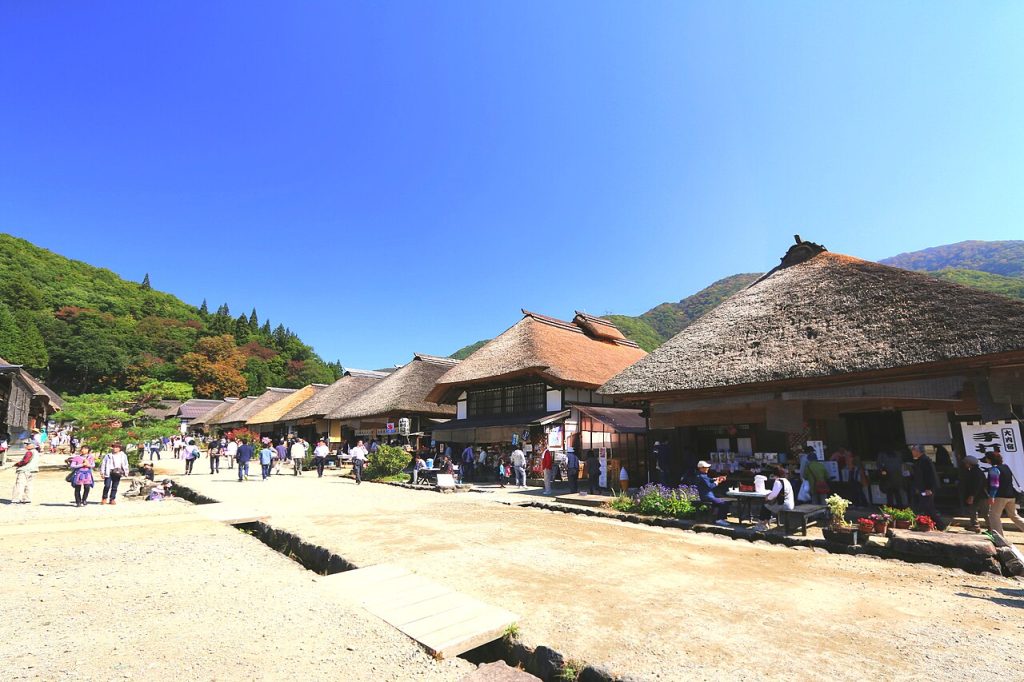
Today, each house serves as a souvenir shop, restaurant or guesthouse. Consequently, you can browse local crafts, sample snacks and even stay overnight in a historic building.
Climb to the Viewpoint
At the end of the main street, a short but steep set of stairs leads up to a small temple. From here, you get the famous panoramic view of the village. Above all, do not miss this spot, since it offers the best photo of the village.
Admire the Thatched Roofs
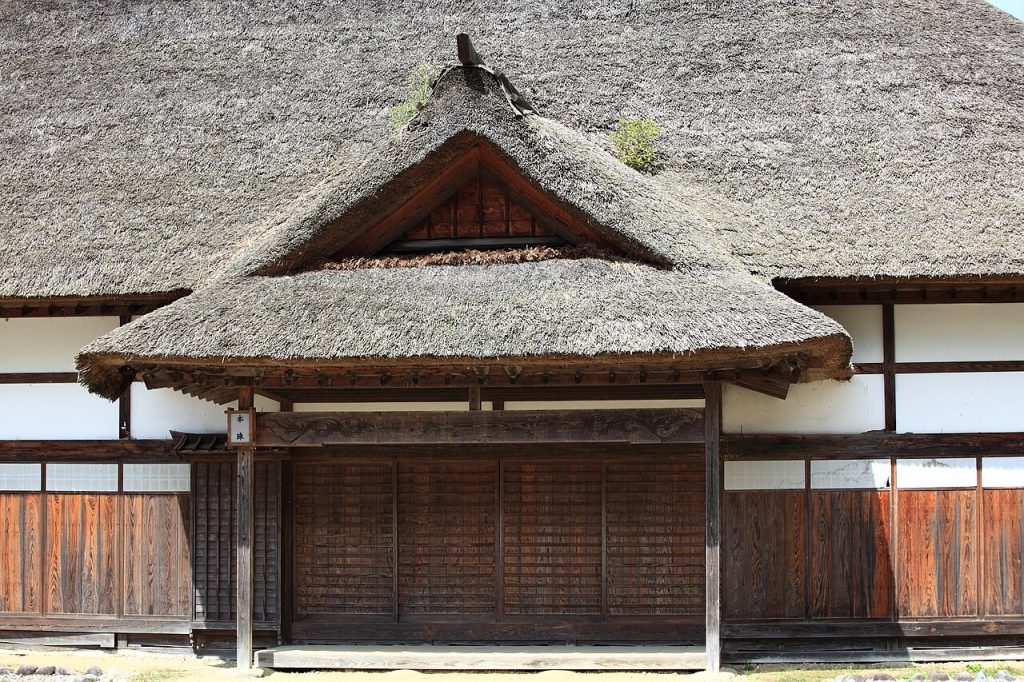
The thick thatched roofs are the soul of the village. They need regular care, and you may even see craftsmen at work repairing them. Up close, the layers of straw are surprisingly deep.
Negi Soba: The Village’s Famous Dish
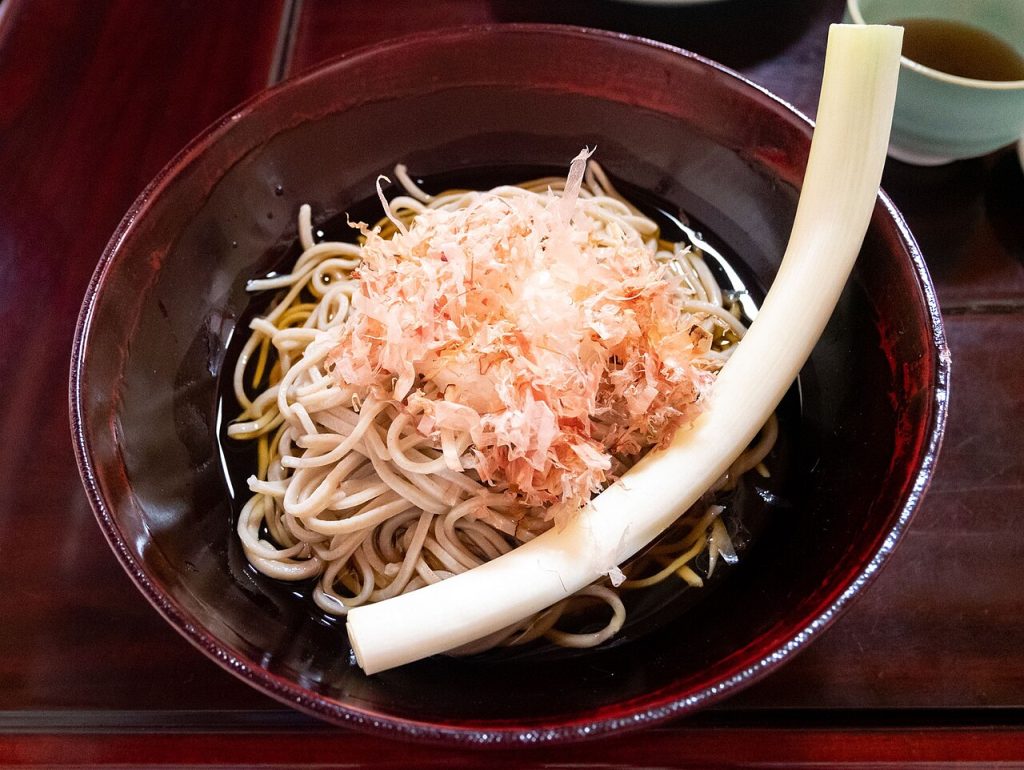
Ouchi-juku is famous for its handmade soba noodles. However, the way people eat them is unique. Instead of chopsticks, diners are given a long green leek to scoop up the noodles.
This dish is known as negi soba. Between bites, you can nibble on the leek itself for extra flavor. Therefore, it makes a fun and memorable meal.
Ouchi-juku Through the Seasons
The village changes dramatically with the seasons, so every visit feels different.
Winter and the Snow Festival
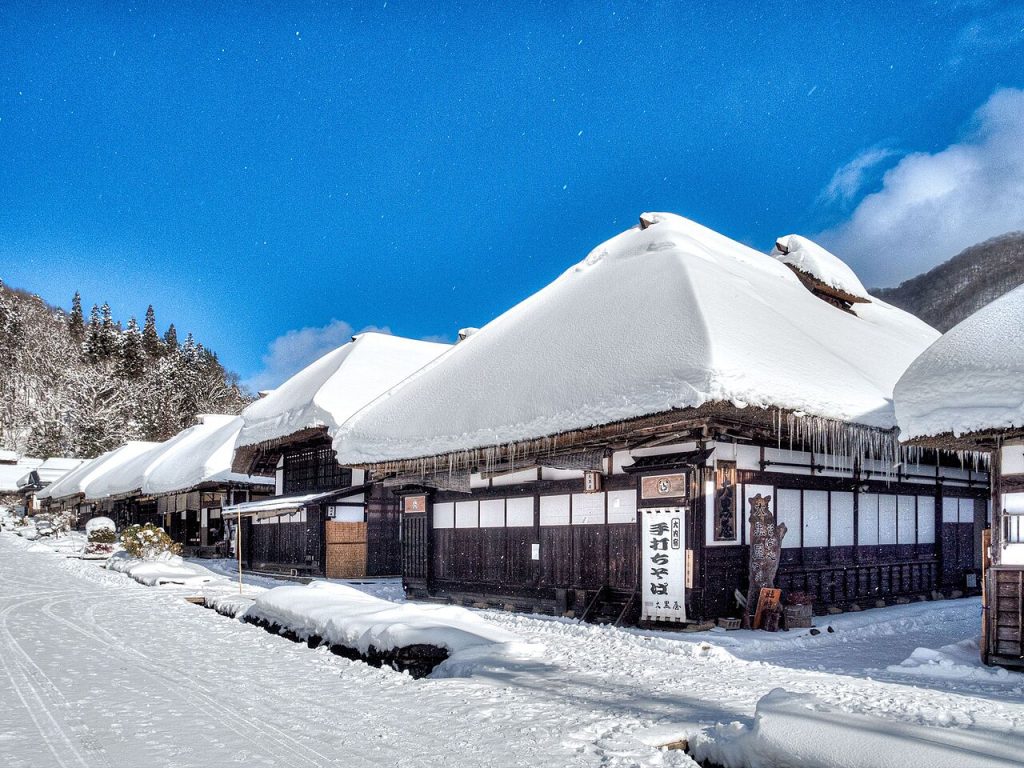
In winter, deep snow covers the thatched roofs. As a result, the village looks like a scene from a fairy tale.
The Snow Festival
The Ouchi-juku Snow Festival takes place on the second weekend of February. Candles glow in snow lanterns outside the old houses. Then, on the first night, young men carry flaming torches through the street to light the lanterns by hand.
Winter Travel Tips
From December to March, there is no bus from the nearest station. Instead, you will need a taxi, which takes about 15 minutes. Also, wear warm, waterproof boots.
Autumn Colors
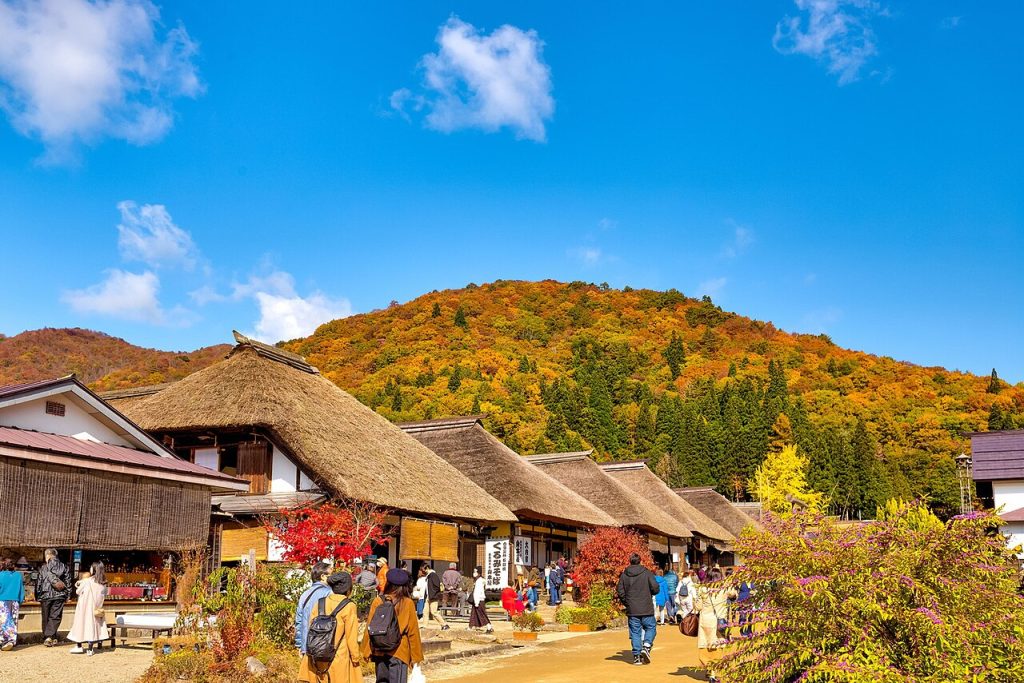
In autumn, the surrounding hills turn red, orange and gold. In particular, late October and early November are lovely for photography.
Summer Festival
In July, the village also holds the Hange Mid-Summer Festival. Meanwhile, the green mountains make summer a pleasant time for walking.
One Historical Fact About Ouchi-juku, Japan
During the Edo period, feudal lords had to travel regularly to Edo. Consequently, post towns such as Ouchi-juku grew up along the main roads to provide them with lodging, food and supplies. Many of these buildings were preserved as they stood before the Meiji Restoration, which is why the village looks so authentic today.
How to Get to Ouchi-juku, Japan
The nearest station is Yunokami Onsen, on the Aizu Railway.
- From Tokyo: Take the Tohoku Shinkansen to Koriyama, then the Banetsu West Line to Aizu-Wakamatsu. From there, the Aizu Railway runs to Yunokami Onsen. Reaching Aizu-Wakamatsu takes about three hours.
- From Yunokami Onsen: Take a bus or taxi to the village. In winter, from December to March, only taxis are available, and the ride takes about 15 minutes.
- By car: Driving gives you flexibility to explore the Aizu region.
Best Time to Visit Ouchi-juku, Japan
The village is worth visiting all year. However, the second weekend of February is the most magical time, thanks to the snow festival.
Alternatively, autumn offers spectacular colors, and summer is green and pleasant. Since the village is popular with day-trippers, arrive early in the morning or stay overnight to enjoy it in peace.
Is Ouchi-juku, Japan Worth Visiting?
Yes, absolutely. Ouchi-juku is one of the most authentic historic villages in Japan, and its thatched roofs are unforgettable. Moreover, eating soba with a leek is an experience you will not find elsewhere.
Although it takes some effort to reach, it rewards travelers who want to see a traditional side of rural Japan.
Final Thoughts
Ouchi-juku is a village where the Edo period still feels close. Stroll the thatched main street, climb to the viewpoint and enjoy a bowl of negi soba. Above all, visit in winter if you can, when snow turns the village into a dreamscape. If you love historic post towns in Japan, you may also enjoy our guides to Tsumago and Takayama.
Image Credits
Wikimedia Commons
- Thatched Roofs From the Viewpoint: Photo by Kurofune via Wikimedia Commons (CC BY 4.0)
- The Old Main Street: Photo by Kurofune via Wikimedia Commons (CC BY 3.0)
- Autumn in the Village: Photo by Kurofune via Wikimedia Commons (CC BY 4.0)
- Winter Snow on the Thatched Roofs: Photo by Kurofune via Wikimedia Commons (CC BY 4.0)
- A Bowl of Negi Soba: Photo by Kurofune via Wikimedia Commons (CC BY 4.0)
- Traditional Thatched House: Photo by TANAKA Juuyoh via Wikimedia Commons (CC BY 2.0)