
Mandu India is a ruined fortress city on a high plateau in Madhya Pradesh, filled with palaces, tombs and mosques from the days of the Malwa Sultanate. Once called Shadiabad, or the City of Joy, it is also the setting of a famous royal love story. Today, it is one of the most atmospheric and least crowded historic sites in central India.
Quick Facts About Mandu, India
| Country | India |
| Region | Dhar district, Madhya Pradesh |
| Known For | Jahaz Mahal, Hoshang Shah’s Tomb, Afghan architecture, the story of Baz Bahadur and Roopmati |
| UNESCO Status | On the UNESCO Tentative List (Group of Monuments at Mandu) |
| Founded | Fortified by the Paramara kings in the 10th and 11th centuries |
| Best Time to Visit | October to March, or July to September for the monsoon |
| Time Needed | 1 to 2 days |
| Continent | Asia |
Where Is Mandu, India?
Mandu, also known as Mandav, lies in the Dhar district of western Madhya Pradesh. More precisely, it stands on a rocky outcrop of the Vindhya Range at about 630 metres above sea level. To the north, it overlooks the Malwa plateau, while the Narmada valley stretches away to the south.
The nearest big city is Indore, about 100 kilometres away. Meanwhile, the town of Dhar lies roughly 35 kilometres to the north.
Why Visit Mandu, India?
First, Mandu has an extraordinary number of monuments in one place. Moreover, a fortified wall about 37 kilometres long, with 12 major gateways, still encircles the plateau.
Second, the setting is beautiful. Lakes, ravines and green fields lie between the ruins, and huge baobab trees grow across the plateau.
Finally, Mandu sees far fewer visitors than Agra or Jaipur. As a result, you can often explore its palaces in near silence.
The Royal Enclave
The Royal Enclave is the most famous group of monuments in Mandu India. In fact, many visitors start their tour here.
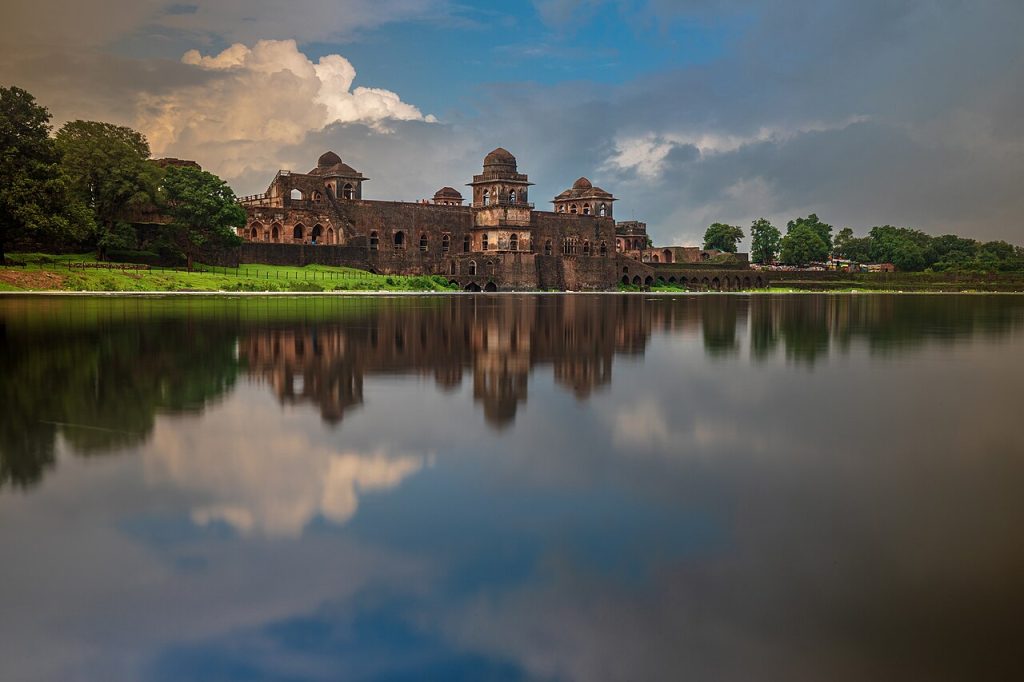
Jahaz Mahal, the Ship Palace
The Jahaz Mahal stands on a narrow strip of land between two artificial lakes, Munj Talao and Kapur Talao. From certain angles, it looks like a ship floating on the water, which explains its name. Historians believe it served as a palace for the women of the royal court.
Arches, Pools and Terraces
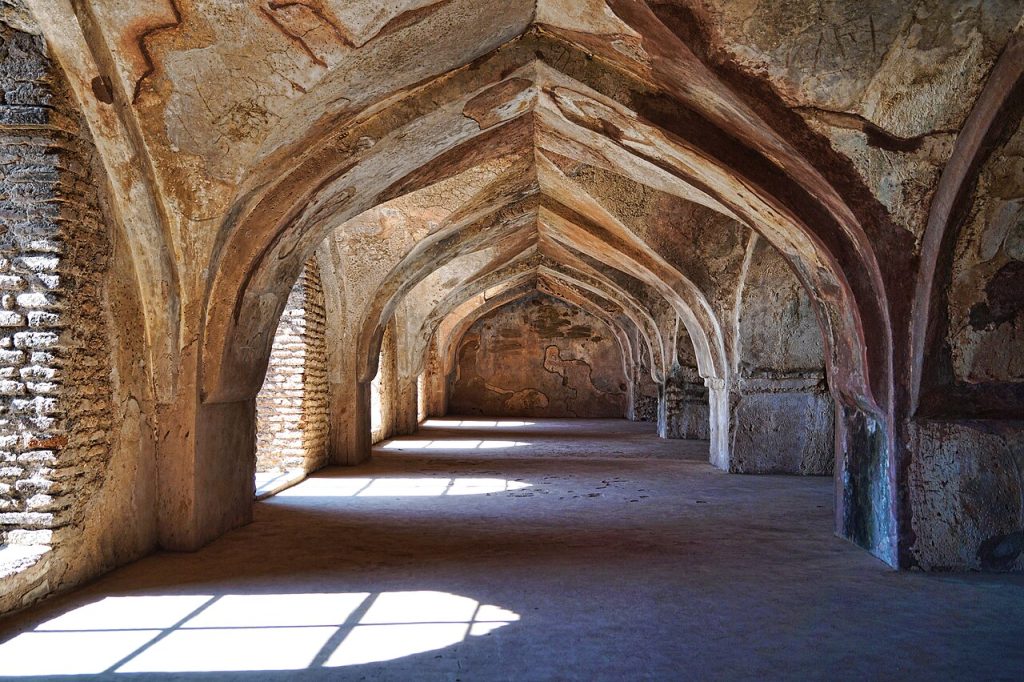
Inside, long corridors of arches lead to open terraces and pavilions. On the roof, you will also find an elegant bathing pool with a curving stone channel. During the monsoon, when the lakes are full, the reflections are stunning.
Hindola Mahal, the Swing Palace
Next door, the Hindola Mahal has massive sloping walls. Because of this unusual design, the building appears to sway, so people call it the Swing Palace. Its simple, powerful form makes a striking contrast with the graceful Jahaz Mahal.
The Village Group: Tomb and Mosque
In the centre of the village, two of the finest monuments in Mandu stand side by side.
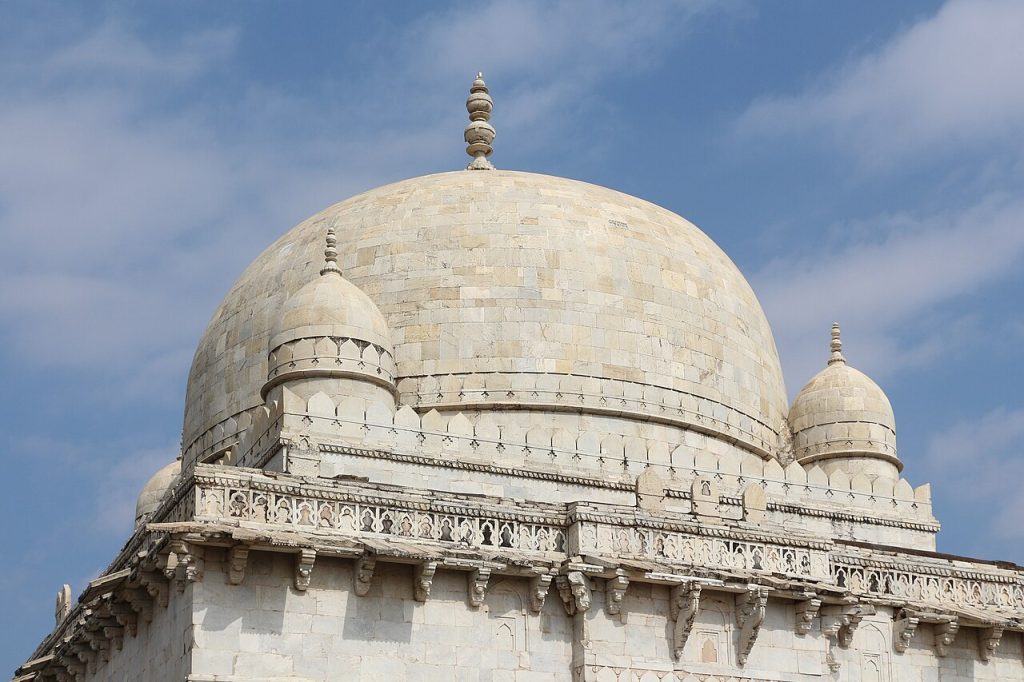
Hoshang Shah’s Tomb is one of the earliest marble buildings in India. Its white dome, latticed screens and perfect proportions make it a true masterpiece. Many people believe it later served as a model for the Taj Mahal.
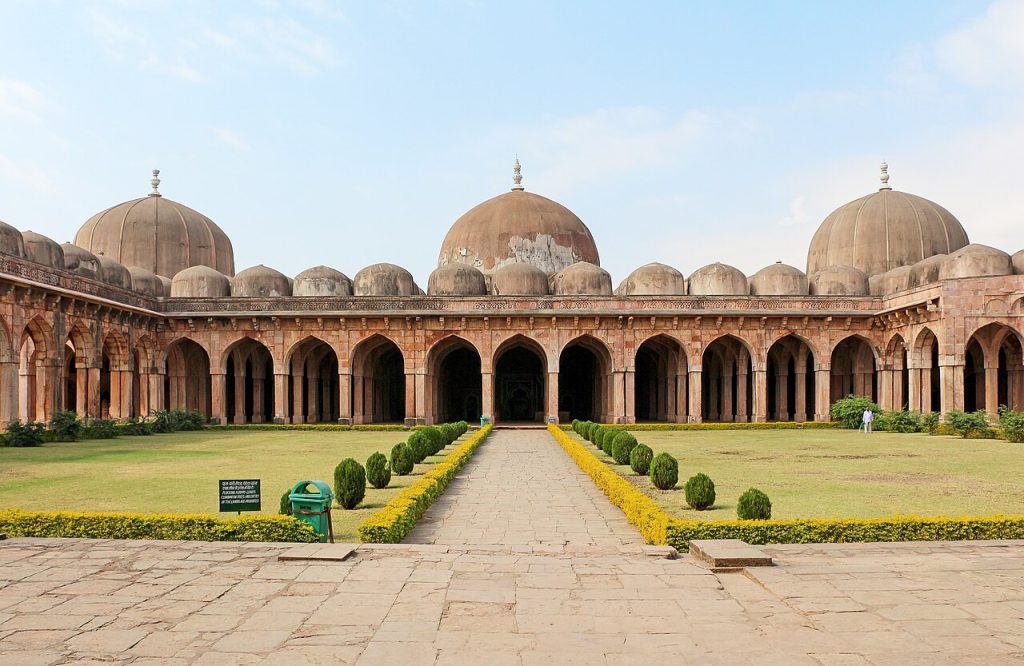
Opposite the tomb, the Jami Masjid is a vast mosque inspired by the Great Mosque of Damascus. Its courtyard is surrounded by rows of arches and topped with dozens of small domes. Similarly, the prayer hall feels calm and spacious.
Rewa Kund, Roopmati and the Southern Edge
The southern part of the plateau holds the romantic heart of Mandu India.
Baz Bahadur and Rani Roopmati
According to legend, Sultan Baz Bahadur fell in love with Roopmati, a gifted singer from the region.
A Royal Love Story
Their romance became a favourite subject of poems and paintings. Sadly, the story ends in tragedy. When Mughal forces captured Mandu in 1561, Roopmati is said to have taken poison rather than be captured.
Baz Bahadur’s Palace
Below the ridge, Baz Bahadur’s Palace has spacious courtyards and terraces. Nearby, the Rewa Kund reservoir once supplied water to the pavilion above.
Rani Roopmati’s Pavilion
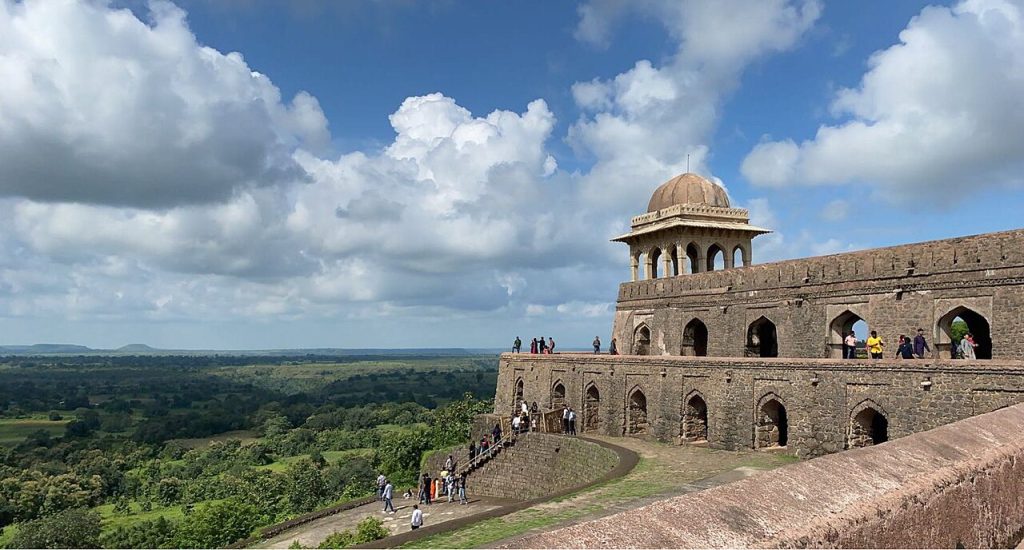
High on the edge of the plateau, Rani Roopmati’s Pavilion offers sweeping views over the Narmada valley. Above all, come here for sunset, when the plains below turn gold.
Viewpoints and Gorges
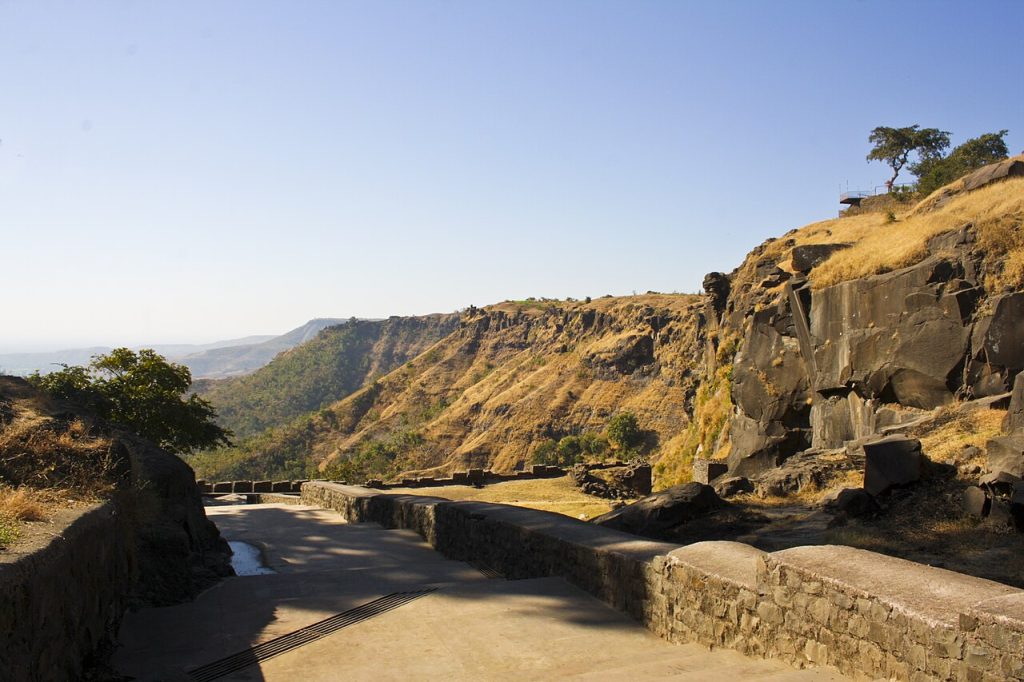
Along the road into Mandu, viewpoints overlook deep forested gorges. In the monsoon, waterfalls tumble down the cliffs, and the whole landscape turns bright green.
One Historical Fact About Mandu, India
An inscription at Hoshang Shah’s Tomb records that the Mughal emperor Shah Jahan sent four of his architects to study it in 1659. One of them was Ustad Hamid, who is linked to the building of the Taj Mahal. This is why many people call the tomb an early model for the Taj.
How to Get to Mandu, India
Indore is the main gateway to Mandu. Its Devi Ahilya Bai Holkar Airport has flights from Delhi, Mumbai and other major cities. Indore also has good rail connections.
From Indore, the drive to Mandu takes about two and a half to three hours. For convenience, most travellers hire a car with a driver. Buses also run from Indore and Dhar, although they are slower.
Once in Mandu, the monuments are spread out. So rent a bicycle, hire an auto rickshaw or use your car to move between them.
Best Time to Visit Mandu, India
The best time to visit Mandu is from October to March, when the weather is cool and dry. In addition, the Mandu Festival usually takes place in the winter months.
The monsoon, from July to September, is also a magical time. During these months, the lakes fill up and the plateau turns lush and green. Summer, on the other hand, is very hot.
Is Mandu, India Worth Visiting?
Yes, absolutely. Mandu offers grand palaces, beautiful tombs and romantic legends in a peaceful natural setting. Furthermore, it is easy to combine with a trip to Indore, Ujjain or Maheshwar. One or two days here will be among the highlights of any journey through central India.
Final Thoughts
Mandu India is a place where history and nature blend in perfect harmony. Explore the Ship Palace, admire the marble tomb and watch the sunset from Roopmati’s Pavilion. In the end, the quiet beauty of this lost city will stay with you long after you leave.
If you love historic forts and palaces, you may also enjoy our guides to Jaisalmer, India and Bandipur, Nepal.
Image Credits
Wikimedia Commons
- Jahaz Mahal Mandu: Photo by Chetansoni via Wikimedia Commons (CC BY-SA 4.0)
- Jahaz Mahal Arches: Photo by Vinat via Wikimedia Commons (CC BY-SA 4.0)
- Hoshang Shah Tomb: Photo by Bernard Gagnon via Wikimedia Commons (CC BY-SA 3.0)
- Jami Masjid Mandu: Photo by Bernard Gagnon via Wikimedia Commons (CC BY-SA 3.0)
- Rani Roopmati Pavilion: Photo by Squirealll via Wikimedia Commons (CC BY-SA 4.0)
- Lohani Gorge Viewpoint: Photo by Indrajit Das via Wikimedia Commons (CC BY-SA 4.0)