Indeed, Bora Bora, French Polynesia is the island that launched a thousand honeymoon brochures. In fact, its lagoon is so famously turquoise that photographs of it rarely need any editing. Thatched-roof bungalows perch on stilts above the water, and Mount Otemanu rises sharply behind them. Still, there is more to this island than postcard views. Reef sharks and stingrays patrol the shallows, and World War Two history sits quietly beneath the palm trees. In short, this guide covers what makes Bora Bora French Polynesia worth the long flight.
Quick Facts About Bora Bora, French Polynesia
| Country | French Polynesia (French overseas collectivity) |
| Region | Society Islands, South Pacific |
| Known For | Overwater bungalows, turquoise lagoon, Mount Otemanu, and coral reef snorkeling |
| UNESCO Status | Not a UNESCO World Heritage Site |
| Founded | Settled by Polynesian voyagers around 800 CE, later a French protectorate from 1888 |
| Best Time to Visit | May to October (dry season) |
| Time Needed | Three to five days |
| Continent | Oceania |
Where is Bora Bora, French Polynesia?
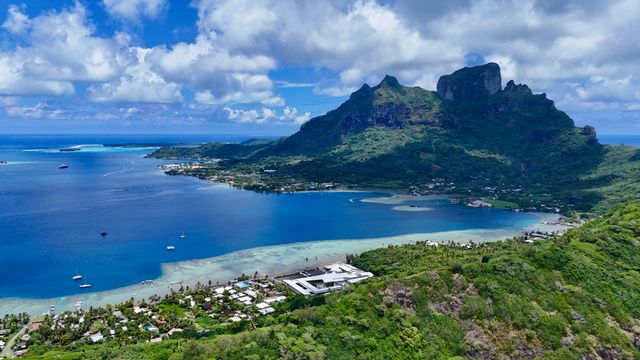
In general, Bora Bora sits in the Society Islands, part of French Polynesia in the South Pacific. Specifically, it lies about 230 kilometers (143 miles) northwest of Tahiti, the territory’s main island. Notably, a barrier reef encircles the island, enclosing a shallow lagoon prized for its clarity. Inside that ring, small motu, or islets, dot the water and host most of the island’s resorts. Generally, the main island itself is reachable only by boat, since the airport sits on its own separate motu.
Why Visit Bora Bora, French Polynesia?
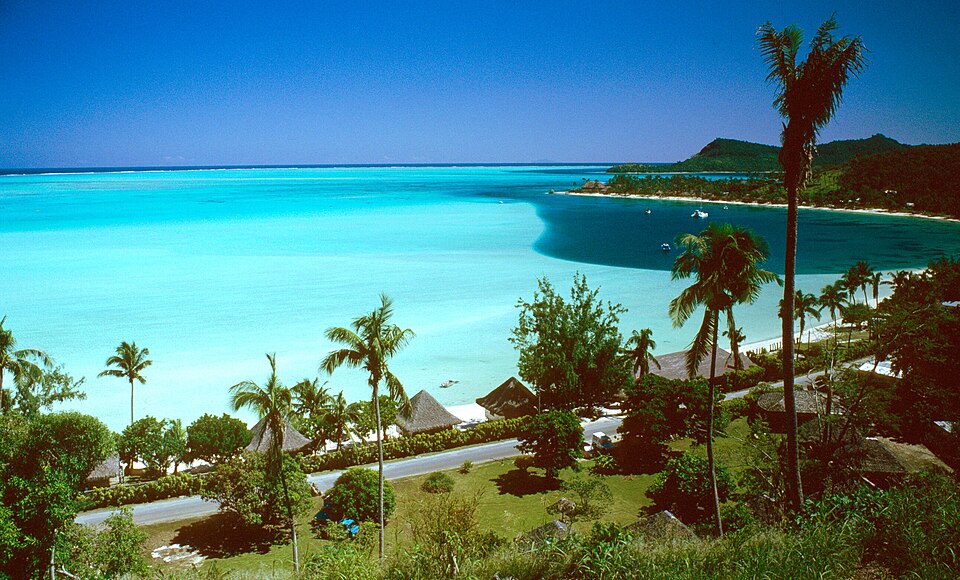
Bora Bora French Polynesia is worth visiting for a simple reason: few lagoons anywhere match its color. The water shifts from pale turquoise near the sand to deep sapphire further out, often within a few steps. In addition, the island’s peaks, Mount Otemanu and Mount Pahia, give every view a dramatic backdrop. In fact, even a short walk along the shore delivers postcard scenery.
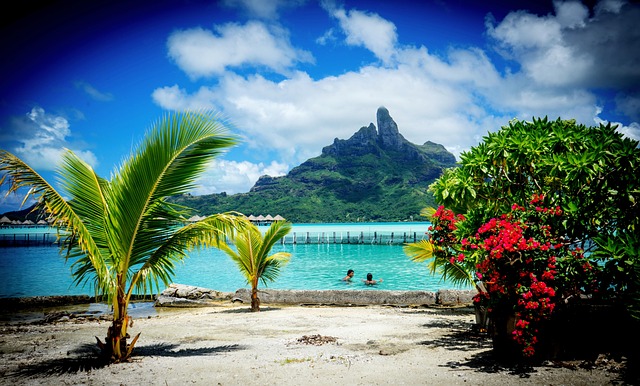
Still, beyond the views, Bora Bora rewards travelers who want to slow down. Overall, the pace here favors long lagoon swims, quiet dinners, and unhurried mornings over packed itineraries. Nevertheless, the island still offers enough snorkeling, hiking, and cultural history to fill several days. For many visitors, that balance of relaxation and activity is exactly the draw.
Overwater Bungalows: Bora Bora’s Signature Stay
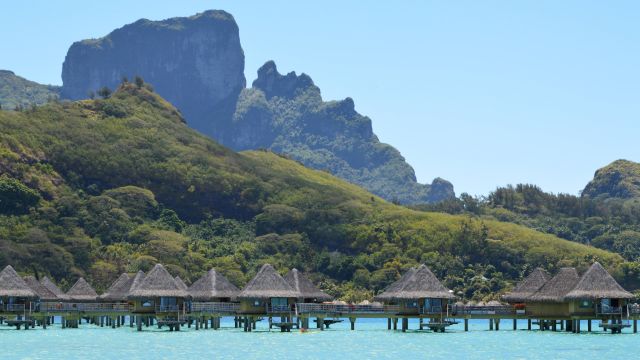
Bora Bora is largely responsible for popularizing the overwater bungalow, and the style still defines the island’s resorts today. Specifically, these thatched-roof rooms sit on stilts above the lagoon, connected to shore by long wooden walkways.
How the Overwater Bungalow Began
The concept dates back to 1967, when the original Hotel Bora Bora built the first bungalows over the water. Three young Americans reportedly came up with the idea after noticing how naturally the lagoon suited the design. Consequently, the style spread across French Polynesia and later to resorts throughout the Pacific and Indian Oceans. Bora Bora, however, remains the place most closely associated with it.
A Day on the Water
Generally, most overwater bungalows include a private deck. Many also add a glass panel or ladder leading straight into the lagoon. As a result, guests can swim, paddleboard, or simply watch fish beneath their room without ever stepping onto sand. Wooden boardwalks connect each bungalow to the next, winding across the water toward shore.
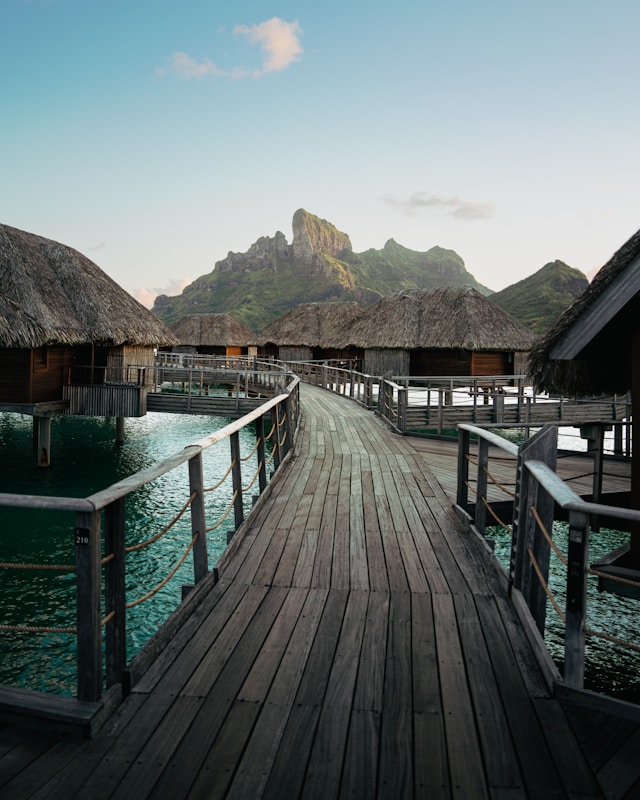
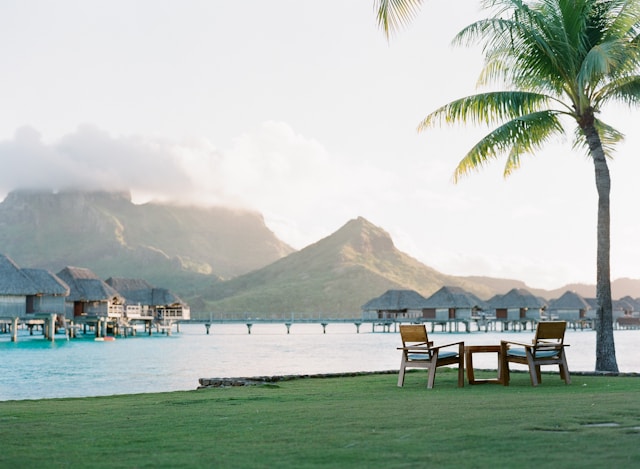
In the evenings, in particular, these walkways offer some of the best views on the island. Mount Otemanu often catches the last light while the lagoon settles into stillness.
Choosing a Motu
Bora Bora’s resorts are spread across several motu around the main island, and the choice of motu affects the view. Some face Mount Otemanu directly, while others look out toward the open ocean or neighboring islands. Generally, travelers who want the classic mountain backdrop should check a resort’s orientation before booking.
[Image 7: bora-bora-overwater-bungalow-row]
Snorkeling and Marine Life in the Lagoon
Bora Bora’s lagoon is not just scenic. In fact, it is genuinely alive with marine life, and snorkeling here rarely requires a boat trip to feel rewarding. Shallow coral gardens sit close to shore in several spots. The calm, clear water makes them easy to explore, even for beginners.
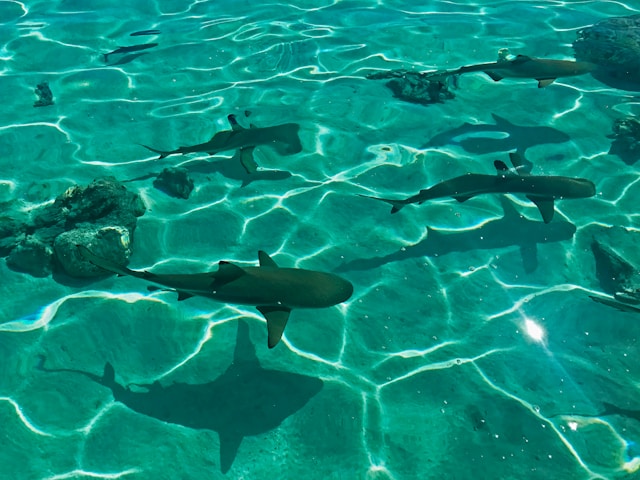
Blacktip reef sharks are among the most common sightings, and they typically stay in shallow water rather than deeper channels. Consequently, most encounters happen at knee to waist depth, which makes them approachable rather than intimidating for most swimmers.
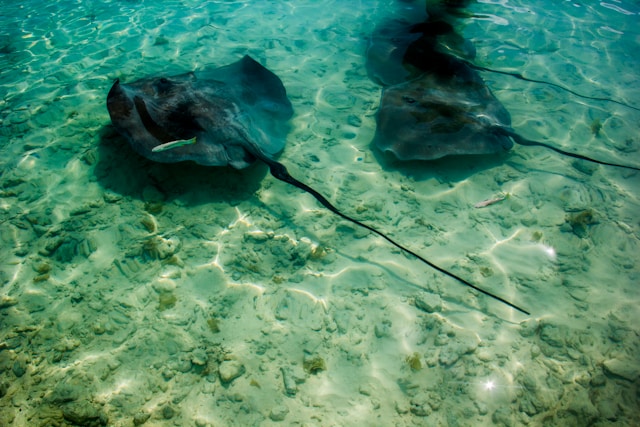
Stingrays share the same shallows and often glide directly past waiting snorkelers. Several tour operators run dedicated stingray and shark feeding excursions, sometimes called a lagoon safari. These trips bring visitors close to both species in a controlled setting.
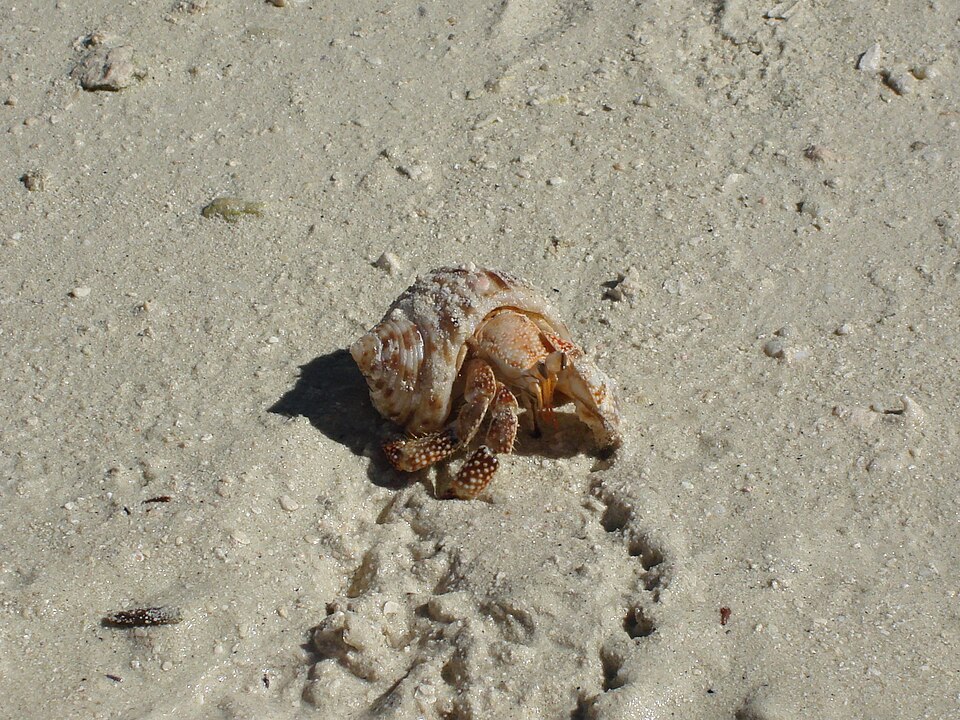
Smaller creatures reward a closer look too. Hermit crabs, for example, cross the beaches in large numbers at certain times of day. Tucked into borrowed shells, they leave small tracks across the sand. Even a short walk along the shoreline often turns up several.
Mount Otemanu and the Island’s Wild Side
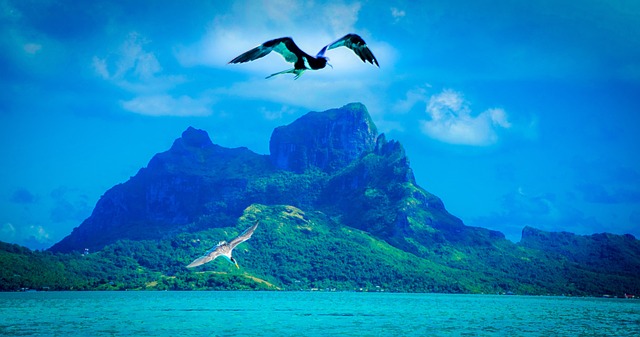
Bora Bora’s interior is as striking as its lagoon. Two volcanic peaks dominate the skyline, rising straight from the water’s edge.
The Island’s Volcanic Skyline
Mount Otemanu
Mount Otemanu is the island’s tallest peak, reaching about 727 meters (2,385 feet). Its jagged summit, formed by an extinct volcano, is visible from nearly every point on the island. Notably, the peak’s steep, crumbling slopes make it too dangerous to summit. Instead, most visitors admire it from a distance or by helicopter tour.
Mount Pahia
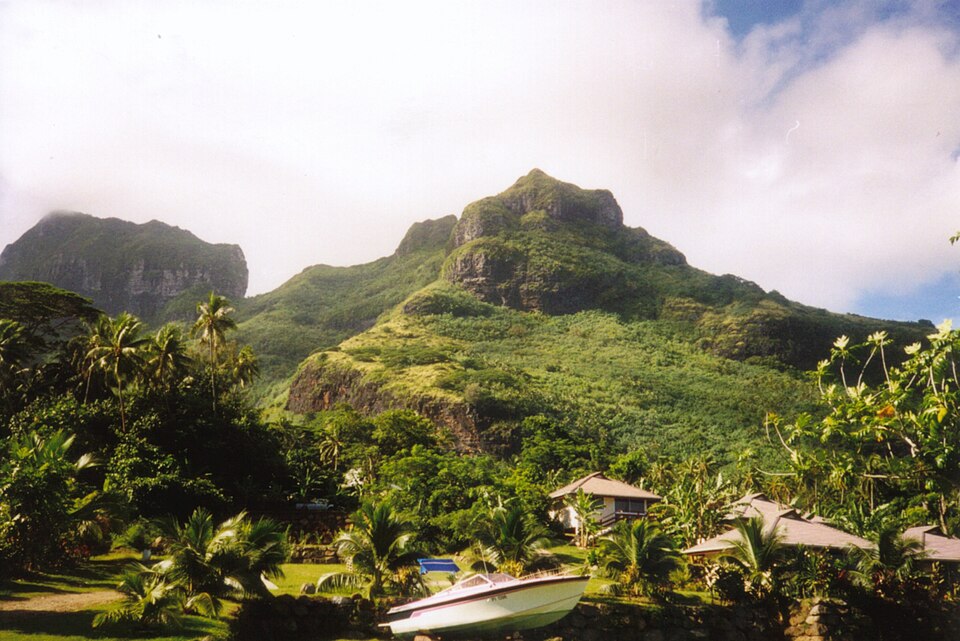
Mount Pahia sits closer to the main village of Vaitape and is somewhat more accessible, though still a serious hike. In particular, guided treks up its lower slopes reward climbers with sweeping views over the lagoon and surrounding motu.
Birds and Garden Views Around the Island
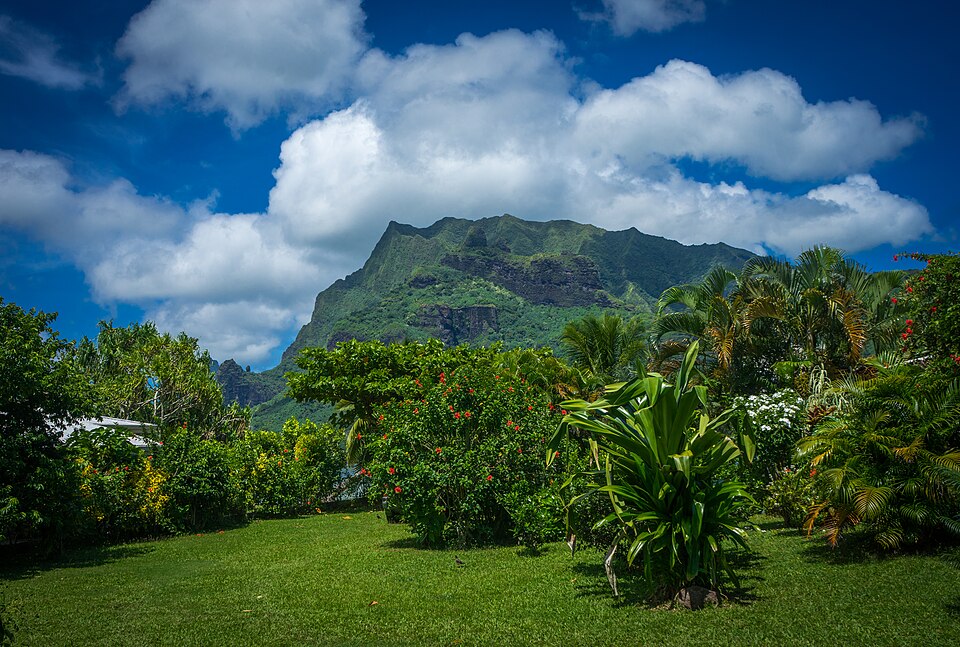
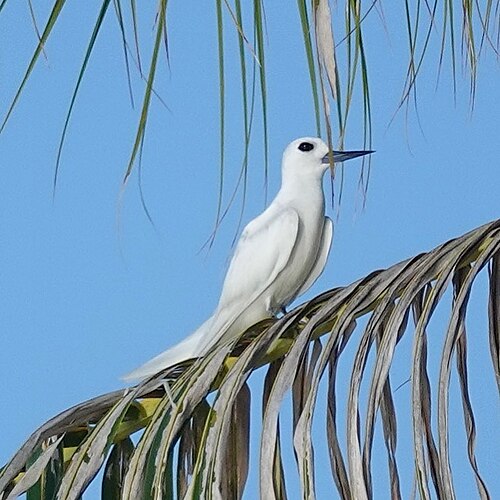
Away from the water, Bora Bora’s resorts and gardens attract a range of birdlife. Notably, this includes the white tern, a small seabird known for nesting without building an actual nest. Lush hibiscus and tropical foliage frame many of the island’s mountain views, especially around resort grounds and quieter residential roads.
One Historical Fact About Bora Bora, French Polynesia
Bora Bora played a significant role in World War Two, though few visitors expect to find that history here. In 1942, the United States established a major supply base on the island, part of Operation Bobcat. Thousands of American troops were stationed there to refuel and resupply ships crossing the Pacific. Remarkably, the base saw no direct combat, and many locals still recall it as a period of unexpected prosperity. Several rusting cannons remain on the island today, tucked into the hillsides as quiet reminders of that era.
How to Get To Bora Bora, French Polynesia
Most visitors reach Bora Bora through Tahiti’s Faa’a International Airport near Papeete, the territory’s main gateway. From there, short domestic flights operated by Air Tahiti connect to Bora Bora’s own airport. That airport sits on a motu just north of the main island. Since the airport is not on the main island itself, every resort arranges a boat transfer to complete the journey. Generally, this final leg takes between ten and forty five minutes, depending on the resort’s location.
Best Time to Visit Bora Bora, French Polynesia
Bora Bora’s dry season runs from May through October, and it generally offers the most reliable weather for lagoon activities. Humidity and rainfall increase from November through April, though temperatures stay warm year round. Specifically, July and August draw the largest crowds and highest prices. As a result, travelers seeking better value often target the shoulder months of May, June, September, or October.
Is Bora Bora, French Polynesia Worth Visiting?
For travelers drawn to overwater accommodations, coral reefs, or simply a strikingly photogenic landscape, Bora Bora is worth the trip. However, it is also one of the more expensive destinations in the Pacific. Budget travelers may find better value elsewhere in French Polynesia. Furthermore, the island’s remote location means getting there takes real planning and time. Nevertheless, for a milestone trip or a genuine escape, few places deliver the same combination of scenery and calm.
Final Thoughts
Bora Bora, French Polynesia rewards travelers who come for the lagoon and stay for the slower pace it encourages. Between the overwater bungalows, the coral gardens, and Mount Otemanu’s steady presence, the island rarely runs short of things worth noticing. In addition, if you are drawn to islands shaped by both natural beauty and unexpected history, consider pairing this trip with Akaroa, New Zealand. It offers a similarly striking harbour town with its own French colonial roots.
Image Credits
Featured Image
Where is Bora Bora, French Polynesia?
- Elevated aerial view of the lagoon and motu — Photo by François Balédent from Pexels
Why Visit Bora Bora, French Polynesia?
- Palm fronds and flowers framing the lagoon — Image by Michelle-Maria on Pixabay
- Hillside view over Matira Beach — Scott Williams, CC BY 2.5, via Wikimedia Commons

Overwater Bungalows: Bora Bora’s Signature Stay
- Wooden boardwalk to the overwater bungalows — Photo by John Ko on Unsplash
- Lounge chairs facing the lagoon — Photo by Paulina Cadoret on Unsplash
- Row of overwater bungalows beneath the peak — Photo by SlimMars 13 from Pexels
Snorkeling and Marine Life in the Lagoon
- Blacktip reef sharks in shallow water — Photo by Tomas Gonzalez de Rosenzweig on Unsplash
- Stingrays gliding over the lagoon floor — Photo by Daniel Bettech on Unsplash
- Hermit crab crossing the sand — Sergio Calleja, CC BY-SA 2.0, via Wikimedia Commons

Mount Otemanu and the Island’s Wild Side
- Seabirds flying over Mount Otemanu — Image by Michelle-Maria on Pixabay
- Mount Pahia seen among the palms — Makemake, CC BY-SA 3.0, via Wikimedia Commons
- Garden lawn beneath the mountain peak — Michelle Maria, CC BY 3.0, via Wikimedia Commons
- White tern perched on a palm frond — Mike’s Birds, CC BY-SA 2.0, via Wikimedia Commons

.jpg)
.jpg)