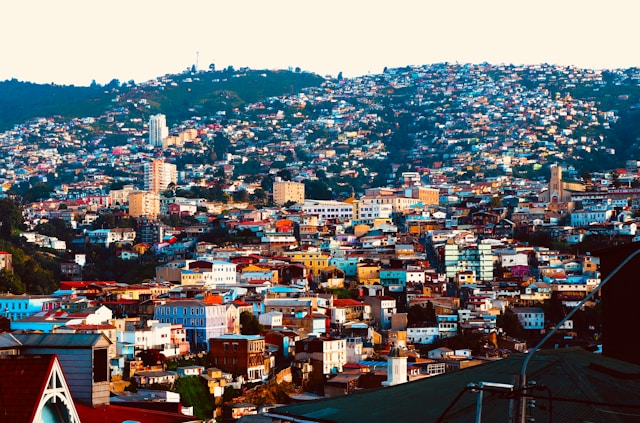
Valparaiso, Chile is one of those places that photographs never quite prepare you for. This is a real working port city, not a curated tourist set piece. Thousands of houses in every imaginable color climb more than forty hills here. Staircases, alleyways, and century old funiculars connect the neighborhoods instead of a grid of streets. Wander just a few blocks and you will find a mural, a stray cat on a step, or a view of the Pacific. In short, Valparaiso Chile rewards travelers who are willing to get a little lost. This guide covers what makes the climb worth it.
So, this guide covers the best things to do in Valparaiso, along with tips on how to get there and when to visit Valparaiso.
Quick Facts About Valparaiso, Chile
| Country | Chile |
| Region | Valparaíso Region, Central Chile |
| Known For | Colorful hillside houses, street art, historic funiculars, and steep stairways overlooking the Pacific |
| UNESCO Status | Historic Quarter of the City of Valparaíso is a UNESCO World Heritage Site, inscribed in 2003 |
| Founded | Founded in 1536, with major growth as a port city through the 19th century |
| Best Time to Visit | Spring and autumn |
| Time Needed | One to two full days |
| Continent | South America |
Where is Valparaiso, Chile?
Valparaiso sits on Chile’s central coast, about 120 kilometers (75 miles) northwest of the capital, Santiago. As a result, it makes an easy day trip or overnight stop for most visitors to the country. In general, the city curves around a wide bay. From the waterfront, its historic core rises almost straight up across a series of steep hills known locally as cerros. Naturally, that vertical layout is what gives Valparaiso its distinctive skyline of stacked rooftops. Consequently, it has earned a reputation as one of South America’s most visually striking port cities.
Map showing the location of Valparaiso on Chile’s central coast, northwest of Santiago.
Why Visit Valparaiso, Chile?
Valparaiso Chile is worth visiting for a simple reason: no two blocks look alike. Indeed, the city’s hills were settled informally over generations. As a result, instead of a planned grid, you get a maze of narrow lanes and dead end staircases. Generally, houses here were built from whatever material was on hand at the time, often corrugated metal or salvaged wood. That improvised character became the foundation for one of South America’s most active street art scenes. Furthermore, it also gave the city sweeping views that are hard to match anywhere else on the continent.
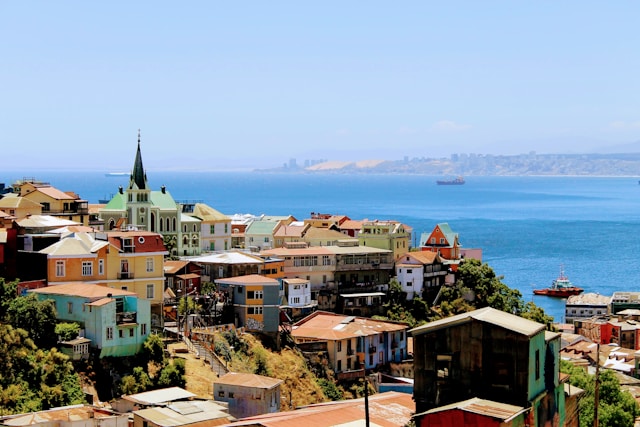
Beyond the visuals, Valparaiso has a real working history as Chile’s main Pacific port. In fact, that maritime identity still shapes daily life today. Cargo ships pass through the bay, and fishing boats dock near the market. Meanwhile, the old funiculars that once carried dockworkers up the hills are still in operation. Ultimately, this is a city that rewards slow travel and plenty of walking. So, stop for the view every few minutes, and you will not regret it.
The Colorful Hills of Valparaiso
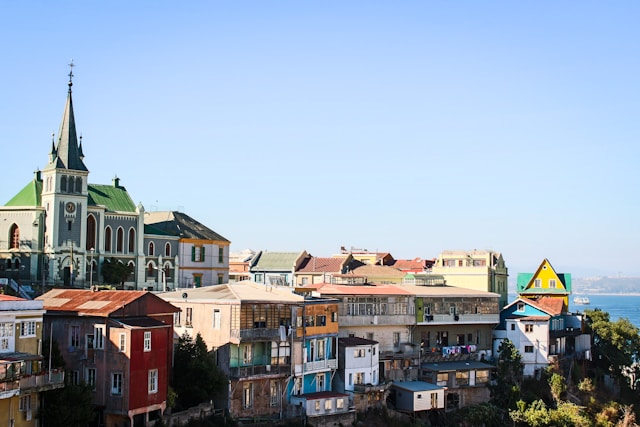
The hills of Valparaiso, particularly Cerro Alegre and Cerro Concepción, are the reason most people visit in the first place. Specifically, these two neighborhoods sit side by side above the port. Overall, they hold the highest concentration of the city’s painted houses, boutique hotels, and small cafes. Walking between them is less about hitting a checklist of sights. Instead, it is about following whichever staircase or lookout catches your eye next.
Cerro Alegre and Cerro Concepción
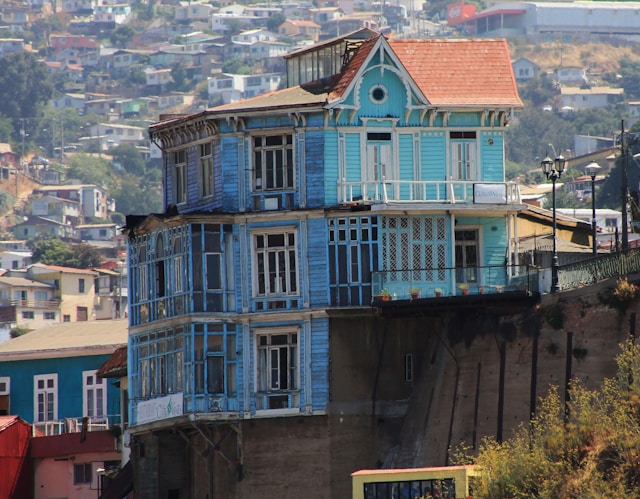
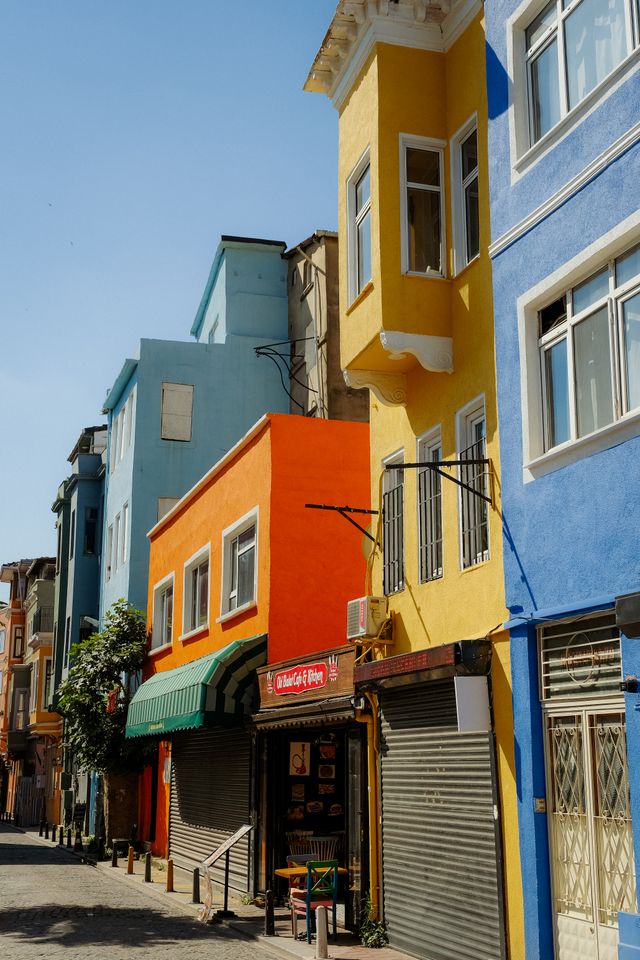
These twin hills form the historic heart of Valparaiso and the core of its UNESCO listed district. In particular, wooden houses in mismatched shades of blue, yellow, ochre, and green line the streets. Most, in fact, are barely wide enough for a car. Many of these houses date back to the 19th century. At that time, British and German merchants settled here, staying close to the port. In addition, balconies with rusted iron railings, corrugated metal siding, and steep gabled roofs complete the look. Overall, the area feels part European seaport, part self built hillside town.
A City Built on Staircases
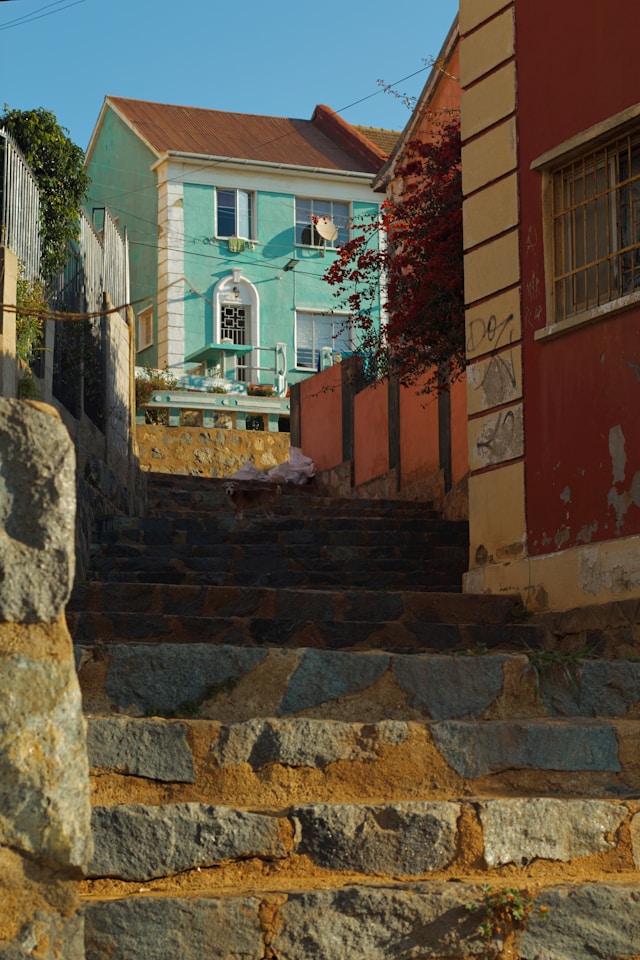
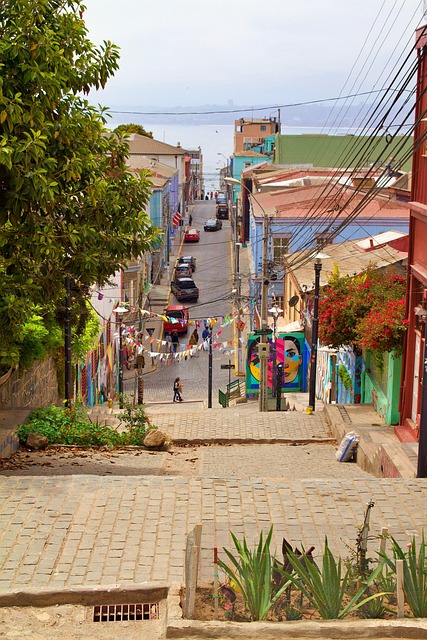
Valparaiso is too steep for a conventional street grid. Instead, it relies on staircases, footpaths, and a handful of historic funiculars called ascensores. Several of these funiculars have been running since the late 1800s and, in fact, remain in daily use. Even so, many visitors end up on foot, since the stairways themselves are part of the experience. In the meantime, expect uneven stone steps and the occasional resident dog keeping watch. Glimpses of the bay open up between houses as you climb.
Wandering the Back Streets
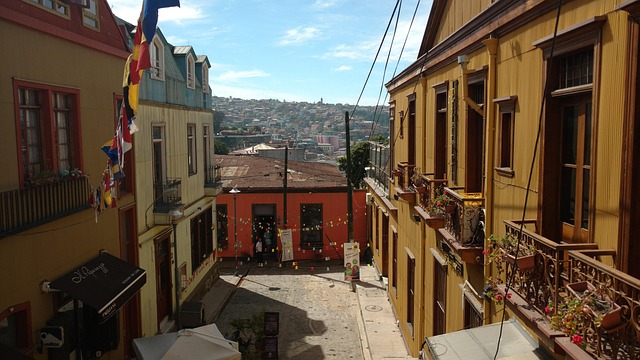
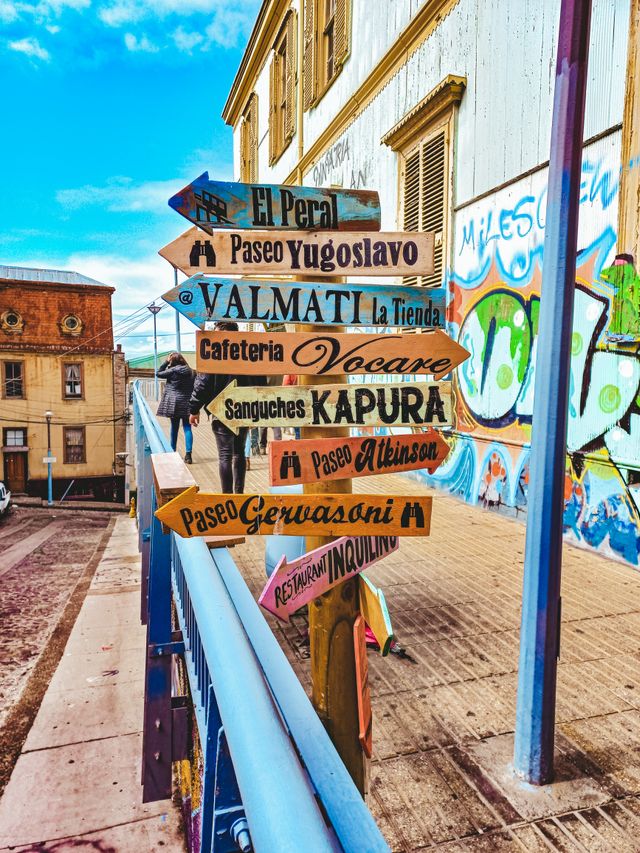
The real appeal of Cerro Alegre and Cerro Concepción is getting off the main paths. Side streets are strung with flags, laundry lines, and hand painted signs pointing toward viewpoints, cafes, and sandwich shops. In fact, it is easy to spend an hour just following whichever alley looks most interesting. Locals have leaned into the maze like quality of the neighborhood. They have added directional signposts and small murals, which make wayfinding part of the fun rather than a frustration.
Street Art and Murals on Every Wall
Valparaiso street art is not confined to a single gallery district or a few sanctioned walls. Instead, it covers entire building facades, staircases, doorways, and alleys across the hillside neighborhoods. This scene has been building for decades, rather than appearing overnight. What truly sets the city apart, though, is how integrated the art is with everyday life.

A mural might wrap around someone’s front door. Another might cover the side of a community cultural center. Elsewhere, a plain corrugated metal wall becomes a portrait several stories tall. For example, a bright red door numbered 173 sits framed by a mural of tilted, stacked buildings. A small painted cat completes the scene. A few streets over, an entire orange building facade is given over to a face rendered in blues and golds. Some of these pieces are signed and dated by well known Chilean muralists. Others remain anonymous, having simply become part of the landscape over time.
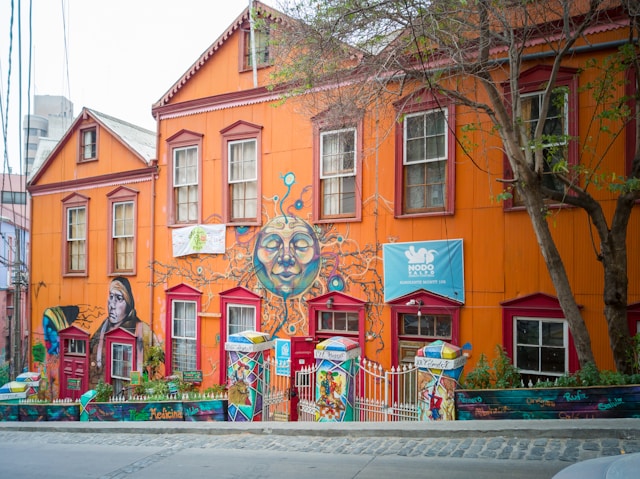
Spend even a single afternoon walking Cerro Alegre and Cerro Concepción. You will lose count of how many distinct works you pass, which is exactly the point. After all, the murals are not meant to be sought out one by one. Rather, they are meant to be absorbed as part of the walk itself. In that sense, an ordinary stroll becomes something closer to an open air gallery.
Valparaiso’s Famous Painted Staircases
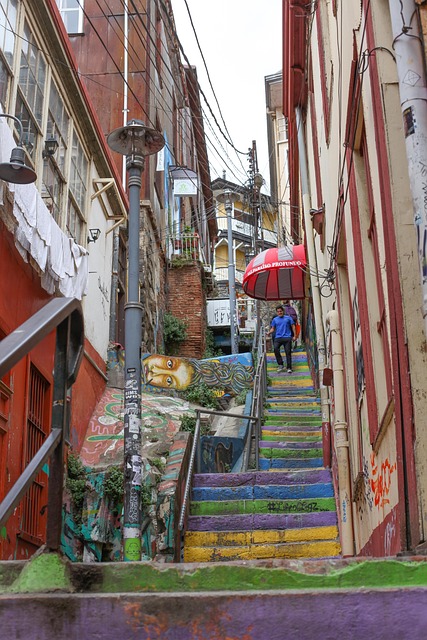
If the murals are Valparaiso’s most photographed feature, the painted staircases run a close second. So much of daily movement here happens on foot, up and down the hills. As a result, residents and local artists have turned many stairways into art projects of their own. They use paint to brighten what would otherwise be plain concrete or stone.
Rainbow Staircases Across the City
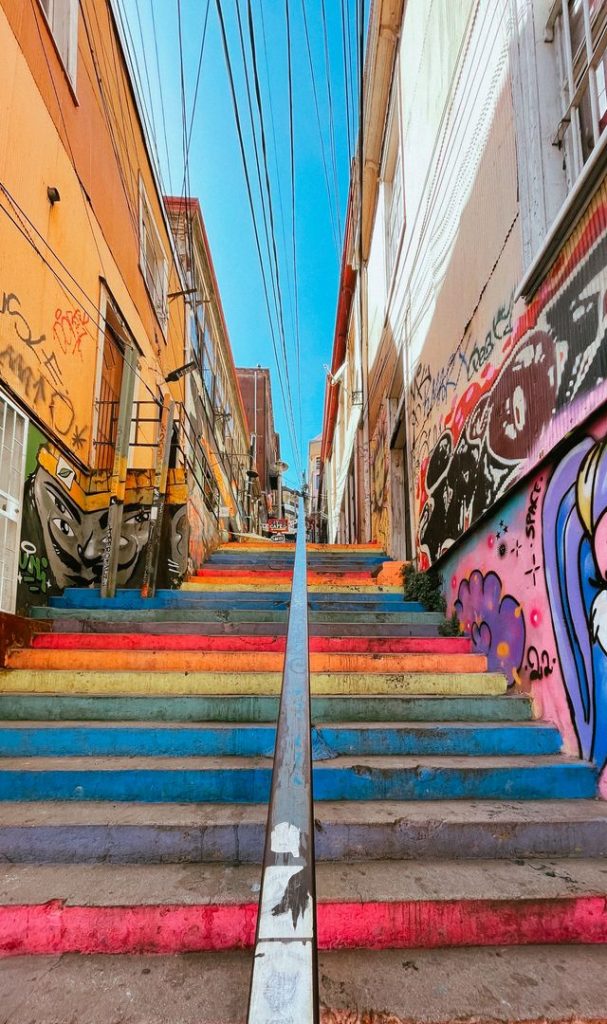
Several of the city’s best known stairways are painted in bold horizontal bands of color. This transforms a simple climb into one of the more memorable parts of a visit.
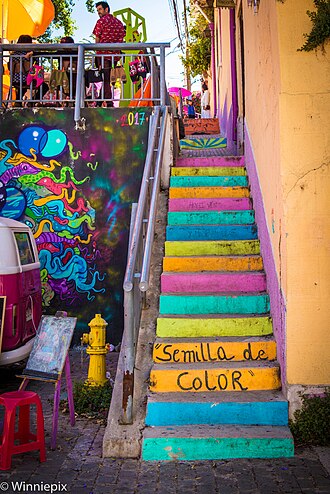
Semilla de Color
One of the most photographed examples is known as Semilla de Color, or Seed of Color. Here, pink, teal, and lime green steps lead past a mural of a swirling octopus. A yellow fire hydrant and a vintage pink Volkswagen van are often parked at the base, adding to the scene’s charm.
Painted Risers with Local Art
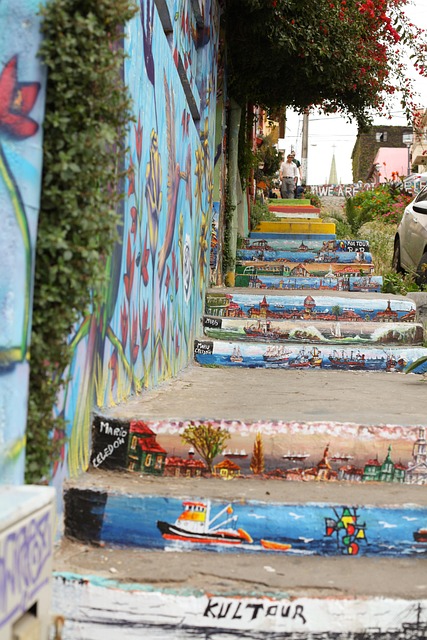
Elsewhere, individual stair risers have been hand painted with small folk art scenes rather than solid color blocks. These scenes show fishing boats, coastal towns, and local landmarks. These are frequently signed by the artists who painted them. As a result, a single staircase becomes a rotating gallery of miniature works.
Iconic Alleys and Mosaic Stairs
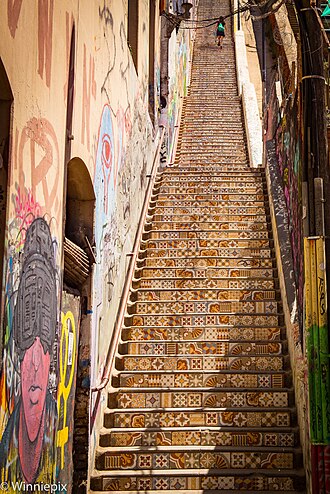
Beyond the rainbow steps, Valparaiso has narrow alley stairways framed by layered graffiti walls. It also has long, straight staircases painted in clean horizontal bands with a central metal handrail. At least one staircase is covered entirely in ornate patterned ceramic tiles rather than paint. Each has its own character. Locals can usually point you toward whichever one is nearest, depending on which cerro you are exploring.
One Historical Fact About Valparaiso, Chile
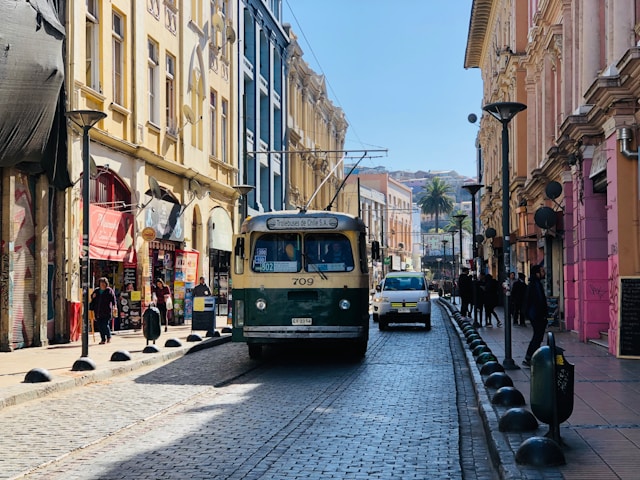
Valparaiso is home to one of the oldest continuously operating trolleybus systems in the world. Trolebuses de Chile has run electric trolleybuses through the city’s streets since 1952. Several of the original vehicles remain in daily service today. This makes the commute through downtown Valparaiso feel like a rolling piece of transit history. Elsewhere in South America, budget cuts and modernization pressure shut down similar networks over the decades. Valparaiso’s system survived, however. It remains a point of local pride and a practical way to get around the flatter parts of the city.
How to Get To Valparaiso, Chile
Most travelers reach Valparaiso from Santiago, either by bus or by car along Route 68, a drive that typically takes 90 minutes to two hours depending on traffic. Frequent bus services run throughout the day from Santiago’s main terminals and are generally the easiest and most affordable option for visitors without a rental car. Santiago’s international airport also makes Valparaiso reachable as a first or last stop on a broader Chile itinerary, with airport shuttles and private transfers available directly to the coast. Once in the city, taxis, ride hailing apps, and the local trolleybus and funicular systems cover most practical transportation needs, though the historic core is best explored entirely on foot.
Best Time to Visit Valparaiso, Chile
Spring, from September through November, and autumn, from March through May, offer the most comfortable weather for walking the hills. Both seasons bring mild temperatures and lower rainfall than winter. Summer, from December through February, brings warmer weather and more crowds. This is particularly true around the coastal resort town of Viña del Mar next door. Winter, on the other hand, can bring cooler temperatures and more frequent rain. This makes the steep cobblestone streets slicker underfoot. For anyone planning to spend most of a visit climbing stairways and photographing murals, the shoulder seasons are ideal. They offer the best balance of good weather and manageable crowds.
Is Valparaiso, Chile Worth Visiting?
Valparaiso is well worth the trip for travelers interested in street art and architecture. It also rewards anyone who prefers curiosity over planning. That said, it is not a polished or manicured destination. Many buildings show real wear, and some streets can feel a bit rough around the edges. On top of that, the hills demand a reasonable level of fitness to explore comfortably. In return, though, Valparaiso offers a genuinely distinctive sense of place that few other South American port cities can match. It also offers easy access from Santiago, which makes it simple to add to almost any Chile itinerary.
Final Thoughts on Valparaiso
Valparaiso Chile is best experienced slowly, on foot, with no strict itinerary. The city’s real highlights are not concentrated in a single museum or landmark. Instead, they are scattered across dozens of hillside blocks. They are tucked into stairways, painted onto walls, and framed by views of the bay. Give yourself at least a full day to wander Cerro Alegre and Cerro Concepción. From there, ride one of the old funiculars. Let the staircases guide you toward whatever mural or viewpoint comes next. If you are building out a broader South America itinerary, colorful colonial streets are not unique to Chile either. Consider pairing this trip with a stop in Colonia del Sacramento, Uruguay, another walkable, photogenic port town just across the water from Buenos Aires.
Image Credits
Featured Image
- Panoramic view of Valparaiso’s colorful hillside houses — Michelle Maria, CC BY 3.0, via Wikimedia Commons
.jpg)
Where is Valparaiso, Chile?
Why Visit Valparaiso, Chile?
- View of Valparaiso’s bay and church tower — Photo by suansita k on Unsplash
- Church and colorful rooftops in Valparaiso — Photo by Fabiola Llerena on Unsplash
The Colorful Hills of Valparaiso
- Blue Victorian house on a Valparaiso hillside — Photo by Leonie Clough on Unsplash
- Colorful buildings along a Valparaiso street — Photo by Mathias Reding from Pexels
- Stone stairway leading to hillside homes in Valparaiso — Photo by Luis Chávez on Unsplash
- Hillside street with flags in Valparaiso — Image by fabifer from Pixabay
- Wooden directional signpost in Valparaiso — Photo by ignacia navarrete from Pexels
- Hillside street with mural view in Valparaiso — Image by Jonny_Joka from Pixabay
Street Art and Murals on Every Wall
- Red door street art mural in Valparaiso — Photo by Olivier Chatel on Unsplash
- Orange mural building facade in Valparaiso — Photo by David Vives on Unsplash
Valparaiso’s Famous Painted Staircases
- The Semilla de Color painted stairway in Valparaiso — Sue Winston (Winniepix), CC BY 2.0, via Wikimedia Commons
- Hand painted stairway street art in Valparaiso — Image by coolabtmc from Pixabay
- Rainbow stairway in a Valparaiso alley — Image by coolabtmc from Pixabay
- Rainbow stairway with metal rail in Valparaiso — Photo by Larissa De Araujo Oliveira from Pexels
- Tiled mosaic stairway in Valparaiso — Sue Winston (Winniepix), CC BY 2.0, via Wikimedia Commons
.jpg)
.jpg)
One Historical Fact About Valparaiso, Chile
- Vintage trolleybus on a Valparaiso street — Photo by Tyler Gooding on Unsplash