Old San Juan, Puerto Rico: The Walled Caribbean Gem

Old San Juan is one of the most colorful and historic destinations in the Caribbean. Perched on a small island connected to mainland Puerto Rico, this centuries-old district enchants visitors with its vibrant colonial buildings, blue cobblestone streets, imposing fortifications, and spectacular ocean views. Every corner tells a story, whether through weathered stone walls, brightly painted facades, or plazas that have witnessed generations of history.

Founded by Spanish settlers in the early sixteenth century, Old San Juan is among the oldest continuously inhabited European-established settlements in the Americas. Today, it remains the cultural and historic heart of Puerto Rico, attracting travelers from around the world who come to experience its unique blend of Spanish colonial heritage, Caribbean atmosphere, and modern Puerto Rican culture.

Walking through Old San Juan feels like stepping into a living museum. Yet unlike many historic districts, it remains a vibrant community where residents, artists, musicians, and business owners continue to bring life to streets that have existed for centuries.

Quick Facts About Old San Juan

FactDetails
CountryPuerto Rico
Region/State/ProvinceSan Juan Municipality
Known ForColonial Architecture, Spanish Fortifications, Blue Cobblestone Streets
UNESCO StatusLa Fortaleza and San Juan National Historic Site (UNESCO World Heritage Site)
Founded1521
Best Time to VisitDecember to April
Time Needed1–2 Days
ContinentCaribbean

Where Is Old San Juan?

Old San Juan occupies the western end of Isleta de San Juan, a small island connected to the larger island of Puerto Rico by bridges and causeways. The district overlooks both San Juan Bay and the Atlantic Ocean, giving it strategic importance that shaped much of its history.

Its location made it a crucial port within the Spanish Empire. Ships carrying goods, treasure, and travelers frequently passed through San Juan, making the city one of Spain’s most valuable holdings in the Caribbean.

Today, Old San Juan remains easily accessible from Luis Muñoz Marín International Airport and serves as one of Puerto Rico’s most visited destinations.

[googlemaps https://www.google.com/maps/embed?pb=!1m18!1m12!1m3!1d1974223.197779092!2d-65.52814307260644!3d17.62326420043595!2m3!1f0!2f0!3f0!3m2!1i1024!2i768!4f13.1!3m3!1m2!1s0x8c036eb8b656b379%3A0x86bd62881c6ab915!2sViejo%20San%20Juan%2C%20San%20Juan%2C%2000901%2C%20Puerto%20Rico!5e0!3m2!1sen!2sph!4v1781481367236!5m2!1sen!2sph]
Map showing the location of Old San Juan, Puerto Rico.

Why Visit Old San Juan?

Old San Juan offers an extraordinary combination of history, architecture, culture, and scenery. Visitors can explore centuries-old forts, stroll along picturesque streets, admire colorful buildings, and experience Puerto Rican culture in a setting unlike anywhere else in the Caribbean.

The district’s compact size makes it ideal for walking. Nearly every street contains something worth seeing, whether it is a hidden courtyard, a historic church, a local café, or a panoramic ocean viewpoint.

Most importantly, Old San Juan remains authentic. It is not merely a tourist attraction but a living neighborhood where history continues to coexist with everyday life.

Colorful colonial buildings in Old San Juan Puerto Rico
Colorful colonial architecture is one of Old San Juan’s most recognizable features.

Guardian of Spain’s Caribbean Empire

Few places in the Caribbean possess a history as rich as Old San Juan. Founded in 1521, the city quickly became one of Spain’s most important settlements in the New World. Its strategic location near major shipping routes made it both valuable and vulnerable, attracting merchants, explorers, and enemies alike.

Historic fortress walls overlooking San Juan Harbor
Massive fortifications protected Old San Juan for centuries.

Recognizing San Juan’s importance, Spanish authorities invested heavily in defensive infrastructure. Massive walls were constructed around the city, while powerful fortresses guarded the entrance to San Juan Bay. Among these defenses, Castillo San Felipe del Morro became one of the most formidable military installations in the Americas.

Throughout the centuries, Old San Juan endured attacks from rival European powers seeking to weaken Spain’s influence in the Caribbean. English, Dutch, and other forces attempted to capture the city, yet its fortifications repeatedly proved their effectiveness. The city’s defenses evolved over hundreds of years, transforming San Juan into one of the most heavily fortified locations in the New World.

The district’s architecture reflects this long history. Government buildings, churches, residences, and military structures reveal layers of Spanish colonial influence combined with adaptations to the Caribbean environment. Blue cobblestones imported as ship ballast became a defining feature of the city’s streets, while colorful facades evolved into one of its most recognizable characteristics.

Puerto Rican flag painted on a historic doorway in Old San Juan
Puerto Rican pride is visible throughout the streets of Old San Juan.

The nineteenth and twentieth centuries brought political and economic changes, yet Old San Juan retained much of its historic character. Restoration efforts preserved countless buildings and landmarks, helping ensure that future generations could experience the city’s remarkable heritage.

In 1983, UNESCO recognized the global significance of Old San Juan’s fortifications and historic structures by designating them as a World Heritage Site. Today, visitors can explore many of these landmarks while learning about the centuries of conflict, commerce, and culture that shaped the city.

Streets Painted With History

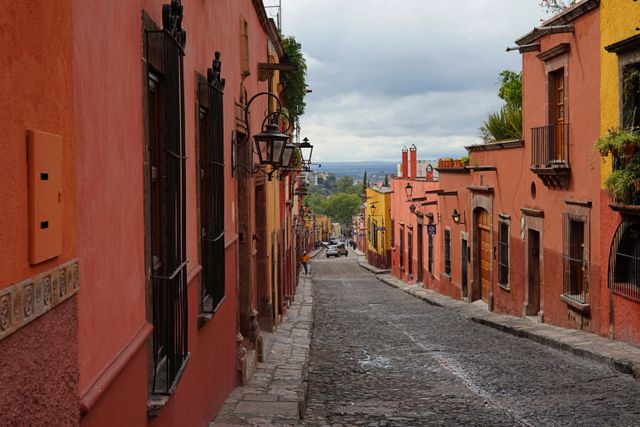
One of the greatest pleasures of visiting Old San Juan is simply wandering its streets. Brightly colored buildings line narrow roads paved with distinctive blue cobblestones, creating scenes that feel almost cinematic.

Historic waterfront street lined with colorful buildings in Old San Juan
Historic streets connect Old San Juan’s neighborhoods to the waterfront.

The city’s architecture reflects centuries of Spanish colonial influence. Balconies adorned with flowers, decorative ironwork, and colorful facades create an atmosphere unlike any other destination in the Caribbean.

Every street offers new perspectives and surprises. Some lead toward dramatic ocean views, while others reveal hidden courtyards, local businesses, or historic landmarks tucked away from the main tourist routes.

Colorful street descending toward San Juan Bay
Many streets in Old San Juan offer beautiful views toward the harbor.

Walking through the district reveals why photographers are so drawn to Old San Juan. Every corner seems designed for a postcard, from pastel-painted walls to vibrant storefronts and elegant colonial homes.

Hidden Alleys and Local Charm

Beyond the main streets and famous landmarks lies another side of Old San Juan that many visitors overlook. Tucked between colorful facades and historic plazas are narrow alleyways, quiet residential streets, and hidden corners that reveal the district’s authentic character. These lesser-known spaces often provide a more intimate glimpse into everyday life within one of the Caribbean’s oldest cities.

Narrow cobblestone alley in Old San Juan
Narrow cobblestone lanes reveal the city’s centuries-old character.

Wandering through these quieter areas allows visitors to slow down and appreciate details that are easy to miss along the busier tourist routes. Flower-filled balconies spill over pastel-colored walls, potted plants decorate doorways, and laundry occasionally hangs above narrow passageways just as it has for generations. These scenes create a sense of connection between the city’s rich history and the people who continue to call it home.

Many of Old San Juan’s hidden streets are lined with beautifully preserved colonial buildings featuring wooden doors, wrought-iron balconies, and colorful facades painted in shades of blue, yellow, pink, and green. Unlike the grand public squares and major attractions, these residential lanes offer a quieter atmosphere where visitors can appreciate the district’s architectural beauty without large crowds.

Colonial alleyway illuminated by traditional lanterns
Hidden alleyways are among Old San Juan’s most photogenic corners.

The district’s maze-like layout encourages exploration. A simple turn down an unfamiliar street may reveal a tucked-away café, a small art gallery, a hidden courtyard, or a picturesque staircase framed by tropical plants. These unexpected discoveries are often among the most memorable parts of visiting Old San Juan, rewarding travelers who take the time to wander without a strict itinerary.

These hidden corners also showcase the strong sense of community that continues to thrive within the historic district. Residents greet neighbors from balconies, local businesses serve longtime customers, and musicians occasionally fill the air with traditional Puerto Rican melodies. Such moments remind visitors that Old San Juan is not merely an open-air museum but a living neighborhood where history and daily life remain deeply intertwined.

For photographers, these quieter streets provide endless opportunities. The combination of colorful architecture, tropical greenery, decorative lanterns, and centuries-old cobblestones creates countless compositions that capture the spirit of the city. Morning and late afternoon light are particularly beautiful, casting warm colors across the walls and highlighting architectural details that tell stories of the past.

Flower-lined passageway with bicycle in Old San Juan
Quiet corners reveal a softer side of Old San Juan.

Exploring these hidden alleys ultimately reveals a more personal side of Old San Juan. While the fortresses and landmarks illustrate the city’s grand history, these residential streets showcase the everyday charm and human connections that make the district truly special.

Plazas, Art, and Community Life

Public spaces have long played a central role in Old San Juan’s social life. Historic plazas serve as gathering places where residents and visitors alike come together to relax, socialize, and enjoy the surrounding architecture.

These plazas have witnessed celebrations, political events, religious festivals, and everyday life for centuries. Their continued importance demonstrates how Old San Juan remains a living city rather than simply a preserved historic site.

In recent years, artistic installations and cultural events have added new dimensions to these historic spaces. Colorful decorations, festivals, and community activities help keep the district vibrant while honoring its heritage.

Colorful umbrella installation above a historic street
Public art installations add color and creativity to Old San Juan.

This blend of history and creativity ensures that Old San Juan remains a dynamic destination that continually evolves while respecting its past.

Top Things to Do in Old San Juan

  • Visit Castillo San Felipe del Morro
  • Explore San Cristóbal Fortress
  • Walk along the city walls
  • Photograph colorful colonial buildings
  • Wander the blue cobblestone streets
  • Visit historic churches and plazas
  • Enjoy local Puerto Rican cuisine
  • Watch the sunset over the Atlantic Ocean
  • Explore local galleries and artisan shops

Best Time to Visit

The best time to visit Old San Juan is during the dry season from December through April. During these months, pleasant temperatures and lower rainfall create ideal conditions for exploring the city on foot.

Morning and late afternoon provide the most comfortable temperatures while also offering excellent lighting for photography. Visitors can comfortably spend hours exploring the district’s streets, plazas, and waterfront viewpoints.

While Old San Juan can be visited year-round, the cooler months generally offer the most enjoyable sightseeing conditions.

How to Get There

By Air

Fly into Luis Muñoz Marín International Airport, located approximately 20 minutes from Old San Juan.

By Taxi or Ride Share

Taxis and ride-sharing services provide convenient transportation directly into the historic district.

By Cruise Ship

Many Caribbean cruise itineraries include San Juan, with ships docking near Old San Juan’s waterfront.

One Historical Fact

The blue cobblestones that line many streets of Old San Juan were originally brought from Spain as ballast in ships crossing the Atlantic. Over time, they became one of the city’s most distinctive features and remain an iconic symbol of the historic district today.

Is Old San Juan Worth Visiting?

Absolutely.

Old San Juan offers one of the finest historic urban experiences in the Caribbean. Its remarkable combination of colonial architecture, military history, colorful streets, and cultural significance makes it a destination that appeals to a wide range of travelers.

Whether you are interested in history, photography, architecture, food, or simply enjoying a beautiful place to explore on foot, Old San Juan delivers an unforgettable experience.

The district’s unique blend of UNESCO-listed landmarks, vibrant local culture, and spectacular coastal scenery ensures that visitors leave with lasting memories.

Final Thoughts

Old San Juan stands as one of the Caribbean’s greatest treasures. Its colorful streets, historic fortifications, and centuries-old architecture create a destination that feels both timeless and alive.

From its UNESCO-listed landmarks to its hidden alleys and vibrant plazas, the city rewards visitors with layers of history and culture at every turn. Few places in the region offer such a rich blend of heritage and beauty.

Whether you’re visiting Puerto Rico for the first time or returning to explore more deeply, Old San Juan is a destination that continues to captivate travelers generation after generation.

Image Credits

Sources: UNESCO World Heritage Centre; Discover Puerto Rico; National Park Service

Scroll to Top