Nestled between lush mountains and the turquoise waters of Brazil’s Costa Verde, Paraty is one of South America’s most enchanting historic towns. With its cobblestone streets, whitewashed colonial buildings, and stunning coastal scenery, the town feels like a place frozen in time.
Founded during Brazil’s colonial era, Paraty became an important port along the Gold Route, connecting the inland mining regions with the Atlantic Ocean. Today, visitors come not only for its history but also for its unique blend of culture, architecture, tropical landscapes, and maritime beauty.
Unlike many historic towns, Paraty remains vibrant and authentic. Its preserved colonial center, scenic bay, and surrounding rainforest create a destination that appeals to history lovers, photographers, beachgoers, and adventure seekers alike.
Quick Facts About Paraty
| Fact | Details |
|---|---|
| Country | Brazil |
| State | Rio de Janeiro |
| Known For | Colonial architecture, cobblestone streets, coastal scenery |
| UNESCO Status | UNESCO World Heritage Site (2019) |
| Founded | 1667 |
| Best Time to Visit | May to September |
| Time Needed | 1–3 Days |
| Continent | South America |
Where Is Paraty?
Paraty is located on Brazil’s southeastern coast in the state of Rio de Janeiro. It sits along the scenic Costa Verde region, a stretch of coastline known for its tropical forests, hidden beaches, and emerald-green waters.
The town lies roughly halfway between Rio de Janeiro and São Paulo, making it an accessible destination for travelers exploring southeastern Brazil. Surrounded by the Atlantic Forest and protected natural areas, Paraty enjoys one of the most spectacular settings in the country.
Its location between the mountains and the sea played a major role in its historical development. During the colonial period, Paraty served as a strategic port connecting inland mining communities with international trade routes.
Why Visit Paraty?
Paraty offers a unique combination of history, nature, and culture.
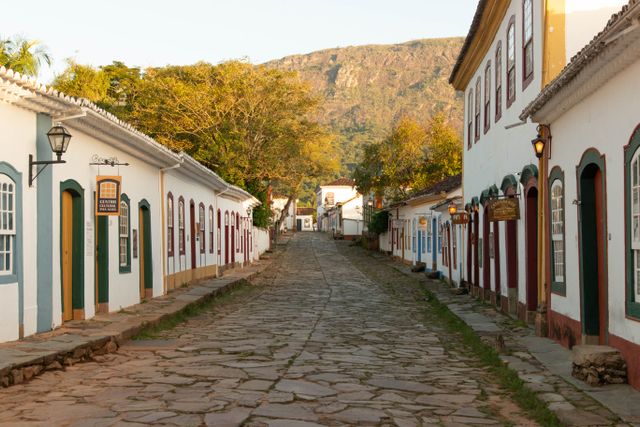
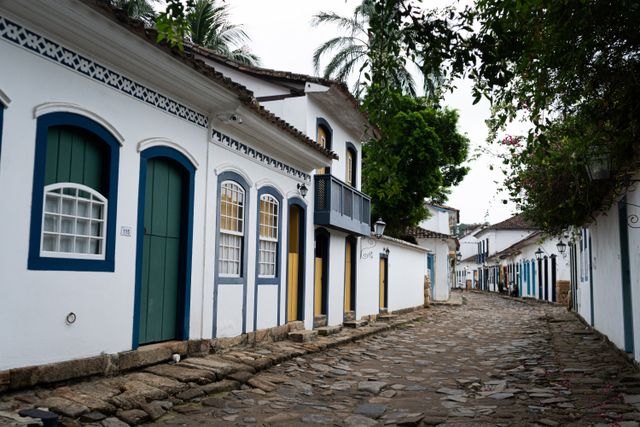
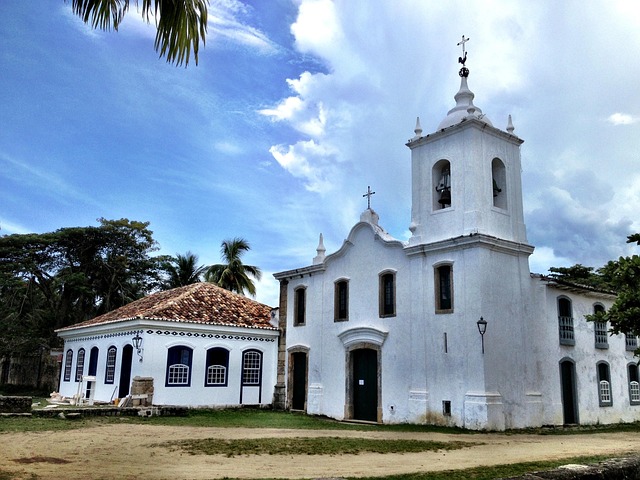
Its beautifully preserved colonial center features whitewashed buildings, colorful doors and windows, and centuries-old churches that reflect the town’s rich heritage. Unlike many historic destinations, cars are restricted from much of the old town, allowing visitors to explore its streets on foot and fully appreciate its atmosphere.
Beyond the architecture, Paraty provides easy access to pristine islands, tropical beaches, waterfalls, and rainforest trails. Visitors can spend the morning exploring historic landmarks and the afternoon sailing through the bay.
The town also hosts cultural festivals, literary events, and local celebrations that showcase the traditions of the region. Combined with excellent seafood and a relaxed coastal atmosphere, Paraty delivers an experience unlike anywhere else in Brazil.
A Port Built on Gold and Empire
Paraty’s history is closely tied to Brazil’s colonial economy.
Founded in the seventeenth century, the town became an important maritime gateway during the Brazilian Gold Rush. Gold extracted from the mines of Minas Gerais traveled along the famous Caminho do Ouro, or Gold Route, before reaching Paraty’s harbor for shipment to Portugal.
The wealth generated by this trade helped shape the town’s architecture and development. Merchants, traders, and colonial officials established residences and businesses throughout the growing settlement, creating a prosperous community linked to international commerce.
As economic routes shifted over time, Paraty gradually lost its importance as a major port. Ironically, this decline helped preserve much of the town’s colonial character. Because large-scale modernization largely bypassed Paraty, many original buildings and streets survived intact.
Today, visitors walking through the historic center encounter one of Brazil’s finest collections of colonial architecture. The town’s churches, public squares, and residences continue to tell the story of an era when Paraty played a vital role in the Portuguese Empire’s South American holdings.
UNESCO recognized this significance in 2019 when Paraty and its surrounding cultural and natural landscapes were added to the World Heritage List.
Walking Through Paraty’s Colonial Streets
One of Paraty’s greatest attractions is simply wandering its streets.
The historic center is famous for its irregular cobblestone roads, locally known as “pé-de-moleque” streets. Constructed using large uneven stones, these streets have remained largely unchanged for centuries.
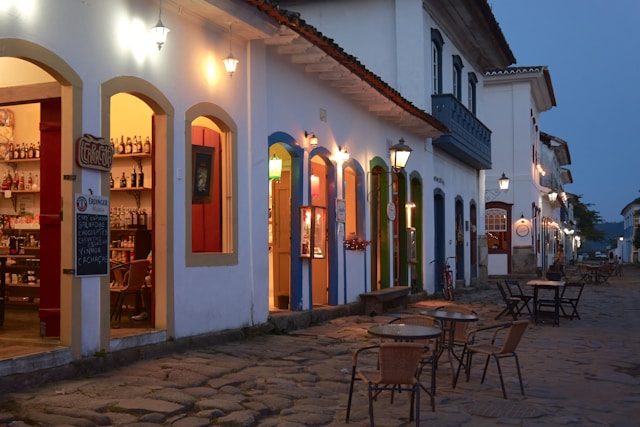
Whitewashed buildings line the narrow roads, creating a picturesque environment filled with colorful doors, decorative window frames, and flowering balconies. Every corner reveals another beautiful scene that seems designed for photography.
Many historic structures now house cafés, restaurants, artisan shops, galleries, and boutique hotels. This blend of heritage and modern hospitality creates a welcoming atmosphere while preserving the town’s historical integrity.
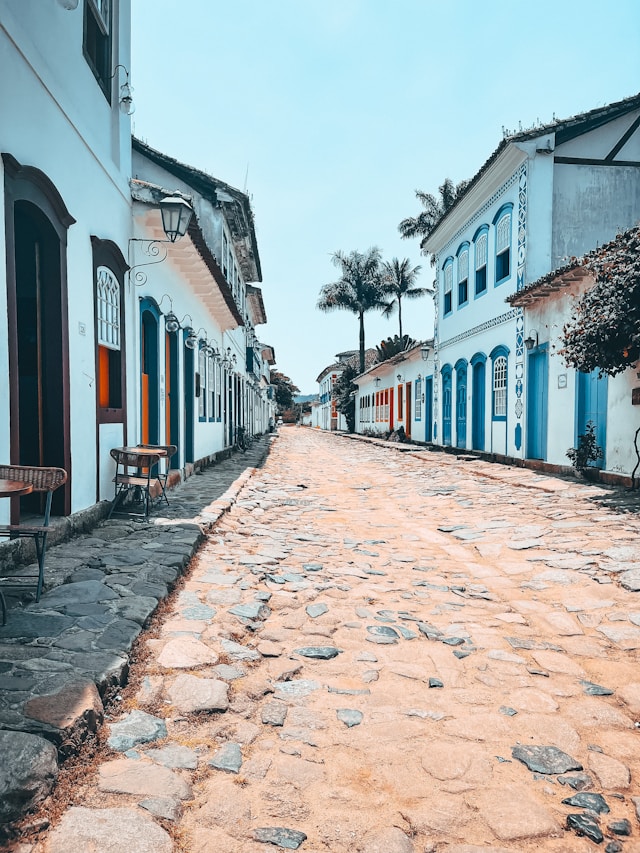
Walking through Paraty feels less like visiting a museum and more like stepping into a living colonial town where history remains part of everyday life.
When the Ocean Visits the Town
Perhaps Paraty’s most unusual feature is its relationship with the sea.
Several streets in the historic center were intentionally designed to flood during exceptionally high tides. Rather than fighting the ocean, colonial planners incorporated the tides into the town’s layout, allowing seawater to flow through certain streets and help flush debris from the area.
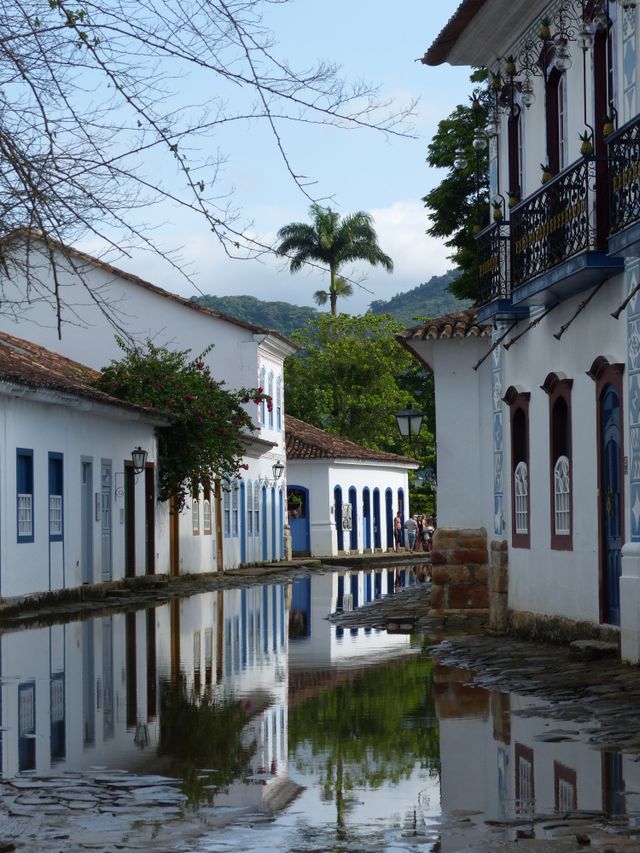
This phenomenon continues today and remains one of Paraty’s most distinctive attractions. During particularly high tides, visitors may witness shallow seawater flowing across the cobblestones, creating striking reflections of historic buildings.
Far from being considered a problem, the flooding has become part of the town’s identity. Photographers often seek out these moments because the water transforms the streets into mirror-like surfaces that beautifully reflect the colonial architecture.
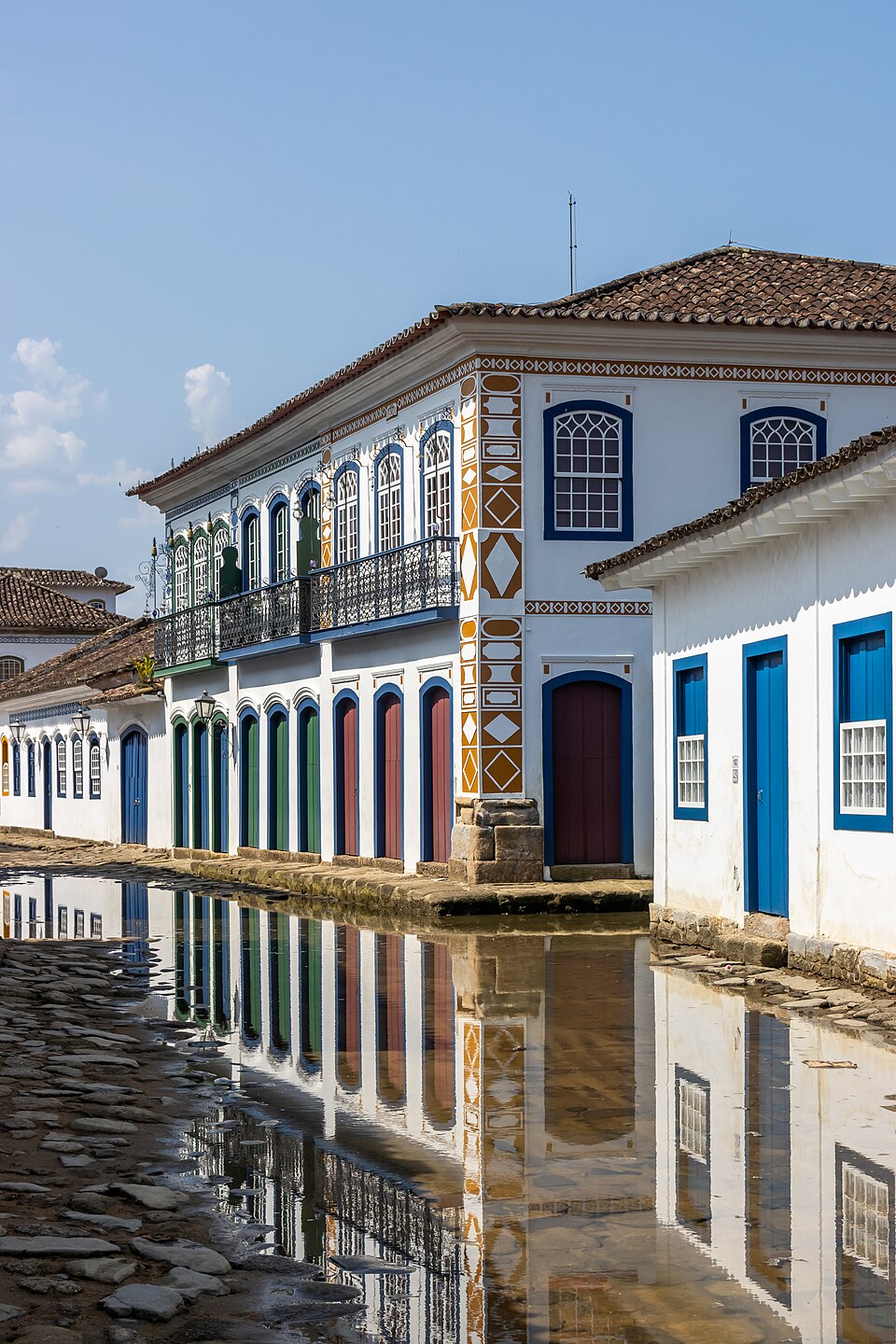
The sight of the ocean temporarily reclaiming portions of the historic center serves as a reminder of Paraty’s long connection with maritime life.
Between the Mountains and the Bay
Paraty’s setting is every bit as impressive as its architecture.
The town lies between the Atlantic Ocean and the steep mountains of the Serra do Mar, creating dramatic scenery that combines rainforest-covered slopes with calm coastal waters. This location provides access to dozens of islands, secluded beaches, and protected marine environments.
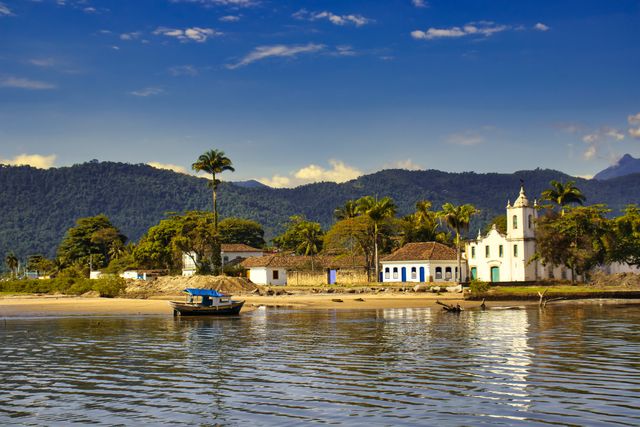
Boat tours are among the most popular activities in Paraty. Visitors can explore nearby islands, swim in crystal-clear waters, and discover hidden coves accessible only by sea. The bay’s calm conditions make it ideal for sightseeing cruises and day trips.
The waterfront itself offers beautiful views of fishing boats, colonial buildings, and surrounding mountains. These landscapes help explain why Paraty has become one of Brazil’s most beloved travel destinations.
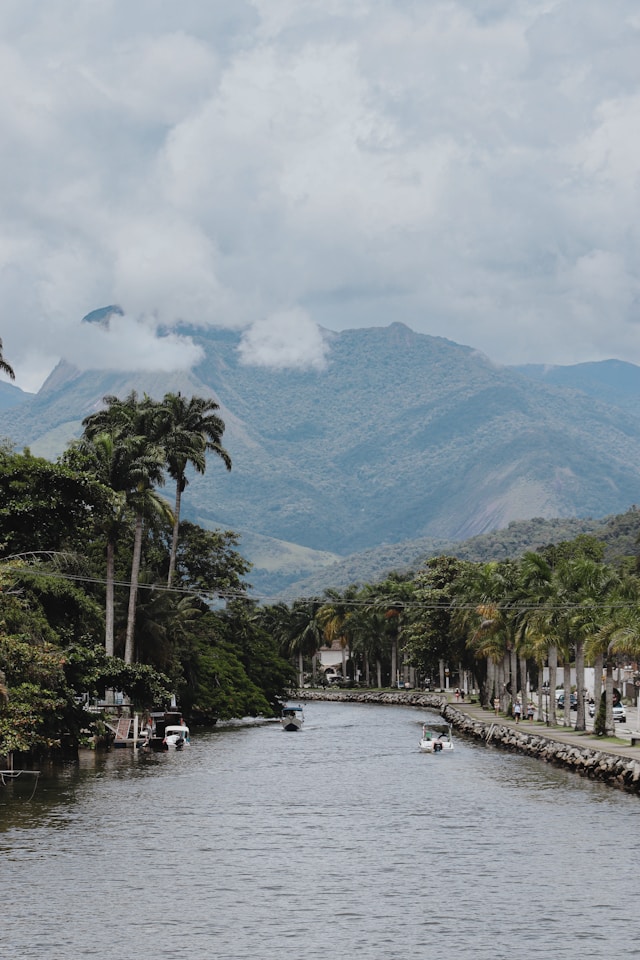
For nature lovers, the surrounding Atlantic Forest provides opportunities for hiking, wildlife observation, and waterfall excursions, making Paraty a destination that appeals to both cultural and outdoor enthusiasts.
One Historical Fact About Paraty
During the eighteenth century, Paraty served as one of the primary export ports for Brazilian gold destined for Portugal. The town’s harbor played a crucial role in transporting wealth from the interior mining regions to Europe, helping establish Paraty as one of the most important colonial settlements on Brazil’s southeastern coast.
How to Get There
- Rio de Janeiro to Paraty: approximately 4 hours by car
- São Paulo to Paraty: approximately 5 hours by car
- Regular bus services connect Paraty with both cities
- Private transfers and guided tours are widely available
- The nearest major airports are Rio de Janeiro–Galeão International Airport (GIG) and São Paulo–Guarulhos International Airport (GRU)
Is Paraty Worth Visiting?
Absolutely.
Paraty combines colonial history, UNESCO-recognized heritage, tropical scenery, and coastal adventure in a way few destinations can match. Its preserved architecture, scenic bay, cultural traditions, and unique flooded streets make it one of Brazil’s most fascinating towns.
Whether you’re interested in history, photography, architecture, food, or outdoor exploration, Paraty offers a memorable experience that stands out even among Brazil’s many remarkable destinations.
Final Thoughts
Paraty is a place where history and nature exist in perfect harmony.
Its colonial streets tell stories of gold, trade, and empire, while its surrounding landscapes showcase some of Brazil’s most beautiful coastal scenery. From centuries-old churches and colorful buildings to tropical islands and reflective flooded streets, every corner of Paraty offers something worth discovering.
For travelers seeking a destination that combines culture, history, and natural beauty, Paraty remains one of South America’s true hidden treasures.
Image Credits
- Historic Cobblestone Street in Paraty — Photo by João Pavese from Pexels
- Flooded Colonial Street During High Tide — Photo by Fritz CAT from Pexels
- Colonial Street in Historic Paraty — Photo by Anderson Alves from Pexels
- Colonial Church in Paraty — Image by Mauro Segura from Pixabay
- Cobblestone Street with Outdoor Seating — Photo by Gilberto Olimpio on Unsplash
- Boats in Paraty Bay — Photo by Gabriela Testa on Unsplash
- Waterfront Buildings in Paraty — Photo by Guilherme Gonçalves Jaques from Pexels
- High Tide at Rua da Praia — Photograph by Mike Peel (www.mikepeel.net)., CC BY-SA 4.0, via Wikimedia Commons
- Whitewashed Colonial Buildings in Paraty — Photo by Charles Assunção on Unsplash

Sources: UNESCO World Heritage Centre; Visit Brasil; Encyclopaedia Britannica; Paraty Tourism Portal