Bukhara Uzbekistan has been welcoming travelers for more than 2,000 years. For centuries, camel caravans on the Silk Road stopped here to trade silk, spices and ideas. Even today, the old city is still packed with turquoise domes, carved madrasas and covered bazaars. In fact, it is one of the most complete medieval cities in Central Asia. Better yet, it is relaxed, walkable and full of tea houses. So, here is how to make the most of your visit.
Quick Facts About Bukhara Uzbekistan
| Country | Uzbekistan |
| Region | Bukhara Region, in the heart of Central Asia |
| Known For | Silk Road history, the Kalyan Minaret, madrasas, trading domes and the Ark fortress |
| UNESCO Status | Historic Centre of Bukhara, UNESCO World Heritage Site since 1993 |
| Founded | More than 2,000 years ago |
| Best Time to Visit | April to May and September to October |
| Getting There | High-speed train from Tashkent or Samarkand, or a domestic flight |
Where Is Bukhara Uzbekistan?
Bukhara lies in the southwest of Uzbekistan, on an oasis at the edge of the Kyzylkum Desert. Specifically, it is about 270 kilometers west of Samarkand and roughly 600 kilometers from the capital, Tashkent. Consequently, most travelers visit it as part of a classic route through Tashkent, Samarkand, Bukhara and Khiva. Meanwhile, the historic center is compact, so you can walk between almost all the sights.
Why Visit Bukhara Uzbekistan?
First, the history is extraordinary. Bukhara was a major center of trade and Islamic learning for many centuries. In particular, it was the capital of the Samanid Empire in the 800s and 900s. As a result, the city has around 140 protected monuments, and UNESCO listed its historic center as a World Heritage Site in 1993.
Second, Bukhara Uzbekistan feels more intimate than Samarkand. For example, its monuments sit close together among small homes, workshops and bazaars. In addition, many guesthouses are set in old merchant houses with painted wooden ceilings. If you loved our guide to Jodhpur in India, you will enjoy this other fortress city on the edge of the desert.
Things to Do in Bukhara Uzbekistan
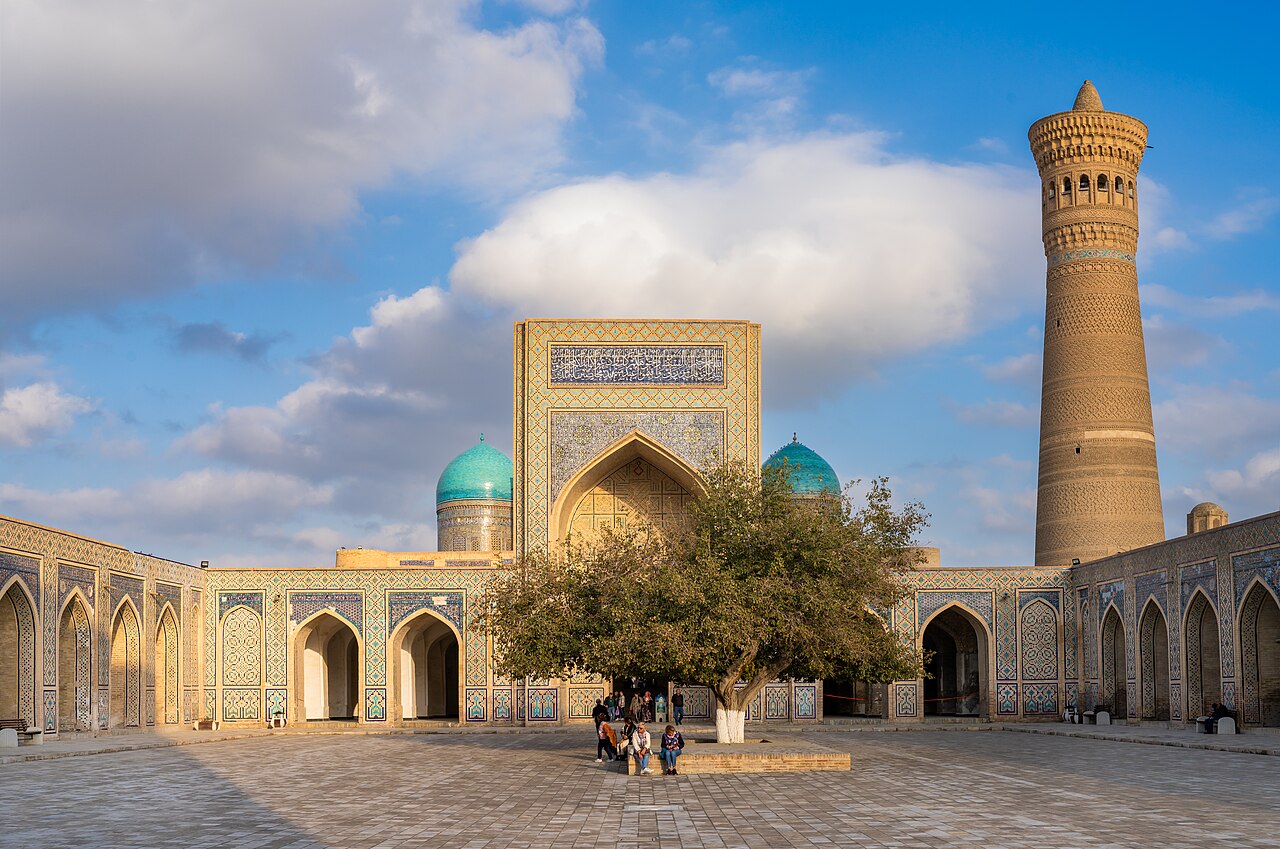
See the Po-i-Kalyan Complex
The Po-i-Kalyan complex is the heart of old Bukhara. At its center stands the Kalyan Minaret, completed in 1127 and about 46 meters tall. According to legend, Genghis Khan was so impressed by it that he spared it while destroying much of the city. Additionally, the vast Kalyan Mosque next to it can hold thousands of worshippers. Opposite, the Mir-i-Arab Madrasa, with its twin blue domes, is still a working religious school.
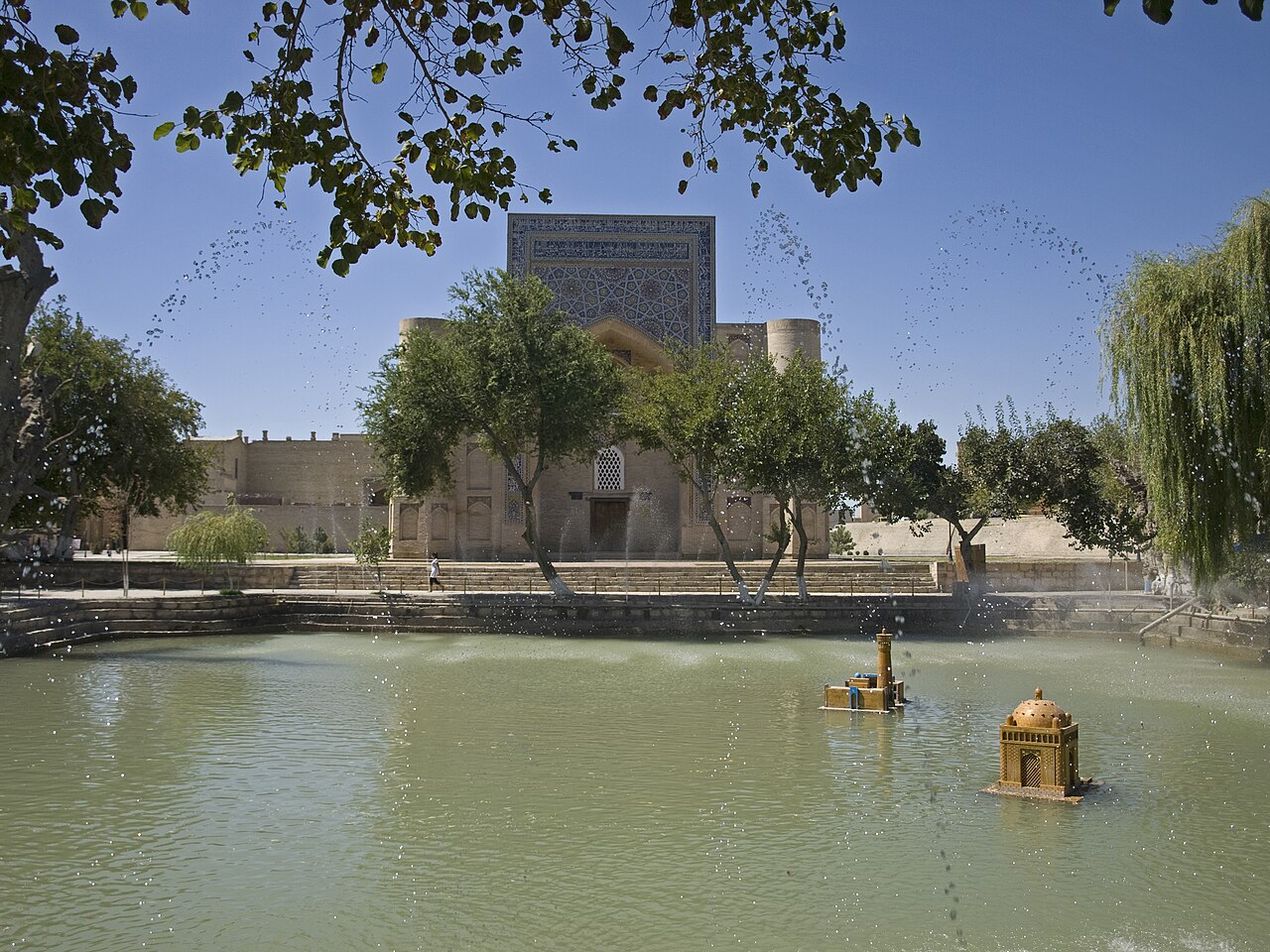
Relax at Lyabi-Hauz
Lyabi-Hauz is a stone-lined pool built in 1620 and shaded by old mulberry trees. Around it, tea houses serve green tea and plov, the national rice dish. In addition, look up at the Nadir Divan-Begi Madrasa nearby. Its entrance shows two mythical birds and two white deer, which is unusual in Islamic art.
Explore the Trading Domes
Between the main sights, several domed bazaars still stand over old crossroads. In the past, each dome specialized in one trade, such as jewelry, hats or money changing. Today, they are full of stalls selling carpets, ceramics, embroidered suzani textiles and knives. So, bring cash and be ready to bargain.
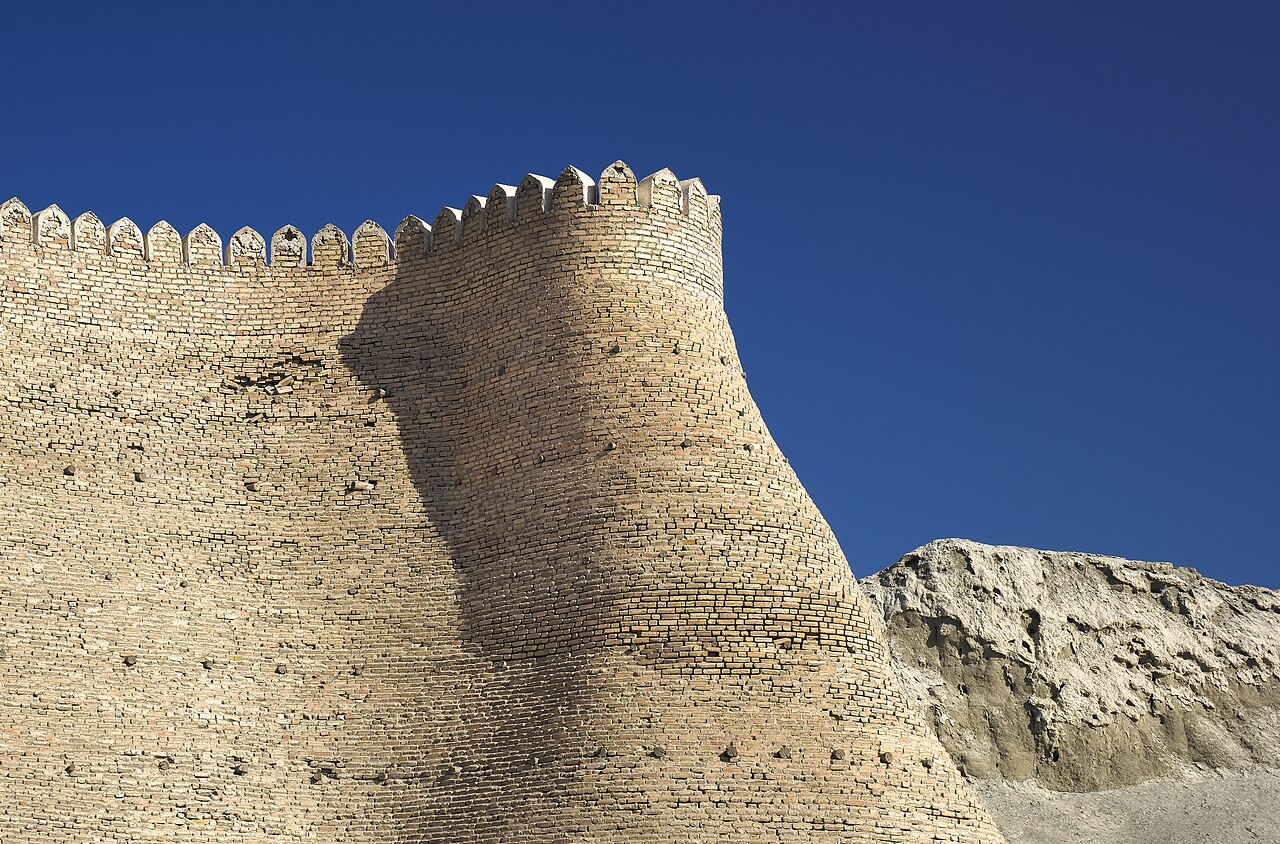
Visit the Ark of Bukhara
The Ark is a massive fortress with sloping walls on the western edge of the old city. Above all, it was the home of the rulers of Bukhara. Inside, you will find museums, a throne room and a mosque. Then, cross the square to the Bolo Hauz Mosque, famous for its tall carved wooden columns.
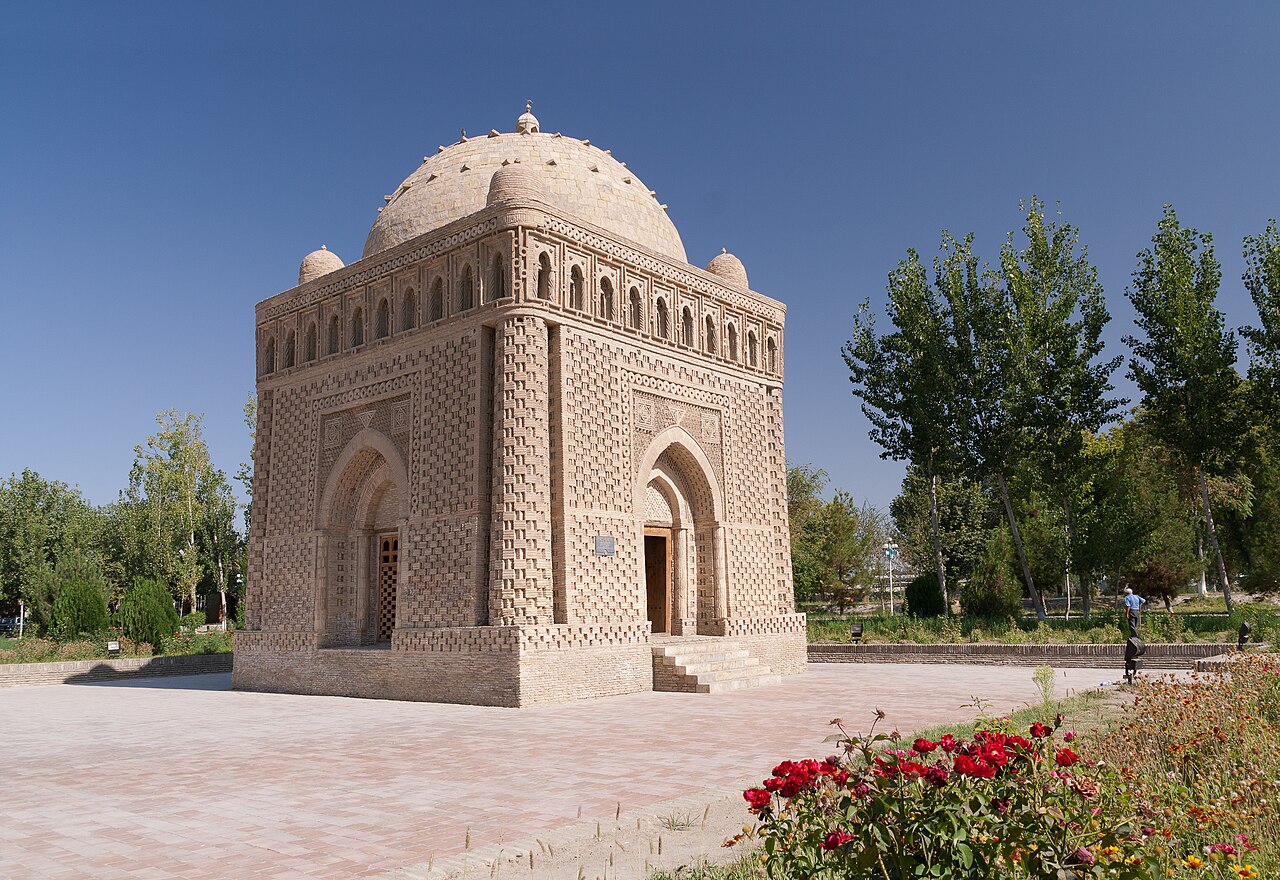
Admire the Samanid Mausoleum
In a quiet park west of the Ark stands the Samanid Mausoleum. It was built in the early 900s, which makes it one of the oldest Islamic monuments in Central Asia. Remarkably, its walls are made entirely of baked bricks laid in intricate patterns. Visit in the late afternoon, when the low light makes the brickwork glow.
Find Chor Minor
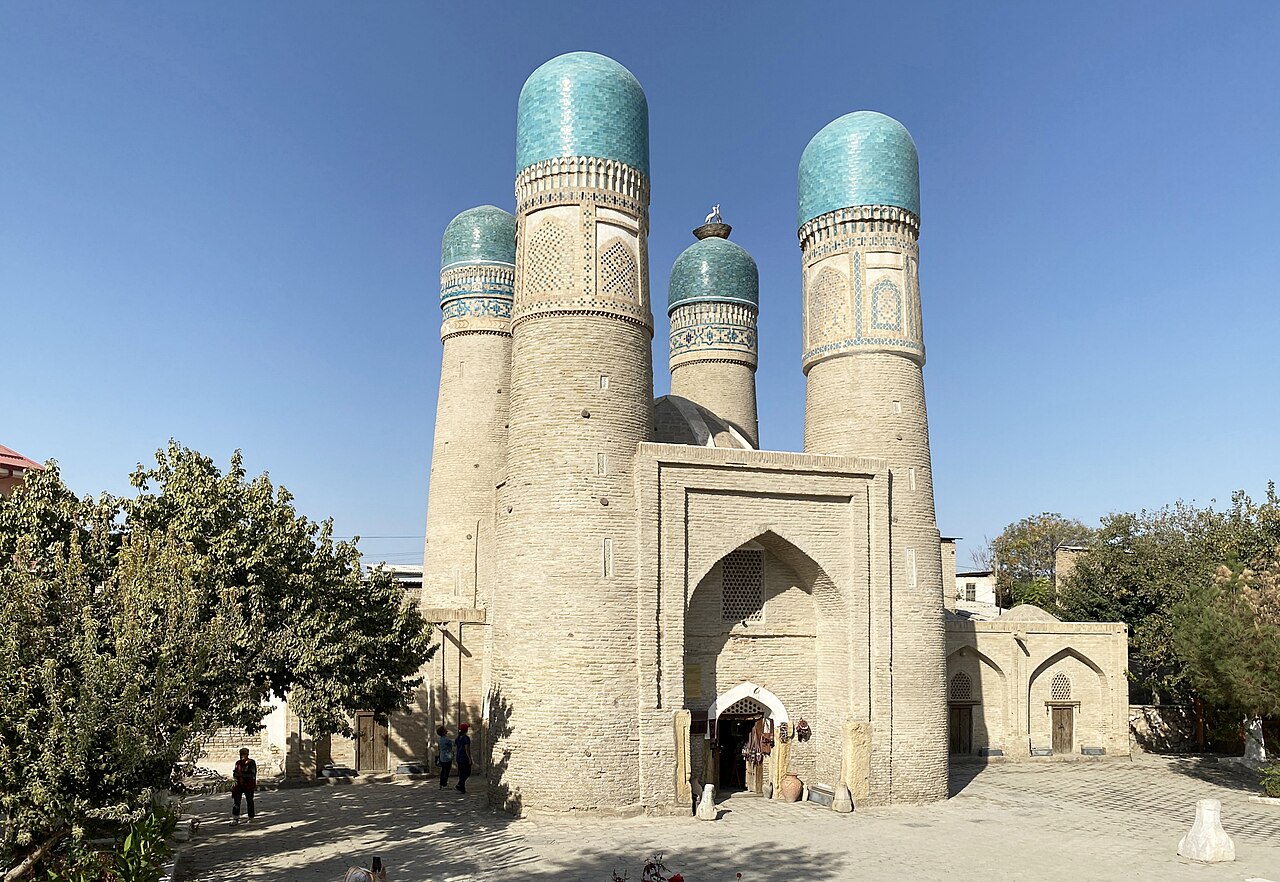
Chor Minor is a small, charming gatehouse with four towers, each topped by a blue dome. In fact, it was built in 1807 as the entrance to a madrasa that no longer exists. Although it sits in a residential area, it is well worth the short walk.
Day Trips From Bukhara Uzbekistan
Sitorai Mohi Khosa Palace
Just north of the city, the summer palace of the last emir mixes Central Asian and European styles. Inside, you will see mirrored halls, painted ceilings and a collection of costumes and porcelain.
Bahouddin Naqshband Complex
This important pilgrimage site honors the founder of the Naqshbandi Sufi order. Furthermore, it has peaceful courtyards, a mosque and a museum, and it lies only a short taxi ride from town.
One Historical Fact About Bukhara Uzbekistan
In the Middle Ages, Bukhara was one of the great centers of learning in the Islamic world. For example, the famous physician and philosopher Ibn Sina, also known as Avicenna, was born near the city and studied in its libraries.
How to Get to Bukhara Uzbekistan
The easiest way to arrive is by high-speed train. Afrosiyob trains connect Tashkent, Samarkand and Bukhara, and the ride from Samarkand takes under two hours. Alternatively, Bukhara has an airport with domestic and some international flights. Once there, you can walk everywhere in the old city.
Best Time to Visit Bukhara Uzbekistan
The best time to visit Bukhara Uzbekistan is in spring, from April to May, or in autumn, from September to October. During these months, days are warm and sunny. On the other hand, summers are extremely hot, often above 40°C. In winter, it can be cold, although there are far fewer tourists.
Is Bukhara Uzbekistan Worth Visiting?
Yes, without a doubt. Bukhara Uzbekistan is one of the most atmospheric cities on the old Silk Road. Ideally, spend at least two or three nights to enjoy it slowly. For another ancient desert city, read our guide to Aït Benhaddou in Morocco.
Final Thoughts on Bukhara Uzbekistan
In short, Bukhara is a place to wander without a plan. Watch the minaret glow at sunset, sip tea by Lyabi-Hauz and get lost among the domes and bazaars. By the end of your stay, you will understand why travelers have loved this Silk Road city for so long.
Image Credits
Wikimedia Commons
- Maksimsokolov: Po-i-Kalyan in Bukhara, CC BY-SA 4.0
- Ymblanter: Lyabi-Hovuz and Nadir Divanbegi Khanqah, CC BY-SA 4.0
- Petar Milošević: Ark of Bukhara (Цитадель Арк. Buxoro arki), CC BY-SA 4.0
- Hylgeriak / Wikipedia: Samanid mausoleum bukhara, CC BY-SA 3.0
- Bernard Gagnon: Chor Minor, Bukhara, CC0


