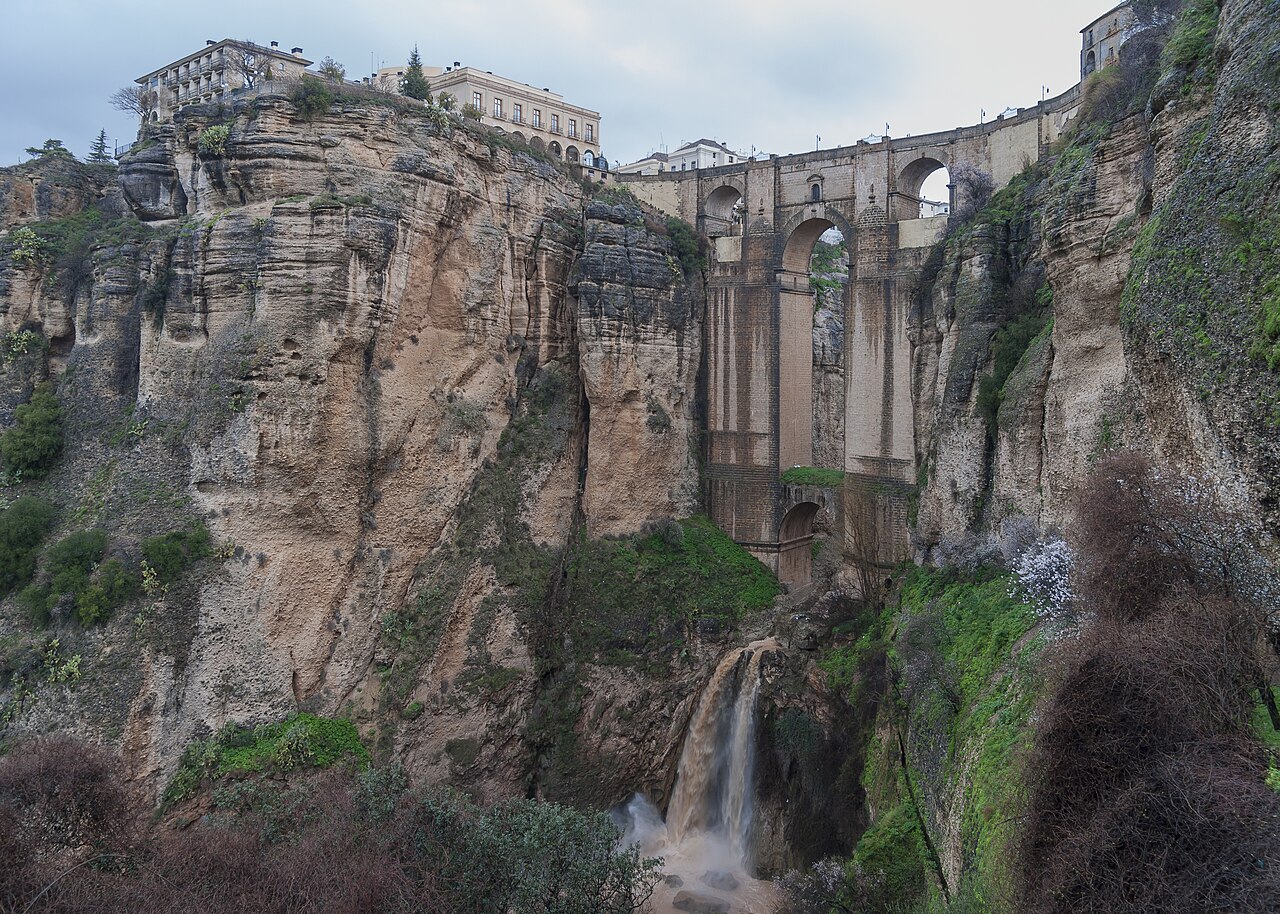
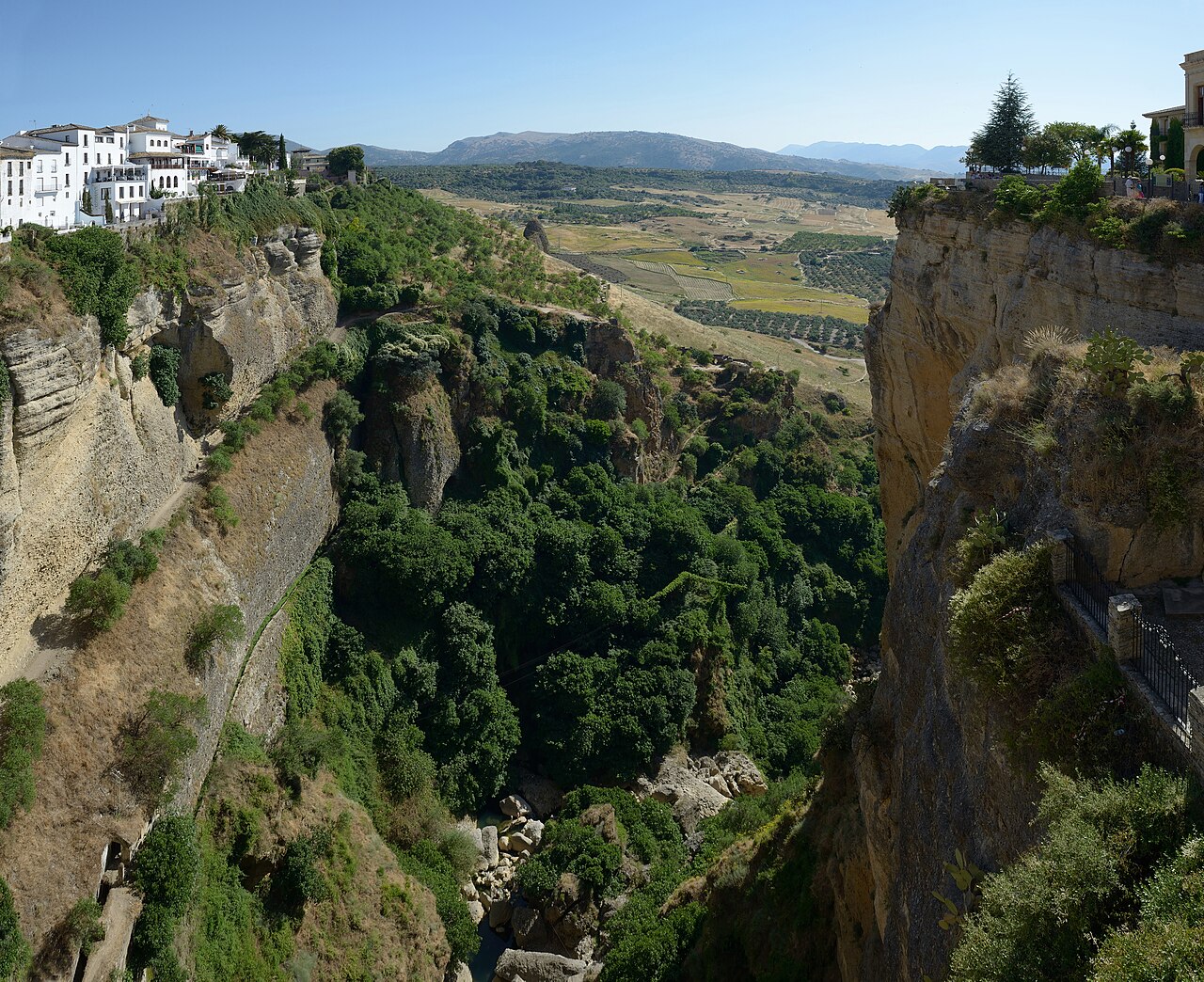
Ronda Spain sits on top of a rocky plateau, split in two by a gorge more than 100 meters deep. Across that gap, a towering stone bridge joins the old Moorish quarter to the newer town. In fact, few views in Europe are as dramatic as this one. Meanwhile, whitewashed houses cling to the edge of the cliffs, and green hills roll away into the distance. Also, the town is full of history, from Arab baths to one of Spain’s oldest bullrings. So, here is how to make the most of your visit.
Quick Facts About Ronda Spain
| Country | Spain |
| Region | Province of Málaga, Andalusia |
| Known For | The Puente Nuevo bridge, El Tajo gorge, a historic bullring and Moorish heritage |
| UNESCO Status | Not listed |
| History | An important Moorish town until 1485, with roots going back to Roman times |
| Best Time to Visit | April to June and September to October |
| Getting There | About 1.5 to 2 hours by car or bus from Málaga |
Where Is Ronda Spain?
Ronda lies in the mountains of Málaga province in southern Spain. Specifically, it sits in the Serranía de Ronda, about 100 kilometers west of Málaga. In addition, the beaches of the Costa del Sol are only about an hour away. As a result, it is one of the most popular day trips in Andalusia, although an overnight stay is far more rewarding.
Why Visit Ronda Spain?
First, the setting is spectacular. The Guadalevín River has carved the El Tajo gorge right through the middle of town. Second, the history is rich, with Roman roots, centuries of Moorish rule and a Christian conquest in 1485. Finally, the town is the gateway to the famous white villages of Andalusia.
Moreover, Ronda Spain has inspired many artists and writers. For example, Ernest Hemingway and Orson Welles both spent long periods here. If you loved our guide to Albarracín in Spain, you will enjoy this other dramatic Spanish town too.
Things to Do in Ronda Spain
Admire the Puente Nuevo
The Puente Nuevo, or New Bridge, is the symbol of the town. Construction began in 1751 and took about 40 years. Today, the bridge rises roughly 98 meters above the river. Then, walk down the paths below it for the classic view of the bridge and the cliffs. In addition, a small exhibition inside the bridge explains how it was built.
Explore La Ciudad, the Old Moorish Town
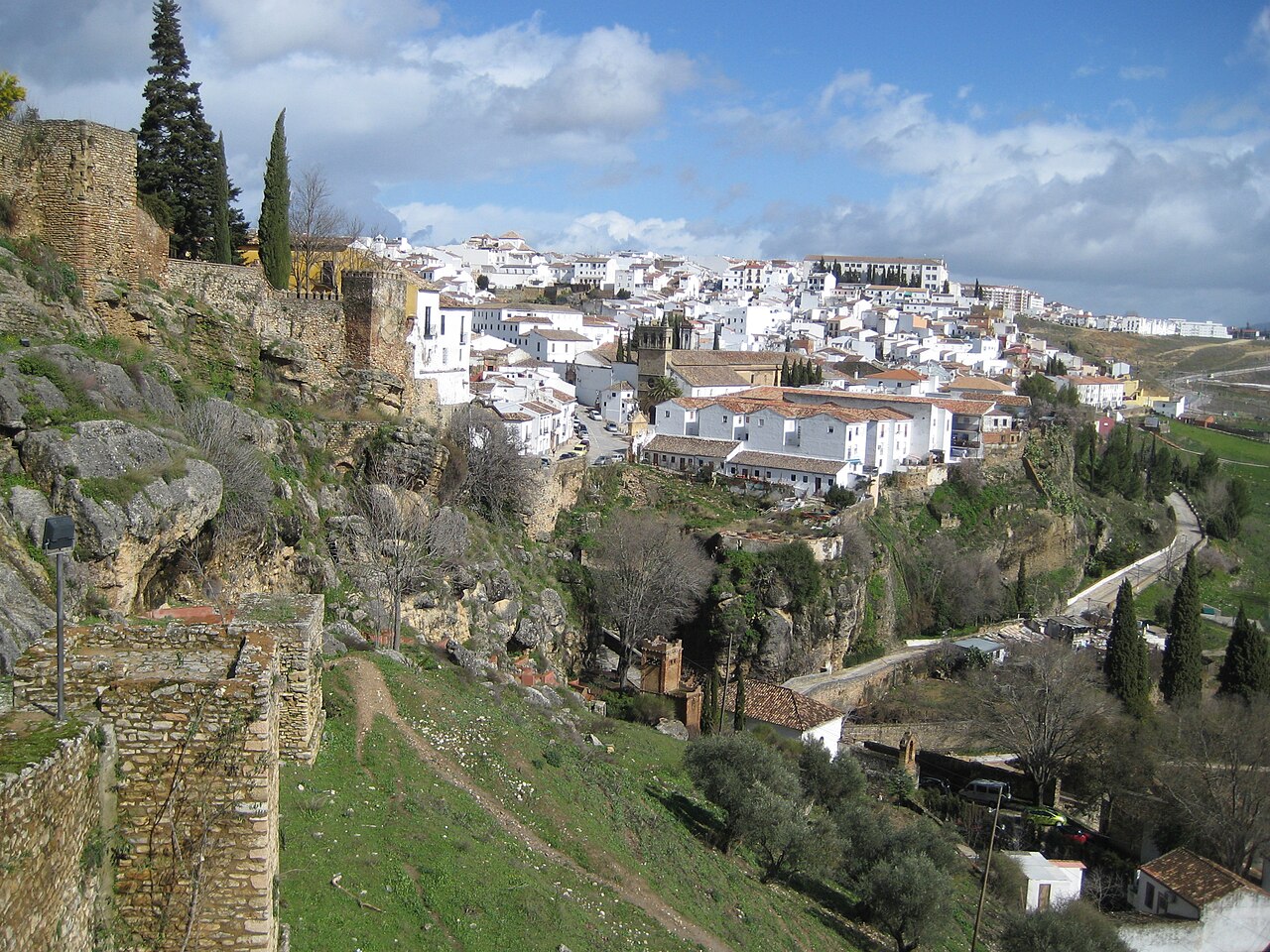
South of the bridge lies La Ciudad, the oldest part of Ronda. Its narrow streets are lined with palaces, churches and quiet squares. For instance, the Mondragón Palace has lovely Moorish-style courtyards and gardens with cliff views. Similarly, the Church of Santa María la Mayor was built on the site of the town’s main mosque.
Visit the Arab Baths
At the bottom of the old town, the Arab Baths date from the 13th and 14th centuries. In fact, they are among the best-preserved Moorish baths in Spain. Inside, you can still see the brick vaults and star-shaped skylights.
See the Historic Bullring
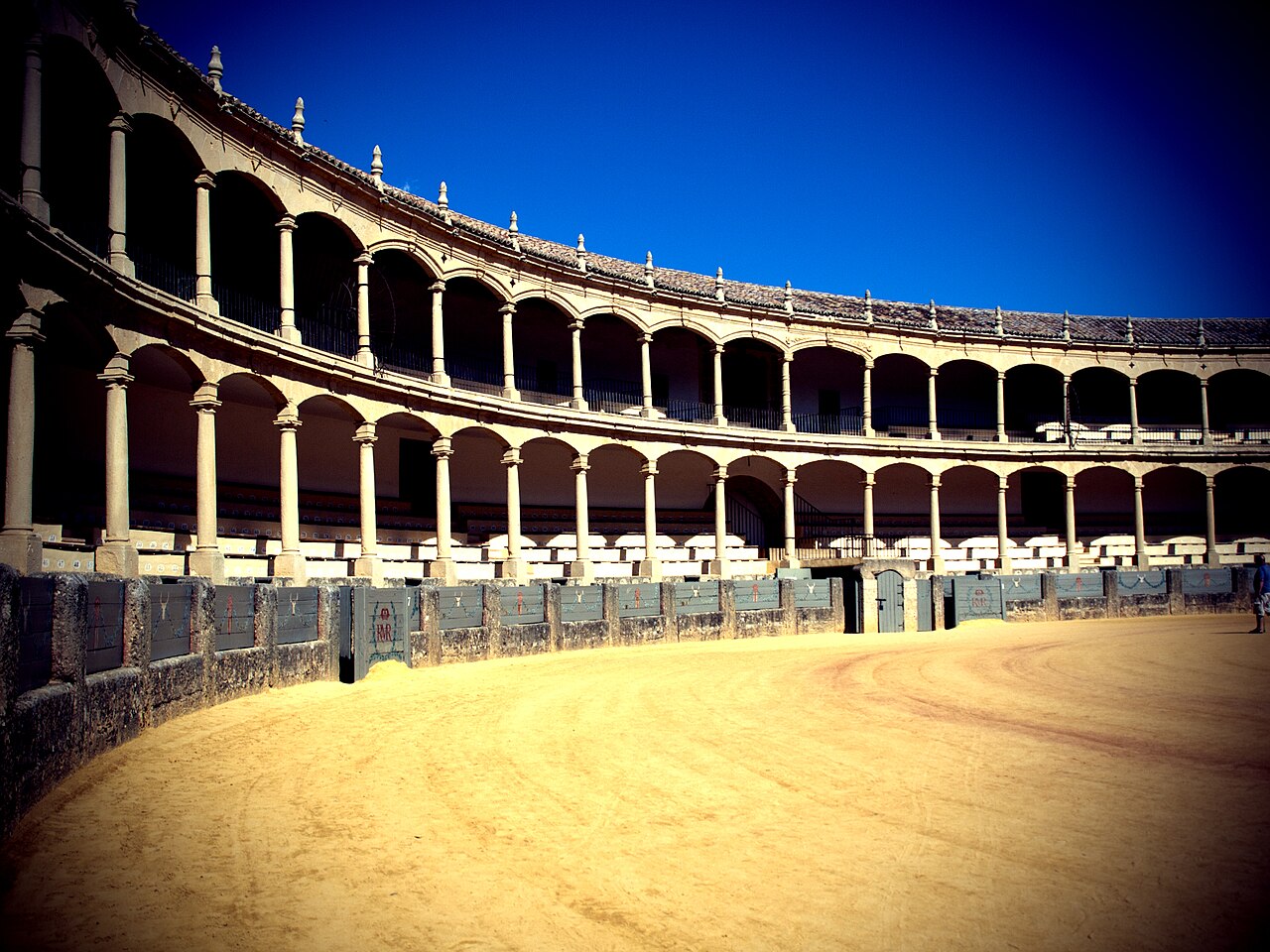
The Plaza de Toros opened in 1785, which makes it one of the oldest bullrings in Spain. Today, it is mainly visited as a museum. Its elegant arcades are a fine example of 18th-century architecture. In addition, the museum covers the history of horsemanship and the town’s long traditions.
Walk Down to the Bottom of the Gorge
For a different perspective, take the path down from the old town to the valley floor. From there, the bridge and houses tower above you. Also, at the Casa del Rey Moro, a steep staircase called La Mina descends through the rock to the river.
Enjoy the Views From the Alameda del Tajo
The Alameda del Tajo is a leafy park on the edge of the cliff. Along its balconies, viewpoints look out over the valley and the mountains. Therefore, it is a perfect spot for sunset.
Day Trips From Ronda Spain
Setenil de las Bodegas
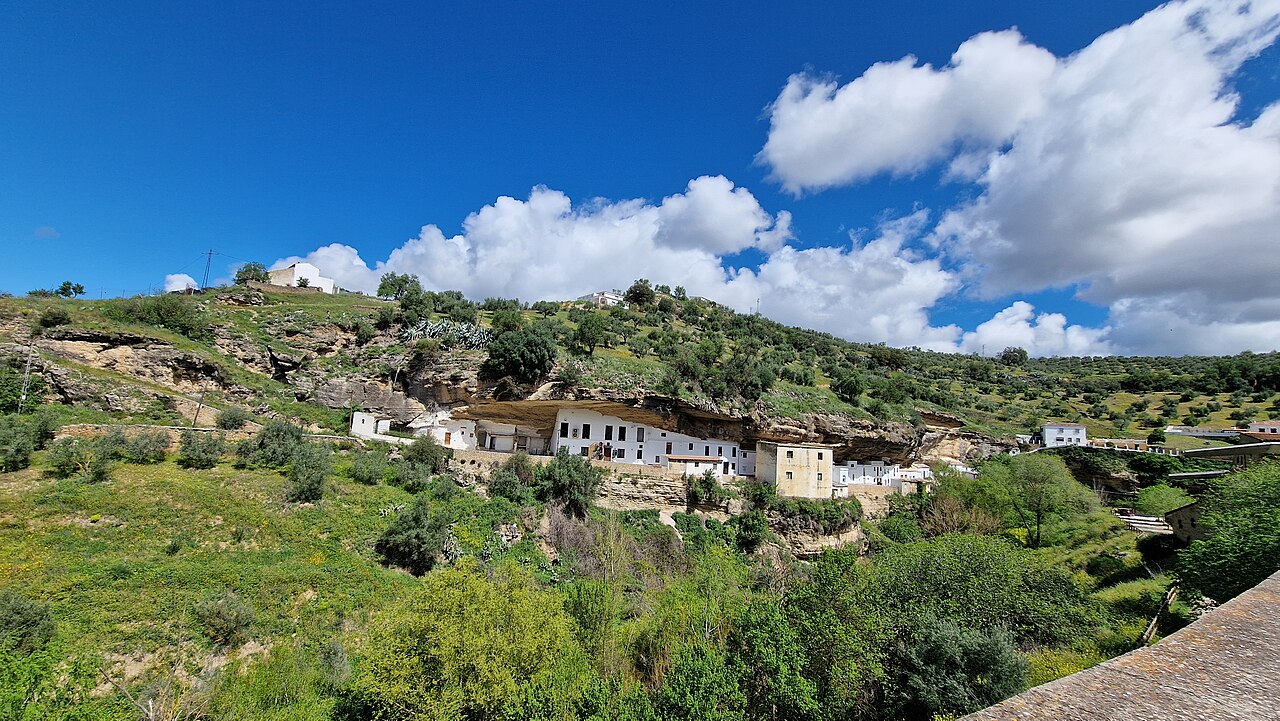
Setenil de las Bodegas is a white village where houses are built right into the rock. In some streets, a huge overhang of stone forms the roof. As a result, it is one of the most unusual villages in Spain.
The White Villages and Cueva de la Pileta
Beyond Setenil, villages such as Zahara de la Sierra and Grazalema dot the mountains. Furthermore, Cueva de la Pileta, a cave near Benaoján, contains prehistoric paintings. Together, they make a wonderful road trip.
One Historical Fact About Ronda Spain
Ronda is often called the birthplace of modern bullfighting on foot. In the 1700s, the Romero family of Ronda helped set many of the rules still used today. Consequently, the town’s bullring holds a special place in Spanish history.
How to Get to Ronda Spain
From Málaga, buses and cars reach Ronda in about 1.5 to 2 hours. Alternatively, trains run from Granada and Algeciras, with connections from Madrid, and the line passes through beautiful scenery. In addition, a car makes it easier to explore the white villages. Once you arrive, the town center is easy to explore on foot.
Best Time to Visit Ronda Spain
The best time to visit is in spring, from April to June, or in autumn, from September to October. During these months, the weather is pleasant for walking. On the other hand, summers are hot, and winters can be cool and rainy in the mountains. Also, early September brings the Feria Goyesca, when the town fills with festivities.
Is Ronda Spain Worth Visiting?
Yes, absolutely. Ronda Spain offers jaw-dropping views, rich history and great food in one compact town. Ideally, stay overnight to see the bridge lit up after dark. For another breathtaking hilltop town, see our guide to Civita di Bagnoregio in Italy.
Final Thoughts on Ronda Spain
In short, Ronda is one of the most memorable towns in Andalusia. Cross the Puente Nuevo, wander the old Moorish streets and watch the sun set over the gorge. By the end of your visit, you will understand why so many artists fell in love with this clifftop town.
Image Credits
Wikimedia Commons
- CEphoto, Uwe Aranas: Ronda Spain Puente-Nuevo-de-Ronda-01, CC BY-SA 3.0
- This Photo was taken by Wolfgang Moroder. Feel free to use my photos, but please: View from Puente Nuevo bridge in Ronda Spain, CC BY-SA 3.0
- Kevin Poh from Petaling Jaya, Malaysia: The Plaza de Toros, Ronda (5165107544), CC BY 2.0
- Peter Turner: Ronda -‘New Town’ from Old City walls – panoramio, CC BY-SA 3.0
- Makoki20: Setenil de las Bodegas (2024), CC0


