Reine Lofoten is often called one of the most beautiful villages in the world, and it is easy to see why. For example, bright red fishermen’s cabins line the shore of a calm fjord. Behind them, jagged granite peaks rise straight out of the sea. Meanwhile, the light changes constantly, from the endless glow of the midnight sun to the dancing colors of the northern lights. In fact, every turn of the road here looks like a postcard. So, here is how to plan your trip to this Arctic fishing village.
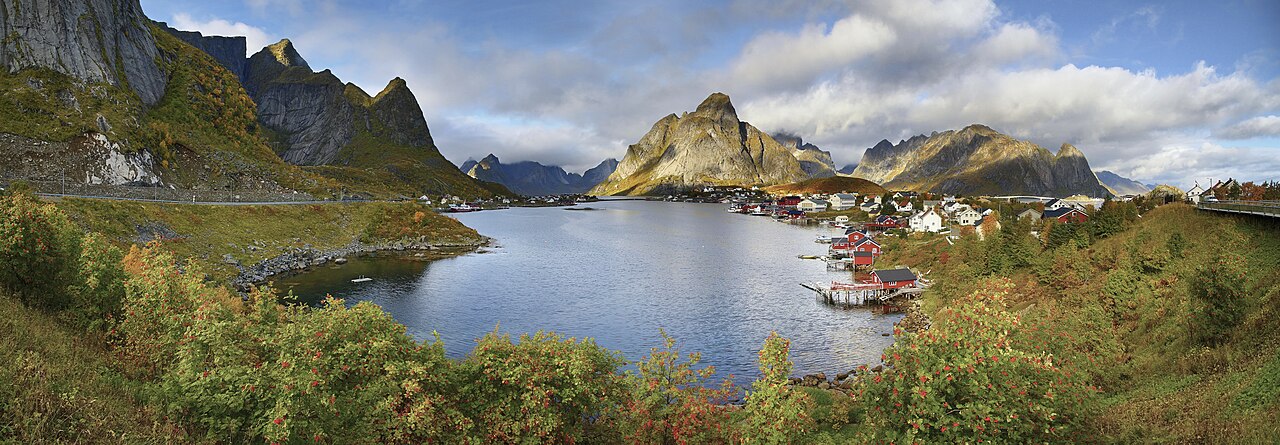
Quick Facts About Reine Lofoten
| Country | Norway |
| Region | Moskenesøya island, Lofoten, Nordland county |
| Known For | Red rorbuer cabins, the Reinebringen hike, dramatic peaks, stockfish and Arctic light |
| UNESCO Status | Not listed |
| History | A fishing village built around the seasonal Lofoten cod fishery |
| Best Time to Visit | June to August for the midnight sun, September to March for northern lights |
| Getting There | Ferry from Bodø to Moskenes, or fly to Leknes and drive about an hour |
Where Is Reine Lofoten?
Reine lies on Moskenesøya, one of the southern islands of the Lofoten archipelago in northern Norway. Specifically, it is well above the Arctic Circle, about 1,400 kilometers north of Oslo. In addition, the E10 road links the islands with bridges and tunnels. As a result, you can drive from village to village with stunning views all the way.
Why Visit Reine Lofoten?
First, the scenery is breathtaking. Indeed, few places combine sea, beaches and mountains so dramatically. Second, the village has kept its fishing traditions, with drying racks, small harbors and red cabins called rorbuer. Finally, the area is a paradise for hiking, kayaking and photography.
Moreover, Reine Lofoten offers two very different seasons. In summer, the sun never sets. By contrast, the dark winter months bring a good chance of seeing the aurora. If you loved our guide to Hallstatt in Austria, you will enjoy this other village framed by mountains and water.
Things to Do in Reine Lofoten
Hike Reinebringen
Reinebringen is the most famous hike in the Lofoten Islands. Between 2016 and 2019, Nepalese Sherpas built a stone staircase of more than 1,500 steps up the mountain. As a result, the climb is steep but safer than before. From the top, at about 450 meters, you get the famous view of Reine and its fjord. Therefore, allow two to three hours for the round trip, and avoid the hike in wet or icy conditions.
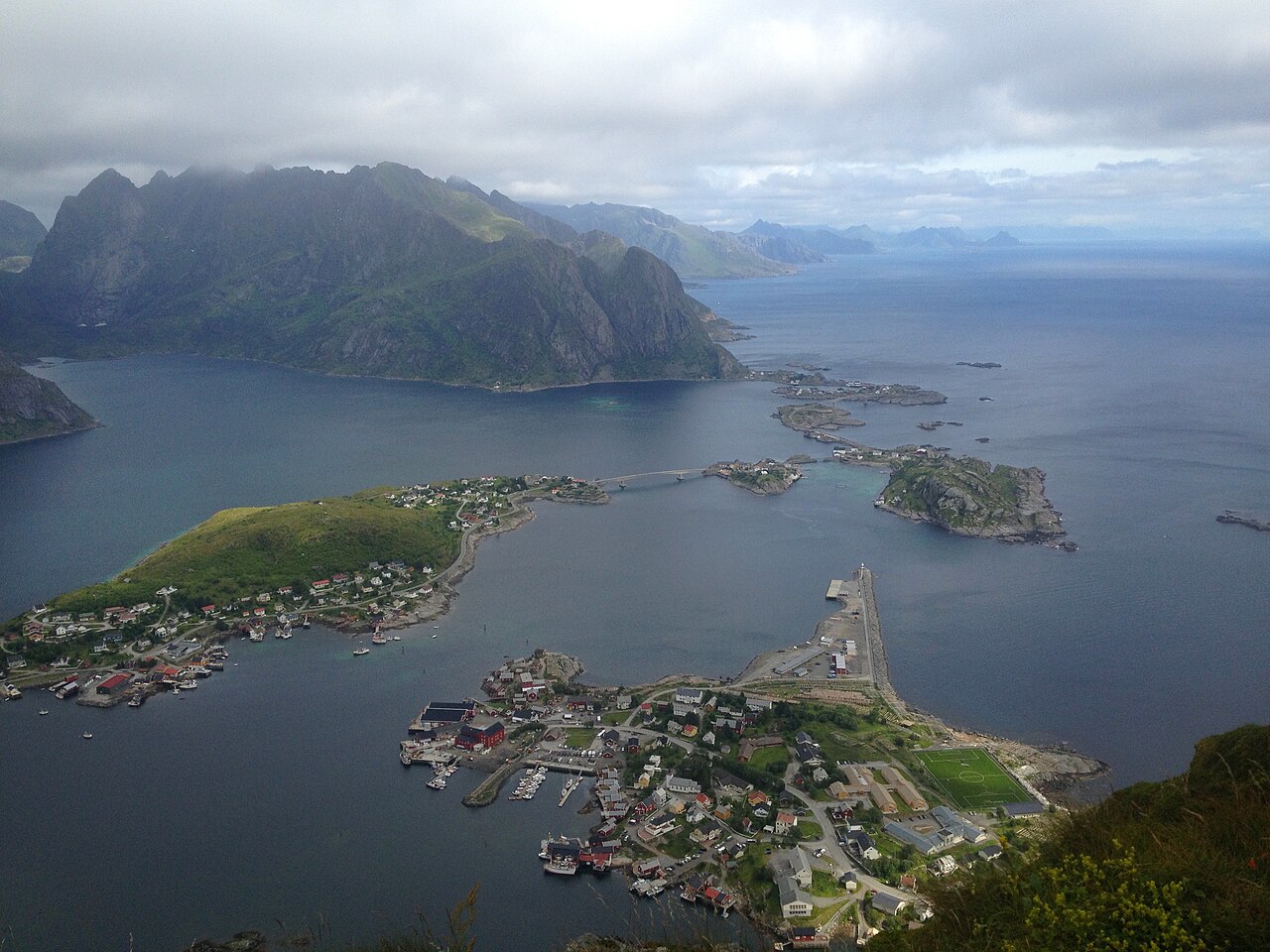
Stay in a Traditional Rorbu
Originally, rorbuer were wooden cabins used by visiting fishermen during the winter cod season. Today, many have been restored as guest cabins with kitchens and sea views. Above all, waking up beside the water in a red rorbu is a highlight of any trip.
Photograph Hamnøy and Sakrisøy
Just north of Reine, the tiny villages of Hamnøy and Sakrisøy are photographers’ favorites. For example, Hamnøy’s red cabins stand on rocks beneath snowy peaks. Similarly, Sakrisøy is known for its bright yellow cabins.
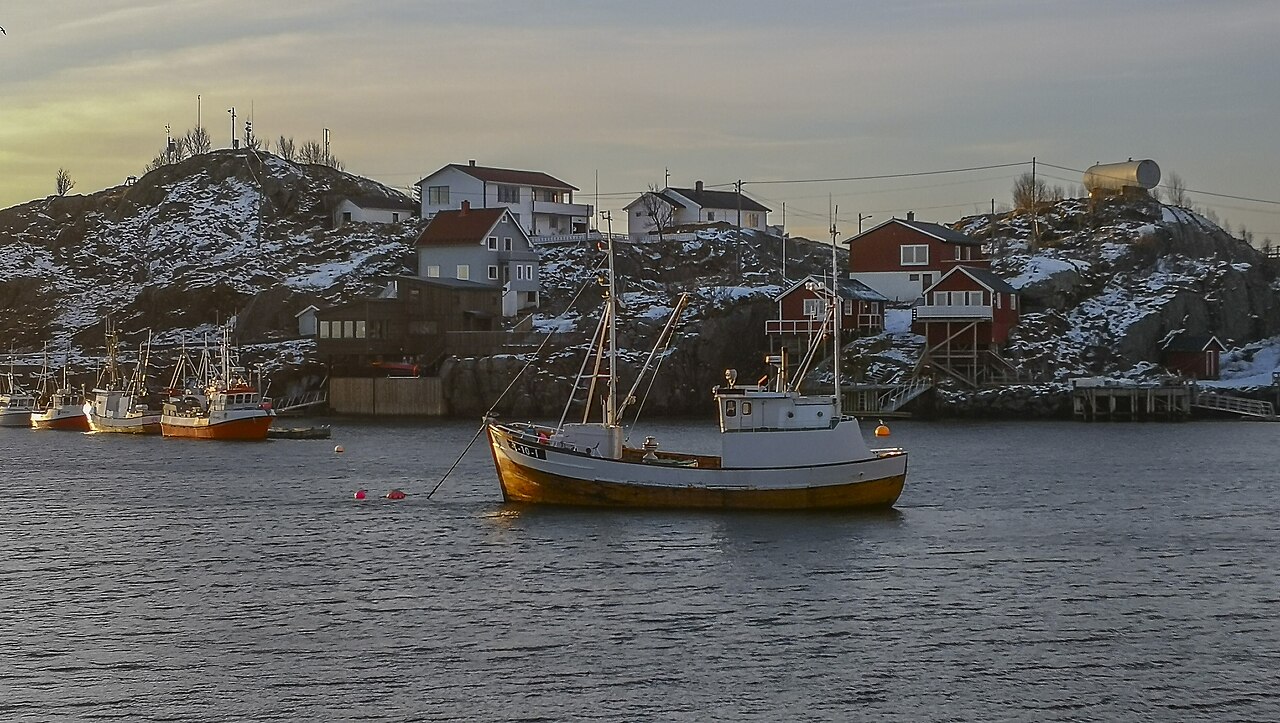
Take a Boat Into Reinefjord
In summer, small ferries cross the Reinefjord to remote hamlets such as Vindstad. From there, you can hike to Bunes Beach, a wide white-sand beach surrounded by cliffs. Alternatively, rent a kayak and paddle along the calm fjord.
Visit Å and the Stockfish Museum
At the very end of the E10 lies the village of Å. Here, the Lofoten Stockfish Museum explains how cod is dried on wooden racks and exported around the world. In addition, the Norwegian Fishing Village Museum preserves old boathouses, a bakery and a cod liver oil factory.
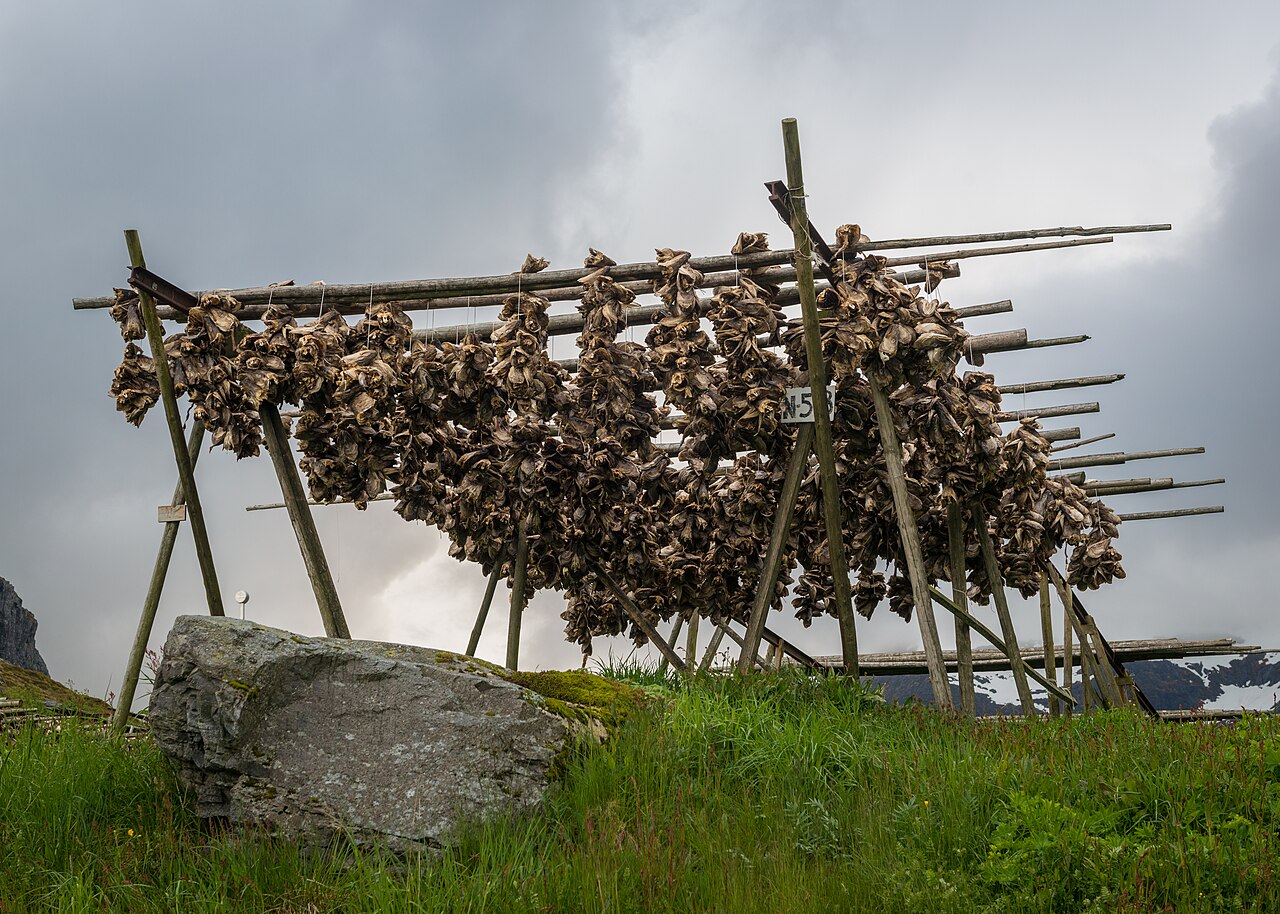
Day Trips From Reine Lofoten
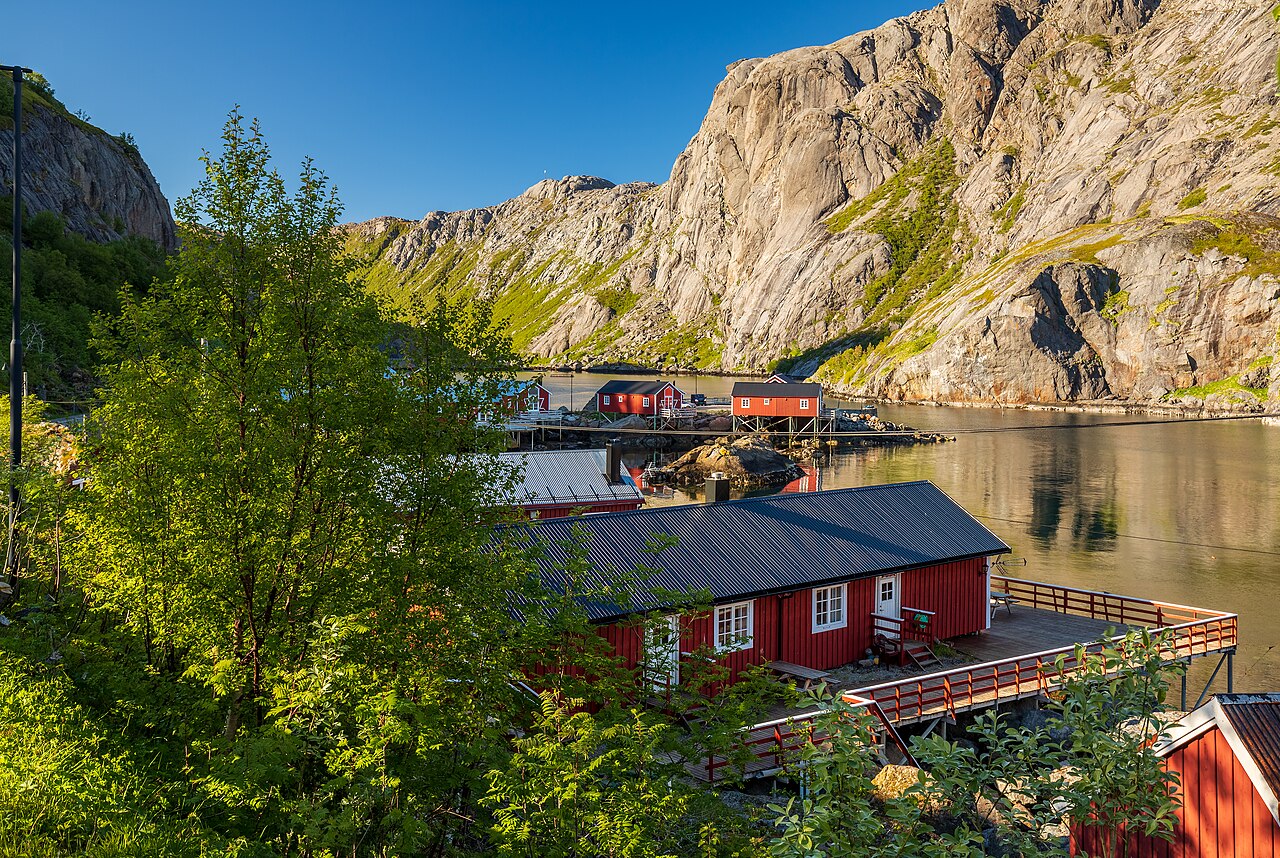
Nusfjord
Nusfjord is one of the oldest and best-preserved fishing villages in Norway. In fact, its wooden buildings sit around a narrow harbor. Moreover, it is about an hour’s drive from Reine, along a scenic road.
Ramberg and Haukland Beaches
Further north, beaches such as Ramberg and Haukland have white sand and turquoise water. Although the sea is cold, the scenery feels almost tropical. Also, these beaches are great places to watch the northern lights in winter.
One Historical Fact About Reine Lofoten
For more than a thousand years, the Lofoten cod fishery has drawn fishermen to these islands each winter. In fact, dried Lofoten stockfish was traded across Europe as early as the Viking Age. Even today, the fishery takes place from February to April.
How to Get to Reine Lofoten
The most direct route is the car ferry from Bodø to Moskenes, which takes about three to four hours. From Moskenes, then, Reine is only a few minutes’ drive. Alternatively, fly to Leknes and drive about an hour south. In addition, a rental car is the best way to explore the islands at your own pace.
Best Time to Visit Reine Lofoten
The best time to visit depends on what you want to see. For hiking and the midnight sun, come from June to August. On the other hand, visit from September to March for the northern lights. Meanwhile, late February to April offers snowy peaks, longer days and the cod fishing season.
Is Reine Lofoten Worth Visiting?
Yes, absolutely. Reine Lofoten is one of the most spectacular places in Europe, and it is still a working fishing village. Ideally, spend at least three nights in the area to allow for changing weather. For another stunning coastal village, read our guide to Akaroa in New Zealand.
Final Thoughts on Reine Lofoten
In short, Reine is a place that seems almost too beautiful to be real. Climb Reinebringen, sleep in a red rorbu and watch the Arctic light change over the fjord. By the end of your trip, the Lofoten Islands will have captured your heart.
Image Credits
Wikimedia Commons
- Ximonic (Simo Räsänen): Reine at Reinefjorden, 2010 September, CC BY-SA 3.0
- Joren De Groof from Ghent, Belgium, Belgium: View of Reine and Reinefjorden from Reinebringen – IMG 2884, CC BY 2.0
- El Coleccionista de Instantes Fotografía & Video: Hamnøy (27063289587), CC BY-SA 2.0
- DXR: Codfish Drying Flake, Å i Lofoten 20150608 1, CC BY-SA 4.0
- Ximonic (Simo Räsänen): Buildings of Nusfjord fishing village by Nusfjorden in Flakstad, Nordland, Norway, 2022 June, CC BY-SA 4.0


