In a quiet valley of Yunnan, a cobbled market square sits between a carved wooden theater and a Ming dynasty temple. Horse caravans once rested here on their long journeys to Tibet, and today, the town still feels wonderfully calm. This is Shaxi, often called the best preserved caravan town on the ancient Tea Horse Road. In this guide, you will learn what to see, how to get there and when to visit.
Quick Facts About Shaxi, China
| Country | China |
| Region | Jianchuan County, Dali Prefecture, Yunnan |
| Known For | Tea Horse Road history, Sideng Square, the old theater and Xingjiao Temple |
| UNESCO Status | Not listed (the conservation project won a UNESCO Asia-Pacific award in 2005) |
| Founded | Trading post since the Tang dynasty (618 to 907) |
| Best Time to Visit | March to May and September to November |
| Time Needed | One to two days |
| Continent | Asia |
Where Is Shaxi, China?
Shaxi lies in Jianchuan County, part of Dali Prefecture in the southwestern Chinese province of Yunnan. Specifically, it sits roughly halfway between Dali and Lijiang, two of the most popular destinations in the region.
By road, Shaxi is about 128 kilometers from Dali and 107 kilometers from Lijiang. Even so, it feels far more remote, tucked away in a green valley surrounded by mountains.
Why Visit Shaxi, China?
First of all, Shaxi offers a glimpse of old Yunnan. Indeed, compared with the busy old towns of Dali and Lijiang, it is quiet, authentic and far less commercial.
In addition, the town has a remarkable history. In fact, it began as a trading point for tea and horses during the Tang dynasty and reached its peak under the Ming and Qing dynasties.
Finally, the countryside is lovely. Rice and rapeseed fields, rivers and mountains surround the town, so it is perfect for slow walks and bike rides. Moreover, most residents belong to the Bai and Yi ethnic groups, which adds to the town’s unique culture.
Exploring Sideng Square and the Old Town
The heart of Shaxi is Sideng, the old market area. Since it is small, you can explore it in a few hours, but it rewards a slower visit.
The Market Square
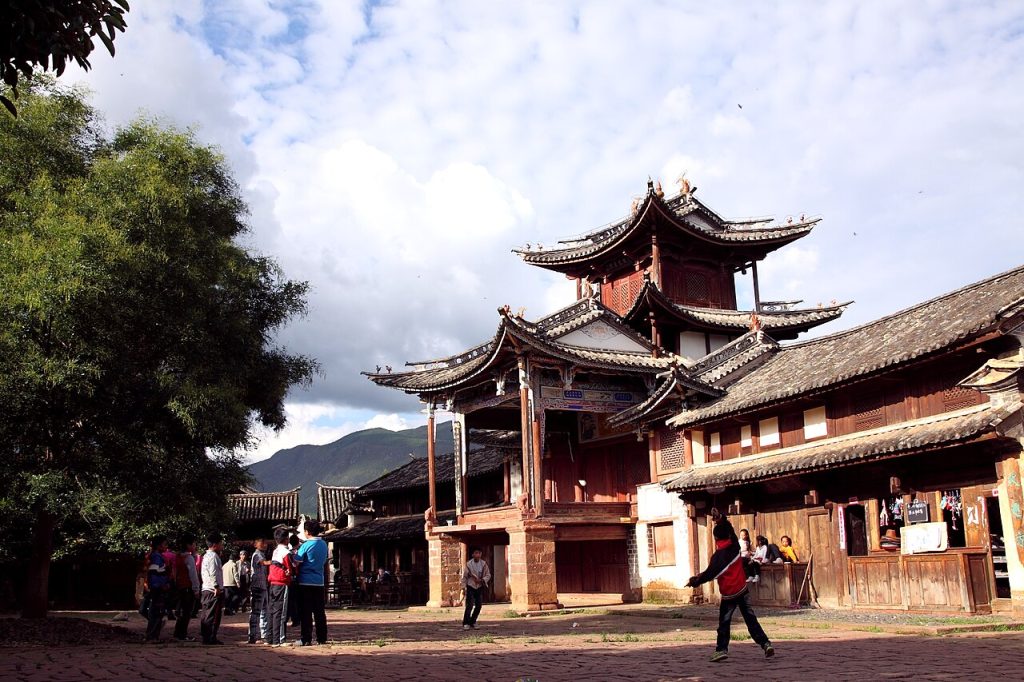
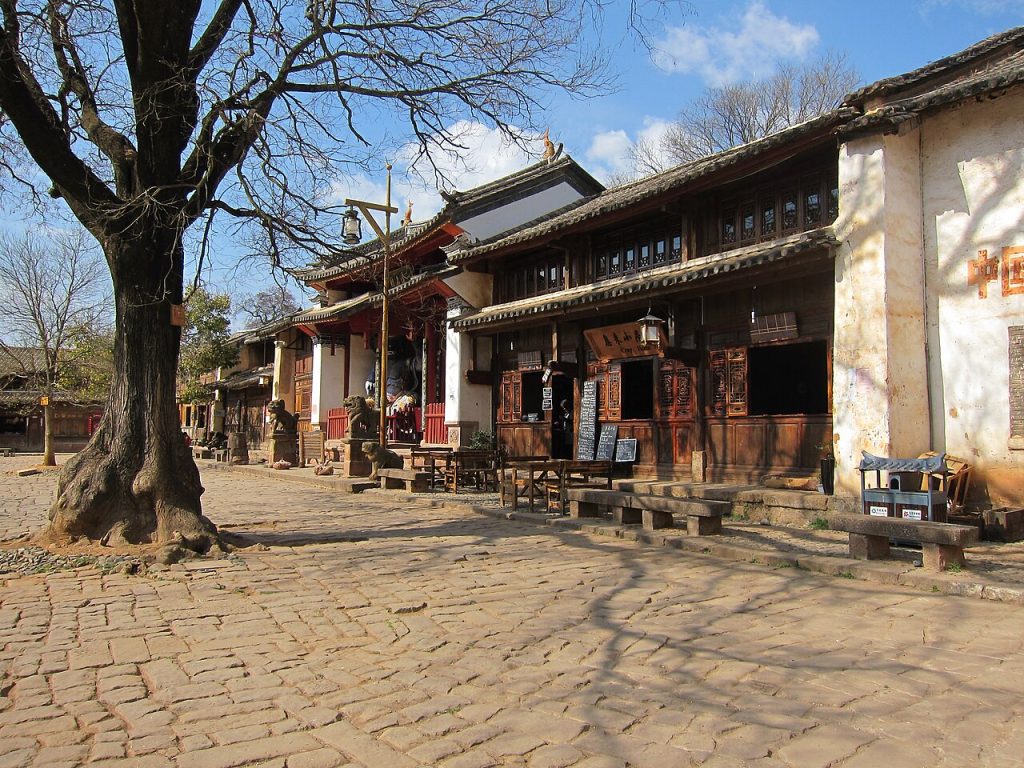
Sideng’s square was once a busy trading hub where caravans exchanged tea, horses and other goods. Today, it is still paved with old stones and shaded by ancient trees. Then, in 2001, it was named on the World Monuments Watch list of endangered sites, which helped launch its restoration.
The Old Theater Stage
On one side of the square stands the old theater, a three-story pavilion built during the Qing dynasty. In particular, its upturned eaves and carved wood make it the most photographed building in town. According to a local saying, the plays were performed for the gods in the temple opposite.
Xingjiao Temple
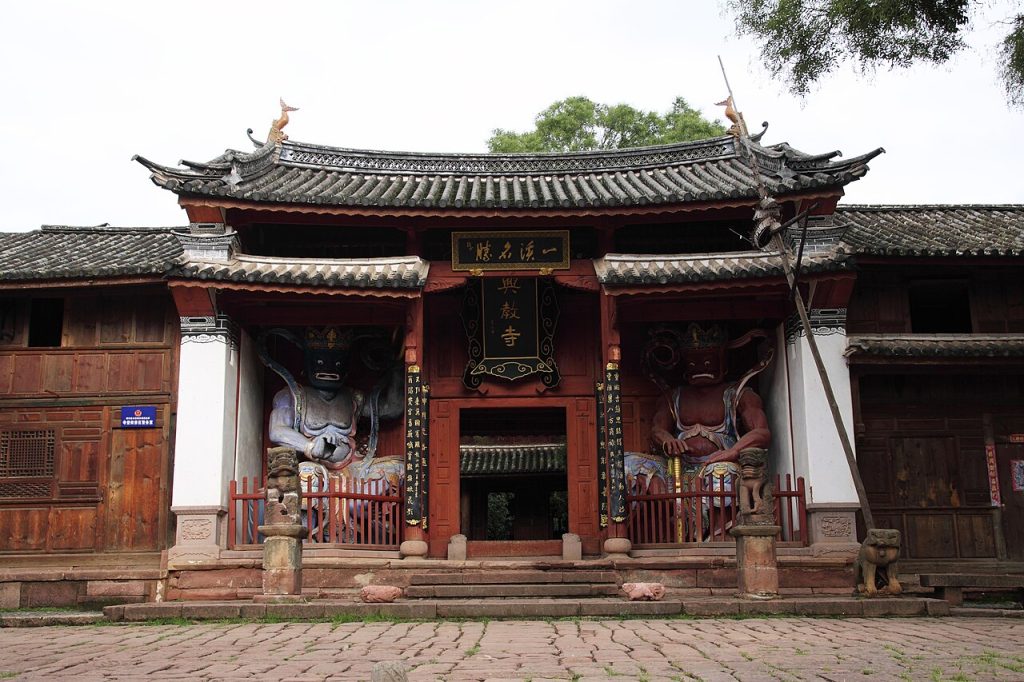
Directly across the square is Xingjiao Temple, a Buddhist temple from the Ming dynasty. Its red gate and quiet courtyards are also a peaceful place to rest. Interestingly, the temple district is linked to an early Tibetan Buddhist sect.
Walking the Lanes of Shaxi
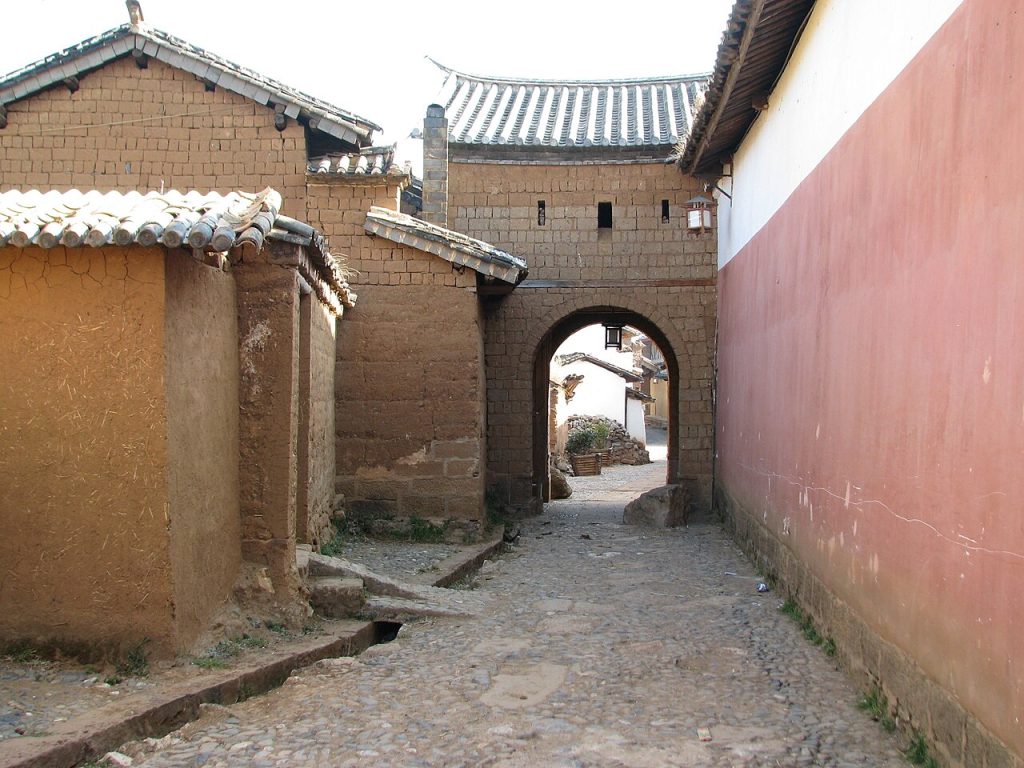
Beyond the square, narrow lanes lead past earthen walls, wooden doorways and small courtyard houses. In fact, many of these buildings were once inns for traveling merchants.
Sideng Street is the main lane. It leads from the square to the East Gate and still works as a traditional bazaar. Along the way, look for the Ouyang Courtyard House, a former caravan inn on the Tea Horse Road.
Every Friday morning, the street fills with the weekly market. For example, local farmers sell goat cheese, herbal medicine, dried tofu and wild mushrooms. Therefore, Friday is an excellent day to be in town.
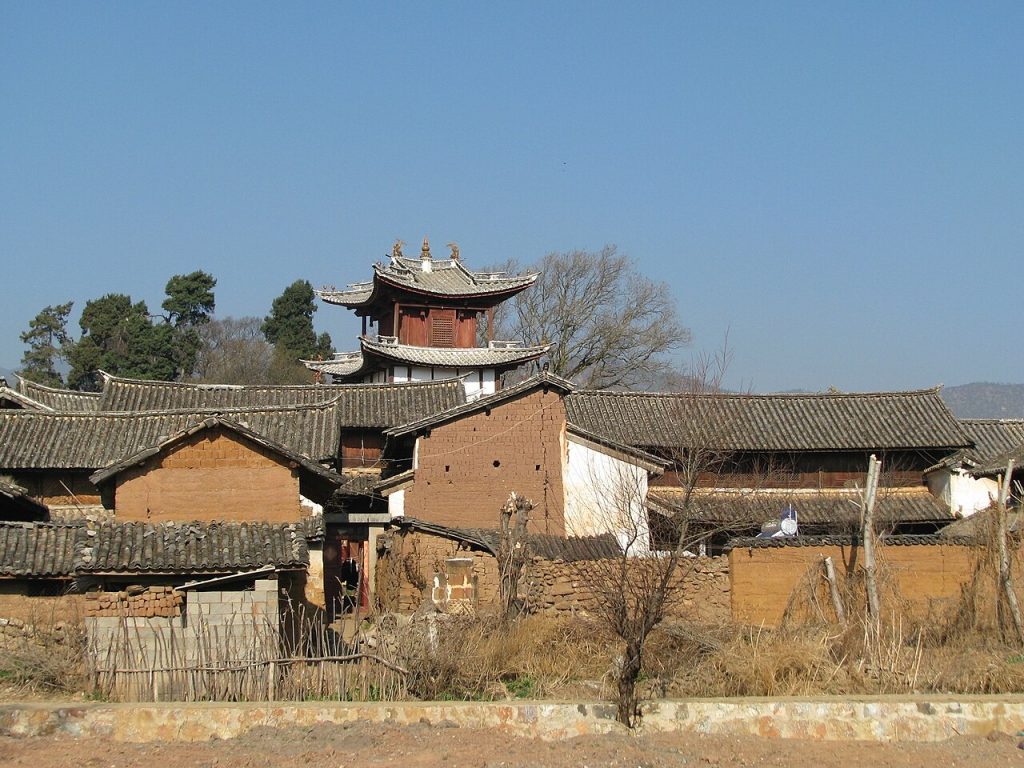
Beyond the Old Town of Shaxi
The landscapes around Shaxi are just as appealing as the town itself.
Yujin Bridge
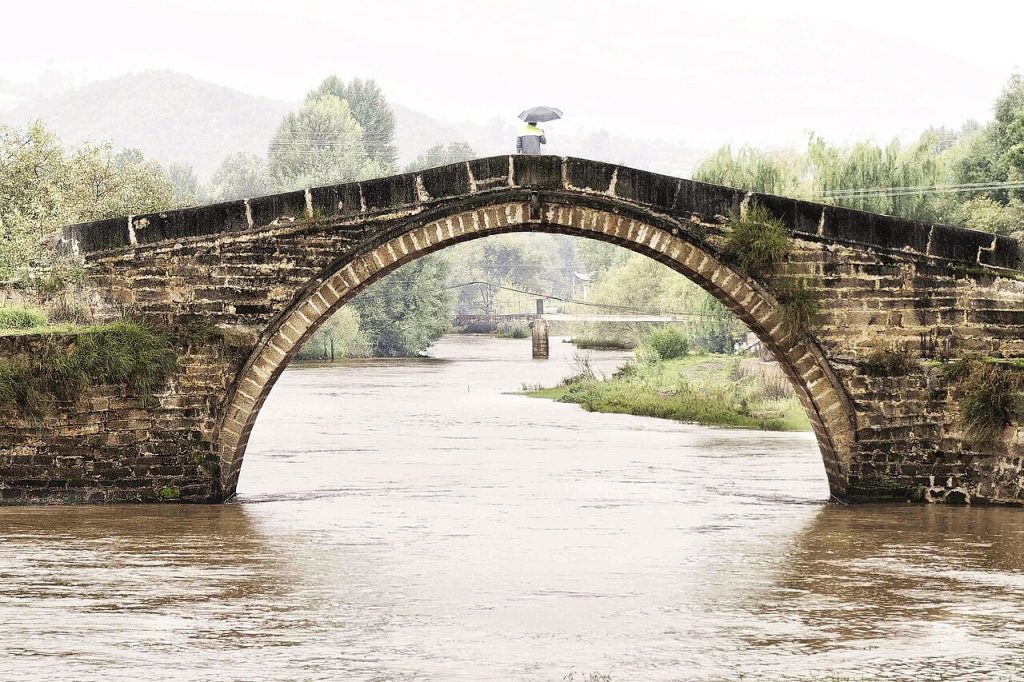
Just outside the East Gate, the crescent-shaped Yujin Bridge crosses the Heihui River. Indeed, its stones are worn smooth by centuries of footsteps and carts. In spring, the fields nearby glow yellow with rapeseed flowers.
Shibaoshan Grottoes
About a 30-minute drive from town, Shibao Mountain holds Buddhist rock carvings and temples more than 1,300 years old.
The Carvings and Temples
The site includes carved images of Guanyin and other Buddhist figures. Walking trails connect the grottoes, with fine views over the valley.
The Folk Song Festival
Each year, around August or September, Bai people gather at Shibaoshan for a folk song festival. Dressed in traditional clothing, they sing to each other in a call-and-response style.
One Historical Fact About Shaxi, China
Shaxi is considered probably the most intact horse caravan town on the ancient Tea Horse Road, the trade route that linked Yunnan with Tibet and Burma. For centuries, merchants stopped here to rest and trade. Later, in the 2000s, the Shaxi Rehabilitation Project restored the theater and temple. As a result, the project won a UNESCO Asia-Pacific Heritage Award in 2005.
How to Get to Shaxi, China
Shaxi is best reached from Dali or Lijiang.
- From Dali: About 2 hours by private car or taxi, or roughly 3 hours by shuttle bus from Dali Bus Station.
- From Lijiang: About 2 hours by private car, taxi or shuttle bus.
- Private car: This is the most flexible and comfortable option, especially if you want to stop along the way.
Best Time to Visit Shaxi, China
Spring, from March to May, is a lovely time, when rapeseed, cherry and wisteria blossoms fill the valley. Likewise, autumn, from September to November, brings golden ginkgo trees and clear skies.
Summer is rainy but very green. Winter, by contrast, is mostly clear and dry, with beautiful sunrises over Yujin Bridge. In February, plum trees also come into bloom.
Is Shaxi, China Worth Visiting?
Yes, absolutely. Shaxi is one of the most authentic and peaceful old towns in Yunnan. Its history, architecture and countryside make it a highlight for travelers who want to escape the crowds.
Moreover, it is easy to combine with Dali and Lijiang. Give it at least one night, so you can enjoy the square after the day visitors leave.
Final Thoughts
Shaxi is a town where time seems to slow down. Sit in the market square, watch the light on the old theater and wander out to Yujin Bridge at sunrise. Above all, try to be there on a Friday for the market. If you are exploring more of China, you may also enjoy our guides to Lijiang Old Town and Fenghuang.
Image Credits
Wikimedia Commons
- Old Theater Stage, Shaxi: Photo by Jingzhe_hkc via Wikimedia Commons (CC BY-SA 3.0)
- Xingjiao Temple Gate: Photo by Jingzhe_hkc via Wikimedia Commons (CC BY-SA 3.0)
- Sideng Street, Shaxi: Photo by Anders Johnson via Wikimedia Commons (CC BY 3.0)
- Village Lane in Shaxi: Photo by Matthieu Lelievre via Wikimedia Commons (CC BY-SA 2.0)
- Rooftops of Shaxi: Photo by Matthieu Lelievre via Wikimedia Commons (CC BY-SA 2.0)
- Yujin Bridge: Photo by Rod Waddington via Wikimedia Commons (CC BY-SA 2.0)