San Miguel de Allende Mexico is one of the most enchanting colonial cities in North America. Set in the highlands of Guanajuato, the city is known for its warm-colored facades, cobblestone streets, dramatic church spires, flower-covered walls, and lively cultural atmosphere. It is the kind of destination where every corner feels carefully framed, from quiet alleys and carved wooden doors to rooftops glowing in the late afternoon sun.
So, this guide covers the best things to do in San Miguel de Allende, along with tips on how to get there and when to visit San Miguel de Allende.
At the center of the city stands the Parroquia de San Miguel Arcángel, the pink neo-Gothic church that has become San Miguel’s most recognizable landmark. Around it, the historic center spreads into a maze of sloping lanes, plazas, churches, balconies, markets, galleries, restaurants, and viewpoints. The city feels both historic and alive, shaped by centuries of architecture, faith, art, independence history, and daily life.
San Miguel de Allende is also part of a UNESCO World Heritage Site, recognized together with the nearby Sanctuary of Jesús Nazareno de Atotonilco. This recognition highlights the city’s colonial architecture, its role in Mexico’s inland history, and its deep connection to religious and cultural traditions. Today, San Miguel is one of Mexico’s most beloved travel destinations for visitors who enjoy heritage cities, photography, art, architecture, and slow exploration.
Suggested Image: san-miguel-de-allende-colorful-cobblestone-street
Quick Facts About San Miguel de Allende
| Country | Mexico |
| State | Guanajuato |
| Known For | Colorful colonial streets, historic churches, art galleries, cobblestone lanes, and the Parroquia de San Miguel Arcángel |
| UNESCO Status | Part of the UNESCO World Heritage Site “Protective Town of San Miguel and the Sanctuary of Jesús Nazareno de Atotonilco” |
| Founded | 1542 |
| Best Time to Visit | November to April |
| Time Needed | 2–3 days |
| Continent | North America |
Where Is San Miguel de Allende?
San Miguel de Allende is located in the state of Guanajuato in central Mexico. It sits in the Mexican highlands, surrounded by dry hills, historic roads, and colonial-era towns. The city is northeast of Guanajuato City, northwest of Querétaro, and within reach of Mexico City by road, making it a popular stop for travelers exploring central Mexico.
Its location helped shape its early importance. During the colonial period, San Miguel developed along routes connected to inland trade, religious missions, military protection, and the movement of silver from Mexico’s mining regions. Because of this, the city became more than a small settlement. It grew into a protective town with churches, civic buildings, homes, and streets that reflected its strategic place in colonial Mexico.
For visitors today, San Miguel de Allende is easy to combine with other destinations in central Mexico, including Guanajuato City, Querétaro, Dolores Hidalgo, and Atotonilco. The historic center is best explored on foot, although its cobblestones and hills make comfortable walking shoes important.
Why Visit San Miguel de Allende?
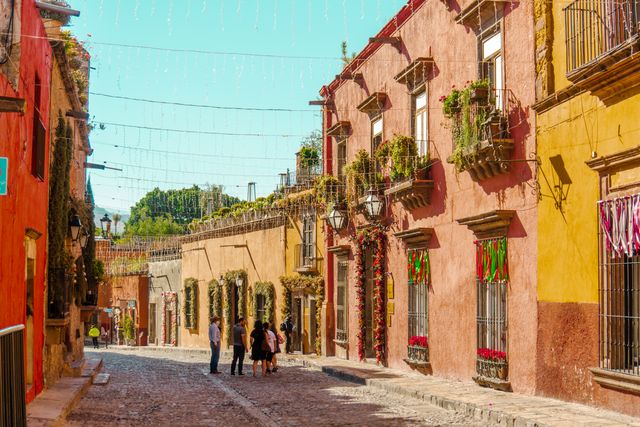
San Miguel de Allende is worth visiting because it combines visual beauty, rich history, cultural life, and a relaxed walking atmosphere. Many cities have beautiful landmarks, but San Miguel feels memorable because the entire historic center has character. Its streets are lined with colorful facades, carved doors, balconies, flower-filled walls, churches, courtyards, and views that appear suddenly between buildings.
The city is especially appealing for travelers who enjoy slow exploration. Around El Jardín, the main square, visitors can sit beneath trimmed trees, watch the Parroquia change color in the light, listen to street musicians, and observe daily life unfold. A few minutes away, quieter streets reveal old walls, hidden alleys, galleries, and residential corners that feel far removed from the busiest plaza.
San Miguel de Allende also has a strong artistic identity. Galleries, workshops, design shops, cultural spaces, and restaurants give the city a creative energy that complements its colonial architecture. This mix of heritage and modern cultural life makes the city feel alive rather than frozen in time.
A City Built Along the Road to Silver
The history of San Miguel de Allende begins long before it became one of Mexico’s most admired colonial destinations. The surrounding region was home to Indigenous communities before Spanish colonization expanded across central Mexico. In 1542, the Franciscan friar Juan de San Miguel founded the settlement that would become San Miguel de Allende. It was originally known as San Miguel el Grande, a name that reflected both its patron saint and its growing importance.
The town’s location gave it a strategic role during the colonial period. San Miguel stood near routes linked to the interior of New Spain and the movement of silver from rich mining regions such as Guanajuato and Zacatecas. These roads were not only commercial routes. They were also paths used by missionaries, merchants, soldiers, muleteers, and travelers. Because of this, San Miguel became a protective town and service center along the inland road system.
During the 18th century, San Miguel experienced significant growth and prosperity. Wealth connected to regional trade and mining helped support the construction of churches, mansions, civic buildings, chapels, and religious institutions. The city’s architecture reflects this period of prosperity, with Baroque, neoclassical, and later neo-Gothic influences appearing across its historic center. Religious devotion, craftsmanship, urban planning, and local identity all shaped the city’s appearance.
San Miguel also became closely tied to Mexico’s independence movement. Ignacio Allende, one of the early leaders of the struggle for independence from Spain, was born in the city in 1769. A military officer who joined the independence cause, Allende became one of the most important figures associated with the beginning of modern Mexico. In his honor, the city’s name was later changed from San Miguel el Grande to San Miguel de Allende.
This history gives the city more depth than its colorful appearance alone suggests. San Miguel is beautiful, but it is also connected to colonial expansion, inland trade, religious architecture, and national identity. Its UNESCO recognition, shared with the nearby Sanctuary of Jesús Nazareno de Atotonilco, confirms the importance of this cultural and historical landscape.
The Parroquia and the Historic Heart of San Miguel de Allende
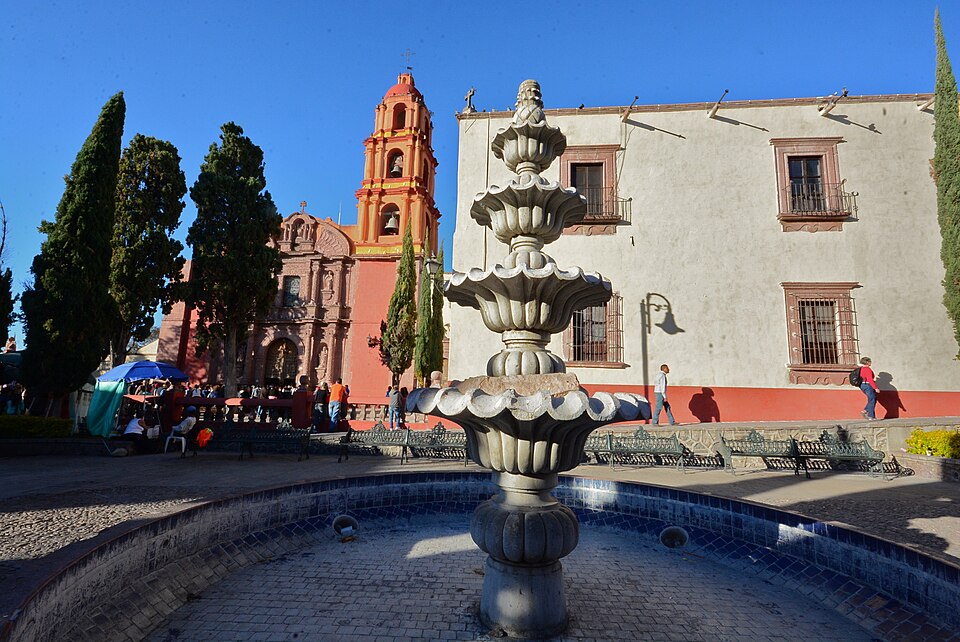
The Parroquia de San Miguel Arcángel is the most famous landmark in San Miguel de Allende. Its pink towers rise above the main square with a dramatic silhouette that looks especially striking at sunrise, sunset, and dusk. Although the church has older origins, its famous neo-Gothic facade was added in the 19th century and is often associated with local master stonemason Zeferino Gutiérrez.
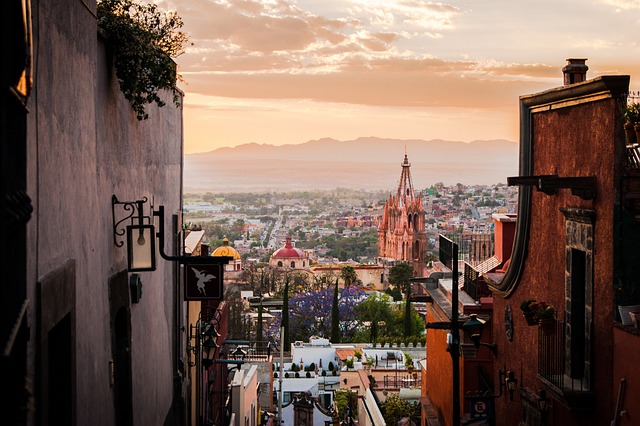
The Parroquia anchors El Jardín, the city’s central plaza. This square is the social heart of San Miguel de Allende, where locals and visitors gather throughout the day. Benches, trees, musicians, vendors, cafes, and surrounding colonial buildings create a lively but graceful setting. From almost every angle, the church towers dominate the view.
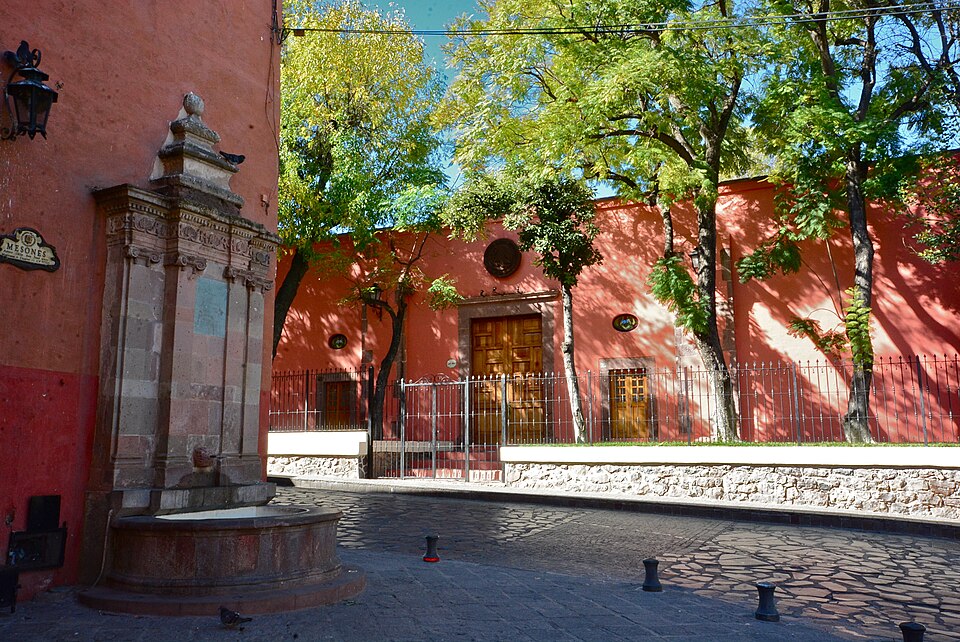
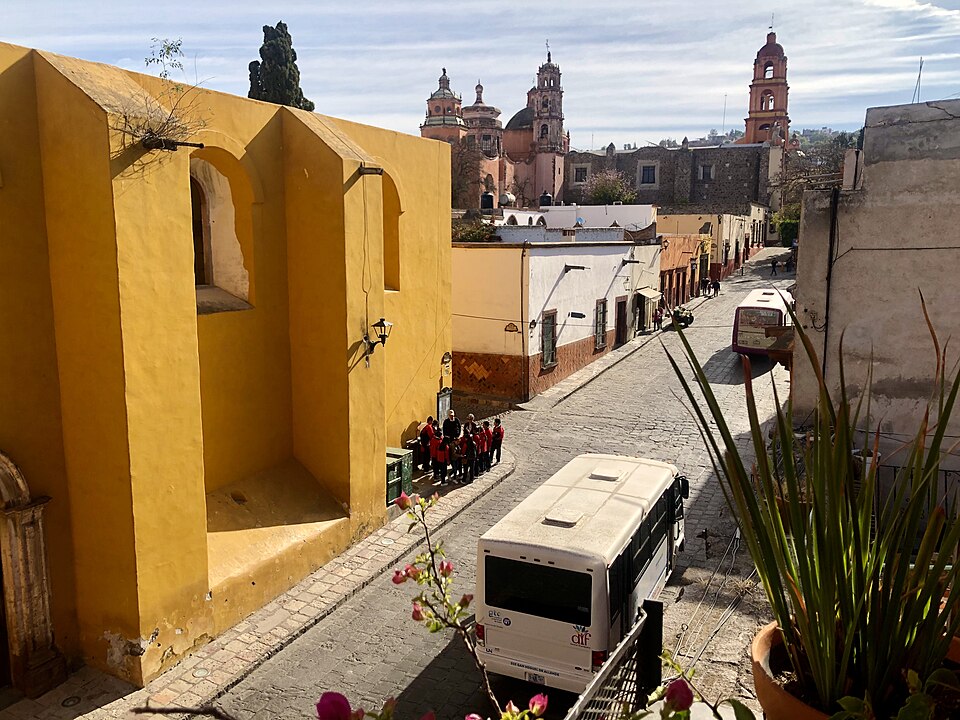
The streets around the Parroquia are among the most atmospheric in the city. Some lanes lead directly toward the church, creating postcard-like views framed by colorful walls and old buildings. Other streets curve away into quieter corners where wooden doors, balconies, ironwork, stone walls, and small architectural details become the main attraction.
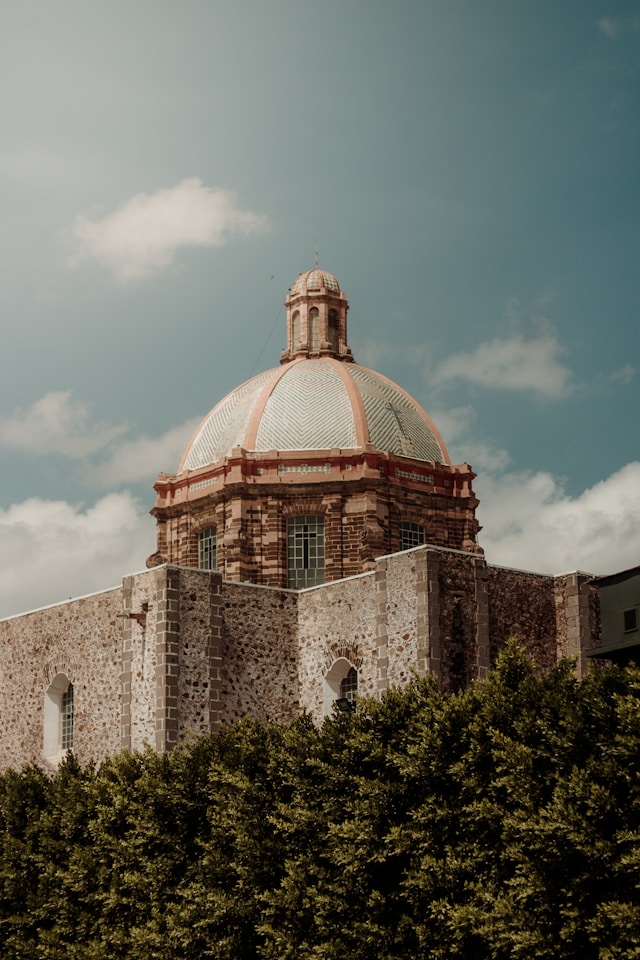
The Parroquia is not the only important church in San Miguel. The Church of San Francisco and other religious buildings add to the city’s architectural depth. Their domes, facades, arches, stonework, and decorative details reflect centuries of faith and craftsmanship. Together, these churches help explain why the historic center feels so layered and meaningful.
Cobblestone Streets, Colorful Walls, and Colonial Details
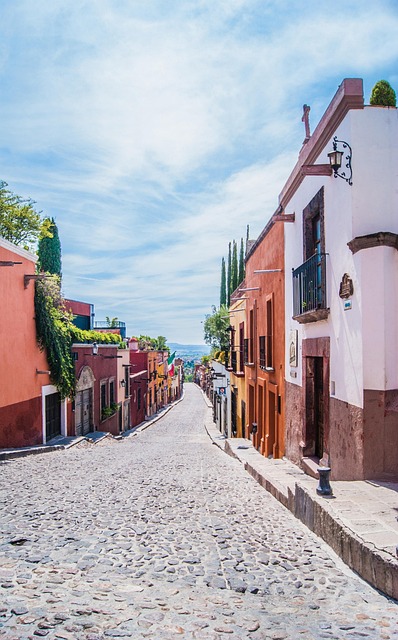
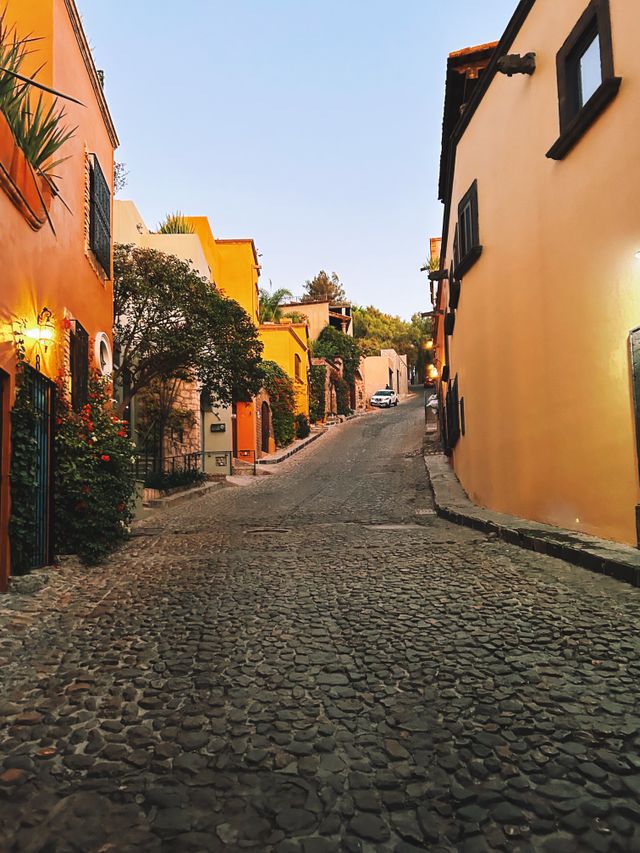
One of the best ways to experience San Miguel de Allende is by walking without rushing. The city’s cobblestone streets rise and fall across the hills, creating changing views with every turn. At one moment, a street may frame the Parroquia in the distance. A few minutes later, the scene may shift to a quiet wall covered with flowers, a carved doorway, or a balcony full of plants.
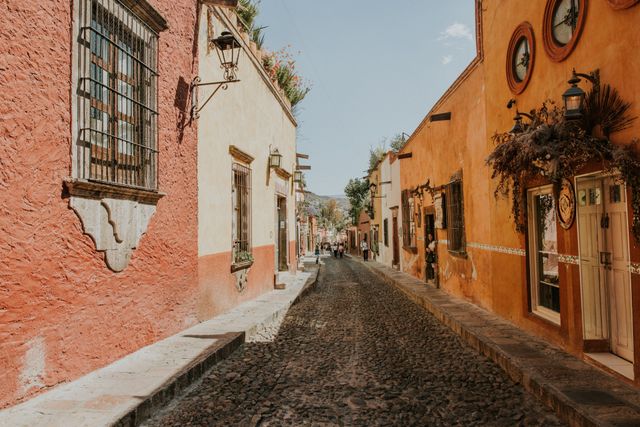
Color is one of the city’s defining features. Buildings are painted in warm shades of terracotta, mustard yellow, burnt orange, deep red, cream, and soft pink. These colors give San Miguel its distinctive atmosphere and make the historic center feel visually unified. The tones also work beautifully with the city’s strong sunlight, which creates shadows and textures across old walls.
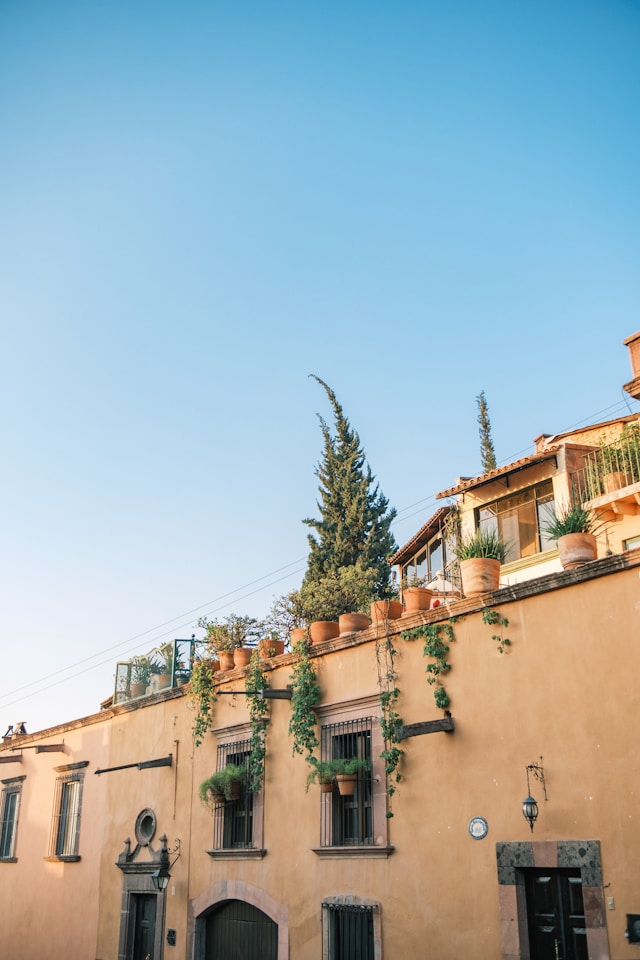
The details matter just as much as the larger views. Hand-carved wooden doors, stone thresholds, iron balconies, potted plants, arched windows, and traditional facades all contribute to the city’s charm. Some streets feel elegant and polished, while others feel rustic and intimate. This combination gives San Miguel a lived-in beauty that is more interesting than a perfectly restored museum town.
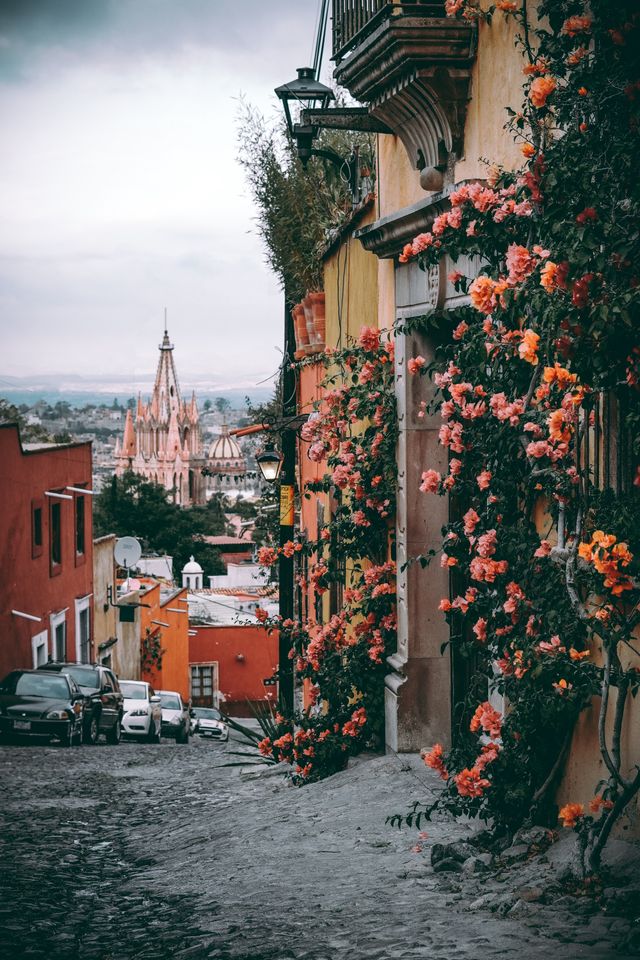
The sloping terrain adds another layer of character. Walking uphill can lead to sweeping rooftop views, while descending into the center reveals plazas, churches, restaurants, and markets. The uneven streets may require patience, but they are part of what makes the city so memorable.
Art, Food, Markets, and Local Culture
San Miguel de Allende has long attracted artists, writers, designers, and travelers interested in culture. Its historic streets provide the setting, but its creative life gives the city much of its modern personality. Art galleries, design studios, workshops, boutiques, cultural centers, and craft shops can be found throughout the historic center and nearby neighborhoods.
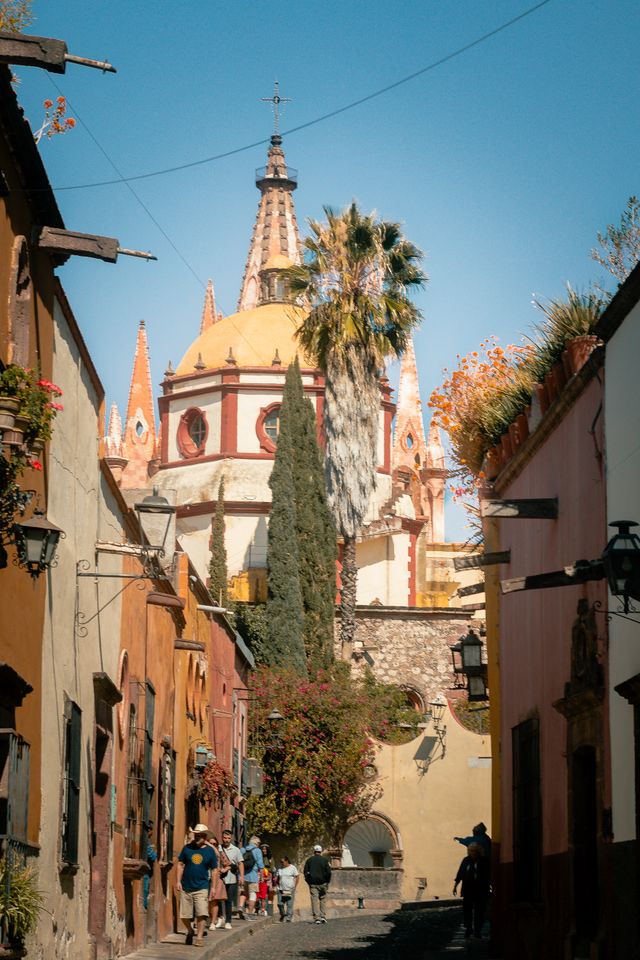
One of the city’s best-known cultural spaces is Fábrica La Aurora, a former textile factory that has been transformed into a center for art, design, galleries, and studios. It shows how San Miguel has reused historic spaces while supporting contemporary creativity. Visitors interested in painting, sculpture, furniture, photography, textiles, and decorative arts can spend hours exploring the area.
Markets and local shops add another layer to the city. San Miguel is not only a place of polished restaurants and galleries; it is also a working town where people buy flowers, produce, household goods, textiles, ceramics, and handmade items. These everyday spaces help balance the city’s tourist appeal with local rhythm and community life.
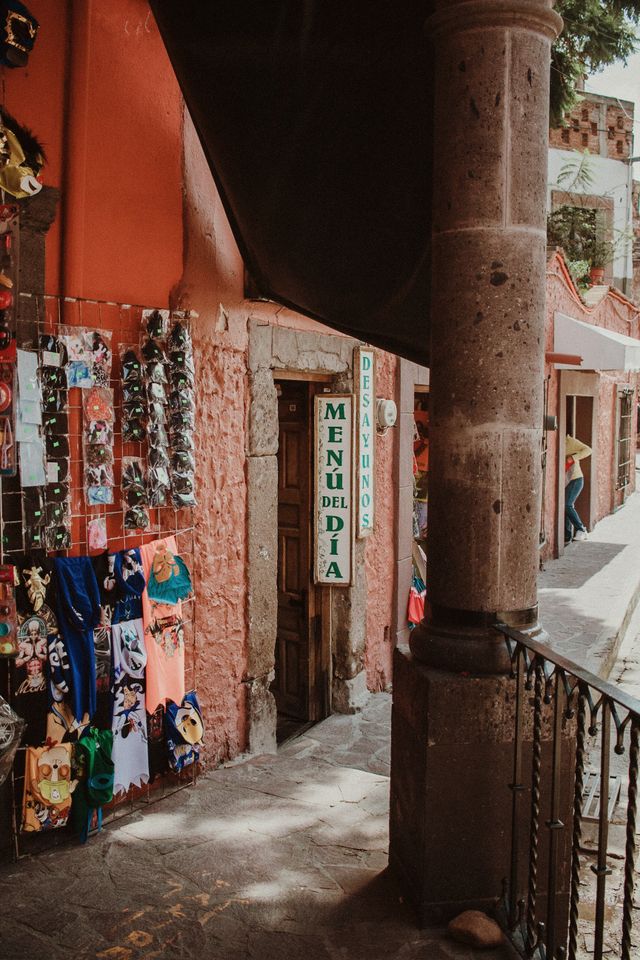
Food is also part of the experience. San Miguel offers everything from simple Mexican eateries and bakeries to rooftop restaurants and stylish cafes. Dining here often becomes memorable because of the setting: a courtyard, a colorful entrance, a rooftop view, or a table near a quiet colonial street.
El Mirador and the Skyline of San Miguel de Allende
For one of the best views of San Miguel de Allende, visitors should make time for El Mirador. This overlook sits above the historic center and offers a wide view of rooftops, domes, church towers, colorful buildings, and the surrounding hills. From here, the city’s layout becomes easier to understand. The Parroquia rises from the center, while streets and homes spread across the slopes around it.
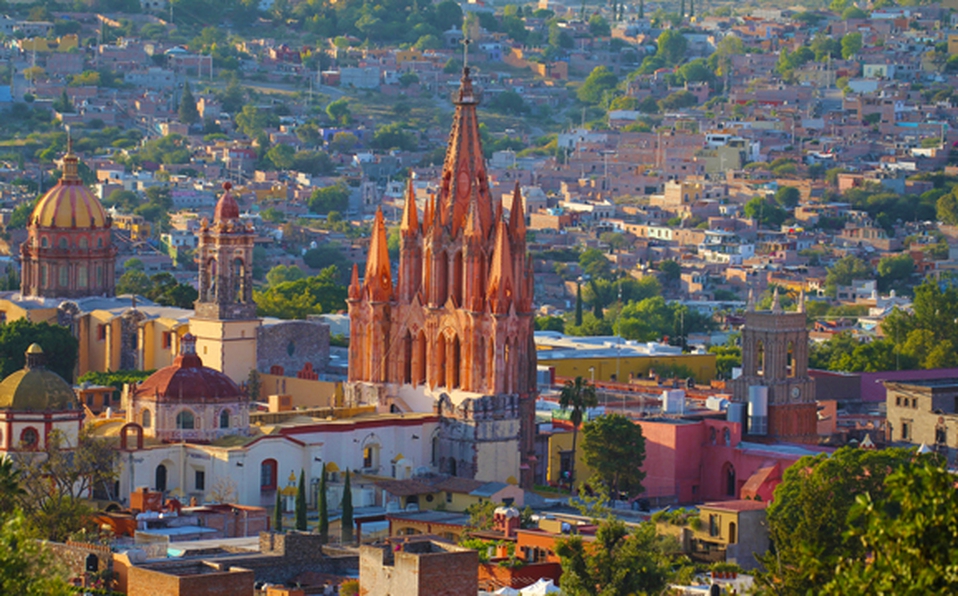
The view is especially beautiful in the morning or late afternoon. When the light softens, the colors of the buildings appear warmer and the church towers stand out against the skyline. Sunset can be particularly memorable, with the city glowing in shades of gold, pink, and orange.
El Mirador also reveals how San Miguel’s architecture works with the landscape. The city is not flat, and its hills create movement, depth, and perspective. This gives the skyline a layered quality, with domes, spires, rooftops, and streets arranged across different elevations.
After visiting the viewpoint, walking back down toward the historic center is a rewarding experience. The route passes through quieter residential streets and offers a slower look at local architecture before returning to the busier plazas and landmarks.
One Historical Fact About San Miguel de Allende
One historical fact about San Miguel de Allende is that the city is named after Ignacio Allende, one of the early leaders of Mexico’s independence movement. He was born in San Miguel in 1769 and became a military officer before joining the movement against Spanish colonial rule.
This connection is so important that the city’s original name, San Miguel el Grande, was changed to San Miguel de Allende in his honor. The name itself keeps his legacy visible in everyday life. For visitors, this means the city is not only a beautiful colonial destination but also a place tied directly to the beginnings of Mexico’s independence.
Allende’s story gives the city national significance. While many travelers first notice San Miguel for its colorful streets and dramatic church towers, its connection to the independence movement adds a deeper historical layer to the visit.
How to Get To San Miguel de Allende
- By air: The nearest major airports are Querétaro International Airport, Guanajuato International Airport near León, and Mexico City International Airport.
- From Querétaro: San Miguel de Allende is commonly reached by bus, shuttle, taxi, or private transfer from Querétaro.
- From Guanajuato or León: Travelers can reach San Miguel by bus, rental car, or arranged transfer.
- From Mexico City: The journey usually takes several hours by bus, shuttle, or private transfer, depending on traffic and route.
- By bus: Long-distance buses connect San Miguel de Allende with several major cities in central Mexico.
- By car: Driving gives more flexibility for visiting nearby destinations such as Atotonilco, Dolores Hidalgo, and Guanajuato, but parking in the historic center can be limited.
- On foot within the city: The historic center is best explored on foot, but visitors should expect cobblestones, hills, and uneven surfaces.
Is San Miguel de Allende Worth Visiting?
San Miguel de Allende is absolutely worth visiting, especially for travelers who enjoy historic cities, architecture, photography, culture, art, and relaxed walking. It is one of Mexico’s most beautiful colonial destinations, but it also has enough history and local character to feel meaningful beyond its appearance.
The city is ideal for slow travel. Rather than rushing through a list of attractions, visitors can enjoy San Miguel by walking from plaza to plaza, stopping for views, exploring churches, visiting galleries, watching street life, and noticing architectural details. Some of the best moments happen between major landmarks.
San Miguel is also a strong destination for cultural heritage. Its UNESCO status, connection to Ignacio Allende, preserved historic center, artistic atmosphere, and nearby Sanctuary of Atotonilco make it more than a pretty city. It is a layered destination where history, faith, creativity, and everyday life meet.
Final Thoughts on San Miguel de Allende
San Miguel de Allende, Mexico is a city filled with color, history, architecture, and atmosphere. Its cobblestone streets, dramatic churches, flower-covered walls, rooftop views, and artistic spaces make it one of the most memorable places to visit in central Mexico.
What makes San Miguel special is the way beauty appears everywhere, not only at famous landmarks. A quiet alley, a carved door, a restaurant entrance, a hillside street, or a view from El Mirador can be just as memorable as the main square. The city rewards travelers who slow down and pay attention.
For anyone looking for a destination that combines colonial charm, cultural depth, art, history, and unforgettable streetscapes, San Miguel de Allende is one of Mexico’s most rewarding cities to explore.
Image Credits
- Colorful Cobblestone Street in San Miguel de Allende — Photo by Alfonso from Pexels
- Parroquia Clock Arch in San Miguel de Allende — Photo by Chris Luengas on Unsplash
- Church of San Francisco in San Miguel de Allende — Photo by Chris Luengas en Unsplash
- Parroquia Silhouette at Sunset — Image by Chris from Pixabay
- Church Spires at Dusk in San Miguel de Allende — Image by StevenBuchanan from Pixabay
- Historic Religious Facade in San Miguel de Allende — Alejandro from Mexico City, MEXICO, CC BY 2.0, via Wikimedia Commons
- Street View in San Miguel de Allende — Alejandro from Mexico City, MEXICO, CC BY 2.0, via Wikimedia Commons
- View from El Mirador in San Miguel de Allende — Valeemb22, CC BY-SA 4.0, via Wikimedia Commons
- Cobblestone Street in San Miguel de Allende — Image by StevenBuchanan from Pixabay
- Downtown Street View in San Miguel de Allende — Photo by Alejandro Aznar from Pexels
- Hidden Alley in San Miguel de Allende — Photo by Edgar Rodrigo from Pexels
- Town Center Street Life in San Miguel de Allende — Photo by Heber Vazquez from Pexels
- Sloped Colonial Houses in San Miguel de Allende — Photo by Amar Preciado from Pexels
- Rooftops and Skyline of San Miguel de Allende — Adamina, CC BY 2.0, via Wikimedia Commons
- Potted Balconies in San Miguel de Allende — Photo by Lauren King on Unsplash
- Carved Doorway in San Miguel de Allende — Photo by stephan hinni on Unsplash
- Flower-Covered Wall in San Miguel de Allende — Photo by Abraham from Pexels
- Traditional Restaurant Entrance in San Miguel de Allende — Photo by Chris Luengas from Pexels
- Colorful Colonial Architecture in San Miguel de Allende — Image by StevenBuchanan from Pixabay
.jpg)
.jpg)

.jpg)
Sources
Sources: UNESCO World Heritage Centre; Encyclopaedia Britannica; Visit San Miguel de Allende; Visit Mexico; Organization of World Heritage Cities