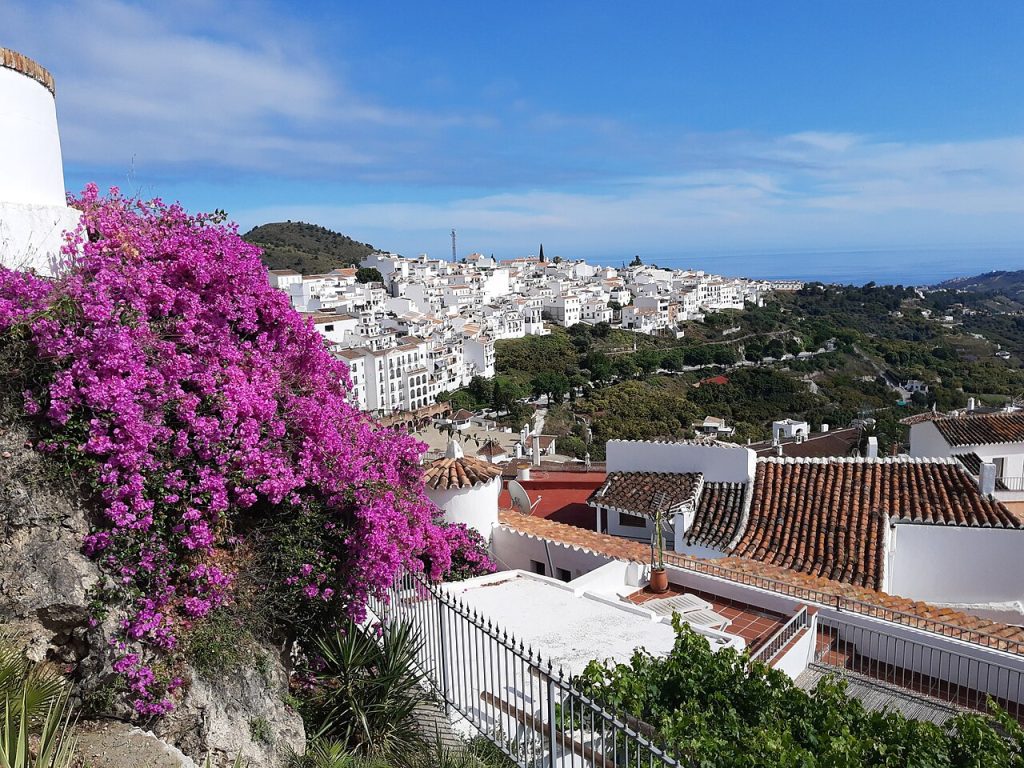
On a hillside above the Costa del Sol, a cluster of brilliant white houses tumbles down toward the sea. Narrow lanes twist between flower pots, bright doors and cascades of pink bougainvillea. This is Frigiliana, often called one of the most beautiful villages in Spain. In this guide, you will discover what to see, how to get there and when to visit.
Quick Facts About Frigiliana, Spain
| Country | Spain |
| Region | Axarquía, Málaga Province, Andalusia |
| Known For | Whitewashed Moorish lanes, ceramic history plaques and sugarcane honey |
| UNESCO Status | Not listed |
| Founded | Moorish origins; castle from the late 9th century |
| Best Time to Visit | April to June and September to October |
| Time Needed | Half a day to one day |
| Continent | Europe |
Where Is Frigiliana, Spain?
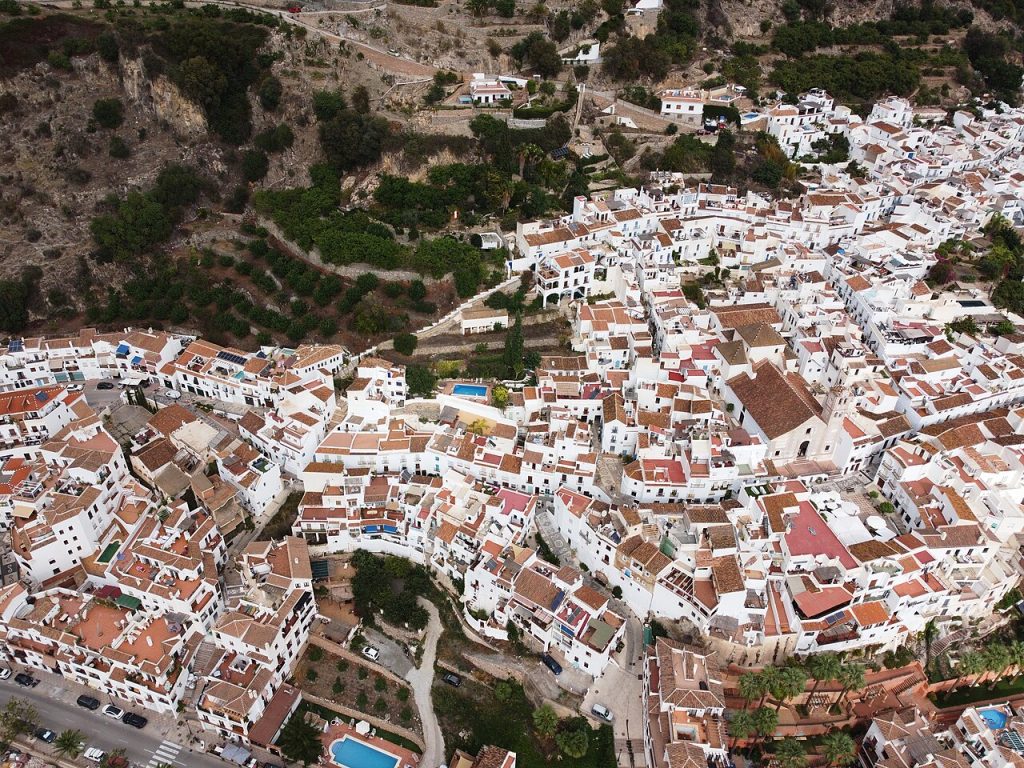
Frigiliana lies in the Axarquía area of Málaga Province, in Andalusia. In fact, it sits only about 6 kilometers north of the seaside town of Nerja and around 71 kilometers east of Málaga.
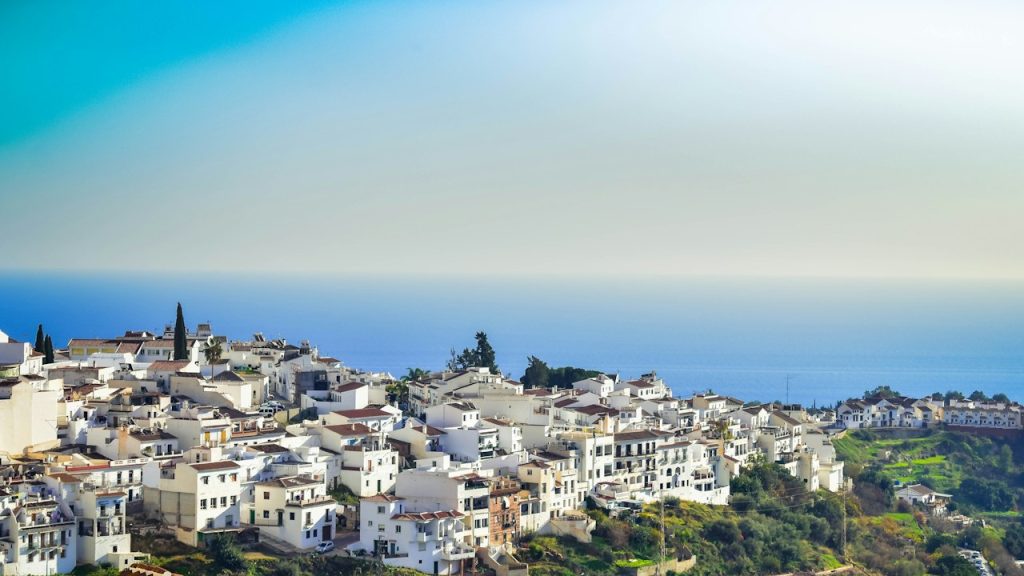
Specifically, the village stands at about 320 meters above sea level. As a result, it enjoys fine views over the hills and the Mediterranean.
Why Visit Frigiliana, Spain?
First of all, Frigiliana is stunningly pretty. Indeed, it has been described several times as one of the most beautiful and best preserved villages in Spain.
In addition, the village has a fascinating history. In particular, its Moorish quarter and its ceramic plaques tell the story of a dramatic rebellion in the 16th century.
Finally, it is easy to reach from the coast. Therefore, it makes a perfect escape from the busy beaches of the Costa del Sol.
Exploring the Moorish Quarter
The old quarter, known as the Barrio Morisco-Mudéjar, is the heart of Frigiliana. Above all, it is a place to wander without a plan.
Whitewashed Lanes
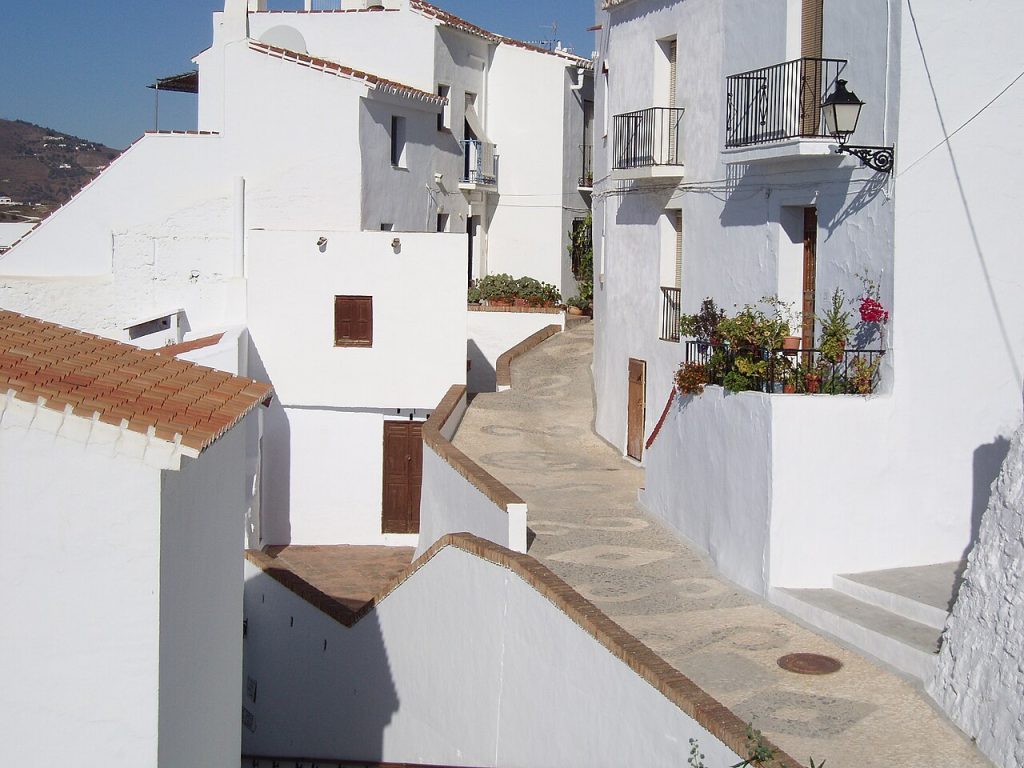
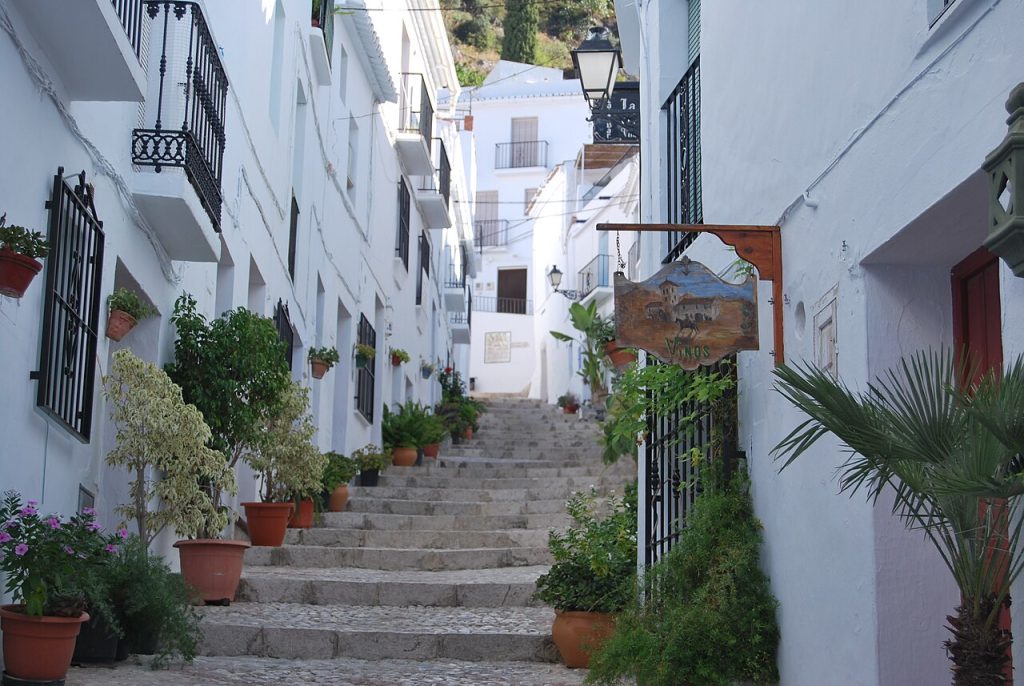
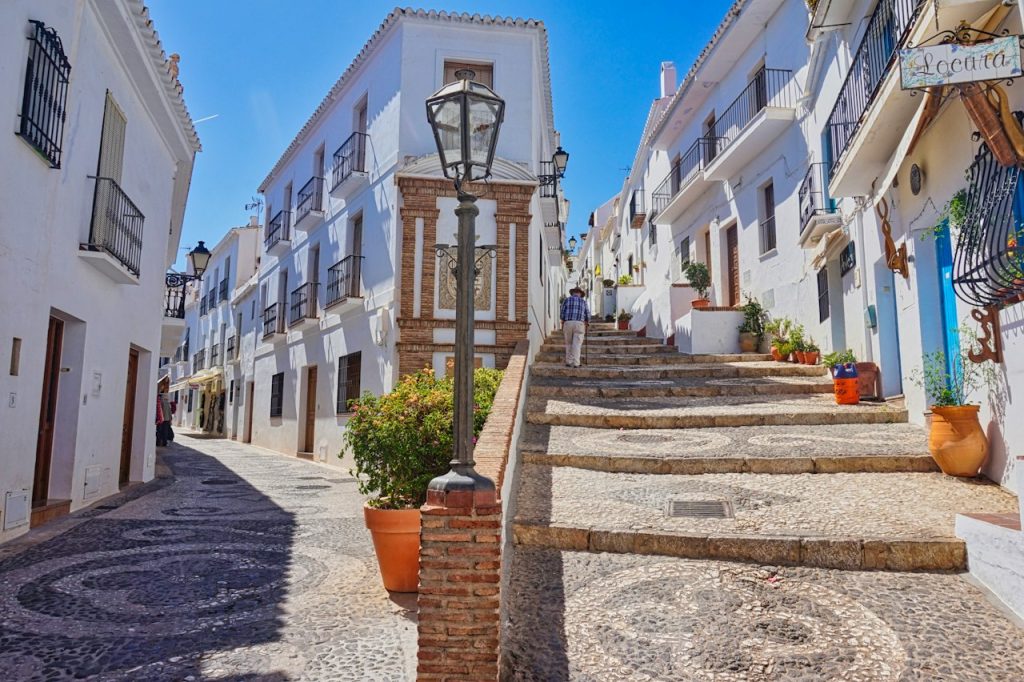
In fact, steep cobbled alleys wind between whitewashed houses decorated with flowers. Meanwhile, bright doors and window frames add splashes of color.
Stepped Streets
Many streets are so steep that they turn into staircases. Consequently, exploring the village is a pleasant workout, with new views around every corner.
The Ceramic Plaques
In 1982, twelve ceramic panels were installed on walls in the Moorish quarter. Together, they tell the story of the Morisco rebellion and the Battle of Peñón de Frigiliana. In fact, following them is a great way to learn the village’s history as you walk.
The Ingenio and Sugarcane Honey
The Renaissance Palace of the Counts, known as El Ingenio, houses a factory that makes miel de caña, or sugarcane honey. It is often described as the only active one in Europe. Therefore, be sure to taste this sweet local treat, which is often drizzled over fried eggplant in local restaurants.
Beyond the Village
The countryside around Frigiliana is also beautiful.
Hiking in the Natural Park
The village sits just west of the Sierras de Tejeda, Almijara y Alhama Natural Park. Moreover, several hiking trails start nearby, leading into rugged mountains and river valleys.
Trails for All Levels
Some trails are short and easy, while others climb into the high sierra. Hence, choose a route that suits your fitness.
What to Bring
Bring water, sun protection and good shoes, since the trails can be hot and rocky. Also, start early in summer.
Nerja and the Coast
Just down the hill, Nerja offers beaches, a famous seafront balcony and large caves. As a result, many visitors combine the two in one trip.
One Historical Fact About Frigiliana, Spain
Muslim rule in the area began in 711, and an Arab castle stood above the village from the late 9th century. However, in 1569, after Morisco rebels surrendered here, the castle was destroyed. Today, only fragments of its foundations still remain.
How to Get to Frigiliana, Spain
In general, Frigiliana is easiest to reach from Nerja.
- By bus: Regular local buses run between Nerja and Frigiliana.
- By car: The drive from Nerja takes only a few minutes, and the trip from Málaga takes about an hour.
- By air: The nearest airport is Málaga Airport.
Best Time to Visit Frigiliana, Spain
Spring, from April to June, and autumn, from September to October, are the best times to visit. During these months, the weather is warm but not too hot.
In late August, the Festival of the Three Cultures celebrates the village’s Christian, Muslim and Jewish heritage with music, street shows and a tapas route. In contrast, July and August can be very hot and busy.
Is Frigiliana, Spain Worth Visiting?
Yes, absolutely. Overall, Frigiliana is one of the prettiest white villages in Andalusia, with a rich history and beautiful views. Moreover, it is very easy to visit from the coast.
For travelers who love charming villages, it is a must. Therefore, it deserves a place on any trip to the Costa del Sol.
Final Thoughts
Frigiliana is a village of white walls, bright flowers and long history. Wander the Moorish quarter, follow the ceramic plaques and taste the sweet cane honey. Above all, take your time and enjoy the views. If you love historic towns in Spain, you may also enjoy our guides to Ronda and Albarracín.
Planning a longer trip? You can also pair this visit with our guides to Ronda, Albarracín and Óbidos.
Image Credits
Unsplash
- View Over the Village to the Sea: Photo by Lucas Albuquerque on Unsplash (Unsplash License)
- Alleys in the Moorish Quarter: Photo by Christian Hergesell on Unsplash (Unsplash License)
Wikimedia Commons
- Bougainvillea and White Houses: Photo by Jaroslav Polacek via Wikimedia Commons (CC BY-SA 4.0)
- Whitewashed Lane: Photo by gildemax via Wikimedia Commons (CC BY-SA 2.5)
- Stepped Street: Photo by Norhum via Wikimedia Commons (CC BY-SA 4.0)
- Aerial View of the Village: Photo by Jorge Saturno via Wikimedia Commons (CC BY 4.0)