
In the green hills northwest of Lisbon, a palace painted red and yellow rises above the treetops, while ancient stone walls snake along a rocky ridge nearby. Below, the old town hides mansions, gardens and a mysterious spiral well. This is Sintra, the romantic hill town that kings and poets loved. In this guide, you will discover what to see in Sintra, Portugal, how to get there and when to visit.
Quick Facts About Sintra, Portugal
| Country | Portugal |
| Region | Greater Lisbon, Lisbon District |
| Known For | Pena Palace, the Castle of the Moors, Quinta da Regaleira and romantic gardens |
| UNESCO Status | Cultural Landscape of Sintra, World Heritage Site since 1995 |
| Founded | Settled since ancient times; a royal retreat from the Middle Ages |
| Best Time to Visit | April to June and September to October |
| Time Needed | One to two days |
| Continent | Europe |
Where Is Sintra, Portugal?
Sintra is a town and municipality in the Greater Lisbon region of Portugal. The historic town lies in the Sintra Mountains, close to the Atlantic coast and the Portuguese Riviera. Although the wider municipality is large and busy, the old town and its palaces feel like a world apart.
Why Visit Sintra, Portugal?
First of all, Sintra has an extraordinary concentration of palaces, castles and gardens. In 1995, its cultural landscape became a UNESCO World Heritage Site. As a result, you can see several landmarks in a single day.
In addition, the cooler, misty climate of the hills attracted royalty and aristocrats for centuries. Their summer homes and romantic gardens give Sintra a fairytale atmosphere. Moreover, it is an easy day trip from Lisbon.
Pena Palace
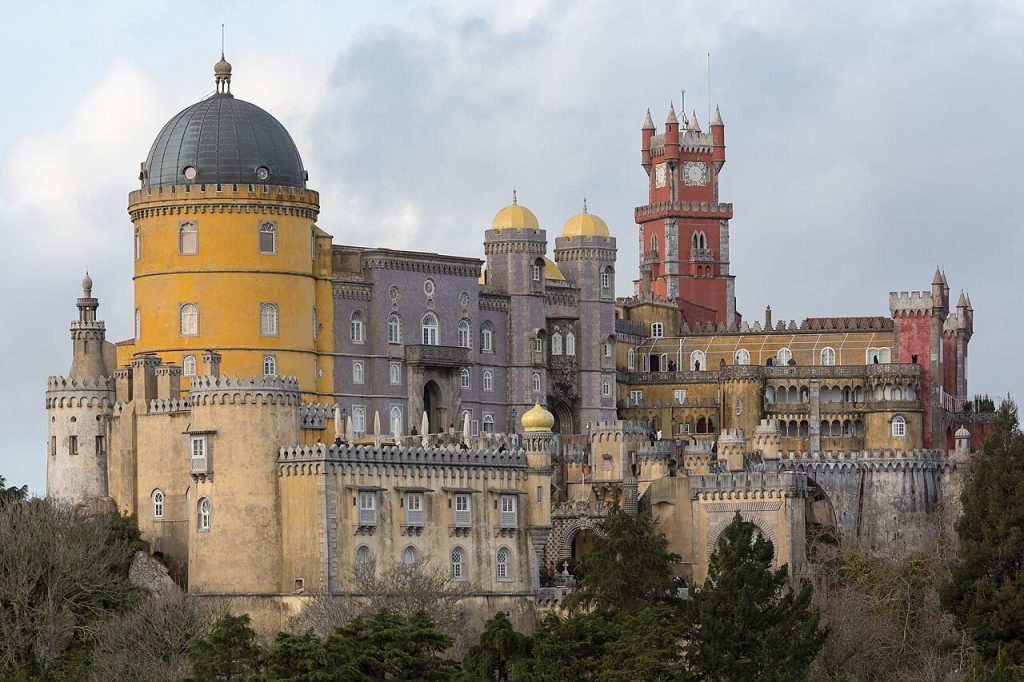
Pena Palace is the most famous sight in Sintra and one of the best-known palaces in Portugal.
A Monastery Turned Palace
In 1511, King Manuel I built a monastery on the highest peak of the Sintra Mountains. Centuries later, King Ferdinand II transformed the site into a romantic palace.
Colours and Styles
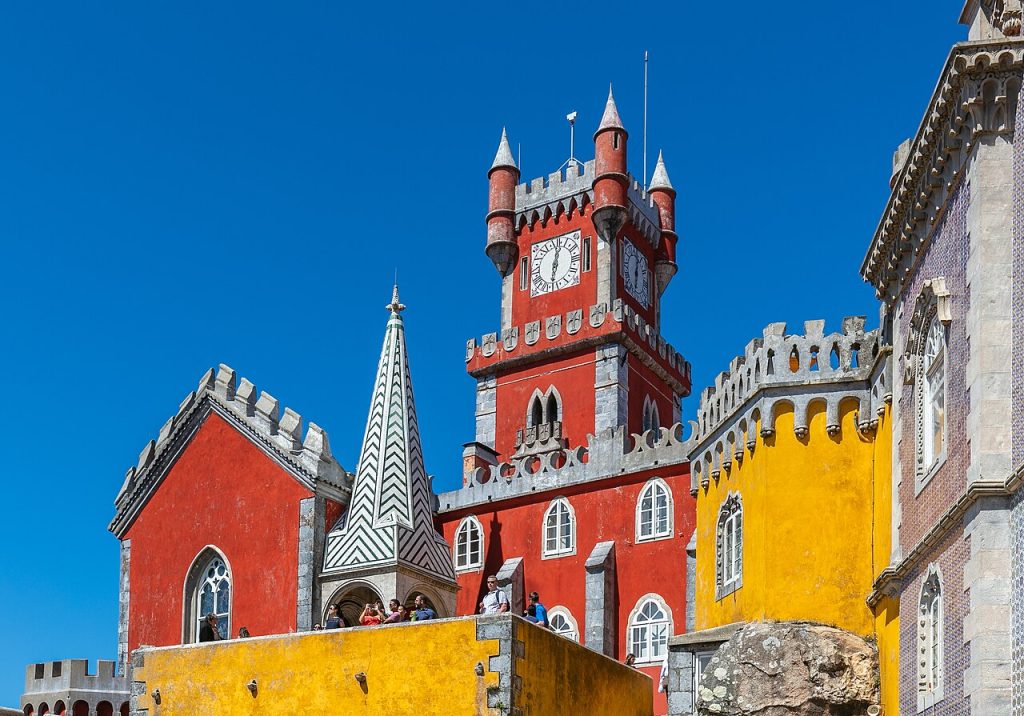
The palace mixes many styles, including Gothic, Manueline and Moorish details. Its red and yellow walls, domes and towers create a truly unforgettable sight.
The Park
Around the palace, a large park covers the hillside. Paths lead through forest, past lakes and to viewpoints over the coast.
The Castle of the Moors
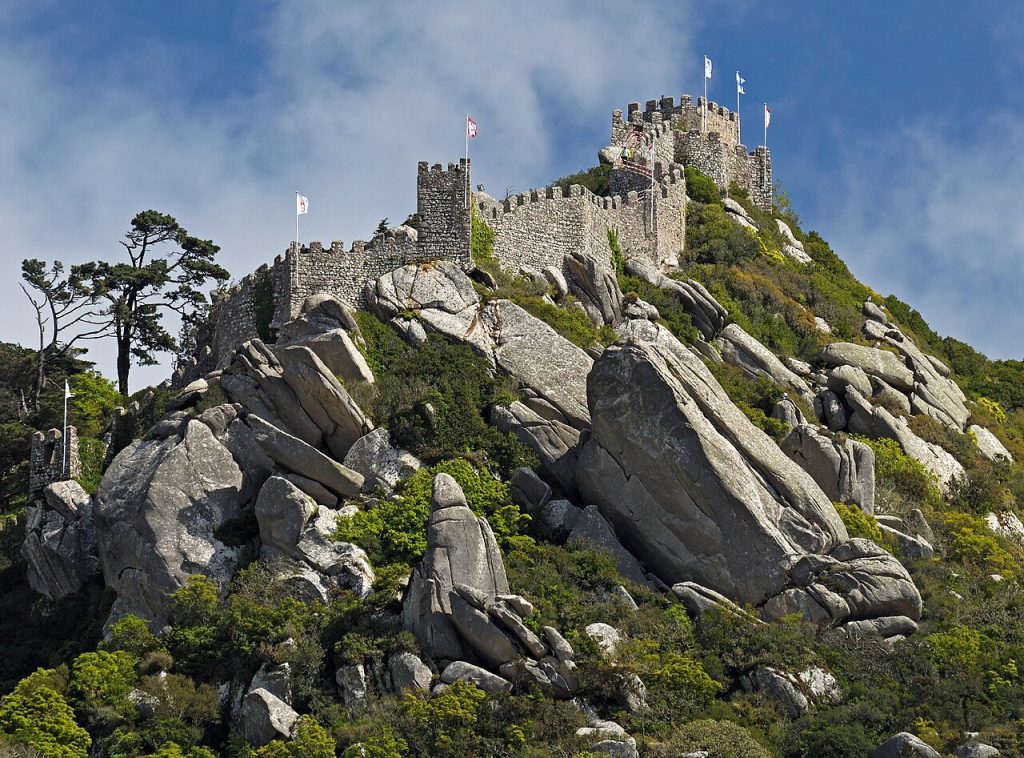
Just below Pena Palace, the Castle of the Moors stretches along a rocky ridge. It dates back to the period of Muslim rule in the Iberian Peninsula.
Today, visitors can walk along its restored walls and climb its towers. From the top, the views reach Pena Palace, the town and, on clear days, the Atlantic Ocean. Therefore, it is a favourite spot for photographers.
Quinta da Regaleira
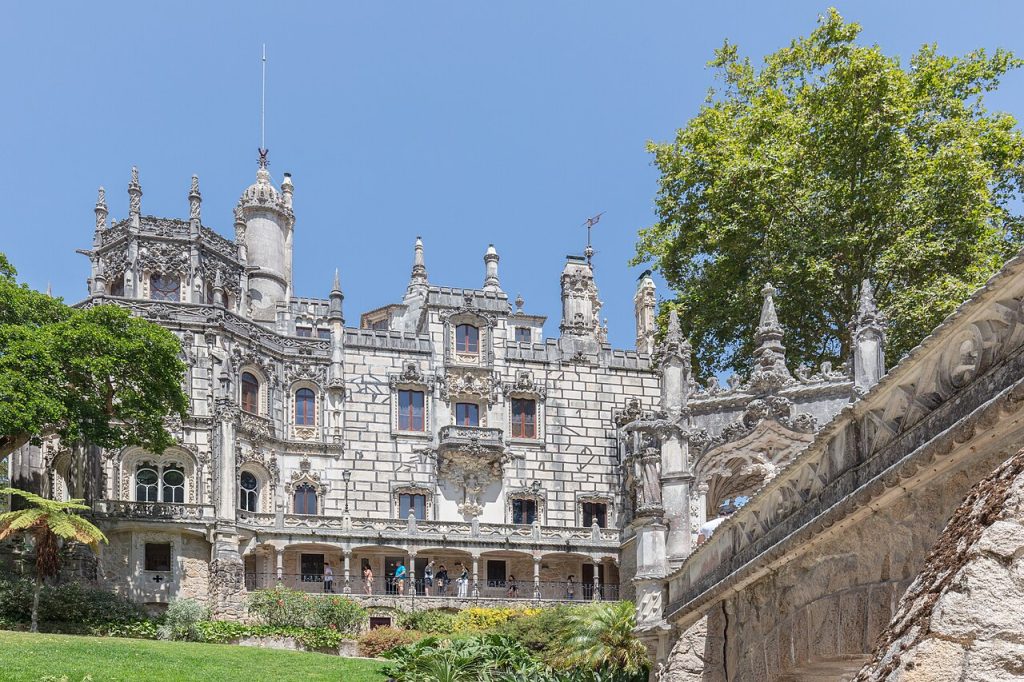
Quinta da Regaleira is a mansion and garden full of symbols and secrets.
The Palace
Built in the early 20th century, the palace combines Gothic, Manueline and Renaissance styles. Its towers and carved stone decorations are intricate and dreamlike.
The Gardens
The Initiation Well
The highlight is the Initiation Well, a deep spiral staircase that descends into the ground like an inverted tower.
Grottoes and Tunnels
From the bottom, tunnels and grottoes lead through the garden, past lakes and stepping stones.
The Historic Centre
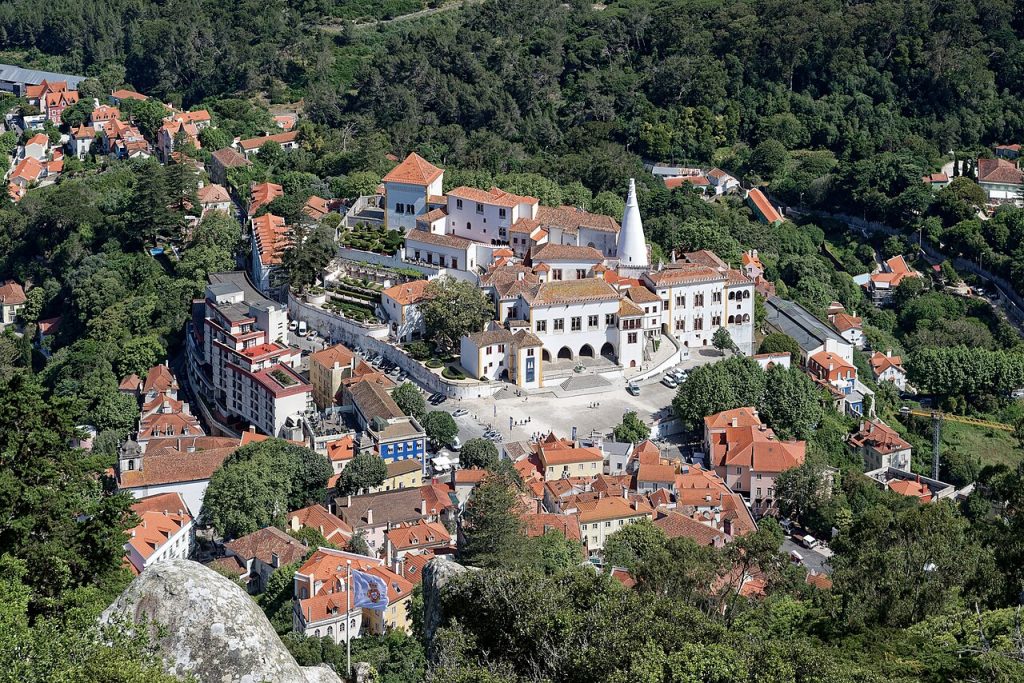
Sintra’s old town is a pleasure to explore. Its narrow streets climb between pastel houses, cafés and shops.
Sintra National Palace
Medieval Royal Residence
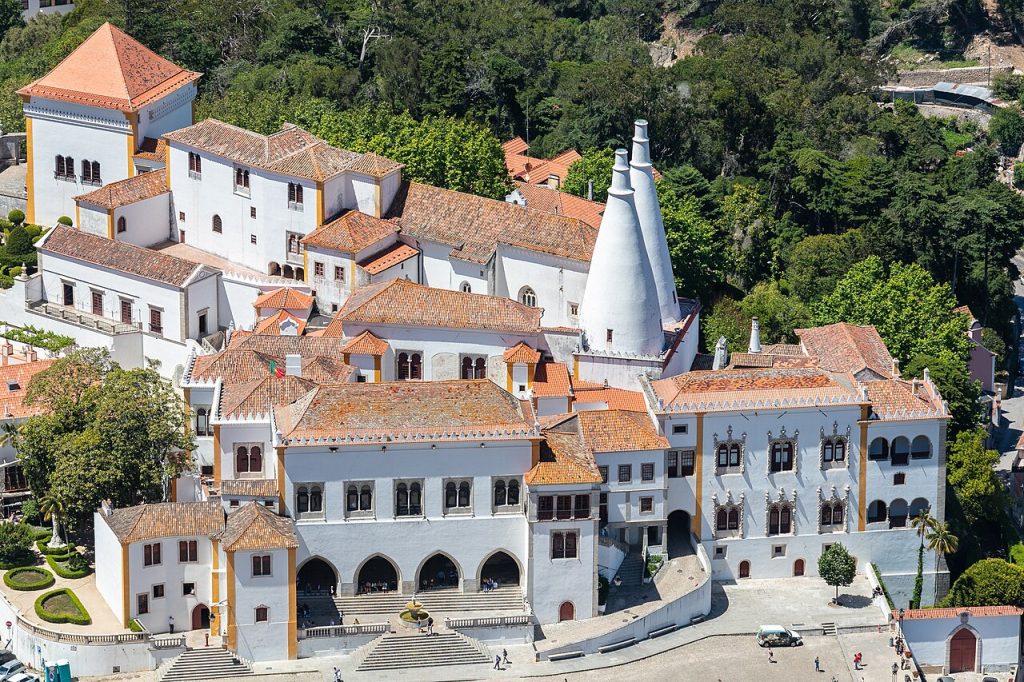
In the heart of town, Sintra National Palace is easy to spot thanks to its two huge conical chimneys.
Painted Ceilings and Tiles
Inside, rooms are decorated with painted ceilings and colourful tiles, reflecting centuries of royal life.
Local Treats
Travesseiros and Queijadas
Before leaving, try travesseiros, puff pastries filled with almond cream, and queijadas, small cheese tarts. Both are Sintra specialities.
One Historical Fact About Sintra, Portugal
Pena Palace grew out of a monastery founded in 1511 by King Manuel I. After an earthquake and centuries of decline, King Ferdinand II bought the ruins in the 19th century. He then created the palace and park that make Sintra famous today.
How to Get to Sintra, Portugal
By train: Regular trains run from Lisbon’s Rossio station to Sintra. The journey takes about 40 minutes.
By bus: Local buses connect Sintra station with the palaces on the hill.
By car: Driving is possible, but parking near the main sights is very limited. Therefore, public transport is usually easier.
Best Time to Visit Sintra, Portugal
The best time to visit Sintra is in spring, from April to June, or in early autumn, from September to October. The weather is pleasant, and the crowds are smaller than in summer. Arrive early in the day to enjoy the palaces before tour groups arrive.
Is Sintra, Portugal Worth Visiting?
Yes, Sintra is worth visiting. Its palaces, castle and gardens make it one of the most memorable destinations in Portugal. Furthermore, it is very easy to reach from Lisbon.
Final Thoughts
Sintra feels like a place from a storybook. With its colourful Pena Palace, ancient Moorish walls and mysterious gardens, it rewards curious travellers at every turn. Whether you visit for a day or stay longer, Sintra, Portugal will leave you enchanted.
Image Credits
Wikimedia Commons
- Pena Palace: Photo by CEphoto, Uwe Aranas via Wikimedia Commons (CC BY-SA 3.0)
- Clock Tower of Pena Palace: Photo by Diego Delso via Wikimedia Commons (CC BY-SA 4.0)
- Castle of the Moors: Photo by Ввласенко via Wikimedia Commons (CC BY-SA 3.0)
- Quinta da Regaleira Palace: Photo by Diego Delso via Wikimedia Commons (CC BY-SA 4.0)
- Sintra National Palace: Photo by Diego Delso via Wikimedia Commons (CC BY-SA 4.0)
- Historic Centre of Sintra: Photo by Jakub Hałun via Wikimedia Commons (CC BY 4.0)